S€x, Stress & Psychedelics: The Missing Keys to Longevity
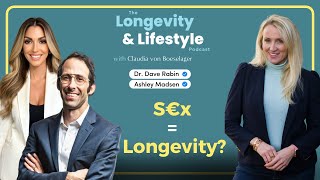
Functional-medicine clinician Ashley Madsen and psychiatrist Dr. Dave Rabin explain how sexual wellness, nervous-system regulation, and relationships drive longevity. Chronic stress shuts down reproductive physiology. The Harvard 87-year study shows social isolation erodes healthspan. Guided psychedelics can reset relational dynamics by amplifying empathy and safety.
Chapters
Hey there, I'm Claudia von Boeselager, a former investment banker turned entrepreneur, longevity coach, biohacker, and mother of two. Once burnt out and overwhelmed with chronic health issues, I've transformed my life and helped thousands of people do the same. I've even reduced my biological age by 17 years. Yes, I'm 26 again. Now I'm here to share the tools, strategies, and inspiration to help you live healthier, happier, and longer. On this podcast, I interview world-leading experts in health, biohacking, mindset, and performance, and share personal stories and learnings to bring you the latest insights and tips. Think of this as your go-to space for real talk about all things health and optimizing your life. Ready to unlock your best self? Let's dive in. This is the Longevity and Lifestyle Podcast.
Welcome back to the Longevity and Lifestyle Podcast. I'm your host, Claudia von Boeselager, and I'm joining you today from the beautiful Mediterranean island of Mallorca. So if it's a little windy or there's some noise, I apologize in advance, but I thought I would take this episode from outside. I am absolutely thrilled to have two incredible guests joining me today. We'll be diving into the fascinating intersection of sexual wellness, hormones, the nervous system, and even the role of psychedelics in enhancing relationships. I'm so excited to welcome dear friends and pioneering experts, Ashley Madsen and Dr. Dave Rabin. We actually became fast friends after speaking together at a longevity and psychedelics conference in Miami a few years ago. So I'm very excited to have them on the show.
Jumping in quickly, it's Claudia von Boeselager. I absolutely love bringing you these conversations for free each week. And I can do that thanks to the generous support of our sponsors. These are brands I've personally vetted and believe in, and I think you'll love them too. Supporting them means you're also supporting the show, your own longevity journey. Thanks for supporting them. Now, here's today's sponsors. This episode is brought to you by Pendulum. If you've been listening to this podcast, you'll know that longevity isn't about quick fixes. It's about supporting your body at the root. And one of the biggest realizations I've had from talking with experts is that so many foundational systems, from your energy and metabolism to immune health and even mood, all start in your gut. That changed the way I approached my own health, and it's exactly why I'm such a fan of Pendulum. They're a science-driven company pioneering a whole new approach to gut health. In fact, Pendulum is the first company to bring live akromancia to market. This is a game changer. I recently started taking their Metabolic Daily, and I can tell you I'm already noticing a real difference. My digestion feels smoother, I have more consistent energy, and I love knowing that I'm supporting my gut at such a foundational level. For me, this is a cornerstone of longevity. If you're serious about your health and lifestyle, this is where to start, because when you support your gut, you support your entire body. And for you, dear audience, get 20% off your first Pendulum membership order by heading over to pendulumlife.com/claudia. That's pendulumlife.com/claudia20. The discount is automatically applied at checkout.
Welcome, Ashley and Dave. So delighted to welcome you to the show and have the three of us here today.
It's a pleasure to be here with you. Thanks for having us.
Thank you.
To start, can I ask you both to give a brief intro to yourselves for my audience?
So my journey started off in the surgical subspecialties working mostly with orthopedic conditions. And when I was really faced with multi-system changes, I started to study more for my patients where we're understanding that there was much deeper issues that were connected from systemic inflammation, cardiovascular changes. And so I started to study functional medicine, nutrition, really segued into something called precision medicine or personalized medicine where you're looking at that person from a 360-degree view and understanding what we could do to actually stop disease in its tracks or reverse it, or at least slow it down. On my journey there, I realized that sexual wellness was a huge barometer for overall healthspan. So, not just lifespan, but healthspan in our patients. And, from a cardiovascular standpoint, insulin resistance, psychological, cultural. And so, it really became a big focus point for me and a passion of mine to really help. And, I saw it was really an underserved, underserved I should say, underdiscussed area of medicine and also just a taboo topic with really little sexual education that we receive. And then also so many different variables that affect people's understanding of it and how it— the dynamics play within someone's relationships and also in their overall health. So it's a huge part of my practice and I love it. And such a wonderful collaboration with Dr. Dave here on what he does with his patients as well.
Beautiful.
Dave?
Thanks, Ashley. I'm Dr. Dave Rabin. I'm a board-certified psychiatrist and neuroscientist focused on primarily trauma and addictions in treatment refractory or hard to treat mental illnesses where almost all of my patients have some degree of sexual dysfunction, sleep dysfunction, and other symptoms that go along with their mental illness symptoms and whether sometimes medication related, sometimes just as a symptom of their mental illness that sexual dysfunction comes about and I think similar to Ashley, I also noticed that sexual health and sexual function serve as like a barometer or a metric that we can think about when we understand somebody's overall health and wellbeing on a holistic scale and really trying to just notice as clinicians were taught to, you know, observe patterns very closely. And I think we start to notice eventually that when you look at the whole person that is your client or your patient, you start to see that these patterns of sexual function or dysfunction start to occur across large groups of people in this very similar way with all those, all of these different kinds of illnesses, you realize that when people are doing really well, they generally tend to be more sexually active and have more desire and more drive. And when they are not doing well, or they have something else going on in their lives that could be impeding their quality of life, sexual health takes a backseat. And then there's also this gap of knowledge that many of us were are not given proper sexual education growing up. And I think that's a topic that Ashley and I are always very interested in because it's just an easy point where even if you are feeling good, you are in a good place in your life and you want to have a more sexually active life, which we now know we'll get into sexual health is so important for overall health and a prognostic factor for, you know, longevity and healthspan. How do you do it? Safely and effectively. And I think that there's a lot of opportunity there. And so getting more into sexual education and kind of revamping sexual education is a big focus for both of us.
So exciting. So many topics. I definitely feel like we have to do a round 2 because I'm not sure how we're going to cover all these amazing things in, in the time we have allocated today. But let's dig in straight away. So looking at sexual wellness and nervous system regulation, Dave, your work highlights safety and nervous system regulation as key to sexual wellbeing, as you were mentioning, given that chronic stress is linked to 70% increase in sexual dysfunction in women and rising ED, or erectile dysfunction, in men. How does a dysregulated nervous system impede sexual health? And maybe what steps can individuals take to cultivate safety?
Well, I'll give you like the 30,000-foot view, and then I'll, I'll let Ashley jump in for the rest. So the details, basically, in, in the autonomic nervous system, which is the core of our nervous system in all humans and almost, and almost every mammal and every animal, going way back for millions and millions of years, which is actually what Eric in large part won the Nobel Prize for in 2000. We know that the body is governed by two core parts of the nervous system, one of which is involved in performance and survival, which is called the fight or flight sympathetic nervous system. And that increases heart rate, increases blood pressure, increases blood flow to parts of the body and systems that help us survive threat. So skeletal muscles, heart, lungs, motor cortex of the brain, everything that we need to get resources forces and a lot of them or all of them when we're running from a lion or running out of air, food, water, et cetera. Then there's the parasympathetic nervous system, which is governed by the vagus nerve that is responsible for all recovery in the body and healing. And it is the quintessential counterpart to the sympathetic nervous system, but it should actually be active more of the time because we're supposed to be safe and recovering more of the time than we're under threat. And whenever we are, if fear is this trigger to the fight or flight sympathetic nervous system to get us to safety. Then once we get to safety, safety is the trigger for the vagus nerve, parasympathetic nervous system. And that takes all available blood flow, diverts it to all of our reproductive organs, digestive system, immune system, integumentary system, the skin, the mucous membranes. Everything that's supposed to function when we're recovering is governed by that nerve, including sleep and rest, because you don't want to be thinking about sleep or reproduction when you're running from a lion, right? So the system is tightly evolved to prevent that from happening. But if you think about that, then when you are in the bedroom or about to be in the bedroom or about to have a, even like first kiss with somebody that you really like and you get nervous about it, if you, if that triggers your fight or flight sympathetic nervous system when it shouldn't because you're worried about rejection, for instance, like many people, then that will shut down your reproductive system entirely. And you won't even get to the point of having an intimate interaction, right, let alone with somebody that you already are comfortable with. Performance anxiety, right, can trigger the sympathetic nervous system and prevent you from getting an erection or prevent you from lubricating properly or prevent you from just getting your body into a state where you're ready for experience, not just desire, but translating desire into action. Right. Because I think for a lot of people, the desire's there mentally speaking, emotionally, but then how do you get your body into a state where you feel safe enough really for the vagus nerve to get resources? And then when the vagus nerve gets resources, it says, okay, reproductive system, turn on, let's go. Right. But if your body's under threat or you perceive to be under threat, like from potential rejection, performance anxiety, anything else, right. Too many emails, leaving the stove on at home, too many responsibilities, too much news, whatever it is. But it's there, right? It's like, it's, yeah, it's totally not the time to think about it. But to many of our untrained minds where we haven't learned to meditate and like concentrate on the task at hand, for instance, like the average attention span for Americans is like 6 seconds or something like that. So that means every 6 seconds you're thinking about something else, right? And you're not, you're not, you're not focused on, on the task at hand, which is like making love or intimacy. And so I think the, and this affects all of us, you know, it's not just, it's, I like, I, in my life have also been affected by that kind of distraction and it prevents you from getting to the outcome goal with your partner. And so I think it's the stress, the impact of stress on reproductive and sexual health is real and extremely real, but it's not just mental. It's fully biological in terms of how our body governs resources to reproduction and intimacy.
Amazing. So, so fascinating. Ashley, do you want to add to that?
Dave and I talk about this a lot, that especially when we educate clinicians and educate our patients, is that, you know, it's really a biopsychosocial approach. So the bio is, yes, I think what we concentrate the most in medicine, what people concentrate on, is the hormones. It's like, oh, what's going on inside the body? But there's also the psychological component of feeling the trust, the relaxation, and the sense of safety in yourself and with the partners. Because this also has to go with self-pleasure. So we think about partner sex, but there's also self-sex. And also, we have to think about that sense of safety, the relaxation, and also a little bit slightly different for a female brain versus a male brain. And we have so much more literature and data from Dr. Mosconi at Cornell, who was really diving into the female brain and how it's affected, not just from a biological, but from a structural standpoint. We have MRIs to show how the female brain is affected during orgasm and whatnot. But the parasympathetic system is very much, or needs to come into play when a woman is receiving and to be able to become aroused. And just like Dave mentioned, libido and arousal are different, which are very much confused also in the medical world because everyone thinks the little blue pill or the pink pill or whatever you want to term it as nowadays is going to fix the issue. And the thing is to understand that we are multidimensional and sex is actually a more complicated function. And so, there are multiple different variables that play a role. But, absolutely, having that sense of trust, relaxation, and ability to drop into yourself and be present is such an important component for someone to also to have arousal, to maintain the arousal. So, we think about erectile dysfunction. 40% of men by the age of 40 have ED. 70% of men by the age of 70 have ED. And so we think about not only being able to have an erection, but maintain that erection. And the same thing for women, because the clitoris goes very much underdiscussed and unknown. And yet clitoral tissue is erectile tissue. So I try to also explain that, that some of those mechanisms need to also be applied for, for beautiful.
And also just add something like 70% of women in studies report not being able to achieve climax during sex with their partner. And the reason— and they can achieve that on their own. And the most common reason why they report not being able to achieve climax with their partners is not because there's anything wrong with them. It's because they don't feel safe to be vulnerable, to be in that, you know, peak state. And so that safety is a real common theme across not just getting there, but getting to the end goal as well for many people.
Yeah. Communication. I think we segue into that a lot is that there's not a lot of communication sometimes also between partners. It's also like, I don't want to feel judged. I don't want to hurt my partner. And then also the lack of communication to your clinicians. So people don't really want to open up about it, maybe at a 15-minute primary care visit. So that's why I really like to build it into my personal repertoire when I work with patients, because you find so much information from that. But absolutely, it is, it is an area that, you know, it's a global issue. This is not even just an American issue, right? So 40 to 50% of people globally are reporting some form of sexual dysfunction. And let's be honest, that's very much underreported.
I'm pretty sure. Yeah. Not many people are talking about it.
Based off culture and, you know, just feeling, do we even know? You know, some people just think it's— it's dysfunction is one thing and it can really play in multiple sectors. So absolutely. And it's an important topic.
It's a spectrum as well, like dysfunction. But I want to unpack that safety component. And I think it's so fundamental because it's holding so many people back. Let's unpack that safety component. What is going on there? Why are they not feeling safe, especially if it's with the partner that they're with for longer? Is it the lack of communication? Is it the lack of self? Is it trauma? What's going on that's hindering it? And what can people do to start addressing it?
I mean, I think it's all of it, right? Like, each person is going to have one thing that's like the most top of mind for them. That's the current thing that's preventing them from feeling safe, but it's all of it. And I can relate to personally feeling thoughts. I don't, I don't ever in my day-to-day life think about rejection to give you an idea, right? Like it just doesn't cross my mind. I'm not concerned about it. I've done so much personal work and therapy and like develop myself that I just don't think about it. It never crosses my mind. And, you know, you knowing me for a while would probably also notice that that's not something that comes off of me. But when I have been in the past in a situation, like many, many years ago when I was, you know, my early 20s, I remember fear of rejection with female partners that especially people I didn't know very well, like where I was just getting to know because of having and, and recalling that that came from having been rejected. In school as a kid when I was really young, like being bullied by my peers, right, and not being accepted by the community. Nothing to do with sex. So I think the past trauma of being either accepted by default, what you remember as being accepted by your community, or being not accepted by your community, which could be your family, your parent, your friends, your school, your school peers, whoever it is, like that feeling of not being fully accepted as part of the whole, which is a critical human need for safety, right? To be— it's one of our core needs, like it's food, water, air, shelter, and sleep, and accept— and love and acceptance, right? Like those are our core human needs. So if you're missing any one of those things, or you think you could lose one of those things, your body enters into a fear state, and then the safety is gone. So a lot of the practices are about that we teach, and especially that I teach in my clinic, are about how do you go through that checklist and remind yourself you have those 6 things. You don't need to worry about that right now, right? And if you can check all the 6 things— the food, water, air, shelter, sleep, and love and acceptance by our community, which you're about to get more of if you just let go of the fear of rejection— then you can overcome and retrain yourself to not be in a fear state in those experiences, which is ultimately like what I had to do for myself. But I can tell you without a doubt that past trauma has an impact because they've experienced it. I think that the other piece that, you know, I know Ashley will get a lot more into is the trauma and stigma around just sexual education and sexuality in general, which is a major problem where it's so taboo and it's so not well taught that people are afraid of their parts. They're afraid of being bad if they use their parts or touch somebody else's parts or what other people will think about them if parts are touching parts or whatever. You know, it's just there's a there's a lot of stigma that also, I think, creates a sense of, of lack of safety in people because of this just being, you know, not taught properly and stigmatized for so long.
And culturally as well, right? So like tradition, I mean, I'd love to actually— let's talk about that as well, that education piece. What is going wrong? And what would, you know, and different cultures are different ways of teaching it, right? But what would you, you both, I guess, love to see in terms of sexual education to change this dynamic that we have been seeing to improve it?
Happy to talk a little bit about this. So, you know, sex education is very limited depending on the country, your culture, your states, right? It's become very politicized. And what most people are reporting is that they're learning sexual education through Hollywood or through pornography. Which is a problem because most of that is very much tilted to one side, mostly for a male perspective, and it's not really giving education on the anatomy. You know, Dave, I remember there was a conversation you have with Dr. Killen where you even mentioned some, some of the students in your medical school who are coming in. I think you mentioned India, and they didn't even know where the clitoris was or what it, you know, what its where it was located, right? I think there's a lot—
they certainly didn't know what it was for.
Yeah. And this is not to make fun of anyone, right? I think there needs to be like some sort of like decompress some of the clinical nature of the conversation so people feel comfortable about it. But can you imagine your doctor not knowing about these reproductive organs? And a lot of it is also that no one has felt comfortable even exploring themselves. And so when I personally work with people, I say, well, are you— and they're coming in specifically, maybe they're having issues with orgasm or arousal. One of my first questions is, are you able to achieve orgasm on your own if you're having a concern with your partner? And many women especially are like, you know, I don't want to touch myself, or I, you know, that's wrong. But where do you learn that, right? You don't come out of the womb thinking that. That's all cultural conditioning. Sometimes religious conditioning where you're taught, no, that's wrong, that's bad, you're bad doing that. And again, this is not for us to teach people, you know, their religion is wrong or this is right, right? It's— we're not shitting on our patients. And I think that's really important. We're not— we're here to do that. But people deserve to have education because what happens is it becomes harmful as time goes on. And there are some really good studies talking about sex education specifically, like less than 50% of women in the United States actually learned about female reproductive anatomy for themselves. That's significant considering that women end up having a menstrual period, right? And learning those basic things about how do you become pregnant, right? How would it, you know, even simple things like reproduction, right? We should be talking about these things. And then in the UK, there was a great, there was a study that also said about 95% of young women said they were never taught about sexual pleasure. And it's really interesting because from my perspective, I'm like, how is that possible, right? And so there's so much cultural biases that happen. And I think that we have to learn about taking some of the bad versus good out of the equation. Say, this is a human body. These are functions. This is physiology. So you're not gonna say no about an orthopedic. Like, this is how a joint works. This is how the liver works. This is how the heart works. But for some reason, these reproductive organs are a no-go zone. And that unfortunately becomes a really big hindrance, not only for clinicians, right? We think about the, orgasm gap that we're experiencing also between men and women, but also the lack of education to clinicians about how to help their patients through even points of like a perimenopause and a menopause transition, which is absolutely earth-changing for a woman from a health standpoint. So yeah, I mean, I think, I think we all can agree that some, some sort of education, obviously being respectful to people's individual feelings about their religious— it's not talking about Yes, you should be having sex, or we shouldn't have this. These are basic functions of the human body that need to be part of a curriculum for someone to learn about themselves, but also in our, in our educational systems for doctors and PAs and NPs and, and more healthcare providers about those types of functions that really are under discussed and educated upon.
Yeah, Dave, it's just very much like we take a very much abstinence-only approach because talking about some of these things makes people uncomfortable. And. Ultimately, no matter what tradition of healing you look at, vulnerability and discomfort is where healing comes from. So we have to like face the things that make us uncomfortable. This is an analogy that I would offer is like, imagine, like you could never imagine this, but like, imagine if we just didn't teach you about the pinky finger, because the pinky finger makes me uncomfortable. So we're just not going to talk about it. And you're gonna have to figure out what to do with that on your own. Right? Like, we didn't teach about, like, any other organ. Like, that just wouldn't be a thing. But I think there is, like, there is a very strange thing that we can't— like, we don't have to dive into it here, but it's something that we can't not mention, which is the relationship between organized religion and, and conserved misogyny and patriarchy that has existed for, like, many, many thousands of years that results in this, like, forbidding of pleasure because pleasure is indulgence and it is not allowed, and especially not allowed by women. And I think that is totally ridiculous when we're in the 21st century and we understand the scientific basis for these kinds of things and that these organ systems, the sexual health system— not only do we all come from a woman's womb, every single human, right, was born from sex. But we can't deny that the fact now that all these studies have come out that show that sexual activity, especially with a partner, is extending to human health and lifespan. 50%, I think that study I talked about with Amy Killen that you, you have seen, I know Ashley, like 50% in all-cause mortality increase or reduction by men who have sex at least once a week. You know, when you think about that. Fit not just mortality from any one thing, but this is like a life-saving thing, right? It bonds humans together. It does all the good things that, that sexuality does, but it also improves decision-making. Like, this is like men who die of car crashes, drug overdoses, all-cause mortality is reduced by having sex just once a week, right? Like, that is something you just can't deny. So we need to be looking at this not just from like a traditional religious cultural perspective, that should be acknowledged because that's a problem. And demeaning pleasure is a problem because pleasure is healing. And when we look at the impact of these studies, I think that's the major message is like, feeling good heals us. And we need to prioritize doing that more often and teach people how to do it better, safely.
Yeah. And I just to go back to the— at one point, it was considered hysteria for a woman to have pleasure or an orgasm. Is it totally based on patriarchal beliefs at the time? And if you actually look at the Greek, the root of the word hysteria or hystera, right? If you think about hysterectomy is the uterus, the Greek word hystera means the uterus. And so it was really an interesting component about how women— it's talking about the misogyny that women's desire to have pleasure or enjoy themselves was considered actually a medical diagnosis of hysteria at one point. And women were actually put into psychiatric wards and being sexually active, or just being sexually active, going from that. And that gets, you know, that doesn't go away. Like, that gets fed down in the— you think about, like, shame, right? I think that that is also a big thing that we tried to uncover a little bit, which takes a lot of work. And, you know, that's why we have wonderful people like Dave out there working with, with individuals, because it is very hard to also find clinicians who are validating to that, like, and understand that the shame, the misinformation, the fear around sexual development, and also what our conditioning is, and how are methods to absolutely help people and unpack that in a way that's safe for them. And also, you know, supportive. It's really a challenging area when you, you are contending with someone who has a lot of that bias coming into some of their sexual dysfunction and some of the the conditions that they're experiencing too.
I read last summer, The Immortality Key. I don't know if you guys have read it. And it just shows, yeah, you know it as well. And the power that women used to have pre sort of organized religion, the high priestesses and they used to go to, I mean, also it was a precursor to LSD. But if you also look at the ancient Egyptians, I mean, they were quite promiscuous. So culturally, traditionally it was different, but I think there's that culture and control. And obviously this is a different conversation, but very interesting if you look back far enough in history to actually see different versions of truths, right, as well. So yeah, sometimes history can also be advantageous. Ashley, I wanna pick up on something you were talking about, midlife hormonal shifts, right? Especially perimenopause and menopause and how it impacts sexual wellness, mental health. And we know that up to 70% of women experience mood changes, anxiety, depression during perimenopause. What are the key hormonal balances you prioritize in menopause-informed education to address these fluctuations and support both sexual and mental wellbeing?
Yeah. Yeah, that's a great question. And I think this is the perfect time that we're seeing this revolution happen of education and advocacy, which we're all for. This is amazing. And Dave knows this better than anyone. It's one of the first-line treatments for a woman when she's starting to experience anxiety, depression in the clinical psychological, you know, realm of things is SSRIs. It's still considered a first line. But what happens is during the perimenopausal shift. And I'll just say that the average age for a woman who goes through menopause, which is the medical definition of 12 months without a period in the United States, I'm going off of, is age 52. But perimenopause, which is the fluctuation and can be a very erratic hormonal time for a woman, can start anywhere between 8 to 10 years prior to that menopause component. And it's a little bit different than men because women go through something called ovarian senescence where the ovaries run out of eggs, and therefore stop producing hormones. And there's that slow decline that happens that can actually feel extremely erratic, meaning you'll start to see these huge spikes in estrogen, and then the next day, they're kind of down in the, in the basement, and they kind of go up like this in the sawtooth component for a lot of women, their periods might change and lengthen out. But because these hormones are considered sex hormones, we have forgotten in the medical world that these are life hormones, and they have very important components throughout the body. We have receptor sites everywhere in the body. We have the brain with the muscle tissue, the bones, our reproductive organs. And women have more testosterone in their body than actually estrogen. But what's interesting with women is we have more estrogen receptor sites in the brain than testosterone receptor sites. So estrogen specifically, and I'll use estradiol because there are 3 types of estrogen, But estradiol is really a very strong and important component of estrogen. So, I'll just use estrogen as an easy way to describe this. But estrogen is important for structural components of the brain, for volume, and also for actually a neuroendocrine connection of the brain to the ovaries. So, it absolutely is important for neurotransmitters, so for keeping us stable and our anxiety at low points, having more of a normal— I would say, I hate to use the word normal, but a better response to stress and to also adaptive response. Thank you. There you go.
There you go.
So when we start to see these shifts in estrogen specifically, you'll see, you'll start to see changes in sleep, right? So if you have worsening sleep or worsening insulin resistance or mood changes, right, that's going to affect many different areas of the body. Also your desire to have sex or your arousal. And so we start to see these changes happen, and it's not always evident on a blood test because as we know, during a perimenopause shift, depending on the day that you test, your labs is not definitive, especially in the perimenopausal shift. So you don't really always know. So you have to go off of symptoms. And then when women actually go through menopause and that estrogen basically goes to zero, we start to see that eventually it shifts out. But you'll start to see more lack of desire for motivation for doing things. You'll start to see women that might say, you know, I'm having challenges in my marriage or in my relationships. I, you know, I feel like I should retire. I don't have that joy of doing things at work. And so estrogen, I would say, is a very component— big component specifically for the female brain. Testosterone, of course, and progesterone also have significant roles. And there's a really I don't love to use the word hormonal balance because there's always going to be a dynamic movement. It's really the harmony of the hormones together and how they play a role. They also play a role in thyroid function. So when women go through perimenopause or menopause, you'll start to see an underactive thyroid that can sneak into the picture. We'll start to see increasing TSH, you'll see a lower free T3. That also plays a role in our mental health. And also our function or metabolism, you'll start to see increased visceral fat around the midsection. So we want to support women with education and let them be understanding and have the driver's seat on what they want to pursue as a treatment potentially. If they're symptomatic, vasomotor symptoms, which are hot flashes or night sweats, are actually a problem. And because they correlate with an increased incidence of cardiovascular disease. So it is a system in the body that's neuroendocrine disruption. So we do want to take these seriously and we do want to also offer treatments to women that go beyond, say, a pharmaceutical route of maybe an SSRI or benzodiazepine. And we also want to offer, you know, education piece of why these hormones are so important for these structures in our body and also for our mood. And it's okay. We kind of gaslight women and say it's all in your head. Not all in your head in that way. Right. But yeah, their brain is a really big, important component in this. And these hormonal shifts do affect women and we have to really support ladies that way.
And there's so much we can do that we're just, we just haven't been doing. And I think there was a, you know, there was a lot of talk about how hormonal supplementation was, was not, not good or increased risk for women. I think there were just not enough studies done to make those assessments. And we're now seeing that there are lots of different ways to apply hormones to the body at, at different doses that can, in different application methods like intravaginal versus oral are very different.
And bioidentical as well.
Right. And there's just so many different formulations. And so of course, you know, I think the good news is there are lots of ways to manage menopause transition and symptoms more effectively than we have and, and safely. And, and I think the, um, and, and just of note, I think to that, there's, it's really interesting to think about of all the, the symptoms that, or signs that we, you mentioned for menopause that people think about often, some of the most common things that people report that women report that are disturbing to them are the hot flashes, which you mentioned, the sleep disturbances and mood changes and anxiety, right? And sleep disturbances and mood changes and anxiety are actually common throughout life, but they just happen to be often exacerbated or worsened during menopause. And so it's interesting to think about how different techniques that we use, vagal nerve techniques, we have a lot of women using Apollo for menopause.
And then also, I love the Apollo anyway.
Yeah. Right. And yeah. And other, there's other tech technologies as well. And then also like gentle hormonal supplementation can make a tremendous difference.
Yep.
And it's also interesting to think about one— I'll ask one last thing in there. We don't have to dive into this, but I think it's fascinating to think about the way that culture, different cultures look at menopause. So indigenous tribal cultures think about a woman's childbearing years as being her generative years. So it's the year, the childbearing years, the years where in a woman's life, a woman is primarily outputting energy. In menopause, menopause is actually the time where many indigenous and tribal cultures view a woman as, as transitioning to be closer to God. In a more receptive energy intaking part of their lives. And so it's a very holy transition in many of these cultures for a woman to go from always putting energy out, giving birth to children, giving birth to all different kinds of things in their lives in their childbearing years. Then when they transition into menopause and they go through that transformation, it's actually a very important life change, not something that's stigmatized like it is or, or, you know, looked down upon in our society. You're not able to have babies anymore. So you're like less valuable to society. That's not true. Right. Women just take on a different role. And in these cultures, that was very, very important and thought to be something that's, that's, you know, praiseworthy and really should be cherished as a, as an important part of a woman's life.
I love that. Here to taking that on in all of our cultures around the world. It's very beautiful. I wanna talk about relationships and longevity and the 87 Years Harvard Study, which started in 1938, consistently shows deep connection extends health and lifespan. Yet we know now that more millennials and Gen Zs are choosing not to marry or pursue traditional relationships. So how do you see this impacting their long-term wellbeing? And for those who do engage, what are key markers of a truly healthy longevity-enhancing relationship?
I can, I think the, I think the thing we're going to see if we continue down this path, I would call it the not evidence-based path of doing things and engaging with technology in a way that decreases the amount of human connection that we have and intimate connection we have. We're going to see lifespan longevity actually go down and we're going to see people get more sick and we're already seeing it with mental illness. Right? Mental illness rates and addiction rates, whether, um, whatever statistics you're looking at, have skyrocketed since social isolation during COVID They were already really bad and they were getting worse every year before COVID All of a sudden you introduce COVID and it's not the mental health consequences of COVID that are the problem. It's the mental health consequences of social isolation that occurred for that period that kept people apart. That, that results in the lack of connection, the lack of connection. All of a sudden, people are losing the natural feel-good they get and the contentment they get from that. So what happens? Well, you get an increase in mental health symptoms. And when you don't feel like you have good ability to manage your mental health systems, you get an increase in self-medication, and then you get an increase in rates of addiction, particularly to sedative and hypnotic drugs. And you see, we saw opiate and benzodiazepine use and and cannabis and alcohol use and these things just go through the roof during the social isolation years. And that's hard to turn back down, right? Once people start becoming dependent on these substances to get the same good feelings they should be getting from authentic human connection and, and touching each other and being close with one another, you start to rely on drugs for that and not your fellow people, right? But we should be getting this for free from each other. And that's how we do it sustainably. And so it has a major toll on society. And I think if we don't quickly teach that and nip that in the bud for people, we are going to see that in the current generations. I think we're already seeing it, that mental health and substance use are going to go way up and longevity and healthspan are going to go way down, which is the opposite of what many of our goals are in the medical and science community.
How do we solve for this? How do we solve for this? What's the answer?
Couples retreats, sexual education. I mean, sexual education is a huge part of it. Like, I think, you know, actually you could talk a lot more about that too, because you do this with your patients on a probably much more often than I do on a regular basis, but it's just teaching people how to and that it's safe to and how to use their parts and starting with, you know, you know, there's all these things that we can teach people on an educational level to get them comfortable enough to connect and then teaching them about the biological importance of human connection. I think does it goes a long way and then The next step is like creating the space, right? Like we, that's what we do a lot is, is we curate spaces for groups of people to intimately nonjudgmentally interact with each other. Right. And then when you have, which is not, which is not a school typically speaking, right? Like school is not that. Yeah. But, but there are ways to create collective spaces where people feel like they can nonjudgmentally meet as human beings face to face and build relationships. Right. And that's, That's what we need.
Yeah. We have a little bit of an issue because we have that dopamine hit from our social medias and our phones. And so, you know, we have this common thing that you hear dopamine detoxes, right? How do we do this? Because typically when you had wanted to form human connection, you didn't pick up your phone, right? You went out amongst your community. You, you know, went and played chess or you danced and you played music and you were in the Plaza Mayor, right? You're in Spain right now, Claudia. So I'm just using that. But when we looked at like the blue zones, right. And, you know, you understand that there are going to be differences nutritionally, physically, all these types of things. But what was a common denominator was the quality of close, emotionally supportive relationships. And yes, typically one would think that may come from a romantic relationship, but of course, close friends, community events, right. But as we have moved away from that further, and as Dave just mentioned, especially during COVID we saw this is that people are starting to seek that closeness through devices, sometimes dolls, right? We saw some people actually investing in buying these lifelike robotic dolls, right? In Vegas, there was like this whole special on it from CNN. But, you know, you start to see that people are moving away from actually human-to-human connection towards more of a tech connection. And so when I check in with people, certainly I want to think about, is there something physically going on, right? So if a woman is going through perimenopause, maybe she's having vaginal dryness, maybe it's painful sex, relax. Maybe she's feeling anxiety and depression and that she's got the weight of the world on her shoulders and she can't relax into that parasympathetic space of receiving and feeling safe and doing that, right? That's one area of the puzzle. And we certainly can help with that in many different ways. But there are also the components of someone literally being addicted to their phone or, you know, and we have to explore that a little bit. What's going on there? You know, how do we, try to move away from that? How do we explore what's going on? Because to Dave's point, perhaps it's the fear of rejection. Perhaps it's the, you know, I don't know how to communicate with people. And I, and I don't say that lightly. We sometimes will see people don't want to look at you in the eye anymore. People don't have an understanding of natural conversation anymore. And so it's a very deep answer, you know, for your question, because it really depends on the individual and what some of their unique challenges are. The other thing to say is, although healthy marriages, marriages that bring joy and open communication and safety, can improve healthspan, specifically for men, by the way, men have a significant better healthspan when they are married. But when someone's in a toxic relationship or someone's feeling stressed, they feel unsafe, they are fighting with their partner constantly, and they don't have that support, you can also say that it all can shorten somebody's healthspan and lifespan too. So we want that balance. And part of that also comes down to that education and the communication piece that, that Dave was talking about. So it's really bringing it back to the table. And when I work with one person and they are in a coupled relationship, or they have a partner, whether it's marriage or, you know, just a romantic partner, I say, are they open to coming in with you? Is this something that they're aware of? Have you brought this up to them? And sometimes they'll say, you know, I didn't even think about it. I didn't, I don't know. I just, I felt, I don't know. I don't want him or her to be uncomfortable and I don't even know where to start. And so sometimes just bridging the gap there and say, well, you know, why don't you, if they're open to coming in with you, I'm happy to educate them with you. I'm happy to start the conversation. And that can be really helpful for someone too.
I think just to pick up on a few points around this, what you guys were saying, right? It's that willing to have those uncomfortable conversations, putting the phone down and being present. I think that is probably number one. And even not even having the phone out, I heard Simon Sinek saying that even having it on the table, even if it's face down, you're showing that person that that has a priority over the person you're with. So number one, phone away. And then I guess number two is being willing to be vulnerable. Leave it out of the bedroom too. And out of the bedroom. Exactly.
Leave it out of the— that's part of my homework assignments for people. Phone out of the bedroom.
Yep. Exactly. Yeah. It's, you don't even want it near you. It's just so addictive, right? And then number 2 is being willing to have more vulnerable, sensitive conversations and opening up that communication to listen, to be heard, to communicate and to speak as well, particularly for women, right? The oxytocin starts going up and we feel more connected, et cetera. So I think maybe those are steps for people listening, what can be done. So the telephone got to go. Definitely really important. I want to touch on psychedelics and deepening relationships. I know this is a very popular topic for a lot of people wanting to understand more. So Dave, starting with you, growing interest in psychedelics for relationship enhancement, right? We know that there's preliminary research showing that, like the Nature study that you shared, it shows a promise in increased emotional openness and reduced defensiveness in relationships post-therapy. How might carefully guided psychedelic experiences— and I appreciate this is not for everyone— facilitate deeper connection, empathy, and understanding between partners? Mechanisms are at play there?
Well, I think simply put, the experience of a properly administered psychedelic medicine in the right environment, being the right environment being a safe and trusting environment, is one that amongst all the other things that it's doing, psychedelic medicines appear across almost entirely across the board to amplify activity in a particular part of the brain. Called the limbic system, which is our emotional cortex in the brain and governs, it includes like the amygdala, the fear center, the insulate cortex. And the insulate cortex is one of my favorite parts of the brain because it has 3 core parts in it that are really important to survival that we don't talk about very much. So one of which is the, there's a stripe in the insula for proprioception, feeling and awareness of your own body. There's a stripe for introspection, which is in the middle, which is self-awareness, like self-reflective self-awareness. And then there's a third stripe for empathy, which is feeling what others feel. Right. And so one of the first and most important experiences that almost anyone who has a properly conducted or properly curated psychedelic experience notices is that we all have a lot more in common than we thought we did going into this, right? And especially when you're having an experience with your partner, and, and this is not unique to psychedelics. This also comes from very thoughtfully conducted couples therapy, right? Where you do eye-to-eye contact, eye-gazing therapy. There's all these different— it comes from— it comes— this experience happens when you're walking down the street and you make eye contact with a stranger and smile at them and just acknowledge their humanity, right? Like, this is not unique psychedelics, but psychedelic medicines dramatically amplify the embodied recognition. Of feeling and knowing in your body without question or doubt that I have more in common with you as a fellow human being than different, just by nature of the fact that we're both human. And when you have that full embodied recognition, not just like a knowing in your head that it feels like you might, but a full knowing, all of the barriers of fear that exist between you start to rapidly kind of dissolve or evaporate. And you start, you can almost restart your relationship from, or reinvigorate your relationship from a, from a, that perspective of common ground rather than just focusing on your differences. Because the amygdala, which is another part of that limbic system, is responsible for sensing differences because differences could result in contrast, can result in potential threat. And so these two systems that detect similarity and differences are constantly in a dynamic, in a dynamic duo together, balancing safety and fear. When there's too much difference in the environment, that might be a trigger for— that might signal newness, it might signal uncertainty, it might signal threat evolutionarily, how our brains develop, because that's— those are potential threat signals in the environment. But now we don't have those kinds of survival threats around us most of the times. That the remind— constant reminders that we have more in common than we do different is actually the core of human bonding and connection. And that's where it has to start. Once we start there, the differences between us start to get reinterpreted as enrichment, right? Not as scary, but they're like, oh my God, you can do this and that. You understand this and that differently than me. That's going to make our lives so much better because I don't have that ability. Can you teach me? Right? It becomes a totally different attitude. Attitude. Not like, oh, I'm afraid of you because you're different than me, right? Totally different attitude. You know how to dance? I don't know how to dance. Teach me. I can learn from you, right? It's like those kinds of things. And so that's what we want to get to, but we have to reset at the foundation. And so I think like the core is that eye-to-eye contact can be a psychedelic experience in that even in just moments of doing it, you can remember and remind yourself of that fundamental core human connection that we have more in common than we do different just by nature of being born humans. And then from there, everything else starts to shift. Psychedelic medicines done properly rapidly reset that in the body that help people to really center around that at the core. And I think that's actually where most of the transformative capacity of psychedelics is coming from in relationships.
There's so much to unpack and I still have so many questions and I know we're at time. I just want to ask both of you before we wrap today, what's one key takeaway you'd like listeners to remember? Regarding sexual wellness, relationships, and longevity. And we definitely need to do a round 2, guys.
What I would love to bring it back to is the fact— I stole this actually from Dr. Kelly Casperson, so I'll give her credit— you are not broken. And so what I think we are constantly judging ourselves, and what we need to bring it back is to a sense of compassion, and that remember that it's really about pleasure and compassion and communication. And there is help. And so what I love people to understand is that there are people out there like Dave and I who love to work with folks who want to explore and improve their sexual wellness. And if they have any questions, and there's so much available, you're not broken.
And just to add to that, not only are you not broken, but you are safe enough to experience pleasure. And you should experience pleasure, not should in the way that you're not doing enough, but should in that you deserve We all as human beings deserve to experience pleasure. It's not indulgent. It's not guilty, something we should feel guilty or ashamed of. It is especially like mutual pleasure is healing to the body. Like when we experience pleasure, and this is like one of the most beautiful things about what I think all of us have learned from studying science for decades, is that when you really understand how the body works, you realize that the body, the human body evolved to, and many animals' bodies also evolved to, pursue things that make us feel pleasure because pleasure is healing. It is fundamentally healing, and it is preventative to developing illnesses like mental illness, right? So I think like, not only are you not broken, but you are safe to experience pleasure, and pleasure heals us, and it heals each other, and we should do it more often.
I love that.
There we go. Me too. Absolutely love it. Thank you so much for coming on today. Thank you to your audience for tuning in. And yes, we schedule around to at some point to cover so many more topics. Thank you so much for your time.
Hi everyone, it's Claudia again. Before you take off, would you like to get a short email from me to you several times a month with top tips, insights, and strategies to help optimize your life, health, and business? This could be interesting posts or articles I've read on life and longevity optimization, cool biohacking or lifestyle products that I've discovered, and other fun things to help you be at your It's a very short piece of inspiration for you, so if you want to receive it, check it out by going to llinsider.com. That's llinsider.com, and leave your email to get the next one.
More from Claudia









Can Psilocybin Slow Aging? The Study on Telomeres, Inflammation & Survival with Dr. Louise Hecker

