Sleep Optimization, Tracking, Stress Reduction & Women’s Health with OURA Ring’s Dorothy Kilroy
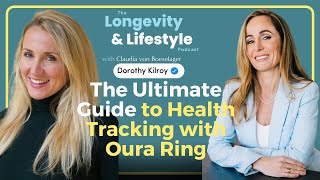
Dorothy Kilroy, Chief Commercial Officer of Oura, discusses the smart ring's 50+ biomarkers and how sleep unlocks continuous health monitoring. The ring tracks cycle prediction, pregnancy, cardiovascular age, and stress via heart rate variability, with data shareable to clinicians. Oura is expanding women's health features including high-risk pregnancy alerts and perimenopause insights.
Chapters
Welcome back, dear audience, to another episode of the Longevity and Lifestyle podcast. I'm your host, Claudia von Boeselager, here to bring you the latest insights and learnings to improve your health, your life, and happiness for longer. Thank you so much for being part of this tribe. I really appreciate you. And if you want to reach out, feel free to do so on Instagram @longevityandlifestyle. My guest today is Dorothy Kilroy, the Chief Commercial Officer of smart ring health tracker Oura. Dorothy's also a dear friend since we were teenagers in Ireland, of all things. So it's fun when the universe allows you to combine work and friends. Dorothy leads Aura's B2B organization and drives forward its partnership strategies, expanding Aura's market presence, brand awareness, scientific credibility, and sales. Dorothy's focused on creating an ecosystem of partners and doubling down on specific areas of focus, including women's and reproductive health, metabolic health and longevity. Please enjoy. Welcome to the Longevity and Lifestyle Podcast, Claudia von Boeselager. It's my dear friend. It is a pleasure to have you with us today after knowing you for so many wonderful years. So, so exciting.
Thank you. So excited to be here. And it's really full circle after knowing each other. I was thinking this morning, it's probably since we're about 17, 16 years old.
I'd even say 15, I think. 15, 16, probably. Yeah, exactly.
But that's your, your, your age now. You've reversed your age. Biological age.
It's 26, 26. So not quite. Let me, let me get down to 16. But I was speaking yesterday with GlycanAge actually, and they, they only go down to 20. Like, they only cut off at 20. So imagine if somebody comes at like a biological age of 2 or something. I mean, that'd be pretty impressive. Well, watch this space. Yeah, exactly.
Very good.
Yeah. So, so excited to have you on. And I'd love to kick off for my listeners perhaps unfamiliar with Oura. Obviously, being in the space, I assume everybody knows Oura, right? And that I'm a long-standing user of an Oura ring. But what exactly is a smart ring? And, you know, how does Oura act as a supporter in helping people with their health? I think not everyone understands that correlation.
Yeah. So Oura is a smart ring. I think many people are familiar with wearables on the wrist. Oura is the leading smart ring that, you know, sits right obviously on your finger. It's been 10 years of research and development. To make this the most accurate ring on the market. What, what it got started in was sleep, Claudia, and we can talk about why that's such an important metric, but I know you really believe in it.
I'd love to. Yeah, exactly.
But building off of that, Oura has added over 50 biomarkers to the ring, and that allows us to sense an amazing amount of data on you. And because of this particular form factor, you'll see there's no screen. The battery life is up to 7 days. You're really continuously wearing it. And because of that, you're not just looking at your biomarkers as a snapshot or a moment. You're continuously looking at them, which allows you to really get a sense of your own baseline. And off of that, we can make some really interesting observations. The key sort of metrics that an Oura member will track is their sleep, their readiness score, which is really a combination of how their body has rested and recovered. They will monitor their stress in real time as a daytime stress metric. We've a ton of women's health features that I know you're familiar with and that are very exciting and near and dear to me. And then finally, we've recently launched a whole suite of features around heart health, including VO2 max and cardiovascular age.
So we'll dig into a bunch of those as well. So why did it originally start as a sleep tracker? And why did they decide to focus on that initially?
So Oura got started in Finland. That's where the company was founded. It's an amazing place that I've been lucky to spend a little bit more time with since I've joined the company. You know, they really believe in health as a practice. It's not a fad diet. It's not just sort of like a flash in the pan of the new trend. And they really believe in sleep, right? They're very far north and they have these amazing shifts in the winter months to the summer months of the amount of daylight. And so when you are in those environments, sleeping can be challenging because it's changing all the time. The number of daylight hours goes down to, in the very north, you know, just a matter of an hour a day. And then in the summer, when I was there last year for Midsummer's Night, you know, there was literally 23 hours of daylight. It's just— wow. You've never experienced it. Yeah. And so they really believed in sleep being really important. It turns out that when you're measuring your sleep, you also are at rest, right? So you are lying, and during when you are at rest, it's a wonderful time to actually get a lot of other biometric signals. So sleep being kind of one of the foundation pillars of our health, I think our body tells us a lot of how it's recovering, how it's doing overall when we're asleep. And if you are able to pick up those signals, it's just a treasure trove of information on how your body actually is, is, is doing.
No, I, it is so fundamental. And I think as someone who's very guilty of neglecting my sleep for so many years of my life until I realized that it's so important, it's having those, you know, amount of time in bed where the body can really cleanse and clean itself, the brain can rejuvenate, etc. And so, yeah, the whole I can sleep when I'm dead philosophy in my 20s was really a bad idea, but I'm trying to make make up for it now these days. Um, yeah. And so let's look at some of the other metrics that you were tracking. So you mentioned some things like stress levels, right? So HRV— would love to touch on that. And I think for some people trying to understand, you know, how can your finger— you know, how are you tracking HRV from your, your finger essentially? But how accurate is like the HRV reading, and why is it a key metric? Maybe you can also share that as well for people to really be paying attention to.
Yeah, so HRV has been around actually in the medical community for, for quite a while. It's actually not something that the layperson like me is really familiar with. It is very hard to get an understanding of your rest and digest, to understand when your body returns to that place where it's actually relaxed. And HRV is a very good metric to do that. So it measures the variability between your heart rate. Which is a very good signal of how you're recovering. We use that metric and a lot of other metrics in an algorithm to measure your overall stress. And I know you're familiar with the ring, Claudia, and you've used it. And we're in an environment where it is very hard to understand where all the stressors are coming from in our life, right? So we can feel stressed We can also be so burnt out that we don't realize how stressed we are. And it is really empowering when you start to realize where the stresses are coming from. I'll give you an example because I think it always helps bring it to light. And I know this is near and dear to you, but the last week my mom has taken ill and has been really unwell. It is easy to think that you're not that stressed as a result of it. And then you start to see your graph and your data just after a phone call and just after learning new information and how stressed that is. Now, I'm describing an extreme situation, but it's the same response happens during work calls. Sometimes in social situations, I find myself kind of anxious and I realize that I'm actually really stressed. Now, of course, not all stress is bad. We know that. We know that with autophagy and actually small stressors on the body like exercise are really good. So it's really your body's ability to return to that. And over time we measure what is called resilience. So we take that stress score, including the HRV metric. We look at that and we measure it over a time period of 14 days. So we look at what is the overall stress load happening to your body over time. And the feature measures the member's ability to withstand the psychological stress. So your daytime stress, how you recover, your daytime recovery, and then your recovery during sleep. And that's basically how you're able to withstand that. So on average, the resilience level can be expected to change 2 to 3 times per month, although it really depends on the individual. The number can vary from no change to several changes in a month. And so that's really how we get to that metric. So it's taking something like HRV, which again is quite scientific for a lot of people, and actually translating it into something where they can visually see and understand into what's happening during the day, what's happening at night, and making sense of it.
Yeah. And I think what I really like about the way the data is prepared as well in Aura is it's about trends at the end of the day, you know, like maybe your baseline is normally like this, but actually you're trending low or you're trending up, like what's going on, what interventions have you been doing so that you can do more of that if it's positive or less of that, obviously, if it's not so positive as well. So I think what I'd also like to really help people to understand if they're not wearing wearables, obviously I have several going on, including one of your partners, Apollo Neuro, on, which is good for also reducing stress levels. I know I'm good friends with one of the, the founders, right? So Dave, I know really well. He's actually been on the podcast recently. He's great. But just for people to really understand how a wearable can support healthy habits and behavior changes? How are you seeing that? And, you know, how do you explain that to people based on sitting on the other side of the fence and seeing the data?
Yeah, you know, I think our approach to wearables is very different to what's on the market. So I sort of think about wearables in these sort of chapters that have happened. The first chapter was counting your steps, which was excellent at the time. 10,000 steps. You know, we had the likes of Fitbit really taking that to the new level. There was earlier products like Jawbone. The second chapter of wearables to me has all been about communication on your wrist, right? Pinging you about text messages, phone calls, payments. Amazing ability to be able to do a lot. But to me, the next— the chapter that we are in and that I believe Oura is leading is about health. And it is really understanding as a variety of health metrics. Many other options on the market are going to encourage you to do more. They're going to hold you to doing more. It's based on an average, and it's not based on you. We are all so unique. Our ability to adapt to stress, to illness, to where we are in our cycle— if we are someone who's experiencing cycles— that really changes. And Oura lets you define what works for you on a given day in the season of life that you're in. So that can really help with a bigger picture of your health, health, not just how you rest and recover, but just also recognizing that you're a human being and seeing what the impacts of your lifestyle actually do to that. So that's just a philosophy that we have. It goes through all our products. We definitely have rest and recovery as a core pillar of our product, more so than just measure your exercise. And I know you're someone who's an advocate of movement. We believe movement is so important and we count all movement, whether that's housework and you can tag it in the Oura app, gardening or yard work as they'll say in the US, or going to the gym and doing a strength training or a run outside. We believe all movement counts, but we also believe that you should honor where you at. So we're not pinging you to get up, do more. We're often telling you, hey, how about sleeping some more, recovering some more too, and really honoring where that individual is.
And I think that's such an important point as well, that recovery time and recovery day. And, you know, sometimes I have, you know, coaching clients as well. They're like, okay, I assume I need to now start working out 5 days a week and like start killing it and do HIIT work. And I'm like, okay, well, slow down first of all. And exactly what, like what you're saying as well, you know, understand what your baseline is and see like what can be tweaked. And actually was interesting speaking also with, with GlycanAge, with the, the CEO there that they, in their research, saw that athletes, professional athletes, tend to have a biological age older than their chronicle one because overexercising causes inflammation. And so just for people to really realize the importance of recovery, it doesn't mean you should be a couch potato and, you know, not move at all, but, you know, it's actually just incorporating movement breaks and they don't need to be these extreme strenuous ones that I used to think was necessary. Like, let's kill it for 2 hours in the gym and realize it's actually damaging to the body as well. So So I think that having those insights are helpful. And I want to talk about also like user engagement, right? So one of the keys is obviously to continue wearing the Oura Ring or a wearable in general. How do you find that? Do you see that people start with it and then they break off? Or like, how do you keep people engaged with the wearable?
Yeah, I mean, the industry at large, one of the hardest things has been to keep wear keep people wearing the products. So a lot of— and I'm sure you can relate— a lot of wearables end up in a drawer. It's really sad. It's that sort of technology drawer with old phones and old wearables. I think that we've been really lucky to roll out features continuously to keep members engaged. Sleep is the first thing that most people discover with Oura, and we call it the morning moment where they wake up, they look what happened the night before, that gives them a really good proxy of how they should go about their day. And because of that, as kind of like the morning moment, we then see at least the average member opens the app 5 times a day to check in on how they're doing, whether that's, you know, looking at what their movement is, whether that's looking at how their stress levels is, looking at their heart health, other metrics. So we've gotten really, really great at getting that right engagement for the member. And I think there's a double-edged sword in engagement. You want it to be just the right amount. It's that Goldilocks kind of moment. And we're really proud that our, our retention rate after 12 months is in the 80s. That's a metric that we measure really carefully because we want to make sure that it's actually still useful to a member years later. Um, now I've been wearing Oura for years, Claudia. I know you have too. What starts to get really interesting, and I know you're, you're very passionate about this, is that over the years you start to see changes, right? I can see the changes in my sleep, the changes in my HRV that you just asked about. My heart rate has changed over the years, and I'm, you know, I have now 5 years of data as a baseline. It's fascinating to see that. And so we've started to see that members who wear it for a longer period of time, they're not so zoomed in and the daily moments and the daily changes. They're actually zoomed out into how am I aging, right? What is my healthspan? What is my longevity? And they're starting to put those pieces together. So we get very excited about not just population data, but actually longitudinally over time as well.
Yeah, super exciting. And so as you're always moving more and more into sort of the longevity and longitudinal, as you're saying as well, you have new features, let's talk about the heart health. So again, someone might think, well, hang on a second, like, I normally have to go to my cardiologist for heart health. How is Oura helping me with heart health? So can you talk about those features and what you can really ascertain from, from them?
Yeah, we know that heart disease is the number one killer, and for most people, they find out too late. I think we all have a story that's either personal to us, a loved one or a friend, or maybe something we've been through ourselves. We wanted to become the first wearable to provide a clear and effective way to track your heart health. It's kind of almost this invisible thing to us, and it's the most important metric for many. So our advantage was the fact that we had this continuous, non-intrusive monitoring and this comprehensive understanding of you that gave us this ability to basically provide a unified space for heart health. The first feature was vascular age, and I know you'll be interested in this, Claudia. I'm so curious to hear what yours is, but vascular age helps you understand how your heart is aging versus your actual age and what you can do about it. It helps you choose the right path for you, which is your ability to make changes. We provide education and tips and insights to do that, but that is based on your arterial stiffness. And if you think about sort of the blood flowing out of your heart pumps down, the finger happens to be an amazing place to get a signal. And when you go to a hospital, they will always put a blood oximeter onto your finger for that reason, because it's the best place to get a signal. Your wrist actually struggles with that because we've got thicker skin, we've got bone, we've got hair. There's a number of things that make that a challenge. Your arterial stiffness allows you to actually see what the age of your heart is, and we measure that based on the speed of your blood flow. What we find is that changes over time.. And so as people age, and depending on the pace of their aging, the stiffness changes too. It becomes more stiff, which causes a lot of heart issues. And so we've been studying this for a long time and we were so excited to finally launch it. And the way that we display it in the app, as I mentioned, is really against your chronological age versus your biological age. And so for me, when we first launched this feature, Claudia, I was plus 7 years. And you know me, I'm this competitive person, and I thought, no way, I cannot lose against myself. But what was actually really encouraging was over a 6-week period, I was actually able to get it back down to my, my, to my age. And then I'm now -3, which, that's a big change. Huge.
And what did you do?
Yeah, yeah. For me, again, it's going to be so individual. For me, it was And so I was one of those people, Claudia, that I believed if I got my 30 minutes in the gym or my 30 minutes of exercise, tick, sort of I've done my exercise for the day. Yeah. And actually, that wasn't the best for me. For me, actually, I'm one of those people, I work too many hours. I'm a corporate athlete, I guess you'll say. I live in California, work in the tech scene, and we think we have to work every hour under the sun. And it's not healthy. So I introduced more movement and walk breaks during my day, taking walking meetings. I increased my cardio, but not, um, not longer sessions, actually just more intense sessions. So I started to do some sprint training, which actually is very efficient. You can do it in 10 minutes. And so I'd often do it between meetings and I'd— no way— okay, all red-faced and sweaty, but it's very efficient to do just 10 minutes. And so those were the habits that I changed in my movement. And then I prioritized sleep in a way that I had never had before. And I just said, you know, I went kind of on a sleep diet for 3 months, I guess I'll call it. And I was able to see instantly the changes in, in my cardiovascular age. So anyway, that's amazing. What yours is?
Yeah, no, but I also want to ask you for the sleep as well, because I think for people listening, they're always like, okay, it sounds great, like, but how does one do it? So what was your sleep diet? Because this is really important aspect as well. And, you know, obviously 3 months dedicated to it. So what did you change and how did you, how were you able to shift? Because I know that for a lot of people, they struggle where they are today and where they want to be. So can you share your story?
Yes. So for me, and we can, we measure what's called our circadian rhythm and Aura, we give you a chronotype on that. It's fascinating. And I am not a very early morning person. I'm a late morning person. And I always knew this about me. I do an incredible amount of work in the evenings. I kind of come alive. So my wind down takes a long time. And I wasn't honoring that. And so I started to push back my wind down routine earlier. And so I went, I basically started an hour earlier so that when I was getting to bed, I was getting an hour before midnight that I wasn't getting. And many people have found getting time earlier to sleep will get you a deeper sleep. That's certainly my case. Again, it's very individual. And also cutting out screens before in that wind-down period. So taking a bath and drinking tea in my case really helps. And I've also found success with supplementing glycine. That was a game changer for me. And so there was, you know, it was a trial and error of experimentation. But honoring that wind-down time, making it consistent, those were key. And then the last one, which is the best hack of all in my mind, is, um, morning light. I have found that resetting my circadian rhythm, and it can be as quick as 2 minutes, um, growing up in Ireland, where Claudia, I know you spent a lot of time too, um, we didn't have much light. It was often gray and overcloud, and I didn't understand that there still an enormous amount of value going outside and even looking at the clouds and to get that light and to set your circadian rhythm. So a number of different sort of hacks and different tips that sort of worked for me.
No, but beautiful. And I think one thing people, they focus on the evening, but they forget about the morning. And actually it's how you start your morning as well. And that daylight exposure, even for a few minutes. And there's cool devices nowadays like these GoIO, you put them on and I even bought one of these SAD lamps. I think the name is so funny for seasonal affective disorder because obviously in London we have great times here too, and I'm really affected by it. Like, I can actually physically feel when the sun is shining before I wake up. It's just such a big difference. So super, super helpful. So I'd love to move on to women's health and an area that you are particularly passionate about and driving forward also at Oura. So can you tell us about this beautiful area that you are uncovering and pushing forward? What has excited you about this the most?
Yeah, so I think we've all felt this, acknowledged the lack of research and understanding of people who have cycles, women who have not had research done across an enormous amount of different areas of health. It just feels inequitable to me. And I think we've all suffered as a result, and we've seen our mothers and our aunts and women before us have to struggle through this. And I, I just feel so passionate that that is not okay.
This episode is brought to you by Sunlighten Saunas. As part of living your longest, healthiest life, discover the power of Sunlighten infrared saunas, where heat and light combine to support nearly every system in your body. Infrared sauna therapy is a natural whole-body longevity hack that eases the effects of aging with every use. Enjoy improved cardiovascular health, better sleep, reduced inflammation, and a stronger immune system, all from the comfort of your home. For 25 years, Sunlighten has led the way in light science. Their patented heaters deliver the best infrared quality on the market. The M-Pulse Smart Sauna stands out with its advanced technology and customizable settings, offering the most effective infrared experience available. Ready to transform your wellness journey? Visit sunlighten.com and mention code Claudia von Boeselager when you fill out the Get Pricing form to save up to $600. That's sunlighten.com and mention code Claudia on the get pricing form to save up to $600. This episode is brought to you by OneSkin. If you're like me, you know the power of feeling confident in your skin, and that's why I'm so excited to share today's sponsor, OneSkin. Their products make it simple to keep your skin looking and feeling healthy, strong, and vibrant without the need for complicated routines. It's all about science-backed effective skincare. OneSkin's secret is their proprietary OS1 peptide, the first ingredient scientifically proven to target and reduce aging cells that cause lines and wrinkles and thinning skin. I've been using their products for a while now, and the difference is amazing. My skin feels refreshed, hydrated, and looks younger. But don't just take my word for it. OneSkin has over 4,000 5-star reviews. Now is the perfect time to try it for yourself. For a limited time, get 15% off your on your first OneSkin purchase using the code Claudia15, C-L-A-U-D-I-A-15, when you check out at oneskin.co. That's O-N-E-S-K-I-N dot C-O. Start your journey to healthier, younger skin today. This episode is brought to you by Apollo Neuro. Since I began wearing my Apollo in November, I've hardly taken it off.
Literally, I'm obsessed.
Apollo's wearable technology uses soothing vibrations to naturally regulate your body's stress responses and improve sleep quality, crucial for long-term health and longevity. You can wear the device on your wrist, ankle, or clip to your chest, and the paired app has different vibration settings for waking you up in the morning with more energy, to focus time, calm, and helping you wind down in the evening. It also has innovative Stay Asleep feature, which turns on if you begin stirring during the night, allowing you to sleep soundly throughout the night. Users report up to 19% more deep sleep, a 40% reduction in stress, and an 11% improvement in heart rate variability. Apollo tailors also for women, helping to manage stress associated with hormonal fluctuations.
So if you're looking for a way to enhance enhance your well-being and support lifelong health, you'll love Apollo. It's not just a wearable, it's a lifestyle enhancer.
Check out Apollo Neuro today and save an automatic 15% off an Apollo wearable by visiting apolloneuro.com/claudia. That's A-P-O-L-L-O-N-E-U-R-O.com/claudia. C-L-A-U-D-I-A or use code Claudia at checkout.
I think actually in many cultures, I think one thing that I've seen consistent is women are almost the chief medical officer of the family. They are the gatekeeper of everybody's health. And there's many studies shown that when you improve women's health, you improve everybody's health. I can certainly feel that in my family. I've been on my own sort of fertility journey, pregnancy journey, postpartum journey. And when I am not right, I feel that it affects the entire family. So I'm particularly passionate about this area because we still, even with our best intentions, still have very little research and understanding. You know, I think Stacy Sims says this really well. We are not small men and we cannot take the research that has been done on men and just apply it to women. We are very unique. And in fact, I think our biology and our bodies are so amazing to study because they're changing all the time. And so I'm particularly passionate about this. There's a number of features that we've prioritized across Oura. We really started to prioritize reproductive health. So our first feature was a period prediction. So we talked earlier about the different biometrics that we track. Temperature is one of those. And what's really interesting is your baseline temperature and the trends of changes to it are an incredible proxy to how your hormones are changing. So we can capture when your period is going to happen with an amazing degree of accuracy. So not just you filling in a calendar method and then checking to see if it's a regular cycle or not, actually using the biological signals from your body to predict that. As it turns out, more than 40% of women have irregular cycles for many reasons. And so just using a calendar method has a lot of inaccuracy. So we've started to use your biometrics to measure that. So we take an algorithm that uses a combination of your body temperature, your heart rate, and other signals to look at that. We went on from there to actually start to study pregnancy. There's so many high-risk pregnancies. I know you've, you've experienced, you know, a lot in this too, Claudia, and I have as well, where we've I faced really high-risk pregnancies. I had twins and I was really lucky to have amazing healthcare that was scanning me every week. But I really did feel lost during that period of time, waiting for the scan, Googling what the results meant, trying to figure out what was happening with my body. I ended up getting preeclampsia and then HELLP syndrome, and it was almost too late for me. And I was so angry that I didn't have that information or knowledge, frankly. And so we're spending an enormous amount of energies on features that will help a woman detect what is happening during her pregnancy and provide those insights back to her. We're working with a lot of different members of the medical community, fertility clinics, medical advisory experts that sit on our board to help us make sense of the science and then how we can actually bring that to a member. Thoughtfully and, you know, make sure that it is accurate. And then lastly, we work very closely with a company called Natural Cycles, and I know they're available in the UK as well. Natural Cycles has developed the first FDA non-hormonal birth control. I think many women have experienced the negative side effects of hormonal birth control. Personally, I was on it for 15 years. And it was not— it didn't agree with me for many things. I had an enormous amount of stress with it, and there's many people who've experienced, you know, challenges coming off of it. And it's an incredible empowering moment when you can actually understand when you are ovulating yourself and then how you can then use your own methods of contraception during that period of time, during that window of time. So the way that it works is Oura's data is sent to Natural Cycles with consent from the user, and then Natural Cycles makes a prediction if you are fertile or not, and then advises you on what to do during that period of time. It means that you don't have to take any drugs during that time, and you can really just honor your own body. We're finding younger women especially loving this. Our fastest growing group is women in their 20s, and that makes me so excited because I believe that they are— they're not marred in kind of what they've been only given. They have, you know, full control and empowerment to choose the right sort of contraception for them.
So this is such an exciting area, and I've had recently a few podcast interviews. I want to share a few details too. So number one, um, how women have been neglected affected. There was a statistic I heard from this interview, which I was so shocked about, and that I want to share with you. But just from 1977, the FDA actually banned women of childbearing age for clinical research. And the gold standard had been set that even then, when it was reversed in 1992, it was just continued because women are complex, right? We have 28, plus or minus, right, day cycles. Men have a 24-hour testosterone cycle, so much more easier to do research on men, right? So this shocking statistic though was that 80%, 8-0, of adverse pharmaceutical effects, right? So outcomes are in women. So 80% of when people have an adverse reaction to medication are in women. Why? Because they're not tested in women. I feel like this should be written on every single medication that is known, that doctors are just prescribing things and saying, oh yeah, this has been tested, it's clinically approved. In men and just being much, much more cautious at monitoring that. So I think that that's shocking. The second thing that you were saying as well regarding pregnancy, I think that this is really fascinating. I have several friends who had preeclampsia and other things. How do you foresee, because if I understood correctly, it hasn't come to market yet. How do you foresee the ability for Aura to communicate and explain that there might be a preeclampsia or other complications happening in pregnancy?
I'm curious. I think part of the studies on that are, are still underway. We're very, we're very confident that we're going to be able to give women more in that space over time. There's a number of biometrics that will go into providing that information. So we're still, still in the works on that particular one, but the, the feature that we have live right now actually gives a gestational age of where the baby is. So you can understand where that is. There's a lot of discussion on what we've been using as gestational age for calculating. And for a lot of women, they're really blind to when that is. So it's really about getting to a point, our vision at least, is that we would become a type of monitor on your finger, and that would actually be a good proxy for what you will get in an ultrasound. Now, I don't want to say that we're going to replace that, not at all, but it gives you this continuous monitoring of your gestational age of your baby, and then what are the effects that are happening on your health during that time too. We see very significant changes trimester by trimester on heart rate, on HRV, on SpO2, and we're beginning to sort of put the pieces of those together to be able to give a better sense of high-risk pregnancies too.
So exciting. And what about postnatal? So if anyone has had a child, they know that life completely changes once this beautiful bundle of joy is there and the nights can be destroyed and women's health and mother's health particularly, it can be a really difficult time for a lot of women. How do you foresee Oura being able to support women better in these phases as well?
Yes, so the first thing, we have a lot of postpartum moms who discover Oura when their sleep is really disrupted. And I think so many people can relate to this because it is just a practicality and something that many just have to go through. What we have found for those kind of irregular sleepers is what we call them, is that they are able to start to see how the load changes over time. So maybe you can survive with 1 or 2 nights of really disrupted sleep, but it's very individual. And then you get to a point where you really are not surviving anymore, and we believe that is really correlated to the mental load that just takes over from them. We measure, as you know, a lot around stress and resilience that we talked about earlier. And we see that this dramatically changes for women in that postpartum period. So the first thing to do is to empower those new moms in that period of time. And frankly, both mom and dad on just where they're at, what their baseline is. To show them that information themselves. It's very different than just reading an article. It's very different than just getting advice on what the general, uh, population experiences. So you start to see your own information. You can start to track when you really are on a downward spiral. I think we live in a society where a lot of people facing that postpartum period are not accustomed to asking for help. And I think if we had better early warning signals of, hey, I'm really struggling, this is not in my head, I have the data that shows it, and I really need help. I think we have to get to that point to be able to action on it. But I certainly can remember that feeling of wondering, was I tough enough? Wondering, you know, I better not complain because Everybody goes through this. And there's just periods where you really do reach a new low of a lack of sleep and the ability to just to get through it. And so I'm hoping that this data over time will give more people going through that phase the chance to ask for help and be empowered to understand what's happening.
I'm really excited about that too. One, because with my firstborn also really struggled, you know, she was feeding, trying to feed every like 1.5 hours, like just sleep was completely destroyed. And this is coming from me not sleeping very much. I'm like, oh, I could do this. That what I forgot was that when I don't sleep that much, I at least sleep several hours at a time. So you have some sort of deep sleep. And when you don't even have that anymore, I mean, you become bananas pretty much. So that was the first 3 months. And then with the second time around as well, and I think this is also with hormones like postnatal depression, different things like this really can, can kick in, right? And I think women typically are not very good at asking for help. And everyone's like, oh, you know, oh, it's normal. Oh, it's a struggle. I went through that, you know, all this kind of sweeping things under the table. And that's where I'm really excited what you're saying as well, is to have that data to be like, actually, I've fallen off a cliff here. Like, my data is telling me that I really, really need some help. And can somebody help me? I guess then the challenge is who do you show the data to? You know, how does the medical profession— and I want to dig into this part as well— is that how, like, how do we help the medical profession better understand the science behind wearable data? And so what are you seeing in the work that you guys are doing at Oura for this?
Yeah, it's such an important point, Claudia, because what we want to make sure we do is we're not replacing the medical community. You really want to work in tandem with them. We've started to work with a number of different concierge medicine practices that use DORA data in their practice of care, whether that's proactive signals of what's happening or whether that's in-the-moment care, just like that postpartum period that you suggested. We have many ways that we provide that data. The first is in the Oura app, there's the ability to download your health reports, everything from your sleep report to your cycle report if you're a woman. You can bring that data instead of sort of showing your screen in the doctor's office. You can bring that data, you can present it to your doctor, and you can go discuss what's happening over time. For many doctors, and if you are lucky, you get maybe 10 to 20 minutes once a year.. And in that 10 to 20 minutes, they are supposed to take a blood pressure monitor, listen to your heart rate, get you on a scales, maybe potentially if you're lucky, get some blood work done to be able to look at your biomarkers. But it is just a snapshot in time. And there's this whole other, you know, 364 days of the year that they do not see your data. And so we believe that by giving those doctors the ability to see your data on a continuous basis, they can look for patterns in it. I mentioned the reports that you can bring in yourself, which is a great start. But really where it comes to life is we have an API where we actually send data to the doctor when they have the way to receive it, and they can then start to look at that data before you even get to the clinic. And even in the best cases we've seen is they are already calling you before you've even made an appointment to suggest that you come in to discuss some aspect that they've picked up from your Oura Ring. We're particularly excited about this in areas of sleep disruption, insomnia, sleep apnea, also in women's health and fertility. And then, you know, lastly, we look at heart health as still an emerging area for Oura. I mentioned the arterial stiffness that we're measuring. We're also measuring VO2 max. Which is an incredible predictor of your heart health. And to date, it's been kind of almost limited to elite athletes. But actually, I think that'll be going forward, you know, a really proactive measure for many doctors to use in their clinics themselves. So there's a number of different ways we're doing that.
I also think, I mean, this is super exciting. As you know, I have the other company, Athena Healthspan. I'm also like, how do you interpret the wearables? Data to help people on their day-to-day journeys and also for the medical community. So as you know as well, and I've shared with my audience a bit as well, but with the VO2 max out of interest, so it's a key indicator of longevity, VO2 max, and traditionally it's done in a clinic or lab. It's not the most comfortable thing to do. People like, I don't want to have to do it. So how does a VO2 max score from the Oura Ring compared to something that's done in clinic? Are you looking more at the trend or is it an accurate measure of VO2 max?
We're looking at the, the trend of it. And we do ask the member to take a walking test, a 6-minute brisk walking test, to actually calculate that. And it approximates how fit you are and predicts what may mean for later in life for you. So what we take is this guided test, and, and that kind of gives you then a result. I think for many, again, it's been sort of limited to this elite athlete population. A lot of elite athletes use this daily in their practice, but it's been very invasive of how they've had to calculate it, and it's not been continuous. So to your point, I think the trend is actually what's really interesting. I don't know about you, Claudia, but I stopped using a scales because I felt that the scales was this sort of like almost like this '80s trend of this was the monitor of your health. And it didn't serve me very well. And I think what's much more interesting is some of these more important longevity metrics. So if you decide that you want to improve your fitness and go on a sort of a spree of more movement in your life, and how do you know it's working, right? I don't think the time you do it, the minutes you spend doing it are the best metric. I don't also think that the scales is the best metric of success of that. We know that for many many, many reasons on like overall musculoskeletal health. But I think actually looking at your cardio capacity and your ability to improve that is to me a much better metric of is that sort of exercise routine that you've taken up actually working.
Yeah. And that's why I think precision medicine and having your personalized wearable data is so essential because we are all different. I mean, they've, you know, there's enough studies on twins and like you would assume and identical twins, like even the gut microbiome is is completely different sometimes. And so I think it's really empowering people to understand and become this sort of CEO of their health or the leader of their own health. And then to understand what it, what the implication, like what are the lifestyle interventions that need to be adjusted or changed to support it. And maybe for people curious listening, it's like, you know, okay, well, my HRV score is such, but what, how do I know what to do with it? Excuse me. Can you share how Oura also supports in people better understanding themselves? So it's not just presenting presenting numbers that they may or may not understand. But for people unfamiliar with Oura, maybe you could explain a bit how you do that.
Yeah, so we provide a set of daily scores that allows the member to look at what those trends are over time. So, you know, you talked about sleep and HRV. Maybe let's dig into sort of HRV. There's definitely a strong correlation between HRV and stress. And so what we see is lower HRV may signal stress, both mental and physical stress, and higher Higher HRV can signal that your body is well-rested and recovered. So every day we provide an actual readiness score that includes your HRV that tells you how you are recovering and what is happening to you. We then suggest different insights of what may impact that. So some of the biggest changes that we see on HRV are actually looking at your, your actually daily lifestyle.. So for some, it is eating late at night is not great on their HRV. Many, you know, having too much stress, psychological stress or physical stress is not great on their HRV. And then for others, it's what they're eating. You know, it's very individual. And so having that baseline, we ask members a set of questions and give them insights into maybe what's happening. So if we see they went to bed later, we will include that in their insight. Many members also tag things that they're doing in their lifestyle. So for example, alcohol is a big tag that we see, and it's actually one of the biggest behavior changes that we see with members who use an Oura Ring. We've sort of been told a myth that a little bit of alcohol is not bad for you, um, and it's very individual. And what we have seen in our data at least is that even one drink definitely impacts people's overall biometrics. Now, some people recover better from others on the alcohol, but it's consistent that it is disruption. And so for many, when they start to see the impact of that, they really think hard about whether they're going to have that drink or not. And so there's a number of different tags that members can tag on their behaviors, whether it's medication whether it's other things going on in their life. Um, for me, I just put a tag in last night of taking a sauna. So sometimes it's not all bad tags, it's actually proactive good tags. And then you can start to see how they correlate, um, to your overall, uh, scores, and in this case, your HRV.
Yeah, beautiful. So, so exciting. Shifting to the future, Dar, like, what are some of the things you're excited about? What what's coming up? And obviously there's exponential developments in terms of AI and insights and more and more awareness also about what is possible in precision medicine and health. So can you share some things that, that you're seeing and excited about?
Yeah, I think we continue to be excited about heart health that I talked about. We think that there's just so much more depth that we can go into there. We believe that wearables are going to get more and more accurate. We're seeing that with our own data. We measure against gold standards and medical-grade accuracy. That's how we hold ourselves to. We don't measure ourselves against what other wearables are doing, and we're really proud of that accuracy. Um, we continue to be excited about women's health that I talked about. A particular area for me that I'm interested in is menopause. A lot of women go through this phase of life really in the dark of understanding and trying to— excuse me— trying to normalize the struggles that they have. We've seen a lot of data in our tagging system of women in later years of the anxiety, the pain, the bloating, the overall mental stress that they're feeling just really increase. And we are— sleep disruption is a huge one too. So we're studying that. We're very excited to bring information on that as we learn it to our members.
And go ahead. Yeah, I want to ask about that because it is such an important, fascinating area. I've had people like Professor Jennifer Garrison on who's around the corner from me there. She's great. Looking to, you know, how do we slow down ovarian aging? Because the ovaries, depending on the research, age 2.5 to 5 times faster than any other organ in the female body. Why and can we slow that down so that it can be changed as well, just for women's health in general, because it can completely fall off a cliff also as well. So I think that that would be really interesting to understand also perimenopause, because that can kick in from the age of like 30, 35 already, depending on the woman. How do you foresee Aura being able to support women in those journeys? You think it's the body temperature? I'd also be curious to hear, like, you know, it would be amazing if ORCAN started understanding hormones better, like what's happening.
Yeah, that's some science that we have underway actually this summer. We're continuing our efforts there. We're seeing a lot of different changes because I mentioned earlier population data over time. We now have over 2 million members and we have years of data on some of them. I'm included in that, in that group. Group. And so we're starting to see that aging over time and what, what the results of that are. Body temperature is a great example, Claudia, where we see a lot more fluctuation in that temperature, which is why it can be so challenging to sleep. It can be so challenging to regulate that temperature and can feel uncomfortable. It impacts your stress and a whole host of other things. We see changes in heart rate, we see changes in SpO2, We're seeing changes across every biometric, frankly, that is really interesting to study. For me, the, the, um, this phase of life for women is, is inevitable. But what is not inevitable is how they need to go into it and how they need to struggle through it. That is not inevitable. And we have almost set women up to expect that. Well, this is just going to be tough. And it's in your head and all the data we see is not enough. Tell me that. And that's what I'm excited about, is to actually show that data across this population and to actually bring that to women. We hope to invite more women into our studies on this too, to allow them to be part of the studies as we learn more. We're looking for all those changes in hormones too throughout your biometrics as a proxy of that. And we hope to be able to give more information back to women so that they can then be empowered to go through this phase of life. I don't think that there is one pill or one solution to this phase. I think that's why it is so complicated. And so I believe that there'll be lots of new solutions that we will discover. But really, it's going to come back to is the woman empowered to actually use all of the tools and solutions available, but really understand what's happening in her body. Yeah.
And I think that that's part of the confusing part, especially perimenopause, is that sometimes you're fine, sometimes you're not. Is it stress? Is it, you know, what is it exactly? Um, and for women to better understand themselves and realize that they're not going mad, which some women think that they are, um, but there is an underlying health, um, there too. And I think there's more and more awareness, more and more tools available, um, from, you know, HRT, body-identical HRT, which thankfully recently a meta-study came out to confirm that that actually it is beneficial in most cases, etc. And the interview I had recently, Dr. Mansour Mohamed is a geneticist— sorry, I'm trying to come up with a proper word— a genetics expert focused on women's health and how your individual genes are expressed, how you break down different hormones, um, in order to better customize hormone replacement therapy or hormones in general to support women on this, um, these journeys. So there's all this exciting things happening across the space in terms of being able to support women better, to be at their best, to not have to go through this huge suffering essentially as well.
Yeah, for sure. And I think you're so passionate about this area, about really getting it personalized and be precision, right? We have, we have definitely understood that sort of general applications have not served everybody well. So can we get it to a point that it's really individualized for where that person is in their journey.
Yeah, exactly. And also I think what should be interesting with the aura to see how certain interventions are helping, right? So someone is maybe taking estrogen replacement therapy. Is it actually helping? Is it not? Is the dose high and too high? Is it too low, etc.? So helping to understand dosage also for things for women in the menopausal years. So yeah, really, really exciting things to come there for my listeners interested in understanding, you know, about more about Oura and the different biometrics that you track, etc., where would you point them to? Where can they find out more?
Yeah, they have— you could come to ouraring.com. We have a great blog that provides information. We recently launched in the UK. So for your UK listeners, it's been so exciting for me to come full circle and bring Oura to the UK market. And it's available in John Lewis for people really want to go in and try it on and see what the fit is. Pick their size, their color preference, that sort of thing. And so yeah, more expansion to come in, in all of our markets.
But that's a great place to start.
Amazing.
And where can people follow what you're up to? Where would you like to send them? Social media. And we can link everything in the social— in the show notes.
So yeah, I'm going through, you know, I know diet is a negative word, but I'm going through my own social media diet at the moment. It's my summer sort of habit change. Good idea. But I have still persisted on LinkedIn, so that's probably the best place to find me personally. Yeah. And look forward to connecting with anyone there. We have, Claudia, we have over 800 partners that we work with. I know we're working with you and Athena Health as well. And so, you know, we continue to want to expand that ecosystem. Particularly with anyone interested in sort of the medical profession side of it as well.
Beautiful.
Yeah.
Do you have any final ask or recommendation or parting thoughts or message for my audience today?
And my final thought would be there's an enormous amount of freedom in being empowered with your own health information, and you really need to take that into your own hands. I think that for many years your health information has been kind of locked up in files or doctors' offices, disparate across different places and hard to make sense of. I think that we have reached a point where people, especially post-COVID, want to have their own information and be empowered with it. And I think there are now great tools to let people do that. I'm so excited for how this is going to change over the next 10 years. I think it'll be the biggest change change for the positive in our life.
And I'm just really hopeful that tools like Aura will be part of that story. Really, really exciting. Thank you so much, Steph, for coming on today. Thank you, everybody, for listening and tuning in. And yeah, we'll have to do a round 2 when more and more features start coming out and you can share about them as well.
Thank you so much. Sounds great.
Thanks, Claudia von Boeselager.
Beautiful. Thank you.
More from Claudia









Can Psilocybin Slow Aging? The Study on Telomeres, Inflammation & Survival with Dr. Louise Hecker

