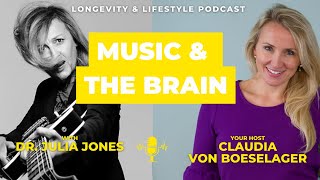
In this interview, host Claudia von Boeselager asks Dr. Julia Jones about why music from childhood remains vivid even in people with Alzheimer’s or dementia. Dr. Jones explains that music is processed differently from language, noting that patients often retain singing ability despite losing speech. She describes music memories as multisensory and exceptionally deep, shaped by repeated, immersive listening habits of earlier generations (e.g., buying and repeatedly playing vinyl records). Hormonal and emotional experiences during adolescence further cement these memories, turning songs into “time capsules.” When such music is played for individuals with severe memory loss, they can often recall lyrics, purchase locations, dance venues, or live concert experiences. Dr. Jones contrasts this with modern listening habits—streaming platforms offering vast catalogs and shallow, less repetitive engagement—raising the question of whether future generations will retain the same therapeutic power of music. The interview concludes with Claudia’s brief call‑to‑action inviting listeners to sign up for a longevity‑and‑lifestyle email newsletter.
And I thought that what you just said was really interesting, that music from childhood is one of the last things to be retained, even in Alzheimer's dementia patients. What is actually happening there in the brain and what is the positive influence that it has?
There's tons of research going on around this and it's still pretty much a mystery. But there, there are— music isn't— music is processed differently to language than just speaking. So you often find that people have lost their their speech ability, but they still have a singing ability. And you see this a lot with people who have stammers and things like that, but they can sing perfectly. And so there are different mechanisms at play when it comes to music. But when it comes to music memory, it gets even more interesting because the brain isn't just storing the music. The brain is doing a multisensory storage. So that moment, you know, everything that's involved in that memory is stored. But for some reason, these music memories are very deep. And when I was doing my PhD research and I interviewed hundreds and hundreds and hundreds and hundreds of people and just observed so many different people who are now in their 50s, 60s, 70s, how they were interacting with music from their youth, those with dementia and without. And it's, it was, I also work closely with the music industry and the difference in listening. If you think about how we listened, when back in the '50s, '60s, '70s, '80s, because of the way the music industry had evolved, you bought a record, you loved it, you listened to it over and over and over and over and over. We would wear those records out, right? It was repeat listening, a ridiculous level of repetition. And so I definitely think that there is a link between that because those— the memories of those songs are so strong. And also during school years where there's a lot of hormones going and your first boyfriend or girlfriend, your first kiss, your first— that there are so— there's so much exciting kind of hormone-driven stuff going on during that time as well. But these songs have become like a time capsule. And when we're playing songs to people who can't recognize their family members, that they don't have much normality left in terms of how their memory is operating generally. But if you play a song from their youth, they'll be able to sing the words. In some cases, they'll be able to say where they bought the record, where they used to dance to the songs, or their memories of when they saw that band live or at a gig. It's astonishing how deep those are. And I'm quite interested to see how— we don't really listen to music like that now. We've got a million zillion songs on Spotify or whatever platform you use to listen to music, it's— there's just so much music and we tend to listen in a much shallower way across a lot of songs. And that was not how we— when people who are now in their 50s, 60s, 70s, 80s, the music listening experience when they were young was very different to the way it is now. So I don't know whether music will still be as powerful a tool in 40 years' time, for the people who are now coming through their youth, listening in a different way, you know.
Hi everyone, this is Claudia again. Before you take off, would you like to get a short email from me with some short but sweet fun tips, tricks, and updates on all things longevity and lifestyle? This could be cool products that I've discovered, interesting posts or articles I've read, and other fun and helpful things around longevity and lifestyle I've found for you. It's a very short piece of inspiration for you a few times a month. So if you want to receive it, check it out by going to longevity-and-lifestyle.com. That's longevity-and-lifestyle.com. And leave your email to sign up for the next one.