The Future Of Longevity & Health Optimization with Claudia von Boeselager
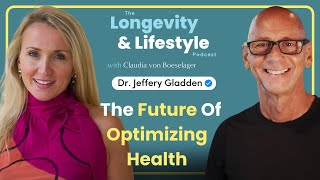
In this episode of the Gladden Longevity Podcast, host Dr. Jeffrey Gladden interviews longevity and peak‑performance coach Claudia von Boeselager. The conversation traces Claudia’s journey from a science‑focused upbringing and a career in investment banking to becoming a health‑optimization coach and podcast host. They explore how curiosity, inner‑child work, and spiritual awakening shape her approach to longevity. Claudia describes the multi‑dimensional “life‑energy” framework that includes mindset, emotional health, relationships, worthiness, safety, and spiritual connection, and how these underpin physical health. The discussion moves into concrete bio‑hacking tools—glycan age, DNA‑methylation clocks, continuous glucose monitors, wearables, and clinical interventions such as plasmapheresis, stem‑cell therapies, and peptide protocols. Claudia emphasizes the need for comprehensive diagnostics, baseline testing, and the integration of data across specialties, which she is addressing by building an AI‑driven platform, Athena Healthspan, to democratize precision‑medicine and provide end‑to‑end coaching. Practical advice on foundational habits (sleep, nutrition, stress management), the importance of decluttering life, and the role of inner‑child work in emotional safety are interwoven throughout. The interview concludes with reflections on scaling her coaching practice, private client work, and the vision of making longevity accessible to all.
Chapters
Are you ready to boost your longevity and unlock peak performance? Welcome to the Longevity and Lifestyle Podcast. I'm your host, Claudia von Boeselager, longevity and peak performance coach. I have something truly special for you today. I had the pleasure of being interviewed by Dr. Jeffrey Gladden on the Gladden Longevity Podcast. Together, we discussed some of my favorite topics around longevity and optimizing health, which I wanted to share with you today. So please enjoy.
Welcome everybody to this edition of the Gladden Longevity Podcast. I'm your host, Dr. Jeffrey Gladden, and today Steve Ryder is playing hooky. I don't know where he is, but apparently he's on the road someplace. Um, we'll have to catch up with him when he gets back. But I'm here today with a really interesting guest. Um, Claudia von Boeselager. I hope I didn't mispronounce it.
Did a great job. It's a hard name. Okay.
It's good. Yeah. It kinda rolls off the tongue.
Right?
Mm-hmm. And Claudia's been involved with some interesting aspects of life, if you will. Everything from being an entrepreneur to being a life coach, a health coach, performance optimization trainer, And so we wanted to talk with her to kind of get her insights on several different topics. So welcome to the show.
Thank you so much for having me. Such a pleasure to be here today.
Yeah, absolutely. So tell us a little bit about how this all started. When you were 10 years old, were you seeing that this is what you wanted to do or what? How'd that start off?
That's a really good question. And I joke sometimes to say I've had many lifetimes in this lifetime alone. My mother has a medical background and I was convinced I was going to go into medicine. I studied everything and my chemistry and my biology and organic chemistry and all these very fun things that we know is out there. And then when I was sitting down to do my college application and I was there and I thought, you know, do I really want to be in a hospital with like neon lights all day inside? And I was kind of like, hmm. And for whatever reason, it occurred to me, I'm like, maybe I should do business and languages first. So that ended up being my trajectory at the beginning and went on and had the master's degree in business. And back in the day, you went into either investment banking or management consulting. So I ended up in investment banking. So completely different space, but always was very entrepreneurial. So moved into, to, uh, let me just interrupt you for a second.
There's a lot to be learned in the investment banking world. I mean, you learn a lot about other businesses, right? You learn a lot about how to value businesses, about correct positions and structuring transactions.
Yeah. Yeah. Yeah. Um, politics as well, depends on different countries. You do learn a lot and you work a lot of hours so you can consume a lot of information. In a few short years that would normally take a little bit longer. But what doesn't kill you makes you stronger, as my grandfather used to say.
Right.
And so from the entrepreneurial space and then when I was in that space, I guess the idea of sort of health optimization and looking at things kind of biohacking trends started coming up. And I found it, you know, amazing that you could upgrade yourself, right? And like, how do you show up as the best person version of yourself every day? And that obviously is multifaceted, obviously from a health and wellness point of view, but also mindset and different aspects to that. And so, you know, well over 10 years now, I was very interested in the space, also just to be the best person I could for myself, my teams, etc., and digging into that. And so I think that's where the journey really began. And it really propelled—
let me interrupt you for a second there. So what, what kind of drove you to that sense of optimization? Was that based on you know, you played sports in school or you found— you met people in the investment banking community or what kind of drove you to that kind of conceptualization? A lot of people don't have that conceptualization of really optimizing their life, optimal living, that sort of thing.
I mean, I'm a bit of an out-of-the-box thinker my whole life anyway. And I'd say I'm an eternal student, hopefully till the day I die. So, anything kind of new that makes sense and I'm fascinated. Uh, yourself included. Yeah. And I just love taking deep dives into stuff. And because I think in my always interest in medicine as well, um, you know, since I was about 5 years old, I couldn't go to a doctor's appointment without my long list of questions and having researched things in advance. My mother was very on top of things. So I, I think that curiosity just continued. And, um, I think also, you know, the fact that it was possible that there— this was a door to— you could be a better version of you, like Who doesn't want that, right? I think, you know, most people, I think, essentially do, right? And so I guess it's, you know, being curious. I think that is also a gift in itself. It can lead you down a few rabbit holes, but as a trait to have to just always be like, okay, interesting. Like, this is new. This is different. Let me understand it more.
Yeah. No, I get that. You know, in our world, we basically kind of tackle the whole optimization strategy, if you will, through 4 different circles. And I've added circles 5 and 6. And the first circle is a life energy circle, which is basically focused on mindset. Are you married to your questions? Are you married to your answers? Right? That continual curiosity. Then optimizing mental health and feeling love, feeling unconditional love for yourself. And then the idea of having great relationships, understanding what a great relationship is, what it takes to cultivate that. Right? Feeling joy and then feeling worthy. A lot of people don't feel worthy. Getting over that hurdle, feeling, you know, being drawn to be wise is another one. And then feeling safe, the ability to give yourself a sense of safety because nothing external to us can ever make us feel safe. And then the last two are really being spiritually connected. Everybody that's spiritually connected on some level lives longer, does better, recovers better. And then I frame it as having this kind of energetic resonance with the universe, this greater sense of purpose of why we're here and what we're doing. Right? And so that sort of becomes the first circle. And it's really the one that everything else falls inside, which is then longevity, you know, going out to drivers of aging, all the health things, all the performance things. So it sounds like— Yeah. It sounds like in your journey, you've kind of addressed that life energy circle as being a piece of it. Has there been sort of a spiritual component to this or a meditative component to this? Or do you want to talk about that a little bit?
Sure, I'd love to. It's actually a really, really favorite topic of mine at the moment. And I think we're all on our journeys and awakening journeys as well. So thank you for bringing that up. And I love what you just depicted there as well. Completely resonates. And I think, you know, I believe that children are all born, you know, very spiritual, very connected, very wise, very in the present moment. And we unlearn that in the educational system, which is based on 200-year-old system of industrial revolution. And just we completely destroy all that creativity. And I guess as Joseph Campbell really portrays in, in the hero's journey, it's a journey of going on a mission and waking up. And obviously it can be very painful along the way, right? We all have our stories, we all have the situations we go through. And as part of that waking up process is also realizing that there are gifts in those challenges as well. And looking for the gold there too and just realizing that, you know, thanks to those things actually happening, what we maybe perceive as being bad, we've actually grown as a person. We've gotten so many other qualities and aspects of life too. So that has also been a process. And looking back, obviously, I spent many years kind of not seeing that and thinking I had to have external validation and I was never good enough and all the stories we tell ourselves. And, you know, the master's degree is in here and then you're kind of there doing it and you feel empty. You know, and I think it's one of the biggest gifts, however scary or however woo-woo it sounds, is to embark on that path of awakening, of getting to know yourself better, of, as you were saying as well, cultivating that piece of self-love, which is really hard for some. I mean, for me, it was always never— I was never good enough, right? So how can you love yourself if you're never good enough, right? And everyone else knows better, they manage it, but you don't. And, you know, outside in, everyone's like, oh, everything looks great. And so it's coming to terms with that and working on realizing that we're all connected.
Just interrupt for a quick second because I think this idea of external validation is so prevalent. And it's really, I think to your point, it sort of starts in the scholastic systems, right? Where it's really not about asking the right questions, about answering with the right answer, right? And so it's all answer-driven. And then you judge yourself based on your grade and, you know, Susie or Timmy are smarter or whatever, and therefore I'm not as good, right? And so leads to all that and all that self-criticism around that when really nothing could be further from the truth. So I think it's a challenge for many people, quite honestly. People listening to this, the question I would ask yourself is, do you actually really feel unconditional love for yourself? Just like, I mean, the first time I ever felt it was when my son was born. And you have beautiful kids as well, right? And there it's like, oh my God, I've never felt anything like this before. And then it's like, wow, well, I think I think little Jeff deserves that too, right? So, yeah, you know, through the years, from, from that experience.
So I'm curious again on this, like, from that experience that you had when your son was born, did that self-love stay, or is it something you have to daily cultivate?
No, no, it stayed. Once I flipped the switch, once I flipped the switch, and the way I, I think about it is I think of myself as being 3 years old, right? Because he was little, and, and we're, we're We're still little, right, inside. Like when you see an adult, they're still a child, right, walking around.
I'm a child and I want to stay there till I'm 100, by the way. So I don't want to grow up.
I think growing up is highly overrated. So, so I see myself as a kid. And so it's kind of like, yeah, but when you were 2 and a half or 3 years old, I mean, how precious were you? Right. And just feeling that unconditional love for, for him. It's like, yeah, I can feel that for me. I can totally feel that for me. And so once I flipped that switch, it was over. I've never looked back.
So yeah, I find also beautiful that inner child work to do. And also when things come up, a friend who's very conscious as well was saying anything that triggers you is actually an opportunity to heal that because I think your body would be like, that's a gift that that's triggered me because that's probably something from unresolved trauma or whatever we want to call it from childhood. And so it's an opportunity to go back to that child, to that incident and just, you know, be there for that child as well. I actually, since doing some inner child work, I have a photo, a childhood photograph of probably a year and a half years old or 2 years old on my desk.
Right.
See it every day. And I think it's so important to connect with that. Exactly.
Absolutely. Yeah.
Yeah.
I think a lot of that, you know, when you think about anxiety, stress, anger, frustration, all of it, a lot of it comes down to not feeling safe. We don't feel safe. And so we feel like if we achieve something or if we have something or if somebody validates us externally, either because they love us or they give us a good grade or we earn a dollar, that somehow that's going to make us feel safe. But of course, that never does. Right. And so just like we give ourselves self-love, being able to reach down and give yourself safety too.
Yeah.
And that becomes kind of the magic combo for me anyway.
Yeah. I like that as well. And I think also one component, and I'm still learning this because sometimes I find that we often seek external things because we're uncomfortable with something. There's something inside that we're like, we don't like this emotion, whatever. And so what mentors of mine have taught me is like, there's beauty in that. You just need to sit with it.
That's right.
And just feel that emotion. Don't try to get rid of it. Don't try to whatever. But typically you'll actually feel it release once you acknowledge it. It's like what you resist persists, right? So the more you try to run away from it, the more you create it. And so that in part also, I would say as well to add to that is, you know, whatever that discomfort is that you're running away from, like, A, that awareness is great because we just think we're looking for external things, be it food, be it shopping, like whatever, you know, people do, internet, etc. And then just sitting with that emotion and it's uncomfortable, but it's like a muscle. The more you do it, the more you're okay and you surrender. And it's that surrendering, I think, is also a really big piece then into it.
Yeah, no, I agree with that completely. And I think all of those things are kind of invitations to grow and they end up making me ask the questions, you know, where is it in this particular space that I don't feel safe? Or where is it that I'm feeling something else? Or what am I reacting to or whatever, you know? And so A lot of it has devolved back to that not feeling safe comment, quite honestly. It's like, so then how do I give myself safety in this context? Right. And then working through that, it's really through a spiritual channel. And then it's like, oh, okay, okay. I can deal with this. Transcendence.
Yeah. And I think also the not feeling safe is feeling isolated, like you don't belong. Right. And so from childhood, et cetera. And so I think, you know, as part of the awakening journey that, you know, we think we're the wave, but we forget that we're the ocean. At the same time as well. I like that a lot.
Yeah.
And so the more we're able to realize, like, you know, any reflection— if you meet somebody and they have a certain emotion, anything you see in them is actually a reflection of something you have in yourself as well. And that, I think, has also given me a lot to think about also. But yeah, I just— there's so much beauty in these different modalities and spending time and enriching yourself. Where do you recommend people to focus on and to go through to go across through this path?
I think the first thing is really being honest with yourself, right? Where are the areas when you take stock of yourself? And the reason this is so important is because it really sets the stage for longevity, I think. So, you know, where is it that you don't feel loved, you don't feel worthy, you don't feel like your relationships are good, or you feel like you have anxiety or worry or stress, or areas where you don't feel safe? And then when you, when something comes up that triggers you, to your point, I kind of run through those different things to figure out what's the, what's the thing that's kind of out of alignment. And then it helps me to start to dissect it. Okay, so what is that really? What's really, what's that really all about? Right? What is that really trying to get to? And so I've found that that kind of both sitting with it while I'm actively sort of dissecting it at the same time, helps me to kind of get to a point where I can see it for what it is and put it in its place and then sort of transcend it, if you will. So beautiful. Yeah.
And it's so freeing then as well, because you're not carrying a weight around on your shoulders, right?
That's right. And in relationships, when things come up, the same is true, right? It's about, oh, that's interesting. Let's, instead of reacting, it's like, oh, that's interesting. Let's talk about that. Let's think about that. You know, how do we, and that's what I call having courageous conversations because it's uncomfortable to bring up, but. But you bring it up in a loving context and then, you know, you get places you didn't think you could go. So it's good.
Yeah. I love the expression that the quality of your life is a reflection of the quality of the questions you ask. 100%. Having those uncomfortable conversations and really trying to understand the meaning instead of shutting things down or ignoring or running away, which I used to be a pro at. I'm like, oh, too stressful. Let me Distract myself over here, you know, distractions run away.
You know, there's many different things, excuses, you know, whatever else, or reframes it. Yeah. No, I get it. We've all gone down that path. But I think in your journey, what I'm hearing is that kind of working through this area of your life has kind of enabled you in some of these other areas where you've been coaching and involved with the biohacking and health and wellness and things like that. Is that, is that kind of right?
But the more I spent time in this space, the more I was trained in this, the more I helped clients, um, in this space as well. I realized, you know, if you have a lot of trauma, if you have a lot of unresolved trauma, um, you have to do that shadow work. Because what's the point of living to 100 or 150 or all these big claims, right, that we hear if you're, if you're burning inside? If you're so upset, you can optimize all you want externally, but what's the point? And so I feel that when you do that work, when you take the time to do that shadow work, you not only elevate yourself, right, and have that beautiful awakening, but You can also identify your purpose, and typically that will be something that's much greater than you, why you're here, right? And how you can serve the human collective. And then you have a mission and a purpose to live to 100 or 150. Then it's like, yes to longevity.
That's right. Exactly. That's what I mean about biohacking. I'll just add this because I'm thinking about what you're just saying. You know, we talk about biohacking and we do focus on the physical, but really it's it's about mind, soul, spirit hacking, right? And people never name that, but that's as big and as important as the actual biohacking because a lot of the disease and aging comes from the, you know, mind, soul, spirit, right?
Exactly.
Exactly. Trashing the biology. So, yeah. Yeah. So even though we're spending some time talking about this, if you're listening to this, it's not because, oh, it's interesting and cool and we can kind vibe on this, it's because it's just so absolutely foundational and critical.
Correct. Yeah. And I think sometimes I get clients like, well, where should I start? And so obviously, if you're not sleeping, if you're eating McDonald's every day, all day, it's going to be hard to be optimizing the spirit if you're not taking care of the vessel that's around it, your Earth vehicle, if you will. So I think there are a few foundational things to get you into the state to then be working on other aspects to. And I think this kind of detox and, and declutter is always a good thing if you feel like you need a change. What can you sort out, eliminate from your life to create space and time for the absolute essential? And we know that we're in this hamster wheel and we can like forget what we're doing, etc. And just to think, you know, do you want to be in the same place next year that you are today? And if it's, if it's yes, well then great and go for it. But if it's no, you need to carve out that time now to start making the shifts and the changes.
It's really a, really a wise statement that you just made. I will say that in our practice working with people, that people come to us asking what they should do or what I should take or what I should add in. Right. And for us, it's really about what is it that we need to remove first?
Yes.
Right. Whether it's, whether it's toxins or toxic thoughts or making space, as you say, to actually have the time, you know, an hour a day. It doesn't take like 6 hours a day, but an hour a day, if you can devote an hour a day to yourself, what a massive, massive impact that will have.
Yeah. And that daily, because it's cumulative as well. So you're starting like you're building up that muscle, right?
You're going up that hill. Compounding interest. It's compounding interest.
Compounding interest. Correct. Yes, exactly. Exactly. And it's definitely very, the rewards are, it's definitely compounding, right? It's definitely a huge reward as well on so many levels.
Yeah, that's very, very cool. So tell us a little bit about some of your passions now in working with people because you're working in several different spaces. It sounds like some coaching things and some other optimization things. Tell us a little bit about that. How does that play out for you?
Yeah, so for me, I think especially when COVID hit and it was an accumulation of a few different things, some personal things, also my mother had a very bad fall, which propelled her dementia, which is so frustrating now because knowing what I know now, had we caught it on time, it's a 20-year-in-the-making disease. We could have picked it up earlier. We could have resolved any of the markers that were out of alignment and she wouldn't be where she is now. And obviously there was COVID and homeschooling, which is, you know, I'm not the most patient of teachers, let's say. So all these different challenges and work projects that I was working on were put on ice, a bunch of them. And so it allowed me, I guess, as a gift, the opportunity to recalibrate a bit and think, you know, what is it that I would love to do more of and how can I serve at an even higher level? And where I really saw, and obviously because it was a health pandemic, more people were interested, more people that were realizing, you know, the traditional system of sick care isn't really serving them, and that route that, that it's going down, there must be alternatives, which, you know, I think is a gift to humanity for people to start waking up and realizing, you know, that's actually not our choice. Like, what can I do now? And as we know, prevention is better than cure. So I'm so passionate about getting the word out and letting people know, like, you can do so much. You know, so many people die of chronic diseases. If caught on time, should never become a chronic disease. And so you can, you know, imagine, right, if you upgrade your health now and live that way for an extremely long time, like, how fun would it be to go dancing on the tables at 90? Or, you know, who knows, climb on Callum and Jared at 100, like, whatever it might be.
Exactly.
Yeah.
This is why, you know, in, in the book that I just published back in September, 100 Is the New 30. Congratulations. The Symphony of Longevity will enable us to live young for a lifetime. It's really about being young for a lifetime, right? And, and the concept there is to have a 30-year-old body and a 300-year-old mind, right? So you have, right, all the tranquility, all the wisdom, yet you have all the fun of dancing on the table.
So I know I've managed to get my biological age down to 26, so I'm now 16 years younger. I'm trying to get down to 20 and then keep it there till 100, 150 as well.
Which biological age are are you measuring? Because I will tell you this right up front, and the audience has heard this, we're really a mosaic of ages. We don't have a biological age or a single, you know, so we have many. So which age are you referring to?
So the glycan age test, which is a measure of IgGs, right? The inflammation in the body.
And mine is 26 also.
Ah, well, okay, you beat me in terms of Delta. But I think women are also a little bit more complex than men. But anyway, that's a different topic. For sure, for sure. But, um, I, I think, I mean, I'm, I'm based on 20 years of research, right? Like in age, I, I know the, the CEO and founder, co-founder really well. And, um, there are obviously different ones, and I know for some people that like, is it really true, is it just a gimmick, etc.? At the end of the day, it's testing in like, how are you, how, how do you feel, you know, do you feel healthy? It's good to have an indication. And at the end of the day, a lot of these things is measuring trends, right? Is it trending downwards? Is it trending upwards? That's right. And keeping an eye on them. Mm-hmm.
Yeah. Very cool. Yeah. We've put together some protocols now that, um, can significantly impact, uh, multiple biological ages like glycan age, like DNA methylation ages and rates of aging and things like this, inflammatory markers, et cetera. Um, which is pretty exciting. Mm-hmm. So linking together things like plasmapheresis with young plasma and then stem cells and then peptides, and you start to package these things together. Amazing. Sequence and timing, right? And then you can take somebody in their 50s, 60s, 70s, and really turn the clock back for them, which is really exciting, right?
Yeah. What's your favorite patient story that you'd like to tell or share? Patient success story, I should say.
Well, there's so many. There's so many. I think, you know, people come to us for a couple different reasons. They either come to us because they want to optimize, right? They want to optimize who they are. So, we had a young guy in his 30s come to us who's in the financial world, runs a stock market kind of thing or stock trading thing or whatever. And, we tested him and some of his biological ages were coming back 40 years older. Telomeres were super short. High stress. Yeah, liver function tests were messed up. DNA methylation ages were 10, 15 years older. I mean, really, really messed up. And I think the interesting thing is that people are going along and they know they're leveraging their health, they know they're burning the candle, but they don't really know what's the impact. And so he was wise enough to come in and say, hey, I want to get checked out. My brother's about to undergo a liver transplant, right? I want to make sure I'm not going down a similar path. And so So, you know, when we checked him out, we did that. But then, you know, working with him for about 18 months, you know, all of that really dramatically improved. So that's super fun. And then we have people that come to us with, you know, a problem, right? Like a guy with severe hypertension on 4 or 5 meds and so scared about what was going to happen to him because he's going into AFib that he couldn't even get out of the house. So we had to go to his house to actually start the process. And a year later he's on one med and doing great. And I love these stories, these kinds of things. So it's really about, quite honestly, it's really about unraveling the knot properly before you start the interventions is what it boils down to.
Yeah, 100%. And I think some people are like, oh, can I just skip the diagnostics? And I was like, you need to have a baseline. It's like, I don't understand. You need to start and understand where you are before you start taking tons of supplements that might even be relevant for you as well.
That's right. Exactly. No, I think that's the key. I find that people, however, tend to relate more to an intervention like, oh, come in and you'll do this to me, than they will come in and test me. That's a little bit more abstract to them. Come in and get tested. It's abstract. What are you going to find? What are we going to do? You know, because there's an element of unknown there. Whereas if they're coming up, signing up to get a procedure, then I know what I'm getting, right? And so I think I think that's interesting.
So, yeah, no, I mean, I'm in the process actually of building a new company in the longevity space as well with using AI to provide an end-to-end solution because there are so many data points. And obviously there are clinicians like yourself and others, but not many, right, that can interpret all that data. But it's rare. And that's, I think, one of the challenges of the current medical system. It's very siloed. Your brain health specialist doesn't speak to your gut health specialist, doesn't speak to your cardiologist, yet each of them will prescribe medication and give you protocols. So as like the end patient, if you're not understanding what's going on, like it could be very detrimental to you and your health as well.
Yeah. That's exactly right. Yeah. In our world, we, we really link all of it together, right? Because we've, we've come to be facile with all of it, which we feel like we have to. But the AI piece is great. We've been working on some stuff as well. Cool. Maybe we'll compare notes. We've built out some things that are pretty interesting.
Beautiful. We can have a discussion offline as well.
Another conversation. Yeah. Very cool. So I get your passion for this. And so you're working on building out AI. So what do you see yourself 5 years from now? What is the plan here? You're building another company to use AI to help people with health coaching. Is that kind of what I'm hearing, or is there something more?
Partnering with longevity clinics and also creating spaces. At the end of the day, I believe that longevity should be everybody's birthright and not just for those who can spend $150,000 plus a year, right? Yes, it needs to start somewhere. So I agree with that. But I believe that through technology, it can allow price points to drop and to make it more available and also to automate teachings. I have a lot of doctor friends that are so disillusioned by being at the end of the spectrum and saying, you know, these are just extending lifespan by 6 months, 12 months. That's not why I got into medicine. I really want to help people, but I can't on an operating table. So how do I upgrade? How do I become a longevity expert? Like, what do I need to do? And so it's through technology allowing the reach to be expanded bit by bit. Obviously, we have a roadmap in that space as well to democratize it, to make it more available, to help educate people, to know that there is an alternative, there is another way. And actually, a lot of the stuff— I mean, even like people like, oh, it's so expensive. I was like, well, sleep is, you know, pretty much free, right? You need a house, but okay. Meditation, you don't need much. Your breath, it's also free. There's so many things that we can do that are readily available. Yes, there are expensive biohacks and stuff like that on top of it, but jump into the ocean. That's, you know, there's great ways if you live by the sea, right? Um, there's so many things that we can do, and it sounds so basic, and people are like, oh yeah, I do that anyway. But Do you really, do you really do this every day? You know, and so it's just helping to educate, to have people understand what are certain protocols they can follow that will already augment their life. What are things that they really need to avoid because it's not agreeing with them, you know, slapping on a continuous glucose monitor for a couple of weeks, even just to see what's happening with their body. That's the beauty of the moment we're in with precision medicine and these wearables. We can actually see something relevant. To ourselves. And I'll give you an example. Like in my sort of health optimization journey, I had my, you know, I was testing my continuous glucose monitor. I was doing my intermittent fasting, which now I know is not for women and not all stages of the month. And I was trying to figure out, I had optimized my sleep and my sleep hygiene and all the routines. And I was wondering why it was showing that I was still waking up at night, but I wasn't waking up such that I would notice, but there was a cortisol response happening. And it turns out because I had the continuous glucose monitor on that I was becoming hypoglycemic blood sugar levels during the night because of the longer periods of intermittent fasting, which was causing the cortisol response of waking me up. So I'm trying to optimize my sleep, yet I'm waking up groggy thinking I'm doing a great job because I'm doing intermittent fasting. And so I realized like, hey, for me it's actually detrimental if I have too long periods of fasting. I need to have something. So I just solved that with some almond butter near to bedtime and maintained blood sugar glucose sugar levels. In the morning, I felt, you know, top-notch, no brain fog, super fit. But find me many a doctor— now there's more and more coming, right? But that would check an Oura Ring and a continuous glucose monitor to make that diagnosis, right?
Yeah. No, we love, we love CGMs, the continuous glucose monitors. You know what's funny is I had the same exact same thing. I was wearing it. Really? Yeah. And I was, I was seeing certain foods, you know, genetically, I, I, um, don't actually get the signal that glucose has hit my system. So, and creatine system is a little bit slow. So, I'm a little slow to the party. So, if I do a glucose tolerance test, 75 grams of glucose, my blood sugar will spike to 160, 180. Wow. Yeah. But then, but then I get the message and everything comes in like gangbusters. And then, 2.5 hours in, my blood sugar is down to 45 or 50. You know, it's like over-response, right? So, I'm slow, but it's not that lacking pancreatic ability. So what was happening was I wore the CGM and I found foods that actually were spiking my sugar. So that was helpful. But then same with you. I went to bed and all of a sudden my blood sugars are 50, you know, at 2 o'clock in the morning or whatever.
It was down to 40.
Yeah. 40. Okay. Well, even worse, right? So to speak. Now you're, now you're worried about your brain cells. So, uh, yeah, but the thing is, if you don't test these things, you just don't know.. And then you wake up feeling, well, I don't know, I guess I'm okay. But, you know, this is just not true.
So, yeah. And that's the beauty of precision medicine that they're more and more available to us. And, and again, I always say to, to clients as well, you know, just test it, put it on for a week, 2 weeks. You don't need to commit to the rest of your life, but it gives you insight. Like for me, big thing was sweet potato soup. I thought, you know, homemade, it was gonna be super healthy. And I'm watching the red line as the blood glucose levels were, were, were climbing and climbing.
So yeah. I just got a text today from an athlete, a triathlete who just started eating sweet potatoes. He's like, oh my gosh, I can't believe my blood sugar just shot up to 180 on the sweet potato. So interesting stuff. So you're creating a system to be able to guide people. I think this is very admirable and you're trying to do it really in a democratized way is kind of what I'm hearing to where more and more people can have access to it and some elements of precision medicine, right? You're probably not measuring and glycination things, but, or maybe you are, I don't know.
Yeah, no, we want to be comprehensive. So it is a big, big task. We want to incorporate all the different aspects because again, like if you're only looking at parts of it, you're not going to be able to optimize. So it's looking from the intake surveys to the longevity diagnostics, right? The head to toe pieces that we really do need. And then the results calibration together with the clinician, of course, and then certain protocols for the optimization journeys that can also be within clinic. Interventions, right? And even the at-home red lights, the saunas, and the cold showers, and all the other things that we know are good for us, and IV drips and whatever else people want to do. So that ideally within a 6 to 12 month timeframe, assuming a relatively healthy individual, not only will you have your markers in an optimal range, but you would ideally be reversing your biological age as well. And then thereafter, it's kind of lifetime maintenance to be able to maintain that. And so we're partnering with longevity clinics to help them augment that availability to the clinics because often, and I mean, I know myself, right? The clinicians see the patients maybe once every 6 months, depends on the patient, sometimes maybe even once a year. And they're like, okay, well, how are you feeling? How are you today? And you could be like, oh, today's great. It was amazing. But you might have forgotten that 2 months ago you had this horrendous virus. Your whole like gut bacteria is totally, you know, flipped upside down. So through having the integration of the wearables within that, you have data points. So the clinician could be flagged if there is some concern along the way. Before you come in next time to better serve the patients, to better help them in their optimization journey so they can upgrade themselves, if you will, sooner than later.
Yeah. Oh, beautiful.
Yeah.
It's a, it's a, in one sense, it's a common vision, right? There are many people that have thought this thought. It's really in the, it's really in the execution of it that distinguishes it. So yeah. We have an amazing team.
Yeah. Yeah. No, happy to discuss.
Sure. Fun. So, so you're working on that. And then are you also— do you have private clients and that sort of thing at this point in time? Or are you focused more on this?
Yeah, yeah, I have, I have private clients, one-on-one clients, some group coaching that I do too. But as now the new company Athena Healthspan is really taking off, I have to kind of reshift, reprioritize as well. And I think, you know, the alignment is there. And then I have also a podcast, Longevity and Lifestyle Podcast. And normally I'm at the other end of the microphone, phone, having wonderful conversations. But I'm an eternal student, so I'm always fascinated, always curious, and love learning what people are doing and connecting.
Yeah, beautiful. Well, it sounds like a really amazing process that you're working on. Thank you. Yeah, I really appreciate you being on the podcast. Really fun to chat with you.
Yes, thank you so much for having me on. This has been such a pleasure as well.
Yeah, absolutely.
More from Claudia









Can Psilocybin Slow Aging? The Study on Telomeres, Inflammation & Survival with Dr. Louise Hecker

