The Gut-Longevity Breakthrough on Live Akkermansia, GLP-1 & Metabolic Health, Dr. Colleen Cutcliffe
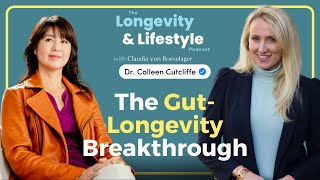
In this episode of the Longevity and Lifestyle Podcast, host Claudia von Boeselager interviews Dr Colleen Cutcliffe, CEO and co‑founder of Pendulum Therapeutics. The conversation covers Cutcliffe’s career shift from pharma to microbiome entrepreneurship, the discovery and significance of the keystone gut bacterium Akkermansia muciniphila, and the technical hurdles of producing a live‑strain probiotic that survives oxygen‑free conditions and reaches the distal colon. They discuss clinical evidence from a BMJ‑published, double‑blind, placebo‑controlled trial showing that Pendulum’s Glucose Control product lowered A1C by 0.6 points and reduced glucose spikes by 33 %, positioning the product as a “medical food” rather than a traditional supplement. The dialogue moves to practical advice for listeners: diet (high fiber and polyphenols), avoiding unnecessary antibiotics, and consulting functional‑medicine practitioners. They explore how gut health underpins systemic functions—metabolism, immunity, mood, and brain health—and why gut dysbiosis is linked to metabolic disease and menopause‑related microbial diversity loss. Cutcliffe explains the challenges of culturing anaerobic Akkermansia, freeze‑drying, and ensuring enteric‑coated, time‑delayed delivery. The episode also highlights real‑world stories, including a patient who reversed pre‑diabetes cravings and actress Halle Berry’s role as chief communications officer. Future directions discussed include microbiome interventions for women’s hormonal transitions, pregnancy, and the gut‑brain axis in neurodegenerative diseases. The interview concludes with rapid‑fire bio‑hacks, personal health routines, and a call‑to‑action offering a 20 % discount on Pendulum products via a personalized link.
Chapters
Hey there, I'm Claudia von Boeselager, a former investment banker turned entrepreneur, longevity coach, biohacker, and mother of two. Once burnt out and overwhelmed with chronic health issues, I've transformed my life and helped thousands of people do the same. I've even reduced my biological age by 17 years. Yes, I'm 26 again. Now I'm here to share the tools, strategies, and inspiration to help you live healthier, happier, and longer. On this podcast, I interview world-leading experts in health, biohacking, mindset, and performance, and share personal stories and learnings to bring you the latest insights and tips. Think of this as your go-to space for real talk about all things health and optimizing your life. Ready to unlock your best self? Let's dive in. This is the Longevity and Lifestyle Podcast.
My guest today is Colleen Cutcliffe, CEO and co-founder of Pendulum Therapeutics. A category-defining leader in microbiome innovation focused on transforming metabolic health. With more than 25 years of experience across academia, pharmaceuticals, and biotechnology, Colleen has a unique gift for translating complex science into real-world scalable solutions. Before founding Pendulum, she served as senior manager of biology at Pacific Biosciences and as a scientist at Elan Pharmaceuticals, where where she worked on therapies for neurodegenerative diseases.
Colleen earned her PhD in biochemistry and molecular biology from Johns Hopkins University and has since been instrumental in unlocking the commercial potential of next-generation probiotics and microbiome-based therapeutics, positioning Pendulum at the forefront of one of the most exciting and rapidly expanding fields in health today.
Also to mention, when I had Dr.
William Li back on the show, he talked about Akkermansia as a keystone strain for gut and metabolic health, almost like a natural GLP-1 with many health benefits. I was so delighted to discover that Pendulum was the first to make live akromancia available in supplement form. And thanks to Colleen von Boeselager and her team for giving you, dear audience, a chance to try it. You can get 20% off your first membership order by going to pendulumlife.com/claudia, and I'll link it in the show notes. So for anyone serious about health, this is such a powerful foundation. Please enjoy today's conversation.
Jumping in quickly, it's Claudia von Boeselager. I absolutely love bringing you these conversations for free each week, and I can do that thanks to the generous support of our sponsors. These are brands I've personally vetted and believe in, and I think you'll love them too. Supporting them means you're also supporting the show and your own longevity journey. Thanks for supporting them. Now, here's today's sponsors. This episode is brought to you by Pendulum. If you've been listening to this podcast, you'll know that longevity isn't about quick fixes. It's about supporting starting your body at the root. And one of the biggest realizations I've had from talking with experts is that so many foundational systems, from your energy and metabolism to immune health and even mood, all start in your gut. That changed the way I approached my own health, and it's exactly why I'm such a fan of Pendulum. They're a science-driven company pioneering a whole new approach to gut health. In fact, Pendulum is the first company to bring live akromancia to market. This is a game changer. I recently started taking their metabolic daily, and I can tell you I'm already noticing a real difference. My digestion feels smoother, I have more consistent energy, and I love knowing that I'm supporting my gut at such a foundational level. For me, this is a cornerstone of longevity. If you're serious about your health and lifestyle, this is where to start, because when you support your gut, you support your entire body. And for you, dear audience, get 20% off your first Pendulum membership order by heading over to pendulumlife.com/claudia.
That's pendulumlife.com/claudia20.
The discount is automatically applied at checkout.
Welcome to the Longevity and Lifestyle Podcast, Colleen. It's such a pleasure to have you with us today.
I'm excited to be here. Thank you for having me.
My pleasure. So you've been at the cutting edge of science for decades. What was the moment, Colleen, can you share that made you leave the pharmaceutical world to co-found Pendulum, and maybe there was a personal story that you could share or health challenge that shaped your motivation to focus on the microbiome.
Yeah, I think there were two big reasons why we decided we wanted to start this company. One is that, so this was about 12 or 13 years ago before microbiome was a buzzword and people didn't even really know what that word meant. And I think the first thing was that we were starting to learn so much more about the microbiome and the, you know, these microorganisms that make up even more of our body than we do. And the important role that they could play in health and disease. And it was just the beginnings of a taste of a new frontier of health. And so it was a really exciting place to be when you think about there aren't that many places that are completely unexplored in the body. And this was a place where we felt like there's a big opportunity to create new products that are gonna help people and potentially even natural products. And so this idea of being able to have the efficacy of a drug, but the safety of a probiotic has never existed before all this microbiome science started to, to come to light. And then the second big reason why I, I was really inspired to start this company was actually my own daughter. So my daughter was born almost 2 months prematurely and she was 4 and a half pounds when she was born. She spent the first month of her life in intensive care, hooked up to all these machines and monitors and receiving multiple doses of antibiotics. And in 2012, Marty Blaser from NYU published a paper. This paper changed my life. It basically showed that babies who were on a lot of antibiotics later on in life were more prone to chronic diseases like type 2 to diabetes. And the Mayo Clinic actually repeated this study and they showed that if you're under 2 years old and you're on a lot of antibiotics, you are more prone not just to obesity and diabetes, but also things like celiac disease, allergies, asthma, ADHD, all of these chronic illnesses that start with this early antibiotic treatment that is decimating the baby's microbiome. And the baby basically can never recover from that. And so my daughter, who had been receiving antibiotics at birth for about a month, I realized that there was an opportunity for me to help millions of people, including my own daughter. And that really set the path for exploring metabolism in the microbiome, and then also for really being dedicated to creating natural products because it's something that I wanted to be able to give to my own child.
So beautiful. And so fast forward, maybe you can take us on that journey. You clearly went down a lot of rabbit holes to understand it and this was really the new frontier. And even going back 5 years ago, talking about the microbiome, most people didn't understand it. It's much more of a buzzword, but what was that path? What was that journey, Colleen, to bringing you to where you are today?
Well, I think it starts with what I, I just said to you, which is like, we thought it was gonna be this really cool science and we could make products, and that was all we knew. And so when I look back, I'm amazed anybody gave us any funding because it really was a research project in the beginning. We basically didn't know what the product was gonna be. We didn't even know if you could actually change the microbiome, and we didn't know if you could change the microbiome in a way that could help with any of these myriad of diseases we wanted to go after. And so it really was almost 8 years of R&D work just trying to figure out what is happening in the microbiome, where is there a target of opportunity, and then doing all the traditional pharmaceutical development you do, which is in the lab work, preclinical trials, clinical trials, and all that culminated finally in a, um, a big publication on a placebo-controlled, double-blinded randomized trial where we showed that this formulation that was completely novel could actually lower A1C and blood glucose spikes in people with diabetes. And it's the first and still the only time a probiotic has ever been able to be shown to be able to do that. And so that was really, you know, a lot of blood, sweat, and tears to, to figure that out.
I'm really, really excited to dig into all those details. I'd love to take a step back, look at gut health as the root of longevity as well, cuz we often think about gut health as digestion.
Right?
But the research is obviously clear what you were saying. There's a link to metabolic health, to immunity, mood, even energy, which is fundamental for, for us living well and thriving. So can you break down for listeners why the gut is really the root system of longevity? Yes.
I think when we think about the body and what we learn in textbooks is that there's these 11 systems in the body and they're all kind of functioning independently. And, and we know that they interact with each other a little bit, but the gut microbiome, what we've discovered is it's really at the center. It interacts with all of your systems. So your metabolism, your immune response, yes, your digestion, but also your brain function. And so when we think about what are the key pillars to healthy aging, it's really centered around how do we keep all those systems operating optimally. And the reason your gut microbiome is such an important part of that is because with the food that you eat, you are populating a, entire ecosystem inside your body that is producing all of these small molecules and proteins and enzymes that are signaling to every part of your body. And so, when you have a healthy gut microbiome that is creating all those proper signals, including neurotransmitters, then you are going to be hitting all of those systems that are important for longevity, including your ability to metabolize sugars, your energy levels, your brain function. All of these things become really important, even your muscle mass. So, all of these things are important and tied to the gut microbiome. And so, when you are missing those certain strains that can't perform those functions, you start to feel it depleted across the board. And so people often say when a probiotic is hitting for them, they feel it in a lot of different ways. And that's because it really is at your core.
So exciting. And as we know, 88% of Americans are metabolically unhealthy. What would you suggest, Colleen? Where should people start if they want to take back control of their gut and metabolic health?
I think the first thing is to look at your diet because that is one of the most profound ways to alter your microbiome. There's two things that we do that completely change our microbiome. One is taking antibiotics. So for some people, they notice that after they've taken antibiotics, all of a sudden they have these new issues that they never had before. So that could be because your microbiome was depleted and you haven't actually been able to replenish those functions back in your body. And your diet is one of the most efficient ways to replenish your microbiome. And so, um, eating foods that are high in fiber, eating foods that are high in polyphenols. These are all gonna be really helpful for reconstituting and feeding. There's actually the food for your gut microbes that's gonna be really important. And then there's certain strains which are actually hard to replenish in that way. And so you might wanna supplement. Oftentimes if people are dealing with, um, chronic issues that they're, they've been trying to figure it out and sort it out themselves, it's helpful to talk to a practitioner about this. And these kind of like functional and integrative medicine doctors who are thinking about more holistically. Eastern and Western medicine and the microbiome, they tend to be pretty sophisticated in helping people target their gut health. So I would say think about whether you've been on antibiotics recently, and there might be some cause there to look at your microbiome. The second is to look at your food and increase your fibers and polyphenols. And the third is maybe work with a healthcare practitioner to help you more efficiently get your gut health in shape.
Beautiful. I'd love to look at your innovation with live akromancia. So in doing my research for our conversation, one thing that really stood out to me is how critical akromancia And I'm going to— might butcher this a bit— muciniphilia, next-generation probiotic strain Pendulum you have pioneered is for gut and metabolic health. So as I understood, it's naturally found in our distal colon and even in breast milk, which I think is fascinating. And most, most of us are deficient. It's also so complicated. And I'd love to unpack this as well because it can't survive in oxygen. So growing it outside of the body must be a huge challenge. And I want to understand about that. And when this really came to light was for people listening who might have heard my second conversation with Dr. Dr. William Li recently, he was describing akkermansia as a keystone strain, almost like a natural GLP-1 with wide-ranging benefits for metabolism, gut lining, and overall health. So I was delighted to discover Pendulum and that you were the first company to actually make live akkermansia, so no easy feat, and I want to unpack this, available in supplement form, something that most people didn't even know what could be done. Colleen, before I hand this over to you, I wanted to also thank you and your team. For also giving myself and the audience the opportunity to try it. So, dear audience, you can get 20% off your first membership order by going to pendulumlife.com/claudia20. So, Colleen, for you, what makes akromancia a keystone strain that is so special, and why are so many of us deficient as well? Could you share?
Sure. I think akromancia, first of all, it was only discovered in, I think, 2010 or 20, you know, the early 2000s. So it's a strain that you're not gonna find on the shelves because it was only, you know, discovered. And so what makes it a keystone strain are two key things. The first thing is that there were all these studies that were being done trying to look at what is the difference between a healthy person and a sick person and define sick in any way that you want to. It's type 2 diabetes, it is, you know, Parkinson's disease, it is digestive issues, it is deficient immune responses, all these different illnesses. One common strain kept coming up as deficient in the people who were sick and it was Akkermansia muciniphila. And so, that was the first step where people were like, "Why is this strain deficient across all these different diseases?" And that's one of the things that makes it a keystone strain. So, when you're missing it, it shows up, it's correlated with all these different diseases. The second thing is as people started digging more into it, there's now thousands of studies published about Akkermansia, they realize that it has two really important functions. The first is as its name implies muciniphila, it loves mucin. And so mucin is actually the glue in your gut lining that holds the gut lining structure in place. So if you've ever heard about leaky gut or you're worried that you have gut permeability and that's creating inflammatory and immune deficiency responses or things, responses that you don't really wanna be having in your body, you might be deficient in Akkermansia because it is the glue that keeps that structure in place. And so that's one important factor. So if you're low in it, You have a deficient gut lining. You literally have openings in your gut lining and, and nobody wants to have a, you know, leaky gut.
That doesn't sound good.
It's not good. It's not good. And the second thing that people discovered that acromancy can do is that it can stimulate GLP-1 production. So people have come to know GLP-1s through drugs like Ozempic and, and, and the incredible immediate weight loss that people experience on those drugs. Those drugs are actually chemicals that are mimicking your body's natural GLP-1 hormone. So your body naturally makes GLP, and more importantly, it's your gut microbiome that stimulates GLP-1. And then more importantly, it's Akkermansia that stimulates your gut that stimulates GLP-1. So if you're deficient in Akkermansia, you're likely not getting your natural GLP-1. So if you have this strain that's responsible for the structure of your gut lining and responsible for stimulating your body's GLP-1 hormone, Well, you can see why people think it's such an important strain.
I am curious, Colleen, because are all babies born with the same level of Akkermansia as it's found in breast milk? If babies are bottle-fed, for example, do they have less Akkermansia? Has there been studies around that?
I think the initial colonization of the gut microbiome is still under a lot of study, and, and Akkermansia is not the first strain that you kind of see pop up with when there's newborn babies, the first strain that pops up is Bifidobacterium infantis, a super important strain that actually works with Akkermansia muciniphila. They, they're actually kind of on the same team. One passes the ball to the other and helps you create short-chain fatty acids that are important for a healthy gut microbiome. Somewhere early in development, people do start to see the appearance of Akkermansia muciniphila. And to your point, there have been so many studies that have been done today to try to figure out what foods you can find Akkermansia in, and there hasn't been a single food or beverage where people have found Akromancia, it is— has only really been found in mother's breast milk. And so the idea is that your mother gives it to you and then you spend the rest of your life trying not to lose it.
Um, or replenish it, right?
Or replenish it. Yes. Now it is fed by, you can increase Akromancia levels through these fibers and through polyphenols. And so in infant formula, there are a bunch of these different small molecules that can help feed the Akromancia. So. Even if you're not full-time breastfeeding and even if you're mostly bottle feeding, as long as you're getting some of that seed planted in there of akromancia and you're feeding it with these other— a lot of the ingredients that are in infant formula, you should be good to go in terms of giving your baby a good start with their akromancia levels.
Okay. I'm sure there's some mothers are going like, I had to bottle feed, whatever. Exactly.
We'll mess our children up in a myriad of ways, but this is one thing I think We do our best.
We do our best. Colleen, can you share what were the biggest challenges your team faced in actually pulling off live akromancia available in supplement form?
Yeah, I think this is a really important distinction to make because when people are looking up akromancia or searching for it on Amazon, it's really important to look for live akromancia versus pasteurized akromancia. So pasteurized akromancia is where they treat the akromancia with a high heat in order to kill it. So it's basically dead organism. So you don't want, I mean, that's easier to make than live and keep alive at home.
But you have none of the benefits then, right? If it's been killed, essentially.
There've been some studies that show that you can get some of the benefits because they've killed it. And so all those small molecules that were in that original live Akkermansia, those are being delivered. But the problem is you can never colonize on your own. So you have to be on that for the rest of your life. And the efficacy is not as large as if you're getting live Akkermansia. And so I think for all those reasons, it's sort of a, an inferior product to the live Akkermansia. So you wanna make sure you don't get duped in the pasteurized. It's less expensive, you know, all the things that you would expect. Mm-hmm. So you wanna look for live Akkermansia. And the reason that it's hard to make and sustain live Akkermansia is because it lives in that mucin layer and feeds off mucin. It doesn't feed off regular things. And it is, as you pointed out earlier, it's a strict anaerobe, meaning that it can't survive in the presence of oxygen. So you actually have to freeze dry the akkermansia after you, you grow it, you culture it. If you've ever been to a brewery or a vineyard where they have those big vats, you kind of culture the strain. And then when you want to get it into a pill format, you have to freeze dry it with all these things that protect it through that freezing stage so that it can remain protected. Once it's freeze dried and in a powder form, it's actually quite stable if you follow that process. But that was a lot of the challenges and the hurdles, which is First, how do you grow this guy who has to have, you know, grow in the presence of no oxygen whatsoever? And then— and the way you do that is you basically pump in other gases in order to keep the oxygen out. And then the second thing is how do you keep this thing alive so that when the person ingests it, it's going to come back into life in the gut microbiome and do its job? And so those are— I mean, and we can talk about delivery too. That would be the third challenge is how do you make sure that it gets all the way to the gut microbiome in the distal colon. So these are all the big challenges.
Oh wow. Um, sounds like a, a few head scratching and reflecting and iterations going on there as well.
Yes. I think if we had known how hard it was gonna be, we probably wouldn't have taken this on. In some ways, a lot of people who've been in the probiotic space for a long time didn't do this because they probably knew all these challenges existed. But we kind of came from a different, you know, more ignorant place, which allowed us to kind of make all these steps one by one.
And your why was really big, right? So to help your daughter, I'm sure, and, and all the other people in similar boat. Let's talk about the delivery though. So I think some people are cautious with supplements. So like, well, you know, how much does it get to the cell? Does it really work? So maybe you can walk us through that.
Yeah, you really wanna have proof that the strain is getting delivered. And so we have publications showing that you can see the appearance of the strain. And more importantly, one of the things that Akkermansia can help do is to stimulate short-chain fatty acid production. So you can actually see short-chain fatty acid production also. So that tells you that the thing is getting there, it's doing its job, it's coming to life. And so we've done all of that research and work, and it's all published data. But the way you as a consumer can know, unless you're like out there reading a bunch of published papers, is you can talk to your healthcare practitioner about it. We also have all these publications on our website, so you can also download them easily and take a look at them. But what you want to look for when you're looking for any probiotic is, um, a capsule that has two key components. One is enteric coating and the second is time-delayed release. And the reason is because when you think about the, the journey, the adventure that this pill has to go through, you swallow it, it has to get through your stomach first. Your stomach has a lot of acid in it, and then it has to get all the way through the GI tract, which is just this long winding tunnel to the distal colon. So you want the enteric coating to get through the stomach acid that protects it through the acid, and you want the time-delayed release because that gets it through the whole tunnel to the distal colon where then the capsule will open up and now all your goodies can come out there in the right location. You've got it delivered.
Amazing. So let's look at results and clinical evidence you were touching on there. So your Pendulum Glucose Control, one of the products you have, showed a 33% reduction in glucose spikes, as you mentioned before, and a 0.6 point A1C drop in a BMJ-published double-blind trial, right? So totally reputable quality results that I think a lot of my audience, uh, love digging into the science. I mean, these are really pharma-level results. How do you think about Pendulum's role? Are you a supplement company? Are you a biotech company? Are you new category altogether?
Yeah, we, we really are a biotech company cuz all that stuff that I just explained to you was all kind of at the heart of it, really biotech. And, and it's kind of a mix of biotech and pharma, right? How do you identify what's the right pathway to go after? How do you figure out how to grow these novel strains? How do you figure out how to deliver them? How do you make sure that you're publishing, uh, you're creating publication quality data that people can really look at and say, okay, I believe this. And so I think we really are, you know, a biotech company and, and pharmaceutical in the blueprint that we use for developing products. But at the end of the day, I think consumers are smart enough now to be able to make good choices about their own health. And so because this is a natural product, we can bring it directly to consumers. And so I think, you know, in terms of the, the category, Pendulum Glucose Control is actually not a supplement and it's not a drug. It's in this third category called medical food. And that's why we can make claims around A1C and type 2 diabetes because it's not actually a dietary supplement. And so there are some different ways in which you can if you have the data, you can start to make these claims and really differentiate yourself. I think that we're just the beginning of another or a whole new generation of products that are going to be probiotics and prebiotics, but they are really founded in science and pharmaceutical-like drug development that the, the world has been waiting for and needs. We really need these natural products that are gonna be able to help us. And the microbiome is beautiful because it's one of the only places in the body where you can actually have a natural product, the bugs as drugs themselves, that actually delivers the work.
I love that, the bugs as drugs. And I mean, you've had amazing early investors like the Mayo Clinic, et cetera, right? So I think it's really showing that the importance of this rigorous clinical validation, you know, and for people listening to, I get a lot of questions, which supplements, how do you focus on it, where's the research, et cetera. And I love that you're really coming from that scientific backing to really validate what you're doing. So, Congratulations on that, Carleen. I'd like to move on to women's health and longevity. So something that stood out to me is your research on menopause and the microbiome, and your research shows that menopause significantly reduces gut microbial diversity, which I didn't know, including important strains like Akkermansia. I was very surprised to learn this. Can you explain the connection between gut health and women's health across the lifespan and how microbiome interventions might support women in perimenopause and menopause to maintain resilience, energy, and metabolic balance?
Absolutely. Well, first of all, the work has been done globally by amazing investigators across the world. And I just get to have the luxury of pulling it all together and then telling, telling you about it. First of all, there, and as this is true with menopause in general and, and women's health, there's so much more research that could be done. There's very little out there, but, but I'll tell you what we do know so far. What we do know is that your microbiome changes significantly when you go through key hormonal changes in life. So when you go through, as, as a woman, when you go through puberty, that's the first big hormonal change that we experience. And your microbiome completely shifts when you're prepubescent and then postpubescent. And then between puberty and menopause, menopause being the second huge hormonal change that we go through, there is a particular type of microbiome that you have. And when you go through menopause, on the other side of that, your postmenopausal microbiome looks totally different. So you have kind of 3 stages of microbiome. One is pre-puberty, the second is between puberty and menopause, and the third is postmenopausal. And one of the really interesting things about menopause, about what happens to our microbiome through menopause, is it's directly correlated to these hormonal changes. So if you have investigated menopause at all, you'll know that one of the things that happens during menopause is you get this like dramatic decline in estrogen and progesterone. And that's some of the huge pain points that people experience when they go through perimenopause and through menopause is this just dramatic change and drop in those hormone levels. Well, your microbiome actually goes through a similar change and becomes extremely depleted in certain microbes. And you can literally plot the drop in estrogen progesterone and lay it right on top of the drop of these microbiome strains. And they literally converge on top of each other.
Direct correlation.
They're changing exactly together. Yes.
Wow.
The key things that you're losing are strains that are actually interacting with those hormones. And so before you go through menopause, I could, you could take a gut microbiome sample and you could say like, this is a man or this is a woman just by looking at their microbiome alone. After women go through menopause, our microbiomes look like men's. And so you actually cannot tell the difference between a man and a woman's microbiome after menopause. That's how different it is. And so it is an incredible difference. And so I think there's a big opportunity for us to kind of target the menopausal microbiome, the postmenopausal microbiome, and also even just to help during that precipitous decline, you know, how can we kind of ease that decline? And so there's a lot of research going on right now about how to modify the microbiome to help alleviate the symptoms of perimenopause and menopause.
I'm really curious about this. I wanna dig in a little bit deeper. As we know, right, hormones are dropping off, estrogen, progesterone fluctuations, et cetera, even testosterone as well. And there's obviously HRT supplementation, but you said that the relevant microbiome bacteria is also disappearing. So is it because there's less estrogen in the body that they're then dying off because they're, they're not needed? Like what exactly is happening there that the bacteria is also disappearing?
Yes, this is a perfect chicken and egg question. So I think that is part of the, the issue is what is causing, which one is causing which.
Yeah.
And that is definitely still being studied. But I think regardless of which is causing which, you could have a solution that is independent of the cause, right? And so you could still have a solution that you, you replenish one side and it helps the other side. So I think that's really, for us, that's where, where we're focused and other people are solving the chicken and egg problem.
But it makes sense as well. And do you find people who are supplementing? That they are not experiencing the same symptoms, that their estrogen levels, for example, are staying elevated for longer.
Some people using our products, especially around glucose control. Um, because if you have obesity, prediabetes, or type 2 diabetes, actually all of your symptoms when you go through menopause are, are far worse. And it usually exacerbates your diabetes. So oftentimes people end up having to go on higher doses of medication or new medication when they go through menopause. Because of these changes. So we definitely have customers with metabolic diseases that are, that the, our products are helping them through that. But I would say we haven't done the kind of gold standard, any, any placebo-controlled double-blinded trial. And I also think that if we were going to develop a menopausal product, there's a couple of other strains that probably need to be included.
So let's look at some human stories. So Pendulum is obviously science first, but what stories have moved you most, maybe from customers or clinicians about how these interventions are changing lives?
I think it's always the inspiration first getting into health in the first place, I think is the people and the people that you can help. And so we have just these beautiful stories. I'll share one with you, which is this woman who, she lives in Alabama and she's super smart, but she never went to college because Her grandmother got type 2 diabetes. It runs in their family. And when her grandmother got type 2 diabetes, she ended up having to have one leg amputated and then her other leg amputated related to the disease. And so she ended up quitting college and coming back to live with her grandmother to take care of her. And she just decided, I am not gonna go through this. I am not gonna get type 2 diabetes. So she exercised, she ate really well, very disciplined, and so she was devastated when she got into her 50s and went to a doctor's appointment and the doctor said, your A1C is elevated, you are pre-diabetic. And she came to us because she's had been doing her own research about different strains and acromancy and all this stuff. And so tried our product and it was able to lower her A1C and actually reduce her food cravings. She said, interestingly, I have been fighting this battle my whole life of food cravings. And I didn't realize that if I had had this better microbiome, that was helping me produce GLP-1, I wouldn't have all these food cravings that I've been fighting this whole time. And so it actually made it easier for her to even just do the things that she was doing beforehand. So I think that's really being able to break the cycle of a multi-generational problem in health is, is huge.
Huge. What a gift.
Yeah.
And I also love that Halle Berry, right, the Hollywood actress, for those who may not be familiar, not only was using it but became such a fan that she's become your chief communications officer. So maybe you can share what did her journey with the product teach you about impact and, and maybe even storytelling?
Yeah, well, I think that, so Halle Berry, a lot of people don't know, um, you know, has diabetes or had diabetes. And so, and this is another, I think, important thing for people to realize is that somebody who is top of their game in terms of nutrition and exercise can still have a depleted microbiome that impacts their health. And so her experience with our product was she was on it and saw her A1C drop and she shared that and she shared it with us. I met her several years ago and she wanted to wait before she made any conclusions. She wanted to reach out to me to understand like, how does this product actually work? She'd heard about it from the Cleveland Clinic. And so I took her through how it works. And then literally a year later where her, she still was experiencing those health benefits, she said, okay, this is real. So now I want to talk about how can I help the company? And, you know, I think if you know who Halle Berry is, you know that she is one of those people who has been an A-lister in Hollywood through many, many people who've appeared and gone away. And to have that kind of longevity in Hollywood is not by accident. She's incredibly smart about building a brand, about reinventing yourself, about staying relevant. And so when she came on to work with us, she and I, first of all, had a really strong personal connection. But she also said, look, You got the science down, you know how to create products that work. I know how to build a brand. Like, why don't we work together to build this company? And so that's really what we've been doing together. And she's been an amazing partner, incredibly creative, and just brings a, I think, a level of legitimacy to anybody who's trying to age healthy and doesn't want to look to all these pharmaceuticals and unnatural ways to do it. She really is kind of an icon of natural beautiful aging.
Role model for a lot of us. Yeah, exactly. Because as we know with longevity, we wanna take care of our insides, but it helps if we look good on the outside as well. And typically if we take care of the inside, the outside will reflect it. So you've said Pendulum is rethinking healthcare by combining the precision of biotech with the wisdom of nature. What do you see as the future of microbiome therapeutics? And could we see a world where gut interventions replace or even outperform standard drugs for metabolic disease?
Um, I think that, well, it depends on how we define outperform. Uh, in the context of longevity, I think totally, because what you're doing is you're giving your body back the functions that it used to have, or you never really had in full force. And you're not gonna get all those side effects that come with small molecule drugs. And so if you think about like, hey, I'm, you know, 20 or I'm 30 or I'm 50 or I'm 70, and I wanna take something for decades to come, this is something that is going to give you sustained long-term health benefits. So if you think about it from that perspective, I would say hands down, yes, this is going to outcompete any drug out there. On the other hand, if you define impact as I'm gonna see an immediate result and I don't really care or think about the side effects too much, it's unlikely that you're gonna see that with any microbiome intervention the same way that you do with a small molecule drug. And the reason is because first of all, you have to get these microbes into your existing ecosystem. They have to colonize and they have to start performing their duties. And so it's going to naturally take longer than if you ingest, inject your body or take a small molecule that's gonna go immediately to the target. And also a lot of these small molecules don't get metabolized by the body very quickly because they're unrecognizable to the body. And so you'll get a really strong immediate impact, but there's sort of the long-term downsides as well as side effects sometimes that come immediately.
And just for people interested, how long would you say it takes for, with the supplementation, with the live Akkermansia, et cetera, to start noticing a difference? Because there is that colonization that's happening, so you're really replenishing and you're rebuilding. Is it a 1 month? Is it 6 months? Is it a year? What would you say is a guideline? Obviously everyone's a bit different.
I know. I'm going to give you the annoying answer, which is that it depends.
It depends. Yes.
Depends on your starting microbiome and your starting health state. It depends on your diet and your environment. It depends on your stress levels. Mm-hmm. It depends on if you're going through menopause. It depends on if you're taking antibiotics. It depends on actually if you travel a lot. All of these are actually things that have been shown to deplete the microbiome. So if you are, don't have a diet that's high in fibers, if you took antibiotics recently, if you travel a lot and your circadian rhythm changes all the time, if you're under a lot of stress, if you're going through hormonal changes, All of these things change your microbiome. Some of them you have control over, some of them you don't. And so all of those will impact how long it takes your body to actually accept these new strains and start experiencing the benefits of them. And for some people, you know, it can happen in a matter of days. And other people, we've had them come back and say, I just really stuck with this thing because I was a believer. And finally, 6 months later, I'm starting to feel the impact. And I went off of it to see if it really was the probiotic. And all my bad stuff came back. So I would say it really does depend on all of those multi-factors.
I think for everyone listening and wondering as well, it's really knowing that you are with every time you do do the supplementation, you are replenishing what is so desperately needed. Cause we have so many toxins in our environment, what we ingest. Yeah. Just bit by bit and have that patience. And I think that's the tricky part for people who go to medication. They want the wonder pill. You have to realize how the body's actually made and replenishing it is just so important in rebuilding. Colleen, I'm curious, what is your optimal health routine? What have you started implementing? How do you set yourself up to win the day and win the week?
I think for me, one of the most important pillars has always been sleep. And I know sleep right now is kind of becoming a much bigger thing. And I'm so glad because it, it is so important. So I've always been very disciplined about my sleep. My kids make fun of me. They're like, we go to bed after our mother.
I know I'm an avid Oura Ring wearer. I know this is a good thing to say.
Do. Yeah. But I think that for me personally, I just noticed very early on that if I didn't get good sleep, I almost felt hungover for the whole next day. Like I just really couldn't function as well. So for me, sleep has always been a really important thing. And then I would say things have changed. I used to wake up ravenous and I had to have breakfast right away. And now as I started to age, I don't wake up quite as ravenous. I kind of don't eat until lunchtime as sort of my first meal. And I think that that breakfast, whether you're eating it at, you know, 6:00 AM or 2:00 PM, that breaking of the fast is actually really important. And so I'm always very thoughtful because what's been happening to your microbiome over that time is you're starving your microbes. So every morning, every time you break the fast is an opportunity to select for the microbes that you want to grow. So if you start with things that are high in fiber, high in polyphenols, You're really giving those a head start to all those microbes that you really want to flourish. So, you know, starting with a smoothie that has polyphenols or berries, or even some people will have salad with their breakfast. You know, all of those things are great things to start with. And so I really try to adhere to that when I'm breaking the fast that I have something that's got fibers or polyphenols in it.
Can you walk us through Pendulum's products? Not only is the design so beautiful, they're so powerful as well. So can you walk through the different products that you have and just share that with my audience? As well and what applications or use cases you would recommend them for.
Yeah, well, actually, and I should tell you, the packaging, we recently just changed it this year. It used to be kind of, you know, I'm a scientist. I'm like, you just put it in a bottle and throw it on a shelf. Like, who cares about packaging? Exactly.
I want the science.
Yeah. It's what's inside the bottle that really matters. And this is actually a big thing with Hallie, our relationship, where she really pressured me. She was like, Colleen, I want to work with you. On redesigning the packaging, because even though I know the inside is what counts, the entirety of the experience is actually what's really important. And so we really coordinated on this new packaging, and I think it does look really beautiful. And I think it does matter when you are launching into a new product or launching into a new health routine that everything about it feels really good and premium because your, your body deserves premium product from the way it feels when you unbox it to the way it feels after you've been taking the pills. So I'll start with that. That was not my push, but definitely one of the things that you're in your alley. The lineup of products is really centered around metabolism and gut health. So we'll start with our flagship product, which is Pendulum Glucose Control. If you have type 2 diabetes, you're trying to lower your A1C, you're trying to lower your blood glucose spikes, that is kind of the Cadillac. That's, that's your product. It has all 5 strains at the highest dose. It was a publication in BMJ. If you got trying to lower your A1C and blood glucose spikes, Pendulum Glucose Control is for you. Have good metabolic health and have kind of a daily pill that you can take in order to sustain metabolic health, Metabolic Daily is right for you. It's basically the same as Glucose Control. It has all the same strains, but just at a lower dose. So if you're like, well, I don't have diabetes, but I think metabolic health is really important, I wanna stimulate my body's GLP-1 production, then you should take Metabolic Daily. If you're like, okay, my gut is a wreck, I think my gut lining has been destroyed through all these different, you know, stress and environmental factors. Then Akkermansia is a single strain and you can just take that. Akkermansia is in Metabolic Daily and Pendulum Glucose Control. But if you're just targeting the gut component, you can take just pure Akkermansia. So those are the 3 products. If you're just doing gut, it's Akkermansia. You want daily metabolic health, it's Metabolic Daily. You've got diabetes and you wanna lower your A1C, that's Glucose Control. And then we also sell a polyphenol that you can take as a booster that goes with any of these and it boosts your Akkermansia. And we did a lot of work to look at what are the right polyphenols to boost akkermansia levels. And so that's a booster. So if you take that along with the probiotics, you kind of get accelerated benefit of the probiotic.
Amazing. And I know with some supplements they recommend cycling. Would you recommend that too, or is this something you can take every day?
You can take this every day. I think one of the recommendations around cycling is that most of the ingredients that are on the market are either Lactobacillus or Bifidobacterium strains. And so when people recommend cycling, they just want you to cycle, like kind of get some different Bifidobacteria and some different Lactobacillus strains. The strains that are in our product are Akkermansia muciniphila, um, Anaerobutericum hallii. So you're gonna find strains in there that don't exist in any other products until somebody else comes out with, uh, you know, other strains in the system that can have health benefits cycling off of this. It's not really equal to the other probiotics that are out there. So I do think cycling those other ones does make sense. But for this one, because the strains are unique, you can't really substitute or cycle off.
Colleen, if you could fast forward 10 years out, what breakthroughs in the microbiome space excite you most? What do you see?
There's two areas that are really exciting. One is what we were talking about in women's health and really targeting these hormonal moments. And we didn't talk about the third moment, which is if you decide to have children or you're lucky enough to be able to have children or unlucky enough to have children, depending how you see it, depending on how you see it. But when you go through pregnancy, that's another place where you're going through extreme hormonal changes and you are responsible for the microbiome that your baby's exposed to in utero. And then also, you know, in delivery and then after during breastfeeding. That's another moment where there's an opportunity. So I think for women's health, every time we go through these hormonal changes, there's a big opportunity for the microbiome to play a role. And so I'm looking forward to, to that. For mostly selfish reasons. And then I think the other big breakthroughs will really come around this gut-brain axis. I started my career working in Parkinson's disease, and we were always very focused on the brain and these plaques that show up in the brain and how do you target them. And it turns out that the gut might be a huge opportunity to modify the neurotransmitters and the, the actual onset and progression of Alzheimer's and Parkinson's disease. And so I think that's a huge opportunity to think about the gut-brain axis. And it's not just Parkinson's and, and Alzheimer's. It includes autism, it includes anxiety, depression, stress. And so there's a whole, when we talk about like our gut instinct or that gut feeling or butterflies in your stomach, this is kind of terms that we use because we kind of know at the heart of it, our gut is tied to our brain and affecting our emotions. And so I think that's gonna be another big breakthrough that can help a lot of people.
I'm really excited about that. As my audience will know, my mother sadly just recently passed with Alzheimer's disease. So it's been a real passion area of mine. We've had many neuroscientists on as well, and even Dr. David Perlmutter, right? So it comes back to the gut. And the food that we feed our body, the medicine every day. Right. So yeah, really, really important. Colleen, do you have a few minutes for some longevity rapid-fire questions before we finish up?
Okay, let's do it.
So what's a surprising biohack or longevity tool that's had the biggest impact on your health? And I'm going to obviously say besides akromancia and the gut microbiome.
I would say for me, surprisingly, it's, it's this cryotherapy. Whether you're doing it in a bath or doing it in a chamber. I have always hated cold weather. I grew up in Georgia. I love warm weather. I had to live in Boston and in Chicago for many years. Yeah. Did not like the winters there. And so it's almost ironic that now I'm deliberately experiencing that, that coldness, but I think it's just, you feel it immediately. There's just such an immediate impact. And we know that it's really stimulating all of these different pathways that are not normally stimulated. It's like we've become so, we've created so many inventions for life to become so comfortable that our body is just kind of in a dormant state in so many ways. And so really activating it through cryotherapy, I think is something that I was surprised by and actually now do.
Yeah. I love it too. So I used to be very sensitive to cold and then you realize you don't actually feel the cold anymore because your, your heating engine essentially is working really well. So yeah. If you could only keep one longevity habit for the rest of your life, health, Colleen, what would it be?
It would be feeding my microbiome. I think that that is— it really is the key. If, if, you know, I don't take a bunch of supplements and I am not on any pharmaceutical drugs, and I think that if you can manage your gut health, hopefully you can kind of stave all of those off for as long as possible.
What's been your most exciting purchase in the last 6 months under $200? So for people listening, they love this, and we love brands, we love specifics, and Doesn't even need to be health or longevity related. It can be, but doesn't have to be.
My older daughter, who was the one who inspired the company, actually just started college. She's filling her room with all these different things. And I told her, you should have vitamin C, cuz like for sure you're gonna get exposed to all these different illnesses and things like that. So you need to make sure they have vitamins, old school, old school vitamin C. And so I bought some for her and she started taking them daily. And so I feel like that has been, I think, a rewarding purchase because if you have children, you know, they usually don't take your advice. And so I think that's, you know, I'm happy about that one.
What's a book or resource on health you find yourself recommending over and over?
Well, I think many people who are listening to this probably have already read this book, but, you know, Peter Attia's book Outlive is one that he and I have sort of become friends over time. And he's not huge on gut health and things like that, but the idea of being able to increase your health span lifespan, and what are all the different things that we can do to tackle our physical and our mental health is really all kind of embodied in, in that book Outlive. And so I've recommended it to many people, given it as gifts. It's a great stocking stuffer.
Mine's over here.
Yours is over there. Exactly. Highly relevant for anybody who's really trying to age in a healthy way.
If you could wave a magic wand and solve one aging-related challenge instantly, Colleen, what would it be?
I think it would be, it would be cognition. It just being able to be, when you when you meet those people who are in their 90s and they're just, they really know what's going on. They're on top of it. They have all these years of accumulated experience and they now know how to translate that into things that can help other people. I think having, being sharp.
Colleen, where can listeners find out more about you and Pendulum? And we can obviously link everything in the show notes.
Yes, please come visit the website pendulumlife.com. Even if you don't buy anything on the site, we have a lot of materials and resources to learn about the gut microbiome. To learn about gut health, to learn about these strains. And so, and if you're a practitioner, we actually have protocols on there written by other practitioners on how they're using the supplements in their practice alongside other interventions. And so I would encourage everyone to please go to pendulumoflife.com and come learn and, and hopefully try something. And I know we're giving a 20% discount, so hopefully that makes it easier to at least trial.
Yeah, to try for sure. I'd highly recommend it. I've been really enjoying my supplements as well. There's, as I said, so beautiful, but obviously feeling the health benefits, more energy, et cetera. So For you, dear audience, Pendulum and Colleen have kindly gifted 20% off your first order. So you go to pendulumlife.com/claudia20 and the discount is applied automatically at checkout. So Colleen, just as we finish up today, I'd love to close by asking if you could leave our audience with one parting thought about taking control of their metabolic and gut health, what would it be?
I would say the, the one takeaway is to actually start to be thoughtful and aware about your gut and metabolic health. A lot of us go through life, we're doing a million things all at once, and you start your day and you end your day kind of in just go, go, go mode. I think to take a moment to really think about, is my gut digesting food properly? Am I having food cravings for things that I know I don't need? Am I experiencing brain fog every day after I eat lunch? Am I not sleeping well and therefore, you know, feeling groggy throughout the day, which is leading me to these food cravings, which is leading me to not be my top best self? So I think just really being cognizant of these things and not taking them for granted. A lot of us just sort of think like, oh, well, I just, you know, I'm just a chocolate fiend. I always just eat chocolate. It does not have to be that way. It could be that your gut microbiome is missing certain strains that are causing you to have those food cravings. And so. Just be thoughtful for the next couple of days. Just think about after you eat, your digestion, all these different energy and metabolic things. And then at the other end, other side of that, after 2 days of really being aware, think about, is there anything that I want to change?
Beautiful. Colleen, thank you so much for coming on today. Thank you for your research and the gut microbiome for really helping so many people improve their health. Uh, it's such a pleasure to have you on. Thank you so much.
Thank you.
Hi everyone, it's Claudia again. Before you take off, would you like to get a short email from me to you several times a month with top tips, insights, and strategies to help optimize your life, health, and business. This could be interesting posts or articles I've read on life and longevity optimization, cool biohacking or lifestyle products that I've discovered, and other fun things to help you be at your best.
It's a very short piece of inspiration for you, so if you want to receive it, check it out by going to llinsider.com.
That's llinsider.com, and leave your email to get the next one.
More from Claudia









Can Psilocybin Slow Aging? The Study on Telomeres, Inflammation & Survival with Dr. Louise Hecker

