The Key Triad For Longevity: How to Optimize Health with Claudia von Boeselager
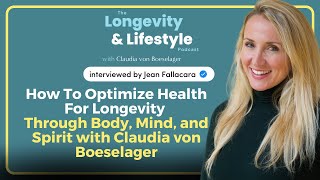
Claudia von Boeselager, founder of Athena Healthspan, explains why standard intermittent fasting backfires for women and how continuous glucose monitors and the Oura ring reveal personalized metabolic patterns. She frames longevity around a body-mind-spirit triad, sparked by her mother's dementia diagnosis.
Chapters
Welcome back, dear audience, to another episode of the Longevity and Lifestyle Podcast. I'm your host, Claudia von Boeselager, here to bring you the latest insights and learnings to improve your health, life, and happiness for longer. Thank you so much for being part of this tribe and wanting to be at your best each day. I'd love to hear from you, so feel free to leave a review on Apple Podcasts or Spotify to let me know what you think of the episode or the show in general. I love feedback and it allows me to bring you more amazing guests and topics for free. Today, I'm thrilled to share a very special conversation with you that originally aired on Jean Fallacara's Lifespanning podcast, where he interviewed me on my journey, passions, and mission. In this episode, Jean and I dive deep into what it truly means to take control of your health, longevity, and life purpose in a world that often values success over self-awareness and well-being. We talk about the crucial role that self- knowledge and purpose play in achieving long-term health, how our lifestyle choices shape our future, and why I believe that we all have the power to avoid unnecessary suffering from preventable diseases. I also share some personal stories, including my mother's battle with dementia, as many of you will know, which sparked my commitment to early detection and personalized health insights. We tackle pressing issues in women's health, the importance of truly understanding our bodies, and how to avoid burnout by aligning with what genuinely fuels us. If you're ready to step into the highest version of yourself, embrace your unique journey, and navigate life with purpose and well-being, this episode is for you. Let's dive in, and please feel free to share it with those you love who might need to hear it too.
Thank you. Please enjoy.
I'm so glad to have you today. Um, we've been, um, in touch from far for years. Mm-hmm. We've been in touch for real in real life. At the Live Long Summit in West Palm Beach, and it was some sort of a crush where we said like, let's get on our podcast, let's talk, let's talk about the future, let's, let's do a thing together. And I'm so glad that we met in person. You do beautiful things. You've been busy. You are, of course, well known in the space of longevity and biohacking as well. Because you do things right, you know, and you do the right thing too. So here's the thing. You're here. I want to know more about you, where you're coming from, what you have to say about yourself. And my first question is very simple. You are the CEO of a company that is called Athena Health, a co-founder. You've been in business several times. You're a business, you're an entrepreneur, serial entrepreneur, investor. And, but you're from the bank banking system before. How the heck can you become an entrepreneur? Entrepreneur when you come from banking?
Well, first of all, thank you so much for having me here today. And, you know, adore what you're doing too. And I think that's the beauty in life when you kind of meet kindred spirits and people who, you know, get it and are aligned. And it's just such a joy. And you feel like we've known each other, we were talking about past lives and various timelines and dimensions, like, you know, multiple, multiple connection points for sure. So thank you so much for having me on today. And, you know, even jokingly speaking of multiple lifetimes, I mean, I've had multiple lifetimes in in this lifetime, right? And I think, you know, just as a meta view of it, I think it's so important for people to follow their passion, what excites them. I think society trains us to say, you know, you work hard, study hard, and you get a job. And if you're lucky, you know, you'll stay there till you retire. And then when you're all like retired and burnt out, well, then enjoy life or whatever as well. And, you know, don't follow your passion and purpose. And I think, you know, for me growing up, I had the joy of having a mother who was very a visionary and could connect the dots. She was involved in, you know, seeing— she came from a medical background. She grew up in Ireland where at the time women could either work for the government, become a teacher or a nurse. That was it. And as soon as you got married, you had to stop working. So that's the environment she worked. Yeah, exactly. Yeah. Because you had to have many kids and obviously the big Irish families, right? So my Irish family definitely falls under that trap. The Foley's are pretty much everywhere. Which has its benefits. And so when she came to the United States, she was involved in the first liver transplant at Sloan Kettering. And so she was quite advanced in her thinking, her connections, her network. And she saw a huge shortage in nurses in the US at the time in the '80s and '90s. So she set up a company, flew around the world and recruited thousands and thousands of nurses to come to the US. So essentially giving all these nurses the American dream, you know, bringing them in, etc. And so that was the type of mother I grew up with, with people always saying like, your mother's amazing. I was like, she travels the world. There. But yeah, she definitely was wired differently and this visionary and then many other things. And so that was growing up, that sort of anything is possible if you put your mind to it and, you know, think big and how can you think bigger. And, you know, it's about connecting the dots and, oh, this person could help with this and, you know, making it happen. And I saw that, I think, time and again. So I'm so grateful, obviously, to have such a visionary mother. And, you know, I wanted to go into medicine. And when I was filling out my application forms and I did the chemistry and I did the biology and everything I needed and had the get the results. But I thought, do I really want to be in a hospital with neon lights every day? You know, is that my highest good? Is that my highest service? And I thought, well, no, I like to be free. I like to travel. I like to do things. I've lived in over 9 countries in my lifetime so far, in this lifetime. And I decided to go down the business and languages route. And at the time, when you finish with 3 master's degrees, right, in business, it was you go into management consulting or investment banking. So I ended up at Goldman Sachs and, you know, got to do the 100-hour work weeks and all of that. An amazing experience and amazing, you know, friends and contacts, and many are still friends as well, which is really beautiful, doing cool things in the world. But when I decided to leave banking, I, you know, for me, I always knew I was an entrepreneur. I always had ideas and things like that too, and I felt, you know, I had a good foundation, and I was just going to kind of wing it with a friend from business school and found our first company. So that's how the transition kind of happened from from banking and a very structured environment to just that feeling of freedom. And I've had the pleasure of having you on my podcast recently, and you said, you know, the most important thing is freedom. And I think it's that freedom to be creative, to create something. So not only just have the idea, it's about the execution, right? I mean, any entrepreneur knows, like, you can sit around like, I've got a great idea, but it's like, it doesn't make me do it.
Yeah, without being scared of doing it. That's probably, yeah, this is—
Or feel the fear and do it anyway, right? And a mentor of mine who speaks to millions of people, you know, he's like, you know, everybody feels fear. It's what you do with it that differentiates those who are successful and those who are not. And we all fail, you know, and I, you know, love to quote, you know, even Walt Disney needed 302 banks to say no before one said yes. And Oprah Winfrey was told she wasn't fit for television and countless examples. And, you know, do you let that stop you or not? So I know I've done, you know, different things and, you know, from e-commerce, I was involved in fintech and like a bunch of different things, fitness. Wellness. And separate to personal passion about health optimization, that was a bit separate and sort of more continuous. But it's what, what, where do you find the passion? What's exciting? And, you know, surrounding yourself with people that inspire you. I love to be the stupidest person in the room and just kind of soaking in.
It's hard. It's a challenge though.
You maybe, John. But, but yeah, and I think I love the fact also, I think that through journey of life, you really, and living in different places, you really understand that you can learn something from everyone. I don't care if it is the person cleaning the streets, is it the person building something or whatever. It's, you know, having that curiosity to connect with the person, get to know them, and like they have something to teach me without a doubt, 1000% of the time.
Yeah, human, recognizing that humans are humans and whatever the title that is behind that. It is so important. I was telling someone yesterday, you know that if you spend 1 minute per day to meet 1 new person, you're going to have 365 friends at the end of the year because you're going to discover that you have something in common with everybody on this planet. Yes.
Yeah, I love that. I mean, 1 minute, probably I talk too much, would be a bit short to really connect. But if you gave me 5 minutes, maybe a day, I could. I could.
Yeah. Interesting. You know, here's the story. Science has demonstrated that It takes 100 hours to know someone. That's a lot of time together. Like, you become friends after about 30 hours spent together, but 100 hours, you know the person too, and it becomes a closest friend after these 100 hours that you spent together.
I would— I am like challenging this science report. Is this like the average person? Like, I love— so in my twenties, I was embarrassing, you know, I was like this I felt I had to say hi to everybody in the room, very superficial, and not in a bad way. It just, I felt the need to spread myself thin and just, you know, say hi to everyone. I embarrassingly would think I would say yes to two parties in one evening. So I was like late for one, you know, another. So total disaster. And I've learned through work and inner journey work and things that I've done myself, like the best evening I can have is if I have one to two very deep conversations. And I love that. And then you can really go deep. You can really kind of almost touch the soul and get to know somebody. And, and see them. And so I would argue the science that, like, I agree, I have some amazing friendships after, like, one great dinner party where I ended up just speaking to the one person or two people or whatever it is too. So yeah, I'm not 100% sure about that scientific research.
I'm with you. I'm with you on that. You have a very good argument and a very good point on that. On this one question still, having a deep conversation is not given to everybody, and most of the time people don't want to unveil their real thought or their real inspiration, and they talk from the book they've read, the sentences they've listened, or the people that have said some things and they repeat it. So having those deep conversations are quite a tough job, but I do agree, when you get into that space, you don't need to have 365 friends, you only need one. Yeah.
Et voilà.
Et voilà.
Also, I think that I guess through time we become better at filtering people who are genuine, authentic. So one, I think, is the ability to connect deeper with people quicker, and then also to have that filter mechanism to realize when someone's, you know, quoting something, or, oh, I read in the paper, like, you know, you can tell that they're just making up something to make up something. And some people are like that, and no judgment. Honestly, at this day and stage of my life, everyone could be how they want to be. But I like to spend time with people who like to go deep, and, you know, either from whatever the topic, Honestly, so I think it's just, you know, I love learning, I love connecting and stuff too.
So yeah, that's a sign of high intelligence. You've been always supporting women because of your mother.
So not just because my mother, obviously I'm female as well. So I have a bias.
I didn't notice that.
Just so you know, I identify as, you know, nowadays, on sait jamais, you never know. But particularly with my mother. Yeah, thank you for bringing that up. Or I'm happy to share that too. And so You know, my mother was such an inspiration for so many years and really a shining light in many regards and her work and what she did and helping others too, and very much a give personality. And in January 2020, pre-COVID, she had a procedure on her legs and the doctor bind both of the legs, which caused— and then she had to have them elevated. And at this stage and just before this procedure, she was going to the gym 5 mornings a week, highly active, high energy. So it's like, that's where we were coming from. And because of having the elevated legs, it caused two blood clots, we found out after, to go from the legs to the lungs, causing low blood oxygen levels, which made her faint. And she must have literally fallen like a plank backwards, opened the back of her head, caused a tremendous concussion. For 8 weeks, hospitalization in the United States is not very typical. So if you're in that long, you know it's quite severe. Bleeding in the brain, but into the ventricle, not the brain matter, thankfully. I mean, there was different events, but Out of the, off the back of it then was COVID. So the recovery, which she would normally have gotten, and the support was obviously not there on several regards, right? The extra physio sessions you would've done, the extra brain training, the supports was, they just said, you know, with COVID unless it's near death, like we're not gonna treat it. And then the lack of social interaction. But what it did then come up was that there was dementia there that had already been indicated previously that we hadn't picked up on. There was just more note-taking and things. She was in her 70s, but again, very fit, very active. And through that, investigating this further, I came across the work of Dr. Dale Bredesen, who I'm sure you know, who has protocols on A, how to assess for early indication of a path to Alzheimer's and dementia, and then what you can do to reverse it so that you actually don't go down that path if you catch it on time. And this is why I'm so passionate because I'm like, there's so many of these chronic diseases that are not necessary, type 2 diabetes, dementia, et cetera, if you catch them on time. And we know what the ideal markers are where people should test for and where they should be. Just not many people actually know it's possible. And so this really led me down the path of wanting to share this with the world. And it was COVID. And, you know, I had friends coming to me asking, you know, well, you know, what should I be doing or what else is there? And then, you know, friends' parents would come. I'm 72, I'm a diabetic and disillusioned. I feel like I'm on the path to being amputated. You know, what's the alternative? And I'm like, you know, guys, I'm not a doctor. I'm like, I can't be giving medical advice, but look at the work of this doctor or this doctor. So This is what inspired me to start a podcast as well and share these conversations with amazing pioneers with the world. And I just thought, oh, it's a little side project for during COVID But, you know, within 2 months of launching, we were top 5%. Yeah, in the world. And now I've increased from there. But for me, it's— that's all vanity. I'm not interested in that. It's like, how can I help people? And I got a message the other day from someone who said she's, you know, been listening to the podcast and following social media and her mother mother is indicating signs now of dementia, like where should she start? What should she do? And even that helping one person, Jean, is like—
It's an impact. It is. Yeah. Making an impact there, helping one person at a time. It's true. Do you think that women are more sensitive to those illness than men or they just neglect more their health than men? We see dementia growing actually instead of going backwards. What's your take on that?
Yeah, so great question. I mean, first of all, I think women are wired to consider everyone else and then look like, okay, what else should I do? Kids, family, home, work, whatever is going on. And obviously with the expectations in society now, like, oh, women should work the same hours and also take care of the kids in the house and like, you know, all the rest of it. And it's just, it's not possible. And I went through health issues previously as well and realized I'm not invincible. So we need to work on that. So one I think is for many women to understand the importance of self-care, which was a big learning for me. I was also the one like, oh, if everyone else is fine, I'm fine. Wasn't really the case. So that's number one. Number two is the lack of research on women. So in 1977, as you'll know, the FDA banned women of childbearing age from clinical research. And even though that was overturned in 1992, a gold standard had been set because obviously Firstly, women are more complex than men, right? Men have a 24-hour testosterone cycle and women have a 28-day varying hormonal cycle. So it's very hard to do clinical research on them. And I think I saw a statistic that like 70 to 80% of adverse effects from medication are in women because they were not tested on women. I mean, these are serious numbers. And then the lack of information around perimenopause, menopause, etc. And that means that women are told like, oh, you know, you should take an SSRI instead of saying these are, you know, perimenopause, menopause symptoms, etc. So I think it's lack of understanding, lack of knowledge, lack of self-care. But it's specifically around the dementia and Alzheimer's. I mean, they, they're calling it like type 3 diabetes, right? There's a lot of lifestyle interventions, but specifically around estrogen and the drop-off of estrogen. If women are not taking body-identical HRT, hormone replacement therapy, coming to menopause, it can age the body exponentially. And we've discussed in the past glycan age. And I was speaking with the founder, Nina Nicolina, who was showing that women are aging on average 8 years biologically in that one year between having their last period and officially declaring menopause because it takes a year and a day. They're aging on average. I want to say this again, 8 years biologically.
8 years.
8 years.
So even if you, yeah, even if you prepared yourself but you don't go the right path and you get like, if you, you, you've been, let's say, biohacking and you reverse your age, but you get to the menopause goes, and then even the 10 years that you've saved there are, are gone.
Yeah.
Wow.
Yeah. And that's why, you know, the, the body identical— in the US it's bioidentical, and depends which pharmacy and compounding pharmacy, etc. But, you know, follow— there are brilliant minds in this space. Dr. Jodi Brighton, Dr. Amy Killen. I mean, they have very fun also Instagram channels with silly stuff.
Yes.
Yeah, exactly. But Amy, I think, on as well, right? And I've even had Dr. Joan Manson, who was heading that, that study 20 years ago where it was all misinterpreted, etc. And so anyway, for all the women listening out there from the age of 35, this could apply to you. So don't think it's only when I'm after 50, right? So perimenopause can start from the age of 35 and every woman is different. So just to be on top of it and know yourself and check in with yourself as well to be in your best state and stay that that for longer.
So it falls down again to what we were saying last time on your podcast, falls down to education. Like, I'm listening, you say starts at 35. I first got like a surprise, then I realized that yes, it is true that some women get into menopause at 35. But where is the communication toward that? We need people like you to spread the vibes and the words and the knowledge, because I don't think that the government does anything toward that, the pharmaceutical industry is zero. And women unfortunately go on social media if they have the time because they're busy.
They do. We know they do.
Yeah.
But they do. They're multi-billion dollar companies. Yeah.
Yeah. And then they don't find information because they don't know who's saying the truth. Like if you listen to certain male recommending intermittent fasting every day to women, this is nonsense.
Yeah. I know. I know for myself. I mean, I can share an anecdote with that. And like, I love trying out things and I'm like, oh, intermittent fasting, great idea. And I have, you know, the great app, Zero app, which I love. You know, you hit it and I'm like, you can see which zone you're in, etc. And oh, I'm hitting ketosis. This is great. And for certain times during the month, totally fine. So, you know, the first half, but the second half, not good for women, right? So the luteal phase where progesterone is increasing. And so I was trying at the time a continuous glucose monitor and I had my Oura ring and I had like optimized my sleep and the room temperature and the dark and like everything. Everything I needed and my evening routine, you name it. Like, you know, I teach this stuff. So I was like, okay, I have to practice what I preach. But I'm still waking up groggy. I'm looking at my Oura Ring and I'm still seeing these awake spikes even though I didn't feel like I woke up. But I generally thought I was a deep sleeper. And because I was trying the continuous glucose monitor, it actually showed me I was hypoglycemic at night because of these longer periods of intermittent fasting. So my blood sugar was dropping down to 40, 42. I mean, extremely low. So what was happening was triggering a cortisol response to get the liver to be producing more energy to keep me alive, essentially. Yeah. Yeah. And yeah. And so that, that's what I really love. And that's the exciting thing about this, you know, biohacking devices, health optimization, whatever you want to call it, the data and the personal data. And I'm— show me a doctor on the planet Earth. Now we obviously have more longevity and concierge doctors but, you know, at the time, who would have asked me for my Oura Ring data and my CGM data as a non-diabetic to say, hey, you know, you're hypoglycemic at night. We need to solve this. And how do you solve it? I have, you know, at these times I have some almond butter closer to bed with no palm oil, no sugar. It maintains beautiful blood sugar levels overnight. I wake up feeling fantastic.
So you sleep well.
Yeah, exactly. Yeah.
So what would be your recommendation in terms of intermittent fasting for women?
So A, I think number one is know your baseline and be in a very good baseline. That means you have a really good blood profile, right? So your bloods are in a good state. You're not deficient in minerals and vitamins as well, because I think this is the detriment women are focused on, just having a salad. And I'll eat a salad every day and salad is good for me. But you need to have the variety. As Dr. Mark Hyman says, eat the rainbow each week and make sure you're getting enough protein. Also, women don't have enough protein. So if women are coming from a very good baseline in terms of all their vitamins, minerals, etc., they're fit, they're healthy, and they're eating well, then typically the first 2 weeks of the cycle are a good time to do it up to ovulation, and thereafter it's not such a good time. And personally, I feel that it can be so detrimental to health and it can cause higher cortisol levels and stress levels on the body, which is like counterproductive. It's not what you're trying to do. Like a super healthy, savory breakfast. It doesn't need to be much. Like if you're worried about, you know, quantity, whatever it is, but have that, it'll kickstart your metabolism as well. And then, you know, a healthy lunch and an early dinner, much, much healthier, you know, do that 3-hour window before bedtime. So I think we need to separate from what works for men, works for women, and especially in this case as well.
Yeah. Thanks for the advice. And this is great tips. You know, for once we clear up the mess and say the truth. Truth. So because I've heard so many things about this intermittent fasting for women, and I hear so many different stories, but I know that what you just said is exactly true and it works properly. You are trying, as we are, we're on the same path on that, to make longevity mainstream. Why?
So, A, I'd like to define, if I may, longevity or what it means for me, because because if I say longevity, some people, they're like, well, I don't want to be 80 years old for 20 more years. Like, what's the point in that? And I get it. Like, I don't— the way we foresee that nowadays, I don't want to be like that either. So longevity for me means how do you optimize your health, your well-being, your mental state, your joie de vivre, right? Your joy of living and happiness in your life and passion and purpose today. You raise that up and live like that for a very, very long time because then you want to live a long time doing amazing things.
I'm gonna die.
Exactly, right? So just to define that as well. And so why do I want to make it accessible to more people and for more people to know about it? Well, one is I've seen the pain it causes when we just go down the path of this current sick care system and the toll it takes not just on the person. So my mother with her dementia and like, had we known, you know, then what we know now, it could have been picked up early. We could have, you know, likely reversed it and had a completely different situation for the family. And it doesn't just affect the person who's ill, it's all the family members. I mean, I see my father suffering so much. He's in this nursing home the whole time. I have an uncle who's had 4 open heart surgeries, one who's had several strokes. Yeah, like a big family, big issues, right? It's all like needless suffering because there is another way. Yes, there will always be, you know, some rare disease or genetic defect falls. But for the average person, you can choose, and we have a choice. And that's a beautiful thing. In this lifetime, we have a choice to understand, to learn, to be curious, like, what is different ways, what are different modalities I can do to step into that highest version of myself? And as we discussed in the past also, I, for me, it's body, mind, and spirit. Very important. If you're burning inside and have all this trauma unresolved, you're not going to want to also live that long either. So working on the body, mind, and spirit, and then not going down that path of the suffering and the disease and the type 2 diabetes that leads to blindness and amputation. I mean, it's horrific, right? Really, when you have a choice, you have a choice to do some lifestyle changes, you know, maybe, you know, do that intermittent fasting. Dr. Jason Fung is doing amazing work also on this and reversing type 2 diabetes in a matter of months, depending on how long people have been on medication. So when you have that choice and when you have seen the pain and suffering of going down that horrendous route is, and the cost as well, by the way, but that's another story that people forget, then why not choose to be the best version of yourself today? And in part of what we're doing, and, you know, with you as well, and with what I want to do as well, is to empower people to know there is a choice and there is another way, and also to make it more accessible. And with Athena Healthspan, what we're looking to do is bring in technology to the, to the piece to really help to understand each person. And because we're all individual, right? Like with my example with the continuous glucose monitor and the Oura, and to understand that we have our medical history, we have our diagnostics where we are now, and we can be put on these health optimization journeys on how to step into that version of ourselves in 3 to 6 months, and then incorporate wearable data so that on a day-to-day basis, as we maybe sleep poorly or particularly stressed, what are the protocols that need to be adjusted to suit us and our well-being in that day? So yeah, that's why I'm passionate about it because I believe longevity should be everybody's birthright. And not just the 0.01%.
Yeah, I do agree on that. You know, the longevity space has been crowded and floated by investment and VCs and bankers and all these things and money in general because they were overselling stuff and overpricing everything that we— that, that was there. Tomorrow, like Devastri just said recently in my podcast, as well, like tools are becoming more accessible so you can get more data, you can get more tools to track down every single aspect of your health. It's going to help you to get there. Now, allow me to jump back on one thing that you've just said, and that hit my left part of the brain. Mind, spirit, and body. You're going to have to define this to me, please. Many people in the science are already in a difficult position trying to separate mind and body. But you add another layer of spirits. Let's make it complicated.
Or not.
Or not. I'm pretty sure you're going to get not complicated.
So body, I think, is relatively obvious, right? The temple that, or whatever you want to call it, the house that we live in every day. And I think truly that our body is here to support us, right? So the human inside, the spirit, the person inside. And that's why we need to take care of our body, because we take care of our body and it takes care of us. So this is our earth vessel, right? That gets us through this lifetime. So I think that that's fairly obvious. Then the minds, right? So it's our brain, our brain function. I know you've had Jim Quick on the podcast. I'm a huge fan. Love his way of thinking and how even from being a brain-injured child, you can repair. And I'm so fascinated about the brain and the power of the brain. And we don't even know that much, right? There's so much potential still there. I heard today, I was listening to another podcast that the electricity field in the brain brain is similar to a light bulb. Yeah, which doesn't seem like much, right?
Yeah. And depends on the people, and some are 2 watts and some are 20 watts.
That's good. I like that as well. And so, you know, we have this strongest superpower, supercomputer in the universe between our ears, and like, we don't even realize it. And, you know, how do you take care of your brain? And a dear friend of mine, neuroscientist Dr. Kristen Willimeyer, also says, you know, we don't the brain. So we're kind of like, oh, it's fine.
True.
You know, she's done work with professional former NFL players, you know, who have so much head trauma and head injury, and you don't realize the importance of the brain until you start on some sort of neurodegenerative disease, which is so sad, right? And so again, prevention is better than cure. Check your markers and get on top of it and keep the brain healthy, sharp. It will serve you. It's basically everything you need for your day-to-day life. And then we have spirit. So the spirits, and I think everyone will have different definition, but I think for me, it's that inside knowing, it's your being, it's your true essence. It's like, you know, when you're in that beautiful flow state, the things that bring you joy, and you just know that that's your true spirits, right? And people will have different names for it. But if that genuine true spirit of yours has maybe gone through, you know, trauma, and we all have our limiting beliefs from when our, you know, growing up in our lifetime and typically between the ages of 0 and 7. And we've heard this a few times before. And the limiting beliefs that are set, we continue with throughout our lifetime until we actually become consciously aware that we are not our belief systems. We are actually much greater than that. And we are these powerful creators that we forget about. And so for me, that is your true essence, your true spirit that might be bogged down by thought patterns that either you developed or that were imprinted on you from your parents. Oh, you can't do this because you're not capable. You're too wild, you're too difficult, whatever it is that this narrative that we don't even realize we have. And so how do you do the work, do the inner work, do the shadow work? There's, you know, there's different terminologies to really peel back those layers and uncover like, who is my true spirit? What do I love? Like genuinely love, not because society tells me so, not because of this, but like what brings me joy? And if you have that clarity, what brings you joy, and you try to do as much of that in each day, then you will tell the all the difference because you will be showing up as a true version of yourself.
Okay. So would that fall into conscientiousness, awareness, or vibration? Because it's a neurochemical aspect of this.
Yeah. Um, consciousness, yes. And consciousness is— what is consciousness? It is a vibration, essentially.
Yeah. Yeah. Today we're trying to get like if there is consciousness or not, trying to define that. Yeah. I have one. I think that yes, we are conscious, um, human being, even if express most of the time are subconscious. But at the end of the day, the subconscious is electrochemical reaction of what is in your mind and what is deeply inside of you, like what you call your spirit, your true you. That falls down to self-awareness.
Yeah, love it. And yeah, self-awareness and self-knowing, I'd almost say, right? Because I think it's— I've forgotten the quote that I heard the other day, but it's, when you think, you don't know. And when you know, you don't think. You know, this, that was a quote from this Greek philosopher.
Yes. Yeah, I love that quote. Yeah. At the end of the day, we don't know anything because, you know, here's a fact: the future is unknown. So whatever the principle of thinking and research and science and technology and mathematical formula that we set on paper today, we set them according to the moment that is now and the past, but the future is unpredictable, and what is true today can be completely false tomorrow. So we don't know.
And this is it. And that's why it's like you can either be miserable and suffering and everything's terrible today, or you're like, you know what, I'm going to love life. I'm going to choose to be optimistic and be enthusiastic. You just be like, you know, let's just see what's coming and enjoy the present moment and be in the now and put on the positive glasses because why live life in a miserable way when you can live it in a great way, right? So yeah, it's a choice. Yeah.
Is it, Claudia, is it teachable? Is it something that we can teach people? Some people say that you cannot change the way I am, the spirit, to take your words. So yeah, I admire your positivity. I admire your way of thinking, but it's not me. What do you have to say to this? Can you change these people? You're a life coach.
So So there my curiosity hat comes on and I would question, why do you think you can't change it? What is that belief system you have running that you believe your current reality is the only reality? Why would you limit yourself that you couldn't create a different reality for yourself?
I think that most people will answer you, it's because of my past. I would guess that I'm built or I became the person I am now. And that's probably the answer you hear most of the time, I guess.
I mean, I love challenging and I love questioning and to say, okay, well, where where in your past did that belief come from? Oh, my father thought like that, or my mother, or my whole family are like this. Okay, so you learned that. So you came to planet Earth and you opened your eyes. You didn't, you're not born as a baby thinking I can't do this, I can't do that, or, you know, the world is terrible. And we forget, like, this is the neuroplasticity and neural pathways, right? Certain neural pathways are like the superhighway. I can't do this, I can't do that. You know, money is evil, like whatever it might be, that narrative that that you might have heard growing up. And it's repeated and repeated. And especially, and I thought it was really interesting, from the ages of 0 to 6 or 0 to 7, where the brain of children are in a theta state. So it's this meditative state, which is highly receptive. You only need to hear things once is what I heard from this.
I wish my wife would be in that state.
Well, theta brainwave training. Sorry. Put your voice on it.
It was an easy joke.
And so we are so receptive that that neural pathway becomes that superhighway. And the path of maybe what we would choose is like a jungle that you need to get your machete out and start going through the jungle to try to force yourself to think that way. And then the next time you do it and you're going down the superhighway and you're like, no, I choose to go the other way. Okay, yeah, no, the positive and I'm not really feeling it. And then maybe the third, fourth, fifth I mean, like, no, I know. And okay, I'm going to focus on the positive and I can hold it for 1 minute and maybe whatever. So it's training and it's work. And, you know, what we speak, and again, it's the vibration of voice, right? But we have to be so careful with the words we choose. How many people are like, oh, I'm so stupid, or, oh, I'm so like, I can't do this. And they just say it offhand and they don't like, oh, I didn't mean it. But it's like you're reinforcing in your subconscious that you can't do this. Why don't you choose to be like, you know what, I can do this. Or I love the rephrasing instead of like, I have to get up. I have to, you know, go to work. I have to get my kids. Instead of changing it to I get to, I get to get up, I get to pick up my kids, I get to go to work. How many people don't, aren't able to do these, right?
So it's the verbiage, like, yeah, the way you express yourself. Actually, you got me on some things here when you said you have to be very careful on the word you use. I found in my personal life that is absolutely true with women more than men. Each word has an impact. And I've learned to, like, in In France, they say roll your tongue 6 times or 7 times in your mouth before saying something. That's what I do when I talk to women, because every word counts way more than for men.
Yeah, I mean, I think you're more typical woman. I think there's some are more dwellers than others. I'd say my mind is already on to the next thing. So maybe you're typical woman, but from what I know from some other friends, let's say that some women will like really analyze and analyze again, you know, well, he said this, and it must mean this or that. But you know, it was really funny. I've had Dr. John Gray on the podcast, who was a Buddhist monk. And then after, I think it was 8 years, decided to come out and had no idea about relationships, so started interviewing people and then became a relationship and sex expert to find out. Everyone's like, oh, you actually know more. Anyway, 26 New York Times bestselling books later, but he was trying to educate and he was saying, you know, the podcast explaining that it's a hormonal thing, right? So he's like, you know, men, when you come you ask your wife or your significant other, you know, how was your day, honey?
Right?
Very American. How was your day, honey? Don't comment. It's just, just ask. And she'll go on and on and on. And just when you can't take it anymore, just say, go on, tell me more. On and on and on. Because what's happening, the women feel they're being heard and seen. The estrogen levels are going up and then they feel super connected and they feel super happy and they will do anything for them. Right? So a little bit, women might be like, I have to to do that. So, and the opposite is true for men, right? So for men, they just want to get a bit of appreciation. They're there to be the providers. This is the words of Dr. John Gray. I would— might have phrased it in a different way, but all you need to say is like, well done, or that's a great idea.
What happens?
Testosterone levels go up, and they're like, oh, I've provided, I'm doing a good job. The worst is if men's testosterone levels go down relative to their estrogen levels, because yes, men have estrogen levels too, and that's when they get emotional and shout muddy and messy. So it's like, no, just find little words like good job or great idea, that's great. And then they're like, oh, perfect. Yeah.
So I think it works on both. Yeah. If you— let's pretend, uh, you switch over what you just said and you apply the reverse. I mean, you go to men and you say what you said to women, and you go to women, you said what you go to men. It's going to work also.
Really? But men don't want to talk about it, do they? I don't know.
Yeah, it's just like, I know that, um, everybody on this planet is trying to get some sort of recognition in a way, others who appreciate you. And today women are becoming stronger and stronger. They need to be supported as well. So a small bump telling them, good job, I'm proud of you, will probably raise testosterone at the same time in both. But it would work. Yeah, yeah. It's a win-win. Absolutely. Especially before menopause.
Yeah. When the estrogen is still there. Exactly. No, I think, I mean, look, appreciation. Who doesn't like appreciation? You can appreciate children, the big smiles. And I think we're just so busy. And, you know, I teach my kids as well, like we spend 99% of our time somehow thinking about ourselves, our own problems, our own things. So having somebody else externally be like, hey, that's amazing. And that's great. You know, you can make somebody's day. Like that might be the nicest thing anyone has said to them that day. So a little appreciation goes a long way.
I think that you can make anybody's day by love. Our planet that lacks love. As simple as that. We raise our children without showing the true love because we want them to behave in a way or the other. But I, I, I, I'm a true believer that if you raise your children by just surrounding them by pure love, you're gonna do a way better job than trying to teach them whatever lesson that you've heard or read or seen on any media or whatsoever. And our world today lacks of this basic part of our well-being that is love. A bit of oxytocin added to the water to everyone wouldn't be a bad idea at all.
That sounds like a cool experiment. We are trying that as well. Yeah, I totally agree with you. Yeah, exactly. Let's, let's find a few other volunteers. We'll do some oxytocin in the water. Exactly. I love it. So I like, I really like what you're saying. I love what you're saying, I should say even better, is that, and I, you know, when you become a parent, for those that are parents listening, you know, we unfortunately or fortunately fall back to things that we saw our parents do in childhood, right? So, and you pick up yourself like, oh my God, this is what my mother did, or my father, like, oh, so it's again, that unconsciousness is like running the show unless we consciously decide way. And I do very much agree with you is that we expect so much of our kids and to do this and that, and it's just pausing and playing and that unconditional love. And, you know, I'm guilty of, you know, I'm busy and I have this and I'm, oh, don't forget to do your homework, and then we have to pack this and that. And it's like, oh, it's like, is that really important?
Yeah, no, always play.
Hey, how are you? And cuddles and love and remind them how much you love them. And, you know, with jokes like, I love you to the end of the universe and back. And they're like, is that possible? I'm like, I don't know.
That's a good question actually. I would, it would take me nights to make a calculation on that now.
Calculate it for me, Jean. I'll let my daughter do this. I actually don't think it's possible, right? To end the universe and back. But okay. And so I think, you know, how, how to, how to spread more love, right? And I don't know, I'd love to hear your strategies.
Good question. Good question. How?
What do you think?
Uh, yeah, well, you know, it's always like, you always have the artificial way of doing it. Like, as a joke, I was said, like, let's put oxytocin in water and have everybody on this planet drinking some water. We put fluoride in water and we actually poisoned a lot of people in Europe with that. So why not oxytocin? Um, the chemical way could work, definitely. We can also provide chocolate to everyone and make a, a similar crop of love. Yeah, MDMA. Um, but I think that it falls back to what we were saying 4, education. We need to educate people on this planet to be true. Like, most people are the reflection of who they would like to be, but they're not themselves. When you start being yourself, your true you, like the spirit, using your definition, then everything is easy, everything is natural, and love is just coming along the way by its natural steps without forcing anything. It's as simple as that. So yeah, we can give a bump using chemicals or oxytocin, but I think that our role, both of us, is education.
Education. And I think it's also starting with self-love. I would say I would add to that. And so I think if you ask a room of people on average, how many people love themselves, and it's not in an arrogance or whatever way, I would say 9 people would struggle to put their hand up.
Do you have yourself?
It's been a journey, Jean, honestly. I perfectionist, like now, yes, like much more. Is it perfect? I don't know. I'm always like, I could do this better. Like, I am a recovering perfectionist. Never enough. Never enough. Exactly. Like a second daughter syndrome. I had to prove myself. 3 masters, 4 languages, like never enough, never enough, never enough. Have. And, you know, again, limiting beliefs from childhood and, um, oh, it's always moving the goalpost and accomplish this, there's another next one as well. And so it's coming back to self and not needing to have any external validation, but actually appreciating the uniqueness of self and what you can do and just being happy with that. And it's not settling, it's actually just finding the joy in our uniqueness, right?
In our recognizing who you are. Um, yeah, you know, I think that most high achievers are like that. Um, never enough, always trying to do more, getting to the next level, learning more. These behaviors become obsessive-compulsive, and I've been into that as well. I can tell you, Claudia, I adore myself. That I love— I adore myself, honestly.
Has it always been like that?
I've always loved myself, but today I— it's, it's way higher than that. I found in a perfect balance and equilibrium of everything. And, and I'm no longer obsessed. And I think this is the past, you know, um, like you, obsessed of learning, obsessed of achievement and successes and, and businesses. But those are like exterior stuff. And when you turn out to look inside, this is where you actually, you can only love to the extreme. Yeah.
And knowing that in the whole wide universe there's only one of us and just appreciating how unique we are and what a gift we are to ourselves.
Yeah, yeah, I love— yeah, I love that. You know, one of my favorite sentences always, like, and I, I don't take credit for it because I heard it in the movie, um, um, with Brad Pitt, um, I don't remember the title. No, no, no, way violent. Fight Club, when he was saying, we are all unique, snowflake. And it is true, we are all unique snowflakes and we're all made differently. Even with this complex crystal structure that water offers to be a snowflake, every single snowflake on this planet is different.
It's amazing, right?
Crazy. Yeah.
Yeah. I mean, even identical twins are different, right? And again, the soul and essence and things too. So yeah, I think that's to celebrate in itself. Like what an amazing fact that we're on this planet and we have this lifetime and mission and things that we can do. And yeah. So I need to embrace that more.
What's your next big step? You're on these enormous projects now. How do you see yourself achieving what you are building up?
I think for me, so yes, with Athena and speaking and getting out there. And I think for me, what I would love is, you know, to help as many people as possible in this lifetime know that they can choose another path. They can choose a path to step into the highest version of themselves. Themselves to not go down the health issue path. So as I mentioned, body, mind, and spirit. So it's more than just you can optimize your health or you can reverse your biological age. Those are all great. But when you figure out your why, your purpose that is so great, and you've done that shadow work and you've cleared that and you're really your true essence of why you're here and you, what is your impact that you want to make on this planet that's greater than yourself. Can you imagine that if the whole world that we all were on a beautiful mission to make the world a better place. Like, what an incredible place would the world be. So I think that's part of the mission, is to impact, inspire, to educate, whatever the word is. It's a technical term, but to connect with enough people so that they understand, like, there's a beautiful higher path out there that we can do to step into our true version of ourselves, to impact in a positive way the planet, other people, and yeah, just, just live at a higher version of reality that's available to us right now.
Love it. So inspiring. So Beautiful. Thank you for saying that. Thank you for sharing your thoughts. If people want to learn about you, where do they find you? Or what's the best way to find information on what you're doing? What's your mission? How they can be helped by you as well? It's important because you're there for them.
Yeah, sure. Thank you. So on Instagram, I'm with the @longevityandlifestyle. Very long handle.
That's a very easy one to remember.
If I mean, when I began with longevity, people like, how do you spell longevity? It's so complicated. So @LongevityAndLifestyle is where most content is. I have also podcast, people are welcome to check it out. Jean has been on it as well. So definitely check out that conversation. It's The Longevity And with the and symbol. When I came up with the name, wasn't thinking. So The Longevity And Lifestyle podcast available on all channels. And then obviously my name Claudia von Boeselager, B-O-E-S-E-L-A-G-E-R, on LinkedIn as well. People can connect with me.
Yeah, you're very active on LinkedIn as well. And I will definitely put all these links on the caption when we're going to put this episode on YouTube and on different platforms. Thank you, Claudia. Thank you.
You, Jean, thank you for all the amazing work you're doing, your inspiration, and yeah, this mission that we share on this planet to help as many people as possible. So I look forward to many more great conversations. So
More from Claudia









Can Psilocybin Slow Aging? The Study on Telomeres, Inflammation & Survival with Dr. Louise Hecker

