The Truth About Hormone Replacement Therapy (HRT) for Menopause with Harvard's Dr. JoAnn Manson
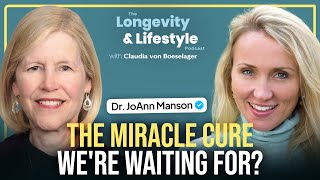
Dr. Joann Manson, a Harvard epidemiologist who led the Women's Health Initiative, explains when hormone therapy for menopause makes sense. Timing matters most: starting within ten years of menopause is safer than starting at 70+. Patches and gels carry lower clot risk than pills, and estrogen alone differs from estrogen plus progestin.
Chapters
There are a lot of genetic factors. There are a lot of social determinants of health that can make it more challenging to change our diet, to change lifestyle, but there's still a lot within our control, and it can have absolutely enormous impact on improving our health.
Hi there, it's Claudia von Boeselager, and I'm super excited to invite you to my free training on achieving peak performance and increasing longevity without burning out. Even if you're short on time or dealing with health issues, this is for you. As a peak performance and longevity coach, I've helped entrepreneurs and business professionals like you accomplish more while enjoying vibrant energy to live their best life. If you're ready to unlock your peak potential, grab the training, a free training, by signing up at llpeak.com today. Plus, I have a special gift for you just for joining, so don't miss out on this life-changing opportunity. Just go to llpeak.com That's LLPEAK.com today.
See you there. My guest today is Dr. Joanne Manson, world-renowned endocrinologist, epidemiologist, and principal investigator for the Women's Health Initiative, the landmark study on HRT or hormone replacement therapy and potential risk to breast cancer, which came out about over 20 years ago. Joanne is a professor of medicine at Harvard Medical School. And the chief of the Division of Preventative Medicine at Brigham and Women's Hospital in Boston, Massachusetts. Dr. Manson has published over 1,200 scientific articles and is recognized as one of the most cited researchers in the field of medicine. She's won countless awards and is the editor-in-chief of Contemporary Clinical Trials., to name but a few of her many accomplishments. Welcome to the Longevity and Lifestyle Podcast, Joanne. I am honored and have such a pleasure to welcome you on today.
It's great to be here, Claudia von Boeselager. Wonderful to talk with you.
I'm very excited for our conversation too because it's on such an important topic for women, and we're going to cover a few different areas, but I'd love to start with women's health and HRT. And for those unfamiliar, HRT is hormone replacement therapy, which is for some controversial, also based on a study that our specialist Joanne here today was involved with. And so we're going to dig into that shortly. But as my audience who have listened to several different episodes and some of my previous guests will be aware of, that there is a spectrum of Understanding around the benefits of HRT, particularly anecdotal about how it helps women going through the perimenopausal, menopausal, and postmenopausal years. Insight from biological age testing company GlycanAge, Nikolina Lauck, who's been a repeat guest. They have 20-plus years of research around glycans and biological age testing, and it has shown that that one year when before menopause is declared, so basically the day of your last period, waiting one year in a day for menopause to be declared, that biologically on average without HRT, women are aging biologically on average by 8 years. So that lack and drop of estrogen is really having an impact on them based on the research and clinical trials that they have been doing. So, Joanne, before we dig into the landmark study that you were involved with over 20 years ago, how in your view is HRT able to reduce chronic diseases such as heart disease, and how How has your view changed perhaps before the study and after the study?
Well, the pendulum has been swinging a lot on this topic, but the way we look at it with menopausal hormone therapy, timing is everything. In the early days, let's say 30, 20, 30 years ago, it was believed that women could initiate, you know, for the first time start taking hormone therapy at age 60, 70, even 80. The purpose of preventing heart disease and it would be protective to the heart. We now know that that isn't the case. However, the earlier in menopause you start, the better the benefit-risk profile. And hormone therapy serves a purpose for women who have moderate to severe menopausal symptoms— hot flashes, night sweats, disrupted sleep. Other symptoms of menopause, hormone therapy is very effective and the benefit-risk ratio is very favorable, especially within the 10 years after onset of menopause. So we generally do believe that hormone therapy, if there's an indication for treatment, such as moderate to severe or bothersome hot flashes, other menopausal symptoms, that women should be able to have shared decision-making with their clinician to decide if hormone therapy is the right choice for them. One big problem is that women often have so much trouble finding a clinician who can have that decision with them. But we really do not recommend hormone therapy for the express purpose of trying to prevent cardiovascular events such as heart attack, stroke, heart failure. The evidence is really controversial still. Even in early menopause, is that really a main benefit of hormone therapy? We know oral hormone therapy increases risk of blood clots. Probably not the case with the transdermal patch or gel. But we think that, um, the thinking about hormone therapy should be very reasonable, a clinical role in management of menopausal symptoms, but not used for the express purpose of trying to prevent the heart attacks, strokes, blood clots, and cancer, that, that overall it's really not for the express purpose of prevention of chronic diseases.
So let's jump into this study, JoAnn, and you were one of the principal investigators on the Women's Health Initiative study 20-plus years ago to better understand the effect of HRT when used for chronic diseases prevention. And please correct me on anything that I might have misinterpreted here. Can you share more about, for people listening, because a lot was based for many years and even to this day, the way thinking is around HRT. Can you share more about the intention of the study, why it was prematurely stopped, and how the misinterpretation of results came about that has caused such a change in perception, if you will, at the time about the use of HRT and the association with a perceived increase in breast cancer?
So the purpose of the Women's Health Initiative, the largest randomized trial of menopausal hormone therapy ever done, was to test the role of hormone therapy in the prevention of chronic diseases such as heart attacks, strokes, blood clots, cognitive decline, cancer, osteoporotic fracture. And all-cause mortality. That was its purpose, and that's why women were enrolled over a broad age range, age 50 to 79, because at least in the United States, and I think many other countries, women were being started on hormone therapy, um, well into menopause. Often women in their 60s and 70s were being started or restarted on hormone therapy if they had used it briefly for symptoms. They might be started again at age 65 or 70. So that was the main purpose. It was stopped early because, at least for combination estrogen plus progestin, it was found that the risks outweighed the benefits when it came to chronic disease prevention. There was an increased risk of stroke, blood clots in the legs and lungs, because it was an oral estrogen. It was the most common formulation of estrogen in combination with progestin. So it was not showing benefits for prevention of chronic disease overall, but it did have certain specific benefits. It did decrease the risk of osteoporotic fractures by about one-third and decrease hip fractures in particular and would decrease the risk of type 2 diabetes. And there were some benefits for all-cause mortality. It was very neutral. Overall very neutral. But what we noticed as we delve more deeply into the data was that the women who were closer to the onset of menopause at the time of randomization to hormone therapy did better on hormones than the women who were in older age groups. So in particular, the women who were 70 and older tended to have the greatest excess number of heart attacks, strokes, blood clots, and cases of cancer, and all the way down the line, their risks tended to exceed the benefits. Whereas women who were in their 50s tended to have pretty neutral results for estrogen plus progestin, but they still had some risks. I mean, they still had an increased risk of blood clots. Again, that may be due to the oral estrogen, may not be seen with transdermal. They did have a signal for increased risk of breast cancer. Now, the results for estrogen alone in women with hysterectomy were much more neutral and even favorable for the younger women. We found that the women in their 50s did have a significant reduction in heart attack with estrogen alone. It was just borderline for total coronary heart disease. They did have, or at least a signal for, um, some coronary benefit, but they also did have signals for increased risk of blood clots in the legs and stroke. With estrogen alone, there was a decreased risk of breast cancer across all age groups. This may be because the type of estrogen tested, the conjugated estrogen alone without the addition of a progestogen, um, was having a— what, what's called a SERM-like effect, almost like a tamoxifen-type effect. And so overall, there was a signal for reduction in breast cancer. This has to be looked at closely with other formulations of estrogen alone, but it suggests that the addition of a progestin or a progestogen is the major contributor to the risk of breast cancer. Seen with hormone therapy. So I think that we can say that overall, the risks of estrogen plus progestin were somewhat greater than the risks of estrogen alone. And that in women more distant from onset of menopause, the risks tended to outweigh the benefits. Whereas for women closer to onset of menopause, especially for estrogen alone, it was quite a favorable benefit-risk profile.
So for women listening who are maybe, let's say, perimenopausal and considering that, and I think you touched on an important point also about finding the right clinician, the right physician to actually have this conversation with, because unfortunately this is not widespread knowledge. But assuming they're able to find a hormone specialist who is familiar and they these women are perhaps anxious about embarking on an HRT therapy, would you say that, you know, what are the type of conversations these women should be having with their hormone specialist in order to best understand if it is beneficial for them in their menopausal years?
So it is really important that women feel comfortable discussing menopause with their clinicians, and they need to be able to find a clinician who's knowledgeable about menopause and open to having a discussion about their symptoms, the chronic disease risks that do tend to increase at time of menopause, and the treatments that are available, which include both hormonal and non-hormonal treatments. So, um, if they have trouble finding clinici— in the United States, there is a website, menopause.org, where they actually find a clinician, put in their zip code and find a clinician who has additional expertise in menopause. That's the North American Menopause Society website. May be helpful, at least in the United States.
We'll link it in the show notes as well. Thank you for that.
Yeah. So women need to feel comfortable talking about their symptoms. Are they having hot flashes? How often are the hot flashes? How distressing or bothersome are the hot flashes. Are they having night sweats? Are they awakening at night? Is their sleep disrupted? Are they having brain fog, difficulty concentrating, mood swings? These are all symptoms that can be related to menopause and can be related to disrupted sleep. Now, under these circumstances, if these symptoms are bothersome, a woman close to the onset of menopause is likely to be a good candidate for hormone therapy unless she has a high risk of cardiovascular disease or estrogen-sensitive cancers such as breast cancer, endometrial cancer, and the like. But most women who are at usual risk of these conditions, low or moderate risk, and they have bothersome hot flashes, night sweats, other menopausal symptoms will have a favorable benefit-risk profile for use of hormone therapy. Now, if they don't, there are other options for them. There are non-hormonal treatments such as the SSRI, the selective serotonin reuptake inhibitor antidepressants, the serotonin-norepinephrine reuptake inhibitors, the SNRIs, also the gabapentin-like medications. And there's a new FDA FDA-approved medication that works directly in the brain on thermostat in the brain, which also has been shown to be effective. So there are non-hormonal options, which it's important women be aware of because if they're not a good candidate for hormone therapy, let's say they have prior history, personal history of breast cancer or very strong family history of breast cancer, they want to avoid hormones. There are non-hormonal treatments for them. Also, if they've already had a heart attack or have multiple risk factors for heart disease, they certainly should not be on oral estrogen in pill form. They may be a candidate for transdermal patch gel estrogen, but they may want to avoid estrogen under those circumstances if they have a, a, a high risk of cardiovascular disease.
No, that's helpful. Joanne, what's your view on the bioidentical versus synthetic formulations of HRT?
It's really important for women to understand that there are the FDA or government-approved formulations of bioidentical hormone therapy and also the synthetic hormone therapy that's not bioidentical. As well as what's called the custom compounded bioidentical hormone therapy. And women should tend to choose the government-approved or FDA-approved formulations of bioidentical or other hormone therapy because those are the types of hormone therapy that have been well-tested for both efficacy and safety. And if they use the compounded form that is not FDA approved, there is less regulatory oversight in terms of is it truly effective? Are they getting the content that they think they're getting, you know, in terms of the amount of estrogen or progesterone? And is it Is it free of contaminants and impurities? They don't have a guarantee of that as they do with a government-regulated, government-approved formulation. But bioidentical approved forms, regulated forms of estrogen, estradiol, and progesterone, micronized progesterone, are very good options. And even have advantages over the, let's say, the oral formulations that may be like the conjugated, the oral conjugated estrogens or the synthetic progestins. First, these are the transdermal estradiol is safer in terms of not going directly to the liver, not increasing clotting factors. It has in observational studies been linked to a more neutral effect on blood clots, you know, not seeing the increased risk that's been seen with the pill form that goes through the liver and can increase clotting factors. So I think that there are a lot of advantages. Also, micronized progesterone in observational studies has not been linked to as much of an increase in breast cancer. As the medroxyprogesterone acetate, MPA, tested in the Women's Health Initiative. So I certainly wouldn't discourage use of bioidentical estradiol, micronized progesterone. If it's FDA approved, I think it's a very good formulation. These are good formulations to use. And also, I would tend to encourage women to choose transdermal patch, gel, spray, you know, type of FDA-approved products rather than the oral estrogens, which have been linked to increased risk of blood clots. But some women prefer oral, and if a woman is in early menopause and generally good health and she really has a preference for the pill form of estrogen, she should still have a good benefit-risk profile with that.
Excellent. And also, I know, um, your audience who are around the world. And so in different countries they call it bioidentical and on others it's called body identical. But it's when the formulations are regulated or approved versus when they are made up in the pharmacy, if you will. So just to make sure if anyone's listening and looking into it to make sure that they are from one of the approved compounds, be it from the FDA or elsewhere around the world.
Could I just provide a clarification on that? When, when they say bioidentical, they're referring to the estradiol or progesterone that is very similar, if not identical, to what the woman naturally produces. But it may not be an approved form. She still has to check that it's FDA or government regulated. And then there are All of these hormones are basically—
And testosterone as well, right? I mean, there's a—
They're all basically synthesized in a laboratory of some sort. But for example, the conjugated estrogens are different from what a woman naturally makes. In fact, the conjugated estrogens is more similar to what a female horse, the pregnant mare, produces. That doesn't mean it's not a good formulation because it has been extensively tested. And in younger women, you know, that formulation of conjugated estrogen, especially when used alone without a synthetic, synthetic progestin, actually had a good benefit-risk profile for the younger women, not for women, you know, who were decades past onset of menopause.
Thank you for clarifying. Joanne, I have a question for you also around timing. I know that based on the study, you were looking at women sort of early 50s up to, I think you said late 70s. And is there a too early timeframe to start HRT? I know that for different women, menopause can come a bit earlier. I think they'd say the average age is around 51 years old, but people experiencing perimenopausal symptoms, change in sort of cognition, more brain fog, maybe even hot flashes already. Is that a time to already look at HRT as a support for helping with these symptoms?
That's a great question, Claudia von Boeselager. Most of the randomized trials of hormone therapy, menopausal hormone therapy, have been done among women in menopause who are at least 1 year past their last menstrual period, their final menstrual period. So there's actually very little known about the benefit-risk profile of starting hormone therapy earlier in the perimenopause or during the menopause transition. But certainly a woman who is very symptomatic, and if her— she already has evidence from some laboratory tests like the estradiol level and the follicle stimulating hormone level are consistent with going, beginning to go through menopause or early menopause, many clinicians will start to treat at that point. Another distinction I wanna mention is women who go through menopause at an early age, if for example, they have what's called premature menopause or onset of menopause before age 40, or even early menopause, which is between 40 and 45, The, those women may particularly benefit from the use of hormone therapy, menopausal hormone therapy, because that early loss of estrogen and the decline in the ovarian hormones at an early age has been particularly linked to an increased risk of heart disease, other cardiovascular outcomes, cognitive decline, osteoporosis, and some other adverse health outcomes. So I think clinicians may want to treat women who have early or premature menopause and don't have contraindications. You know, they don't have prior history of cancer, estrogen-sensitive cancer, that type of contraindication. May want to particularly consider the use of hormone therapy in that clinical scenario. But it's important that they understand the randomized trials have not been testing that specific scenario of early premature menopause, starting the hormones in a woman in her 30s or early 40s. It's almost entirely after a more typical age of menopause women who are age 50, you know, 48, 50, or older than that. That's usually what's been seen in the trial.
So yeah, I think it's a conversation for someone to have, right, in that circumstance with their clinician. And I guess just keep an eye on biomarkers and see how the impact is and the benefits and keep an eye on any potential risks as they go along. Is there a time to stop? Would you say, has there been research around women taking HRT for menopause and then after 10 years, 15 years, like, is there an ideal time when women should be stopping with HRT?
So there's a lot of controversy and debate about how long is best to be on hormone therapy. We've generally said that the risk of breast cancer with estrogen plus progestin begins to increase around 4 to 5 years of use. Generally, there's an encouragement for clinicians to try to reduce the hormone therapy or stop the hormone therapy in that period of time if a woman is no longer symptomatic and, and she's very receptive to stopping hormone therapy. But there is no magic age or duration of hormone therapy where a woman has to stop at that particular age or time period. It is a very individualized decision. It depends on first, how well is she doing on the hormone therapy? Is she feeling, you know, much better than she was without the hormone therapy? Does she have a very good sense of well-being? Is she free of adverse effects of the hormone therapy. And if she starts to reduce the amount, does she, you know, restart the symptoms? The symptoms restart? Does she become, you know, really symptomatic and unhappy? That might be a woman where you continue, you know, much longer. Also, it's important to take into account the underlying health status of the woman, she's very healthy, she may be able to stay on longer than a woman who's developing several chronic health conditions like diabetes, heart disease, other forms of cancer. You know, you may want to try to avoid hormone therapy under, under those or continuing hormone therapy longer under those circumstances. So it's a highly personalized, individualized decision that is made— with the woman herself and the clinician, you know, shared decision-making. And it will depend on how significant the symptoms were, whether they're reappearing after trying to stop, and just her general health. Also, there's the question of osteoporosis. If a woman, for example, has an increased risk of osteoporotic fracture, And she's doing very well on hormone therapy. She's at very low risk of breast cancer and heart disease and some of these other health conditions that you worry about with increasing or continuing long-term hormone therapy. She may— that type of patient may be a good candidate for longer-term treatment.
I have a question for you a little bit on the personal for me to better understand as well. So before we started our conversation, we were talking offline and As I mentioned to you, I'm taking part in some clinical research. I'm 41. I had my hormones tested using the Dutch test and my estrogen levels were low. My testosterone was also nonexistent. So I started on estradiol and a body identical or bioidentical testosterone as well. Very small doses, transdermal. Notice definitely a benefit in it. My GlycanAge test result, which is the biological age testing, reduced by 3 years. So I've gotten down to a biological age of 26 years old now. I'm trying get it down to 20. The estrogen is helping, right? So all this in the name of biohacking and science.
You got to be careful. You're going to be a teenager again.
Well, that's okay. I'm okay with that, right? But I definitely notice personally, anecdotally, I'm obviously doing other things and cold therapy and all these other wonderful things, etc. But so it's always hard to just pinpoint one thing. But I do definitely notice a difference in that, particularly with the testosterone, because it was pretty much nonexistent, but obviously the estrogen is beneficial as well. And through my tracking of sleep, right, I wear an Oura Ring, which obviously isn't always perfect, but it shows that my REM sleep is so low. And so what's thought to support REM sleep is progesterone and progesterone hormone replacement therapy as well. Would you say that the benefits of— obviously, and I know this is maybe an area I don't know how familiar you are with the sleep dynamic of things, but I know you're a brain health specialist as well. But of of taking progesterone as well as the estrogen, the benefits are larger in order to repair that REM sleep, which for me is pretty much always at a 1 to 2% of my sleep at night, or are the risks because of the combination of estrogen and progesterone too high that it's better to avoid the progesterone?
So we recommend that any woman who has an intact uterus take a— if she's gonna be on hormone therapy, she should take a combination of estrogen and a progestogen in order to protect the uterus from endometrial cancer, endometrial hyperplasia. And a woman who's had hysterectomy, she can be on estrogen alone. Now, does the addition of a progestogen help with sleep? Yes, there is quite a bit of evidence for that. Would I recommend that a woman who's had hysterectomy and would not otherwise need to add a progestogen, that she add that for the purpose of assistance with sleep. I would probably say no, it may not be worth the trade-off because of some of the concerns, health concerns about the added progestogen. However, I think again, that is an individual decision. And that if it's micronized progesterone, you know, the evidence from observational studies and randomized trials have not been done, of the other formulations of progestogens. But the observational studies suggest less of an increase in breast cancer with micronized progesterone than, than with Provera or MPA. So she might make that decision based on her own personal circumstances together with the doctor, you know, discussing all the benefits and risks in her individual, you know, circumstances. But generally, I would not. Recommend. And a woman who could take estrogen alone because of hysterectomy, it's probably advisable to just stay with the estrogen without the addition of a progesterone.
So I will get on to it to make sure I have the progesterone then as well. And what areas would you say are really still missing? Where are the biggest gaps in research around HRT and women's health in general? Where do you see the biggest need at the moment?
So I started out by saying when it comes to menopausal hormone therapy, timing is everything. I think we need more research on the cognitive effects of estrogen and hormone therapy. Women who are in early menopause, and particularly women who are symptomatic with hot flashes, night sweats, disrupted sleep, Are there in fact some cognitive benefits of taking hormone therapy, or is it just neutral? We are seeing in most of the randomized trials that in terms of cognition, if a woman is in early menopause or below the age of 60, the effects of hormone therapy on cognition and memory tend to be neutral. There does not appear to be an increased risk of cognitive decline in the randomized trials looking at cognition in fairly great detail according to the age of the woman at time of randomization. However, in women who were 65 and older in the WHI memory study, there was an increased risk of dementia and cognitive decline among, you know, the women who are randomized to hormone therapy compared to placebo, especially for combination estrogen plus progestin. So with cognition, it does appear that timing is relevant, you know, that age is a factor, just as it seems to be for heart disease. But we don't have a lot of data on how this— the benefit-risk profile of hormone therapy is affected by whether the woman has hot flashes, night sweats, disrupted sleep. Because it may be that women who are symptomatic, especially with disrupted sleep, may be most susceptible to some cognitive adverse cognitive effects from these symptoms because their sleep is disrupted, and they may benefit the most from taking hormone therapy. And, but right now there isn't a clear message such as, oh, if you're having those symptoms, you really should seriously consider hormone therapy because it may be protective of cognition. We don't yet have enough data to be able to say that, but I think there's a gap in knowledge. Women would really benefit from having more research on that particular subject. I think we also need more research on the effects of different formulations of hormone therapy. Um, even in terms of breast cancer, you know, there are some surrogate markers such as mammographic breast density that maybe could be used to see if there are differences between estradiol and conjugated estrogen, different progestogens, micronized progesterone versus, um, medroxyprogesterone acetate and other, uh, types of progestins. I, I think we need more research on the effects of different formulations of hormone therapy on mammographic breast density, and ultimately the risk of breast cancer is the You know, an endpoint of great importance, but it takes very, very large trials, randomized trials to look at, you know, that, that endpoint. That's why the Women's Health Initiative was 17,000 women randomized to either estrogen plus progestin or placebo, and nearly 11,000 additional women randomized to estrogen alone or placebo. So overall, there's more than 27,000 women in the WHI hormone therapy trial. And these are obviously very, very large endeavors. It's not going to be possible to do a trial of that magnitude for every formulation of estrogen and combined with every formulation of a progestogen. But we can look at intermediate markers. We can look at surrogate markers, imaging studies. We can do more with cognitive testing, you know, trials that are testing memory change and cognition change. So I think more can be done even with smaller randomized trials. But the trials, the randomized clinical trials, are so important for getting really clear answers, rigorous answers for women.
I understand. Thank you for sharing that. And just on the cognitive aspect as well, it was interesting. I've had Dr. Dale Bredesen, I'm sure you're familiar with his work. He's of the Buck Institute. He's a neuroscientist. His very popular book, The End of Alzheimer's Program, which really helps people to understand, and in his view, that he has uncovered 38 different drivers of neurodegenerative diseases, and one of which is low estrogen levels, particularly for women. And so my mother, who suffers from dementia, as my audience knows, I talk about regularly, and through the analysis that we did based on Dale Bredesen's protocols, discovered that the lack of hormone replacement therapy and essentially her low estrogen levels, as well as several head trauma events, were the main drivers of her dementia cause. So when I did my DNA testing, I have a single copy of the APOE4 gene, but it turns out my mother doesn't have a single copy. Yet she's the one with dementia. My father, who has also a single copy, he's fine at 84. So this is also something through Dale Bredesen's work that has become very obvious in terms of understanding estrogen and the impacts for cognitive health in later years as well. So just to highlight that point—
Claudia von Boeselager here again. Don't miss out. Grab the free training on how to achieve peak performance and increase your longevity without burning out. Just go to LLPeak.com today.
Some other guests I've had on as well, Joanne. Are experts in ADHD, and they see a lot of women coming to them sort of late 30s, 40s, saying that they went to their doctor, they're experiencing difficulties focusing, concentration. So they're not particularly menopausal yet, but because of fluctuations in hormones through perimenopause, they're going to their doctor saying, I don't know what's going on. And they're saying, well, typically they're offered an antidepressant instead of actually having their hormones addressed as well. So are you familiar with research around the incident of increased ADHD and ADD symptoms? So for those maybe unfamiliar, attention deficit hyperactivity disorder, if I say correctly. So the correlation between that and hormone levels.
So I'm certainly familiar with ADHD and ADD, and that women generally have been perceived as being at lower at risk and were not often— as often diagnosed with this condition earlier in life. But now there's an improved understanding that women are also very vulnerable to this condition. And the prevalence is quite high in women as well as men. So I think that's progress, that this is being detected and diagnosed more commonly in women than it was in the past. The association with hormone levels, I haven't yet seen that research. I'm very interested in that possibility that it, it could be linked. But I do think this is another area where randomized trials could be so helpful in women, especially as they're beginning the menopause transition, getting into the perimenopause. If they have these issues with attention deficit hyperactivity or just attention deficit disorder, that they could be tested compared to placebo. Is there a benefit of hormone therapy for these symptoms? I think that that would be very, very important to do.
Joanne, I'd like to shift gears and talk about a further research field. I know you're doing many, but one that you cover around dietary supplements and separating fact from fiction. Can you share more about a recent study that was a randomized trial, I believe, as well, on multivitamins and their impact on memory and slowing cognitive aging in older adults?
Yes. So in a large randomized trial that we've done, the Cocoa Supplement and Multivitamin Outcome Study, also known as COSMOS, this is overall a trial of 21,000 participants. We have looked at cognition, the effects of these interventions on cognition, in two separate ancillary studies. One involved a very detailed telephone-administered cognitive assessment and another a web-based cognitive assessment. And in both of these studies, we saw a clear signal that the participants randomized to multivitamins as opposed to placebo did did better on memory and cognitive testing than the participant— they did better than those randomized to placebo, which is actually, when you think about cognitive tests like this, there's a lot of noise. You know, the, um, the noise-to-signal ratio can be quite high, and despite that noise, this signal did emerge, um, that multivitamin were associated with greater improvement in memory and cognition than the placebo, and generally better results than the placebo group on these memory tests and cognitive tests. We have one other ancillary study that we're analyzing the data. This involves a very gold standard in-person assessment of cognition.. And so we'll be publishing that relatively soon and moving forward with that relatively soon. But it's somewhat remarkable that in these two separate randomized trials, there would be this signal for a benefit of the multivitamins. Also, we saw in those who started out with low flavanol levels, you know, from the diet, you know, foods such as fruits, berries, apples, you know, pears, the different fruits that are higher in flavonols. And then there's tea and other sources, cocoa products. Those who started out low benefited from the cocoa flavonols in terms of cognition. But the, you know, we are seeing this repeated signal for the multivitamins, and we want to pursue this with additional studies because there's multivitamins. As you know, they contain just the usual intakes, you know, the daily intake levels. These are not megadoses. These are not doses that have been associated with risks or toxicity. They're very— like the recommended dietary allowances or the daily intake levels. And it may be that people who are deficient in one or more of these micronutrients will benefit from taking a multivitamin. We know there are multiple nutrients that are important for brain health. Some of the top candidates have been B12, thiamine, other B vitamins, vitamin D, lutein, magnesium, zinc. There are many, many micronutrients in multivitamins and correcting deficiencies in any one or more of these micronutrients may be beneficial for brain health. And I think that this is really promising research and needs to be pursued further because multivitamins, they will never be a substitute for a healthy diet or healthy lifestyle. We're not talking about, oh, just throw a multivitamin at a really unhealthy fast food diet with lots of processed foods. No, we're talking about still striving for healthy, balanced diet and healthy lifestyle, physical activity, not smoking, all the things we talk about frequently and are so critically important. But many people may have a low level or even a deficiency of just selected micronutrients and may benefit as a complementary strategy by taking a multivitamin, especially at older ages. And we think that these are very interesting findings. This was age 60 and older. So these are not really, you know, old adults. This is more like midlife and older adults, and there was this clear signal emerging. So we thought this was quite interesting. This does not mean that taking megadoses of individual nutrients, micronutrients, such as taking really high doses of beta-carotene, vitamin E, vitamin C, would be a benefit for brain health or would have a favorable benefit-risk ratio because In fact, some of these isolated micronutrients have been tested in randomized trials and have not shown benefits for cardiovascular disease, cancer, or cognitive function. We're thinking that this may be something that is more specific to a multivitamin, multimineral supplement that contains the daily intake levels of 20, 30, or more, you know, micronutrients conferring this benefit.
Joanne, did the study look at any deficiencies that the participants might have had previous to partaking in the trial and taking the multivitamins?
We have measured the micronutrient levels on only a small subset, and we haven't measured everything. We are seeing first that the micronutrient levels, such as of vitamin D, of folate, B12, they do increase as would be expected with the amount of the micronutrient in the multivitamin. And that suggests that absorption and bioavailability of the micronutrients tends to be good. We are planning in the future— of course, all This takes funding and money. Hope to look at a much larger number of nutrient levels at baseline and follow-up. And also look at things like epigenetics, DNA methylation changes, and whether aging is affected in terms of that marker of biological aging, as well as telomere length. And many other biomarkers for aging. Hmm.
Beautiful.
Joan, what are some of the most harmful myths in your view about dietary supplements? I know a lot of people hear like, oh, supplements, you know, there's an— is there any nutrients in them at all, etc.? So what are some things you would warn people about in terms of just in general dietary supplements?
First, I want to emphasize again, even though I already said that dietary supplements will never be a substitute for healthy diet. It shouldn't— they should not be perceived that way, but rather as a complementary strategy. Secondly, more is not necessarily better. In fact, it can be worse. And megadosing on a single isolated micronutrient could interfere with the absorption and the bioavailability of other micronutrients, particularly related micronutrients. For example, if you take beta carotene in very high doses, in the randomized trials, that was linked to an increased risk of lung cancer in smokers. And the US Preventive Services Task Force has clear guidelines now not to take supplements, you know, to really avoid taking high-dose supplements. Of beta-carotene or vitamin E. Vitamin E, um, also was found to increase risk of hemorrhagic stroke in high doses. We're talking megadoses, not the amount that is recommended, because these are really essential for good health, but only a small amount is needed. More is not necessarily better, and avoid megadosing. Those are other really important points. Also So I think the need for these supplements is individual. You know, really needs to be individualized assessments. It can depend on life stage. We know that it's really important for women during pregnancy to take prenatal vitamins. That's so important for a healthy pregnancy and to avoid the neural tube defects. But also prior to conception, you really We don't want to delay taking these vitamins until you're into a second trimester in a pregnancy. So if a woman is, for example, if she is reproductive age and is not taking, you know, contraception, using contraception, really avoiding pregnancy, it's not a bad idea to be taking a multivitamin just to be sure it's on board at the time of conception. The American Academy of Pediatrics has certain guidelines. For some vitamins, um, you know, vitamin D, iron, you know, breastfeeding infants up until a certain age. I'm not a pediatrician, I'm an endocrinologist, adult medicine endocrinologist, so I, I won't talk further about pediatric guidelines. But, um, I think we already know certain life stages, uh, prior to conception, during pregnancy, lactation, um, at older ages, where calcium, vitamin D can be achieved through, especially calcium, we're recommending more just trying to get it through the diet. But some people do need supplements of vitamin D, calcium, magnesium. Certainly if there are underlying health conditions, B12 deficiency, that can happen with pernicious anemia, with different medications that can interfere with the absorption like anticonvulsants. Medications, tuberculosis treatments can interfere with absorption and metabolism of some of these micronutrients. And people who have ulcerative colitis, Crohn's disease, celiac disease, gastric bypass surgery, they may have some malabsorption, fat malabsorption, and need to take higher amounts of these micronutrients. And not only a multivitamin, but even additional supplementation of some of these micronutrients. Macular degeneration is another example. There's some evidence that in randomized trials that adding certain types of vitamins and minerals can be helpful to slow progression of macular degeneration. The AREDS2 trial, for example, there are supplements on the market for macular degeneration. So the decision needs to be individualized. It can relate to— for multivitamins, it may be more broad, especially in older age groups. But for some of the other micronutrients, it may relate to life stage. Certain age groups may particularly benefit. And also underlying health status. People who have certain health conditions or taking certain medications medications may particularly benefit from taking these supplements.
Would you say there's certain supplementation for helping to optimize female hormones and female hormone health?
So the interaction between micronutrients and hormones has not been extensively studied, um, even in terms of healthy diet, you know, general composition of the diet in relation to hormonal status and menopausal symptoms. Very, very limited research on this question, but I actually do agree that more research is needed. Certain types of dietary factors have been studied for reducing hot flashes, night sweats. You know, soy products are effective in in some individuals but not in others. You know, it does depend on how you metabolize soy products. So there are genetic factors that can influence that. But overall, diet has been minimally studied in terms of menopausal symptoms and interrelationship with estrogen levels, the declining estrogen levels during the menopause transition. And menopause, and more research would be very valuable on that subject.
Joanne, a question I ask all my guests of late is that if you could live to 150 years old with excellent health, how would you spend your time?
That's a, that's a great question. I, well, right now, maybe for the next 5, 10 years, you know, I'm really enjoying kind of the, the balance of working and spending time with my family and trying to make time for a lot of different things, you know, being with friends, family, as well as work. I think if I could live to 150, I probably would work a little longer, but not much longer. I hope— I think keeping your mind active is always tremendously important. And learning new things. I would just really enjoy having more time to delve more deeply into some topics that I haven't had a chance to, including, you know, more in both the science and non-science fields. I'm tremendously interested in history. I would be really interested in learning more, having opportunities to do more recreational leisure time reading. Um, I, I would say most importantly, I'd want to spend time with my children and eventually grandchildren, as much as they're willing to, uh, spend with me. Of course, they're going to have their own priorities, but I would say if I could live that long, I would really want to be spending most of the time with family and friends and personal interactions, but also just, you know, trying to keep my mind active, learning new things, exciting new things, and even kind of keeping a hand in medicine, you know, in terms of the science and the scientific research. I probably wouldn't be as actively involved in, you know, the actual randomized trial and, um, the day-to-day activities of the research, but I would want to really keep up on it.
Beautiful. Joan, what excites you most about the future of health and well-being and longevity over the coming years and beyond?
As you probably have guessed, I'm a very strong proponent of testing the effectiveness, you know, of different interventions in randomized trials. So that's is what really gets me excited about science. Actually, if something looks promising, I know I think all these forms of research are so critically important. You need the bench research, the basic science research to suggest biological mechanisms, then the observational research to generate hypotheses that many can— of them can be tested in randomized clinical trials. Now, not everything can be tested in a randomized clinical trial, and very often the observational research is just so overwhelming overwhelming and so compelling. You know, examples would be cigarette smoking. We don't need randomized trials to tell us that that's very bad for health and people should stop or never start smoking. But, you know, for many dietary factors, for many other medications, interventions, the randomized trials have been very helpful. Helpful in understanding what really works and what doesn't. And even the randomized trials that prove something doesn't work, this often gets very little attention. The importance of randomized clinical trials that have disproven that some intervention is effective. But think about it. If it's proved by a trial that an intervention is not effective, then it can spare people the risk of the intervention, the expense and cost of the intervention, and it redirects the energy and the scientific investment in other topics, other areas. So they're no longer wasted pursuing something that doesn't work. So I think if there's any scientific question that's worth answering, then the answer is important, whether it's positive, negative, or null. Um, and that does not receive as much attention as it deserves.
If people want to find out more about results of randomized clinical trials, where would you point them to? Where's a good resource resource to find out more?
I think if there is a specific intervention that they're really interested in, such as hormone therapy and, and the trials of hormone therapy, um, I think women in the general public can get a lot from the menopause.org North American Menopause Society website because it provides a lot of information about the trials and about the research. And it provides, you know, short write-ups to help women understand the changes that they experience during menopause and the treatments that are available and all of that. So I think that's a very good website. I think that clinicaltrials.gov is a good website for information about the clinical trials that are out there. That are being done. Some of them are being— are undergoing recruitment still. Others have ended recruitment and the results may be posted. But there's a lot that can be learned from clinicaltrials.gov. And generally, if there is a specific intervention that you're interested in, you can go to— government websites tend to have very reliable information, or even searching on some of the commercial websites that are known to be reliable. You do have to look into, you know, it can be a little complicated figuring out whether the information is reliable or not. But, you know, there are websites such as WebMD, you know, that do provide reliable information on a lot of topics. I think Wikipedia is is not bad for looking. I mean, you obviously have to be a little skeptical, but I think there's a lot of process in place for double-checking on, on that information. But generally, I, I would recommend, if possible, reading the actual article. You know, you can search on PubMed and find the articles, go to the original sources. And medical societies, the American Heart Association and the European Society of Cardiology. You know, there are many other— I'm probably mentioning too many US American. I don't want to be US-centric here. There are many, many other websites that can be very helpful for this purpose that are are in throughout the world, international websites.
Yeah. And I think one thing a researcher told me once was follow the money. Look who funded the study if you want to know how biased or unbiased a study might be. So just a word of caution when doing research on studies as well.
To some extent. And most of my research is government-funded through the National Institutes of Health. But I do want to put in just some defense of industry-sponsored research because I think we need to have that collaboration between industry and academia. And very often the government will not fund certain types of trials where they feel that there could be a company, a commercial benefit to a company. And it is so important that the, you know, pharmaceutical companies and industry be willing to test these products very rigorously. But what's really important is that there be a firewall between the company and the academic researcher, and that the results of the research need to be published no matter what, whether they're favorable, unfavorable, or neutral. There can't be an arrangement where the results will be suppressed if they're not favorable for the company. So I think if that kind of contract can be worked out and a firewall erected between academia and industry, that that research can be very credible and very important in building the scientific database.
I am. Here's to more of that for sure, so that a lot of research will get funded. Jennifer Garrison, Professor Jennifer Garrison of the Buck Institute, who you know, is, you know, looking on ways to optimize funding for women's health research, that through what she's doing as well. And the struggle, I mean, she was on the podcast recently, you know, saying that at the moment she spends so much time managing grants and like, this one's ending in 6 months, this one's in 12 months, and, you know, trying to juggle, you know, where do I get the grants and the funding for that as well. So finding that beautiful model where research can be funded over 7, even 10 periods of time, something that she was mentioning is where you get to that Nobel Prize breakthrough worthy research that hopefully we will be able to shift more towards. Siobhan, it was such a pleasure speaking today. Where can people learn more about what you're up to online or websites?
And I'll, I'll link everything in the show notes. So I, I, I'm on Wikipedia. Um, yeah, people can just search on my name, and I do have a website through Brigham and Women's Hospital. You know, if they, they search on my name, I think that they will— Dr. Joanne Manson— they will get to one of my websites, which would be either at Brigham and Women's Hospital or the Harvard Chan School of Public Health. And they can read more about me there. And also, there's information on the websites about the research. And if they really want to contact me, I don't want to get— I already get 550, 600 emails a day..
So I don't want to— we'll keep it. Yeah, exactly. To a low amount. But for research purposes, if they're looking for some articles, then on your website you have resources there too.
And people find my email address, so I'll be able to find it if they really do want to reach me.
Yeah. Joanne, do you have a final ask, recommendation, or any parting thoughts or message for my audience today?
Well, I, I want people to feel empowered to really improve their health, to be able to ask the questions that they have of, for example, their clinician. They need to be able to find a clinician who listens to them and can help them with problem solving. I mostly, I just think it's so important, and I mean I have decades also of clinical practice experience, and I think it's so important for women in particular because so often they've felt that they can't find a clinician to help them with these issues related to menopause and midlife health. They do feel that there are clinicians out there. There are strategies for finding a clinician, even if you're just calling a lot a lot of medical centers and asking for women's health specialists and for menopause clinics. Many hospitals and medical centers have established those. And then women need to feel free to talk openly and request shared decision-making with their clinician. And also to understand that there is really strong evidence that we can take charge of our own health. You know, there are a lot of genetic factors. There are a lot of social determinants of health that can make it more challenging to change our diet, to change lifestyle, but there's still a lot within our control and it can have absolutely enormous impact on improving our health.
Here's to, to that as well. Yes. Lifestyle interventions, living our best lives, thriving with lots of energy for longer. So thank you so much, Joanne, for coming on today.
It was an absolute pleasure. Wonderful talking with you, Claudia.
More from Claudia









Can Psilocybin Slow Aging? The Study on Telomeres, Inflammation & Survival with Dr. Louise Hecker

