This "Magic Bullet" Molecule Might Be the Key to Living Longer - Methylene Blue | Dr. John Lieurance
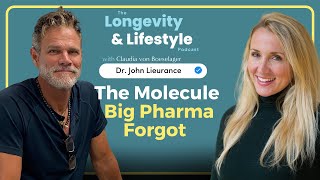
Dr. John Lieurance discusses methylene blue, a molecule that accumulates in mitochondria and acts as both an oxidant and antioxidant to support cellular energy and protect the brain and heart. He also covers high-dose melatonin (up to 200 mg nightly) and adipose-derived stem cells, including a case where the combination eliminated a prostate tumor.
Chapters
Hey there, I'm Claudia von Boeselager, a former investment banker turned entrepreneur, longevity coach, biohacker, and mother of two. Once burnt out and overwhelmed with chronic health issues, I've transformed my life and helped thousands of people do the same. I've even reduced my biological age by 17 years. Yes, I'm 26 again. Now I'm here to share the tools, strategies, and inspiration to help you live healthier, happier, and longer. On this podcast, I interview world-leading experts in health, biohacking, mindset, and performance, and share personal stories and learnings to bring you the latest insights and tips. Think of this as your go-to space for real talk about all things health and optimizing your life. Ready to unlock your best self? Let's dive in. This is the Longevity and Lifestyle Podcast.
My guest today is Dr. John Lawrence, a leader at the frontier of functional health, mitochondrial health, and peak human performance. With 30 years of experience, he's helped thousands upgrade their vitality, longevity, and consciousness using cutting-edge therapies like melatonin, methylene blue, NAD+, and cranial optimization. He's the founder of Advanced Rejuvenation and the scientific advisor for, for Mitozen, blending ancient wisdom with modern science to unlock what he calls the three pillars of human thriving: body vitality, mind mastery, and spiritual connection. He's also the author of Melatonin: Miracle Molecule and Methylene Blue: The Magic Bullet. And today we're diving into how to seriously boost your energy, heal your body at a cellular level, and why tools like methylene blue, melatonin, and cutting-edge stem cell therapies might just be the future of health and longevity.
Please enjoy. Welcome to the Longevity and Lifestyle Podcast, Dr. John. It's such a pleasure to have you with us today.
Oh, Claudia, thank you. I'm just, I'm blessed to be here with you and it's like—
No, the pleasure's all mine.
We're gonna be talking about some of my favorite subjects.
I know, I'm really excited to dig in as well. And I'd love to start with methylene blue and supercharging mitochondria. So I think a lot of people have heard about mitochondria and the energy packs of the cells, but how does the methylene blue component play into that, right? And you've called methylene blue the magic bullet for mitochondrial health. So for someone hearing this for the first time, how would you describe its superpower?
Well, first of all, I'd just like to say I've got a long, long history with methylene blue. This is not something that is a fad for me personally in my life and in my experience working clinically with it. I've been in the natural medicine arena for 30 years. I'm a chiropractic neurologist and a naturopath. And, um, and so, you know, the whole, um, kind of way that we, that we work with patients is we try to get to the root cause of many conditions. When people come to us and they have a diagnosis, that's not enough for us, right? Because the diagnosis is when the thinking starts. Because once we have a diagnosis, then we're thinking, okay, well, what's causing that diagnosis? We're in mainstream medicine, once there's a diagnosis, the physician will look into a booklet and find that diagnosis, and there's a list of drugs that would relate to that. And so the thinking really stops once the diagnosis is made. And so it's the opposite in kind of our field. So I had a medical doctor colleague of mine whose father had Alzheimer's. And this is like 15 years ago. And he started to run methylene blue IVs. And I remember because I would go over there and run IVs myself. It was across the street at the time. We're very, you know, we would send patients back and forth. And so, but I remember the dosage was so low that basically it was a big bag of saline and it was just barely blue., right? Which, I mean, it might be just a few milligrams, right? But back then, you know, we were really kind of afraid of the molecule because there was some literature that talked about something called serotonin syndrome, and there just wasn't enough research at that point, and there wasn't enough people with experience that we felt really confident to really jump into it. And so kind of moving forward, I started following a scientist. His name's Francisco Gonzalez Lima. And there's some great interviews he's done, but he's dedicated his life to methylene blue and also the photodynamic aspect. So using different types of lasers and lights interacting with what's called photodynamic substances. Like a great example of this is like your dentist, right? A lot of people, if you've had a filling, in fact, I literally just had one done like a few days ago.
Okay.
Yeah. And, you know, they put the putty in there and then they get that light, right? And like within seconds, it's, it's rock solid. Change, right? Yeah. So that's a really good example of a substance that like really resonates with a very specific wavelength of light and then it changes something. Molecularly within that structure, there's a whole lot of medicines that have been researched and looked at, a lot of which are like cancer therapies where they've either injected the tumor or they've given the solution orally. And, and these different photodynamic substances might actually accumulate in these tumors and then they irradiate them and they found in a lot of instances, some exciting things that can happen with cancer cells. And so, what I think we can do is kind of make all of that make sense and kind of wrap all this together in a very simplistic way of looking at health and longevity and vitality, which I think a lot of your listeners really want to have kind of a basic framework so they kind of understand this from a 300-mile or, you know, like a scenic view from above. Yeah. And then some actionable steps and how one might actually try to embark on utilizing methylene blue. And we might even have time to touch on some other of my favorite molecules like melatonin.
Oh, 100%. We're going to go there as well. But I'd love to just, if you can explain a little bit about methylene blue. And I think some people, especially US-based, might have seen R.F.K. Jr., Bobby Kennedy with the blue tongue. Right. So that's like the Smurf tongue effect of the methylene blue. But can you explain like what is actually happening and what is the compound so powerful with? You mentioned that 15 years ago it was at a very low dose, but now there's more research to understand that a higher dose is also effective. But can you explain like what is actually happening in the body when people are taking the methylene blue?
Yes. Yes. So the methylene blue has over 100 years of history of use. It precedes our FDA in the United States, and it's the safety when taken right is very high. So it's a very safe molecule as long as the dosage is below a certain amount and you don't go too high. Right. And we can talk about that a little bit later. Yeah, it has an affinity to an area in your cell, a structure called mitochondria. And each one of our cells has mitochondria within them. And it's kind of the most important thing these cells have because it's how it makes energy. Yeah. And there's something called the electron transport chain. It's kind of a fancy label for— if you think about it's moving electrons, right? It's a chain of electrons. And within the mitochondria, it's like shuffling these electrons along. And in the process of moving these electrons, it's producing heat. And then the cell, you know, kind of captures that heat to produce something called ATP.
ATP, which is the energy essentially, right?
Think about it like gasoline in the car, right? Or electricity in a battery. And so this, this ATP and this output of energy from the mitochondria is, is going to fuel the energy within the cell. And so our cells need to adapt to a variety of different things. And there could be very extreme things like, like severe toxicity. There can be chronic toxicity over many years that can be very damaging to the body. There's different infections, there's certain like lack of nutrients and there's a lot of stressful situations that the body, lack of sleep. I mean, all of these things kind of accumulate for people to diminish their energy, right? Yeah. So it's up to our body and ourselves to be able to have an energy output to be able to overcome these stresses. When we don't have that energy and we can't overcome these stresses and adapt. So think about it like an adaptation response. Then if we can't muster up, we don't have enough energy to muster up that adaptation response, then this is where disease has an opportunity to create itself in your body. And if, if that stress lasts for long enough, the cell makes a switch from making energy through the mitochondria to a primitive form of making energy, which is called fermentation. And that's what happens with cancer, right? So basically, in essence, cancer is a mitochondrial problem, dysfunction with the way that we're making energy. And therefore, if we're looking at mitigating disease, if we're looking at extending life, if we're looking at dealing with something like cancer, all of these things, it's very important for individuals to look at their, their metabolic status. In other words, how efficient are they at making energy? And when I say efficiency, we're talking about, you know, certain amount of glucose and oxygen that's being fed into that electron transport chain.. And then on the other side of it, what do we get for those glucose and oxygen molecules and how much waste kind of— they call that oxidation, right? So how much— it's like when you're burning coal, how much soot or smoke is happening on the other side of that, right? And all of these things are really important. So when we start looking at things like methylene blue, we don't know why, but for whatever reason, methylene blue has an affinity, a strong affinity for the mitochondria. It's a brilliant blue salt and it happens to accumulate in the mitochondria, which historically has made it a great tool for biologists to dissect tissues because they can see, because different tissues will have a different amount right, they're going to absorb the amount of methylene blue depending on how many mitochondria are populating the cells. Yeah. And the brain, the brain and nerves have the most. And even within the brain, there's some that have way more than others.
And maybe the prefrontal cortex, hopefully not the amygdala.
Well, there's structures in the, in the brainstem like the locus coeruleus, which literally means blue spot. You know, the, the substantia nigra. I mean, these have like millions of mitochondria per cell, but on average, a lot— most of your cells just have like a few hundred, right? So, so this is a like massive amount. So like if you were to stain it and then, then you were to take it out of the body and you're looking to like dissect it, you would very specifically see these very, very blue dark blue structures versus light blue structures.
That's fascinating. And I wonder, from an electrical point of view, is it the electrons that are like magnetizing to each other? That's why they're being drawn there. Like, I just— my, my science, geeky science side is kind of curious as to how it's targeting the mitochondria so effectively.
It's amazing. Yeah, I, I don't know. So there's something spiritual about this molecule, you know. There's something very divine about it.. And I say that because they're, again, when taken properly, there doesn't seem to be a lot of downside to it. In fact, the word magic bullet was coined by Paul Ehrlich in the late 1800s, and he was talking about a molecule that had far-reaching benefits to the body but left the body unharmed, right? And he discovered methylene blue works for malaria. And malaria is actually carried by a parasite. So they were looking for a cure for the parasite that carried, that carried malaria. In other words, this would be the cure for malaria. And so he sat there with his microscope and he was about to start experimenting with various molecules, right, to see which one might— these medicines might work.. And as he added the stain so that he could witness what would happen when he added the various medicines, when he added the stain, he noticed that the parasite died. And so he's like, wow, I haven't even started and I have my cure, right? Wow. So that's amazing. This is where the medical use for methylene blue was born in that moment. And then we kind of fast forward and antibiotics came on the scene. And this is like anything else, it's new and it's sexy, right? And probably even back in the early 1900s, the pharmaceutical companies were hiring cute girls in skirts to kind of go and say, hey, you know? And it is, it's like it's our nature to be kind of excited about the newest, latest, greatest thing. We want to be the ones on the, on the cutting edge. Right. And so all of these doctors, when these new medicines come on board, you know, they're, they're, they're likely going to kind of jump on to that and forget the old boring stuff. And so that's what happened is antibiotics kind of replaced methylene blue in a lot of situations. But when that happened, there wasn't a knowledge of like how detrimental antibiotics were to the microbiome. They didn't even understand the microbiome back then. And so now we understand that. So there's a resurgence and people are getting back and finding more interest in methylene blue for things like malaria and other infections. And you might ask, well, infections, methylene blue, I thought you said it was good for the energy. Now you're saying it can be treated, doesn't it, for infections? Well, there's, there's also been studies on depression. With methylene blue. Hmm. There's been studies on cancer. And so those are the main key points, is it seems to help with improving cellular energy. It seems to improve with infections. It mitigates toxicity, and it seems to be neuroprotective and cardioprotective when an individual has it. In fact, so much so, some neurosurgeons will actually— won't do brain surgery with their patients unless they have a low-dose methylene blue IV running at the same time.
Wow. And neuroprotective in terms of how is it supporting it just because of the mitochondria, or I'm just curious to understand like what is going on there in terms of the neuroprotectiveness of it, or does it support the neuroplasticity?
Like what, what do you see happening? Yeah. Great, great question. So because it works on— it seems to recycle electrons in a way, right? So there's two structures within methylene blue. There's an amine group and a thiazine. And I kind of look at both of these molecules as like in baseball, you have a pitcher and a catcher and they're throwing the ball back and forth. And there's this recycling that happens where methylene blue can act as both an oxidant and an antioxidant. And I mean, they literally have never found anything since or before methylene blue that works anything like this. It's just a very unique molecule. Again, there doesn't seem to be, you know, when taken properly for most individuals, like almost 99% of the population. There is a very rare gene, G6 gene snippet. If an individual has that, then it's not necessarily black or white either. Then those people are going to have a hard time with methylene blue. It is actually an oxidant. Okay. So when we consume it, it's, it's an oxidant. And so when we convert it into something called leukomethylene blue, and this is what happens, 80, up to 80%, 86% of all of the methylene blue within a short period of time is, is transferred into a clear kind of a white, non-blue colored molecule called leukomethylene blue. And it can kind of go between the two, but eventually most of it kind of dissolves into this leukomethylene blue. So, if you start scanning the internet and you see blue brains or you listen to some of these non-scientific individuals putting out articles talking about how bad methylene blue is for you, they have no idea. And, I've not seen one report or video or article that holds any weight that would give me to change my mind to take it personally myself and recommend it to all my patients. But yes, so the leukomethylene blue is the antioxidant, and they've done a lot of studies on leukomethylene blue, and this is actually fine for these people with this G6 phosphate gene issue. But what the way to convert the meth— it's really interesting, they do this as a trick in chemistry classes is if you take methylene blue and you add like vitamin C, which is an antioxidant, to it, it'll actually turn clear. You can even take light. You can take red light and run red light through the methylene blue, and it'll change it and shift it where it'll either lighten up or it'll turn totally clear.
So it becomes an antioxidant then by doing that.
Is that right? Right away. And more of the anti-inflammatory and antiviral components of methylene blue. A lot of them are more from the leukomethylene blue, but your body knows what to do. Your body handles all of that in the background. And so again, don't worry, you're not— it's not like things are staining permanently like us.
But the stain on the carpet you're trying to get out of your stomach.
Yeah, but you know, us that are really love methylene blue and understand it, when we see that, we actually get excited and we're we're really happy to see that. We know it's not permanent, but we know it's getting into the—
into those mitochondria. So which is where it needs to be as well. What is the optimal, like, protocol with it? I think you have like the red, the blue O2 brain protocol at Advanced Rejuvenation. So can you share some of the different protocols that you do? And then maybe for someone at home keen to try it, like, what are some protocols that you recommend to do and what to stack it with or not stack it with?
Sure. Yeah. Well, I probably should just say that I recommend that you work with a healthcare practitioner, you know, starting this and any type of supplement regime. You know, unfortunately, there's not a lot of practitioners that really understand it. I did write a book on it and we also offer distance coaching for people if they are looking to kind of start working with a practitioner with it. But, the general kind of rule with it from looking at all of the research, if you are on SSRIs, then you definitely want to be under 2 milligrams per kilogram of body weight. And, you may not want to take it if you're on an SSRI, but basically, this is like the big contraindication that a lot of people talk about is that there's a potential for something called serotonin storm. What I found digging into that is that that warning was created based on individuals that were receiving a thymectomy. So the thymus gland, which kind of sits behind the breastbone, can have cancer. And so these patients had cancer of the thymus gland. And so they were undergoing a surgery to remove the thymus gland. And so they were given high doses of methylene blue as an IV. So that the surgeons could see the thymus gland very clearly. And the patients that were on SSRIs, there were several of them that had some health issues surrounding serotonin storm, and I think a couple of them died. And so it was a big deal. It's like, oh my God, no SSRIs and melatonin and serotonin and methylene blue. It's like, can kill you. But then the Mayo Clinic kind of came along and really looked at this and said, well, you know, I think you were a little bit overzealous with that warning. You know, this is a very high dose and it's done intravenously over a short period of time. And, and so they retracted the warning and basically just said, don't take methyl— don't, don't take SSRIs if you're getting this thymectomy. And there was other countries that removed that warning.. But our FDA just kind of keeps that warning there, and it's really just a blanket warning. No SSRIs and no methylene blue. And the real sad part about it, there's so many psychologists out there and psychiatrists that, that could be recommending methylene blue that are afraid of it. But the reality is that there's not been anything suggesting that if you take very low doses of it, which you know, anything below 4 milligrams per kilogram of body weight is really considered a low dose, right? However, a lot of people, you know, people, I have a tendency to suggest people take a little bit more. There's, because I know it, I've studied it, I've researched it, right? I use it clinically, right? I have experience with it, right? Where there's other people out there kind of touting it or touting themselves as a so-called expert with it and say, oh, don't take any more than 10 or 20 milligrams, just, you know, across the board. And oftentimes these people come to us and they never really felt the methylene blue. And then we put them on, say, 45 milligrams or 90 milligrams or something like that. Like, oh, okay, finally I'm seeing my pee blue. And that's something to look out for. You can have fun in the snow with that as well.
That's a good point as well. And then they're really feeling the impact and the difference of it. It was just too low a dose previously. But is it something you take every day, multiple times a day?
Um, we usually suggest people take it in the morning, and it's generally okay to take late at night. It won't, like, keep you up or rev you up. It's not like caffeine. But the first time or two that you take it, you might not take it late at night because sometimes If we've been deprived of energy and then we all of a sudden get this boost of energy, those types of things can be a little disruptive to your sleep, but generally not.
Dearest friends, I'm so excited to announce a brand new giveaway for you featuring a product I love, Blue Eye Drops from Mitozen. These powerful eye drops combine methylene blue, silver, and Quinton sea water to support mitochondrial health, eye health, and antimicrobial protection. Methylene Blue has been shown to boost cellular energy and enhance photobiomodulation, especially when paired with light therapy. If you want to dig into the weeds of this, make sure to listen to the full podcast episode with Dr. John Lawrence. To help you experience this cutting-edge wellness product, we're giving away 3 bottles of Blue Eye Drops, a potent blend to energize your cells and support vibrant eye health. Here's how to enter. Number 1, tag 3 friends in the comments of our giveaway post on Instagram or Facebook. Links in the description. And 2, share your biggest takeaways from the podcast episode on methylene blue and mitochondrial health with Dr. John Lawrence. The giveaway closes on May 21st, and winners will be contacted via DM shortly thereafter. I can't wait for you to try it. Your cells and your eyes will thank you. What if you could wake up every day feeling unstoppable? Limitless energy, razor-sharp focus, and a body that's biologically years younger. This is your invitation to upgrade your life. For those that don't know me, I'm Claudia von Boeselager, former Goldman Sachs investment banker and serial entrepreneur turned longevity and peak performance coach. After reversing my biological age by 17 years and counting, I now help high achievers like you do the same. My peak performance and longevity coaching is designed exclusively for visionaries, entrepreneurs, and leaders who refuse to settle for burnout, fatigue, or suboptimal health. Together, we'll optimize your energy, longevity, and performance so you can thrive in business and life. This is a bespoke, science-backed coaching experience integrating cutting-edge biohacking, longevity science, and high-performance strategies tailored to your unique biology and goals. If you're ready to unlock your next level, let's talk. Book a complimentary exploratory call now. Just answer a few quick questions to get started.
Head to the show notes for the link, and I look forward to speaking with you. Yeah, but yeah, we recommend people starting out in the morning and taking it in such that, you know, if you don't want your mouth turning blue, then the best way to take it is in a way that we've, we've created where it's a small little bar and it's suspended in a palm oil. And so this little square can be cut into pieces depending on what dosage you want. And what's really amazing about it is that you can throw that in the back of your throat and drink something down. No blue in your mouth, and it dissolves completely in your stomach, which is exactly where you want it. And then we've also added a little bit of vitamin C to it, as well as a number of other plant polyphenols that help to work with this light. And so we can capture these— this light from our environment and utilize it within the mitochondria as well. We haven't even really gotten there yet. It's called photobiomodulation. But this, this can really be a powerful one-two punch where we take the methylene blue and then we utilize things like red light panels or saunas, infrared saunas, going out in the sun, laser therapies, like things like that.
Really powerful.
And then oxygen therapy, you guys do as well, right? So Yeah. We really love this concept of red blue O2. In fact, we've done a couple of events here in Sarasota at our event center. And the idea of using photobiomodulation in the form of, you know, like light therapy. Of course, you can go out in the sun as well. And then hyperbaric oxygen or hypoxic training. We've been utilizing a lot of hypoxic type of training to accentuate the absorption of oxygen and the utilization of oxygen and breathwork. And then also another form of kind of oxygen therapy that a lot of people may not be familiar with is actually breathing very small amounts of carbon dioxide gas in oxygen. And so it's an oxygen mix with carbon dioxide. So we have a carbon dioxide inhaler that we just launched. And anyway, it's, it's real easy. It's just a small box. It sits on your desk, you hook up a tank, and then you just set it. And it's, it's— we're breathing about 5 or 6%, you know, for 10 or 15 minutes and resetting your carbon dioxide sensors. It can be really important because it can just calm the system down. And it works on vasodilation. All the benefits that we really look at with like nitric oxide. So people have really been like digging through different health and supplement regimes. You'll definitely run across this whole nitric oxide argument that it's really important to maintain our, our vascular system. And yeah, I, found that there's, there's, it's not real black and white, right? And, and one of the arguments people will say is like, well, I don't want to take methylene blue because it's going to decrease my nitric oxide level. And so we can address that. And so there's 3 forms of nitric oxide: neuronal, endothelial, and inducible. Okay. And so Yeah, the inducible nitric oxide is the one that is elevated when you have an infection or you have toxicity, like, and that's, and that's why, like, when these things happen, we swell and it's like that inflammation, right? The problem is, is that nitric oxide, when it mixes with, mixes with certain nitrates, can create peroxynitrate and these peroxynitrates are the most damaging substance to tissues and to your endothelial lining of your blood vessels and your heart. Very, very bad. You really don't want those to be high. So the methylene blue only works on that, lowering that inducible nitric oxide. The endothelial and the neuronal, those are the ones you really want more of. And okay, Light therapy elevates those. Hyperbaric oxygen elevates both neuronal and endothelial. The sauna and infrared, near-infrared light in the sun elevates the endothelial. And then you have methylene blue that lowers the inducible. And so very complementary kind of mix of modalities that one can kind of put together at home.
Very powerful stacks as well. Dr. Jenn, I'd love to move on to another of your favorite topics, high-dose melatonin and the art of cellular recovery. So in your book, Melatonin: Miracle Beyond Sleep, you argue that melatonin is massively misunderstood. Why do you think high-dose melatonin could be one of the most powerful anti-aging tools that we have?
And what's the biggest myth around it? Well, I would, I would offer that methylene melatonin is the most powerful, like starting a high-dose melatonin regime, especially for those over the age of 40. And the older you get, I would say the more impactful this can be on your, on your quality of life and your length of your life. Right. And so these are both things that we really want to work on. It's not going to make a big impact if our length of our life isn't, you know, we have a longer life but we're miserable because miserable. Yeah, we have all this disease in our body. And literally, um, you know, when I, when I first was introduced to melatonin, I was prescribed 60 milligrams of melatonin a day, twice a day. It would be about 180 milligrams a day. And that would be actually 3 doses of 60. And this was by this doctor in Reno, Nevada. His name is Frank Shallenberger, and he's very well known in the natural medicine kind of arenas. And kind of in the late '80s, he actually brought ozone to the United States from Germany. So he's kind of considered the father of ozone and ozone therapy. And so, I went and did an internship with him and then I was able to have him kind of evaluate me. And, I was just recovering from chronic Lyme disease and I was still having a lot of brain fog and a lot of word finding. And, I told him I was having those challenges and he suggested I go on a high-dose melatonin regime and that he had learned this from this Dr. Russell Reiter who who's really considered the foremost expert. And so, then I started to research Russell Reiter's work and I found out this guy has literally been on over 1,000 research articles on melatonin. And, he was the first doctor to discover that the pineal gland was more than just a worthless gland. And, I started listening to him and he's talking about hundreds of milligrams of melatonin and all of these different disease patterns in the body, almost like kind of what we were talking about with methylene blue. Like, it was like almost this, like, oh my God, this is unbelievable. Mood, hormones, neurological, cardiovascular, cancer, skin. Virtually almost all diseases, I would go in and I would look in the research in PubMed and I would find not just 1 or 2, but sometimes hundreds of articles and research studies that have been done on melatonin for those specific types of conditions. Like with gut, there was research on ulcerative colitis and Crohn's disease. How is it that melatonin helps gut.
Like, I know, I want to understand this. Like, what is, what is happening? I totally, like, that threw me when you were saying that. What, what's going on there?
Like, what, what, what's the science saying? So yeah, so I, I, I've got a book I wrote on melatonin. We have chapters on all this. So anybody that wants to, like, really deep dive, it's, um, Melatonin Miracle Molecule, and it's, um, it's on Amazon. But, um, it, it, it works on the gut because it seems to that your microbiome is on a circadian rhythm just like we are. And at night, this is when the microbiome do something called swarming, which is they reproduce themselves. And during these events, you have like in a perfect world, the bad bacteria go down and the good bacteria go up. Right. And they found that supplementing with melatonin seems to accentuate microbiome swarming in the, in the gut. And, and so not only do you have, um, a support where you have more of the good bacteria proliferate, but you also have a suppression of a lot of the bad bacteria in the gut. Wow. So it does it in that way, but it also protects the lining of the gut. So the melatonin— this, this happens for all of our tissues— is that when you have good saturation of melatonin within tissues, and every cell in your body within the mitochondria produces melatonin. And this is what really blew my mind is like, well, I thought it was just the sleep molecule, like it was just produced by the pineal. But now you're telling me every single cell in your body produces it and it's within the mitochondria, right in the middle of like ground zero of making energy. You've got melatonin right there as the master antioxidant. Wow. And it's that important. And what happens is it goes way down as we get older. And you can do all the biohacking you can. You can, you know, put on the blue-blocking glasses, turn off your blue and green lights at night. Don't look at screens so much after the sun goes down. Watch the sun come up. Watch the sun go down. I mean, all these different things that you can do to pace your circadian rhythm. You're still not going to produce the melatonin you did when you were a kid. And therefore supplementing it could mitigate a lot of diseases because it works on this core aspect of our cell where we produce energy. And like kind of back to the very beginning of this interview is when we have enough energy, we can adapt, right? That adaptation response to environmental stressors, because it's not the genes that get us in trouble. It's the expression of the genes based on our environment.
Right.
That's the genetic impact. Yeah. This is where we really need to focus our attention to. And if there's— so both melatonin and methylene blue work on the mitochondria, but they work on the mitochondria in different ways and they're incredibly synergistic. Incredibly synergistic. And, we often will combine both of these molecules with a lot of our cases and see people feeling quite a lot better. I personally, it's been a game changer for me and my health for sure.
Oh, amazing. And, Dr. John, what is the dose for people interested in starting out? And then, are there any— because in the U.S., you can buy it over-the-counter. In other countries, it's actually prescription-based, but is there anything people should look out for if they're like, okay, I'd like to get started on the melatonin journey, you know, I'm 45, I'm 55, whatever age they might be, what would you recommend to look out for and what to avoid?
Well, first of all, don't let anybody get you thinking that melatonin is dangerous. There's two things that I would look at as a physician to determine if something was dangerous. Number one is, is it have a toxicity to it? Right. And most everything has a toxicity if you go and you take enough of it. Right. Yeah. But literally, they can't even find that with melatonin. They did a study with animal models and they stopped the study. That would be as if giving a human 150,000 milligrams to like an average size adult. And they just said, well, I mean, this animals are getting pretty groggy, but no, there's just no toxicity. So if there's no toxicity to it, that's great. Now, is it going to monkey up my hormonal system?
Right.
Because I don't want to take something like with testosterone, with progesterone, with estrogen, with cortisol. There's insulin. Like all of these things have feedback loops, right? We're built this way because if we have enough of a hormone, we want to auto-regulate it where we, okay, let's tone that back a little bit because we have too much of it. We don't need to produce that much. And so with melatonin, there's no negative feedback loop. They've not done any, there's never been any studies that have demonstrated that there is any monkeying up of our hormones. In fact, it's quite the opposite. It seems to be very positive for our hormones, right? There's some people out there that might, if you really dig into it, and some people might, some people might not, is there's some very, there's some very top kind of podcasters out there that'll say that, that they don't think it's a safe molecule because it will lower testosterone and potentially cause the gonads to which is the male, the gonads that produces testosterone, to shrink. Right. And this is based on a Siberian hamster. And I know— and Siberian hamsters are on a breeding cycle based on the seasons and humans aren't. But so they have this seasonal thing. And so the more sunlight there is, the, the, the less they produce of sex hormones because they're not as active breeding at that time. So these, the gonads shrink and, and, and expand based on melatonin, based on the light, because that's the way they're wired. There's never been a human trial that suggests that this is the way it's happening at all. Um, so I just haven't found anything. Um, if anybody out there has anything at all, please send it to me, but It's a very safe molecule. There's no toxicity. There's no negative feedback loop. Most of the researchers out there, according to Dr. Russell Reiter, are taking 180 to 200 milligrams per day. And that's usually taken at night, you know, sometime before bed. Yeah. Sometimes individuals might be a bit groggy in the morning. It tends to taper off after a few days of taking the high dose. But also you can take melatonin earlier in the day and then the body has more time to metabolize. Some people are slow metabolizers of melatonin, and you'll know if that's you, if you're, if you're a slow metabolizer. Slow metabolizer of caffeine. So if you take caffeine and it just seems to be in your system for a long time, it's likely you're also going to be a slow metabolizer for melatonin. So if that's the case, you can take melatonin earlier, like, say, before dinner. Okay. Before dinner. Yeah. And then as long as there's light, you know, it's going to suppress the melatonin from being released in your pineal. So you might feel relaxed a little bit, You know, one thing that I found really fascinating is I have a dog. I have a cute little Australian Shepherd. And I started to do some research on melatonin for dogs. And I found some exciting research showing that it tends to extend life and improve quality of life with both dogs that have cognitive decline, but also dogs that have cancer and are on chemotherapy.
Wow.
And if you stack that with the rapamycin, right, you're doing really well. Yeah. Or even just physatin. Or physatin as well. Yeah. Super exciting. Yeah, I think that's a whole, like, realm that's exciting to understand. And speaking of which, I'd love to touch on before we finish up today, your X-cells, right? The Rolls-Royce of stem cells, as you guys call it. So you pioneered the use of X-cells. X-cells, which are adipose-derived stem cells with mu cell populations. Can you explain what they are and what makes X-cells fundamentally different from other white bread perinatal stem cells or other clinical uses?
Yeah. Well, yeah. So, X-cells are a population of about 120 different types of stem cells. And you have two main reservoirs of stem cells in your body. It's your bone marrow and then your adipose, your fat cells. And when we look at those, so the mo— most of these cells are all made in the bone marrow, right? And so they'll continue to populate the bone marrow. There's just a plethora of studies showing that bone marrow transferred from, like, mostly from the pelvis. You know, they do what's called an aspiration, and then that can be transferred into like an arthritic knee or, you know, a spinal condition or something like that. And there's some great studies on bone marrow. It's been around for a long time, and it's something that we started using clinically. Gosh, I want to say over 20 years ago. And And then shortly after, we started using adipose. And a lot of people might be listening to adipose like fat, like, you know what, you want to touch that? Yeah. Like, it just sounds so crazy. But literally, I, you know, these, they settle and accumulate in the fat, particularly around your belly. And 1 out of every 100 cells in your adipose tissue is a stem cell. And that's way higher than anywhere else. You know, even more so than in the bone marrow. Yeah. And, and there's this population of stem cells in the, in the, in the fat that are of particular interest to us, which are called MEUSE. And that stands for multi-generational endurance stem cells and multi-differentiating multigenerational differentiating endurance stem cells. All right, there you go. That's like a mouthful. It took me a while to memorize that.
That was a tough one. More methylene blue for the cognitive enhancement.
But those, but those are your M-U-S-E cell, the MUSE. And the MUSE cells are getting a lot of attention because they seem to be anti-cancer. Wow. And, um, of course we're doing a lot of work with prostate here. And, um, my, my team, we had a, a case that came in, um, because we've been, we've been working with treating the root cause of prostate disease, which we've discovered to be infections, which we can detect with a semen test. And we had a case that came in where we did an MRI just as a preliminary to just kind of see, you know, we didn't expect to see a growth there, but we did. And this individual had a, um, a small tumor in one of the lobes of the prostate. And so my team went and did their standard protocol with the ProstaBlue Zone where we're using ozone and methylene blue. And he had a kind of a microbial overload in there, not a big one, but the main concern was what was happening as far as the growth. And they, they added in these MEWS stem cells into this injection. And 2 months later, we followed up with a post-MRI and the growth was completely gone. Right. And this really correlates very well with, with the research with, with these MEWS cells. And what we love about it is that we're able to use them and it's so safe because you don't have that safety with stem cells from placenta. In fact, it's quite the opposite. There's a lot of fear. And when people report to most clinics doing stem cells and say, I have active cancer, they'll kind of shy away from doing any systemic type of treatment. Now, with stem cell therapy, there's, there's really a systemic and non-systemic approach. A systemic approach would be doing it as an infusion, right? Yeah. IV drip.
Mm-hmm.
And if we did an IV drip, there's ways we have a brain protocol and there's ways for us to get them to go and populate inside the central nervous system. Wow. And if we do local, then we would use ultrasound guidance. Anybody that's looking to get stem cell therapy, please, the one biggest thing not only is the quality of the stem cells, but also make sure that these people are good with ultrasound guidance and needle guidance. Not only that, but you can see what's damaged and then guide it, you know, like with rotator cuff and arthritic knees and, and, and hips and spinal conditions. You've got to be able to really see and guide these injections precisely. So if you don't inject it in perfectly in the right place, it likely won't work. At least not nearly as good as it would as if it was, if it was precisely injected.
Yeah, so the quality of the stem cells is super important, and then with the ultrasound, making sure that it's guided properly as well. And so, given that exosomes survive longer and release exponentially more exosomes, which is my understanding, how do you see their role in evolving in regenerative neurology, especially in conditions like neuropathy, MS, or brain injuries, or even dementia and Alzheimer's?
Yeah, thank you. That was one thing that I think we kind of glazed over, you know, the name of the cells being Endurance Stem Cells, that kind of speaks volumes right there, right? They endure and they're very hardy and they live a very long time. And so when stem cells are transplanted from one part of your body and put into another, or in most of the cases that we treat here, these are donated It's donated from young, healthy females, usually in their early 20s, and then they're processed so cleanly that there's nothing there that could transfer any diseases. And they're cryopreserved. So we just take them out of liquid nitrogen and then we defrost them and utilize them right away. But we had utilized different placental-based products over the years. You know, just like we talked about methylene blue and antibiotics, you know, it's like the new thing comes along and it's sexy. Oh, well, we may not have to do liposuctions on patients in the bone marrow aspiration. We've got these new placental things. You just take them right out of the refrigerator and they're ready to go. But, you know, the results were never, never as good as they were when we were pulling bone marrow. And so when I finally connected with this company that was, you was utilizing the stem cell populations from adipose tissue. I just knew right away this is going to be the holy grail. If we could not have to subject somebody to a mini liposuction and just take it right out of the freezer. And the big thing and the reason that they weren't working for us and that they're not working for any other clinic out there. I mean, don't think that you're gonna go to a different clinic and get a different result from the same stem cell unless they're injecting it differently. They don't live very long. You know, they maybe live an hour. And the difference between a placental-derived stem cell and these egg cells is the egg cells could live up to and longer than 2 months. And so, like you said, you know, you're talking about a medicine working in the body for that long of a time, and it's constantly signaling the body to grow more cartilage over that long. So you're gonna have thick cartilage growth. We've seen that in a lot of before and after MRIs. When it's neurological cases, you've got that support for these patients. You know, it's not just a quick little flash where there's a benefit, short-lived benefit, but instead there's this really long gradual improvement that we see with cases.
With the use of these cells. Amazing. So I know that we're at top of the hour now. I have obviously a lot more questions, Dr. John, but we'll have to keep them maybe for round 2 at some point. Thank you so much for this inspiring conversation. If people are interested in diving deeper into your work, what you're up to, mitochondrial health, methylene blue, melatonin, egg cells, et cetera, where can they find you? Where would you send them to?
And we can link everything in the show notes. Yeah, Claudia, thanks for having me. And so I'm on Instagram quite a bit at Dr. John Lawrence, and I've got a few books that I've written. The two I think we kind of pointed out, and I have my third edition of Magic Bullet on Methylene Blue that just came out a couple of weeks ago, and it's got a lot of new stuff with what we're doing with the prostate. And then of course, the melatonin book as well on Amazon.
And then Our clinic is Advanced Rejuvenation, and the website's advancedrejuvenation.us, and we're in Sarasota, Florida. Amazing. Do you have any final ask or recommendation or any parting thoughts or message for my audience today, John?
Well, I do. I think we've— this is a podcast that, you know, some people might want to listen to twice because we put a lot of information out there. It's really important, I think, moving forward in today's world. It's not the same environment that our parents and our grandparents lived in. Right. And so there's a lot of manmade toxins and a lot of manmade stressors. Right. And so this requires something extra for us to live a healthy and, you know, a longer life in today's world and age. So I think a lot more people are becoming attracted to utilizing a lot of these strategies that we talked about today. Boy, we really gave a lot of great stuff. We talked about utilizing protocols, red blue O2. We talked about methylene blue. We talked about melatonin. And then we just finished talking about regenerative medicine and and I'm really excited. I think your, your interview was just fantastic.
Oh, thank you so much. Well, you, you were sharing the information, Dr. John, so thank you so much for sharing your wisdom. I think it's so exciting, and these are areas that are talked about a little bit less than some other ones. So I'm— thank you for going down the rabbit holes of really understanding them and being able to share them so eloquently, um, with the world. So thank you so much again for your time.
And there is one, there is one more thing I might suggest is like people that we're talking about the prostate. Mm-hmm. Women that might be having chronic UTIs might think that whoever their, um, lovers are, they may be carrying these microbes in their prostate, and it can be tested with semen. So whether you're a male and you're having some challenges with urination, waking up, uh, frequently, um, you can reach out to us and we have a semen test that we can ship out to you. And so, and if you're a female and you have a loved one that you think might be contributing to your chronic issues, then you might purchase this kit for them for, I don't know, for what's the next upcoming—
we're past Valentine's Day, but maybe there could be some special Labor Day, but I wonder, or Memorial Day. For women with constant UTIs, I know like D-mannose, because it's like an overgrowth of the bacteria, so potentially the methylene blue would be really powerful for combating the UTIs for women as well, right?
Oh yeah, in fact, that was an indication that they, they've used it and that your urine turns blue and taking it can be, um, really helpful.
It starves out the microbes of oxygen. So a combination of, would you say, D-mannose, like my, my mother obviously dementia and later stage, so UTIs are a typical thing, but combining methylene blue with D-mannose, would you think that would be a really powerful stack? Yeah, and even cranberry juice. And cranberry juice as well.
Yeah, yeah, yeah. Be really interesting. Yeah, be a really interesting supplement actually.
You're giving me some ideas with, with Mitosan. The next one to come up with it as well. Yeah, no, it's— when we have aging parents, you see different things. My father also has prostate cancer. It's spreading out to bladder as well. So I'm definitely going to get him on some methylene blue as well. And then, yeah, see what we can do. But anyway, thank you so much for your wonderful work, Dr. John. Thank you so much for everything. And yeah, look forward to seeing you hopefully soon.
You're welcome, Claudia von Boeselager. Hi everyone, it's Claudia again. Before you take off, would you like to get a short email from me to you several times a month with top tips, insights, and strategies to help optimize your life, health, and business? This could be interesting posts or articles I've read on life and longevity optimization, cool biohacking or lifestyle products that I've discovered and other fun things to help you be at your best. It's a very short piece of inspiration for you, so if you want to receive it, check it out by going to llinsider.com. That's llinsider.com, and leave your email to get the next one.
More from Claudia









Can Psilocybin Slow Aging? The Study on Telomeres, Inflammation & Survival with Dr. Louise Hecker

