Treating Chronic Fatigue Syndrome: The Naturopathic Approach With Dr. Sarah Myhill
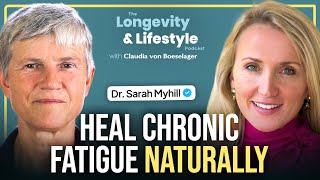
In this interview, host Claudia von Boeselager talks with naturopathic physician Dr. Sarah Myhill about chronic fatigue syndrome (CFS/ME). Myhill frames CFS as an energy‑delivery problem rooted in mitochondrial dysfunction and outlines a comprehensive naturopathic protocol. She recommends a paleo‑ketogenic diet to reset metabolism, addresses gut dysbiosis and upper‑fermenting issues, and supports mitochondria with specific supplements, breathing exercises, iodine and vitamin C. Detox strategies such as Epsom baths and avoidance of plastics and chemicals are discussed, alongside thyroid and adrenal optimization and careful lifestyle pacing. Myhill also critiques the dominance of Big Pharma, vaccine skepticism, and environmental pollutants, urging individuals to take control of their health, seek DIY solutions, and use her online resources, workshops, and community Facebook page. The conversation blends scientific rationale, practical treatment steps, and a strong advocacy message for self‑empowerment and systemic change.
Chapters
Doesn't matter who's listening to this. You might have chronic fatigue syndrome and you might not. But the bottom line is, if you sort out your diet and get a really good diet and gut function, then you are going to live to a high level for many years yet to come. You will greatly improve your longevity.
My guest today is Dr. Sarah Myhill. Dr. Myhill is a distinguished naturopathic physician with an incredible career spanning over 4 decades. Throughout her career, she has made significant contributions to healthcare, Serving as a general practitioner and working in private practices, Dr. Myhill's commitment to advancing medical knowledge led her to specialize in neuropathic medicine. With a remarkable body of work that includes 6 published books and a reputation as an international lecturer, she has solidified her status as a leading expert in the fields of chronic fatigue syndrome, which I've had and which we'll discuss as well, and myalgic, and I'm going to get this name a little bit mixed up, encephalomyelitis. I should probably be able to pronounce that better. And so much more. So we're going to dig into it today. So I'd love to welcome you on, Dr. Sarah. So such a pleasure to have you with us on the Longevity and Lifestyle Podcast.
That's very kind, Claudia. You make me sound quite good, so I better try and live up to that, hadn't I?
For sure. I first came across your work, as I mentioned, by Dr. Molly Maloof, who's been on the podcast a few times. As well, where she was mentioning your expertise around chronic fatigue syndrome. And so I've had this and I know that some traditional Western doctors are like, well, this is, this really a diagnosis or not? So for people listening and we all have stress, right? So what is exactly chronic fatigue syndrome? Can you expand on that? And then what are modalities people can, can offer?
So yeah, the key thing about chronic fatigue syndrome is don't think of it as a diagnosis. It's a clinical picture. And it's a clinical picture which has many causes. And when you ascertain those causes, then that obviously gives you the diagnosis. So chronic fatigue syndrome is the clinical picture of poor energy delivery mechanisms. So that immediately invites the question, how does the body generate energy? Where does that come from? And the analogy that I like to use that I get and most of my patients get is the car analogy. So if your car's to go, you've got to have the right fuel in the tank, and that's all about DART and gut function. And then you've got to have oxygen coming to our, our engines for the engines to work. And then you have to have the engine of the car, and in the body, those are mitochondria. And every living cell, pretty much every living cell in the whole of nature, without mitochondria, they are dead. So it's a universal engine that applies to all living cells. Then you need the control mechanisms, you need the thyroid accelerator pedal and the adrenal gearbox, and the adrenal allows us to gear up to energy requirements. So obviously as we're trotting around in the day, sometimes we have to spend a lot of energy if you're running away from a predator, sometimes you're not spending much energy because you're hibernating at night, and it's very important to match energy delivery to energy expenditure because otherwise energy would be wasted. Would be wasted and that'd be evolutionary disaster. So now chronic fatigue syndrome is similar to ME, but ME is chronic fatigue syndrome plus inflammation. And inflammation occurs when the immune system is activated and busy, and the immune system can be activated and busy for good reasons, i.e., it's fighting an infection, or for bad reasons, i.e., allergy or autoimmunity. But if the immune system is busy, first of all, you get lots of symptoms of inflammation, and inflammation is redness, heat, pain, swelling, and loss of function. So things stop working. But also, when the immune system is busy, it takes up a huge amount of energy. You know, the immune system is our standing army, and as I call it, it kicks a hole in the energy bucket. So, you know, we spend— we can—
there's—
we've got less energy that's available to us to spend spend in a day. So that's the overall kind of strategy for explaining, you know, how it all works and how we put it together. And of course, when a patient comes to see me, the first question we have to ask is, does this person have chronic fatigue syndrome? And that is, again, is a clinical picture. And the clinical picture of chronic fatigue is, well, let me explain that. We all have a bucket of energy to spend in the day. We've got so much energy available to us and we can spend it physically, we can spend it emotionally, or or mentally or whatever. Now, if you spend more energy than you have in your bucket, then you will die. You will die because there's no energy for the brain, there's no energy for the heart, you know, and so on. And so, you know, we have this bucket of energy, but if spending gets close to our total amount of energy, then the body and the brain gives us symptoms. And those symptoms have to be deeply unpleasant and nasty. If they're not deeply unpleasant and nasty, then we'll carry on pushing through, won't we? And then we drop dead. And that's totally undesirable. So these symptoms are very unpleasant. So we all know the symptoms of fatigue, physical fatigue, poor stamina, muscle weakness, haven't got the strength to do things. Now we may all feel tired. Now we may all feel tired at the end of the day, but the difference between normal fatigue and pathological fatigue is how you are the next morning. You should know, if I should be normally fatigued at the end of the day, I should have a good night's sleep and I should wake up tomorrow morning feeling as right as rain. But if you wake up the next day and you are ill, you have to rest up for a few days in order for energy levels to be restored. That is pathological fatigue. Now, even athletes suffer from this. It's called overtraining. And, you know, the key to all athletes is have a good trainer who knows where that sweet spot is, where you've got the optimum amount of training that gets you to peak fitness, but not so much that your fitness declines. So this is universal throughout, but If you have pathological fatigue, then that means you're overdoing it. So the first thing that people must do is pace their activities really carefully. Pace them so that they're not overdoing things the next day because failing to do that and you are working very inefficiently. So physical fatigue is obvious. Then we have mental fatigue. And mental fatigue is foggy brain, difficulty organizing things, can't problem solve, can't multitask. In fact, many of the patients who come and see me say, I think I'm going demented, I've got an early dementia, and they're absolutely right. The pathophysiology of dementia is the same. It's all about poor energy delivery mechanisms. And again, we can reverse dementia by all the interventions we're going to be talking about today. And then you have poor energy delivery mechanisms to the heart. And if the heart doesn't beat strongly as a pump, then blood pressure will fall. And so it's typical for these patients often to have very low blood pressure and a blood pressure much below 100/60, I would consider pathologically low.
My mother falls under that category and she has dementia now.
God bless her. Okay, well, we could talk about that too. But of course, if the blood pressure drops, then cardiac output will fall. So the heart compensates by beating a bit faster. So it's quite common to see with people who are very severely fatigued, low blood pressure and a mild tachycardia at rest. Then, but that becomes a real problem when people stand up because normally my very sick patients, you know, are horizontal, they're lying down because it's much easier to circulate blood around the body on the flat, as I call it. Now, when you stand up, you have to circulate blood uphill and downhill, and that takes energy. In fact, the heart has to increase its output by about 20%. Now, if you've got very poor energy delivery to the heart, you haven't got the energy to do that. So when you stand up, you have to— the heart has to be even faster to maintain cardiac output. That too becomes unsustainable and you fall over. And this is called postural orthostatic tachycardia syndrome. And it's almost universal in people who've got severe fatigue. So those are the signs of clinical picture. With that clinical picture, yep, you've got a chronic fatigue syndrome and we need to look at energy delivery mechanisms.
So I want to obviously dive into the energy delivery mechanisms as well. But I think for— I don't know what percentage of the population you look at in this terms, but how much is it sort of mental from overinduced stress or lack of sleep? Like, how many cases would you say, percentually?
Well, well, that can certainly be a triggering factor. I mean, the people who are severely mentally fatigued, they simply don't have the energy delivery mechanisms to function well. And that's why their brain is going slow. That's why they can't problem solve. That's why they can't multitask. So that, that's a symptom of. But I think you're talking about precipitating factors. What causes this disease in the first place? And yes, for many, you know, if they're just chronically burning the candle at both ends, they're sleep deprived, they're skipping meals, not eating well, they're using addictions to keep going. People who have a high intake of caffeine or alcohol or sugar, which is of course a serious addiction, or using drugs to keep going, you know, that's symptomatic that their energy delivery mechanisms are falling— are failing, rather. And of course, so, and mental stress will do that, won't it? Because it'll stop you sleeping. If your brain's constantly thinking about work and commitments and family, then, you know, that is obviously kicking a hole in the energy bucket. So yes, it's very common to see people with fatigue syndrome. Sometimes there can be a slow buildup to their chronic fatigue as a result of these cumulative lifetime stresses. And then often you get the last straw that breaks the camel's back that might be, a Christmas you have to prepare for, a flu-like infection, getting COVID, having a COVID vaccine, you know, some acute event that then tips you over the top into a full-blown chronic fatigue syndrome. So yeah, so there are many precipitating factors. I mean, I've even seen somebody had a chronic fatigue triggered by a head injury. He was unconscious for about 3 days, and when he came round, he just didn't have his usual energy. So there are many potential triggers, but Regardless of the triggers, the workup is the same. We start with energy delivery mechanisms. And as I say, the car analogy is very helpful. And again, it's so important to do these in the right order. And getting well is like building a house. And what do you do? What's the first thing you do? Well, you put down the foundation stones, don't you? And the foundation stones of this is the diet. And the diet is, to my view, is non-negotiable. If you don't get the diet or on the way to the diet, the diet as right as you can, then don't bother with the rest because you're going to really struggle. The diet, it is that important.
I love your firm statement with that as well. And I think it's so important. And I think people listening might be like, well, my diet's okay, or I do, you know, as best as I can. So how will some person know they're doing the right diet? And obviously for people around the world, this could be different, right? So how would you define that?
Okay, well, you know, the first point is everybody thinks they're eating a healthy diet and they rationalize it to them of themselves. But whenever there's a difficult question like this, I always go back to first principles. And those first principles are about evolutionary biology. You know, how— what did primitive woman eat? You know, what was her diet? And the answer is she wasn't eating as much food as we are. Many people are chronically overeating. It was largely based on fiber, high fiber, high fat, yes, and protein. She would have carbohydrates, but only once a year with where we have a windfall, when we have windfall of fruit, a windfall of root vegetables, of grains, of pulses, of nuts and seeds. They're the high carbohydrate foods which are such a problem for many. And yes, you'd have had a windfall of those in the autumn. And the thing about carbohydrates, especially the sugars and especially processed foods, is they're very addictive. And what that means is when we start eating them, we can't stop eating them. And addiction for primitive woman was very desirable. She would get addicted to her fruits and her nuts and she'd eat lots of them, as many as she could get, and she would get fat. And being fat is survival value for the winter. It's insulation and of course it's a fuel source. But in the end of the autumn, she stopped eating those foods because she had no choice. She ran out of them and went into hibernation mode. And basically she'd be hibernating with the odd excursion to try and hunt or kill a deer or whatever, whatever. So essentially our diet needs to be, as I call it, paleo-ketogenic. So, so ketogenic, low in sugars and carbohydrates, rich in fiber, fat, not high protein. It's a normal protein diet. It needs to be paleo because the two modern groups of foods that have come in recently are the dairy products and the gluten grains. From an evolutionary perspective, they are very recent. They're a few thousand years old, which is the blink of an eye. And many people haven't evolved a gut function or an immune function that can deal with those foods. So dairy allergy and allergy to gluten grains is very common. So that's the essence of the paleo-ketogenic gut. And in parallel with that, we have to sort out the upper fermenting gut. Now, to explain what the upper fermenting gut is, I'll take you for a quick whiz through normal gut function. Now, the gut is a tube between the mouth and the anus. It's about 30 foot long and we've got about 22, 23 foot of small intestine, a big part of upper gut from the esophagus, stomach, duodenum, jejunum, small intestine, about 20 foot of that, which should be near sterile. There should be virtually no microbes there, it should be almost sterile. And then the last bit of the gut, last about 5 foot of gut, the large bowel, the colon, that's where the microbiome is. And the microbiome is comprised of kilograms of bacteria and yeast and viruses that are fermenting fiber and some resistant starches to do much good for the body. It synthesizes vitamins and minerals and programs the immune system, makes neurotransmitters, and so on. But I'm talking about the upper gut, the first 20-odd foot of gut that should be near sterile. Now, the problem with modern diets that are high in sugars and carbohydrates is you overwhelm the ability of the upper gut to digest them and foods start to ferment instead. And these microbes which ferment are evolutionary incorrect, if you like, they're foreigners. And that causes all sorts of problems. First of all, if you've got a fermenting upper gut, these microbes live in the lining of the stomach, that makes for a leaky gut. And if you've got leaky guts, you can't concentrate acid in the stomach. Acid in the stomach is such an important part of correct digestion because we need acid to absorb minerals, we need acid to break down proteins, and we need acid to sterilize the upper gut because about 90% of infections will come in through the gut. And even those microbes that we inhale get stuck on sticky mucus in the nose and the throat, coughed up and swallowed, and they also end up, should end up in an acid bath, and in that acid bath, they're killed. So it's a very important defense against infection. And another problem when we ferment is if you ferment, if you've got yeast there and they ferment sugars, you will produce alcohol. This is called the auto-brewery syndrome, and we produce significant amounts of alcohol which have to be dealt with by the liver. If you gave me half a glass of wine to have for breakfast, then I can tell you work wouldn't get done that morning. And so it's not just alcohol that be fermented. Sugars and carbohydrates are fermented to D-lactate, to hydrogen sulfide, to ammoniacal compounds, to all sorts of nasties which give you foggy brain. And so often people tell me that as they do the PK diet and they clean up their upper gut, their foggy brain is much improved. Not surprising, as I say, we're not drinking a half a glass of wine with every time we eat something. And there's another really important issue here as well. Because, and it has to do with energy. Now I'm jumping sideways for a second, but don't panic, I won't lose you. At rest, the brain, although it weighs 2% of body weight, that consumes about 20% of all the energy generated in the body. The heart consumes about 7% of all the energy generated in the body, but the liver can consume up to 27% of all the energy generated in the body. Because it's using a huge amount of energy to detox all these nasties. And not just products of the upper gut, people eating processed foods with lots of chemicals and additives and flavors and goodness knows what, who are on prescription medication, who take addictions, these all require detoxing the liver. So massive amount of energy goes there. So, and there's another point here, of course, because these microbes in the upper gut, they are also hungry for vitamins and minerals. So, you know, people want the easy way out. They don't want to change their diet. They just want to take some supplements and all will be well. But it's not like that. If you feed supplements to someone who's got an upper fermenting gut, then they will just ferment harder. The microbes will say, oh, yum, yum, yum, here's some nice B vitamins, here's some nice cakey thing, I could do with some of that. And they do, and they reproduce faster, and they produce more toxins as a result. And one final problem for the upper fermenting gut, so I'm going off on a tangent, but It's my favorite subject, as you can probably guess. These microbes, although we are taught at medical school that yes, they're in the gut, but there they remain, we now know that's not true. We now know microbes get very easily from the gut into the bloodstream. Now, if these are friendly microbes from the large bowel that the immune system's been looking at for, you know, hundreds of thousands of years, no problem. The immune system is, oh, they're safe. And they just come out in our urine. We just get rid of them. But if they are unfamiliar microbes, then the immune system can be alerted to them, and this will switch on inflammation wherever these microbes end up. So we know in the gut, these drive inflammatory bowel disease like Crohn's disease and ulcerative colitis. We know in the joints, they drive inflammatory arthritides like rheumatoid arthritis, ankylosing spondylitis, psoriatic arthritis, all these nasty arthritides. In the muscles, they drive polymyalgia and fibromyalgia. In the brain, they drive psychosis. In the lungs, they drive asthma. Dee-da dee-da dee-da. They drive a whole heap of other pathology. So the interesting thing about this approach to treating chronic fatigue syndrome is it is also the approach to treat all Western pathology. So it doesn't matter who's listening to this. You might have chronic fatigue syndrome and you might not, but the bottom line is We should all be doing this because if you sort out your diet and get a really good diet and the gut function, then you are going to live to a high level, you know, for many years yet to come. You will greatly improve your longevity. So upper fermenting gut, how do we treat it? Well, first of all, stop feeding it. Stop feeding it yeast. Stop feeding it sugars and carbohydrates. So that's why we want a low carbohydrate diet. And then in addition to that, there are two very useful tools that I love to use. And that's iodine and vitamin C. Now, both iodine and vitamin C contact kills all microbes, so they're very helpful to clean up the upper ventricle. They're also extremely safe. They're also very cheap, and they do lots of other good jobs too. They help strip out heavy metals, they improve our antioxidant status. You know, they're essential for the immune function, for killing microbes. You know, they are my two favorite and most important tools.
So which iodine would you recommend? Which vitamin C?
The key about iodine and vitamin C is don't take them at the same time because one's a reducing agent, the other's an oxidizing agent. One's an electron donor, one's electron seeker. They knock each other out. So separate them. Some people prefer to take iodine in the morning and vitamin C throughout the day, or vice versa. It doesn't matter. But I use Lugol's iodine 15%. It's as cheap as chips. We sell it for about £6 for a bottle that will last you a long time. And I like to take 3 drops of iodine either at night or first thing in the morning. Children, a bit less maybe. And that contact kills all microbes. And then vitamin C, I just use ascorbic acid because it's inexpensive and ascorbic acid is good for my PBs. Now I'm going to have to tell you a little joke to explain what PBs are. So forgive me, but this derives from a newspaper article I read or 20-odd years ago now, about a merchant bank who wanted to target its wealthiest customers. So it was a very wealthy bank with lots of wealthy customers, so it prepared a letter that then went down to the mail merge department so it could be personalized. So you go to Lord This or Sir That or Mr. This or Mr. That. But unfortunately, the scroff in the mail merge department forgot to press the mail merge button. And so all these wealthy people received a letter that opened up, Dear Rich Bastard. So people who come see me who are wealthy are described as RBs, rich bastards. But most of my patients are PBs, they're poor bastards. They can't afford many interventions because they can't work. So the interventions I'm looking for have got to be affordable, they've got to be doable, they've got to be accessible to all, they've got to be very cheap. And vitamin C and iodine ticks all those boxes. And ascorbic acid is the cheapest form of vitamin C, and it's also the best because it is an acid. You can take it with food and that helps to digest and acidify, digest food through acidifying the upper stomach.
And just is it absorbic acid or ascorbic?
Are you saying it doesn't matter? I call it ascorby. I pronounce the C. I think there should be a C in it, but it's the same thing.
I just want to be sure for our show notes here for everyone listening.
Okay, beautiful. So, so now hopefully we've got the right fuel in the tank for our mitochondria, i.e., ketones. And we get ketones from fat and we can get ketones from fiber. When fiber is fermented in the microbiome, we produce short-chain fatty acids, which are ketone bodies. And then we have to have oxygen, right? Now, this is actually, I think, quite a common problem, but often overlooked. Now, obviously, for your engine to go, for your mitochondria, it's got to have oxygen. And the way this works is obviously we breathe in air which contains oxygen. Oxygen hops on to haemoglobin in the red blood cells, it circulates in the body until it gets near a mitochondria in the capillaries, and then oxygen hops off and goes to the mitochondria. But the question we have to ask is, how does oxygen know to hop on in the lungs and hop off in the mitochondria? Because guess what? If it was the other way around, it would be an absolute disaster, wouldn't it? And the answer is, has to do with carbon dioxide and acidity. Now, obviously mitochondria are burning oxygen to produce carbon dioxide. That's the waste product. That carbon dioxide has to be carried away in the bloodstream and it dissolves in the bloodstream as a weak carbonic acid. So where, when blood comes in contact with mitochondria, there's carbon dioxide, there's acidity there, and as the acidity changes, oxygen hops off to the mitochondria. In the lungs, the opposite is true. In the lungs, we're exhaling carbon dioxide, we're washing it out. And as we wash it out from the blood, the blood becomes more alkaline. And in an alkaline environment, oxygen hops from the lungs onto the hemoglobin. Now, the reason this is important to understand is because some people breathe too much, they hyperventilate. And if you hyperventilate, you wash out all your carbon dioxide. And you make the blood too alkaline. And if the blood is too alkaline, then oxygen cannot get from hemoglobin to the cells. Now, these people, when they do their oxygen saturations, they can be 100% saturated. Oh yes, I've got lots of oxygen in the bloodstream, but that's oxygen in the bloodstream. That is not oxygen in the cells going to the mitochondria. So to diagnose if we have a hyperventilation problem, We can do this through breathing exercises. Now, I'm very happy to send my chapter on oxygen around if your listeners would like to read this in detail. But there are 3 important points to breathing. First of all, always breathe through your nose. Many people are mouth breathers, which is not good news for other reasons as well. But breathe through your nose because that increases what we call the dead space, i.e., the amount of air that is re-inhaled after exhalation. The second thing is breathe with your diaphragm, because that improves circulation of the blood actually, but it's an important part of normal respiration. Many people panic and breathe with their chest. And third thing is breathe more slowly, slow the breathing down. And it should be fairly easy to get to, you know, 3 breaths a minute. So you breathe in for maybe 5 seconds and out, out, out, out, out, out, out for about 15 seconds, and then repeat. And by doing that, you are retaining carbon dioxide and resetting the respiratory center in the brain. Now, anybody who's running their life on adrenaline, on caffeine, on addictions, it stimulates the respiratory center and they hyperventilate. Now, this is a stress response. But when you hyperventilate, as I say, you impair oxygen delivery, and you will make yourself more fatigued. So it's a difficult concept to get your head around, but guess what? The treatment for it is free. It doesn't cost anything at all. Anybody can do these exercises. Perfect for my PBs. When you're lying down just before you're going to sleep, when you wake up in the morning, that's the time to do them, just to reset the whole system and maybe combine it with a meditation or listening to a storybook or something relaxing. So now we've got to the point where we have got good fuel in the tank, we've got oxygen coming to our mitochondria, and then we have to look at the mitochondrial engines. Now mitochondria, I mean, when I learned about mitochondria at medical school, it was the sort of something, and this was the 1970s, I'm ashamed to say, this is the 1970s, it's the sort of subject you mugged up the night before on chocolate biscuits and black coffee and regurgitated your recently acquired knowledge onto the exam paper and hoped you'd done enough to pass. And the reason that we treated mitochondria in such a disdainful manner is because when I was at medical school, they had no clinical application whatsoever. Mitochondria were not once mentioned in pathologies, whatever that pathology may be. And now we know they are involved in all pathologies. There is no pathology that doesn't involve mitochondria from aging, cancer, dementia, heart disease, diabetes, arthritis, you name it. Mitochondria are centrally important in all. So the fact is we should all be paying attention to our mitochondria. Now, why can they go slow? Well, they can go slow because they don't have the raw materials to function. And we know that from, well, from lots of work. There's a wonderful book called The Sinatra Solution written by cardiologist Stephen Sinatra, who started off life as a conventional cardiologist with the with the drugs, with the surgery, with the pacemakers and all that, and ended up just doing nutritional medicine because those drug interventions might maintain or control the heart, but it doesn't reverse pathology. And Stephen Sinatra established what he calls his awesome foursome. I will add one to that, which is magnesium, 300 milligrams daily, and vitamin D, 10,000 IU for its absorption. Coenzyme Q10, at least 100 milligrams a day. Acetyl-L-carnitine, maybe 1 gram a day. Vitamin B3, 1,500 milligrams a day. And D-ribose, which is the raw material to make ATP. So those are the 5 key rate-limiting steps that come up time and time and time again if your mitochondria are going slow. And then of course mitochondria can go slow because they're blocked by something. So, and there are any number of somethings that can block them. And we, thanks to John McLaren Howard, who really should be awarded the Nobel Prize for medicine for his work with mitochondria, he developed tests so he could look at what was inhibiting mitochondrial function, either by what's inhibiting oxidative phosphorylation, which is the biochemical name for energy making, or that was blocking translocator protein, which is how the energy molecule ATP gets from mitochondria into the cell where it's needed to do a job of work. And by doing these studies, he established that common things were common. Now, the number one thing that blocks mitochondria is lactic acid. Now, lactic acid is what happens when we don't pace our activity well. So this is another reason why pacing is so important, because if you're producing lactic acid all the time, your mitochondria are getting slower and slower and slower. The second thing he found was products of the upper fermenting gut, malondialdehyde, D-lactate, ammoniacal compounds, and so on. So, well, guess what? We've done that too, haven't we? Because we sort out our upper fermenting gut. And then we've got heavy metals, toxic metals. Now, they won't— they have to— to get rid of those, we need nutritional supplements, glutathione, minerals, or chelating regimes, which can now be done at home. The second group will be pesticides and volatile organic compounds. So glyphosate, synthetic pyrethroids, organochlorines, all these nasty chemicals can get stuck on, and many volatile organic compounds. Now these can be got rid of by heating regimes. And this is my favorite, another favorite intervention, because we can, hopefully most of us can afford to do a heating regime. My favorite are Epsom salt baths because Epsom salt baths, again, multitask. Most people have got a bath and hopefully hot water. Epsom salts are very cheap. For your foreign, for foreigners, Epsom salts is magnesium sulfate. It's mined out of the ground by the ton and in the UK we can get a 20 kilogram bag delivered for about £30, which will give you 40 detox Epsom salts. Salt baths. And my experience is because we've done tests of toxicity before and after, roughly speaking, 40, 50 baths will halve your total load of toxins. Now you can never get down to zero. You can, but you can halve the dose of 50 and halve the dose, another 50 and halve the dose, another 50 until you get the level so low that the body can cope. And in addition to detoxing, you also give yourself a nice dose of magnesium and a nice dose of sulfate.. And that again further helps in many ways. So we have to say we detox our mitochondria. And then of course they can be blocked by, by virus proteins, by bacterial exotoxins, by fungal mycotoxins. So sometimes you can get a clue from those tests that, you know, that there's a chronic infection there. Well, at the moment those tests aren't available, so don't everybody come rushing to me, say, can we have the test? Because presently you can't get them. But those are the means by which mitochondria can be blocked, can be inhibited. And then, of course, we have to have the control mechanisms. And for the control mechanisms, we need the thyroid accelerator pedal and the adrenal gearbox. Now, of the two, I probably cure 10 times more people through sorting out their thyroid than their adrenal glands. So let's, let's talk. Let's look at the thyroid. Now, of course, if the thyroid gland is underactive, you will get all the symptoms of poor energy delivery mechanisms that we've talked about. Doctors will tell you if your thyroid's underactive simply by looking at the blood test, and that can be very misleading because many doctors only look at the thyroid stimulating hormone, which will only pick up primary hypothyroidism. That will miss secondary hypothyroidism due to the pituitary gland, and that's the commonest form in fatigue syndromes. They will miss the diagnosis because the reference range is set too low. So my reference range for a T4 is about 12 to 22. Professor Sir Anthony Toft, who wrote the BMA Guide to Treating the Underactive Thyroid, in his book he says, and some people don't feel well until their free T4 is running at 30 picomoles per litre. So the reference ranges are often wrong. So, the point here is it's not just biochemical diagnosis. We don't just look at the blood test and say yes or no. We also look at the clinical picture. You know, what can we see? And the useful symptoms and signs, first of all, are the pulse. Feel your pulse at rest. And if your pulse at rest is much below 70 beats per minute, certainly in the 50s and probably in the 60s, think underactive thyroid. Another name for the underactive thyroid is mixed oedema, i.e., tend to retain fluid. So puffy eyes, crease marks on the face when you wake up, a big tongue. So if you look at the side of your tongue, if you've got tooth marks along the side of your tongue, that can point to fluid retention. Fluid retention in the wrist causes carpal tunnel syndrome, and that presents with numbness and tingling in those fingers and half of the ring finger. The little finger is spared. So if you wake in the night with tingling there, think underactive thyroid. And temperature, low temperature. If your core temperature on waking in the morning is low, think underactive thyroid. Edema of the vocal cords, that can cause croaky voice. So it sounds like you've been smoking for 20 years, but you ain't. And you can lose your singing voice. So people say, oh, I can no longer hit my top notes. So those are all clues that there's a thyroid issue. And I say often adrenal issue goes in parallel with that. So by correcting all these factors, you can greatly improve energy delivery mechanisms. And for some people, that's all they have to do, that, that, that, that nails it. But there are some people who have, as I call it, a hole in the energy bucket. And you alluded to stress and so on. And yes, that would put, as I describe it, an emotional hole in the energy bucket. But the big, the common problem is the immunological hole in the energy bucket. The immune system is activated and that is using energy. Now it can be activated for reasons of allergy. And actually, this is how I got interested in the whole chronic fatigue syndrome area in the first place, because when I was working in the 1980s, I discovered that my daughter and I were both very dairy allergic. And not only did cutting out the dairy products cure her intractable colic as a baby, but it also cured my chronic snotty nose and chesty wheeze, and I felt much better for that. So, so I knew allergy was a big player. And that was nowhere in the medical textbooks then, and it's nowhere in the medical textbooks now. Very few doctors will even mention allergy, but it is a very real issue. So allergy to dairy products, allergy to gluten grains are common. And so what do you have to do? Well, you have to avoid them. And of course, that's the start of the paleo-ketogenic diet. Some people have lots of other allergies and they know what their allergies are. And there are desensitization techniques that we can use, but we won't go into those today. But that's for the allergy side of things. And then we have autoimmunity. Now, autoimmunity is very easy to switch on and it's very difficult to switch off. So, you know, avoidance is the name of the game. And I think that the number one thing that's switching on autoimmunity today of vaccines. Not my words, but the words of Professor Yehuda Schoenfeld, consultant immunologist who works out of Israel, flies all over the world as an expert witness talking about vaccines and autoimmunity. So don't vaccinate. And if you have any doubts about the efficacy of vaccination, because it's never been tested, vaccination has never been tested placebo-controlled double-blind. But if you have any doubts, then you need to read a book called Dissolving Illusions, which is about the history of vaccines. And what we find through reading that book is that it wasn't vaccines that stopped infectious disease, it was good hygiene. You know, having people living in clean conditions with clean water, a good sewage system, clean food, and therefore having a good immune system. I mean, I could give anybody typhoid fever. I give anybody cholera if I put them in filthy conditions and fed them filthy food. And we know that, don't we? Wherever there's a war zone, a war event, people end up in these conditions and guess what? Infectious disease is sore. So it's not vaccines. It's all about good health and good hygiene. That's what protects us from disease. Vaccines are almost irrelevant. So again, autoimmunity and autoimmunity is also switched on when we're in an inflamed state.. And the most pro-inflammatory thing you can do to your body is eat sugars and carbohydrates. And the most anti-inflammatory thing you can do is get into ketosis. Ketones alone have a marked anti-inflammatory effect. So I'm now going to talk about chronic infection because I mean, do you want me to— I mean, I've been waffling, surely you didn't ask any questions before you all fall asleep with boredom.
This is— no, this is absolutely brilliant. But I just want to touch on the ketogenic diet. I think, I mean, two things that I'd like to touch on. One was before when you were mentioning low carbohydrates. If you could just expand on that a little bit as well, because obviously there's different versions of it. And then secondly, obviously the ketogenic diet has had its sort of renaissance. However, there is some that say, and I've had phases of doing the ketogenic diet myself, but that it's not sustainable or it's good to kind of flip in and out, particularly for women as well. It can be a bit tricky as well. So Could you expand a little bit more on both of those as well?
Okay, well, a ketogenic diet is not a no-carbohydrate diet, it's a low-carbohydrate diet. And because the point is sugar is such dangerous stuff for the body that if sugar levels go high, then the body will always burn that first to get it out of the way. So sugar is an essential, it's an essential for detoxing, it's an essential for the raw material to make ATP, It's essential to make DNA and RNA. So it is essential for the body. But the problem is if you just eat processed foods and sugars, you get addicted to them and you overeat. So it's not no carb, it's low carb. And the way to test is to get yourself a breath meter. Now the one I'm using at the moment is called AceTrack. It's very, it's very good, it's very reliable. And you know, I'm in ketosis, well, 99% of the time, but I do eat apples, I do eat figs. I do enjoy the odd dark chocolate, sometimes, you know, oatcakes, but I'm in ketosis all the time.
And how deep in ketosis are you? Like between 2 and 4 millimoles?
Well, this is parts per million. Sometimes I'm as low as 20 parts per million. Sometimes I'm as high as 100 parts per million. It just depends. So, you know, I don't eat breakfast. I eat all my food within a 6-hour window of time. So if I go for a walk, say, in the morning, By the time I come back, I might be bringing 80, 90, 100. But in the morning, sometimes when I wake up, it might be as low as 20 or 25. But it doesn't matter the actual— what the actual score is, because as I said, the body will always get rid of sugar first because sugar is so dangerous. If the blood sugar rises, it'll burn that off as a fuel. So what it means if you're in ketosis, then we can infer that your blood sugar is going to be level and stable. So it's a very good way of monitoring to make sure that you are there. Now, some people struggle to get into ketosis because you need extra nutrients. And the 3 that come up time and time and time again are thiamine, vitamin B1, and there's a product called benfotiamine, which is a lipid-soluble form, and you need 1 gram a day. Chromium, you need chromium for good glucose burning, and I suggest If you're deficient, take 2mg a day for, say, a couple of months and then a maintenance dose of maybe 200mcg a day. And the third one is carnitine, L-carnitine. You need carnitine to, to fat burn efficiently, maybe a gram a day. So those are 3 supplements. But despite that, some people still struggle with ketosis, and that is often a symptom of the underactive thyroid. Because to fat burn, we need thyroid hormones. We know that somebody who's thyrotoxic goes into, you know, overdrive fat-burning mode and they just burn off all their fat. So we need thyroid hormones to fat burn. If you haven't got the thyroid hormones, then you fat burn with adrenaline instead, 'cause you can fat burn with adrenaline. But if you're running high levels of adrenaline, that is very uncomfortable. Stops you sleeping, you get that wired, tired but wired feeling. And very often people say, "Oh, I can go ketosis for a week or so, but then I feel absolutely terrible and I can't sleep." They often have an underactive thyroid. It's called ketogenic hypoglycemia. It's a dreadful name, but it's a condition that absolutely exists. So if you have any problems getting to ketosis, think those things.
So the supplements and then we've had specialists on who are Hashimoto's specialists speaking about the thyroid as well and the amount of people that have hypothyroidism. And it's such a large number as well. So if somebody who is hypo or has a tendency towards hypothyroidism, myself included, what would you recommend in order to be able to be in that optimal state of the paleo-ketogenic diet?
Well, I've written a book about this and I've been very naughty. I've called it The Underactive Thyroid: Do It Yourself Because Your Doctor Won't. And the shameful thing is that is the state of things because doctors do not treat the underactive thyroid well. And, and as a result, you know, the diagnosis is missed or worse still, or worse, people are undertreated. And you're absolutely right. Kenneth Blanchard, who is an American physician, and he only dared write this once he had retired. Recounted that at least 20% of Westerners have an underactive thyroid. Amongst my fatigue syndrome patients, I bet it's about half have an underactive thyroid and can benefit from thyroid supplements. So yes, this is common. And the key point to remember is, yes, you need blood tests. You need blood tests just to make sure that you are not overactive, because the last thing you want to do is use thyroid hormones in somebody who is overactive. And also to see if there's biochemical scope for a trial of thyroid, because we all have our own personal reference range, which is not the same thing as the population reference range. So the population, my population reference range is a T4 of about 12 to 22, but some people will be normal running at 12 or 14, and some will be normal running at 28, 29. So having got the blood test to show that there's scope for a trial, We then ask ourselves, is the clinical picture right? So we then go through the symptoms and signs that suggest the thyroid is underactive. Well, one important one I forgot has to do with our diurnal rhythm because the way that we stay awake by day and we go asleep by night, obviously light determines that. But as light fades, then the levels of melatonin, which is the sleep hormone, build up at night. And melatonin levels, as they build up, then they stimulate the pituitary gland to produce thyroid stimulating hormone. Now, TSH spikes at midnight. Now, TSH trots around the body to the thyroid gland and gives it a kick, says, "Come on, make some thyroid hormones." And the first one the thyroid gland makes is T4, and that spikes at about 4 o'clock in the morning. T4 is fairly inactive. That's slowly converted to the active T3, and that spikes at 5 o'clock in the morning. T3 then trots around to the adrenal gland and gives it a kick. So we should wake up naturally at 6 or 7 o'clock in the morning. Okay, so if any part of that goes wrong, then the whole down rhythm slips and people become owls. And many of my fatigue syndrome patients say, "Oh, I can't get off to sleep till midnight or 1 o'clock in the morning, and I can't get out of bed till 9, 10, 11 o'clock in the morning." That's another clue that you've got an underactive thyroid. So we look at the clinical picture and we think, yep, the clinical picture fits. You know, I've got many of those symptoms. The blood test shows there's biochemical scope for a trial of thyroid hormones, so let's try them. Now thankfully, anybody can buy those over the counter online, and these are thyroid glandulars. And thyroid glandulars are, in the book, there's a list of all these suppliers throughout the world. If you Google around, you can find them. And essentially, these are animal thyroid glands that have been dried and encapsulated. And thyroid hormones are extremely stable, so it's a very good product, and the doses and the amount of thyroid hormones in there is very standard. And what we do then is we start with a very tiny dose of thyroid glandular. I suggest 15mg of thyroid glandular, and we increase the dose by 15mg every week until we get up to the level that sorts things out. Now, the level that sorts things out is going to be different for people. So bigger people need more than little people. But, you know, I too have an underactive thyroid and I reckon I need about 90mg of thyroid glandular in order to be well. And in old money, this used to be measured in grains because the original one was Armour Thyroid and you used to get it in grains. And 1 grain of Armour Thyroid is equivalent to 60mg of thyroid glandular. That's pork thyroid. Or 65 milligrams of bovine thyroid. So just gives you, and they're pretty similar. So I'm taking the equivalent of about 1.5 grains of Armour Thyroid daily, and I need that to be well and to be sharp, but everybody's different. So the point is you can sort it out yourself, but the key is start low, go slow, check your pulse, check your temperature. How do I feel? How am I functioning? And you work it out yourself. And there's a key point here. Because there's nobody who's going to be better motivated to do it than yourself. Nobody is better on hand to assess the symptoms of day-to-day than yourself. You are in the driving seat. So what I am doing is I'm teaching my patients to become their own doctors. You know, I'm empowering, giving them power, saying, you know, you can do it. Obviously they come back to me and I suggest this and I suggest that, but it's much better if patients learn that they have to be the one in charge. They have to be the ones, you know, taking control of their health because there's then there's no blame game. There's then no, oh, I'm going to sue you because you gave me the wrong advice game, you know, and it's— and we're intelligent people talking to intelligent people and that's how it should be.
Yeah. Empowerment of health as well. So sorry, I had interrupted you when you were on to the next mechanism and I'm trying to recall where we left off.
Do you? Absolutely. Chronic infection. And this is very likely to be a problem when there's an obvious infectious trigger to that fatigue syndrome. So the one that comes up time and time again is Epstein-Barr virus. And a very common history is the dairy-allergic child who goes through life, who gets recurrent tonsillitis, recurrent sore throats, and then they get Epstein-Barr virus, or mono as the Americans call it, and then they flip into a chronic fatigue syndrome or ME. That's a very common sequence. We're seeing epidemics at the moment of Lyme disease, and it is— I mean, although we talk about Lyme disease and ticks, it is biologically plausible Lyme disease could be passed by any biting insect. In fact, a colleague of mine had a picnic in Hyde Park in London, right in the south. She came home a few days later, she found a bullseye rash, and she tested herself for arm in laboratory, and she had picked up Lyme disease. So anybody can get it, you know, it's almost impossible to avoid, but think Lyme, you know, if there's any history of illness following a bite. Mycoplasma, very common cause of pneumonia, often called the walking pneumonia because it's not sufficient to get somebody into hospital, but chronic chest infections, you know, think mycoplasma infection, think fungal infections from aspergillosis, women who've got chronic vaginal thrush and so on, think fungi. So there are any number of microbes that can get in. And of course now COVID, in particular spike protein, which gives a similar immunological reaction as to actually getting COVID infection. The vaccine we're now finding is very dangerous and very good at switching on post-MEs and long COVIDs. So one of the problems is if you've got one infection in like Epstein-Barr virus, then the immune system is going to be slightly suppressed and you're more likely to get other infections in. And so what we find is that these people, they don't just have an infection, they have a cocktail of infections. And there's no point just giving the antibiotics for Lyme because that will make a yeast problem worse. There's no point just giving the antivirals because that may allow something else to flourish. So these days I'm increasingly saying we need general measures to reduce the total infectious load as much as we possibly can. And then hope the immune system can do the rest. And there we do have some very good techniques of doing that. Now, of course, just improving energy delivery mechanisms, as we talked about, will give the immune system the energy to do the rest, to fight. But there are, at the moment, there are two approaches that I'm using. One is something I learned about quite recently called Vedicinal. Now this is medicinal but spelled with a V, Vedicinal. And it's a combination of 9 herbs, 9 herbs that we all know about, like Chinese skullcap, curcumin, lutein, asparagin, and a whole range of herbs. I can't remember them all, which have multiple antiviral, antimicrobial, antifungal, anti-inflammatory, healing, repair effects. And I think that's going to be very useful. But for my PBs especially, I'm getting very interested in methylene blue. Methylene blue is very inexpensive. So, you know, 3 months treatment will cost you about $20 or $25. It's very cheap. It's very safe. It also multitasks. It's also good for our mitochondria. It's a very important donor and acceptor of electrons. And it has broad, widespread antimicrobial effects against viruses, against bacteria, against COVID. It's even antifungal. And the way to take methylene blue is we slowly build up to about 2 milligrams per kilogram of body weight. And I can send you my instruction sheet, how to prepare it. So it's very simple. What I do advise is make up the methylene blue. And when I say blue, it is blue. It's blue like my shirt is blue and it gets blue everywhere and you pee blue. So the key to that is before you drink it, add some ascorbic acid. About 2 or 3 grams of ascorbic acid. So your cup of methylene blue, stir it in and leave it for a couple of hours. And the ascorbic acid converts it to meth— to leukomethylene blue. It renders it colorless. So that means you can drink it without staining your teeth and your dentures and your tongue and everything else bright blue. It's enough to frighten the horses, isn't it? So, um, uh, uh, and then slowly build up to 2 milligrams per kilogram a day. And in parallel with that, Use DMSO, which breaks down biofilm, and then activate it all with light. If you're, if you're lucky enough to live in a country with lots of sunshine, get sunbathing. Failing that, far near-infrared light works really well, and you can have a little belt that you can put on that shines light through the body, and the light activates the methylene blue and makes it work just as well. This is called photodynamic therapy, and guess what? It's inexpensive and very doable. So, you know, that's, that's how I'm treating chronic infection. And I've had some good results too. So this is hugely encouraging.
This is so phenomenal. I think I want to become your patient. I love information and I think it's so tricky to find someone who has such a depth of knowledge on all the different aspects. Right. So, I mean, personally, I've lived in 9 different countries. I've seen medical professionals around the world. I obviously look experts and through the podcast obviously speak to many as well, but to have that breadth across the spectrum as well is just really phenomenal.
Well, I can promise you I don't know all the answers, but I do know all the good questions.
The quality of life represents the quality of the questions you ask, right? So I'm paraphrasing, but as we finish up today, I want to ask you if you could live to 150 years old with excellent health, how would you spend it?
Oh gosh. Well, first, in my garden, because I love my garden. Secondly, developing my tribe because I live with, with a group of friends and others and we have fun riding my horse, of course, and going on doing these, these talks because health is so important and there are there aren't many good people out there asking good questions. I mean, health has now just been bought out by the drug companies. And if I can get the message across to people that take charge of your own health, and you know, my job, as I call it, is to give the rules of the game and the tools of the trade so everybody can heal themselves. And all the stuff we talked about today, you don't need to buy any drugs. Anybody can do it. You don't have to be a clever doctor or have gene therapy or something like that. Or, you It's all dead simple stuff. And the simple stuff done really well, you know, gets you all the way. So I will go on shouting, you know, just do it, just do it, just do it. In fact, on that longevity thing, you see, one of the members of the tribe is an old boy who lives in the granny flat. And obviously I feed him a PK diet. He's been here about 6 years. But in July, we celebrated his 101st birthday. Wow. And he is as sharp as a tack. He has no dementia. He goes out walking every day. He has no cancer. He has no— he's got a slightly wobbly ticker occasionally, but otherwise he's fit and well.
Fabulous. So yeah, clearly tried and true for longevity as well. Do you actually have a certain protocol or where can people find your protocol for the paleo-ketogenic diet?
Oh, all my stuff is on my website. So if you go— if you just Google Myhill, it comes up and all my books are there. I'm just about to read— well, the Chronic Fatigue Syndrome book is about to be reprinted, so that will have the up-to-date 8 chapters there, but there's ecological medicine, there's PK1, how there's the thyroid book.
So there's lots to go at. Beautiful. What excites you most about the future of health and longevity over the coming years and beyond?
Well, gosh, I mean, I suppose what excites me is the prospect that it's all very possible and very doable. But we live in such an awful world at the moment where, you know, health has been taken over by Big Pharma. People are walking like lambs to the slaughter with respect to this wretched vaccine and drugs. You know, these days I'm ashamed to be a doctor. I'm proud to be a naturopathic physician. And it's the naturopathic doctors who are asking the right questions. So I'm not sure I can be very excited about the future. I'm hugely worried about the future. I've got two girls and I want them to have as good a life as I have. Thankfully, they do all the stuff that I do, but there's so much that's not within our control, isn't it? Within the control of the politicians, pollution by chemicals, pollution by plastics. You know, I think we're going to have to struggle for the— to survive as a species.
I guess it's raising awareness as well and letting people be aware and then make choices based on that. So what are alternatives that are healthier and better for them? And then modalities to detox and to get rid of them in the environment.
Yeah, correct. But for 999 good people like that who are doing all the right thing, you only need one psychopath in power to destroy the whole lot.
Yeah. Which is around the world. I guess we have a few examples. Where can people follow more what you're up to? So your website, as you mentioned, why—
website and the lovely Craig runs a very good Facebook where I think he's got a few thousand followers there. And then I run online workshops so anybody can— I can— I talk for a day in this vein and anybody can ask any questions. I run workshops in my home, which are good fun all weekend where I teach the whole of medicine. We've got one coming up shortly. So yeah, look at the website and you'll find stuff on there.
Beautiful. Do you have a final ask or recommendation or any parting thoughts or message for my audience today?
Well, I think I would say just do it yourself, take control of your health. Don't rely on, on doctors who may be misleading you with drugs and other things like that. You know, take control of your own health, work it out for yourself from first principles and just do it and feel the benefits.
Beautiful. Thank you so much for sharing your incredible knowledge with us today. This has been such a pleasure.
My pleasure.
More from Claudia









Can Psilocybin Slow Aging? The Study on Telomeres, Inflammation & Survival with Dr. Louise Hecker

