Cliff Auerswald debunks claims that reverse mortgages force people out of their homes. A reverse mortgage doesn't come due at age 100 and stays interest-free for life if you pay taxes and insurance. A line-of-credit option grows 3.6% monthly and can outlast a fixed-payment plan if you draw modestly early and let it compound.
Chapters
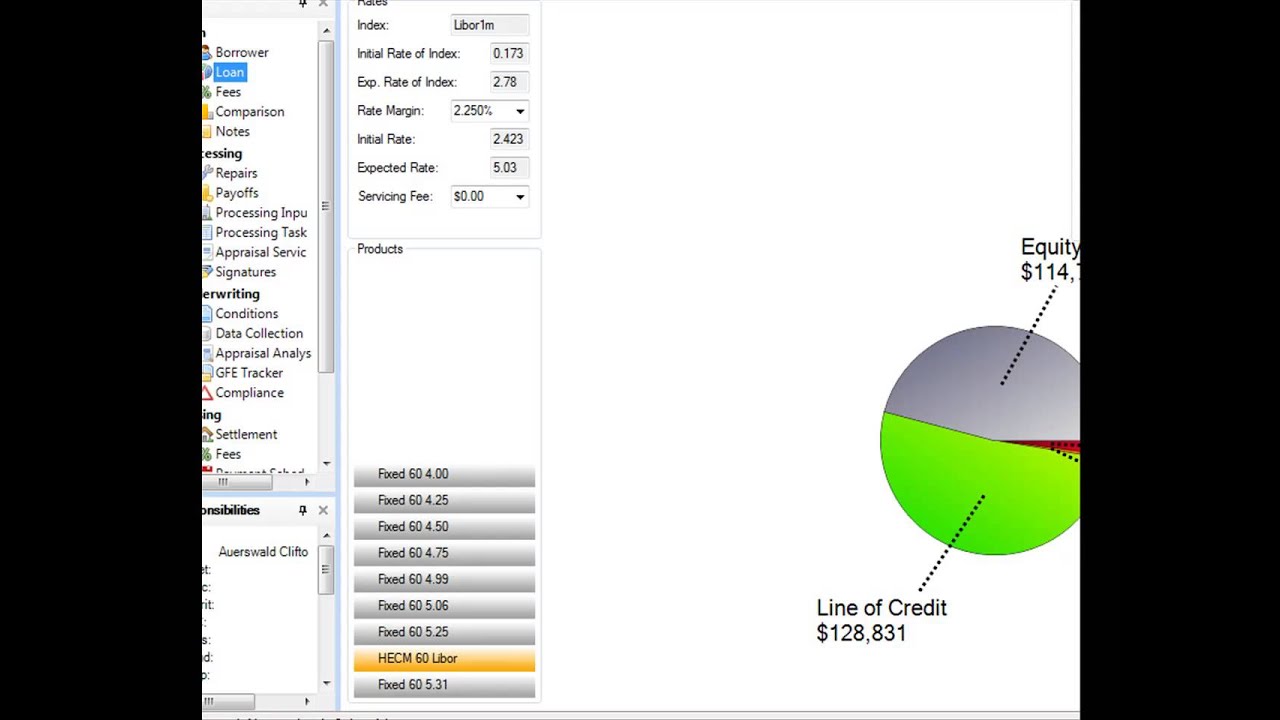
Hey there, this is Cliff Auerswald with All Reverse Mortgage, and today I just found an article circulating on some major news sites and media outlets. This one is pretty catchy, caught my eye: 3 Ways a Reverse Mortgage Can Leave You Homeless, playing into the misconception yet again that taking a reverse mortgage is dangerous and can leave you without your home in the future. I just wanted to go over this article written by expert Dennis Miller and point out a few things just to educate, hopefully, Dennis with a little comment after this back on your blog. A reverse mortgage does actually not become due and payable when you celebrate your 100th birthday, that's not a maturity event. Uh, if you've looked at a quote and you saw an amortization schedule, uh, we stop showing you the proceeds in the illustration after 100 years, uh, but actually you're allowed to still live in your home mortgage payment-free, uh, for the rest of your life, providing that you're still maintaining the property taxes and the homeowner's insurance. And so that's actually not factual. And how does inflation— how does a reverse mortgage tie into inflation? I think that's how you're trying to tie it in here. You're trying to say, if you watch out, if you get a reverse mortgage, inflation still might not be able to keep up. Well, what's the difference between having a reverse mortgage and inflation, having a regular mortgage with inflation, or not having any mortgage? What seems to be the difference? I don't— I can't put the two and two together. How you take a reverse mortgage definitely helps if you plan it out correctly when you start this. At age 65, taking a 10-year payment, which is T-E-N-U-R-E payments that are guaranteed for life, actually may not be as wise as taking the reverse mortgage as a line of credit option. The line of credit actually is designed to keep pace with inflation because the line of credit grows in availability every single month. And so I'm gonna just show you a quick illustration here. I plugged in on my calculator a similar scenario where, let's see, a 65-year-old borrower's gonna receive a 10-year payment, which is for life, of say $750 a month. Instead of taking that monthly payment Dennis, I would actually look into the line of credit because all of this money that's sitting on the sideline is growing in availability. If you don't touch it, it's going to grow at the same interest rate charges, including the insurance rate, every single month. Now, right now that rate is very low. It's only 2.4% plus 1.25%, so you're gonna have a growth rate today on your credit line of 3.6% on your unused portion of this $128,000. $128,000 at 3.6% divided by 12, that's $384 a month in growth if you left that line of credit just sit there. So how about the thought of setting up this reserve, this line of credit, and using it as a strategic financial planning tool, uh, letting the line of credit sit there for a few years and letting it grow so that by the time you need extra money in your retirement when that inflation is, uh, as you speak, is kicking in, you'll have a sizable reserve you can pull from. Let me show you an example, real figures. Um, this borrower who is 65 years old, uh, free and clear property, $250,000 value, um, you'll— at $750 a month, let's say that's $9,000 a year. Okay. Well, taking $9,000 a year with moderate rise in interest rates, you just ran out of money in the year 2047. Now, did this person at age 65 need to take the full amount day one? Because if they didn't, maybe they didn't need that whole $750 a month to start with. I would actually recommend taking as little or as possible so that you can have your line of credit growing at the most potential. So starting over on the same scenario, maybe the first few years of their retirement they only need an extra $4,500 a year. Maybe that is good enough for them to get by until— or they can delay Social Security and pick up some more money by doing that. But anyway, just my illustration here, $4,500 a month, say, for the first few years. Maybe they raise that up to 70— I'm sorry, $4,500 a year, that was. Maybe they raise that up to $7,500 a year for a few more. And now let's go above the $750 a month and say they're taking $10,000 a year. Maybe they need to increase that to $12,000 a year. And what I'm showing you is that this line of credit now, because you had so much money in it to start with, you allowed it to grow because interest rates are tied to that. That line of credit grows in availability guaranteed. Now they have reached a point in their lives where they can never run out of money at the rate of which they're borrowing it from. So anyway, I just wanted to point out a couple things on your article, and if you have any questions on reverse mortgages in the future, feel free to get a hold of me at cliff@allrmc.com, or you can visit allreversemortgage.com. Take care.