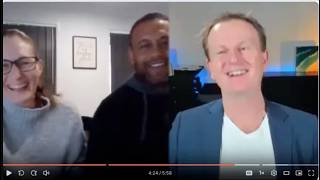
2 x BRW Award Winner Interviews International Best Selling Author Dave Parry
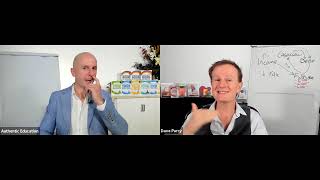
Dave Parry, a financial consultant with 34 years' experience, shares his Five Pillars of Wealth framework and a mortgage hack: paying an extra $2 a day can save roughly $20,000 and years off your loan. He covers cash flow, debt, tax strategy, and property investing.
Questions this video answers
Approximately 34 years (he corrects 32 → 'probably closer to 34 now').
Pay an extra $2 per day (about $14 per week) into your mortgage as an overpayment.
Around AU$20,000 off the mortgage and shave a couple of years (savings vary by interest rate).
Bulletproof Wealth (two‑day program) and recurring free 90‑minute events; website: daveparry.com (also listed on elevatebooks.com).
Chapters
Hello and welcome to another one of our Elevate podcasts. My name is Benjamin J. Harvey, the difference maker mentor. And once again we have the pleasure of interviewing an international best selling author from the Elevate series. Now, to find out more about them or any of the other authors from the series, be sure to check out elevatebooks.com where you'll find a bunch of additional information and plenty of highly valuable free resources you can download immediately to assist you in elevating all areas of your life. Now, today we are speaking with the one and only Dave Parry. Now, for those of you who have met him before, with over 32 years experience in financial consulting, education, property investing and wealth coaching, Dave's passion and mission is to inspire and enable everyday Australians to achieve their own sense of financial freedom. Now, he's got two systems. The first one is the Cash Flow Conundrum, and the second one is the Five Pillars of Wealth. And with these two systems, Dave makes finance practical, fun and most importantly, memorable. His content is based on hundreds of consultations as well as his own extraordinary personal journey, all of which has helped him develop simple, safe strategies regarding finance, debt reduction, tax awareness, property investing, and of course, the psychology of money. Dave's mission is assisting hardworking Australians to become debt free so they can live a life of freedom and have incredible peace of mind that they're growing a sound future not only for themselves, but also for their loved ones as well. So please join me in welcoming Dave. How you doing, buddy?
Good, mate, thank you, thank you, thank you for that wonderful introduction. Don't know where you came from.
Big intro, buddy.
Thanks, mate. Thanks, mate. Some clever person wrote that.
32 years of smashing it out inside the wealth game.
Yeah, look, that's probably, in fact, it's tiny bit out of date. It's probably closer to 34 now, but there you go.
There we go. We'll have to update that one little Update there. It's 34 years, mate. I know you, I've known you for a long time and I know that everyone who interacts with you just in a very strange way seems to just make money. Like, it's just there's this bizarre correlation between people who meet you and people who sort their finances out and tend to generally just become wealthier. So I'm pretty excited about this podcast because, I mean, who doesn't want more money in their life? And I know that you're definitely the man that people should be searching out. So what I want to find out because I'm just as Curious as our listeners today, I want to know, why did you crack the game? Like why did you crack it? And how did you crack it? Like run us through that. What made you so focused on helping people become so wealthy?
Oh, well, which one do you want to go for? Do you want to go for the why or the how?
You know, let's go, let's go for the why, then the how. Let's do it that way.
No worries. I was gonna, I was gonna be a bit facetious. Say how it's easy, I've just got the Midas touch. Everything tends to gold, which, which jokes, in fact, jokes aside, there was a period of my life where that's what I felt was the case. And then anyone that goes 20 wealth journey will find out that sometimes you just go through a cycle where, where everything is in your favor and it's just to do with the cycle of the markets, whatever those markets are. And you realize you are in fact not bulletproof and you are fallible and can make mistakes. But nonetheless, I don't have the Midas touch, but through those I've come up with some process that I think are pretty simple, pretty safe. In fact, they're super simple and super safe and do make you bulletproof. But what's it all about? Why? Look, Ben, I had it look like most people I was born at an early age. And.
Just to hear that out, listeners, in case you're wondering, Dave was in fact born at an early age.
So I have that in common with you, I presume. And what I may or may not have in common with you, look, some interesting stories. My dad was Australian. In fact, he was son of a butcher from South Australia. I'm a WA boy, Perth born and bred. Some of you people may have heard of Perth. It's this little town over the other side of the country in Australia. And so dad was Australian, but mum came out as what was called a 10 pound Pom post war from England. And the family came out to start a better life, to do whatever. And through that, the short version is that I guess mum and my nana and the aunties, they had a very war ration mentality towards money. And that was something that, that stayed with mum forever. And as a kid you can't help but that that sort of imprints on you, for want of a better word. And some of the looking back with fondness and, and a bit of a joke like mum, you know, I talk about this in the book, but you know what? I wanted a Frisbee. Frisbees were around when I was a kid, know, in the 70s, it was a big thing and mum getting an old ice cream container lid and putting a cutlet, you know, whatever, getting an outline pen and there's your Frisbee, you know, or a Batman doll first tried to cut it out of. Again, the ice cream could be used for everything.
Let me get this straight. So the idea of a Frisbee in your family was an ice cream lid?
Correct.
Been painted and drawn on with a marker pencil.
Yeah, look, I use the term painted bit loosely, you know, like.
Yeah, yeah, I get it.
But super crafty, super. You know, she. She knitted, she sewed, she did all that as well. Frugal and creative, but kind of going.
To ask, was that a frugality move? This. This ice cream lid thing?
Yeah, that was a frugality. That was. We don't have money, we're poor because the war is not finished.
Right.
That's the mindset that came with it, you know. So now, on the other hand, my dad was a doctor and so I had this mixed message that. Hang on, aren't doctors supposed to be kind of rich? Well done. But later I kind of tweaked. The dad worked for the health department. So he gave a life of service for years to the health department. And in fact, it was quite special in his later years he was awarded the Order of Australia for his service to pediatrics. But he's. I guess in some ways he sacrificed the chase of money, finance for serving. So I had these interesting messages going on about frugality and you don't work for money, you serve and all that sort of thing. But at the same time, I had this grandpa Cliffy. He was the guy that came from South Australia and he'd done quite well as a businessman and he seemed to have money. So grandpa Cliffy had money, which was dad's dad. Like I remember as a kid being in the first. It was the first car ever. It was purple. It was the first car I'd ever been in where you. You didn't wind down a window. You pushed a button and the electric windows went up and it just flashed. I think it must have been a statesman or something. So Cliffy had money. And what Cliffy had was this. He had this. He had this black box, this secret black box that was hidden under his bed that we knew was there and we. We weren't even allowed to sit. But that's where all Cliffy's wealth was. So had this mystery and intrigue around. There's grandpa Cliffy's wealth. And one day that's going to be opened, you know, one day. Anyway, fast forward to when it was my 20s and I had the privilege of assisting and running Cliffy's funeral. And after that, when the box was opened, the sad thing was there was barely enough to cover the funeral expenses. And I left my gran in a really tough situation, really tough. So all this played in my mind about, you know, about what, what was going on. And with that, you know, there's my dad having an opportunity to earn a lot of money and choosing not to. And then Cliffy having money, earning money but having nothing left at the end. Now the third bit to that was that I grew up with this story that Also in the 60s, I believe my grandpa Cliffy is an avid bowler. A bit. He was a bit of a punter as well, but he's a lawn bowler and he was down the bowling club and he was this guy that always seemed to come home with the meat raffle or whatever. He's always winning stuff, probably because he bought so many tickets. But nonetheless, there's this story that I grew up with that he'd bought a bunch of blocks of land in Perth in what at the time was this unknown suburb. Look, there was an established, very nice area in Perth that was, you know, these days is very close to the beach. But back then it was a sort of a 20 minute drive up, wooden planks to get to the beach. Anyway, so this suburb in the middle of nowhere, Cliffy heard from a mate that there's this cheap land going, but soon a famous private school is going to be moving up there. So buy these blocks. Cliffy bought them. He bought six, I believe for like half a year's wages. So if you can picture that when.
You do that, 10 years wages to get half a deposit.
Well, sure, sure. So it's a bizarre thing anyway, six blocks of land, half a year's wages. But Cliffy being Cliffy, he went, he basically almost barged into the headmaster's office and said, look, I believe you're moving your school up here. And the headmaster basically laughed him out of the office and said, not in our lifetime. So Cliffy sold all the land. He did okay. He gave one block to my dad and one block to my auntie. Now, years later, it turned out that that school did move at this unknown suburb. A golf course came, private schools came, you know, within. Within a. Within a lifetime, it was game over. But dad was given that block, built a house on the cheap, no carpet no, nothing. Again, frugal. But that was my house as I grew up as a kid, I got fond memories of walking around in the bush. We'd collect firewood. So it was pretty isolated place, but within 10 years, that was a wealthy suburb, very wealthy. So there's these stories that all these opportunities for Cliffy ran through his fingers. And on the property side, he got the wrong information from the wrong people. And anyway, that all that all led to this. There's got to be a way to serve and make money, keep money, make sure there's money at the end. There's got to be something around this. And I guess that was. And in a way that you can then protect the ones that you love. Because behind all that there was my gran, that was, you know, living below the poverty line. And the same thing had happened to my nana. So frugality. And she was a 10 pound Pom Nana. So frugality was not the answer. Frugality didn't help. It didn't serve you.
So where all of this kind of leads you, is that what I guess was the building block for these five pillars of wealth that you run people through?
Yeah, it's absolutely. Ben. So it's the five pillars and also I guess the three core areas which I might just quickly touch on because they might link to it. The three core areas. In fact, there's three core areas in the subset I'll talk about. See, what the first lesson I guess I got from Cliffy was that, see, he worked hard. That's my grandpa, Cliffy. He worked hard to earn his money, he worked reasonably hard to keep his money, but he never got his money to work hard for him. And I think they're the three lessons that we need to take away for all of our lives. Work hard to earn your money, but then work hard to keep your money. And then finally, the key to wealth is getting your money to work hard for you. And he never got those three things to happen. He just never did it. So. So that was all part of the journey with this. So I'll jump into the five pillars. What's that all about, Ben? Look, for those of you can see the video, I've got a diagram behind me. But for those that are listening along, the easiest way is probably just to ask you the questions and I'll ask you, Ben, look, the simple thing is, would you like more money? Yes, yes, sure, sure. Most people would say, yes, that. And if I'm a bit more specific, would you in fact like to increase your income?
Yes.
Would you like to create more cash flow in your life?
Yes.
If you've got debt, would you like to get those under control or get them disappeared?
Yeah.
Would you like to find out how to take home more tax or pay less tax?
Yeah.
And would you also, would you like to think that one day you're going to have a fantastic future to look forward to, full of freedom, opportunity, choice and maybe leave a legacy for those that you love?
Yep.
Well, look, you said yes to most of those. They're the five things I've kind of figured out that people generally want, and they're my five pillars. What can we do to help you increase your income? Most people want to increase their income, create more cash flow, destroy their debts, pay less tax and have a fantastic future. They're the five things. So let's help you increase your income, let's help you create more cash flow, let's help you destroy your debt, pay less tax and focus on a fantastic future. They're the five pillars. But there's this conundrum that we get into when we put our focus on the wrong things. Now let me ask you this, Ben. For most people, what do you think happens as soon as they start increasing their income, earning more money, what is the next thing they spend? Either slips through our fingers, our lifestyle goes up, but we earn more and we spend more. So back to my comment from earlier. Work hard to earn your money. I'm all about. Absolutely. Don't get me wrong, I'm all about helping people increase their income. In fact, a lot of the private clients that I have and through the courses that I run, like the bulletproof wealth, we actually focus on generating multiple income streams because I believe that's an important thing. Not just one income stream, but multiple. So absolutely, let's work on super safe ways to increase your income. But then we've got to keep it, we don't just, we don't just spend it. So as your income goes up, you've nailed it. Most people spend their money. But the second thing, this is a bit of a trickier question, what's the second thing that is pretty much guaranteed to go up whenever you earn more money?
Tax.
Absolutely. And it's often what people forget. So we earn more money, we're paying less tax, but if we're spending more money at the same time, sometimes we actually have less cash flow. So we obsessed with this idea of earning more money, higher paid job, maybe winning the lotto ticket, whatever. We want the money in, the money in, without realising or paying attention to the fact we pay more tax and we're spending more money now, spending money may be bad enough or look, hey, I like spending money too, don't get me wrong, but I love it. But I put money aside to do that so I can track it. But what makes it a bit worse sometimes is people don't just spend the money, Ben. We end up clocking up our debts. So if our income's gone up and in fact our debts have gone up and we're paying more tax, we often find our cash flow is worse than it was before our income started going up in the first place. We end up scratching our heads going, what's going on? This is, I don't get it. I'm stressed, I'm bugging out, I don't know where the money's going, the pressure it puts on relationships, on family, it just sucks everything, it's terrible. And I've seen the dark side of that time and time again. And unfortunately, the answer we often come up with is, I guess I've got to work harder and earn more money. And we earn money, it becomes this cycle, becomes this vicious cycle. So I earn more, pay more tax to alleviate this stress that I've got or my debts. I spend more on things I don't really need. I just go round and round and round. So we end up in this cashflow conundrum where we're stuck in this cycle of earning more, spending more, you know, paying more tax and having nothing to show for it.
So no doubt there's a lot of listeners that are hearing what you're saying and they're saying, you know, that this is my life right now, I'm going to work, I'm trying to increase my income. As my income goes up, I pay more tax, then I get in more debt, my cash flow gets strangled and I'm not going anywhere. What are they meant to do? What's the average person today meant to do about it?
Yeah, sure. Well, we'll tell you what the average person does. Well, first, if you're feeling that or any of this is resonating for you, 100%, 100%, you are not alone. You're absolutely not alone. And I want to tell you this, you know what, in a lot of ways it's not your fault. Because the most common comment back to me after hundreds of conversations with everyday Australians, hard working Australians, I'll do some diagrams, map some things out and make things look super simple and super safe for them. They go, Dave, we just weren't taught this at School. We just weren't taught this at school. So I want to say, if this is your situation, I get it. You're not alone. And. And it's not really your fault because no one's ever taught you how to master your money. No one does, which is one of the things we need to do. We need to learn how to master our money. So what can we do? Look, there's a few things you can start doing to flip it around. And this is where, look, the conversation could go in many ways, Ben. The three core areas, apart from these five pillars, is, look, we've got to learn how to master. You've got to learn how to master your money, because if you don't learn how to master your money, you'll become its slave. It's as simple as that. Master your money or you'll become its life. You'll be the person that is stuck having to earn money. You'll be the person stuck. When you go to a restaurant, you don't look at the dish you want. You look at the price that you can afford. So you'll be a slave to money rather than learning to master it. And you can learn to master your money. And the second step with that, to start generating wealth, is you need to learn also how to prosper with property. Property is this amazing tool that's accessible to so many people. And prospering with property just could be slight. It could be for you, as simple as buying your first town, learning how to pay it off quickly as possible to start creating your own destiny or equity. Because if you don't prosper with property, you'll end up paying the price, literally. Literally paying the price of either soaring rents getting out of control or property prices getting out of your reach. And the final thing you need to do is focus on your future. Because if you don't focus on your future, you will face the consequences. And the consequences are possibly not going to be that flash for you. So that's a bit of the dark side that I'll leave it with you. But there's some rationales behind it.
So the average, they're sitting at home right now and they're like, all right, what's my first step? But, like, what have I. What can I do today that's going to change my financial destiny?
Yeah, sure. Look, look, these five things I talked about, increasing your income, creating more cash flow, getting hold of your debt or paying down your debt, getting more, you know, take paying less tax and focus on your future. They're all together, look, conceptually I could talk conceptually or I could just give you a big takeaway. What would you prefer?
Maybe a big takeaway?
A big simple takeaway is this one. Look, instead of when you start, no matter if you've increased your income or you haven't, in fact, look, most of you will have increased your income year by year because most of you will get a pay increase. So if nothing else, most of you get a pay increase a year. So you do increase your income. So I'd like you to think about this. If you take even some of what your increase in pay is every year and do something different with it, you will start a different cycle. Rather than spending it all, you start a different cycle and there's a takeaway. It's quite simple. Look, if you've got this thing called a house that you live in and you own it, well, you're doing very, very well. It would be very unusual situation for most people today. Most people have this thing called debt. We need to get a debt, we need to get a mortgage to buy a house. So if you've got a mortgage, that's often one of the biggest stresses that people go through, it often is such a big thing that people just ignore it. Play ostrich head in the sand, hope it goes away. Well, there's a couple of simple things you can do. There's a simple little saying I want to say to you as he says, $2 a day can save you 20k. $2 a day can save you20k. What does it mean, Ben? Look, for most mortgages, most home loans, you've got the ability to make an extra payment. And I'm selling you this. If you could, most people can afford $2 a day for something, would you agree? It's, it's a nothing. It's not even half a coffee. Now, if you can set things up to physically or literally pay $2 a day into your home loan, extra and above to what you're paying on average, it's going to save you $20,000. Now if you're on a higher interest rate, actually it will save you more than that. But the very fact of just $2 a day, which you're probably going to miss, could easily shred 20 grand off your home loan and probably a couple of years. Now that's one of the. I've got nine home loan hacks that I talk about in my courses and that's one of them.
That's where you're getting that just with that sheer adjusting, you know, you go to your bank, you adjust the payment by whatever. What's that? $2 a day, 14 bucks a week.
14 bucks a week.
14 bucks A week.
Yeah, yeah. Now, most people. Most people can find $14 a week. Now, if you can't find $14 a week, there's another side of it that I know you'd be very familiar with. And it's probably to do with your mindset or your psychology. So, you know, and that's another whole thing we probably don't have time to get into, but need to start focusing on the question of, like, how can I do this? Rather than I can't do this. Look, Robert Kiyosaki penned that, I think his rich dad, poor dad, years ago. That one of the concepts or the mindsets of the wealthy is rather than saying, what? Or the poor mindset is, I can't do it. Whereas the wealthy's mindset is, how? How can I do it? So back to the $2 a day thing. Look, my suggestion would be quite simply this. If you have a home loan, get online, talk to your bank, do whatever you can, and adjust your mortgage payments. Make sure I got to be careful. This isn't going into specific financial advice. This is a suggestion.
We can appreciate that anything that Dave suggests is. He doesn't understand your specific situation. Cool. He's worked with hundreds of people, though, so he's just sharing what's worked in the past, for sure.
Tends to work. So, look, most of you, be able to talk to your bank, get online, do whatever you need to do, and just start paying. This might sound counterintuitive. Pay the minimum monthly payments on the home loan. Just stop it. To go to the minimum monthly payments, Then go to your bank account that your money goes into and physically set up a transfer of $14 a week to go into the home loan, because that is a payment you can control. And I am such a firm believer on people taking control of what they can control, because choice and control ends up giving you this sense of freedom.
Yeah, I love that. I like that a lot, Dave. I actually. I mean, that's super practical. And a lot of people sit there going, oh, you know, I'm waiting for this magical silver bullet that Dave has. People don't realize it all comes down to the little things. You keep doing enough little things. And you said you've got nine of these mortgage hacks. And I know that if people just do the little things, they start to compound, obviously, and it ends in tens of thousands of dollars in savings and years being shaved off of mortgages And I like that idea that I set up my direct debit, I choose the 14 bucks a week, and who knows, you know, maybe I feel good about myself and I increase it to 20 or whatever it may be, but at least I control it. So I like it. So all the mortgages in your world, you'd set them all to the base minimum payment and then you'd have another direct debit from your own in the account your money goes into and.
Yeah, for sure. Yeah. And that's step one.
Yeah, I like it.
And as I said before, look, it's often when we get this stress around finance where we're bugging and wigging out, it's because we feel as we've got no control anymore. And as you'd know that I'm sure, well, I presume you'd agree with this, that choice and freedom and control are all linked together. And if we feel as though we have no choice, that we have no control and got no control of choice, we have no freedom. And most of us want freedom in our lives and most of us ideally want to end up with financial freedom. So it starts with these series of.
Small choices and the question, they reinforce a mindset. You know, I think just with that $14 a week thing, you start to. You reinforce that you're controlling something. You know, as you said, you know, you, you get this idea that you've taken control of an element of your finances that leads to a great return over the years. And I think that reinforces a stronger belief which builds and builds and you get momentum off these little steps.
For sure. For sure it does. Look, and I know that you're aware through a lot of the teachings that you give, look, the mindset, the psychology mindset is vital. You, you got to work on that. However, mindset alone doesn't change anything. You've got to take action. You just got to take action. And the action can, if it's taken correctly and gets the correct results, will reinforce the mindset, which gets better actions to better results, to better mindset. So the two bucks a day, 14 bucks a week is a start. It's a good start. But going up with clients that start in time, they end up with all these different little payments going left, right and center. And it becomes, honestly, it becomes a game, it becomes fun. You can see where your money's going, you're controlling it. And then you find yourself in this situation. You know what? Oh, I actually, now I've got this money that I can spend on the thing that I Want to spend and it becomes fun. A sense of freedom comes out of it. So I'm not. There's two things I'm not. I'm not promoting a frugal, boring, live on baked beans, smell of an oily rag existence. I do not. I believe in abundance. Living in a life of abundance and appreciation within your means, but with an aim to grow that, to grow it to where you really want to be with your abundance. So I'm not a frugal guy, not a frugal mindset guy. I'm absolutely getting people into that place of choice and freedom. But to start with, let's get the debts under control. But the other thing I want to say, Ben, here is the other thing. I'm definitely not, I'm not, I'm not the get rich quick guy. If you, if you. I don't have the silver bullet and forgive me, I might have lost viewers here. But I do not, I do not believe in the lottery ticket. I do not believe in the come to my course, you'll be a millionaire in a year. I, I don't believe in that. I believe that is a lot of bs other people's belief systems that and it's not mine. I believe there's a formula and you can crack it. It compounds in your words and actually becomes super simple and super safe. And it's, it's, it, it can't be this other stuff that's out there that people are carrying on or sprung about. Unfortunately, I believe they're fundamentally flawed and it doesn't happen the results.
I know a lot of people go along to your incredible wealth event. That bulletproof wealth that you run, it's a two day program but I also know that before they get there, you do a lot of these 90 minute freebies all over the place. So it's not uncommon to log onto your website, daveparry.com that au said davepary.com au and you've always got something running some type of freebie event, some type of 90 minute program. Is that kind of the entry point that most people go through before they get to your bulletproof wealth?
Yeah, for sure. Look, every now and then. Look, I do have a few. Look, I've got a lot of private clients, Ben. I've got a handful. Look, I need to be more and more selective these days with who I want to work with. If you're super willing, ready and able to get cracking on things. It's a bit of an interview process but through the courses which, which I do, it's it's, that's just, it's really become my mission and passion is to get this information out to as many people as I can. And, and I believe that's through the education. Look, one of the laws of business is you gotta, you've got to spend money to earn money, you know, and I believe it's the same with investing. You've got to spend money to be able to create money. And one of the best ways you can create wealth is by investing in your education.
Absolutely.
After 34 years and I've paid thousands of dollars on training, on courses, being taught from the best in various, I guess, aspects of all this wealth stuff. And they were the best investments ever made within was in the education. So I've developed this stuff that I believe is accessible to everyone and I give a lot of stuff away absolutely for free. In my 90 day events, we dig more into the five pillars. The increasing your income, creating more cash flow, destroying your debts, paying tax, less tax, focus on a fantastic future. And you can find out more about the whole bulletproof wealth process through that as well. So that's. Yeah, jump on the website, you'll see links to upcoming freebies and most people get incredible value. You'll see testimonials from people that, you know, get great value out of what I give in 90 minutes for sure.
You definitely pack in the value, that's for sure. Is there, is there any final tip you'd want to offer our listeners who are wanting to elevate their results in the area of wealth? What would be like your final takeaway before we wrap it up?
Look, I want to just. Look, the final takeaway. I just want to reiterate what I said earlier, Ben, that if nothing else, I really want you to take away this mindset. There's no get rich quick scheme that works. There isn't. I mentioned I thought I had the Midas touch for a while. It was flawed. I didn't. Taking action is part of it. But really you need to focus on work hard, work hard to earn your money, work hard to keep your money and then get your money to work hard for you. And if you're doing that in the framework, as I increase my income, I'm going to focus money on paying down my debts, maybe siphoning some money towards my future. And here's a tip. Secret, secret. Come and find out more. There's certain ways you can slide money towards your future that helps you reduce your tax. So you're keeping your money, you're paying your debt, you're getting tax back and it starts this amazing cycle of generating wealth.
Nice.
Work hard. Yep. So work hard to earn your money, work hard to keep your money and finally get your money to work hard for you. And that is when we jump into master your money, prosper with property, and focus on your future. We get all that happening together.
And away we go.
Away you go.
Nice. Well, look, I just want to say thanks so much, Dave, for being on the show, mate. Thank you so much for sharing your wisdom with us. And for the listeners out there, of course, go to daveparry.com to find out more about his 90 minute free programs that he does. Or you can actually reach out and talk to him about his bulletproof wealth program. But also, if you want to find out more about Dave as an author, you can go to elevatebooks.com and check him out there online as well. So always remember that giving yourself permission truly is the key to elevating all areas of your life. And until we meet again, share your light, live your love, and do whatever it takes to be your own best friend. Thanks so much for tuning in and bye for now. See you, Dave.
Thank you. Thanks, mate. Thanks, Ben. Bye.
Bye. All right, let me hit this button here, buddy.