Café Contemplative with Dr. Cortland Dahl—Suffer Less, Flourish More: The Science of Well-Being
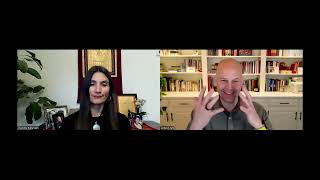
In this live Naropa Café Contemplative, host Charlotte Rotterdam interviews Dr. Cortland Dahl, a neuroscientist‑meditator and lead developer of the Healthy Minds Program. The conversation weaves Dahl’s personal biography—growing up in Minneapolis, early anxiety, discovering meditation at 19, solitary Himalayan retreat, mentorship by Tibetan teachers, and a PhD with Richie Davidson—with his professional work integrating contemplative practice and science. Dahl describes how trusting inner currents, creating sacred spaces, and widening the aperture of experience allow anxiety and fear to become sources of insight rather than obstacles. He explains the Healthy Minds app, its “active meditation” approach (practice embedded in everyday activities), and presents rigorous research findings: short‑dose practices improve microbiome composition, epigenetic markers of stress, reduce teacher stress, boost well‑being, improve student test scores via teacher use, and lower implicit bias. The dialogue also covers practical guidance for dealing with grief, anxiety, empathy versus empathic distress, and teaching mindfulness to children, and concludes with a brief guided “beingness” meditation. The session highlights the evolving mindfulness movement, the role of contemplative science, and the importance of community and compassion in flourishing.
Chapters
Hello and welcome, everyone. It's good to see you here tonight. Thank you for joining us. We are here tonight for our Cafe Contemplative. That music put me right in the mood for a Cafe Contemplative. And the series, which is called Mindfulness Is For Everyone series, hosted by case, which is our center for the Advancement of Contemplative Education here at Naropa. I'm Charlotte Rotterdam. I'm the director of the center. And I'm very honored that we are hosting Dr. Cortland Dahl tonight for a conversation on suffer less, flourish more. Sounds good to me. The science and practice of well being. And before we begin, I also want to express special thanks to the Templeton foundation for their generous support of this series, which has allowed us to bring many wonderful speakers. And as you'll see, we'll be continuing with this series in the months ahead. So just a little bit of background on Dr. Cortland Dahl. He has a wonderful bio, if you're looking for a good read, goes to his website because it's a really beautiful journey through a life. So thank you for that court, that beautiful journey. And I will just highlight a few pieces here so we have a sense of who he is. Dr. Cortland Dahl is a leading expert in mindfulness meditation and the science of well being. His interest in meditation and science, the science of flourishing, began in the early 1990s when he drew on his personal struggle with anxiety to explore the practice of meditation and the study of psychology. After traveling and practicing extensively in Asia, he returned to the US and completed his master's degree in Buddhist Studies here at Naropa University. So welcome back, Quartz. It's wonderful to have you back. He then returned to Asia and spent the next eight years living in Tibetan refugee settlements in Nepal and India. And it's here that he met his most important teachers, who include Chatril Rinpoche, Kenpo Cherub Sangpo, and Mingyur Rinpoche. And it was under their guidance that he studied and translated many Buddhist texts, particularly within the Dzogchen tradition of Tibetan Buddhism. And it was also then that he spent more than a year in solitary retreat in the Himalayan foothills. In 2006, Mingyur Rinpoche asked Kurt to help him establish Theragarh International, a network of meditation groups and centers that now spans the entire globe. Cort teaches meditation and Buddhism online in online courses and retreats around the world. In 2016, he received his PhD in mind, Brain and Contemplative Science at the University of Wisconsin, Madison, where he studied closely with Dr. Richie Davidson. He's published numerous articles in the field of contemplative science. He's a lead scientist at the University of Wisconsin Madison center for Healthy Minds. There he's also developed the Healthy Minds Program app, which has been downloaded more than a million times and has been featured in numerous major publications. He recently authored a book called A Meditator's Guide to Buddhism. And also forthcoming is a book called Born to Flourish how to Thrive in a Challenging World with Dr. Richie Davidson. A warm, warm welcome to you, Cor. Thank you so much for making the time to be with us this evening.
Yeah, it's fantastic to be back. I wish I was sitting in Boulder having a nice cup of tea with you all in person, but such fond memories of my time in Boulder. But it's. Yeah, it's great to be back and to connect with you, Charlotte, and with the whole community.
Well, thank you. Next time maybe we'll do it. We'll all be at Naropa together for a proper cup of tea.
Absolutely.
So I thought maybe we could start this conversation with a little bit more about your life because as I said, just reading about your own journey was deeply inspiring for me and I'm sure for others. And I wonder if you could perhaps share a bit about this journey, which obviously included your time at Naropa. These deep retreat experiences, really close connections with amazing wisdom teachers, and then this integration of neuroscience in your own work and your doctoral work and your current work as a scientist, as a teacher. I know this is a big question, but perhaps there's some key experiences you might share with us that shaped you in particular, or key insights, perspectives you've gained along the way.
Yeah, yeah, I'm happy to share a bit about my own journey. In many ways, a lot of the things that have formed and shaped my life were there right from the beginning when I started to meditate as a 19 year old. I'm from the Midwest. I grew up in Minneapolis and I went to the University of Minnesota as a, you know, for my undergrad. And at that time in Minneapolis, at least in the social circles that I was part of, meditation was not a thing there. I didn't know anybody who meditated. I mean, I had zero social modeling or support or anything for that. But you know, as you, as you mentioned, Charlotte, I had, I had kind of the right mix of curiosity and anxiety and just the right balance that, that, that prompted me to, to really start looking for a different way to live. Really, I, I just knew that my life was not on a track. I was, I was really stressed out and really anxious and it was just getting worse. And I was, I was 19. So I was at this time of life, this time of life where you're, you know, you're trying new things and figuring out who you're going to be in the world. And all of these different strands kind of came together at the same time in a really, really beautiful way. And strange to say this, but I feel so grateful that I struggled in the way that I did, because I don't, I don't know that I ever would have looked in the way that I did and looked quite intensely as you, as you shared. It took me around the world. And I guess I'm just kind of, despite all my years of meditation, I'm just kind of an intense guy. So I do anything and I, you know, do it as fully as I can. So a few of those strands that came together were science. I, I was working in a lab. University of Minnesota has a really great psychology department and it has for a long time. And it was also the worst psychology department to be interested in meditation. And it was where B.F. skinner finished his career. For those of you who know, you know, it's kind of like the. Know the mind is a black box and you don't even want to look inside there, much less try to study it. But there was really great science happening there. And I, I worked in a lab actually studying intelligence and got, you know, a front row seat to some really interesting scientific work that was being done. And of course I was starting to meditate and I, I was really, really passionate in a very undisciplined way about meditation. So I was, I was, I was interested in psychology and science not purely from a theoretical point of view, but really because I wanted to understand my own mind and what was going on in my mind. So there was the scientific angle, there was the meditative angle. I started getting interested in Buddhism, although I had an active allergy to the idea of becoming anything, becoming Buddhist or becoming anything. But the ideas of Buddhism really resonated with me. It wasn't actually until I got to Naropa years later that, that I actually, you know, actually became Buddhist. Actually, I created such an identity around myself, around being kind of like the non Buddhist Buddhist. I was so obviously Buddhist, but I had to like, explain to everybody how, like, well, Buddhism is about not having an identity. And it just became so obnoxious that I finally said, all right, I'm Buddhist, I'll just kind of admit it. What everybody else already knew. The other thing, in addition to meditation, science, Buddhism was really kind of a way. I don't even know how to put this. I think one thing that happened at that time was learning to trust the currents, the energies that were moving through my life. And I noticed at that time that the energies and currents that were moving through me and that seemed to be just opening doors in my life and in my experience did not follow any paradigm that was discernible in my world and that I could recognize in my culture, my family, my friends, what the world was telling me I should care about, what the world was telling me I should do with my life. Everything that intuitively I was, I was becoming interested in just didn't follow any discernible roadmap that made sense to anybody else. I don't even know that it made sense to me. And yet I trusted that. It was not easy at the time. It became easier and easier. Going to Naropa actually was. Was another kind of jump where I just kind of trusted my heart. I had no idea what I was going to do when I left Naropa, but it just felt like the right thing. Like, what does one do with a master's in Buddhist studies? Turns out actually a lot of amazing things have opened up in my life because of that. But that was utterly unpredictable. I couldn't have figure that out ahead of time. So I think maybe the biggest thing that happened in those early years in my life was just trusting what the universe is putting in front of you, even if it makes no sense. And if everybody in your life is questioning you and asking you what the hell you're doing, just really tuning in to those currents that are moving, that are there all the time, but we can learn to ignore them. And there's a lot of things in our world that teach us to ignore them. But for me, there was something in noticing them, trusting them, and just seeing all the amazing things that happen when you can start just to tune into the energies of life rather than fighting it or just trying to control it all. So anyways, I could say a lot more like kind of where it led and we could talk about that. But that was kind of how it all started for me. And strangely, it was. It was a phobia of public speaking. Actually. I was utterly and completely phobic of doing things like this. I never in a million years would have willingly chose, chosen to do something like this. But that was. That was what opened the door for me, was. Was just wanting some tools to work with My mind.
Beautiful. Thank you. I wonder if you'd speak a little bit more about this sense of trusting that inner voice, because I think there's so many voices that we receive from our parents, from our culture, and probably strongest from ourselves, of what we should be doing and where we should be going and what success looks like. And that capacity to one, hear the inner voice, see that guiding light, and second to trust it, which takes courage, as you said. So there's some quality of both awareness and, and of courage that I hear you talking about. And I wonder if you could say something more, because I think this question is not just for people who are 19 or 25, but even as we proceed in life, I think those same questions are relevant. So I'd love to say a little bit more.
Yeah. You know, so much of my life has. Has been about practice. And I think even this, in a way, is a practice. It takes practice to, to notice these things, to tune into these things and to nurture these energies of life. I don't even even saying energy, there's no good word even to describe it, but I. But I. I've simply noticed some things in my own experience. One is actually, there's a word for this, but if it sounds very antiquated to say it this way. There's this very central notion in the Buddhist tradition and probably most spiritual and contemplative traditions, of merit. Merit sounds so antiquated. It sounds like something you would have cared about, you know, like 200 years ago or something. But I think what. What I've come to understand in my own life is that the things I really care about that are meaningful to me, whether it's my own inner meditative journey or things that I'm doing more outwardly, they need such a rich array of. Of causes and conditions to. To make it possible. And I think we tend to. We tend to overemphasize the wisdom element or the like. Just sit your butt down on a cushion and just do the hard work of meditation. And of course, that is a huge part of it. But we miss how much help we can get by simply nurturing, creating, nurturing circumstances in our lives. And actually, these are some things I've learned at Naropa. One of the things that I'd been completely oblivious to before I came to Naropa but was just totally in my face in Naropa in a really beautiful way, was something like sacred space. And I don't think I'd thought much about that before. But being in Naropa and Seeing how much care was given to the environment and seeing how different it was when you simply walked into an environment that. That had been constructed in such a way that it was meant to nurture qualities within us and help us to see things about ourselves. That actually was really helpful because I think I just had this sort of like, you know, American, you just do it yourself. You're kind of independent. Actually. No, we need help. We need, like, all the help we can get. We need help from our relationships. So you can be intentional about the. The world of relationships in the same way that you can around your environment and sacred space. And later, when I moved to Asia and spent many years living there, I started to see that one of the reasons why it can feel, I don't want to say easy, but just so much more natural to live a life of wisdom and compassion when you're in an area like Bodina and Kathmandu, which is one of the areas I lived in, was because you're just surrounded by sacredness. Every. You just walk down the street and you see monasteries, you see nuns and monks and little old ladies with malas chanting mantras, and you just. It's just there all the time, mirroring your own Buddha nature back to you. And so I learned that, I think consciously for the first time at. When I was in Naropa. And I think it's just sort of. There are many, many, many things in life where we need to tend to them. We need to bring intentionality to the world in which we live and to care for it in the same way that we do this internally with meditation in our mind. Like, all of that works together. So it's probably maybe an unexpected way to talk about that point I was making earlier about tuning into the rhythms of life. I think a lot of it is actually tending to the circumstances of life, what you're feeding your mind, what you're feeding your relationships, and just sort of how you live in the world in a very intentional way. So that was one thing, I think the other thing is noticing and working with fear. We all have our baseline kind of emotional habits, as I've mentioned now, and as you mentioned, Charlotte, anxiety was a big one for me. And I just noticed that there, in equal measure to feeling that energy of life and feeling kind of a heart pull in a particular direction. There was always almost a corresponding fear of what if? Like, well, what am I going to do? Where is this going to lead? Why would I do that? What might happen if I do that or if I don't do this? Other thing, you know, what am I giving up? And I just started seeing. It's, you know, it's easy to say this, but very hard to live. It just. I didn't want to. I didn't want to live my life and make the decisions based on fear. And so as much as listening to that energy of where my heart was pulling me, I think it was also listening to the fear and not trying to shut it down, not trying to repress it or deny it, but just letting it in fully. Actually, this was another thing from my time at Naropa, which there was a lot of circumstances, in fact, hanging out with Judith Zimmer Brown and Reggie Ray, who was still there. They seem to like to provoke intense experiences that seemed to be part of the game plan. I didn't. I wasn't signing up to have any gurus, but I think there was a bit of the kind of like the, you know, put you on the spot in a beautiful way that I got an Naropa from the people who I was around. And so actually, I mean, you might look at it almost as like, as a sort of move away from the fear and move towards, you know, the light or the. The heart energy. But somehow I. I think it's actually fully being with all of it together, like letting the fear fully be there, tuning into that, and even just like welcoming that in some way, which meditation uniquely gives you the capacity to do that. And it was through that of opening up to that that I think I could start to notice that current and attuned to that almost not as like the opposite of the fear, but as something that it was sort of like the atmosphere, something that was sort of surrounding and a more subtle thing that was there that the fear would. Could crowd out at times. But if I could not resist the fear that was there in my mind, somehow it opened up to that. So anyways, these are somewhat random thoughts about this, but it was very much working with those energies was a huge part of. I mean, not. Not only was. Is a huge part of my life and my own journey.
Beautiful, thank you. I mean, what I'm reflecting on as you're talking is really you're painting the picture of what it means to be liberated from this close, this claustrophobia of the self. Right. Which is really where most of our anxieties are held and most of our fears are held. And so even when you talk about creating a field of merit and. And the way we create a sacred space or we create a community of others, there's a Relief, Right. We can almost exhale. Like, I don't have to do this all alone. Like, no, we're not busy creating the Charlotte project or the Court project or, you know, we're actually in this together in a sacred world and a community as well. And so there's already a beginning of a relief. Like, okay, and then that sense of fear. It's beautiful, right, that you said it's not about, oh, what are my tools for getting rid of my fear? Right. Because then you're still in the game of, like, okay, where's my fear? And how do I get rid of it? And which tool do I pull out of my tool belt? And rather, seems to me the picture you're painting here of practice, and maybe you could speak to this more, is that it creates a space in which even the fear gets to have its place. But our relationship to it has changed. Changed in some way. And so because you talked about energy and you talked about some way of it, you know, you even sort of somatically were like, the fear is here, but then there's something else. And so I'm wondering there's something else. And practice, maybe you could speak to this. And I'm. I'm going to bring in here also the beautiful title of, you know, of your work, which is Suffer less and flourish more. And it feels like there's a connection here. So maybe you could take us into that as well.
Yeah, yeah, yeah. Great. Questions and prompts. I think exactly as you described. A lot of what. What's happening here is, is we're learning to widen the aperture of experience. And it's challenging because what we usually think, especially at the beginning, I mean, I would. Maybe I'll just speak for myself. At the beginning of my path, the way I. I thought about it was, well, there's these things about myself and my life and my own mind and emotions that I don't like. And I can see that what I'm doing is not working out. Like, just avoiding the problems isn't working out. I can see my normal. Like, my. My normal coping strategies are just seem to be making it worse. And so now there's this, you know, I read. I read, you know, my Pepper Children book or whatever. Like, and it's like, okay, she's got something else going on. That sounds exciting. That makes sense. So now I'm going to meditate and maybe finally, actually I'll be able to get rid of this stuff about myself I don't like. Now meditation is just this new, better tool to kind of dislodge the. My inner demons. And whether we think about that consciously or not, I think a lot of us really believe or hope, hope for that, right? We think the things that, the ugliness of life, the pain of life, the discomfort of life, that if we just kind of play the game a little bit, get a little bit better, we'll. We'll actually get rid of that. And then we start to see that actually we start shifting into a totally different paradigm. It's almost like meditation is this Trojan horse where it kind of at the beginning you can think like, oh yeah, I'm going to be a little less anxious. I'm going to be a little less, you know, have less of a temper. I'm going to be a little less depressed, and this grief that I'm drowning in is going to finally go away or whatever it is we think we need to get less of or get rid of or change about ourselves. But, but then as we do that, we, the, the, the aperture widens almost like without us even knowing it. And we just start tapping into parts of our minds, parts of our experience that we didn't even know were there. And then we start to see, oh, actually I can, I can be anxious, I can be upset, I can be fearful, whatever it is. And actually I feel okay. And that gives us a little bit more space. We're just in touch with a little wider range of our full experience as human beings. And then fully as we get a ground, as slowly as we get a grounding in that, then you actually can start to explore the, the inner demons, the things that you were running from at the beginning. Like, again, for me, with anxiety, I could actually go back to that. Not with the agenda of needing it to change or be anything different. And then you can start to see there is so much creativity in anxiety. There is so much, there is so much care in anxiety. There are actually so many beautiful things in any toxic emotion. It's just that when. That's all we see, the toxicity of them is, is when we, when we, we sort of narrow our field of vision. So that's all that we see, or we just see the world through that emotion or through that pattern of thoughts. So for me, I think that was the beauty of it is actually seeing that, you know, like there's this theory of the Buddha families and Buddha nature and the wisdom of, you know, what otherwise would be toxic emotions. But I didn't feel like my emotional categories quite fit exactly. You know, the, the classical framework. But the idea of exploring the things I would normally run from and the idea that everything that I'm looking for in life might actually be in the things that I'm trying to get right away from. And just being willing to look and to explore like that was just a total mind blowing game changer for me. So again, these are just simple ideas, but they're lifetimes of practice to, to go into that. So again, a lot of these things, again that my time at Naropa were, was where a lot of these things that I'd been maybe exploring, I don't know, a little, not unconsciously, but it wasn't so clear what I was doing in my life or practice. It's like I suddenly got the language to describe the inner journey that I had been on and I started to be a little bit more conscious about some of these things that I'd been working with in maybe a less clear way, I would say. So yeah, anyways, I could say more about the. I think that is the suffer more and flourish less.
It's actually that suffer less and flourish more.
I'm sorry. Yeah, that's a better version.
Otherwise we're about to lose everyone. So we're like, I'm out of here.
They're like, what? Oh my God. But so, yeah, so in a nutshell, I think it actually is the. Is we start seeing that actually we were flourishing all along, right? And no amount of, no amount of suffering is ever going to touch that. And the hardest thing is just to trust that at our core that we're actually fine, more better than fine. And we just need to learn to see these qualities that have always been there. I think that's the, that's the trick of it. It's just so hard to believe. That doesn't help us as a, as a concept, right? But we need to have the trust so we can explore. And then through the exploring we actually start to experience that and then that's the unlocking the whole new paradigm.
It's so profound, really. Right. It's so simple, but it's like the absolute reverse of what we do. When you talk about going into the difficult emotion and actually being with it and being willing to see, let's say in the anxiety, the profound, the potential for incredible insight and wisdom and actually maybe our strength. And you know, I personally study labjan from the 11th century, this amazing Tibetan woman, right. So she has this great interaction with one of her sort of colleagues, teachers, Padumpa Sanjay. She says, how can I best serve the world? How can I benefit sentient Beings. And one of the things Padumpa says to him, to her is, go to the places that scare you. Go to places that scare you. Which is exactly what you're talking about, I think, right? And not with armor and with weaponry, but go to the places that scare you with an open heart and an open mind. And what is possible then? What opens there? And so I feel when you're talking about suffering and flourishing, not as a dualism, but actually that in moving into our anxiety in a different way, let's say we. We have the potential to flourish more. And I wonder, would you be willing just because you gave this personal example. I was about to say, I don't want to put you on the spot, but you are on the spot, since you.
I'm already on the spot, so you can.
Exactly. You said that one of your anxieties was public speaking. And here you are, and you seem so at ease and actually a lot of joy and just flowing and naturalness. And would you maybe be willing to share with us, like, how might you give that as an example of this movement of. Into the anxiety and what opens.
Yeah, yeah, yeah. It's so funny, given my history with. With. I mean, having a genuine phobia of public speaking for, you know, I just. Just to give you an example of how anxious I used to get when I was a teenager. I was in a choir concert in front of my whole school, and I got so freaked out, I fainted on stage, like, literally in front of my entire high school. And my mom, who was in the audience, ran and leapt onto stage and thank God I was unconscious when this happened because I would have been so embarrassed, I would have fainted all over again if seeing my mom in front of all my friends, like, you know, for a teenage boy, that was. Whatever shred of coolness I had was utterly obliterated in that moment. I mentioned that just to say I. I was. I, like, I was, no joke, really, really anxious in particular of public speaking. And it's ironic now that in part, just because I do it so much. Like, actually I have this. This ring that has all these biometrics that measures my heart rate and heart rate variability. All these. All these. These things related to all these biomarkers of stress. Basically, I actually am more relaxed when I'm public speaking than I am just in my normal, like, hanging out with friends and family, strangely. So something dramatically changed being. Having a genuine. From having a genuine phobia of public speaking until, I guess, the way I experience it now. And I can Share a little bit about what the practice has been for me because as I mentioned, it's not the absence of fear, it's not the absence of anxiety. But as you as something you pointed to earlier, Charlotte, which is, it's more about the relationship to it. And so it started for me actually two things that were very simple and incredibly powerful that happened in my early meditation experience. The simple mechanics of it was just body awareness. So I'm sure almost everybody here, you've done mindful breathing or you've done body scans and things like that. I was 19 and I was working my way through college delivering pizzas. And I found myself driving around the streets of Minneapolis all the time delivering pizzas, you know, hours and hours every day. And prior to learning to meditate, I would, you know, I would put on the radio or listen to music or whatever, find some way like we do now, we grab our phones. But back then in the pre mobile phone days, we found other ways to distract ourselves. And I started to meditate and I thought, okay, well I'm just going to, why not just not fill the space and do this practice that I was learning. And it was funny because in my normal meditation practice I was meditating twice a day for 20 minutes. I was totally distracted. I had maybe 8 seconds of presence and 19 minutes and 52 seconds of wandering mind and total distraction. So it felt like my formal meditation practice was going nowhere. I mean I felt like my mind was really restless. I was bored, crawling out of my skin most of the time. But for some reason practicing like that, when I was driving around doing the same practice, just bringing awareness to my breath, bringing awareness into my body was really helpful. And I think what was helpful about it was that it was a very non threatening environment for me. What was stressful was social interactions, it was public speaking, it was having to go out to a party and meet new people that like, it was just really, really stressful for me. I've always been introverted, I've always been kind of shy by nature. So being a 19 year old who was meeting, needing to make new friends in this totally new social world of college, plus all the pressure of, you know, needing to study and all the other things you have to do at that age, it was, it was kind of overwhelming to me. So I had this time that was, there was just no pressure, I was just driving around, no expectations. That just made it a lot easier for me to practice. What that did was it created a little momentum in my experience. So when I walked into a party And I felt that crawling out of my skin and wanting to turn around and run out the door kind of feeling, which I felt pretty much in every social situation I was in at the time. I was able to do the same thing I would do in the car when I was delivering pizzas. I just felt the anxiety. I brought awareness into my body. I noticed the movement of my breath, and now it was the anxiety. So I noticed a very particular kind of flow of anxious experience. But what changed is I just got curious about it. I suddenly was like, oh, wow, this whole. This thing that was like this monster under my bed. I'm suddenly looking under the bed and I'm like, oh, there's nothing there. What is it? What even is anxiety? There's some very predictable thoughts moving through my head. There's this buzzing, nervous energy. And it's. It's certainly not pleasant, but it's also not horrible. It suddenly just seemed. Felt workable rather than overwhelming, which it had felt, you know, just a few months prior. I do that to this day. You know, it's. It's still the same thing. I mean, I don't have, like, the charge of it is not nearly as intense as it was at that time, but it's just that very simple movement of tending to your inner experience and not needing to shift it, to change it, to improve it. And then beyond that, noticing this inner sky of experience, this vast openness of awareness that we normally can't see at all at the beginning, but we slowly learn to open up to, you know, that, of course, came much more slowly and later as my private practice and study deepened. But it really was just that simple inner movement. And for me, as I said, it was the anxiety that actually was the thing that got me to look such a gift. You know, I never would have guessed it, but, you know, fainting on stage and public humiliation and total and complete social awkwardness were the greatest blessings of my life.
Thank you for sharing that. And what's interesting, too, right, A blessing in your own life, but then a blessing to others. Because now the work that you've done and the teachings you do become an offering to others. And so I think this, you know, sort of where we meet ourselves and our fears and our. Our challenges actually becomes a form of compassion because it becomes a gift we give. We give others with such honesty and the rawness of our own experience. So. Yeah, and thanks to your mom for getting you on stage.
Yeah, actually, the one I. Actually, I. It's 100% owed to my mom. In fact, I told. I mentioned that I had no social support for meditation. I didn't know people who meditated. I know, like, my friends accused me of joining a cult. I mean, I had like a deficit of social support for my early interest in meditation. The only exception to that was that my mom, she wasn't a regular meditator. But one of the earliest images I have from my childhood was knocking on my mom's door and like going into her bedroom and she had this kind of wing back chair that I remember. Like, in fact, she has a. She said, like, anyways, headed my whole childhood and remember walking in and she was just meditating on that chair. And it was the first image I ever saw of anybody meditating. And it's still like to this day. It's just etched in my conscious memory. And that was the only thing, the. The only thing in my immediate social world was actually the role model of my mom, actually in those early years, who was exploring that kind of stuff. Nobody else I knew in my life was interested in these kinds of things and explored it. So, yeah, her. Her support and role modeling in many ways kind of opened the door for me, not only jumping onto stage and saving me in a. My moment of unconsciousness.
Ah, beautiful. The Great Mother.
Exactly. The cosmic. The Cosmic Mother.
Exactly. So I wonder, you've pointed a few times now to, you mentioned just now, the sort of sky like nature of awareness that we can actually tap into this capacity. And you've pointed to it in different ways that's inherent almost right to who and what we are as human beings, as sentient beings that actually has the capacity to hold whatever arises. So I'm wondering, I want to shift maybe our conversation a little bit to looking at sort of the mindfulness movement, which has begun with, you know, has done so much good and just coming to the breath and coming to the body and sort of what you were talking about working with your own anxiety while you were bringing pizza. What great. What a great story. But really has expanded, right? The mindfulness movement has expanded to include compassion, has now include, you know, I think is beginning to expand with people like Mingyur Rinpoche, whom I know you study so closely with, and Sokni Rinpoche's work and really beginning to also say, well, maybe this capacity to tap into this vaster beingness of our nature is also something we can make available outside of just a narrow path of maybe what the Tibetan Buddhist tradition has offered us. And I wonder if. If you could speak to where you see this contemplative movement going and also contemplative science, because I feel like the science is really offering a lot here to support the growth of these practices and views in the west, specifically.
Yeah, yeah. There's so much to share. I think, you know, there's a few things, a few doors that are opening in the world of contemplative science and also in the more kind of opening up of these traditions to the wider world, I think. So one of them is rethinking what does it mean to practice. A lot of the early work in meditation and mindfulness was very much on intensive sitting meditation. And it's not surprising. I mean, it's obviously there in these traditions. And most of the people who are the ones who were at the forefront of bringing this stuff out into the the modern world were serious meditators and had devoted their own lives. I mean, I guess I'm an example of this. You know, I was totally off the deep end in the very traditional side of these practices and these traditions and doing long retreats and things like that. And so it's easy to think then because of that, oh, well, this is what we need to get everybody to do. We've experienced the benefits of this scientifically. We have tons of evidence that it's beneficial. There's even evidence that retreat in particular, you know, it's. You could think of retreat as simply immersive learning. If you're going to learn a language, you can learn it in a classroom. But if you, you know, if you're learning Spanish and you go to Mexico or you like, and you spend a month there, you'll learn in that month what you would learn for years of studying in a classroom. Meditation is no different. If you do it intensively and immersively, it's just going to speed up the whole process. So that's true. And a lot of people are not. If that's the hurdle you have to get over, a lot of people are just never going to get started. So we've done. You mentioned the Healthy Minds app. So we created. Actually, this came out of my dissertation work when I was doing my PhD work. Part of my dissertation was actually the curriculum for what eventually became the Healthy Minds app. We had no idea was going to reach as far and wide as it has. We built it mainly for research because we wanted to do research on some of the very questions that we felt weren't really getting much attention scientifically. But one of the things that we did in the app, and this is going to look where things are likely Headed is we made an option for every single practice in the Healthy Minds app to do it as what we call active meditation. So there's hundreds of practices. You could practice for a whole year and do something new every day. You can do everything as a sitting meditation, but you can also do it as an active meditation. The skill, the inner work, is really the same. You know, it might be like a body scan or an appreciation practice, or a reflection on your thoughts or something related to altruism and compassion. So there's all sorts of different skills, you might say, but in some cases, you could practice them while you're going for a walk or while you're commuting to work or while you're doing the laundry. So we built it really as a scientific question, will these be effective? Will people do them? If they do, will they benefit from them? And what we found is that we've done now with thousands and thousands of people, we have hundreds of thousands of people who've used the app. As you said, more than a million people have downloaded it. And we've done many large, very rigorous scientific trials using the app. And what we've found is that at least at the early stages, people seem to benefit as much from the active practices as from the formal sitting practices. So that's really important because it simply opens the door for many people who wouldn't think of themselves as meditation, as meditators. In fact, we hear people from people all the time who say, you know, people have been telling me to meditate forever and I'm just, I don't like sitting still. I'm too restless. But finally I understand why this might be helpful to me and I feel like I could actually do this. So I think that's one area that's opening up. And I feel like there can sometimes be a critique like, oh, we're sort of dumbing it down or watering it down, for one thing. I would say these have been part of the tradition forever. I mean, you could find all sorts of active practices in virtually every meditative tradition, you know, since antiquity. More importantly, they seem to be just as beneficial. I mean, the key is like, what helps people get started and what makes it as beneficial as possible. The other thing, and this is another huge current, is that a lot of the traditions were created by full time meditators, by monks and nuns, you know, who were literally doing this day in and day out with no families and jobs. But this is not where most of us live our lives. So, like me, I needed to learn how to do it. When I was delivering pizzas, right? Like it didn't, like, yeah, the 20 minutes twice a day was great, but what about the other 23 hours? That's where most of us live. How do we do it when we're on our eighth zoom meeting of the day? How do we do it when we're at the dinner table with our family? How do we do it when we're with our colleagues in the meeting? That's where most of us live. It's not dumbing it down. This is actually contemplative practice in the modern world. We need to find ways to integrate it with all of these different activities. So anyways, I could say a lot more, but the science is kind of mind blowing these days, the things we're learning. And I could share a little bit about some of the cutting edge research stuff we haven't even published yet. But it's just showing that even very small, simple things are not only changing people's minds, but even their biology. It's really quite extraordinary what we're learning these days with the research we're doing so great.
And thank you for the research you are doing because I think in part it's the research and the scientific view and angle that is making these practices more accessible to people and having people be more willing to give it a try because it's not some esoteric something or other from another culture in another time. So I would actually, I'd love for you to share some of the science. And you know, I got curious when you said there that there are equal benefits to people, at least in the beginning of just doing some of these practices in everyday life as if they were sitting on a cushion. And what are some of those benefits? And anyway, you said you're doing some cutting edge science that is very exciting to you. So if you'd be willing to share, it'd be great to hear.
Yeah, I can share some of the unpublished, some of the stuff that's the cutting edge for us. So we're doing a lot of collaborative work with some of the leading teams in the world in different areas. So for example, we're working with a team that are some of the world leading experts on the microbiome. And we have data that we haven't yet published, but we'll publish soon that shows doing just five minutes a day on average for a month of these kinds of practices. And this is just using the Healthy Minds app, it's a free mobile app. There's no classes, there's no, you know, it's Very lightweight in terms of like time commitment. But we're seeing real improvements in the microbiome, for example, just from a few minutes a day for a month. And we're also seeing epigenetic changes. So epigenetics, this is basically the degree to which certain genes, especially related to inflammation and the stress response are up, regulated or downregulated. Again, very small doses of practice in a short period of time can actually change the expression of genes. We're also seeing that there are systems level changes. I think that's one of the critique by people especially usually it's not people who meditate because this is. Very few meditators would think this, but it can seem like this very kind of inward, like you're just taking care of yourself. But we really need to focus on the world. Well, we're seeing systemic changes simply by giving people these tools so they can work with their own minds in a healthy way. So as an example of that, we did a large randomized controlled trial in the school system in Wisconsin during the pandemic. We just gave mostly school teachers, but school employees more broadly. We gave them the app, we told them to use it for a month and we measured them before they did it. We measured them each week and then we measured them at a three month follow up. So we, we found improvements in stress, anxiety, depression and then positive things like well being and social connectedness on the order of 20 to 30% in just like five minutes a day for a month. So that was, that was a really good proof of concept. And this is, these are all very rigor, rigorous studies with control groups, randomized controlled trials. We more recently did a second replication study in the Louisville School district, which was actually a much more diverse school district with an even larger group of employees and again mostly teachers. This was really cool. We replicated everything and actually the findings were a little bit more robust than the first study. But this time we had access to the school data. This was not an intervention for students. In fact, there was nothing about the students. There's nothing in the app about students. There's actually nothing even about the school environment. It's really just giving the general Healthy Minds app to all these teachers. But what we found was that the students who were in the classes with the teachers who did the Healthy Minds app six months later, their standardized test scores improved relative to the students who were with the teachers who didn't get it. Again, we weren't saying anything to the teachers about the classroom, the students or anything. It was just purely something for their own mental health and well being. But it just shows that taking care of ourselves has systemic benefits. I could give other examples of that as well, but it's not like an either or. It's not like you need to choose between doing something that's good for the system and vice versa. We have maybe just one other data point. We also have work showing that teachers who do this before, when they're in their pre service period of their training, meaning before they actually go out and start teaching, if they learn these things, they are much more likely to still be teaching three years later. We've also found that we can reduce unconscious bias, what scientists call implicit bias, simply by giving this training and that those improvements are still there six months later after the training happens. So you can actually reduce unconscious bias. Unconscious bias is related to disparities in disciplinary actions towards, especially towards minority and outgroup kids. Those disciplinary, disciplinary gaps are related to achievement gaps. So there's a big achievement gap between white and black students that's related to the discipline gap. Basically, black kids are much more disproportionately receive negative disciplinary treatment and that is related to this unconscious bias. So you can just see the, you know, the chain reaction if you give teachers the tools to reduce unconscious bias, it ends up affecting the kids who need help the most and who are unfairly treated and have these really deleterious impacts. So anyways, there's all sorts of really cool science happening. But it's. What's most exciting is just that it just takes a little bit to see these changes. It's not like, you know, move to the Himalayas and do six months of retreat and then something nice might happen. It's literally a couple minutes a day while you're commuting to work or while you're doing the laundry. And you can see these benefits. In fact, we actually see them statistically, just statistically different impact after a week, actually. So the data diverges. Even at a week, you start seeing these differences. It's, it's, it's extraordinary.
Oh, it's amazing. It's amazing. It reminds me of what you started with when you're talking about the field of merit and creating sacred space and actually how. Right. It's this almost a synergy we have between what we do internally and what happens externally. And then obviously that becomes iterative. So, so beautiful. It's wonderful. So needed in our time too. I just want to say, if we had a lot more time to talk, I would ask you questions about we're going as a humanity. But I will stop myself and I will ask you to please lead us in a practice actually now so we can experience of it, some of it, and then everyone else will open it up to Q and A after that.
Yeah, I'd love to. So I thought, I thought we could do a little practice around being. You actually mentioned earlier, Charlotte, I think you use the word beingness a lot of actually in the Healthy Minds program. And this is very much rooted in the teachings of Mingyur Rinpoche, who as you mentioned has been one of my main teachers. One of the game changers in my own life of practice, was making space in my life, even in my meditation practice, for being, even letting going of the doing of meditation. And it's been a maybe the most nourishing part of my own practice. So I thought we could do a little bit with that if that's okay. So I'm guessing everybody here, everybody who's listening has probably meditated plenty. So maybe take a moment to tune into your body. Just notice that the natural rhythms of your body, whatever your body naturally wants to do, if you're, if you want to gently close your eyes, if that feels natural to do, you can do that. If you want to leave them gently open, that is fine too. You might notice that your breath naturally settles a bit as you bring awareness into your body. Notice any feelings or sensations without needing to fix or change or improve anything. Just bring a warm, gentle curiosity into your body for a few moments. Likewise, bring awareness to your heart. See if you can take just a moment to tune into a compassionate motivation for being here and for meditating, perhaps for other things you're doing in your life. Just link this simple act of being to the well being of all forms of life. That through this practice we might not only benefit ourselves, but that this might ripple out and ease the suffering of all beings, of helping all beings to flourish. So just take a moment to tune into that compassionate, open hearted motivation. And once you feel grounded in compassion, you can bring awareness back to the movement of your breath. And here we're going to use the movements of the breath to gradually ease into being. So just notice how the, how the breath feels as it moves in and out of your body. Where do you feel it most? Clearly, Notice the feeling of movement, feeling of flow as the breath moves in and out. You don't need to concentrate on your breath or try to focus on any one aspect of breathing. Rather widen the aperture of your awareness as wide as it will go. Feel your entire body stay open to what's happening in the world around you. And just breathe. Just be with the movement of your breath. It. And as you naturally shift from the mode of doing into being, you can loosen your focus, your orientation to your breath, and more and more simply be. You don't need to be having any special state of mind. It doesn't matter if you feel calm or agitated, restless or relaxed. Just simply be with whatever is happening in this moment as it is. It. It's. Even distraction is okay. You don't need to control the movements of your mind. If you give yourself the space, your mind will always come back to awareness. So just rest it. And from this space of effortless presence, you can allow the natural movement of appreciation, curiosity to fill that inner space of awareness. So whatever is happening in your body, Whatever's coming in through the world of the senses, Whatever might be happening in your mind, just notice all the richness and beauty and subtle detail of all of these experiences as they unfold naturally. Not that you need to observe this flow of experience. You are this flow of experience. Just be this flow of experience. It. Now, if your eyes have been closed, you can gently open them, Take in the beauty of the world around you again, just let the aperture of your awareness be wide open. Nothing to change, nothing to fix, nowhere to go. And we can now maybe shift into a little discussion. I would love to hear what is on all of your minds so we can continue to be. But be in discussion.
Thank you, Court. Beautiful. Thank you. So, friends, I think the way this works is that you chat in your. Use the chat for questions, comments, reflections, anything you like, some responses, reflections from Court on. So the chat is open. Do you see the chats? Court?
So should I just. Should I just answer directly?
Yeah, why don't. Well, why don't we go with this first one here? Could you give an example of how one can flourish amidst grief?
Yeah, yeah, it's a great question. My father passed away a couple years ago and it was really. I think I. Yeah, I never had somebody so close to me pass away. And it was very unexpected. So I have kind of firsthand experience. I think the. The first thing is it's the most natural thing in the world to want to avoid pain. And grief is painful. And so I think maybe the. The most radical thing to do is just like I described earlier with my anxiety, you know, when I wanted to run out of the room and wanted to find ways to avoid what I was feeling is almost to do the opposite of that and, and to begin to move toward it and Oftentimes there's tremendous fear because it feels like it's just so overwhelming. We're just. We're just gonna drown in it, right? And there's a lot of. So there's a lot of skill in how to do that. So it's easy to say that, and yet it's incredibly difficult to do. And I think the. A way that has been helpful for me to look at it is that if you really kind of simplify a broad range of experience, there's kind of our comfort zone, right? Like when things feel workable, it's not threatening, it's not overwhelming, and we might have things in our life that we can go to to do that. You know, hanging out with friends, being in nature, reading a good book, whatever it is that fills our tank and it makes us feel nurtured. That's really important because it's. It kind of. It's what gives us the energy, it's what gives us the grounding so that we go. Can go into the difficult stuff. So part of it is really just making sure we have that. Are. Are we spending enough time with friends? Are we spending enough time with loved ones? Are we doing those things that do fill our tank? And then there's the space of discomfort, and there's healthy and unhealthy healthy and unhealthy discomfort. If we're only in a safe space, there's usually not a whole lot of growth going on there, but we usually want to be there, and we don't want to be in discomfort. But actually, discomfort is where the breakthroughs happen. It's where the insight happens. It's where the basis for deep empathy happens. But the key is knowing where the boundary is between healthy and unhealthy discomfort. The healthy discomfort is hard. It might be really painful. Like it's me sitting in that party and wanting to crawl out of my skin, but having the sense that, okay, this is hard, I don't like this. It is certainly not pleasant, but I can do this. I'm not lost in it. I'm not drowning in it. If. If it starts to feel, maybe the simplest way to know the boundary is if it starts to feel unworkable. I'm now just lost in this. If that's the case, it's usually the best thing to do is like, you don't need to sit with it. Don't try to force yourself to meditate, for example. Go back to the comfort zone. If it starts to slide into the unhealthy discomfort. Go back to the stuff that's going to fill your tank, whatever that might be. For me, at that time, it was actually listening to music. I would sit on my couch and I would put on music with my headphones, and that was just my safe space. That was where I could just. I just. I loved it. I felt joyful. It kind of brought energy. I knew I could listen to certain things and it would just. It would bring something into my mind that then gave me the energy where I could go to the party and I could still stay there, but if I was just pushing myself all the time, and I would have been very quickly in the unhealthy space where it's not workable anymore. I'm just drowning in it. So I think a lot of the wisdom we develop in our practice and in our lives is learning what are those things that fill the tank? What does it feel like to be in the healthy discomfort and kind of building up the muscle memory so that we kind of know how to navigate that space in a way that actually leads to insight and meaning and leads to a lot of wonderful things, even though it's difficult and to recognize experientially when we're over the boundary into unhealthy discomfort. And again, it's different for everybody what that actually looks like and feels like. And so I think that's the. It's to sort of stay in that zone of sometimes in the healthy place, sometimes in the. In the healthy discomfort and just kind of playing in that space and just realizing, not feeling bad when you hit the unhealthy, that sometimes it's like, no, I just need to do the. The thing that's going to fill the tank right now. That's not failure. That's just wise practice, actually. So there's been times where in my life where I felt like I'm just not meditating now. Like, this isn't. This isn't constructive for me just to sit on the cushion. I need to be with friends right now. I need. I need to just pick up a book and read right now or go for a walk. That's not a cop out. That's actually just trusting your gut and knowing what's. What's right for you in the moment.
Great. Thanks, Court. And I'll monitor the questions. And so just for everybody, there's a Q and A also that I'll be checking on. So I'll. I'll look at all of these. So this is just a practical question. Someone's asking about the name of the app again, and if they can download. Download it on their phones.
Yeah, it's called the Healthy Minds. If you search Healthy Minds, you'll find it in either the app store. It's the full title is the Healthy Minds Program app. It's completely free. It's in all. It's in both the app stores. So, yeah, you just search for Healthy Minds, you'll find it.
And then there's a question. What are you reading currently?
Too many things. Oh my God. If you even saw like I have like 18 scientific papers open right now. Yeah. What. What is maybe most inspiring? Actually, I'm going to, I'm going to say what is most nourishing right now is actually not something that I'm reading, but something I, I've been listening to a lot, which is a woman named Samaneri Jayasara. She has a. Actually, it's on Spotify. It's on YouTube. Can I type this in? It's probably. Let me type it in the chat. Sorry. As I do this here, Check her out. Okay. This is the most brilliant thing ever. And I, I've spent so much time listening to her. So she, she has a channel on YouTube. She has a channel on Spotify you can download. She gives it freely away on her website. What she has done, first of all, she has the most amazing voice. She is like. Yeah, she's like an alien being come down from the heavens with like. Her voice is just, just enchanting. But basically she just reads spiritual texts, a lot of things from the non dual tradition, both Hindu tradition, people like Nisargadatta and Ramana Maharshi, people like that. And from the Tibetan tradition, Longchampa and Milarepa. She just reads texts mostly around like pure awareness and non dual awareness. And she reads them aloud and it is just the greatest thing in the world. Like these are oftentimes texts I've read. There's something about just actually doing the kind of practice we just did. What I do, what I love more than anything right now in my practice is just to rest in awareness. Just effortless awareness. Not doing anything. Kind of like what we just practiced. And then I'll just play that. It's like the atmosphere, it's like you're just, you know, like Longchampa is my, my like favorite of all time. So I'll just like listen to Longchampa and just resting in awareness and that is just like the most precious experience. Yeah, I'm so grateful for her and all the things she's put out into the world. So I'd highly recommend that, so that's, yeah, kind of answered.
It's not what you're reading, it's what you're listening to.
Yeah, yeah, yeah, beautiful.
The old, old fashioned oral tradition, right? Maybe it's.
Yeah.
Bible in us. Yeah, beautiful. Okay, here's another question Maria wrote. Thank you for the amazing meditation. I was wondering if you have any advice for someone who is very anxious and when trying to meditate, can't concentrate.
Well, first is to recognize that it's not just you, humanity can't concentrate. This is not a. It feels so personal, right. Like it feels when our mind is restless, when we've, you know, getting distracted. It feels like a personal failing or personal failure. The Buddha, 2500 years ago, distraction was, you know, that was the first thing that any meditator is dealing with. Right. Not only the first thing. You know, very experienced meditators are still dealing with the restless energy of the mind. So the first thing is just that, that this is the most con. The most common human problem. And it feels like a failure when, when the mind is like that. But actually it's the awareness of it. The power of it is, is the awareness of it. So in noticing that and the fact that you're even wrote what you wrote, obviously you're bringing awareness to that. That is the shift. That is the powerful shift. Sometimes that might ease up. That's like the byproduct of meditation. The real power of meditation is simply being able to hold the space for whatever's happening in the mind, whether that's anxiety or anger or sadness or grief or any of other of a million different things. So part of that I think is just as much as it is the mechanics of meditation, of sitting down, being aware, getting distracted, coming back and being with that. The more important thing is the shift in perspective that happens where we're not viewing our own mind through the lens of an endless list of problems that we're trying to solve. And our own being is a problem we're going to fix. And just seeing that actually the things we think are lacking actually are in these very experiences that we're running from. And so that's the view at a practical level. It's kind of what I said earlier. It's, it's, it can be challenging to sit with an anxious mind. So having those things where you can find the things that are nourishing for you, like I said for me was putting on some headphones and listening to music, going for a walk in nature, you know, whatever it is, and just viewing like that Is the practice. You know, you can sit down and meditate and just hold space for the energy of the mind without trying to fix it, coming to to it with an attitude of curiosity and exploration. So I oftentimes like to talk about the shift from an attitude of self improvement to an attitude of exploration and self discovery. And that's again that's easy to understand intellectually it's kind of hard to embody that, but just slowly opening up into that space that the end product here is not I feel less anxious or I feel less anything. It's. It's that I can actually be with any and every experience and find the beauty and richness of that. And eventually to open up into the that open sky of the mind that is always there waiting for us is not in the absence of those things, it's through those things that we find that. And that just takes time. The last thing is just patience. It just takes, it just. We've had a lot of time to build up these habits of mind. It's just a lot of patience and a lot of self compassion of just giving ourselves the space to work with that.
Thank you. I wanted to just read a note of appreciation to your response on the grief question. The person wrote much appreciated. Thank you so much for the wonderful response. My mother is a former Naropa professor and who I'm experiencing grief. I over attending this tonight is me getting back into the safe space you mentioned. Thank you for validating my experience through your response.
Yeah, yeah, thank you for asking that.
So here's another question. How can a person who is an empath balance the weight of carrying so much depth and the suffering of others?
Yeah, that's a great question. Actually really interesting research. There's a woman named Tanya Singer, a very brilliant neuroscientist at the Max Planck Institute in Germany who's done some of the best work in social neuroscience and in particular in looking at empathy and compassion. One of the interesting things from her research is that empathy and compassion are completely different networks in the brain. And even in like our language, we oftentimes sort of mix the language together. And experientially for us these things are oftentimes muddled together when actually there's a very interesting range of experience. And what is depleting? And the question mentions this. What can be overwhelming, what can be depleting, what can get so challenging is the space of what is called empathic distress. In scientific terms. Scientists distinguish between empathic distress and empathic concern. Empathic concern is basically compassion. The Common ground between. Because they're both forms of empathy, the common ground is the ability to recognize and to acknowledge and to some degree, to resonate with the experience of another person. It could be something positive, it could be something challenging. But you're, You're. You can attune to the experience of another person, but that can go in two very different directions, one direction. And again, we can see this in the brain. Totally different brain networks activate, and it activates the nervous system different ways. That moment of connection can then shift into empathic distress, where, for example, somebody else is grieving and you recognize that, and then that activates a similar response. You kind of mirror their response. You're vibrating at the same frequency. You'll experience similar emotions. So it's like, you know, classical example, somebody stubs their toe and you feel that, that ouch, like the physical contraction, right? If you look at the brain, at that point, your pain network will be activating. So the key. And actually Tanya's work showed this. She actually did research on this and showed not only the difference between these networks, but showed that we can actually learn to shift from the empathic distress network and to activate the care network in the brain or the empathic concern network in the brain. And so you can think of this experientially as what happens is, say you have that moment of connection with somebody, you have that feeling of, it's not like me and you. You're in. It's the relationship, right? You're in that relational space. If they're in a moment of distress, whatever that might be, you have that moment of recognition, and there might be some degree of even feeling that, right? If you're an empath, you might feel that a lot. So what can happen is that in that feeling, in that empathic response, it can be so strong that almost the relational space gets lost and we start needing to take care of ourselves. Like, we get wrapped up in the empathic response we're having because we're having a strong. We're experiencing that emotion ourself strongly. So the practice in this space is to stay in the relational space and to maybe notice the impulse to kind of contract into the strong emotion we're having and to instead to infuse the relational space with compassion. And there's all sorts of ways to do this depending on kind of what's most natural for you. Like in the Buddhist tradition, you know, sometimes repeating phrases in your mind. You know, just earlier, actually, in this call, I thought in the. In the response, the person who asked about grief. Grief. I thought about my father or I thought about my mom earlier. So you could think about somebody who cared for you and just imagine that this person, you have that same relationship. So Tibetans love to talk about their mothers all the time. That's. That can be a very complicated thing for a lot of us. But it could be your puppy, right? It could be your child, it could be your best friend. It could be whoever just naturally elicits that response. Or if you're with them, just stay in the space of care. Kind of. It's like you're tuning into the radio frequency of care. And so in that. That moment of having the empathic response, consciously and intentionally stay in the space of care. And then again you can do. There's practices where you're just learning to do that. You're kind of dialing up the frequency of care. What Tanya Singer and her work has shown is that it basically helps people steer out of the empathic distress and stay in the place of empathic concern. And that's activating brain networks that are energizing, that are associated with positive emotions, that are not depleting but are nourishing. So again, it's just a practice. This stuff takes practice. And like me, you got to practice when you're delivering pizzas, not just wait till you're in the party. That's the key. Practice when it's not in the charge situation. Practice when it's easy and you have some space. And then when you're in the charge situation, that might be challenging. You've built up that muscle and heart memory so it becomes natural. But again, like all these things, it just takes time and practice.
Thank you. And I'll use this moment to plug our mindful compassion training that we offer through Naropa and Dr. Jordan Qualley and myself and my colleague Carla Burns co teach this and we work with empathy and compassion in this very distinction you were just talking about. So come join us when we offer.
Next time, everybody do that. I should have just said do that.
Nice. Thank you. I know we're at time. Maybe I'll just one last question and maybe there's just a short response. You can point them in the right direction. Direction. There was a question around. Any recommendations for teaching kids mindfulness practices for self regulation?
Well, the work of Susan Kaiser Greenland. I mean, she's really one of the great pioneers in this area. When my son was 7, I read the Mindful Child, which was, you know, her first book. And I immediately like bought it and like gave it to his kindergarten teacher. So she's done a she's ready written a number of books. There's a lot of resources online. So that's one the center for Healthy Minds. We also have something that we did actually. Susan was an advisor for this as well, called the Kindness Curriculum, and it's kind of freely available online, so you could check that out. And yeah, I would say probably through Susan's work you're going to find you could find a lot of other things as well. But I can't recommend Susan highly enough. She's really one of the brilliant pioneers in the world of mindfulness and meditation on the planet today and a really amazing human being.
Thank you. Well, with that Cor, just want to thank you so much for your time, for your beautiful, heartful sharing, so open and so warm and moving and inspiring. Thank you for the work you do, the work you do in the world and so needed in this time and where our humanity is going. So deep gratitude and wishing you many, many blessings for all you do. I want to invite everyone here. Please come back, join us in April. Our dear colleague, Jordan Qualia, faculty here at Naropa, research director of our center. His book is coming out on compassion and he'll be in dialogue with Dr. Dan Siegel on April 17th. So not to be missed and look out for information about that. And maybe Cort, I believe you will remember the Naropa bow. So we didn't start with a bow, but maybe we can end. And those of you who are joining us who don't know what this is, it's simply a way of acknowledging the threshold between what has been and where we're going and that we're in this moment together. And I'll offer also offer this as about of gratitude to you, Court, and to all of you who've been with us.
Thank you so much. It's been honorable.
More from Cortland
Insights at the Edge | The Energizing Force of Compassion, with Cortland Dahl, PhD
The Path of Awareness, Compassion & Wisdom w/ Sharon Salzberg & Cortland Dahl – Metta Hour Ep. 248
What Makes A Healthy Mind? with Cortland Dahl & Raghu Markus – Mindrolling Podcast Ep. 504
Science, Meditation & the Mind's Full Potential - Cortland Dahl, Ph.D. | The FitMind Podcast