Closing the $100B Wealth Gap: Carter Cofield & George Acheampong on Ownership, Tax Strategy & Gen...
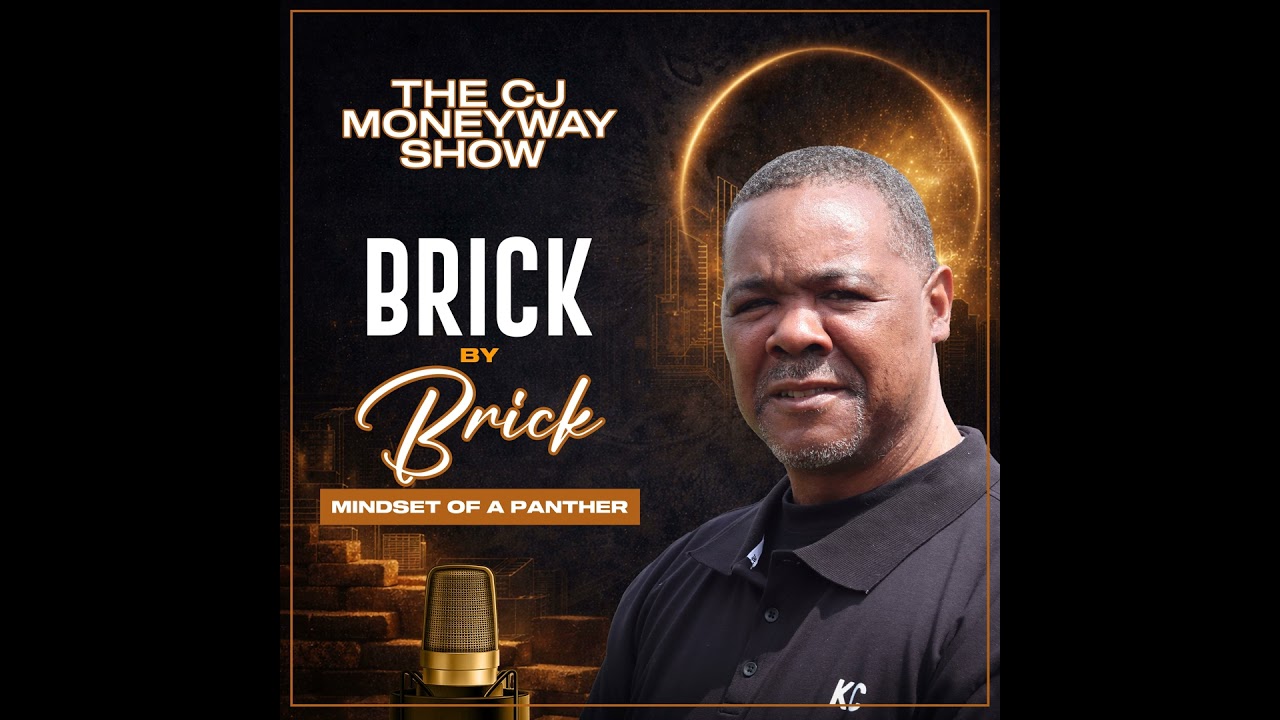
Carter Cofield and George Acheampong of Melanin Money discuss their plan to close a $100 billion wealth gap for Black and brown communities through tax strategy and wealth management. They've added over $244 million to client net worth in the past year and aim to help 100,000 people reach $1 million. The shift from hustle culture to ownership mindset is key.
Chapters
When I found out I was gonna be a parent, I immediately felt a lot of anxiety and worry.
So I went on to BetterHelp to try to look for a therapist to help me with that. My relationship with my family and with my boyfriend and with myself were suffering. I really needed help. I was ruminating a lot. Really getting those thoughts out to a therapist and getting feedback was just life-changing.
Discover what BetterHelp online therapy can do for you. Visit betterhelp.com today.
Welcome to CJ Moneyway Johnson Media, a storytelling platform built brick by brick where conversations become lessons and experiences become perspective. This is the mindset of a Panther, moving with patience, discipline, and purpose. From podcasts to books to media storytelling, CJ Moneyway brings voices, journeys, and real conversations to the forefront. You're now listening to the CJ Moneyway Show.
What's up, my good people? Welcome to the CJ Moneyway Show, powered by CJ Moneyway Entertainment and Believe Network, where legacy is the mission and ownership is the strategy. Today's conversation isn't about hustle. It's about holding. It's about shifting from income to ownership, from survival to scale, from reacting to building. Hey, let George and Carter talk about this, man. What's up, brothers? Welcome to the show.
What's going on, man? Thank you for having us, brother.
Happy to be here. I thank y'all for taking the time out y'all busy schedule, man, to join, man, on the show, man. Hey, first question I gotta ask, man. Let's start with the $100 million vision, man. Why do you believe it's possible?
Man, so not only do we believe that's possible because we've already eclipsed that one, but we have a $100 billion mission.
Oh, that's what I meant. I got the— I got you.
Oh, no, all good. All good. Yeah. So why do we believe it's possible? So, you know, our goal is to help 100,000 people of color achieve their first or next $1 million in net worth, and that will effectively allow us to reach that mission. The reason why we think it's possible is kind of a multi-pronged approach, right? Number one, Every year, you know, we bring on a bunch of new clients that we're able to work with closely. And in the last 12 months, our clients improved their collective net worth by $244 million. So making some good strides there. In addition to that, every year we educate free, free of charge, actually about, what'd you say, Corwin CJ Moneyway Johnson, about north of 30,000 people opt into our free workshop annually.
Attend? Yeah, opt in is different, but attend, yeah.
Attend, yeah, attend, opt in is probably more. So yeah, about 30,000 that we actually get a chance to touch and teach and speak to every year. And obviously all of them don't necessarily become clients, but they get a chance to hear our strategies in order to go back and implement them in their own respective lives. And that kind of creates a trickle-down effect for how they're able to build wealth in their respective communities. And last but not least, we are thought leaders in our respective industries, right? Uh, CPAs, uh, see what Carter has done, financial advisors see what I've done and We're able to help them build their infrastructure to be able to serve people in the way that we've been able to serve. So you kind of add all that together over the 15-year career that I've already had. Plus, you know, I think Carter's been doing it for 13 years. We feel very strongly about being able to reach that goal.
Man, I like it, man. Before we go any further, man, you gotta give us the information on where people can come and get some of this guidance, man. Get some of this knowledge.
Yeah. So If you comment on any of our posts, me or Carter, comment the word class. We do complimentary classes every single week where you can come and learn what we're doing. And then ultimately, if that's interesting and you got value, we do a virtual workshop where not just for one day, but for 5 days, we're sharing our top strategies so that people can learn how to pay less taxes and use that tax savings to build more wealth.
Okay. Okay. Let me ask you, man. Most people think earning solves wealth gaps. Why do you say tax strategy is the real level?
Yeah, so the two reasons. One, it's not about how much money you make, it's about how much money you keep, right? And so if you make $100,000 but you're only keeping $60,000 because you're giving $30,000, $40,000 away to taxes, it's really hard to build wealth that way. And a lot of people look at what they earned A lot of people spend on what they earn, but they don't really understand what they truly take home, right? And so if there's a big gap between what you think you make and what you actually bring home, it's going to be impossible to build wealth. That's number one. Number two, taxes is everybody's largest expense, whether you know it or not. Taxes is everybody's number one expense. So if we can eliminate your number one expense, then we just put you on a faster track to build true wealth. And I tell people all the time, like, one of the easiest ways to make money is to figure out how to legally pay less taxes. Like if you go from having a $30,000 tax bill to having a $5,000 tax bill, you literally put $25,000 back in your pocket every single year. And with that extra money, it's just going to be easier to build wealth.
Oh man, well, I need to talk to you then because I just filed my taxes a couple weeks ago and I know exactly what you're talking about. Bring it home and take it away. And they ain't even including the child support that I had in there, man. I don't even want to go through the numbers, G.
I don't even want to say the numbers, man.
Yeah, they stretch all the way out to North Carolina, bro. So what separates hustlers from holders?
Mm, what separates hustlers from holders? That's a good question. I feel like hustlers are looking for a quick come up, right? They're looking for the next big thing. You look at them one year, they're talking about one thing. The next year, they're talking about another thing. There's no real consistency and continuity in who they are. They're just, because they're just chasing what's hot, right? And how can they make a quick buck? Holders are long-term thinkers, long-term builders. They're digging their heels in to build a real foundation, to build something that's sustainable and meaningful, right? So for example, I always like to say people look at the fruits, but they don't see the roots. I feel like holders are people who dig deep roots so that they can support this tree that can hold all the fruit, right? And so That's how I would articulate it. Just somebody who's long-term thinking versus somebody who's short-term thinking.
Mm, I like that. Carter, man, you wanna elaborate on that a little bit? Yeah.
Hustlers focus on working hard for money while holders focus on their money working hard for them.
I like it, man, because, you know, I got a little thing and it's kind of like what you were saying, G, legacy over likes. Actually, I'm writing a book called Planting Seeds with CJ and Discipline Builds Legacies. And so, you know, like what you were saying, it's like some things, likes, they only last 24 hours. You know, we do a lot of things on the internet or social media just to get attention, you know what I'm saying? But legacy, man, that lasts generations. And that's something that you guys out here teaching, not only, you know what I'm saying, like generations where we instill stuff, man, but y'all out here teaching cats how to go out there and have that generational wealth, man. And I'm loving it, especially seeing what I'm seeing right now. I ain't gonna go there, but y'all know what I'm talking about. Hey, so, um, Let me ask you this, man. How do you move somebody from survival mode to ownership mode?
Man, that's a, that's a really good question. How do you move somebody from survival mode to own? I think the key there is they have to get out of survival mode. I think you have to focus on, you can't focus on building wealth when you can't take care of your basic needs, right? And so the first investment before anybody want to make, want to learn about making passive income, I'll say it this way. A lot of people want to make money when they're asleep and they haven't figured out how to make money when they're awake, right? So people want that easy because it sounds good. It's like, oh, I want to make passive income. I want to get mailbox money. I'm like, bro, like you haven't figured out how to make money when you're awake. So I think in order to get out of that survival mode, you have to invest in the most important asset class, which is yourself. You have to develop high-income skills that the marketplace will pay you enough money so that you're out of survival mode. But if you can't get past that, it's going to be very hard to be thriving. It's going to be very hard to build wealth. So investing in you, getting those high-income skill sets, becoming a person of value to the marketplace, and then once you have those resources, starting to steward them the right way to build long-term wealth.
Carter, man, let me ask you this, man. How did your health battle shift your urgency and your leadership style? Hmm.
I mean, I feel like anything that you go through is a test or testimony, right? And I believe that you could turn any pain into a profit, you could turn any adversity into advancement. So whatever you go through is not only meant for you to get through, but it's meant for you to show others that they can get through it too. So I believe that the strongest leaders have went through hard times, because you can't be resilient if you never had to do anything to build the muscle. Of resilience. And so whether it's a health issue or childhood trauma, like, I actually feel like adversity is the best gift if you have the courage to open the package. So it's just, you know, having that courage to open the package and having that approach to be able to meet people where they are and lead them the right way, I think is a skill that everybody could use, especially when it comes to building a business similar to what we're building.
Man, I like that, you know what I'm saying? Because you do, a lot of times you go through tests, you go through trials, you know what I'm saying, tribulations. And life ain't just for you, you know what I'm saying? It ain't just for me. And like you said, if I can open up and give my testimony, because it's a lot of brothers out here, man, that need what G got to say, that need what Carter got to say, that need what CJ got to say. Because, man, there's a, you know, a lot of brothers out here lost, as you was talking about earlier, George. With the survival mode. You know, like, we in survival mode out here on the streets, you know what I'm saying, in our minds, period. And so, you know, like what you were talking about, the marketplace and things of that nature, like, it all coincides with life because, you know what I'm saying, like, when I'm in survival mode, I ain't thinking about trying to, you know what I'm saying, accumulate wealth and things of that nature. I'm just trying to get through the day. I'm just trying to, you know what I'm saying, I'm just trying to make a dollar out of 15 cents. That's the mentality that a lot of us have, man. But this knowledge that y'all giving us today, man, hey, people can eat off this, man, because your boy, I'm gonna push class on one of y'all posts, man, because I gotta come get this knowledge, man. Which, let me ask you this, G, man, let me ask you this, George. Why is financial literacy still being taught incorrectly?
Why is it still being taught incorrectly? Because people are trying to emulate something that they have not become themselves. And they're trying to piece together what they think other people are doing from the outside looking in, right? One thing we always like to say is you cannot be what you can't see, right? But at the end of the day, like, it's even bigger than that. Like, you have to be able to understand what it takes to build wealth at the highest level before you can teach somebody else. You got a lot of people who are teaching things that they haven't done themselves. You know what I'm saying? And it's as simple as that, right? They'll see a soundbite, they'll see something that's a popular topic, and they'll try to relay that message, and they haven't done it themselves. And when you haven't done something yourself, you don't understand the nuance. You don't understand the context. You don't understand what happens when something goes wrong. And you're giving people half-baked information. And as a result, now you're perpetuating something that other people can't even fully grasp. And so I think that it's simple, like, just only teach what you know and what you've done. If you do that, I guarantee that there'll be a lot less misinformation online and a lot less people just trying to teach something so they can make a quick buck.
Hey, let me ask y'all this, man, because Carter, you from Chicago, G, you from North Carolina, man. How did you two guys meet, man? How did y'all connect and build this powerhouse?
You know what, I always tell this story. I'm gonna let Carter tell this story.
Oh man, you got a cadence, man. You always tell the story. Nah, it's funny because our team just posted it on our story. So we met back in 2019 at a conference. And as you can imagine, CJ, at financial advisor conferences, there's not many brothers. There in the first place. Not many people that look like us there in the first place, let alone, you know, with considerable amount of swag. So when we saw each other at the conference, it was like the Spider-Man meme. It was like, you're me, you know. And we decided to go to lunch that day to just, you know, have a conversation about how we're building our businesses, to learn from him and learn from me. And it turned out that we were building our business in a similar way. And so it was like, hey, man, like, we should— I don't know nobody else that has the goals that I have, right? I am the black sheep of my family. I'm the only entrepreneur. So we met every 2 weeks for, I want to say, like north of 2 years, right? Just masterminding. I'm bringing information, he's bringing information. And we were like, man, like, this is really good. Maybe we should turn this into a podcast. We turned it into a podcast. And then a few years later, it was like, man, we can build a business together because he already had his firm of clients that he was helping with wealth management. I had my former clients I was helping with tax strategy. So we said, we combine the tax strategy plus the wealth management, we can create an all-in-one, one-stop shop for financial services and really built this business that's bigger than us. And we've been doing that ever since. And so, you know, getting in the room at the right time has put us in position to change a lot of lives.
Let me ask you this, Carter, man, I like that explanation that you gave, you say, you know, like, we saw each other, We went out, you know what I'm saying, ate, because you the black sheep of the family, you know, the first entrepreneur in your family. I got this thing, George, man, you know, like when you the first one to do something in your family, it ain't no blueprint. It ain't nobody that's before you that you can go ask, you know, like, how can you do this? You the only one. So Carter, so like when you met George and you say like, you don't know too many people that had the same goal, the same mindset that you had, like, man, was that a relief? You know what I'm saying? Because you didn't have nobody to lean upon itself for like, social media, you know, like how you go and look stuff up, you research stuff, you know, so I know you're pretty smart guy. So I know you did a lot of research over your time, probably researching right now. So like, you know, I'm saying like that connection, man, how did it feel once you guys like truly got connected like that?
Yeah, I mean, it feels good to know you're not crazy. Right? And pioneers always take the arrows in the back, because they're first, right? And so part of it is just getting around somebody that helps you realize that you're not crazy, especially when everybody around you is telling you that you're crazy, because society has taught us to work a job for years, retire at 65. And we like, I don't want to do that. I want to do what I want to do. And so number one, you find out that, you know, you are on the right track, and it's okay to have a bigger vision. And number two, it's just having that entrepreneurship can be extremely lonely, extremely lonely, especially if you don't have a team yet, you know, people like, can I speak to the head of sales? And it's you. People like, can I speak to the head of HR? And it's you. And so having that person to bounce ideas off of, I think it's mandatory for anybody who wants to succeed at anything. If you want to win at any area of life, I personally believe you have to commit with the 3 C's. You have to commit with your cash, commit with your community, and commit with your calendar. So the fact that we committed with our calendar and the community that we had, we eventually put our cash together to build this business. So that's why I think you need to succeed in any area of life.
This episode is brought to you by CJ Moneyway Media, where podcast ideas become platforms. Through the Moneyway Lab Masterclass, CJ shares real lessons from the lab for creators building their voices brick by brick. From powerful guest conversations, storytelling that inspires growth, CJ Moneyway Media is about one thing: building legacy through stories. Learn more at CJMoneyway.com. Music style, music store.
Let me ask you, G, man, on top of that, you know what I'm saying? Like, when your family, you know, your family, friends, people that you close to, like Carter was saying, people saying that you crazy. A lot of times when you start doing stuff that's off the cuff, like he say, you know, people like my wife like that 9 to 5, you know, expected. That ain't what I want to do, you know what I'm saying? Like, that ain't my vision. And a lot of times, you know, people can't see your vision. So let me ask you this, George, man, how did you persevere going through some of the challenges, you know what I'm saying, within your own family, within your own friends, till you met Carter, man? How was that like?
Yeah, I think the first thing is you have to remove dependency, right? Because when someone isn't sending you money on the first of the month to pay your bills, like, yes, you love them, yes, you care about them, but if we're being honest, the opinion only carries so much weight, right? So that's the first thing. The other thing is I would say just stacking proof, right, over and over again, because it's not for them to understand, it's for them to see. It's almost like you got on glasses right now. I'm not sure what the prescription is. But if you hand them over to me, I'm pretty sure it's not gonna be as clear for me as it is for you, right? So it's almost crazy to think that if God gave you a vision, that someone else is gonna see it as clearly as you. But when you build it, and they can't ignore it, then at that point, it's like, oh. So like, you almost have to be okay not getting the approval. You have to be okay being misunderstood. And if you can get past that, That's half the battle because now you just focus your energy on building. And then when they see it, it'll be undeniable, right? It's like the building is there. Like, what more do we have to talk about? So for me, it was just a matter of focusing on what I could control and not alienating the opinions of people I cared about, but just understanding that it's not for them to understand, it's for them to see.
I like it, man, because, you know what I'm saying, a lot of times, 'cause one of my slogans, Carter, is, what are you doing when ain't nobody giving you no applause? What you doing, you know what I'm saying, when you by yourself? And like George was saying, when I go on interviews, I say this to them. I'm like, once you get over the fact that you in tune with your vision, regardless of what anybody else think or whatever, that you made up your mind, that I can't unsee what I saw, you know what I'm saying? I seen it, but I can't help it if you haven't saw it, you know what I'm saying? Because a lot of times people can knock you off your square because we listening to the wrong people 'Cause they can't see the vision. So they like, 'Cause you crazy, you don't know what you talking about. You can't amass $100 billion. What is you talking about? That's stupid.' But look at my brothers right here, they did it. He said that was then, CJ Moneyway Johnson. We went past that now, man. Hey, let me ask y'all this, man. Give me a little perspective of each individual podcast, man, and the podcast that you guys got joined together and your business venture, man.
Yeah, I mean, it's pretty straightforward. So There's a lot that comes in when we help our clients, you know, comprehensively, we help them pretty much in almost every area of finance. But what our claim to fame is, is you're probably already overpaying in taxes, right? And if we can help you stop doing that, that's going to free up resources. When you have those resources, it probably will make sense for you to invest. And so Carter focuses on showing them the tax strategy on how to save the money, right? And keep the money in their pocket. And I show them now that they have those resources, What can we do to multiply it?
Right?
So our individual segments, he's talking about taxes. I'm talking about investing in wealth building and our joint segment is a combination of the two. In our joint segment also, we sprinkle in a little bit of entrepreneurship and business, obviously, because we built a business together and a business can be one of the biggest catalysts to people building wealth because wealth is made through concentration, but it's preserved through diversification. What I mean by that is your business is your most concentrated asset, right? And then as it profits, you take the profit and then you invest the money in diversified ways. So that's essentially the long and short of it in terms of our respective platforms. As far as our joint business venture, yes, we educate at scale and we teach people the strategies, but we also own and operate a wealth management tax advisory firm. We take on hundreds of new clients every single year who want to build more wealth and save money in taxes. And we actually celebrate them every year at our annual event called Wealth Weekend. On their various net worth milestones, right? So whether they achieve their first $100,000, half a million, million, $5 million in net worth, we actually celebrate them at our award show every year. That's the long and short of it, man. But our whole mission is how can we decrease the wealth gap? How can we keep families together? How can we preserve legacies and really change the narrative?
Hey man, let me ask y'all a question, man. You say y'all have an award show every year. Where it be at? You know, is it random places or is it North Carolina? Is it in the Chi? Where is that, man?
It's in Atlanta, Georgia, July 17th through the 19th. It's been in Atlanta pretty much every year. And it's an amazing ceremony. We celebrate our peers, we celebrate our clients. And it's, you know, people get celebrated for a lot of things, not for building wealth. And we want to change that narrative.
I asked, man, because I wanted to know if your boy CJ Moneyway Johnson came to y'all's show, man, came to the thing. Can I get in, man? Do I get in? You know what I'm saying?
Absolutely, brother. Absolutely. Absolutely.
Hey, I like that. You guys way ahead of me, you know what I'm saying? And so I'm learning, you know, I bring people on my show that I can learn from myself, you know what I'm saying? Like, I'm the first audience. That's what I tell people. I'm the first audience, and I ain't got a whole lot of tools in my toolbox from a lot of people that I bring on, man. And so I love it that you guys are sharing, you know, saying what you know and giving the advice what you guys can do for people, and I know it can go deeper. And so, hey, yeah, y'all gotta check out George and Carter, man. These boys up to something. $100 billion caught my eye right off the jump, man, because 100— what, $100 billion? Wait a minute, man, they talking Elon Musk money, man. Hey, let me ask you this, man. What mindset shift must founders make to scale properly?
What mindset shift must founders make to scale properly? I would say you have to understand the power of team, right? So people build the business and you build the people. So you have to shift from like a technician because many people, you know, they get good at something and they develop an identity around the thing that they got good at, right? Like, I'm really good at this thing. But in order to build the business, you have to shift into visionary, you have to shift into leader you have to focus on building people, right? And you have to get rid of your scarcity mindset, you have to get rid of your limiting beliefs that only you can do something, that you're the best person to do something. Because if you want to truly build something of massive scale, it's not going to work if you're at the center of it. I always— the analogy I always use is if you walk into Charles Schwab, do you think you're going to talk to Charles, right? So you have to build a business that can outlive you, which means you have to remove yourself from the day-to-day operations, which means you have to put in infrastructure, systems, processes, procedures. We all can agree that McDonald's probably makes one of the worst burgers we've ever tasted. I think the worst for you, but there's— why are they one of the most successful? Because they have a business system, right? But if the owner of McDonald's got fixated on, man, I want to be the best burger maker ever, do we think we would see the McDonald's that we have today, right? He had to focus on what does it look like to build this business system? So for our business, to speak specifically, We look at our business like an airplane, right? And there's a lot of, of course, people that go into play to operate that airplane, but there's a few main functions. Number one, you got to have somebody that can fly the plane, someone that can see where we're going, where are we landing, where are we going to next, right? That's the CEO. That's the visionary. Then you have to have somebody who can get people on the plane, right? It's like, okay, this is a beautiful plane, but if there's nobody in the seats, right, there's no point taking off, right? I.e., getting new clients. Then you have to have somebody Who can take care of the passengers? Because if they have a bad experience, they're gonna leave bad reviews and you're not gonna get people on the plane the next time, right? So who is taking care of the passengers? And last but not least, you have to have someone who's actually taking care of the machine, who's making sure that the machine is operating properly. So that's operations, that's sales, that's client fulfillment— well, sales and marketing, client fulfillment, and of course the visionary who's the CEO. So those are the core functions that you have to have in order to scale.. But ultimately, if I had to sum it all up, you have to be willing to let go.
I like that, man. I like the airplane analogy too. So I take it that you guys are the pilots?
Yeah, so I'm the CEO and Carter is responsible for getting as many people on the plane as possible.
Oh man. Hey, so I want to get on the plane to Atlanta, Georgia, July 17th, 19th. I ain't gonna forget that, brothers. Hey, you see CJ Moneyway Johnson? I'm coming. Hey, I know them personally. Carolina Tar Heel fan. And my man Carter from the shadow side. Outside and he don't like the Sox. That's like— Corwin CJ Moneyway Johnson, man, let me ask you this, man. In 2030, what would the wealth conversation look like if your mission succeeds?
2030? I mean, I feel like in 2030, which is 4 years from now, we should be very close to hitting our company mission goal. And I think what success looks like Even deeper than that is we bridge the wealth gap between Black and brown people is tightened because in this day and age, it is not our fault we don't have this information, but it is our responsibility to get it. I'm a firm believer in that. And in order for us to build wealth, we first need to understand that we're worthy of wealth. And hopefully by 2030, we've done a great job of painting the narrative for our people that we are worthy of wealth. And instead of wealth being an outlier for people that look like us. We want to normalize it, right? And so normalizing Black and brown wealth will be something, a huge accomplishment for us. 2030, we look back, we were able to do that.
And I hope you guys, you know, matter of fact, I don't hope you guys are gonna do it. $100 billion is already proof in the pudding. Whatever you guys set y'all mind to do, man, who thinks of $100 billion, man? You know what I'm saying? That's a lot of dough, man. And you put your mind to do it, y'all accomplish that, man, and more. Whatever you guys put your mind to, man, I know this is gonna come to pass, man, because we serve an Almighty, you know, I don't know, y'all, Almighty God.
That's almost—
hey, so, uh, George, man, let me ask you this, man, last question, man. I appreciate you guys coming on, man, taking the time out y'all busy schedule, man, coming to entertain your boy CJ Moneyway Johnson. Hey, but before I go there, man, where can we find you guys at, man? What can we find you on social media? Where can we find your company? Everything, man.
Yeah. So as far as our business brand, that's Melanin Money on all platforms, social media, YouTube, Apple Podcasts, The Melanin Money Show. Individually on Instagram, probably the platform that we are the most active on outside of YouTube. So I'm George @chinpungjr, probably going to want to put that one in your show notes, uh, so people can spell it. And then @cofieldadvisor on Instagram as well for Carter.
So, sir, let me ask you this, man. Mm-hmm. If someone is making six figures today but feels stuck, what are they missing?
They're paying too much money in taxes and they don't feel like they have enough free cash flow to be able to maximize their wealth building. So that's the first step is to minimize and mitigate those taxes and then use that money to multiply following the strategies that we teach, man.
So I appreciate you guys, man, coming on the show today, giving us this knowledge, man. Again, as I said, dropping these nuggets. Hey, this conversation with Carter and George is a reminder that wealth isn't built by working harder alone. It's built by owning smarter. Too many people are stuck chasing income, stuck in a cycle of earning and spending. But today we talked about making the shift from hustle to holding, from checks to ownership, from temporary to win, lasting legacy. Hey, if you enjoyed this show, if it challenged your mindset around money, share it with someone who's ready to level up financially. And if you haven't already, take a moment to rate the show. It helps us keep bringing conversations like this to a global audience. Until next time, hey, build brick by brick like my brothers over here from North Carolina and Chicago. They have built it brick by brick. Until the next time, it's your boy CJ Moneyway with my boy George Carter. We outta here. Peace.
You've been listening to the CJ Moneyway Show. Woo!
With real stories, Real lessons, yeah, and real perspective come together. Remember, move with patience, move with purpose. That is the mindset of a Panther.
Until next time, keep building your legacy brick by brick by brick by brick.
Music style.
If you like the show, please take a moment to rate, review, and subscribe. It really does help the show to grow. Thank you for listening.
More from Corwin


Pressure-Proof Leadership: Claire Hayek on Neuroscience, Resilience & Leading Under Pressure

Healing With Fire: Zulma Williams on Trauma, Cancer, Depression & Finding Your Voice

The Economy of the Heart: How Love and Leadership Build Profitable Cultures | Hanna Bauer

The Doorman Nobody Valued: Wes on Storytelling, Corporate Blind Spots, and Building Brotherhood o...

Art for Your Sanity: How Creativity Helps You Survive Chaos — with Susan Hensley

Becoming Better: Ryan Gottfredson on Why Success Requires More Than Doing More

Mission Control OS™ Demo | Governance-First AI Executive Operating System | OpenAI Build Week

From Frustration to Confidence: The Dyslexia Professor’s Blueprint for Struggling Readers

Built in the Pit: Chris Duffin on Resilience, Accountability, and the Discipline to Rise

Cyber Thrillers, AI & the Future of Technology with Charles V. Breakfield & Rox Burkey