“Exploring Mental Wellness and Healing: A Conversation with Phyllis”
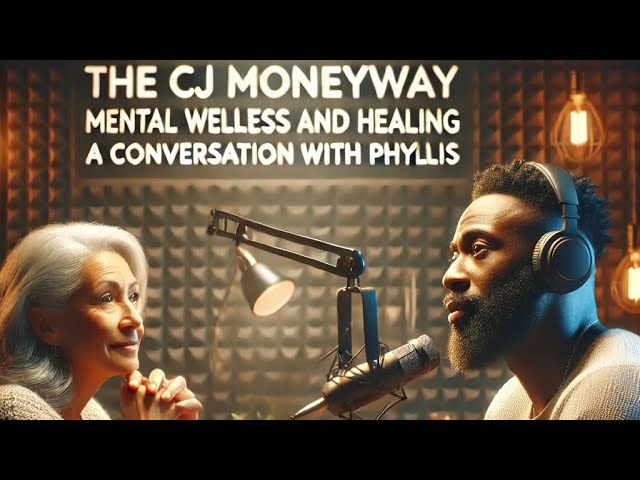
In this episode of the CJ Moneyway Show, host Corwin CJ Moneyway Johnson interviews psychotherapist and author Phyllis Levitt, MA. Levitt shares her personal story of surviving childhood sexual abuse, the long‑term impact of that trauma, and how the process of remembering and therapy led her to become a mental‑health professional. She describes her work at Parents United, a sexual‑abuse treatment program, highlighting the dynamics of intergenerational trauma, the Non‑Offending Parent Group, and how abuse can perpetuate across families. Levitt explains what a psychotherapist does, the range of therapeutic modalities she employs (EMDR, somatic work, inner‑child work, hypnosis, etc.), and the importance of empathy combined with personal responsibility. The conversation turns to her three books—A Light in the Darkness, Into the Fire, and America in Therapy—detailing how the first two chronicle her own healing and the third applies therapeutic principles to the nation, arguing that America exhibits family‑like dysfunctions (systemic abuse, neglect, power imbalances) that mirror individual trauma. Levitt discusses the root causes of rising violence and mental‑health crises in the U.S., emphasizing the breakdown of family support, economic stressors, and the cycle of power versus submission. She urges a shift from blame to healing, calls for societal policies that prioritize families, and promotes her books as tools for personal and collective recovery. The interview ends with reflections on retirement, ongoing writing projects, and a call for listeners to engage with the ideas presented.
Chapters
Imagine what's possible when learning doesn't get in the way of life. At Capella University, our FlexPath learning format lets you learn on your own schedule. A different future is closer than you think with Capella University. Learn more at capella.edu.
Welcome to the CJ Moneyway Johnson Show podcast, the podcast show where we unlock potential one dream at a time. Today we have another guest whose journey is truly worth hearing. Sit back, relax, and enjoy the Moneyway experience.
What's up, my good people? Welcome to the CJ Moneyway Show. Today we have author and psychotherapist, Master of Arts in the building. Today we have Phyllis in the house. How you doing today, Phyllis?
I'm doing great. Thank you so much for having me here with you.
Thank you for taking the time out of your day to join me today. So Phyllis, tell us a little bit about yourself and about your background.
Yeah, I grew up in New Jersey in a kind of a middle-class family, very focused on education. My whole family was very focused on education. And, you know, like so many people, there were things that happened that weren't so great that nobody knew about. I was abused as a kid, and I think at a very, very young age. And so most of that was just buried. And I kind of grew up feeling very much like something was wrong with me and I didn't know what it was. And, you know, I've shared this many times. When I grew up, nobody talked about psychology. Nobody talked about how you felt. I don't remember people talking about like, are you depressed or do you feel anxious or are you frightened? You know, we just kind of did a routine day in and day out. We went to school, we made our bed, we did our homework. And it was also, you know, following World War II that I was born. And I think many people just shut down after the war and didn't want to talk, and they just really wanted to prosper and get on with life and maybe forget some of the horrors that had happened. In any case, that was what my family was like. And so I just had this very deep sense that something was intrinsically wrong with me, and I had no language to describe it to anyone. And there wasn't anybody who asked. So my first encounter with, you know, I was a really good student, which was good. I love to learn. I love to read. And that was kind of, you know, a nice focus for me. And as I got older and went to college, I started to have some, you know, just interesting experiences also that nobody ever talked about. And I didn't talk about them either, but I had some very powerful experiences in nature of really feeling very, very connected. And writing was always a big thing for for me. And in writing, I made a very profound connection with what I would call my true self. But again, I had no language for that. So I just knew that writing was something that I really aspired to pursue. I didn't know what I wanted to write about. I just wanted to write something. Right? I was really young. But I would write little pieces and I wrote— started writing poetry and I didn't do anything with it. It was just for me. I got married, I had kids. And I think, you know, like many people who are untreated and don't know what has happened to them and don't have any help for it, we tend often to repeat what we know. So we tend to be attracted to people who are somewhat like the people who hurt us. We're still looking for love from the person we didn't get it from. Or we just know how to be the person who submits or the person who dominates, and I tended to be the person who submits and I made a very unhappy marriage, and it just all began to fall apart. And I think when that happened, I had 3 little children at the time, the memories of what happened to me started to surface, and I started to remember. And it was very difficult for anyone who's been through that. You know that your psyche can hold so much pain and keep it down in order for you to survive. And when it starts to come up and come into consciousness, It can be very, very difficult. It's good because it's a healing thing that's happening, just like if, you know, you're opening an infection and you get the infection out of your body, it might hurt, but the body's trying to heal itself. And I believe our psyches are always trying to heal themselves, and mine was. And so I went through a period where I finally went to therapy and began to remember and decided to become a psychotherapist out of all that because it was such healing that was able to experience, and so much more of of a deep connection to myself that I had longed for. And I left that marriage and I went back to school. I became a psychotherapist and I kept writing. I wrote my first two books, A Light in the Darkness and Into the Fire. And those are really all about my own healing journey and what happened when I made contact, really deep, profound contact with my really, my soul, my essential self, my higher self. People have different names for that. And then eventually I remarried and very happily and wrote my third book, America in Therapy. So that's, that's a little nutshell.
That's a lot in that shell right there. I tell you. So, Phyllis, tell us about your time working at Parents United.
You know, it was such a blessing. I started as an intern there when I was in graduate school in psychology and And, you know, when you're, when you're a graduate student in psychology, you look for someplace to do an internship, obviously, that deals with mental health. And I don't think it was an accident that I ended up working in a sexual abuse treatment program because that's what had happened to me. And it was a profound experience. I worked with some really wonderful colleagues there. And we did— we worked with all members of the family, children who had been molested, their siblings who hadn't, parents who were not the abuser, parents who were the abuser, and then adults who had been molested as children who had never gotten any help for that. And we did tons of group work and group therapy, and it really opened my eyes to how profound and pervasive intergenerational abuse and trauma is. That just, you know, a person is abused, then they abuse someone, and that was true for many of the perpetrators. Many of the perpetrators of violence against their spouses or children have been abused themselves and never got any help. And so they're just— they're also just doing what they were conditioned to do. That's not to excuse the pain or the responsibility, but it's an important part of what I wrote about in my book and what we need to know in the world of psychology, that people are not born molesters. They're not born someone who just beats other people. Unless perhaps, you know, in a rare case there's some brain anomaly that really doesn't— that doesn't wire them properly. But for the most part, a baby is born an innocent, loving, innocent, beautiful, essential human being, and then something happens to them and they get conditioned in a way that's either healthy or not. So one of the beautiful things about working at Parents United was, was our ability to work with children and help them while they were still young. There was also something that was really profound for me in working. We had a group that was called the Non-Offending Parent Group, and primarily that group was a parent who had not abused their child but who had not been able to protect their child. And it was usually either their spouse who had abused the child or another family member, and sometimes they knew And sometimes they really didn't know. And they just, you know, it just happened, you know, out of their hearing and out of their sight. Or, or they had been molested by that person. And then they ended up leaving their children with that person, you know, and, and from the outside, what was so profound about my learning there was from the outside, it's like, well, how could you leave your child with your father if your father molested you when you were little? Or you know, whoever it was. But what happens is people often get really disabled by abuse. Their, their instincts of self-protection and protection of others actually go offline, and they become helpless in the face of, of their own abuse, abuse in the present, or abuse of those around them. That's not true for everyone, but it certainly is an understandable and known psychological outcome. So I just learned so much about the dynamics of abuse, the effects of abuse. And then meanwhile, I was, you know, doing a lot of my own personal work still because I did that for quite a while. So it was a really profound experience to feel like we could intervene on the front lines and know that there was help for some of these children who were going to grow up and, and otherwise probably would have either continue to be victimized or perhaps become victimizers themselves, or in any case, suffer the way I did, you know, because it's very, very, very painful. It's really impossible to put into words the devastation that it does to a person when you are violated by people that you trust and that you live with and that you depend on, or anyone else. But when it's in your family, it's a certain kind of trauma that's a little different than if it's a stranger.
Mm. Point taken. I've had a few people that have come on and talked about being abused, and they say exactly what you say. Sometimes it's hard to put in words. If you haven't experienced it, then you really wouldn't understand what somebody's talking about or going through. Right.
And so in some ways, you know, the silver lining was that I think it made me a better therapist. Because I knew what that experience was like. I knew what that pain was like. I knew how hard it was to move through it and how important it was to have a safe other person to go on that journey with you. It's very hard to do that work all by yourself.
So on that note, Phyllis, so what exactly is a psychotherapist?
Yeah, psychotherapist is someone usually with a master's degree, which is, you know, a graduate school degree in psychology of some kind. Sometimes it's a social work degree, but that's usually training in being a therapist as well. And you just— you, you've learned all about family dynamics and intrapsychic dynamics and early childhood conditioning. And you also learn about many of the healing modalities that help people recover from the things that have happened to them with other people that have really hurt them and given them, you know, negative messages about who they are. Most people have some kind of coping mechanisms that they develop out of abuse or neglect on whatever level it happens, whether it's emotional abuse or abandonment or actual violation of your body. Or it could be not in your family. It could be discrimination in your community. It could be the effects of poverty. It could be that you've developed an addiction as a way to try to medicate your own pain. So there's, there's all kinds of things that we learn about how to treat different symptoms and get to the causes. And so most psychotherapists, I think, learn a lot of different modalities. They learn how to work with children, they learn how to work with couples and families and individual adults, and do— sometimes, you know, we do hypnosis or inner child work, or there's a wonderful methodology called EMDR, which is based in working with the left and right hemispheres of the brain. There's all, all kinds of new technologies. There's somatic therapy. But basically, the, the bottom line of what a psychotherapist does is try to uncover the source of whatever pain brings a person to therapy. Could be pain in a relationship. It could be addiction. It could be an inability to really manifest who you feel like you really are. Your creativity is blocked. You can't find good work. You end up being attracted over and over again to partners who are not good for you. You're having trouble parenting, you know, whatever it is. You're obsessed, you're, you know, you're highly anxious, you're deeply depressed, you can't sleep. Sometimes people come in with horrible nightmares. I mean, you know, the list of symptoms is endless. And so we try to help people get to the source of the pain Where did it start? What happened to you? How old were you? What did you learn about yourself? You know, positive and negative. And usually out of negative experiences, we take on negative beliefs like I'm unlovable, I'm not worth anything, I don't matter, I'm invisible, I'm fat, I'm ugly, I'm stupid. You know, just whatever messages you got, either implicitly or directly. Children are like little sponges. They just absorb. You know, the reflections they get back from other people. And then out of that, we develop coping mechanisms. You know, my, my coping mechanism was not the worst one, you know, not the worst highly dysfunctional one. And it's not to my credit. It just happens to be that I mostly just, you know, shut down and, and just try to keep everything to myself and look good on the outside. But for many people, you know, their symptomology— and I had a lot of depression, and later in my life I began to have a lot of anxiety. But, you know, for many people, their lives just don't work at all. And, you know, and so, so anyway, we— but we were coping the best we can. Even if a person becomes an addict, they're doing the best they can to deal with the pain that they don't know how to resolve or or often either don't know how to get help for, don't feel like they're supposed to get help for, or help's just not available or affordable or whatever. And so, you know, one of the, one of the great gifts of having done so much work on myself and work working with hundreds of people over the years is you really grow your empathy. You know, we are really doing the best we can, even if it's awful. Sometimes it's awful. You know. And, and that doesn't mean there's not a place for responsibility and accountability and making amends and changing our behavior or getting serious help. Maybe sometimes it's going into treatment if, if there's depression and addiction, or, you know, so it doesn't— the empathy doesn't take away the need for self-responsibility. But, but my experience with people is the more understanding and empathy you can receive about what happened to you and even how you've manifested out of what happened to you, the more likely you are to want to take responsibility for yourself. And I've seen that happen over and over again with people. They work on, you know, whatever happened to them as a little kid, and all of a sudden they realize that they're not treating their children well or they're their anger with their spouse is out of control, or they're mean to their employees. And they get it once they start to internalize that empathy for what happened to them. And it's very common that that happens.
Now I see how you got so many books. A lot of wisdom and understanding. And so talking about Talking about books, tell us about your book, A Light in the Darkness and Into the Fire.
Yeah, so those are the first two books I wrote, and I think I wrote them about, I don't know, somewhere within like 10 or 12 years ago. I don't remember exactly, but, uh, the first one was A Light in the Darkness, and the first part of that book is just autobiographical. It's kind of like starting from my earliest memories of my childhood and up into my adulthood and up until the time I went to therapy and really started to have some breakthroughs. And then I really talk about what happens. How did the light come into all that darkness? That's— those words really always spoke to me, a light in the darkness, because I felt like I lived in the dark for a really long time. And I, and I feel so deeply for people that feel that way. And I think there's many people Millions of people all over the world who are suffering abuse and neglect in their homes and in their communities and in their countries, who have no opportunity to ever get help. And many people don't even have an opportunity to get safety. They're still in it. They're still in the trauma of war or discrimination or poverty or persecution for their religious beliefs or their gender. And so what I really wanted to chronicle, what it was like to emerge from that darkness. And emerging from that darkness for me was really making a very deep connection to my true self. And I write about that in the, in the whole second book, Into the Fire, is very similar. It continues that story. And it, you know, it's really actually what enabled me to leave the marriage that I was in and form healthier relationships with other people and stop repeating what I knew.
So tell us about the new book that you just—
Thank you. Yeah, thank you. So really, all of that culminated in a desire from my own experience, but also from so much work that I did with, with clients over the years of seeing what abuse and neglect family dynamics are like. And I'll just name quickly some of the dynamics that, you know, probably if I say them, they seem obvious, but, you know, abusive people. And again, they may have come by being abusers honestly. They may have been terribly hurt, and many of them have been terribly hurt with no access to healing. But in an abusive family, an abuser tends to obviously hurt other people without being able to feel remorse for the terrible effect they're having on the people they're hurting. And usually, often blame their victims. She wore that short skirt. She shouldn't have done that. She was asking for it. He wouldn't do his homework, so I beat him. They always have a justification for what they do so that the victim is blamed rather than the victimizer holding themself accountable or seeing that they have a part in what's going on. And then they blame their victims for their symptoms. Because if you hurt a child, a child or spouse or anyone around you, they're going to be symptomatic. They're going to get depressed. They're going to act out, they're going to fail in school, they're going to have excessive fears, they're going to wet the bed, they're going to start using drugs at an early age. And then we blame them for their symptoms, like, what's wrong with her that she's failing in school, or that she is hanging out with those bad kids? Or, you know, he ran away from home, what's wrong with him? Rather than, what's he running away from? And what I began to see is that all these dynamics and I can come back and name a few more that I think are really important, are playing out in the largest levels of society. As a society, we also blame our victims. We blame masses of people for the societal abuses that we heap on them, whether it's discrimination or, you know, not providing people with a living wage or adequate housing or having medical care accessible for everybody. So we do the same thing in our society that an abusive or neglectful family does in their own home. We favor some people and we discriminate against others. We make lots of opportunities available for certain people and we don't give any opportunities to others. And if a parent was doing that, we'd say there's something wrong with them. If they were feeding one child and starving another, we'd say, what's wrong with them? They're mentally unwell. What parent would do that to their child? And they are mentally unwell if they do that. And there's a reason why they're mentally unwell.
But imagine what's possible when learning doesn't get in the way of life. At Capella University, our game-changing FlexPath learning format lets you set your own deadlines so you can learn at a time and pace that works for you. It's an education you can tailor to your schedule. That means you don't have to put your life on hold to pursue your professional goals. Instead, enjoy learning your way and earn your degree without missing a beat. A different future is closer than you think with Capella University. Learn more at capella.edu.
What I'm saying here is the basis for American Therapy is to look at how as a country we're also enacting policies and practices toward many of our own citizens, to say nothing of people around the the world that we would consider abuse if they were happening, if it was happening in our own homes. And a parent might be jailed or their children taken away from them if it was known that they were perpetrating some of the things that we do on these larger societal and governmental levels. And I just really felt like I had to point that out because, well, first of all, I love America. I love the United States. I love living here. And I think as a family member of the family of America, I feel like in my heart I want to speak out, but I also feel like it's my responsibility as a member of the family of America to speak out, not from the point of view of shame and blame of people, but can we heal this? Can we heal the family dynamics in the family of America? Because a couple of the other things that I'll mention that I think are happening here that are huge and really, really important that maybe, you know, everyone doesn't understand because they're not steeped in the world of psychology and family dynamics, understandably. Some of the other dynamics that happen in an abusive or neglectful family are that it's dangerous to try to get help. It's dangerous to tell other people what's going on in your home because you might get hurt worse or you might just be kicked out. Or you might be publicly humiliated, you know, she's a liar, she's a tramp, you know, or he blah blah. And that's what happens also in America when many people try to come forward and call out abuse or neglect or injustice, they often get targeted for further blame and shame and sometimes assault. And then the other really big one is that many people are enrolled in cooperating with those who are in positions of power who are abusive. They get rewarded. They get to feel like they belong to the powerful group. There may be money involved or gifts or favors. And of course, we're seeing this all over the country, you know. And again, I say this not from the point of view of blame, because the world of psychology— and what's so beautiful about the world of psychology And why— part of why I wrote this book from a psychological perspective is that psychology is not partisan. It's not about shame and blame. It's not about retaliation. It's not about punishing people or hating them. It's about— it's like a doctor saying, you know, you have a tumor and it's malignant and you have to take it out or you're going to die. You have to get treatment for this because it could kill you. And my point is that our mental health, the ways that we behave as ordinary citizens, as, you know, people in larger community settings, schools, businesses, houses of worship, states, and in government on a national level. If those behaviors are injurious, they're creating more and more symptomatic people, and we're living with those symptomatic people. Right. Yeah. So the point of psychology is not to shame or blame, but to say, can we heal this? And how do we heal this? And what do we need to do? So the whole kind of second part of my book is taking some of the principles that I've learned of the best healing practices and perspectives and taking them to the nation, taking them like out of the office, out of individual application to national policy and practice and application as a way— because like I said, I love America, I love this country. I'm fearful of what's happening in America today. And I think the escalation in divisiveness and hatred and violence and targeting certain populations and our continued investment in weapons of mass destruction should have us all in a state of alarm. And so how can we bring the best healing principles? What could bring us back together? What could have us listen to each other? What could have us actually try to cooperate with each other for the good of the American family rather than continue down this path of hatred and divisiveness and violent rhetoric and threats and this, you know, winning at all costs, no matter who sort of gets trampled underfoot. Yeah.
Don't miss out on CJ Moneyway's book, Both Eyes Open and Both Eyes Shut, and get ready to preorder his upcoming release, The Issues of Life, coming soon. Moneyway, aiming to inspire.
Everything that you said, I can see the concept. I can see where you're going with it. As we're speaking about that, I want to get the book. Where can we find this book at?
Please, I, you know, and I just really, I've been giving away lots of copies, but please buy it on Amazon or Barnes Noble. You can get it in a Kindle version or a paperback. And, you know, it's available from all major booksellers, but, you know, people usually go to Amazon and Barnes Noble if they want to buy it online. You can also buy it directly from my website. There's order buttons on there and my Website is my name, phyllislevitt.com. And of course you can get the other books also from any major bookseller. And I'm on all the social media, LinkedIn and Facebook and Instagram, and I have articles and blogs and I have tons of videos of other conversations I've had with people, wonderful people like yourself on YouTube. And, uh, yeah, and, and please, if you get my book, I just really want to urge the audience this because please write a review because it really helps to have reviews to sort of up the algorithms of how your book shows up. And this book is my service. You know, I didn't write this book to make money. I wrote this book because in my heart, I really want to see our country heal. I want to see humanity heal.
Yeah, I can tell how sincere you are about it. Just speaking about the different dynamics and the things that, that's going on in America. And the way that you're telling it, the way that you're providing it, I think is very intelligent, the way that you're putting it all together, because it is an issue. And the way that you put what's going on with America as far as what can go on in the home, I think that it translates to even simpler understanding of what's actually occurring. You wouldn't ignore it in the home,, but we're ignoring it in the government. We're ignoring the things that should be addressed, but the things that may be able to pass over, you want to ignore that. But right, because as a parent, if I beat on my child, I'm going to jail, right? No doubt. Right, right. So with that being said, fellas, what do you think accounts for the escalation of violence and hatred in America today?
I think it's a very complicated question. I don't think there is one answer. And so what I offer is from the point of view of psychology. You know, an economist would give you another set of reasons. Someone from, you know, a church might give you another set of reasons. A sociologist might tell you something different. So I'm— I don't want to say that everything I say is the only word about what accounts for the escalation divisiveness and violence. But I think if we were going to just go to the bottom line from a psychological point of view, I would have to say that it's really the breakdown of the family and that we don't esteem families. We don't take care of families in America. They're not a priority. You know, providing adequate childcare and medical care and good education for every child and making sure every parent has a living wage and can find decent housing, safe housing. I think that's the bottom line. I think it goes out from there. But I, from my experience working with so many people over the years, what happens in the average home is not necessarily that great for most people. And especially in the economy that we have today where For most people, I don't have statistics, but for many, many people, let's say the family can't even survive unless both parents are working. So there's a lot of inadvertent neglect of children, not because even parents want to neglect their children, but they're just not there. And then we have all this social media on all these devices and the access to terrible things as well as wonderful things is just out there. You know, and so many children are just on their tablets all the time. There's a breakdown just in the value of actually relating on a one-on-one. But really, you know, again, I just say this from a point of view of like, how can we help? Not who's to blame. But I would say so that that's the bottom line. I think, I think we're in desperate need of reevaluating. And I'll just say as a country, because this is the country I live in, but really as a human race, what our priorities are. Because I think our priorities need to be the welfare of people, not material possessions, not— certainly not weapons, not extreme, you know, power, not extreme wealth. But really, what is the quality of life that our children are being brought up in and that our adults have to survive in? Because I think the stressors are so enormous, even if there's not abuse and neglect, the stressors to to make a living, to have adequate housing and all the rest of the things I mentioned are enormous for vast numbers of people. And of course, that's going to play out in their human relations. Where does our stress go? It goes to the people around us, right?
Yeah, exactly. Exactly. So with that, like you say, with stress. So with that, what do you feel is the major causes for mental health?
Well, let me add something to that which answers this question, but it also goes back to your first question. And I think because there's a certain level of emotional neglect going on widespread, it's not like there's just that mentally unhealthy person over there. Collectively, we're not making wise decisions for the family of America based on, you know, some of the things that I said, and there's others. So I think that what we have to look at is that for the people that come out of violence who get no help, they're either going to reenact it themselves because it's what they learned, or the other side of that is they become very passive because they've been so overpowered that fighting back didn't do any good. And if you have more and more people who have identified with the aggressor and become aggressors, and you have more and more people without help who become passive and are resigned because they don't see a way to help themselves or protect themselves. And if we were to stop blaming both of them and know that there's a victim inside of both, then we have a way to begin to heal. But right now we have more and more people who are addicted to power, who get off on the power and control they have over other people. And we have more and more people who, through no fault of their own, are forced to submit. And that creates an unhealthy society. And I think that's what we have. And the result is the escalation in hatred and violence and blame.
Yeah, I've been told before, when somebody is speaking the truth, there's nothing you should add or take away from what they're saying. You said it. I can't even add to what you said because it's so profound to what you are saying, and it does resonate. I'm sitting here and I'm listening to you because you're talking about exactly what's happening, but in a different way than most may hear it. I know the book has to be very, very interesting if you have all these points in there on how— not just the— the solutions, but how we got to this point, you know.
Exactly. And it's really an escalation. I mean, if it doesn't get interrupted in the home and it doesn't get interrupted in the community, and it's also being perpetrated from the top down, from the highest levels of authority and control, then we have a society where for many people there's no way out and they're going to become really symptomatic. If your environment is unhealthy at home, if your environment is unhealthy in the world around you, And of course, you know, let me just say, and I try to say this every time I talk, there are wonderful people in America and there are thousands and thousands and thousands of people doing extraordinary good things, acts of service, generosity, philanthropy, volunteering, you know, volunteering in prisons, volunteering with disadvantaged youth, volunteering in their communities to help people grow food. There's all kinds of wonderful humanitarian efforts going on in America and around the world, but they don't always hit the news. You know, they're not always top of what we're exposed to. You kind of sometimes have to search for that, or it's like, oh, that's a beautiful human interest story rather than no, this is the way it should be.
Yeah, yeah, yeah. You're totally right. You know, and like, I was on an interview yesterday and they was asking me like, basically, what did my book the title actually mean. And I say, well, both eyes open and both eyes shut was actually, we see the things that we probably shouldn't see and don't see the things that we need to see. And so we have our eyes open to, as you were saying, all the social media stuff going on around us. We getting information from here, information from there, but the things that we need to see, we have our eyes shut to it. So I'm listening to you because in a sense, some forms of America has closed their eyes to the things that need to be addressed, but don't nobody want to see that. So. Right.
And that's the same thing that happens to us as individuals. We go into denial for a variety of reasons, either because we just cannot acknowledge the truth because it's too painful or because we think it's going to cost us something that we can't afford, not just money, but, you know, maybe safety. Or belonging or something. If I was really to call something out, would people still like me? You know, would I lose my job? Whatever. So there's— there's— and we're flooded. I think part of the reason why people shut down— it's not the only reason— part of the reason why people shut down is it's just too much information. It feels overwhelming. How many people have I heard say, there's just nothing I can do, you know, America is just going to go down, or you know, I just got to take care of myself because this is just too big. And that's a dangerous place to be because it's going to take all of us to turn this around. Yeah, I'm just curious. And I wanted to say one thing about my book and then I wanted to ask you what your book is. So just for your audience, I want to say this is not an academic book. There's lots of client case stories, histories in here, you know, that give examples of what I'm talking about. Obviously, the people have been disguised. Some of my own personal journey and professional observation. But it's very, very readable for, for the average person. It's not like you don't have to be a psychiatrist or a psychologist to understand the book at all. So I wanted to say that. And then I wanted to find out what your book is.
My book is basically a health— I would say a self-help book, talking to the people as far as some of the things like what you're talking about, you know, Because in order for families to grow, it has to grow from the inside. And so although we have clutter on the outside, like you say, with America, but then there's a lot of things that's happening that we're self-sabotaging ourselves because a lot of us not in place. And a lot of, especially men, a lot of men are not in position where we're able to be there with our families, or, you know, we able to provide for our families, or being the head of the of the house and being a leader. And so that's a form of what my book is about. Biblically, it was a donkey that spoke to the guy when he was about to get killed by the angel. And so in a form of it, I'm that donkey in this season that's actually trying to talk to people that got their eyes closed. Because actually, the guy who was on the donkey, Balaam, he had his eyes shut. He didn't see the angel in the road that was about to kill him, but the donkey saw, and the donkey began speaking to him. And so sometimes people may see you as an ass and think that what you said don't matter, you know what I'm saying?
Right, right.
So try to just— so I, when I, when I was writing it and everything, you say you the donkey in this season. So that's why I came up with the format of it.
That's beautiful. That's beautiful. Well, I think I'm somewhat like you.
You're more intelligent. You're a more intelligent donkey than me. But so I appreciate you coming on. I got one more question for you, and this is on a good note. So since retirement, How have, you know, your speaking engagements been? How has your writing been since you've been retired from your practice?
You know, it's been amazing. It really has been amazing. I loved the career that I had. I loved having a psychotherapy practice. It was a perfect— it was a perfect profession for me. But I love being retired. I work all day, every day, so I'm not really retired. I, you know, I'm promoting my book. I'm talking to wonderful people like you. I've met amazing people, as I'm sure you you have being the podcast host. There are just phenomenal people out there, you know, that— and the podcast world, I think, is a fabulous alternative to some of the social media because there's just so many people whose voices we would never hear otherwise. And I've met people like you and people around the world who are just amazing human beings. And there's really a lot more like-mindedness for peace, for safety, for love, for, you know, celebrating our diversity, for including everyone, for providing everyone. There's a lot more like-mindedness around that than we probably even know. I think people are really hungry for healing and for, for coming back together and reconnecting.
Yeah, I totally agree with you. Like you say, I've met some amazing people like yourself too, and people that, you know, people that want to make a change, people that have a heart. Heart for service and to make a difference in the world. You get people saying, "I want to help 100,000 people do this," and it takes a big heart to be willing to try to help others that probably don't have what you have or been in the places that you've been. But for people to be willing and accepting to go the extra mile to see other people succeed or to see If my brother didn't have a plate or if he ain't had nothing to eat, give him a plate. Because a lot of times nowadays, instead of giving somebody a plate, we'd rather keep it all ourselves and let everybody else starve. And so yeah, I appreciate you coming on. I'm glad everything went well with you and your practice. I know about the working every day, promoting and doing this and doing that. It's a grind, but it's a grind that I'm pretty sure that you enjoy doing.
I enjoy doing it.
Doing it. And so is there anything else that you'd like to share with us before we leave? Any new projects that you have on the horizon that we can look forward to?
Well, I don't think I'm done writing. I have some ideas for a sequel to this book, although I've got to have a break before I do that.
Yeah.
And I have some other ideas for things I want to write. You know, writing is just my passion, so I can't see myself not writing.
So there probably will be other books after this Well, Phyllis, when you write your other books, I hope you will keep the Moneyway Show in mind and come on.
I will.
On the show and give us some of your wisdom and understanding with your new book. Hey, you have been listening to the CJ Moneyway Show. Hey, go pick up the book America in Therapy by Phyllis— I can't pronounce her last name, so I ain't gonna even try.
It's Levitt. Phyllis Levitt.
Phyllis Levitt, MA, Master of Arts. Great, great woman. Glad she was on the show today. This your boy CJ Moneyway. We outta here. Peace.
Thank you for listening to the CJ Moneyway Show. Don't forget to share this episode with your friends, leave a comment, and drop a review. Be sure to tune in every Tuesday and Friday for more inspiring journeys. Who knows? Your story might be next.
Imagine what's possible when learning doesn't get in the way of life. At Capella University, our game-changing FlexPath learning format lets you set your own deadlines so you can learn at a time and pace that works for you. It's an education you can tailor to your schedule. That means you don't have to put your life on hold to pursue your professional goals. Instead, enjoy learning your way and earn your degree without missing a beat. A different future is closer than you think with Capella University. Learn more at capella.edu.
More from Corwin


Pressure-Proof Leadership: Claire Hayek on Neuroscience, Resilience & Leading Under Pressure

Healing With Fire: Zulma Williams on Trauma, Cancer, Depression & Finding Your Voice

The Economy of the Heart: How Love and Leadership Build Profitable Cultures | Hanna Bauer

The Doorman Nobody Valued: Wes on Storytelling, Corporate Blind Spots, and Building Brotherhood o...

Art for Your Sanity: How Creativity Helps You Survive Chaos — with Susan Hensley

Becoming Better: Ryan Gottfredson on Why Success Requires More Than Doing More

Mission Control OS™ Demo | Governance-First AI Executive Operating System | OpenAI Build Week

From Frustration to Confidence: The Dyslexia Professor’s Blueprint for Struggling Readers

Built in the Pit: Chris Duffin on Resilience, Accountability, and the Discipline to Rise

Cyber Thrillers, AI & the Future of Technology with Charles V. Breakfield & Rox Burkey