“From Bonham to Buddha: Clementine Moss on Music, Healing & Spiritual Awakening”
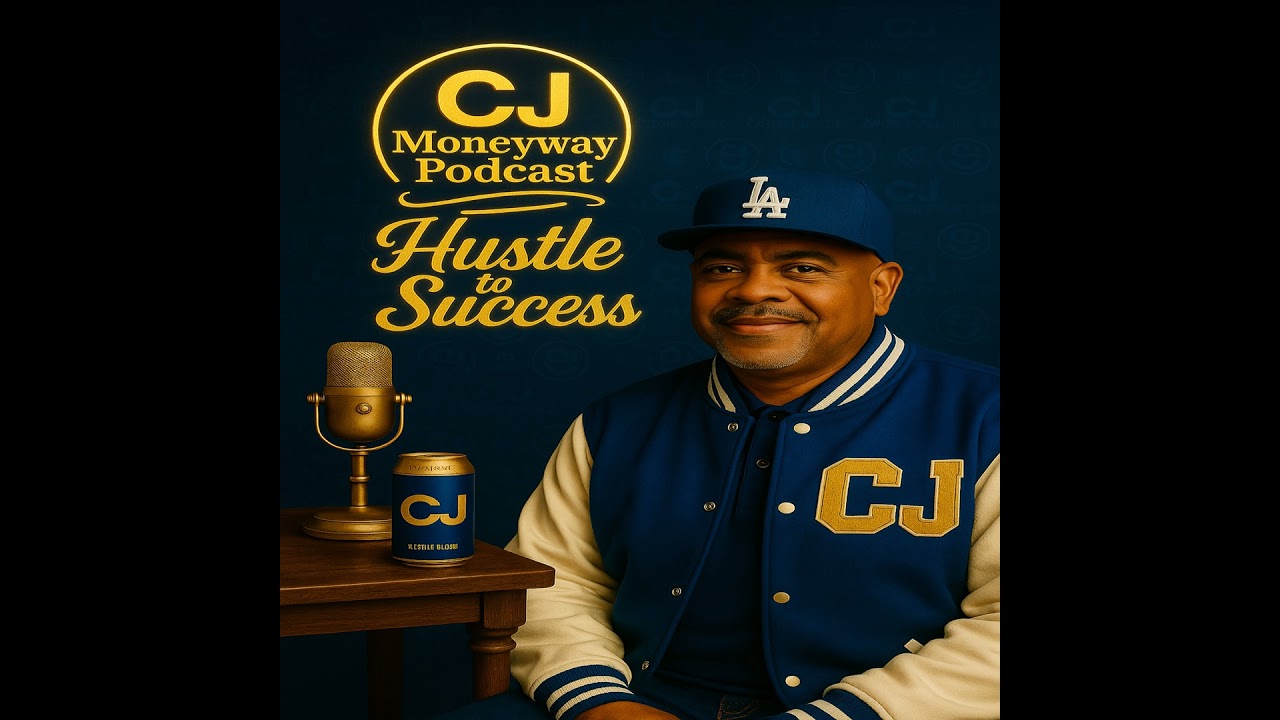
In this episode of the CJ Moneyway Show, host CJ Moneyway interviews Clementine Moss, a founding drummer, singer‑songwriter, author, and spiritual counselor. The conversation begins with Clementine’s unconventional shift from a creative‑writing degree to learning drums at age 27, sparked by a private lesson that quickly led her into band life and a 30‑year touring career. She recounts vivid road stories, including the infamous brief‑throwing tradition on tour, living in a van, and the challenges of maintaining sobriety and self‑care while on the road. Clementine explains how a regular meditation practice over three decades became the foundation for her musical expression, describing drumming as a metaphor for spiritual practice and detailing the overlap between flow states in performance and mindfulness. She shares practical grounding techniques—deep belly breathing, short daily breathwork, and compassionate self‑observation—and how these tools help her stay centered during hectic tours. The interview also covers her memoir, which uses the road as a backdrop for awakening lessons, and her upcoming music releases under the name Clementine Moss, with two records slated for 2025. Clementine offers advice to creatives about listening to and silencing the inner critic, emphasizing authenticity, compassion, and the power of simply doing. The episode concludes with promotional details (website, socials, upcoming events) and standard sponsor messages from Progressive Insurance and Indeed.
Chapters
This episode is brought to you by Progressive Insurance. Do you ever think about switching insurance companies to see if you could save some cash? Progressive makes it easy. Just drop in some details about yourself and see if you're eligible to save money when you bundle your home and auto policies. The process only takes minutes, and it could mean hundreds more in your pocket. Visit progressive.com after this episode to see if you could save. Progressive Casualty Insurance Company and affiliates. Potential savings will vary. Not available in all states.
You just realized your business needed to hire someone yesterday. How can you find amazing candidates fast? Easy. Just use Indeed. Stop struggling to get your job posts seen on other job sites. With Indeed Sponsored Jobs, your post jumps to the top of the page for your relevant candidates so you can reach the people you want faster. According to Indeed data, Sponsored Jobs posted directly on Indeed have 45% more applications than non-sponsored jobs. Don't wait any longer. Speed up your hiring right now with Indeed. And listeners of this show will get a $75 sponsored job credit to get your jobs more visibility at indeed.com/kidsandfamily. Just go to indeed.com/kidsandfamily right now and support our show by saying you heard about Indeed on this podcast. Terms and conditions apply. Hiring? Indeed is all you need.
Welcome to the CJ Moneyway Johnson Show podcast. Podcast, the podcast show where we unlock potential one dream at a time. Today we have another guest whose journey is truly worth hearing. Sit back, relax, and enjoy the Moneyway experience. What's up, my good people? Welcome to the CJ Moneyway Show in association with Believe Network, where we dive into the stories of extraordinary people who inspire us with their passion, creativity, and life journeys. I'm your host CJ Moneyway, and today we have an incredible guest who blends the world of rock and roll drumming, spirituality, and healing in a truly unique way. Our guest today is Clementine Moss, founding drummer of a band— I'mma let her say that. That was a powerhouse. A singer-songwriter with a vibrant solo career and the author of her new memoir. I'mma let her say that too. The slow enlightenment of the hard rock drummer. Clementine is also a spiritual counselor, helping others on their path to healing and awakening. Clem, welcome to the CJ Moneyway Johnson Show. We're thrilled to have you today.
I'm so happy to be here. Thank you so much, CJ.
Yeah, I thank you for taking the time out to join the show. So Clem, your journey is fascinating. To start, you started with a creative writing degree, moved to New York City, and then found your way into music, becoming a drummer age of 27. Can you share what led you to choose music as your path and how that transitioned into your spiritual practice?
Yeah, well, let's see. Yeah, it was a big surprise to me that I'm a musician. It still is kind of a surprise to me. Like you said, I started off as a writer. I went to college for writing and I moved to New York thinking, you know, all my favorite writers had lived in New York and that's where I was going to be. You know, in my early 20s, I was really looking for myself. I really didn't know who I was. I was writing, but I felt like I didn't have anything to say. And I had a really strong negative voice that was kind of thwarting me. And I had musicians in my orbit around me. And one day I just decided to take a drum lesson. And I'd never played the drums. I'd played some instruments when I was a kid, like piano lessons. You know, the school band and stuff. But, you know, I had stopped playing music by then and I took the drum lesson and it just really spoke to me. For one thing, I had an amazing teacher. You know, I was taking— I took a private lesson. So I went into, you know, his studio and we just hit it off right away. And he saw me as his guinea pig. You know, I knew some stuff about music, but I'd never played drums. And so he thought to himself, I'm going to see 'How quickly I can get you to play well,' and kind of testing out his own theories about teaching drums on me. And I lucked out because within a year and a half, I was starting to play in bands. And now, 30 years later, here I am as a drummer for all of that time, having traveled, you know, quite extensively and with my band. So it was a surprise that I ended up as a musician. But it feels when I'm behind the drum set, I feel like I'm home somehow. Drums caught me and I feel like, you know, I was lucky to find my instrument. You know, sometimes I think maybe everybody has their instrument, but we don't take the time to kind of go move through all of the, you know, all the different ones. We pick something up when we're kids and either we like it or we don't. And then we're like, okay, I'm not musical, you know? And sometimes I wonder, maybe it's just we haven't found our instrument. Instrument. Yeah, yeah.
Me, I was in the 8th grade and he tried to get me to play the saxophone. Oh, he did not like me. I couldn't play not one instrument. And then, like you say, the crazy part about it is when I was younger, I was a music person, you know, dancing to Michael Jackson. I was a family entertainer for the holidays and things of that nature. I couldn't keep a beat. Hey, Let me ask you a question. I just interviewed a guy a few weeks ago, this guy Carter Fox. He traveled with Freddie Jackson, you know, who's like a composer and things of that nature. And he was telling me about some of the things that would go on on the road, like behind the scene things or on stage that I know that you're very aware of. So I don't wanna make this inappropriate, but some of the things that he was telling me, and as being a female drummer, Hey, you know, the rock and roll, we know how the atmosphere is, so I just have to ask you this question. So I know that some women, when they, you know, uh, come across these concerts and everything, they say they throw their drawers on the stage, you know, to some of these, uh, band members. So I just have to ask you, being a big-time drummer as you are, have you ever had a man throw his drawers at you?
Well, I have to say that The answer to that is yes. I had that.
Actually, it was really funny.
Um, somebody did it once and it was, you know, they threw it up. They were like a clean pair that they had drawn a heart on them and it said Zepparella on them, right? And so we took a picture of that and put that on social media, and for that whole tour people were throwing all of these men's briefs up. It became this thing, which I, you know, is funny, and then we don't need to have that happen again.
Yeah, well, I'm glad that it happened so it wasn't an inappropriate question. But you know, that's just some of the things that he told me that goes on behind the scenes. I've, you know, interviewed a few people. They say it's wild behind the scenes, you know, when you're in a band and things to that nature.
Definitely can be. Yeah, definitely can be. I was a lot wilder when I was in my, you know, my 20s and early on at the time. And, you know, I was in a 3-piece hard rock band with 2 other women, and we lived in the van in the year 2000, and we played over 300 shows that year. So every night we were in a different city. And, you know, that being on the road for that long and that grueling of a thing I think most of my most risqué stories happened in that year. It was— we were like wild animals living in a car, you know. So, wow. But yeah, you know, now it really is, you know, it's so much work. And, you know, as I get older and, you know, older, I really— unfortunately, I have to be a lot more, you know, careful because I want to keep doing it. I want to give the best performance possible. So I have gone sober and do yoga and all of the eat good and just really try to keep it going because I want to keep being able to do this until I can't possibly do it anymore.
Longevity. And as you say, as we get older, things wind down and you start putting more things in perspective and things of that nature. Then now you're enjoying what you're doing. You made a name for yourself. Just go out there and reach the stars. So Clem, you said something earlier about being in the business for 30 years, but you also, for over 30 years, you're a certified psychotherapy, and so, and then dealing with energy medicine. How did meditation and this practice start to influence your life and career as a musician?
Yeah, well, first of all, so I've been a certified spiritual counselor for several years, And I've been meditating for over 30 and had a really regular contemplative practice. And, you know, this is really what I wrote a book about, which was the— like, using my music career as a kind of metaphor for my spiritual practice. Because, you know, you think about rock and roll and meditation, and they seem like they're completely opposite things, right? One is very loud and noisy and chaotic, and one is very still and peaceful and quiet. And what I started to understand was that the place that I go when I'm sitting on the meditation mat, that stillness, that awareness, that peacefulness, that mindfulness that I find when I'm meditating is the same place that I'm looking for when I'm sitting behind the drum kit and there's a big audience and we're playing music and everything is loud and raucous and a party, I'm still in that place, that still place, because from that place is how I let the music move through me, right? And, you know, the thing I love the most about playing an instrument is that it's a communication that, you know, when I'm playing the drums, that the waves of sound are moving into the audience, and then the audience is bringing that energy, that emotion back to me. It's like this big circular moment where we're all speaking together with our hearts, with music. And if I can let Clem, the person, get out of the way and just be in that big awareness of stillness, then I can really— then it's not about me anymore. It's about the music uplifting everybody. And so that's kind of what I wrote a book about, you know, where I see the ways that, you know, when I'm sitting on the meditation mat and I just, I have a million things going through my mind and I don't want to be there. And, you know, I want to get up and start my day, but I told myself I was going to sit for this amount of time. All of that frustration, all of those kind of thoughts and emotions, you know, when I can overcome that, it's the same as when I'm sitting on the drum stool and I'm playing something and I mess something up and I start to attack myself, like, I shouldn't be there, I'm not worthy to do this, everybody else is a better drummer than me, you know, I'm terrible. Like, you know, all of that self-attack that happens, that isn't helpful. And it doesn't, you know, it's just a barrier for me to be in the moment and kind of move forward. So I feel like there's a lot of connection of our mindset, of our perspective. And I think meditation helps us understand how we really do create every moment with our perspective. So that's kind of a lot of blah, blah, blah, but something like that.
Yeah, I understand. We need that peace of mind. And like you say, to focus on the things ahead. Like you said, you got a thousand things going through your head at one time. You just need that inner peace. I'll put it that way, that inner peace. So Clem, you was talking about your memoir. Let's get a little more into that. In your memoir, you talk about life on the road and how it provided lessons of awakening. Can you share one of those moments where music and meditation came together in a powerful way?
Mm. Yeah, well, there are so many of them, and it's those moments where I forget that I'm playing the music and that the music is moving through me. I don't have any thoughts. My thoughts are almost like they're way up on the surface, and I'm kind of below the surface in the flow of the music. And that's really where I can be transported by the music. My body becomes an instrument for the music to play. And those are magic moments. I think that in sports, it's like what people talk about, that flow state, where they're just— they've trained their bodies to do the movements, but things are happening so quickly that the mind is not involved anymore. Right. I was on a podcast with Greg Louganis, the diver, you know, and I asked him, where is your mind, you know, in that dive? I mean, you see those people do these things, and he said, well, a dive is 3 seconds, so the mind isn't there, right? He said, but leading up to, like, when I'm— he's walking up onto the diving board, he can have one of two experiences. One of them is where he sees absolutely everything. Like one time he saw that, you know, the mayor had come into the auditorium, and he saw where that person was wearing that particular kind of hat, and he was aware of every little detail around him. And then he has had experiences where he walked up and there was nothing but him and the diving board, and everything else was stillness, right? And I kind of feel that I really related to that with music. Like, it's kind of like I can be completely hyper-aware of everything that's happening in the most— the tiniest way. Like how my foot is feeling on the pedal, how my— my— like every hit of the snare drum is hitting in a particular place, you know, the tiny nuances of my guitarist playing, so I know exactly where she is in time. All of these little things. But then at the same time, I let go of thinking, and it's just music. It's just my body making the motions. And I think when we're meditating, you know, we're, we're kind of diving through that constant barrage of thoughts and until we're not paying attention anymore and we're just in awareness. And when I'm sitting in a meditation hall and there's maybe 200 people there, I can be aware of every little sound and every little thing happening, and yet it's not taking me out of that center. Yeah.
You know, Greg, I remember him in the Olympics, right? He was in the Olympics. Yeah, I remember that. You saying that and you being from San Francisco, You made me think about Joe Montana when they was playing the Cincinnati Bengals in the Super Bowl and they was going for the game-winning touchdown. And they say Joe Montana, while he was in the huddle, he saw John Candy in the crowd. And like you say, it's like we going for the biggest drive of our careers right now. We in the heat of the moment. And he had the ability to just be so calm where he looking, you know, Super Bowl got thousands and thousands of people and he can spot somebody like, oh, that's John Candy in row 68. You know what I'm saying? Like just the poise and, you know, like, you know, I'm hearing what you're saying. Like, you know, just sometimes some things just overtake you, although you got this going on, but it just calms down and everything just slows down where you just, and then matter of fact, he went and they got the winning touchdown. In the last seconds, all that drive. So, so that's amazing. So yeah, you made me think about that as you was telling me your story about, you know, you doing the example.
Yeah, it's a perfect example because he probably noticed John Candy and it kind of went through his head, but it was just a thought that went through his head and he didn't take him out of that place where he needed to be in order to do what he needed to do, right? Like, he wasn't distracted by it.
You just realized your business needed to hire someone yesterday. How can you find amazing candidates fast? Easy. Just use Indeed. Stop struggling to get your job posts seen on other job sites. With Indeed Sponsored Jobs, your post jumps to the top of the page for your relevant candidates so you can reach the people you want faster. According to Indeed data, Sponsored Jobs posted directly on Indeed have 45% more applications than non-sponsored jobs. Don't wait any longer. Speed up your hiring right now with Indeed. And listeners of this show will get a $75 sponsored job credit to get your jobs more visibility at indeed.com/kidsandfamily. Just go to indeed.com/kidsandfamily right now and support our show by saying you heard about Indeed on this podcast. Terms and conditions apply. Hiring? Indeed is all you need.
He was able to notice it. Yeah, yeah.
And that's when you know that you, you know, you something great. I think, you know, before Tom Brady came along, it had to be Joe Montana who was the GOAT before Tom Brady. Had to be, you know, right? And then I'm— and trust me, I was a Dallas Cowboys fan for a long time, so I was not, uh, San Francisco 49ers. But I like Joe Montana, and I do not— still to this day, when Super Bowl come up, I do not like to catch with him and do The tight end, I forgot his last name. Oh, Dwight Clark. I did not like the catch because that was against my Cowboys, so we're going to move on from that. So, but since you were from, so since you're in the San Francisco area, I just wanted to bring that conversation up real quick. Hey, so.
Yeah, that's funny.
So Clem, in your book, you use drumming as a metaphor for spiritual practice. Can you explain what that means and how playing music can become the completive act that you was talking about earlier?
Mm-hmm. Well, anybody who's ever played an instrument knows that, um, there is a lot of practice that you're doing where you're just doing the same thing over and over and over and over. You know, it's like muscle memory. It's like anything. It's like sports. You know, there are a lot of things that are very tedious, you know. For drums, it's like I have to— I want to go— rather than what's comfortable is to go right, left, right, and this fill I have to go left, right, left, and there's like something in my body that doesn't want to do that, right? And so I have to do that slowly over and over and over and over and over. That practice can be very meditative because I have to I can't force it, right? But I have, and I have to just be with my body as it learns, you know, very patient, very methodical, going back to it, going back to it, noticing when I don't do it correctly, slowing it down a little more and doing it again and doing it again. And that is kind of like meditation where, you know, when we're sitting in meditation and say we're focusing on the breath, a very simple meditation is just to watch the breath move in and out. And you notice you can watch your breath come in, and then suddenly your brain runs away. It runs away into tomorrow. It runs into what happened yesterday. It, it's constantly bringing all of these thoughts around and drawing you out. And then you realize, oh yeah, I was concentrating on my breath. And then you come back and you look at your breath again, and maybe you take 2 breaths where you're focused, and suddenly that thing that that person said to you yesterday pops in your head, and you follow that track. Of thought down the road. And so, you know, in meditation, what we're doing is we're— we just keep gently bringing the mind back, gently bringing the mind back. You know, in Buddhism, they call it the monkey mind, right? Those thoughts that are constantly bringing us into either the future or the past, right? Never, right, trying to escape the moment. And You have to approach that practice with a lot of compassion for yourself. You can't force it. You can't get angry. I mean, you can, but then it's just wasted energy, and then you got to deal with all this feeling the anger rise up in your body. So much easier to just gently bring the mind back, gently bring the mind back, constantly bringing it back in that gentleness, that focus. That constant practice, gradually the mind stays with the breath longer and longer and longer. And the kind of— that compassion for yourself kind of starts to open up within you, open up an awareness within you, a stillness within you, a feeling like there's a part of me that is okay, you know, it's always okay. There's a part of me that's never touched by anger or frustration. There's a part of me that's always peaceful, and that gets deeper and deeper and deeper as we go into meditation and we learn not to listen so much to the mind and to the thoughts. We can observe it like there's John Candy in the front row, and then that thought goes away and it sinks away, and we don't do anything about that thought. And That's where we're talking about regulating our reactivity. And I'll say that I think that the place, the times in my life where I regret the most are when I've been very reactive. Somebody says something to me and I fly off the handle, you know, that I'm not thinking, I'm not compassionate. I'm just like instant anger, you know, will come up or instant frustration, or I'll be in traffic and it's just like, you know, just that kind of frustration. That doesn't make me feel good, you know. I don't like being that way, and it has a lot of bad repercussions, you know, going forward. And the more that I can allow my thoughts to rise without me reacting to them, the more peaceful I become in my life. And that compassion that I start to really develop for myself, it starts to create compassion for other people. You know, I remember having big feelings when I started meditating, like, wow, if I have all of this negativity within me, how much other people must have too, you know? And you start to feel a lot of compassion for humanity, even when they're acting like jackasses, you know? It's like, oh, you kind of feel the compassion, like they're struggling, they're suffering. Because I too have suffered that way.
Yeah. Yeah, I totally agree with you. And just listening to you, listen to how you speak, how soft-spoken, I could tell that you've been in meditation for a very, very long time because you're very, very, very calm.
Just like, "Ooh, nothing bothers me anymore like it used to." Well, you know what's funny is that every now and then something will happen where I will get really angry. And you know, I'm an Aries, right? So if you know anything about zodiac signs, like, they have very fast anger, right? And so it takes a long time for me to get there, but if I get angry, it's just like, boom, it like hits. And my bandmates think it's hysterical when that happens to me. Like, I'll get really angry and yell at somebody really fast, and they'll just just all burst into laughter because it's so unexpected.
So Aries, end of March, April.
Yeah, March 31st.
Oh wow, my, uh, son's and daughter's mother's birthday is March 31st. Really? My mother is an Aries. Her birthday is April 13th. Oh, I know very well what you're talking about when we're talking about the signs of an Aries. So, uh, so before I go into Next question, Clem. Are there any upcoming book signings, events, or new projects related to your book or music careers that listeners should know about?
Well, I have a new record out. I've been putting out songs every couple weeks recently. It's under my name, Clementine Moss, and actually I'm releasing two records this year of my own music. And this first one is coming out now, and then the second one will come out in May. And you can find those on Spotify and, you know, any place where you listen to music. It's under Clementine Loss. That's that kind of stuff. And as far as the books, you know, I really saw these— doing the podcasts as kind of a good way to kind of do a book tour these days, you know, without going anywhere, talking to wonderful people and talking about the book. And I sell the books at my shows a lot.
Yeah, this is the new book signing. It's not all about Barnes Noble no more. It's about getting on here, promoting your stuff, and getting it out there to masses of people, like you say, sitting at home in your living room. And then the more shows you get on, the more exposure and the more people that you can reach. Because actually, that's the same thing that I'm in the process of doing myself. Last year I didn't get on a lot of interviews to promote the podcast and things of that nature, but I have a new book that I'm writing to come out this year as well. So I'm getting on more interviews and promoting myself and my podcast and the things that I'm doing, projects that I'm working on myself. So I totally agree with you on that. This is the new traveling guide to build your brand. To build your brand.
Yeah.
So Clem, again, when we get off, send me all these, uh, links to everything that you have so I can put them in the show notes so that the audience can check out everything and go buy your memoir and listen to your new, uh, songs that you got coming out on Spotify.
Thank you.
So Clem, let me ask you as we wind this down, being on the road as a musician can be chaotic and draining, I know. How did your meditation and spiritual practices help you stay centered while touring?
Yeah, well, you know, I don't know that I do that great of a job of self-care, you know, when I'm touring because, you know, Zebrilla is— I'm kind of in charge of the band, right? And, you know, I do all the driving or, you know, setting up the shows and really tour managing. So I'm making sure everything is good. So I'm kind of working from the minute that, you know, the tour starts. And we generally do, you know, 3 show weekends, you know, 2 times a month, sometimes more. And so there's a lot with the flying or the driving and the setting up the gear and, and the hotels and, you know, just everything that goes into it. So I really do work really hard. And the first thing that I let go of usually is sleep. And when I'm underslept, that's when I don't take that good care of myself. I'm drinking Red Bull, I'm eating crap at gas stations. I'm doing things that in my daily life back home I don't do. So it is what it is. But over time, I really feel like I have kind of dialed it in where You know, I give myself a lot of downtime when I come home. I make sure that the day after I come home, I, I can just really lay around and, and take care of myself. But, you know, again, the meditation is helpful. It allows me to, you know, when I'm driving, I'm connecting to my breath and making sure that I'm, you know, that I'm breathing nice deep breaths. That's really good for the body. And I do try to meditate in the mornings when I'm on the road in the hotel room. Send and just center myself. And, and then, you know, the playing, the being on the stage for that, those 2 hours that every night, it's so energizing. It's so wonderful to connect to people, like to have so many people in a room. I don't know, I just, I really think it's important for humanity to all come together and celebration, you know. I think it lets go of a lot of the stress that we feel when we just sit and in front of a computer screen all day reading people's comments, you know. I think it's just— it's so much better to just, you know, be in a room with people from every side of the aisle and every side of the— every idea of the way things should happen. And in that moment, we're all just one being, kind of just in music, and that fuels me. And then also drums. I love playing the drums, so I can play forever. I love playing drums, so that's also great fuel for me.
Yeah.
So speaking of drums, and you mentioned something not too long ago about, you know, centering yourself, you've talked about the idea of finding your center, whether being behind a drum kit or the meditation cushion. How can people cultivate the sense of grounding in their own lives, especially during difficult times?
Yeah. Well, I have a few things to say about that. First of all, to remember that we're given a great gift, which is our breath. It keeps us alive. But also, when we take a nice deep breath down into our belly and we hold it for a few seconds and then we release it, it turns on the parasympathetic nervous system, which basically calms our nervous system down. And so remembering that, if you can notice how you're breathing during the day, a lot of us are kind of almost panting all day because there's so much stress around us and we're not taking nice deep breaths. Realizing that just taking a nice deep breath can really help us center and ground, and it's something we all can do. We can do it while we're talking to somebody, we We can do it while we're driving, we can do it while we're walking down the street, we can do it while we're shopping. Just remember to really fill the body up with breath. That's one thing. The second thing is if you have any interest in any kind of meditation practice, and there are lots of really wonderful apps where you can listen to meditations, or you can just sit down, tell yourself that every morning while your coffee is brewing, you're going to sit and for 5 minutes close your eyes and just breathe deeply and just see if you can just watch your breath as you do that. And notice how the mind is, notice how the mind tries to escape doing that, and just keep bringing your, your mind back to your breath for 5 minutes. If you were to do that every day, I think within a month you would really start to notice that during your day you're a little more patient, you there's a little more space in your day, there's a little more compassion for yourself in the day. And I'm a big believer in a regular meditation practice, and I, I also think that it doesn't have to be this big deal. I think it could be 5 minutes where we just connect to that part of ourselves that is okay, you know. And that brings me to the third thing, which is to realize that there is a part of us that is Okay, it's perfect as is. We don't need to be better. We don't need to improve ourselves. We're worthy as we are. We're okay as we are. And when we close our eyes and just feel into, where is the part of me that is okay, that is good, you know, no matter what else is going on, there's a part within us that never stops being okay. And to connect with that, I think that carries us through some of the most difficult times of our lives.
You know, last week I interviewed a young lady and then I had another lady, I believe it was, it had to be yesterday or the day before, and they was talking about breathwork. And I said, wow, you know, and as I'm listening to you, that's basically what meditation is, but the way, you know, they like, they breathwork counselors. I never heard breathwork, so that was the first two that I really heard explain it that way. So the one girl, as I'm listening to you, she was telling me, she say, "CJ, just 4 seconds, go in," and then like an 8-second rule or something, then bring it out. But then she got me when she said, "Pucker up your butt." I said, "Now, I don't know if I can pucker up my butt cheeks now." You got me on that one. So you gotta breathe in with your stomach and puck your butt up, quote me, CJ. I said, I don't know, I don't know if I'm gonna be able to do that part, uh, Z, but I will try to go 7, 8, 9, what is it, 7, 8, 7, 6, 5, 4, 3, 2, 1, something like that, how she, you know what I'm saying, you bring it in. So then the other lady was telling me that it's different methods, you know, saying to breathe in Everybody have a different rule, a different, you know, I'm listening to you and you said 5 minutes and watch your mind try to escape and things of that nature. So those are good points and I thank you for sharing those with us. So Clem, as we going down this road, you've built an impressive career in both music and spirituality. Looking back, what's one key piece of advice you would give to someone who's trying to follow their passion, whether in music, writing, or any creative pursuit?
Mm-hmm. I would listen very closely. Lay down on your bed, close your eyes, and listen very closely to the voice that's telling you no. The voice that's telling you that you're not good enough, that other people are better, that you have to be something different in order to do what it is that you want to do. That you're not worthy, that you're bad. I had a voice in my head, and I don't know where it came from, but I had it since I was, you know, a young person telling me that I just was bad. Like, that if people really knew me, they would know that I was bad. And because of that, I felt very unworthy and like I always had to strive to be better than I was so that I could hide the fact that I wasn't good, you know. And when I really started to meditate and started to hear my voice, hear that voice in my head, what was it telling me? And I remember thinking, but that's not even me. Like, I don't even know where that voice came from. And, you know, a lot of the voices that we hear in ourselves that are saying you're not good enough, you can't do it, you're too old, you're too fat, you're too lazy, all those things that tell us— not even our own voice, it's just something that we picked up from the culture, you know, from people we knew when we were young, from, you know, all of those voices. They don't mean anything. They can dissolve away. It's your life. You get to decide. You get to be free to do exactly what you want to do, and you can do it right now. You don't need to be better. You don't need to do anything other than just do. Go where your enthusiasm is, go where you're excited. Realize that you've got one life, one beautiful life that you get to just express yourself. And however you do it is perfect if you follow your own true voice. So I would just examine whatever it is that's telling you you can't do it and throw that aside. Mm-hmm.
I thank you for that, Clem. So as we get ready to close, is there one final thought that you would like to share with us before we get out of here?
Oh, I'm just so happy to have had this conversation, CJ. It's really just been such a treat, such a pleasure. Yeah.
Clem, I thank you, Clem. It's been an absolute pleasure having you on the show. Your story is such an inspiring blend of creativity, spirituality, and resilience. And I'm sure our listeners have learned a lot from your insights and your very, very, very calm demeanor. I want to be that calm one day. I do. I want to be that calm. I get a little antsy at times, like you say. Hey, I'm a Libra, so I'm a scale. And so I try to stay balanced, but if you tilt that scale a little bit, you know what I'm saying, you will I don't get it.
Hey, it's— we're all human. None of us are perfect. We're all wonderful, this wonderful concoction of things, right?
Yeah, I'm glad you brought the, uh, the size up. That was a good one. So, so, Cleo, I know you gave us your website and things. Did you give us your social media handles? Like, what can we find you on social media?
Yes, my website is clemthegreat.com, and all of my socials on Spotify, on Instagram, and everything is Clementine Moss. So if you go to clemthegreat.com, it's all there. All the different aspects of my life are there laid out.
You heard that, clemthegreat.com. Go check out, follow her on social media. Clementine Moss, I call her C-Moss. No, it's not the vitamins that you take, it's the actual sea moss. Clementine.com, go check out, check out her new album, check out her memoir. Again, Clem, thank you for coming on the show, CJ Moneyway Show. And to our listeners, thank you for tuning in. If you enjoyed this episode, please leave us a review, subscribe, and share with someone who might benefit from learning Clem's incredible, from Clem's incredible incredible story. Make sure to check out Clem's book, her memoir. I can't pronounce the name of it, so that's why I've been skipping it. And visit again clemthegreat.com for more information on her music and healing practice. Until next time, stay grounded, stay inspired, and keep pushing forward. This is CJ Moneyway Johnson signing off. We out of here.
Peace.
Thank you for listening to The CJ Moneyway Show.
Don't forget to share this episode with your friends, leave a comment, and drop a review. Be sure to tune in every Tuesday and Friday for more inspiring journeys. Who knows, your story might be next.
You just realized your business needed to hire someone yesterday. How can you find amazing candidates fast? Easy! Just use Indeed. Stop struggling to get your job posts seen on other job sites. With Indeed Sponsored Jobs, your post jumps to the top of the page for your relevant candidates, so you can reach the people you want faster. According to Indeed data, Sponsored Jobs posted directly on Indeed have 45% more applications than non-sponsored jobs. Don't wait any longer. Speed up your hiring right now with Indeed. And listeners of this show will get a $75 sponsored job credit to get your jobs more visibility at indeed.com/kidsandfamily. Just go to indeed.com/kidsandfamily right now and support our show by saying you heard about Indeed on this podcast. Terms and conditions apply. Hiring? Indeed is all you need.
More from Corwin


Pressure-Proof Leadership: Claire Hayek on Neuroscience, Resilience & Leading Under Pressure

Healing With Fire: Zulma Williams on Trauma, Cancer, Depression & Finding Your Voice

The Economy of the Heart: How Love and Leadership Build Profitable Cultures | Hanna Bauer

The Doorman Nobody Valued: Wes on Storytelling, Corporate Blind Spots, and Building Brotherhood o...

Art for Your Sanity: How Creativity Helps You Survive Chaos — with Susan Hensley

Becoming Better: Ryan Gottfredson on Why Success Requires More Than Doing More

Mission Control OS™ Demo | Governance-First AI Executive Operating System | OpenAI Build Week

From Frustration to Confidence: The Dyslexia Professor’s Blueprint for Struggling Readers

Built in the Pit: Chris Duffin on Resilience, Accountability, and the Discipline to Rise

Cyber Thrillers, AI & the Future of Technology with Charles V. Breakfield & Rox Burkey