From Combat to Transformation: Brian Fleming's Lessons on Resilience and Purpose
Combat veteran Brian Fleming survived two near-fatal explosions in Afghanistan that burned his body and forced him to confront what his life meant. He now runs the Use Your Story program teaching others to build resilience through their own narratives, and hosts a podcast called Dear God WTF interviewing people who faced extreme adversity.
Chapters
Shopify is the global commerce platform that helps you sell at every stage of your business. Shopify is there to help you grow. Shopify helps you sell everywhere, from their all-in-one e-commerce platform to their in-person POS system. Shopify's got you covered. Shopify helps you turn browsers into buyers with the internet's best converting checkout, 36% better on average compared to other leading commerce platforms, and sell more with less effort thanks to Shopify Magic, your AI-powered all-star. What I love about Shopify is how no matter how big you want to grow, Shopify gives you everything you need to take control and take your business to the next level. Shopify powers of all e-commerce in the US, and Shopify is the global force behind Allbirds, Rothy's, and Brooklinen, and millions of other entrepreneurs of every size across 175 countries. Plus, Shopify's award-winning help is there to support your success every step of the way, because businesses that grow, grow with Shopify. Sign up for a $1 per month trial period at shopify.com/westwood1, all lowercase. Go to shopify.com/westwood1 now to grow your business no matter what stage you're in. shopify.com/westwood1.
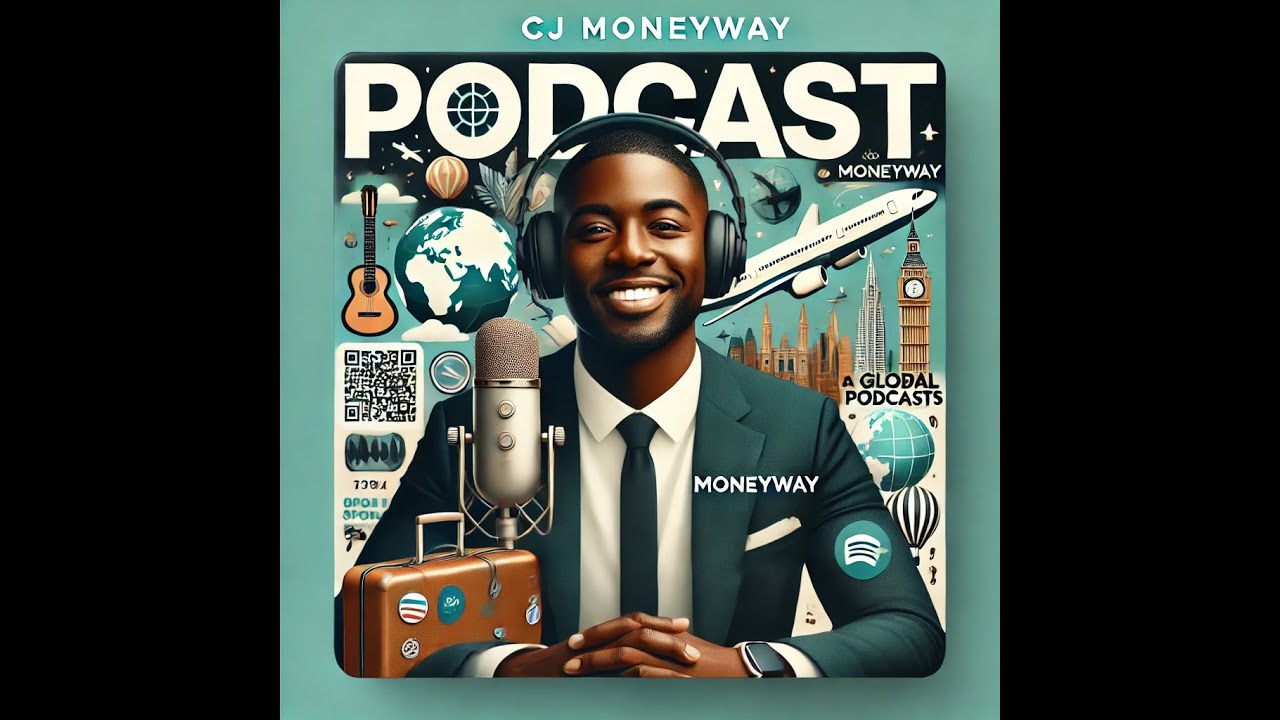
What's up, my good people? Welcome to the CJ Moneyway Johnson Show, the podcast that brings you stories behind its success. Today, welcome to the show, combat war veteran, speaker, and author Brian Flemmons. How you doing today, B?
I'm doing great. Thanks for having me on.
Oh man, thanks for taking the time out your day, man, to come on the show, man. Appreciate it.
Absolutely.
So Brian, man, tell us a little bit about yourself and a little bit about your background, man.
Yeah, I was born and raised in Jackson, Michigan, uh, Southern Michigan. You know, I'd say blue collar, but I think we're actually more poor than blue collar, so I say no collar because we couldn't afford one. And, uh, he had a pretty rough upbringing. You know, my parents divorced at 12, pretty traumatic experience. And, uh, I, I actually attribute a lot of my mental strength that I had to use in the military and in war, uh, to the fact that I went through that, that really challenging traumatic time as a child. And, uh, I joined the military out of high school as Army infantry in 2003. I got sent to Afghanistan in 2006 with Army's 10th Mountain Division. I was a team leader in an infantry platoon, and the short version is while I was there, I was inside of two vehicles that were blown up and destroyed. One was a roadside bomb. I walked away from that one on April 18th, 2006. Then a few months later, on July 24th, 2006, a suicide bomber in a minivan drove up next to my door, slammed into my door of my vehicle and exploded, blew himself into about a million pieces, including his vehicle. Uh, I woke up in a ditch on the side of the road, on the side of Highway 1 in Kandahar, burned second and third degree. Which a lot of that has healed now, thankfully. Spent a year and 2 months at the hospital in San Antonio, Texas, and was put out of the military medically after that.
Man, that's quite a story. So, so tell us, man, tell us about being wounded in combat. Well, you know, like you say, the, the suicide bomber— what was, what was that like, man? What was that experience like?
Yeah, it hurt.
I know it did, man. I know it did.
Yeah, no, um, you know, it's, it's interesting because I, I don't remember anything happening until I woke up. And my wife has this fantasy that we're gonna die together like at the end of the movie The Notebook, where we just, we're cuddling in bed and we die together. I tell her all the time, it's equally peaceful to go if you just stand next to a giant explosive, because unless you survive it, you don't know what hit you. Yeah, so that was kind of, that was kind of my experience. And, uh, I have sort of a humorous perspective on it now, but when it happened, you know, I woke up in a ditch on the side of the road. I didn't know where I was. I thought— my first thought was, why would I go to sleep here? Because I don't remember laying down there.
Yeah.
And I thought maybe we're in a gunfight, but there was no firefight ensuing. And I couldn't find my weapon. It was still in the vehicle, and I was outside the vehicle. And I did sort of a push-up, got to my feet, just disoriented, trying to figure out what's going on. Uh, it was about probably 120, 130 degrees outside. It was lunchtime, late July in Kandahar. And my— I saw my driver, who was a medic, thankfully, uh, who thankfully was uninjured, helping out my gunner who was also wounded with me. And he called in the medevac helicopters. They came and got us. And, uh, yeah, it was, uh, it was one of those days when you wake up and you have a bad year.
Yeah, man, I, I, I can only imagine. So what was the single greatest lesson you taken away from the trauma that, that transformed in your life so much?
You know, it's interesting because when you're faced with death and you think you're going to die, or you actually are dying, And I thought it was— I didn't think I was going to make it out of there. I asked my medic, I said, you know, hey, how am I? And he said, oh man, you're good, don't worry about it. He sounded good, but I could tell in his eyes he wasn't being entirely truthful. He was doing the right thing. He was trying to comfort me and, you know, be good to me. But I could tell in his eyes that, you know, he was under a lot of stress and he did his job flawlessly under pressure. In combat. But in that, in that moment after, I remember sitting there. I'm sitting there in the dirt waiting on the medevac helicopter. I don't know if I'm going to make it out of this country alive. I'm 20, 21 years old, and I'm just thinking to myself, this can't be it. Like, like, it's, it's— I can't believe it's over already. I'm, I'm too young to die. Like, this, this can't be the end of the road of existence, of my life. And when you're in a moment like that, where you think or know you're dying, only the things that are absolutely most important come to the forefront of your mind, and everything else fades away. It's like it's just a very sharp, very tip of the spear focus. And what came to mind was, what did I do for other people while I was here, because I realized the only, the only thing that makes at least my life meaningful is what I do for other people that has an impact that outlives me, you know, when I'm gone. And at that young age, I was pretty young and cocky and probably really arrogant. And you can ask a lot of people who knew me back then, wasn't a terrible person depending on who you ask. I was a horrible person, but You know, I, I didn't feel like I had totally lived my life selfishly, but in a lot of ways I thought, man, like, I could have been so much better to those people at these different times. Or why didn't I try these certain things? I was afraid of maybe not making it somewhere, so I didn't try something, you know, because I was afraid of failing. And I thought— I'll think to myself, like, well, gosh, like, why didn't I even try it? Like, even if I did fail, at least I'd know how to maybe come back and fix it and make it work and adapt. Or maybe who knows what would have been possible and what I could have done with my life and created. But now I'll never know because I never tried certain things. And so what that, that combined with the fact that I thought my— I had this overwhelming sense of irreversible regret because of the fact that I felt like I didn't I didn't do anything for anyone but me. And so in other words, it was like, well, my life was pretty much meaningless then. You know, this world's not better because I'm, I'm just one soul, another soul that came through this place and didn't do anything that helped it be better than when I, when I arrived. And that, for some reason, some reason, was very haunting. And so now with everything I do, I sort of, I say I have the gift of the perspective of a 90-year-old. A lot of people get to the end of their lives and they go, man, I wish I would have this, I wish I would have that, but the clock's against them. They can't go back in time. Well, I had that experience on the front end of my life at 21 years old. So I have no excuse to get to the end of my life and have regrets because I've already lived that regret and I've sort of seen into that beyond that veil, so to speak. And I know that the ultimate feeling of meaningfulness and fulfillment and my life was well lived. Is doing things to help other people, you know, have a better journey themselves or win the battles they're facing.
Yeah. I mean, like, I'm just listening to you. And so, like, sometimes some things put certain, certain things in perspective, you know? And so, like you say, was my life meaningful? The things that I could have did, you know, because I like, like you, I sit back and I'm— I thank God that I went through a lot of challenges in my life. Uh, in the beginning, the things that I did, you know, the dumb stuff that I did as a kid, now that I'm older now and more mature, I'm glad I don't— I'm not stepping on them same things that I did back then, you know, because you put things in perspective. And I know a lot of people haven't went through the trauma that you went through, and so I know that the things and the insight that you have is totally different than a lot of us, you know, have experienced or have, you know, can even imagine how that, how that actually feels, man. So it's cool that, you know, you came out of that and now, you know, you want to serve and you want to do things to make, make the world a better place, man. And that's what we need. We need more people like yourself to, to have that type of mindset to actually want to be of service to others.
Yeah, you know, and absolutely. And that's not just true for me, though. And what's, what's really important for people to realize is that you don't have to have the same experience as somebody else to be able to be of value. I mean, what I do as a public speaker, when I go and speak for all these conferences, conventions, things like that, as the keynote speaker, I only talk about my, my story getting blown up about 10% of my talk. It's, it's always, it's always more about, okay, here's my story, that's sort of the platform, but then It's actually more about what lessons did I learn through this and how do they apply to your life right now to help you win a battle you're facing. Because that's all people care about. It's, it's what's in it for them. It sounds selfish and it is, but we're all that way. We're all trying to get somewhere. We're all trying to overcome something. We're all trying to win a battle or figure something out. And when we come along, that— see, that's what makes your story meaningful and useful. Is when you, when you use it to start seeing what problems in the world you can solve and how you can help, help other people heal. And not only can you equip them with actual advice that, that can work for them, but you also inspire them to do the same for other people because there's so much power in that. And everybody, everyone gets hurt, but we get hurt in different ways, but we all deal with the same small handful of finite issues as, as human beings as a result of being hurt or going through trauma. And so, you know, you don't have to have been attacked by a suicide bomber in Afghanistan to understand the post-traumatic stress, you know, I've, I've had to overcome and deal with for, you know, years. I don't have to have grown up in an abusive, uh, sexually abusive household like some women I've met who deal often with the same post-traumatic stress issues I've had to deal with in the past. It's not about someone's been in your shoes. It's about the fact that after you've been through something, that to know that there are other people, even though their trauma was different, that caused the issues, it's the similar, very similar, and often same issues we deal with that really binds us together and unites us. And pain is a— pain is a language that transcends culture. Color, any sort of division. Everybody speaks the language of pain. And when we hear someone else talking on that level, we immediately start bonding to them in our minds because we finally see someone else who understands to some degree.
Yeah, I totally agree with you, man. I totally agree. Expect, you know, especially the pain level, you know. And I'm listening to you, like you say, it becomes a bond because I might not share the same experiences that you share, but it's similar to the fact that I have gone through some things and I have been through some challenges, like you said, may not be the ones that you've been through, but it resonates to, you know, to, to— it connects and like you say, make a bond with us. So let me ask you a question, man, because you say, you know, you've been a keynote speaker and things of that nature. So did you ever intend on telling your story? And, you know, if, if not, or if so, why did you choose to start telling it now?
Yeah, I never planned on doing this. I didn't know anyone did do this. I was, uh, how it started is I was, I was at the medical center still healing, still wrapped up in burn bandages, and this guy who's a Vietnam veteran, he came through. He was injured in Vietnam. He came through and gave a keynote speech to me and about 30 other guys who had been blown up, shot up, burned up, you know, limbs blasted off. I mean, we're just one big jacked up bunch of guys. Well, he had been burned severely in Vietnam And when he came home, he became a speaker. He wrote multiple books. He'd been doing it for 35-plus years at that point, and he couldn't talk about his, his pain for more without making us laugh hysterically. And that was really unique. And so afterwards, we— he and I talked, and we ended up becoming friends. He ended up putting me on, uh, one of his stages a couple months later. For a couple of minutes, and that's when I got hooked. And, you know, I— so I met him. I didn't know anyone did this, but I told him after that first time, because I had a girl tell me that she tried to kill herself 2 weeks prior to that but failed suicide. But if I could get through my thing, Afghanistan, she believed she could get through her struggle too. So now this young lady is not going to go home and try to kill herself. That really That pulled something out of me I didn't know was in there. And I told Dave, my mentor, I told him, I don't know what happened tonight, but I have to do this. It wasn't like, hey, I'd like to explore public speaking as a career option. No, it was like, I need to keep doing this. I'm going to do it or die trying. Will you help me? One way or another, like, I'm going to do this. Will you show me how? And he said, absolutely. And he did. And that cut years off my learning curve. He taught me how to relate to people, how to use my story to relate to people on a deeper level and communicate effectively in order to help them get somewhere in life, to help them overcome something in life. I wasn't looking for him when I met him. I wasn't going anywhere. I was just at the medical center healing.
Yeah.
And I didn't orchestrate our paths crossing.
Well, you know, life, life be like that sometimes. We don't have to It's the way that he designs it, you know what I'm saying? Like, put people in our path to take us to our next level, to take us to our next journey. And it was cool that, you know, that y'all connected like that. And because this was heaven-sent for this to happen at that moment, at that time, because now your story, as you said with the young lady, you know, now your story is helping others turn away from some of the thoughts and some of the things that they want to do and inflict to themselves. So on that note, Brian, man, What exactly do you do and how does it help people?
Well, I do a couple things. I do keynote speaking, the speeches. I, I have a few speeches. I, I have, you know, a personal battle plan. I teach people how to overcome the challenge they're facing in their life using proven military strategies. And I also do keynote speeches for conferences, conventions, things like that for different companies and organizations. I do keynotes, you know, I have a keynote speech called How to Stand Firm When Everything Around You Is Blowing Up.. It's a resilience message. It's not just an inspiring message. A lot of people say it is, but it's a practical message where you can apply what you learn to your life to get an outcome and a result. I've been, I've been using that message for probably 15 years. And the other thing I do is because everywhere I speak, I always, there's always a few people over the years, everywhere I go, people ask, Brian, how do you do what you do? Like, how'd you learn how to do— they, they say, I want to share my story, I want to use my story, like, I want to do what you do. But they didn't teach them that in college or in school. Like, where do you learn how to do this? And there really— there isn't a right place to do this. There's— there are a lot of speaking programs out there, but I thought, you know, there's so many people with their stories of what they overcame, and there is our stories have the power to transform our world if we know how to share them and share them effectively. And so I have a program at userstory.com, that's user story, and I teach people how to make, how to make a difference and an income, a side income or full-time income, speaking, sharing their story, because that's literally what I've been doing for the past over a decade and a half. And You know, one of the things I do is, uh, you know, while we're on that topic, I actually have a resource there that's absolutely free if anyone's interested. If they want it, it's called this— it's called the free Share Your Story Roadmap. And I lay out for you in a one-page PDF with a short video attached to it how to use your story to make a difference, how to share your story and make your first $500 speaking. So if you go to useyourstory.com, it's right there. It's free. I'm not charging money for that. I'm giving that away because that— if I wanted to do what I do and I didn't have Dave as my mentor back then, this is exactly what I now know I would need to do to get up and running quickly and write. And so yeah, I speak and I teach other people how to do it, uh, mainly, you know, people with unique life stories or trauma survivors who feel called to share their message, uh, with the world.
Getting engaged can be stressful. Getting the right ring won't be at bluenile.com. The jewelers at bluenile.com have sparkle down to a science with beautiful lab-grown diamonds worthy of your most brilliant moments. Their lab-grown diamonds are independently graded and guaranteed identical to natural diamonds and ready to ship to your door. Get $50 off your purchase of $500 or more with code POD at bluenile.com. That's bluenile.com, code POD for $50 off. Yeah, I just signed up for your program for that the other day, the Share Your Story program. And I think it's pretty cool. And it's cool that, you know, you're giving it away for free to— for people that want to get into speaking and tell their stories. And because a lot of, you know, a lot of us have creative and unique stories, and sometimes we're afraid to tell them because we don't know how people gonna accept us, or would it work in front of a crowd, or would people clap, or, you know, because I know we've been in some places where we look at some faces and be like, hey man, what am I doing? You know, they just sitting there looking still. But the more that you get in, you know, I know that, you know, the more that you, you speak in front of people and the more that you do it, the more you get relaxed and the more, you know, your technique, you know, because I've learned how to not just look at people's eyes to like look over their heads and make it seem like I'm looking at you. But I'm looking in that direction, you know. So, so yeah, I think that's a cool program that you got going on. So one thing that you mentioned, and I would like for you to elaborate on that. So one of your main messages is to be resilient. So talk to us a little about that, man.
Yeah, I never really chose that speaking category. It was just my life experience and it sort of evolved into that. It's kind of funny because I, um, I'm represented by a number of different speakers bureaus now at this point who help, you know, pass me, you know, bookings to speak. And it's so interesting, I, before 2020, I don't remember there ever being a resilience category, but that's what I always, you know, billed myself at was, you know, it's a resilience trainer. And then after 2020, all of a sudden everyone's a resilience expert now. It's just kind of funny to me. And it's now a category which I'm glad if someone has good information, that's great. But it was just interesting to me that, you know, it was, it was never a category and then it took this major world event and now it's, it's, it's a major or it's an actual category, uh, in speaking. But yeah, I mean, resilience is really just your ability to adapt to change, and that is a constant thing. I don't know who it was, it may have been Darwin that said you know, it's not the strongest species that survives, it's the one that can adapt the quickest to situations and circumstances around it, or something of that nature. And there are certain things that extremely resilient people do, whether they know they're doing them or not. There are certain things they do that other people don't do that, uh, allow them in a lot of ways to make headway and get through certain things that sometimes other people can't, or they can't seem to find— not that they can't, they just, they can't figure it out. They haven't found it out yet.
So yeah, that, that, that's cool, man, you know. So it's the adapting, and I like that part of it because a lot of times we do have to adapt to certain situations. And, you know, in this day and age now, you just have people that, you know, as far as job, people that don't want to adapt to change. And so a lot of times That's, that's even in your own life that you have to adapt to change. You have to go with what, you know, what it is. But a lot of times we can be content in our situations and I don't want to expand. And so that's part of the adaption, to expand your horizons, to expand where God is trying to take you to, you know. But I want to stay where I'm at because I'm comfortable. But, you know, so you have to adapt to certain situations, just like in football, like Yeah, your man, uh, uh, what's his name at the Jets, Aaron Rodgers, right now he got to adapt to a different situation, you know, coming off Achilles heel injury and still really, you know, playing with his teammates like that, you know. Although as great as he is, you still have to adapt to the different culture, to the different teammates, different offensive line, things of that nature. So yeah, I mean, that's just life in itself, man. So So, uh, Brian, tell us, man, you have some books out there on the market, man. I believe you have 4 of them.
Yeah.
So tell us a little bit about your books, man.
Yeah, you know, the one that, the one that went the biggest, that, you know, we've sold the most of, I think is probably the best known, is, it's called Redeployed, and it's about, it's about how combat veterans can fight the battle within and win the war at home. Me and a, um, um, buddy of mine who's a cage fighter and a Marine Force Recon guy. We put our heads together because he and I made a lot of, a lot of headway in our healing and were able to, to move forward productively in life. And he's a little bit older than me and he has a little bit different life experience, but we found that we had come to the same— a lot of the same conclusions or different conclusions that helped us heal and move forward beyond, you know, the post-traumatic stress and some of the issues, uh, we had after coming home. And so we, we put our heads together in that book and we just talk about what worked for us. And, you know, that, that, you know, became a book that, uh, was the, again, the, the most well-known one that I've, I've written and produced and distributed. And, you know, the interesting thing is that, to me at least, one of the most interesting things is that We wrote that book for the military and military veterans, but as we were going out speaking and selling it and distributing it, we found we had so many civilians coming up to us who had never been in a war zone saying, man, I can relate to this or that in your book. Like, I've never been in combat, but I relate to this. And so we realized it wasn't just a military message, it was like a, a human mental health message Again, kind of like we touched on a few minutes ago, where everybody goes through things and, and we can relate to the things we deal with as a result of what we went through. And so that, that was a great, uh, a great project to, to do. We had, you know, Randy Couture, you know, wrote the foreword for it. He was an Army veteran and UFC Hall of Fame champion. Uh, really fortunate to have a number of people that helped, uh, get in that book with it and help us, uh, promote it and things like that.
Oh, so that— so, man, you, you've just been lucky to come across people in your past, you know, that, that it helped you get to the next level, you know. And, and that's—
yeah, you know what though, here's the thing, some of those people I sought out, but most of them I didn't. But here's the thing, I have an open mind. I'm not perfect, but I'm one of the— probably one of the most open-minded people you'll ever meet. With as much as I'm I know I know, or I think I know. Yeah, I'm always aware there's a blind spot somewhere with some detail I might not know or I might be missing. And whenever I'm going through something or trying to get through something, I don't have a, a solid in-the-box perspective where everything has to happen in these certain structured ways. Yeah, it's— I, I mean, I don't know enough to know what I don't know. Yeah, uh, I don't know enough to know I have to stay stuck because— or that I know it's— you don't know what you don't know. And I, again, if I had any advantage in my healing over anyone, it was simply that I'm open-minded. I'm, I'm, uh, you know, I, I have a positive outlook. It's not, not just thinking happy thoughts in the face of the bullshit you're going through or the hell. It's like, oh man, I'm feeling really cool and fun today, and you're like 'You're on fire.' Like, 'No, you're on fire right now.' Like, 'Yeah, this hurts, but where's the fire extinguisher?' Oh, solution. So on top of all that is it's just being optimistic and keeping my mind open because I don't know what's going to come next. And it's a cool journey to live when you're not trying to just stay in the— stay in the box and defend the hill you're on when the hill is burning down.
Yeah, I agree with you too. I agree with you on that. The open-mindedness, you know, uh, like I said, I was on some calls earlier and I know my lane. I know what I don't know. What I don't know, I don't try to act like that I know something that I don't. And you never know who may be put in your path to help you get to your next level. But if I'm closed-minded and I'm looking for it to happen this way and that way, that person that came that he sent to come to get me to that next level. But because I was looking at them to come in a different way or a different form, or they should have been somebody on this level, that level, then I missed out on my opportunity. So I get what you're saying about being open-minded like that.
And that— what you just said is a perfect example of when I met my mentor at the medical center that day he came to speak. I wasn't even supposed to be there that day. I didn't have any appointments. But I was there anyway. It, it— I, I would get tension headaches just being there because the medical center could be such a stressful place. So most people would have said, well, Brian, you don't need to go, um, you don't need to go over there today, and it's probably best if you don't because it causes you physical pain. You get headaches from stress, just don't go. No, nobody would have blamed me. But I did anyway, and it changed my family tree. It didn't just change my life, it changed my family tree. My kids have a life now that I could never have given them if I didn't know how to do what I do, if I didn't know how to speak, if I didn't know how to help people the way I do, if I didn't know how to be financially productive giving my advice and finding people who I can help them solve their problem words, whether it's coaching people or whether it's speaking for a company, knowing how to be financially productive doing something that's helpful. I never would have thought to think to do this, like I said earlier. But to your point, my, my, I had an open mind. And so I thought, well, got nothing to lose, you know, let's, let's go see what's going on today. Yeah. And, and I could have easily just sat home. I have no idea who I'd even be today. I would probably, I'd probably be all right. But I wouldn't be who I am, and I, I don't like that thought because I think I'm way better now than I, than I would have been. At the same time, I would have gone and done something else, but this life I've been able to live since all that horrible stuff happened to me with the military and the war and all that, I've never had a better life. But yeah, people come into your life, and the thing is, my original mentor Dave, based on whether or not my mind was open or closed Either way, he would have walked right in front of me in my path regardless. Yeah, but I would have seen him or not saw him. And you know what, I met people over the years who I watched him offer to mentor and help, guys like me, didn't take him up on it, didn't show up to a thing he, he paid money for them to come to, to try to help him. And I'm just looking at him like, oh my God, Are you guys idiots? Like, do you have any idea what, what this guy can offer you, like equip you with to be able to— they didn't see it, they didn't know it, it's not where they were in life. Yeah, whatever. It's like, I know what a closed mind looks like, and I'm like, you have no idea what it did for me and what it could do for you just knowing somebody like that, number one. But number two, being able to develop a skill set that impacts people. Because you can take that everywhere. It doesn't matter where you are in the world.
Yeah, that's, that's cool, man. And, and, and to your point too, on the one thing that you say that he paid for this to, you know, bring them on, whatever, and I'm pretty sure that you've probably been in some situations, and I've been in some situations where you spend time and, and your resources to prepare for people to come and they don't show up, man. That's like, you—
I give people, I give people, most people, two opportunities. I understand, I understand, you know, the dog died, you had an accident, you know, the one time. And there's a guy this week I offered to mentor, uh, no, it was about a month ago. And yeah, I said, you know what, I'll take you under my wing, I'll mentor you along a little bit till you get up on your feet. You know, I've scheduled with him twice and both times he didn't show up, so I'm done. Like, yeah, yeah, I wish, I wish him the best, but I'm not wasting my time.
Exactly.
That kind of person isn't going to do the work it takes anyway to be able to share his story effectively. If he's not going to show up on time for this, what happens when somebody pays you a bunch of money and says, hey, fly across the country and show up in San Diego in 2 days?
Yeah, yeah, you know, it—
well, you just not show up there either.
Yeah, I, I know, man. I know exactly what you mean. I'm that type of person too. I give you more than— I give you another chance, you know. You hit me back and say, I would— okay, things happen. I, I, I get that. Yeah, but you do it again, I'm deleting you. Don't— yeah, don't even worry about it, you know.
Because here's the thing, people like that, it's because they don't— they don't have skin in the game. They have nothing invested to lose. Like, I mean when even with my speaking engagements, I require 50% down, half down non-refundable, because in the past I've gotten booked to speak and then the week before, oh, we have to cancel, or we went with someone else, or whatever it was. And, and then I lost other bookings and money to pay my bills and feed my kids. And so it's like, yeah, you know, they don't get— they might cancel other speakers, they don't cancel me. Because I keep the, I keep the first half of that check or that speaking fee. You can cancel me, but it's just free money.
Yeah.
And it doesn't happen often, but it has.
Yeah, that's a good tactic right there, but I like that. Hey, so, uh, about to wrap this up, Brian, man. It's been an interesting conversation, man. I got one more question for you. So if anyone is listening to this right now and wants to learn more about your program, how can they find you?
Yeah, if you want to book me to speak at your event, go to blownupguy.com. It's easy to remember. I'm a guy got blown up in Afghanistan along with a bunch of other guys. Blownupguy.com, you'll see my speaking. Uh, and if you want to learn how to share your story and make your first $500 speaking, go to useyourstory.com and get that free Share Your Story Roadmap.
Uh, you heard it here on the CJ Moneyway Show. useyourstory.com and blown up guy— is it blown up guy? It is.com, blownupguy.com. Book your man Brian Fleming, man. Interesting story, interesting guy. Hey Brian, man, before we leave, is it anything else that you would like to share? Any other projects that you got on the horizons that we can look forward to?
Yeah, I just launched my own podcast called Dear God WTF because I, I interview people like me who have had some terribly rough life experiences, and they've looked at the— you know, if you've ever been through a hard circumstance in life, a situation, and you just maybe looked at the sky and thought, God, WTF, like, what is going on? You know, your, your life just completely blows up. Well, there are a lot of people with stories and lessons that we can learn from that to make our lives better. And so now, instead of me just telling my story, I'm highlighting other people with stories of their own and the lessons that, that we can all benefit from.
Oh man, that's pretty cool, man. So how long you been doing that?
I just launched it last week. We have 5 episodes already and there's 10 more that are, that are scheduled to go out over the next couple months.
Oh man, I wish you great success in that, man, as everything else that you doing. I appreciate you coming on the show today, man. So, uh, like we say— oh, social media handles, man. Where can we, uh, find you at?
You know, if you just Google Brian Fleming Blown Up Guy You'll find me. I'm on Facebook, I'm on, you know, Instagram, I'm on LinkedIn, but I'm not real active on it. But yeah, if you just Brian Fleming, Blown Up Guy, you'll find all my links there.
I hear you, man. Brian Flemish, the boy, uh, the Blown Up Guy, man. Hey, hit him up on Facebook, Twitter, YouTube, check out his podcast. You have been listening to the CJ Moneyway Show with your boy CJ Moneyway and my new friend Brian Flemish, man. Hey, we outta here. Peace. Hey, hold on, B.
This is a mini meditation guided by Bombas. Repeat after me. I'm comfy. Comfy. I'm cozy. Cozy. I have zero blisters on my toes. Blisters. And that's 'cause I wear Bombas, the softest socks, underwear, and t-shirts that give back. One purchased equals one donated. Now go to bombas.com/listen and use code LISTEN for 20% off your first purchase. That's bombas.com/listen and use code LISTEN at checkout.
More from Corwin


Pressure-Proof Leadership: Claire Hayek on Neuroscience, Resilience & Leading Under Pressure

Healing With Fire: Zulma Williams on Trauma, Cancer, Depression & Finding Your Voice

The Economy of the Heart: How Love and Leadership Build Profitable Cultures | Hanna Bauer

The Doorman Nobody Valued: Wes on Storytelling, Corporate Blind Spots, and Building Brotherhood o...

Art for Your Sanity: How Creativity Helps You Survive Chaos — with Susan Hensley

Becoming Better: Ryan Gottfredson on Why Success Requires More Than Doing More

Mission Control OS™ Demo | Governance-First AI Executive Operating System | OpenAI Build Week

From Frustration to Confidence: The Dyslexia Professor’s Blueprint for Struggling Readers

Built in the Pit: Chris Duffin on Resilience, Accountability, and the Discipline to Rise

Cyber Thrillers, AI & the Future of Technology with Charles V. Breakfield & Rox Burkey