“From War to Wealth: John A. Brink on Survival, Success & Mental Strength”
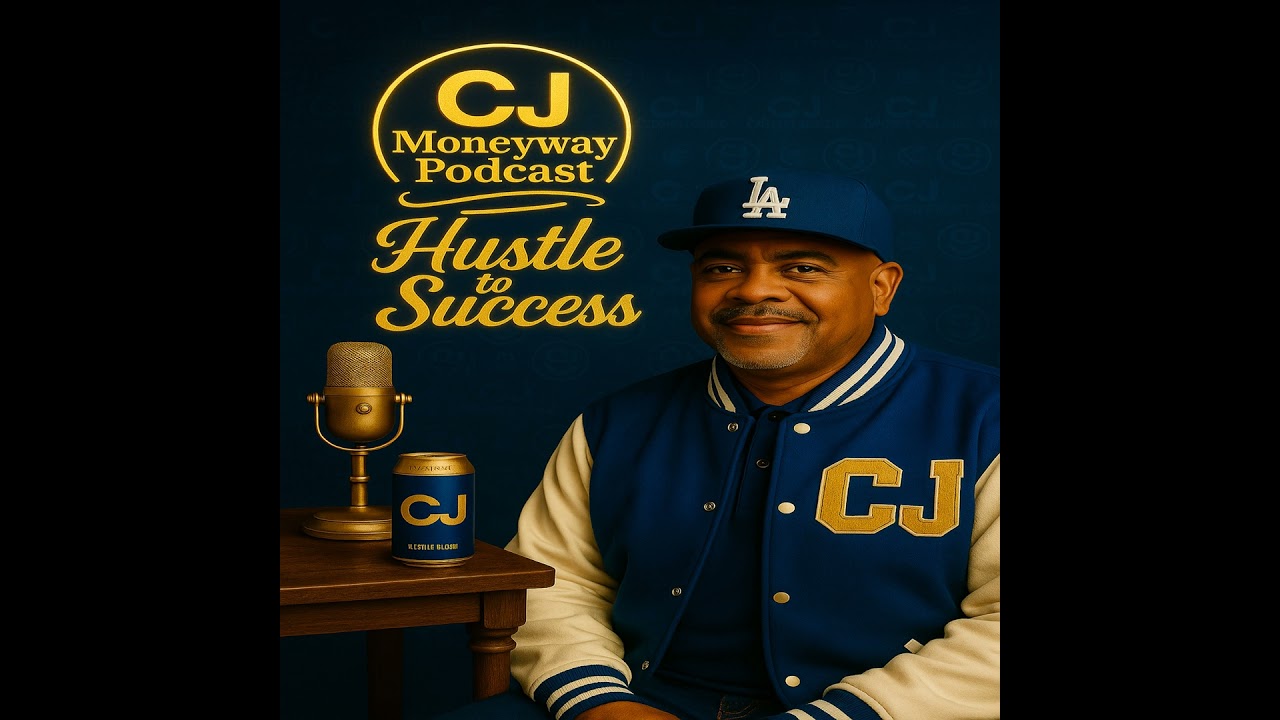
John A. Brink arrived in Canada with $25.47 after fleeing occupied Holland during World War II, then built a four-company lumber empire in Prince George. At 62, he was diagnosed with ADHD and PTSD, which reshaped how he understood his relentless work ethic and drive. He's since donated $1 million to the College of New Caledonia and hosts his own podcast.
Chapters
This episode is brought to you by Progressive Insurance.
Fiscally responsible, financial geniuses, monetary magicians— these are things people say about drivers who switch their car insurance to Progressive and save hundreds.
Because Progressive offers discounts for paying in full, owning a home, and more.
Plus, you can count on their great customer service to help you when you need it, so your dollar goes a long way.
Visit progressive.com to see if you could save on car Progressive Casualty Insurance Company and affiliates.
Potential savings will vary.
Not available in all states or situations.
You just realized your business needed to hire someone yesterday. How can you find amazing candidates fast? Easy. Just use Indeed. Stop struggling to get your job posts seen on other job sites. With Indeed Sponsored Jobs, your post jumps to the top of the page for your relevant candidates. So you can reach the people you want faster. According to Indeed data, sponsored jobs posted directly on Indeed have 45% more applications than non-sponsored jobs. Don't wait any longer. Speed up your hiring right now with Indeed. And listeners of this show will get a $75 sponsored job credit to get your jobs more visibility at indeed.com/podkatz13. Just go to indeed.com/podkatz13 right now and support our show by saying you heard about Indeed on this podcast. Terms and conditions apply. Hiring Indeed is all you need.
Welcome to the CJ Moneyway Johnson Show podcast, the podcast show where we unlock potential one dream at a time. Today we have another guest whose journey is truly worth hearing. Sit back, relax, and enjoy the Moneyway experience.
What's up, my good people? Welcome to the CJ Moneyway Show in association with Believe Network, where we dive into the inspiring stories of leaders, entrepreneurs, and visionaries who have overcome the odds and built extraordinary lives. I'm your host CJ Moneyway, and today we have a truly incredible guest, someone who has went from surviving the survivors of World War II and occupied Holland to becoming a successful entrepreneur and advocate in Canada. Our guest today is John A. Brent, founder of Brent Forest Products, a pioneer in the wood industry, author of the book and host of the On Brent podcast. John is an advocate for mental health, having lived with ADHD and PTSD, and he's here to share his remarkable life journey from surviving war to achieving business success. John, welcome to the CJ Moneyway Johnson, man. It's an honor to have you on today.
I love it here, CJ. Look forward to it.
Hey, so John, your story, man, you know, being in a war-occupied zone, man, during World War II. Can you take us back to that time and share what it was like growing up in a war zone?
I sure can. I was born in 1940, November 1st, actually. A couple of weeks ago, I turned 84 years young. And so in northeastern Holland, so it was in 10 minutes of the German border, and my mom and dad were married in 1938. They were in love. My dad was working in the lumber mill. They had rented a beautiful house. Pretty quickly they had a boy and a girl. And then, and then the world changed as Adolf Hitler decided to invade Poland initially and then started to threaten the rest of Western Europe. My dad was called into the Dutch Army, and the last time that they saw him was just before the bombing of Rotterdam, and thousands of people died. And he was then in the Dutch Army, and for 5 years they wouldn't know if he had survived. So my mom was pregnant with me, As we went into the war, the German army invaded Holland, and so we were under occupation for 5 years. The first thing that I remember, CJ, is that when I was about 3.5 years old, overhead, the Allied forces were bombing the German war infrastructure. And again, realize, northeastern Holland 10, 15 minutes from the border with Germany. A lot of the bombers came over our area. I can still remember the sound of hundreds of bombers in the air, 200, 300 bombers. The sound you will never hear again, and I will never forget. My mom would take us outside on the flat roof behind our house, not to see the planes, but it was safer in her mind outside than inside. And in the distance, we could see German cities burning, Wilhelmshaven, Kiel, Hamburg, all those cities, Bremen, that they had built, that they have a manufacturing infrastructure for the war. And so the next thing that I remember is the hunger winter or the hunger year of 1944 when I was 4 years old, between 4 and 5. And so there was very little food. And in the winter in particular, which was the coldest winter on record, my brother, 2 years older than me, me 1 year older than my sister, together the 3 of us would go every day into the railroad yards, pick up anything edible and burnable. And so the reason that we did as kids, because the Germans wouldn't shoot us, they would boot us back the following day. I still remember the feeling of hunger even now, 80 years later. And then I still can feel the cold. And, you know, we had a little room in our house that we heated and the rest we had no fuel for. So, and then the next thing that I remember was April 12th, 1945, when we were liberated by the Canadian Army. And it made such an impression on me that I always knew from that point forward, 5 years old, nearly 5 years old, when I grew up, I would go to the land of my heroes, Canada. And so that always stayed with me. We saw far too much that we should not have seen, and things were very, very tough. You know, and for a lot of people, with all due respect, and a lot of people think that if there is a war, after the war is over, everything goes back to normal. It simply doesn't. It can take a generation, two generations before they get back to a sense of normality. And the same happened with our family for years thereafter. It always affected my mom and dad. My dad came back after the liberation of Holland, but had been working underground and was affected by it, you know, for all those years that followed that. So Academically, I was not a success story, and I failed grade 7 3 times. And so they said, "What are we gonna do with this guy?" They said, "Well, send him to the mentally challenged school." They said, "No, we're not gonna do that. So make him a laborer and then maybe teach him a trade." Now, my dad had a friend that had a furniture factory, so they, at 12 and a half years old, they sent me to the furniture factory to become a furniture maker. And I loved it. And so that's what I did. And then at 17, I was drafted into the Dutch Air Force for 2 years. It was mandatory then, either Army, Navy, or Air Force. Then when I was 23, I decided to go to the land of my heroes, Canada. I wanted to start with nothing, as little as I could. So I left Holland with a suitcase, 3 books, 2 sets of clothes, and then very little money. And couldn't speak language, didn't know a soul, didn't have a job. So when I flew into Montreal, took the train across Canada, 4 days, 5 nights, my God, that's a long way. And when I arrived in British Columbia in Vancouver, I wanted to go to British Columbia because that's where all the trees are. And I dreamed of building a sawmill. And so I went to the immigration office there, and fortunately there was a German fellow there that I could speak some German. So I told him what I wanted to do. He said, "Go to Prince George." Now for our people watching us here from around the world, obviously they know where Canada is, they know where British Columbia is likely, and a beautiful, beautiful province, big actually. And then there's a big city called Vancouver. Well, Prince George is 500 miles north of Vancouver, or for European friends, 800 kilometers. So I went there with the Greyhound bus, came off the bus with my suitcase, my 3 books, my 2 sets of clothes, and I counted my money at least 3 times. I had exactly $25.47.
Wow.
And I had lots of his attitude. I've always been positive. Even at the worst of times, passion. Whatever I do, I give it 125% work ethic. I'm even still today, probably at 84, I still work harder than anybody around me. And so I get up at 5:30 in the morning. I always make my bed and I always think I'm late. And yes, I build my lumber mill and 10 other companies, but it's not about that. Obviously, I've been successful. And I love it here. And so that's kind of what I do. The other part, because you will be touching on that, I'm sure, is that when I was 57 years old, I picked up a book in the store. I'd never quite felt good about myself, even not then, is that everybody said, "Oh, you got all these businesses, you're so successful." And I didn't feel that way. And so I found this book, Driven to Distraction, written by Dr. Halliwell, and the book was about ADHD. And I said, oh my God, that's me. So the actual book is in my studio that I podcast from. I'm guesting on yours from my boardroom, but normally I have it with me, the same book. So I read the book and the more I felt about it and the more I understood it, the more I believe that it is a superpower. And so I felt I had to write a book about many other books. And I know you're an author as well, is that I wrote this book about it and then another 4 or 5 other books. And so, and a lot of people say to me, how do you do all the things you do? You're podcasting, you're presenter all over the place, you do write books and you have 10 companies. How do you do all of this? I say ADHD, that's how I do it. So there you get a bit of a background of me.
Hey, John. Hey, first off, happy belated birthday, man, at 84 years young. For those who listening to this on a podcast, Apple, Spotify, anything, please go to my YouTube channel. Hey, John, man, you got to put that book up, man. You got to put the book up.
I showed you. Here it is.
Man, you got to go to the YouTube channel or social media where these clips are out, man, and see how good this young 84-year-old man looks, man. This guy, his body is tremendous. I'm jealous, I'm, I'm jealous.
And as he said, he worked harder in North America. Oh man, training right now for the Arnold's—
for the Arnold's.
Yeah.
Is that what, like Arnold Schwarzenegger or something or?
Yeah. No, they have a competition in numerous sports in Idaho on an annual basis. And so, in 2017, 2018, I podcast out bodybuilding. I competed in British Columbia, in Northern British Columbia, came in second in bodybuilding, third in physique. That qualified me for the provincials, came in third in physique, second in bodybuilding. Qualify me for the Nationals and the Arnold's. Then COVID came and now at 84, I'm training again. That was a picture of me to again go to the Nationals and qualify for the Arnold's.
Oh man, I wish you great success. I get, you know what? I interviewed a young lady, she's in her 60s. She's from Canada as well. And she was also doing bodybuilding and things of that nature, like in the Olympics. So I guess there's something in the water over there in Canada, man. That makes you want to get that body right and looking like that, man. Like I told him, everybody, before we got on, I'm 51 years old, he's 84 years young. I wouldn't test him. I wouldn't test him at all, man. You see them guns that man got on him. Hey, so, so, so, John, about your business, man. 10 years after arriving in Canada, you achieved another lifelong dream by founding the company that you have now. Which became North America's leading secondary manufacturer of value-added wood products. What inspired you to start your own sawmill and what were some of the biggest challenges you faced along the way?
Very, very good question, CJ. But I wanted to do this partially because I failed grade 3 and I failed grade 7 and everybody said, "Oh, this guy's too dumb," and blah, blah, blah, and you know all this stuff. But I knew I was different. And then when I was in Holland, everything goes around saying, "Okay, what are your diplomas? Blah, blah, blah, blah, blah, blah." And so I had felt I had to start over again in Canada. And then I knew that for my own personal satisfaction, I wanted to start with nothing. So meaning a suitcase, couldn't speak no English, didn't have a job, didn't know a soul. I had $25.47. My dream was to build a lumber mill. So when I came to Northern British Columbia, as I said earlier, with a suitcase and the $25.47, I started as a cleanup man in the lumber mill, then a lumber pilot, then a supervisor, and then a superintendent of one of the larger mills here. And that was all in the first year and a half. From there, in about 2, 2.5 years, I bought into a little sawmill. And then I started in 1975, after I was here, the one company, Brink Forest Products Ltd. And then that turned into the Brink Group of Companies. And we have 4 silos. The one silo is lumber manufacturing. The other silo is warehousing. Distribution and logistics. The third one is real estate, residential, commercial, and industrial. And the fourth one is media. And I do writing, presentations, and all things in that area and will start a platform. Quite successful in podcasting. I think I have about 700,000 subscribers on YouTube and we have had about 25 million viewers in the last 4 years.
That's awesome, man. You know, for somebody that's in the podcast space myself, I can't even fathom them type of numbers.
You just realized your business needed to hire someone yesterday. How can you find amazing candidates fast? Easy. Just use Indeed. Stop struggling to get your job posts seen on other job sites. With Indeed Sponsored Jobs, your post jumps to the top of the page for your relevant candidates. So you can reach the people you want faster. According to Indeed data, sponsored jobs posted directly on Indeed have 45% more applications than non-sponsored jobs. Don't wait any longer. Speed up your hiring right now with Indeed. And listeners of this show will get a $75 sponsored job credit to get your jobs more visibility at indeed.com/arts. Just go to indeed.com/arts right now and support our show by saying you heard about Indeed on this podcast. Terms and conditions apply. Hiring Indeed is all you need.
Again, again, here I am being jealous. Hey man, but for somebody to be, you know, as you say, you found out when you picked up the book, to flunk 3rd grade, 7th grade 3 times, you say, and to come to a country, unknown country, man, with $25.47,—
and to do— I didn't speak the language.
Okay, I forgot. I couldn't speak no— Man, for the things that you have done, man, and the things that you're doing in society, man, what a great feat, man, for yourself, man, your family, and all those around you. That's a kudos to you, man. Kudos to you, John. Hey, so John, let me ask you, man. You start running your business. You say you got 10 companies. You know, now you 84 years young. Let me ask you a question. What continues to drive you to keep going, and how do you manage all these, uh, large enterprises?
That 25 Foundation attitude— I avoid negative. Every day for me is a good day, and if it isn't so good, I know tomorrow will be. Passion— no matter what I do, I give it 125%. Work ethic And as I said, I work harder than anybody, but follows is success. That has always been my foundation. Even when I didn't have nothing and when I was cleaner man, when I was piling lumber and doing all those things and couldn't speak the language, I was building my first company already then mentally. And when I would go home, I design the labels of the company, I design the layout of the little mill that I wanted to build and the stationery and the name and all of— I was building my company and I still do that now after being in here in business. 1975 is when I started the first company. 50 years later, the company is still very, very successful, but there's many, many other companies and I still have the same attitude. I'm always positive. I stick with the basics. Become especially good at what you know. And then from there on in, be hands-on and stay involved in the business closely as you build it step by step. And obviously understand how finances work and what makes companies successful.
You know, John, let me just run this by you, man, and tell me if I'm on the right track. I heard you say that you would go back and you were planning, saying you do your logo and you was doing the blueprint. And so I was telling somebody last week I was talking to, and I say, man, you got to start preparing before you get there. You know what I'm saying? Some doors going to open, but if I'm not prepared to go through that door when it opens, then I'm still standing at the same door that I was at. And so I say, you got to start preparing before you actually get there. So when the door do open, I'm ready to go in that door at that time.
Exactly. Success will find you. The question is, are you ready when it does? You know, and so for me, I made a business plan. I knew exactly what I was going to do step by step. And believe it or not, CJ, that business plan that I developed in late '74, 1974, and implemented in 1975, when opportunity presented itself to me, I was ready. And so, and that same business plan I still use today. Amazingly.
Man, that's awesome. And I just had to ask because I'm working on some projects myself and I'm prepared, you know, I'm prepared preparing myself. It may not be there yet, but I'm preparing myself so when that door do open, I be ready to go through it. So the things that I'm hearing you say is really inspiring, man, because like you, me personally, I feel that way too. Even at my regular job, a lot of people not going to outwork me. I got a work ethic. I've been working since I was 16 years old, so I know what work is. I seen my mother and father work. I go to work early. I'm at work early every day. Regardless of where I work at, I'm at work way before time. You know, I was working 45 minutes away. I leave 2 hours ahead of time so I can avoid traffic, you know. So, so I, I, I like your thing, man. I like the thing with your book. So let me ask you, John, man, many people dream of starting businesses but never take the leap. What advice would you give aspiring entrepreneurs who are afraid to get started?
So I wrote a book about that, actually, you know, and, and so A good example would be this, CJ, is that I heard it on a US station, I forget now which one, CNN or one of the other ones, forget now which one, that 75% of the people in the US, and the same in Canada in my opinion, do not like their jobs. And 75% of them are looking for other jobs. And I do a lot of presenting to younger people in colleges, high schools in some cases, colleges and universities. And I say to them is that, "What are you going to do when you're down here?" And a lot of them say, "I don't know." I said, "Well, respectfully, why don't you start checking out what direction do you love to go in?" For me, at a young age, I knew it would be lumber. And so I started to find out as much as I could. And so what I say to them is, example, if you'd like to be a truck driver, talk to a truck driver, see what is involved. If you own the truck, what hands involved? What about this? What about that? And he'd be glad to talk to you. If you want to be a carpenter, talk to carpenters or contractors building houses Talk to them. What is involved? How about this?
How about that?
How about the other? Or you want to be a doctor or a lawyer, or for that matter, an entrepreneur or a business person. Talk to them. And a lot of them, if you do carefully, obviously, and explain why you want to talk to them, they love to talk to you and tell you what is involved. So you form first and foremost an opinion on what are the opportunities, what likely would be attractive to me, and develop a plan already as early as you can when you go to school, college, university, as to what attracts you. Then from there and then become, and if it is in the general sense, I want to be a business person, find out what business is all about. You want to own it, what makes it click? How do you get something started? How do you, how about this, how about that? Other things. I became very good at lumber manufacturing because I started when I was 12 and a half years old. And I always loved that being at, my grandfather was a master carpenter, my dad worked in lumber. So I became very, very good at that. So by the time I came to Canada, and then I always listened to business persons, what they in speaking about, or if they gave presentations, I tried to be there. And of the 3 books that I had with me when I came to Canada in my suitcase, the one was Management by Drucker in Dutch, very popular book in the United States about how business works. But that one was by Drucker in Dutch. The other one was Logical Thinking in Dutch, and the other one was about Canada. And so I knew I had to become good at what I wanted to do. So when I came here, started to work with my hands, cleanup man, lumber pallet, but my dreams always were, how do I go forward? How do I go forward? How do I become a supervisor? How can I become better and better? And so within 10 years after I was here, for 4 or 5 years, I already was part owner of a small mill. And then after being here for 10 years, I started my first company. And again, these ideas that I had already developed when I was younger. And so what I say to people that aspire to go into business, become good at what you want to do. What direction do you want to go into? Whatever that may be, but understand it and the mechanics of it, and then be prepared. If you start something from the ground up, it's not easy. It's usually difficult. The best in terms of business, if you can buy a going concern that has already established a bit of a market, but that costs money, and a lot of times young people starting out do not have that cash. But then become good at whatever you want to do and then start out small. And the more you know about it, but how the business works, the better you will become working in the business and opportunities, as you said, and what I say, will present themselves. At some point, the door will be open and now it's you that will create an opportunity. In my case, what I say, success will find you if you keep doing the right thing. The question will become, are you ready when it does? And so the key is always build confidence that you're good at what you do, that you're prepared to work long hours or sleep fast, I say a lot of times. So that's what I used to do when I started. I worked 24/7. You know, as long as I could stay awake. And so, but then the opportunity is very rewarding. But understand the basics of business. Make a business plan. First and foremost, the direction you want to go in, and then learn as much as you can about it. And then from there on in, go step by step. Some people say, think that I'm going to start something, and they have a whole different idea about entrepreneurship and entrepreneurs that are successful. And they have the impression that people that are successful in business, they spend all their time planning holidays and bringing money to the bank. Well, that's not the way it works.
Hey man, impressive, John, man. For y'all listening to this, rewind this. 84 years young, a lot of experience, a lot of wisdom going out right here. 10 companies, hey, take notes of what he said 'cause I'm sitting here soaking it in. Hey, so John, let's change courses a little bit, man, and thank you for them nuggets, man. You know, we talked about ADHD. You know, you said that when you picked up the book, you found it, you know, that, oh, that's me. So exactly what age were you when you found out that you had ADHD and how has it impacted your life and your career?
Very good question, CJ. I've always had ADHD. There's no question in my mind about that. And I'm not a doctor, you know, but knowing from me, and if I look back, hence my challenges in grade 3, ground challenges in grade 7, when I was sitting in school, I liked some things, but most of the things I didn't like and I lived elsewhere. I didn't pay any attention to it. So a lot of my life I knew I was different. I don't know why, but I was until even when I was already in Canada and in 1997, after I'd been here in Canada, I came here in 1965. I was already here for 32 years, walked into that store Hirajansani picked up that book Driven to Distraction written by Dr. Halliwell, that Dr. Halliwell has written 18 books. He is ADHD and has dyslexia. I'm the same. And so when I read the book that he had and I was sitting there going through it, I said, oh my God, that's me. And if I picked up the book and I showed it to you, That same book, I still have it in my studio, and I wrote inside the book on the first page in Dutch in January 1997, in Dutch, because I was ashamed of it. Now I know who I am. So that was when I was 57. Then it took me 5 years before I would go to my doc that was a personal friend. Delivered our two daughters, and I went into his office and he said to me, "Hey, John, why are you here?" I said, "I think I've got ADHD." And so we checked it out and I do. By then I was 62 years old. So remember, I left school at 12 and a half years old. And so for 50 years I knew I was different, but I didn't understand why. I went through all the ups and downs of people saying, well, you know, the guy is dumb and he is this and that and all negative stuff, and maybe send him to a mentally distracted school and blah blah blah, and he will never amount to anything. All those kind of negative things. But I knew that was not the case, but I didn't know why I was different. So it took me till I was 62 that I found out. From that point forward, my whole life changed. I already had numerous companies, but then my company started growing because now I had the confidence. I started writing books. The first one that I wrote, and as you know, writing books is not easy. So a lot of people had said to me, uh, hey John, you know, you should write a book, you know. And, and so I started, I stopped, on and off, on and off. And then I knew 5, 6 years ago when already in my 70s, if I didn't do it now, it would not happen. So I wrote this one, Against All Odds. It's not about how successful John is, but through all the ups and downs along the way, you know, and then I wrote 5 other ones after that. So, but it kind of unlocked me as to who was I. And then the other part about it is that I was not a good communicator. I lacked self-confidence still. Operating businesses was something that came natural to me, but being out in a group and giving presentations, I was not good at that. And so until 1990, when an ex-sister-in-law of mine said to me, "Hey, John, why don't you go with me to a club? They call it Toastmasters." Now, I don't know if you heard about Toastmasters, but they do communication skills. And they're probably, as we speak, half a million people in North America, in particular in the US and Canada, have Toastmaster clubs in my city here, as well as in the United States, and probably 10 million, if not 20 million people around the world have been involved in Toastmasters. I stayed there for 10 years and became a distinguished Toastmaster, which is the highest level that you can get to in Toastmasters. And I became a very good presenter. And that's what I do now. I'm an in-demand speaker and obviously I'm a successful podcaster. So the other part that I never realized that I was in school very good at numbers. I was a very good writer. And then I became involved in Toastmasters. I became a very good speaker, but that part was always with me. I had a very good memory and I never fully realized that. So now I can give presentations, which I do, uh, on Toastmasters for one, on, uh, podcasting for one, but also being an in-demand speaker, that to me comes natural. And so between those elements, more circumstantial than anything else, I changed my life.
Man, John, against all odds, like you say, you know, the things that you have accomplished, man, the things that you doing, man, like the book is fitting, Against All Odds. Let me ask you this question, John. We talked about the ADHD. You also live with PTSD due to your experiences during the war. How have you managed those challenges and what message do you have for others who are struggling with mental health issues?
That is still very much part of me. Saw far too much that I should not have seen and I speak about it. In the inner child, the fear, you know, like as I said to you before, I grew up with my brother and sister and then my mom was on her own because my dad was lost during the war. And so she was on her own and there was always a fear because all around us people were dragged out of their houses and sent to Germany in a lot of cases to work in factories or Worse yet, concentration camps that never came back. And so there was always that fear potentially of losing my mom. And so that's what they called, and it was through counseling that the counselor said to us, "I should talk to John about DNA Childs." And I never even heard of it. I was already in my 50s and very emotional actually. But again, left over from the war years. The inner child is also part of people that have been exposed to trauma and the same mental health issues and all of those things I have been exposed to in some form or fashion. And that's what I do in a lot of my podcasting. I'm attracting people either to present to or to host. I think I'm close to 365,000 podcasts that I am hosting, which is an amazing, amazing platform, podcasting around the world. And in a lot of cases, it's about variety of things that I do on the Brink with John A. Brink. It's about entrepreneurship, it's about all the different issues. Mental health, fitness, PTSD, warriors, entrepreneurship, all those things I podcast on and I love to podcast on. The other one, I'm a believer in fitness. I'm vegan. My wife is a vegetarian. And so I'm a believer in physical fitness, but it's all connected. Mental fitness, Physical fitness, health, diet, all those things all lead to success. For those people that have challenges, and I meet them often, many, many times, I talk to them about what I believe, what's important, and to believe in yourself. But I have been there, as I said to you earlier, is that for 60 years, or 50 years, not knowing that there was something called ADHD. I didn't know who am I, who am I. It took me that long to find out who I was, although I was successful, but I did not know who I was. And it took me to that period and those circumstances that I finally could say to me, I know who I am and to have confidence, not being better than, but no worse than. And so it took me that long.
Man, John, man, like I say, I thank you for coming on, man, throwing these nuggets out here, man. Nothing but wisdom coming out of your mouth, man. Hey, so John, man, let me ask you, where can we find this successful podcast at, man? What's the name of it? And where can we find you on social media? Your social media handles?
John A, as in Adam or Aaron's, Brink, B-R-I-N-K, .com. And that will show you the way. And my podcasts are On the Brink with John A. Brink. And so we do lots of podcasts. I probably do 5 or 6 a week. Yeah. And then I release them very quickly within 24 hours. Or if I podcast at 9 o'clock in the morning, we release them in the afternoon and they are on different topics. I'm in the process of developing a platform that we will release probably in the next 3 to 4 months.
Mm. That's awesome, man.
And talking all about these issues that you and me are talking about, CJ.
Man, I probably do like 6, 7 a day, but I don't put them out right away, though. I know you probably got a team, you know what I'm saying? A big team where you doing your thing.
Hey.
Small T? Yeah, small T better than no T, John. I'm by myself, man, so you know how that is.
You're doing a great job though, CJ.
I appreciate you, John. I appreciate you. So John, I just got a couple more questions to ask you, man, before, you know, let you go off and do your thing. I know you're very busy, man. You know, you do a lot of humanitarian work, you know, saying you advocate for mental health and things, and it's inspiring, incredibly inspiring. Can you tell us about the $1 million donation to the College of New— I can't pronounce it— and your vision for And your vision for the trades and technology center, man?
Yeah, so, but it's always been important to me that these skill sets are criminally important. And so the advantage that I've had is when I started to left school and started working is that gave me skill sets that made me successful. Without that, I would have been much harder for me to become successful. So I believe in that. And then the College of New Caledonia here in Northern British Columbia was not doing as well as they could in developing skill sets. So I helped them in building a part of the college that focuses on trades and technology. And so they named it after me, the John A. Brang Trades and Technology Center. I want to go beyond that and build a center of excellence here as part of the University of Northern British Columbia, and I've committed $1 million to that exercise. But more importantly, CJ, is that from the time that I grew up, I grew up in Northern Holland, and I very much believe that part of success is being involved in the community, giving back to the community and understanding the community that you live in. And so that to me has always been very, very important and still is today and has always been from the time I grew up. Stay involved in your community, give back where you can. That does not mean millions of dollars or no, whatever it is, even just helping out, but be Part of your community is very, very important.
I like that, be part of the community. So John, man, just got one more question for you, man, before we get outta here. Your life has been filled with remarkable stories and lessons as we've been listening to. Looking back over your 84 years young life, what's one key piece of advice you would give to someone trying to find purpose and fulfillment in their life?
Attitude, passion, work ethic, but will follows is success. And that applies to all the things that you do. The other part is give back to your community. Be part of it. It's very important.
You heard it from the man with all the wisdom. Work ethic, passion, and give me the third one, John.
Attitude, passion, work ethic, but follows is success.
Oh man. Hey, you heard it from John, man. John Brick, go check out his podcast, On the Brick Podcast. Check out his books, man. Hey man, got a lot of knowledge, a lot of wisdom coming out of that, man. John, I appreciate you coming on the show. It's been an honor having you on the show, man. Your story is a testament to resilience, hard work, and never giving up on your dream. Thank you for sharing your journey with us with the incredible work you're doing in business, mental health advocacy, and humanitarian work. Humanitarian work.
Thanks, CJ. It was a pleasure to be on your show.
I thank you, John, man. Hey, so you have been listening to the CJ Moneyway Show with your boy CJ Moneyway and my esteemed guest John A. Brinks. Hey, we out of here. Peace.
Thank you for listening to the CJ Moneyway Show. Don't forget to share this episode with your friends, leave a comment, and drop a review. Be sure to tune in every Tuesday and Friday for more inspiring journeys. Who knows, your story might be next.
Mm-hmm.
More from Corwin


Pressure-Proof Leadership: Claire Hayek on Neuroscience, Resilience & Leading Under Pressure

Healing With Fire: Zulma Williams on Trauma, Cancer, Depression & Finding Your Voice

The Economy of the Heart: How Love and Leadership Build Profitable Cultures | Hanna Bauer

The Doorman Nobody Valued: Wes on Storytelling, Corporate Blind Spots, and Building Brotherhood o...

Art for Your Sanity: How Creativity Helps You Survive Chaos — with Susan Hensley

Becoming Better: Ryan Gottfredson on Why Success Requires More Than Doing More

Mission Control OS™ Demo | Governance-First AI Executive Operating System | OpenAI Build Week

From Frustration to Confidence: The Dyslexia Professor’s Blueprint for Struggling Readers

Built in the Pit: Chris Duffin on Resilience, Accountability, and the Discipline to Rise

Cyber Thrillers, AI & the Future of Technology with Charles V. Breakfield & Rox Burkey