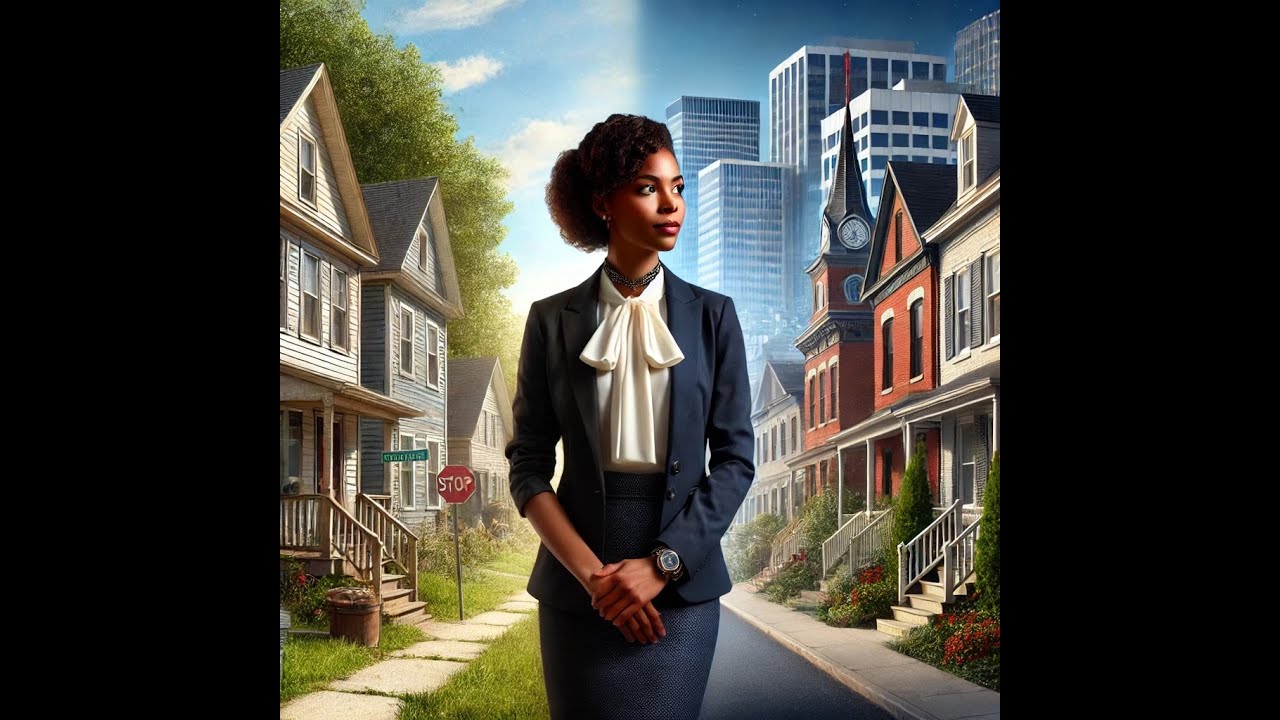
In this interview, Cassandra shares her life story, beginning with her upbringing in a small town of 159,000 residents where she was an only child of a minister grandfather, a mailman father, and a schoolteacher mother. She recounts her mother’s role as the sole African‑American teacher during the early 1970s school integration, which placed Cassandra as the only Black student in her elementary school—a formative experience that taught her about safety, community, and resilience. After high school, she pursued college without a clear career plan, relying on faith to guide her direction. Post‑graduation, she entered a corporate landscape that was actively seeking African‑American talent to meet diversity quotas, starting at Chrysler Credit Corporation as the sole Black employee. She later broke barriers by becoming the first African‑American General Manager at a Courtyard by Marriott and eventually rose to Vice President at a Global 500 company, where she was again the only Black executive. Throughout, she reflects on the challenges, racial bias, and personal growth that accompanied her ascent, emphasizing the importance of values, perseverance, and trusting one’s path.
So Cassandra, can you tell us a little bit about yourself and about your background?
Absolutely. I, I actually grew up in a small town. Uh, the population during that time was 159,000 people, so you know that was small. Uh, I was— I am an only child. My grandfather's a minister, my dad was a mailman, and my mom was a schoolteacher. And I would say that my parents, um, I would say they were pretty strict, but now that I'm older, I get it. I understand. They provided me values. You know, we had to go to church. You had to say thank you if somebody gave you something. You have to particularly go to their home, whoever gave you the gift, and thank them. Also, during that time, we started integration in the '70s, had started. Because at first we were all segregated, and because my mom was a schoolteacher, obviously she was a pretty good teacher because they took her, they asked her to go to a far away, probably over an hour from my house, to teach, uh, and she was the only African American teacher in that school from 1st through 6th grade. And she asked me, and she didn't ask me, she told me that I was going to school with her because she did not want me to be home by myself when I came home from school. So I was voluntold, not volunteered. And as she— and my mom knew best. So during that time that, that happened, and that was a rude awakening for me to be the only Black kid in the entire school. It was amazing to me. Now, the janitor was Black, my mom was Black, so I felt I was safe because my mom was there. So if anything were to happen, then I could run to her classroom. But so, you know, and I, uh, also after I did that, I was an individual that wanted to live independently. I guess because I was an only child, I'm like, I want to get away, I want to start living on my own. So in the event that I go to college, my dream and my goal was when I left college, I was not coming back. I was coming to— I would visit, but I wanted my, my own, my own thing. And what's so interesting, during my childhood, you You know how a lot of people have— kids have dreams and they want to do this, they want to be that. And one of the things I noticed because I was around individuals that were teachers, nursing, worked in a shipyard, in the military. So those were the things that I thought, well, maybe I could be a teacher. I don't really want to work in the post office. And so I took that behavior, that attitude with me to college. When I went to college, I had no idea what I wanted to do. And I felt bad about it because all my other friends, they knew what they wanted to do, but I didn't. So I just says, you know what, I'm just going to go and I trust that God's going to give me this direction to tell me to do this, do that. So I just say that to say, I never knew in the beginning when you go away to school, you go to college, people know what they want to do. And I was one person that had no clue what I wanted to do.
Speaking about what you didn't want to do, Yeah, where you went to college. You have a pretty impressive career as VP of a Global 500 company where you were the first and only African American in that space. What was that experience like and how did it shape your journey?
Huh, well, you know, uh, once I graduated from college, I was in an era where companies were looking for African Americans. You know, they had a quota to meet. So that was the era that we were in. So I started, you know, working for different companies, and I, I started out working for Chrysler Credit Corporation, and I was the only Black person there as well. But this was the kicker.
Speaking of your journey, uh, because after experiencing such a successful career, what were some of the side effects or challenges that came with your success? Hmm.
The, the challenges were as I moved up into different organizations, it was just like, I remember being in the hotel business and I was the first African American general manager for Courtyard by Marriott. And if anything went wrong, either people were going to call Mr. Marriott or they wanted to see the general manager. Whenever I would walk out as the GM, they would look at me like, like something was wrong with me. And so I was treated like something was wrong with me. And I've had individuals say, no wonder this place isn't running well, you know. And I was like, oh my gosh, this is just so crazy.