Strategic Leadership & Corporate Consulting with Pattie Dale
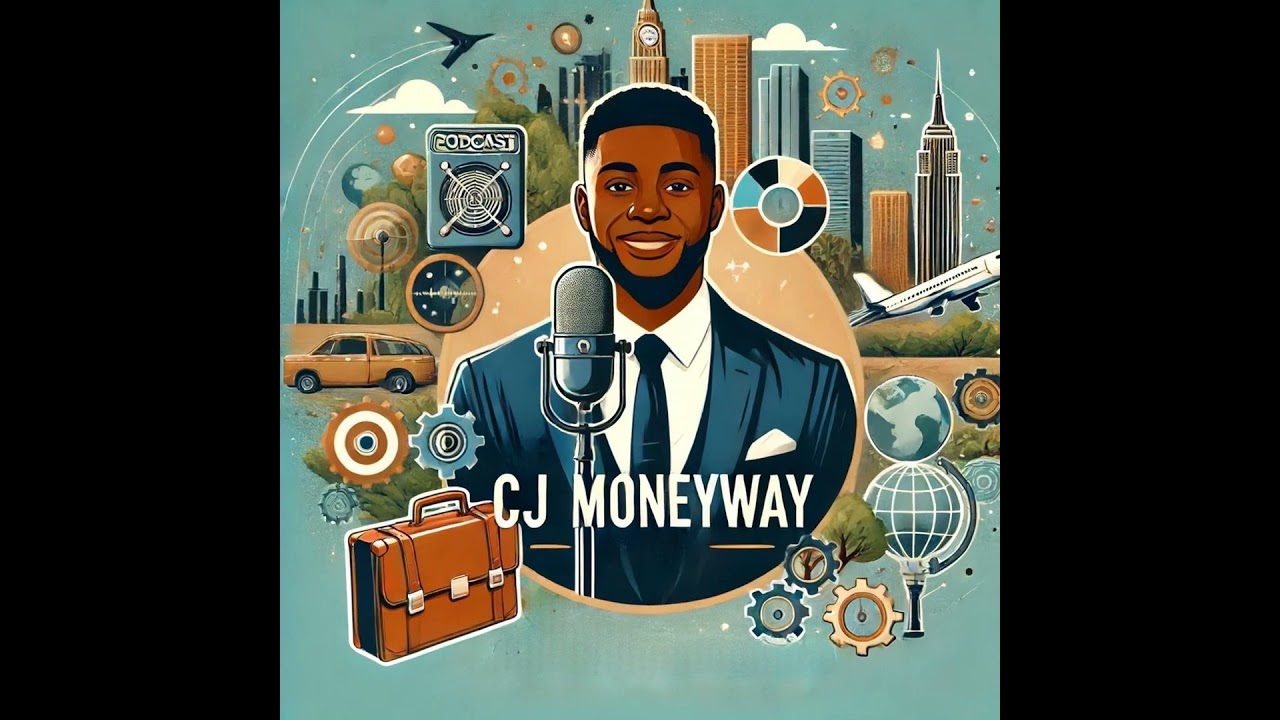
In this episode of the CJ Moneyway Show, host Corwin CJ Moneyway Johnson interviews Forbes author, consultant, and board member Pattie Dale about her new book Ordinary to Extraordinary and her 40‑year corporate career. The conversation weaves personal backstory—from growing up in Lake City, Florida, to rising through AT&T, Chase, and Humana—to the principles that guided her success. Dale emphasizes purpose discovery, the lifelong value of networking, generosity as a workplace super‑power, and a balanced money mindset that avoids obsessing over paycheck. She shares practical strategies for work‑life balance, including planning Fridays to protect Sundays, and introduces the concept of “third‑stage opportunities,” a post‑career phase where seasoned professionals can diversify their impact through consulting, writing, and board service. Faith and gratitude are recurring themes, with both hosts linking purpose to spiritual belief. The episode also includes sponsor reads for Mando Whole Body Deodorant and promotional details for Dale’s book.
Chapters
Welcome to the CJ Moneyway Show podcast, the podcast show where we unlock potential one dream at a time. Today we have another guest whose journey is truly worth hearing. Sit back, relax, and enjoy the Moneyway experience. Mando's starter pack is perfect for new customers. It comes with a solid stick deodorant, cream tube deodorant, 2 free products of your choice, like mini body wash and deodorant wipes, and free shipping. As a special offer for listeners, new customers get $5 off a starter pack with our exclusive code. That equates to over 40% off your starter pack. Use code CJ at shopmando.com.
Shopmando.com.
Please support our show and tell them we sent you. Smell fresher, stay drier, and boost your confidence from head to toe with Mando.
What's up, my good people? Welcome to the CJ Moneyway Show in association with Believe Network, the podcast that brings you stories behind the success. Today we have on the show Forbes author, consultant, and board member, Patti Dale. How you doing today, Patti?
I'm doing so well. Thank you for having me, CJ. I see the messages that you put forth in the universe, and I'm thankful to be part of those messages.
Ah, I appreciate that. I appreciate that so much. So Patti, let's start off. Tell us a little bit about yourself and about your background.
You bet. So I was born in a small— I was born and raised a third-generation Floridian. There aren't many of those. North Florida. CJ, it's where I-10 and I-75 meet and intersect. Most people have had a flat tire or a hamburger there. It's called Lake City, Florida. And I bring all that up because that's part of the gist of why Forbes wanted me to write the book, that so often today we see people through the lens of social media, and that's not always an accurate lens. And there's a fear that a lot of people are assuming from the get-go they're not good enough. And that they can only be good enough if they were born into a certain type of family, went to a certain type of school, got the perfect job right out of school. And that was not me. So I went to college, graduated from college, did not go on to further education, and started out as a salesperson and then put my aptitudes to work. And that's a lot of what I talk about in the book. You've got to lean into your true strengths. And what the good Lord gave you, and then worked hard and kept my brand polished and ended up at a very, very, very high place with Humana. And now I'm on my third stage. As someone said, I'm on the back nine of my career, and I'm happy to be able to share what I think helped me get to where I ultimately got on with people like you, because you share so much with so many.
I appreciate you, Patty. So speaking of humana, so Patty, you've been in the business of consulting large corporations like AT&T, Chase, and others. What has that experience been like?
Well, actually, I was an employee at those companies. So I was a baby fresh out of college, pretty fresh out of college when I went to work for AT&T. And that's a big company, and you can easily get lost. So what I tell folks in the book is build a network. The network of people that you work with and grow with should stay with you for your entire career. And CJ, what a lot of folks don't think about is, and you know this, you're going to be on your career path for 30 or 40 years. It's a long haul and collect as much as you can along the way in terms of skill, friends, coworkers, mentors, because you're going to need to lean back into that network over and over again, or you should. So keep it current. And that helps me a lot in a big company like AT&T. I found a couple of wonderful mentors and they were there to help me. So guess what? The deal was if they helped me, I had to turn around and help someone else. And that's been sort of my modus operandi for 40 years.
Yeah, I like that motto. Pay it forward, you know, because that's the only way that we all can get ahead. I was just talking to somebody not too long ago. We plant seeds in the world. You plant seeds to other people. And planting seeds is just basically taking the knowledge that you have and trying to impart it in somebody else. And so I love that concept, paying it forward. So, Patty, let me ask you, you just released a book in June, the book that you're talking about in June of this year, Ordinary to Extraordinary. So tell us about this book and what would you like readers to gain from it?
Thank you for asking that. So Ordinary to Extraordinary is my attempt to take 40 years, 35 years of corporate career life and a life, as I explained, where I got to really really nice place. And boil it down, CJ, into digestible bits and things that people could really— it's not rocket science— things that people could really take and start doing tomorrow. I mentioned the network. That's one of them. The other is generosity. I believe generosity is the great superpower in the workplace because usually when we're in the workplace, we're in survival mode, right? We are thinking about us and only us. But I found that if I lifted my eyes up away from, you know, what I was doing and looked around to see, does my leader need some help? Is he or she struggling? Can I take some burden off? Same thing with a team member. If something comes easy to me and they're struggling with it, why don't I offer to take that from them and help? Generosity paid me back multiple. It was, it was the best ROI in my work life. And I don't think we often think about it in the workplace. So those are just a couple of the things. But the book is sprinkled with ideas like that, with advice like that. One chapter is about money. Don't get distracted by the money. People are so emotional about money and especially what their paycheck looks like. And I get it, it's got to provide for a whole lot of things, but don't let it be the all-consuming. Find all the reasons you work and negotiate about all the reasons you work, not just the one-dimensional paycheck.
Yeah, I totally agree with you on that one too, you know, because you're making me think and it's getting biblical. Even with our jobs and our sources that we have or the resources that we get, I know the words say that our job's not our resource, this not our resource, but God is our resource, you know. And so that's the main important ingredients, regardless, as you just said, how your paycheck look and the things that you got to do. We just got to tap into a different, different mind space. And I believe is what you're talking about as far as generosity, being generous, that comes from the inside. So that's something that has to be built inside of you inwardly. And I believe that that comes by having faith that, as you know, as you alluding to, that if I have faith, then my paycheck, it really don't matter. It's what I bring to the table at the job, you know, whether I'm making $20, whether I'm making $40, will I still be the same person and deliver and be generous, be courteous to people, you know what I'm saying, lend a helping hand, plant seeds whenever I can. And so I love your approach about that.
Absolutely. And it's— and, you know, we've been given much, CJ. We've been given the gift of being able to impart wisdom. And you have this beautiful platform to share with people, and you bring in guests that lift people up and help them understand that they too deserve a seat at the table. And that's incredibly generous. And you've got to be confident also to be generous, right? And if that comes from your faith, which a lot of mine comes from my faith, just like yours, but it also comes through years of experience of understanding what it's like to be on the other side of it and not be confident and not have people that are willing to help, have some doors shut in your face. You don't want to give that to anybody else if you can help it.
Exactly. And it rings true, you know, because you're going to go through some trials and some tribulations. You're going to have people that's not going to believe in you. And I'm writing a book, Extraordinary to Ordinary. Ah, you know, man, you expect for the people whom you have grown with, people that you have shared your story with while you was writing the manuscript, and they be the main ones that may not go out and go buy it or support you. And so that's the— I hear you.
Yes. Yes, it's the truth. But you know what? If you and I touch just 2 or 3 lives through this program today, that's a win-win-win because we won't even know their names. That's a beautiful gift to be able to help somebody out of a difficult jam. If they're stuck at work, stuck in career, not feeling confident, if we just give them the ability to lift their eyes up and say, I'm going to get up on Monday and I'm going to give this a whole new shot. That's a win.
You know, Pat, before I get to the next question, you made me think about something because this is an emotional season for me. And as today is November 15th, and you said something that made me think about it. 9 years ago, my father went into the hospital for, you know, to have back surgery on this day, on the 15th. No, he went on the 16th. My book got published on the 15th. November 15, 2015, my book, my first book, Both Eyes Open, Both Eyes Got Published. And I used to give my manuscript when I was writing it to my father, right? And so one day he told me, Patti, he say, and this is what you said made me think about it, he said, look here, man, he said, don't nobody buy your book. He said, as long as you did something for yourself, you set out a goal to do something and you accomplished it, He said, that's all that matters, you know. So like you say, whether one people, whether it inspires one person or two people or three people, you put something out there that changed somebody's life, you know, or whatnot. And I say it was emotional week because emotional month because 7 days after my book was published, my father passed away.
Oh, I'm so sorry.
You know, I appreciate it. But I, you know, you just made me think about that when you said if it touches one person or two people, you know, that that's something that he told me when I was writing the manuscript. You know, a lot of times it's not going hundreds and thousands of people may not be inspired by what you did, but there's those out there that's looking for what Patti has in this Extraordinary to Extraordinary book that's going to change their lives forever. And that's what matters.
Well, your dad got to know that his son was a published author. And that's a beautiful way for a send-off, right?
Yeah.
So that's— my mother, CJ, would have been 100 last week. So this must have been divine intervention that we get to be in each other's lives right now. But she would have— on November 8th, she would have been 100.
Wow.
And she— I dedicated my book to my parents and my husband because they've all been so influential. And I learned generosity from my parents in a big way.
The same here. So, Patty, let me ask you a question. You have some, you know, you've been talking about books, so let's touch on some of these key points that you have. You have some key takeaways that you would like people to gain from your book. Let's go over a few. First, let's start with purpose.
Purpose. So I believe that purpose takes you a little while to find, CJ. I start with asking people, I say, know thyself. And I ask them to think about those skills that come easy to them. I had my aptitudes tested years ago, and now people can do that comfortably online. There's places like Gallup StrengthFinders. A lot of corporations have, have put their people through that. There's Richard Bowles' What Color Is My Parachute? So find your skills, those things that come very naturally to you. CJ, you're probably a natural writer. You're certainly a natural interviewer. And conversationalist. There's some people that couldn't do that for a minute. And so you take that skill and you start doing it and you find ways that you can do it over and over again and in venues that are greater and greater from an impact perspective. And then you finally get to a place where you are passionate about this and you want to keep doing it. You want to keep moving forward with this. And that's when I think, CJ, that you step back and you think about your life and what you've been doing, and you go, this is my purpose. I am meant to share wisdom to people I may never know. I am meant to find people that will come on my show and let me talk to them in a way that helps my listeners have a better life as a result of having tuned in today. And my purpose is very similar. And I love to see a person thrive. I love to see a business thrive, a church thrive. And I'm a problem solver. So if I can go in and help that business, church, person figure out what their true strengths are and then turn those into skills and push them forward, that is a happy dance moment for me. So I think my purpose is to help entities and people thrive.
Mm-hmm.
And I like that, you know, as far as— because you said something that really stuck out to me. You like to see people strive, you know, as far as businesses and churches as well. And I think one thing that I think in society as a whole is that sometimes when we want people to do good in life, But some of us are scared to give each other advice, compliments, certain things of that nature, as if it's going to take away something from you. You know, like me reading Patty's book and saying, oh Patty, that was a— that's a great book, you had some great points in there. It's not taking nothing away from me to congratulate you or compliment you on your accomplishments. But it seems like some people are just They just don't wanna do that as if it's taking something away from them. And that's one point that I don't understand sometimes in life. But as you alluding to, when you have a purpose, it don't really matter what other people may think about this or what other people may think about that. This is something that God has put in you. This is a mission that God has sent you forth with. And I think once we get to the realization that this is God sent or this is what he had me to do, then we don't mind the barriers that come with it. We're just going to push forward and say, look, I'm not going to be stopped. God's will is not going to be stopped. So—
Well, and you know, CJ, a couple of points to your great points. I think that if people really look at their lives and realize that they don't have scarcity, meaning you can compliment me exactly the way you said, And it doesn't take a thing off of your aura. It doesn't take a thing off of your career, off of your bank account. You're just being authentic. And if you like something, you're saying, I like it. But some people are so worried about scarcity or losing, or they lack their own confidence.
Mm-hmm.
And it's a little irritating when they watch somebody do well because they lack the confidence to believe they can do well. And that's a big part of why I wrote the book. Everybody can do well if they put themselves in the right place, if they think about their true aptitudes, build skills around that, and then put themselves in the right place, show up every day ready to work, ready to polish your brand and to show up and do the work to be done, being generous. Everybody can have a great career. I deeply, truly, authentically believe that.
Mm-hmm. Yeah, because at the end of the day, Patty, we was all sent with gifts and talents for the kingdom. You know, we was all sent. A lot of us like to bury them in the earth. I won't go through the scriptures, but a lot of us like to bury them in the earth instead of multiplying them. And, you know, you bet.
Hey, listen, that talent parable has gotten me out of the house faster a whole lot of mornings. I'm like, I'm not burying these talents. I was supposed to be out here and using them. So I love that.
Yeah, I mean, and I think that it's times that, you know, maybe as finding your purpose, uh, as we're talking about right now, I think a lot of times people are still trying to find their purpose, but they buried them.
Yes.
And so what I take from the scripture is that I think a lot of times we need to go back and dig those purpose, those talents back up, because the same talents that we've buried in the earth are the same talents that God has given us to multiply. It's in the same scripture. Two of them took them and multiplied them. One of them took them and buried his in the earth.
He went the safe route. He went the safe route, and it didn't feel very good at the end of that parable for him.
And that's just human life. That's just the natural. But in the scripture, it's a spiritual dwelling that goes with that too, and we can't deny that.
No, I totally agree. And I love that parable, and it has been very motivational to me through my career work because too much you've been given, you have to give much back, right?
Yeah.
CJ Moneyway, ex-Mando, the freshness upgrade, fellas. Let's be real. Have you ever had that moment where you catch yourself wondering, do I smell fresh right now? Yeah, we've all been there, but let me put you on to the game-changer— Mando Whole Body Deodorant. I've been using Mando for a minute now, and let me tell you, this isn't your regular deodorant. This is next-level freshness, not just for underarms but for your whole body. It's smooth, lightweight, aluminum-free, and keeps you smelling like success all day. Whether I'm grinding in the studio, handling business, or out making moves, Mando keeps me fresh, dry, and confident. Let's be honest, your balls, your chest, your back, everything deserves the same level of care, and Mando, it's built for that. And because Mando is rocking with the CJ Moneyway Show, they're hooking up my listeners with an exclusive deal. Right now, new customers get $5 off a starter pack, that's over 40% off, when you use the the code CJ at shopmando.com. That's shopmando.com. Please support our show and let them know we sent you. Smell fresher, stay drier, boost your confidence from head to toe with Mando Whole Body Deodorant. Mando, the whole body deodorant for men who move different. Go get yours today.
I just gave him— I just— so Patty, let's stay on this topic. You talk about networking a lot. You mentioned it earlier. How important is networking?
So I think networking is great and getting out there. What I really encourage folks to do, CJ, is not make it a one-and-done thing. Don't go out and network and then go, I did it. Go back, put that person in your contact list, and be a routine emailer, phone caller, Instagram sharer with that person. You must nurture your network. It's not a one and done. There are people that I lost contact with, CJ, people that I know would be so interesting to have in my life now, and I've just lost total contact with them, and that's my fault. So I try to encourage people to build their network and then nurture it, take care of it, Water it, get sunshine on it, give back to it. You can't just get from your network, you have to give to the network. Don't just press the LinkedIn button that says, "Congratulate CJ, he's been in this work for 5 years." That's not enough. Contact CJ and say, "Can you believe you've done this for 5 years? That is amazing. Tell me how you're doing." Really emotionally invest in your network. Because you're going to need it. CJ, one day you may need to ask somebody for a reference. I've got this big network. They want a reference for me. I've got 3 people here that I used to work with and they will be great references for me. You may have to ask someone to help you find a talent because you're looking for a talent that's in a very narrow field. You're looking for kind of a unicorn. Go to your network. They may know somebody. My network is so valuable to me, so beautifully valuable to me. And I'm going to put you in my network now, CJ. In fact, you're already in it.
Thank you, Patty. Yes, I appreciate that. So I'm with you on that with networking is important. I was just talking to somebody prior to talking to you, and he was saying the same thing, you know, as far as networking and how you, you know, once you start networking, you start getting involved with different people or get into communities, organization communities and things of that nature. And it just opens opens up different type of opportunities for you, you know, as far as, as you said earlier, getting mentorship and resources that you probably wouldn't have known about or didn't have and things of that nature. So I totally agree with you on that one. So we stand on your book because I want to know more about this book, Patty.
So, so I'll tell you one thing about the book, CJ, and you're a biblical scholar, I can tell. I don't know about you, but I've never finished the Bible. I want to before I, I go Up to the Great Beyond. But I'm not really good at completely finishing a book. I kind of get the gist of it and then I'm like, okay, I'm on to the next thing. Not fiction, but nonfiction. But so what I did with my book, CJ, I built it for people that might be that way. They're 9 chapters, they're easily read, but at the end of every chapter I put a section called Patty Dale's Pertinent Points. And it just brings out the gist of what that chapter is. So if you don't have time to read the chapter, just go to that. If you think, I don't know if I need this chapter on money or not, read the back section on Patti Dale's Pertinent Points, and then you'll see, no, that makes sense. I do need to read this, or no, I don't. So it's an efficient read, I would say, CJ. And it's also on Audible. So if people just need to be able to listen to it while they drive or they commute, It's right there for them. I wanted to make it easily accessible.
I think that that's creative and that's thinking outside of the box, you know, as far as— to me, don't too many people do stuff like that, put something at the end where you can read it and see if this is what you want to read in the chapter or not. Because as a creative as you are, you always have to think of new things or something that somebody else is not doing. You know, to make a point. Okay, I don't think, I haven't seen this in too many books, or I haven't seen this in too many books. I think this would be great value. So that was a good thing that you did there, Patti. As a matter of fact, matter of fact, while we on it, where can we find the book and where can we find you on social media?
Thank you, sir. You can find the book at Amazon. I have a few local bookstores in my hometown. You might have them in your hometown. I'm in Louisville, Kentucky. So Carmichael's here, Barnes Noble, But Amazon is usually where people have the easiest way to find it. And then I've got a website and it's pattiedaletye.com. So P-A-T-T-I-E-D-A-L-E-T-Y-E dot com. And they can find me. And there's also a link to buy the book on the website.
You heard it right here. Ordinary to Extraordinary. Her website will be in the show notes so you can Just log in right there and buy a book and get some of these life lessons like right now. So Patty, tell us, how can we have a work-life balance?
Oh gosh, what a great question. So it takes preparation, CJ. It takes you planning. And so I'm going to go to the first one that gets out of balance. And that is, I have a chapter on something called Suddenly Sunday. And don't you remember the Sundays when you woke up and you realized your freedom was almost gone because you had to go to work on Monday? And people get depressed on Sunday. More heart attacks happen on Monday because we've had that enjoyment that we've been with family, or we've been, you know, hiking, we've been outside, whatever, and suddenly it comes crashing down. And so what I advise on that, 'cause I went through the same thing, But I started working a little bit more diligently on Friday to be darned ready for Monday so that if I suddenly let the Monday creep in on a Sunday, I could go, nope, I've already done that report. I've already prepared for that meeting. I don't have that meeting until later in the afternoon. I can study for that between 1 and 2. I mean, I'm very planful about what Monday is gonna look like. If there's a person in my work world that is grumpy and a grouse, I'm not going to meet with them on Monday because I don't want to dread that on Sunday. And we all have those grumpy people in our work worlds, I think. Yeah. So be planful about your Friday and your Monday to preserve your weekend because that's the best time to get your recharge. And then I will tell you, CJ, I tend to compartmentalize. I learned to just— when I walk through the door at work or when I log on for the first time of the day, I give it everything I can. But when I am ready to turn off because I'm out, I'm tapped out of gas, then I really need to have space to myself. I need to have the quiet. I need to have the evening. I need to have the morning to exercise and to get ready to do it all over again. So I'm not an 11-hour day girl. I did it. I don't do it anymore. I'll just be honest.
And, you know, I agree with you on I need time. You know, people ask me all the time, Patty, they say, well, why you come to work so early? I come to work early because driving to work is me. And then I like to just sit out in the parking lot and just get, you know, do things that I have to do. You know, maybe I might have to read my emails, maybe I might have to respond to somebody, maybe I got to respond to Patty about setting up this interview today. You know, it's just, just me, you know. So, so I like to have some me time, you know. I come out in the garage and this is what my wife like to have her own set of me time, you know. I think in life it just balance things out. I think everybody needs a little me time because I don't think— and people actually, you know, they, they trip on me, they say You don't talk to your wife all the time. I said, me and my wife talk all the time, but we don't talk all day every day. It's not that much talk about.
That's right. That's exactly right. My husband says that the audiologist told him that his hearing is perfect except for the cadence that I speak in or the tone that I speak in. So I must have talked more than I thought, CJ. But anyway, he can tune me out now. But you do have to have me time. And you know what you're doing when you're centering yourself in your car in the morning? You are getting ready to give it all to your audience. You don't want any distractions when you, when you hit that mic on button. I think I can tell that from my interaction with you. When you turn that red button on, it was time to not take it in for CJ. It was time to Give it to the world.
Uh, I appreciate that. See, that's why you the consultant and the coach. And like you say, you solve problems. You, you're solving problems. You solve solutions. And so you see right through everything, and I appreciate that from you, Patty. So Patty, I only have a couple more questions for you, then I'll let you go on, on to your busy day. So Patty, how can one make a lifelong impact?
Gosh, it goes back to one of your other questions of me, CJ, and that was purpose. I think you figure out your purpose, and it doesn't happen overnight. You've got to give it some time. There's rarely a person— my best friend growing up, she knew what she wanted to, quote unquote, be from a young age. Most of us don't. It takes us a while to find that purpose. And then when you find it, you're on your way to making a lifelong impact. Because you are putting yourself in a place, probably, of solving a big problem that's out there. Usually when you found your purpose, it's not a purpose like, I'm gonna have a purpose that means that I get to be happy all day long. Usually purpose-filled lives are solving some big issue. Maybe it's a societal issue, maybe it's an environmental issue, But it's something, here's, you'll appreciate this, I think. Whenever somebody asks me about how they can find their purpose, I will ask them, what breaks your heart and what do you think is breaking the heart of God? And that helps me line up with what my purpose is.
Mm, that's a good point right there. I like that one. Pat, now I do have to ask you this 'cause I never saw this one before and I've never heard of it. So please explain this to, us. What is third stage opportunities?
Okay, so I think of the first stage in your career as being, you know, it's zero to the 50-yard line, right? It's where you're being formed. It's maybe your first promotions, it's your first leadership. And then you get into that middle, second stage. The third stage is what I'm in, CJ. And it is, I've retired from Humana where I was, you know, did one big thing every single day. And now in my third stage, I can write a book, I can talk to you, I can consult, I'm a chief operating officer for a law firm. So I have room in my, if I'm a potted plant, I have a bunch of space to plant a lot of different flowers. As opposed to one big azalea bush, right? I was one big azalea bush for 30 years, and now I can have a sprinkling of a bunch of different plants. And that's what I think of as third stage. You've gone on past traditional work, but you're not ready to stop. You've got still too much to give.
Mm, I like that. I can't wait till I get to my third stage, Patti.
Yeah, it's fun. Come on over, the water's fine. It's fun.
I bet it is. I bet it is. I'm gonna have to— Like you say, since we're in a networking group together, I'm going to have to get some points from you for when I do get to that stage. So, Patty, just let me ask you one more question. What practical tips would you give to those that are taking their first steps into their careers?
I would say show up every day ready to do the work to be done. And you should know the work to be done. You should get that from your leader. And When I say show up every day, CJ, we are a connectional society. So you can do a lot on Zoom, you can do a lot on Teams, but if you have the opportunity to go in the office and be in the community of the office, I would suggest that. I would work really hard because right now, those first, I think there's a lot of distrust in the work environment, particularly in the, Gen Zs, they don't trust their leaders. I would try to trust. I would try to trust. I would not believe everything you read or hear on social media and assume that you should be distrustful. It's a happier dance if you can trust. I mean, don't go into anything blind, but try to trust and show up every day ready to get the work done and ready to be generous. And those are things every single person can do. And when you get stuck, talk to your leader. If you can't talk to your leader, talk to your peers. Find somebody you can talk to and say, "I'm stuck and I don't know why." And I bet you, if you go back and think about those aptitudes that I want you to learn about yourself, you'll find that you're not able to express one or two of them. And that will make you frustrated. I'll give you an example. If you have a musical aptitude but your life never involves any music, you're going to be frustrated and you will not know why. But if you turn that radio on and start singing and dancing, that frustration will go away. Find out your aptitudes. If you're supposed to be analytical and you're reading and doing editing of books every day that doesn't have anything to do with analytics, you'll be frustrated. Go back to the basics. Know what you were gifted with from the get-go, and then show up every day, be generous, and try to trust.
Thank you for that, Patty. You, you said some things today that made me think about certain things, you know, like to, you know, to apply certain things to your life, you know, as far as your purpose. And when you find your purpose, then just go full throttle with it. You was talking about— I was listening to some things when you was talking about the purpose and take that purpose and go to this level and take it to the biggest stages that you can. So I really and truly thank you for the inspiration, not just for myself, but for the audience as well. So just let me ask you, Patti, is there anything else that you would like to share with us before we leave today?
Just that I do want to stress one more time, everybody can have an extraordinary career. You've got to believe it. You gotta put the work in, but you may as well. Not many of us are independently wealthy, CJ. I think most of us have to work. So why not do it in the space that you were best equipped to do it in and do it as great as you can, because it's a long, long, long road, but it's a good one. And CJ, you'll be off that road one day and onto your third stage as well. And that's when the fun begins.
Really, I can't wait for that time to come. Hey, so go buy the book, check it out on Amazon, Barnes Noble. If you're there in Kentucky, check it out at McMichael's. Ordinary to Extraordinary, written by Patty Dale Thai. We didn't say her last name, but I don't know if she wanted to use that name. Patty Dale Thai, hey, has been on the Moneyway Show. Appreciate you coming on. You have been listening to the CJ Moneyway Show with your boy CJ Moneyway and my new networking friend Patty Dale We outta here. Peace.
Thank you for listening to the CJ Moneyway Show. Don't forget to share this episode with your friends, leave a comment, and drop a review. Be sure to tune in every Tuesday and Friday for more inspiring journeys. Who knows, your story might be next.
More from Corwin


Pressure-Proof Leadership: Claire Hayek on Neuroscience, Resilience & Leading Under Pressure

Healing With Fire: Zulma Williams on Trauma, Cancer, Depression & Finding Your Voice

The Economy of the Heart: How Love and Leadership Build Profitable Cultures | Hanna Bauer

The Doorman Nobody Valued: Wes on Storytelling, Corporate Blind Spots, and Building Brotherhood o...

Art for Your Sanity: How Creativity Helps You Survive Chaos — with Susan Hensley

Becoming Better: Ryan Gottfredson on Why Success Requires More Than Doing More

Mission Control OS™ Demo | Governance-First AI Executive Operating System | OpenAI Build Week

From Frustration to Confidence: The Dyslexia Professor’s Blueprint for Struggling Readers

Built in the Pit: Chris Duffin on Resilience, Accountability, and the Discipline to Rise

Cyber Thrillers, AI & the Future of Technology with Charles V. Breakfield & Rox Burkey