The Colors of Home: Edwina Perkins on Grief, Race, Faith & Rebuilding Family
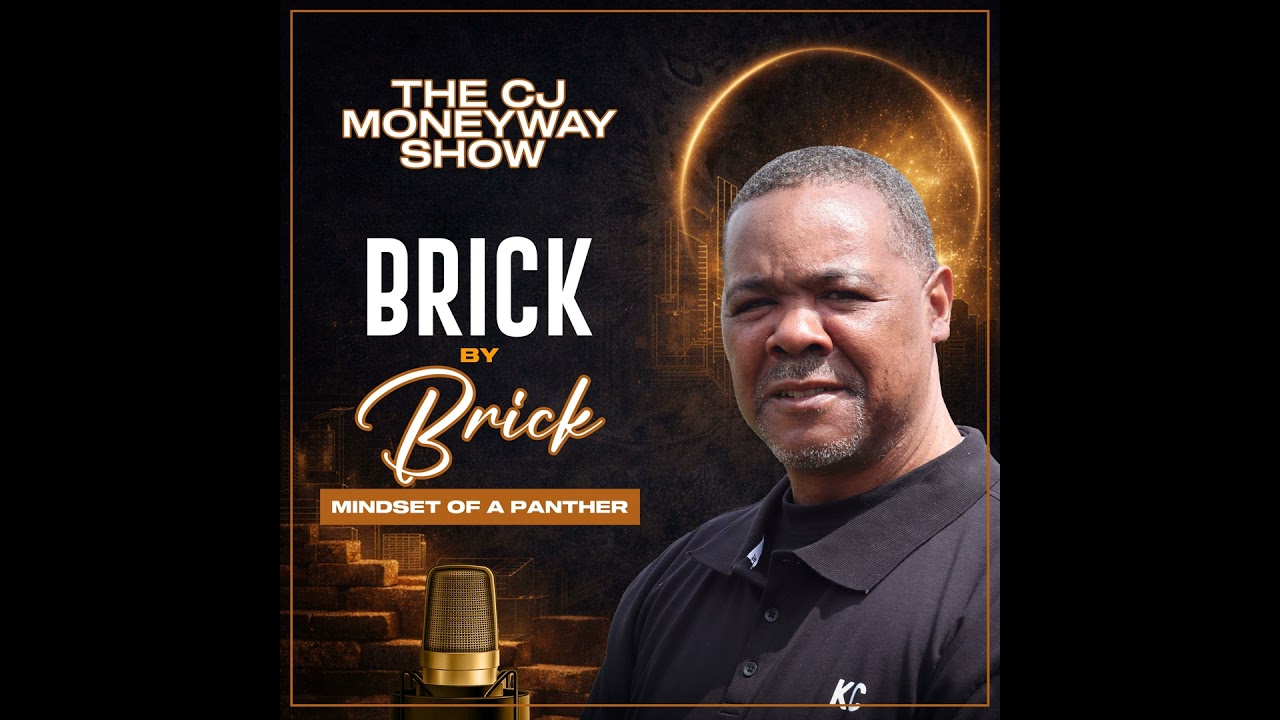
In this CJ Moneyway Show episode, host Corwin CJ Moneyway Johnson interviews award‑winning author Edwina Perkins about her debut novel The Colors of Home. The conversation begins with a brief ad read before the host introduces Perkins and asks what inspired the book. Perkins explains that a prompt at a writers’ conference sparked the idea, and she drew on her own multiracial family—what she calls the “brown rainbow”—to shape the story’s premise. She describes the novel’s central themes of grief (her own loss of her birth mother), race, and redemption, and how these are embodied in the protagonist Ebony, a biracial widow navigating loss, financial hardship, and family tension. Perkins also highlights the character Destiny, a child with Down syndrome, as a source of innocence and alternative perspective. Faith is presented as the engine of the narrative, providing redemption and hope, and Perkins stresses that Christian fiction must include realistic, diverse experiences rather than only romance or idealized endings. She discusses the publishing challenges faced by stories about race and belonging, noting resistance from some houses and the decade‑long journey to publication. As co‑director of the Blue Ridge Mountains Christian Writers Conference, Perkins outlines how the conference supports new writers through workshops, industry mentors, and business‑side education. She offers advice on authentic storytelling—developing “rhino skin,” doing diligent research, staying true to one’s voice, and avoiding isolation. The episode closes with Perkins’ core message that life is messy but hopeful, encouraging readers to persevere, and provides practical details for pre‑ordering the book and connecting via her website.
Chapters
Ah, it's so weird. This app shows that my credit score is pretty good, but I couldn't get the car loan.
Are you using myfico.com?
No, it's some other company.
Oh, you should get a MyFICO account instead. FICO scores are the ones used by 90% of lenders, and other credit scores can vary up to 100 points.
That would have been helpful yesterday.
Get the scores lenders use. Get the right FICO credit score for your credit goal, including your FICO scores used for mortgages, auto loans, and credit cards. Visit myfico.com or download the MyFICO app to get started today.
Are you trying to get weight loss support through telehealth, but it feels overwhelming and rushed? Check out OrderlyMeds.com now! OrderlyMeds.com was built to be different. Here, you connect with real doctors who take the time to understand your goals, review your eligibility, and guide you through a plan that's right for you. OrderlyMeds provides access to proven GLP-1 medications like semaglutide and tirzepatide, including both name-brand options and personalized compound versions when appropriate. So you have choices backed by clinical oversight, not guesswork. It's a simpler, more supportive telehealth experience designed around people who want clarity, care, and confidence in their weight loss journey. And your medication is delivered directly to your home in discreet packaging, so your experience stays private from start to finish. Do your research, ask the right questions, then visit orderlymeds.com/podcast for an exclusive offer. Again, that's orderlymeds.com/podcast. Individual results may vary. Not medical advice. Eligibility required. See site for details.
Welcome to CJ Moneyway Media, a storytelling platform built brick by brick where conversations become lessons and experiences become perspective. This is the mindset of a panther, panther, moving with patience, discipline, and purpose. From podcasts to books to media storytelling, CJ Moneyway brings voices, journeys, and real conversations to the forefront. You're now listening to the CJ Moneyway Show. What's up, my good people? Welcome to the CJ Moneyway Show, powered by CJ Moneyway Entertainment and the Believe Network, where we explore the stories behind leadership, resilience, creativity, and legacy. Today's conversation takes us into the world of storytelling. But not just fiction. Stories that challenge us, stories that reveal truth, stories that remind us what home really means. Our guest today is award-winning author and speaker Edwina Perkins. Welcome to the show.
Thank you so much for having me on.
Oh, thank you for coming on. I know it was a last-minute thing. He replaced you with someone else, so I, I thank you for taking the time to come and join your boy today. So Igwene from 85-degree North Carolina. You know, she tried to make me a little jealous the other day because I'm riding in 40-degree weather in Northwest Indiana. So let me ask you this, Igwene. What inspired the story behind The Colors of Home?
Really, I think my own life did, for one. But I had gone to a writers' conference and was talking with someone who asked me if I could read anything, what would it be? And I thought about it and I went, I'm not sure it's been written. And he said to me, then write it. And so that's where he planted the seed. And I looked at my own— I grew up in small town North Carolina. And then when I got married and had 4 kids, we are all shades of the brown rainbow. And based on that, The ideas of colors from home started materializing.
Mm. Now, I do have to ask you this because I was taken aback a little bit. The terminology that you used went a little bit over my head. So let me put a marker right there. What is the brown shade of the colors that you was talking about of the rainbow?
Okay, so I call them the brown color or the rainbow colors, brown colors. So I am a very rich chocolate complexion. My husband is fair because he is mixed race. So our oldest looks like she came from India. Our second one, a son— so our daughter looks like she came from India. Our firstborn son looks like he could almost pass as white. Then we have twins. One looks like my husband, and I call him my caramel child because he has sandy brown hair, caramel-colored eyes, that caramel-colored complexion. But here's the funny thing, he has blonde hair all over his body. And then his younger brother, the second twin, he has that look when you think of an African-American man. He can sport the afro. He's darker than me. And so we're all shades of the brown rainbow. See, now you know. To the point that we have gone out as a family before when the kids were younger, and we got those looks like, somebody in that family is adopted. And the idea of the Colors of Home came from that.
Oh, man. You say somebody was out there saying, wait a minute, wait a minute. You know, it was an old school saying back in the day, you wouldn't— It said, mama's babies, daddy's maybe. You know what I'm saying? Oh no, something ain't right there. You know, something just don't seem right. Something don't seem right. You know what, I guess we had shades of color too. Excuse me, mother, that I say this, and you know, rest in peace to my father, because my father was a dark shade and my mother was a light shade. And so I guess me and my brother came out fair complex, because we ain't as dark Them Johnsons was some black ones, boy. They used to call them darkies, you know what I'm saying? But I love my father, think about it all the time. So Mama, don't get mad at me. And so, but they was some darkies. We had some brown shades of color in our family too. I can relate a little bit, I guess. Let me ask you this. The novel deals with grief, race, and redemption. Why were these themes important for your explorer?
They were important to me because I've dealt with grief like most people, but my birth mother died when I was 14. And I knew who she was, but I didn't really have that relationship with her. So I was raised by my grandparents that I call mom and dad. But at the same time, I grieved over not connecting with that birth mother. And the whole thing with race, I kind of touched on it I think a little bit. I grew up in small town North Carolina. And, you know, I grew up born in the '60s, mainly grew up in the '70s, telling my age there. And I dealt with some of this. I, my brother and I dealt with some of this. Our parents always told us that you judge the character, not the color of the skin. And because we had white friends, we were judged by our own people, our own Black friends. Well, I call them friends, but the kids in our neighborhood didn't like it because we had white friends. And I saw things in that small town that I didn't realize how small-minded some of the people were until I went off to college. And I started thinking back on, wait a minute, this was a little bit old school. And so that's where that came in, the whole idea of redemption. And I teach on this when I speak at conferences, is— and I say this in the book— hurting people hurt people, but somebody has to take the first step. And that is something when you look at the issues of race, Both sides are hurting, but somebody has to take the first step and realize they can still get hurt, but you don't quit. And that's in the book.
I like that. Somebody got to take the first step. You know, as you say, like the old school said, used to go, somebody got to be the bigger man. Somebody got to be the bigger man. Whether you got to put your pride and your ego to the side, you know what I'm saying? Because in life, there's more important things than than the division and things that's going on in life. And a lot of that, we missing it because we, you know what I'm saying, blindsided for what we see. But there's a bigger picture to life than that, you know what I'm saying? And we talking everlasting life. He say, love thy neighbor as I love thyself, you know. So that's very key. So I agree with you on that one, Ewen. So let me ask you this: Ebony's journey is deeply emotional. What does her story represent for readers?
Real life. I think it represents real life. We walk through life and it's not with rose-colored glasses. Ebony is realizing— she has to realize that she's not on this journey alone. Her husband was her everything. And when he died and she realizes she's going to take her 3 children across the country because she has nothing left. She has no money. At this point, she's losing her home. And she goes into his hometown. So what you see is this woman trying to hold it together. She wants to protect her children because they're biracial. But what she doesn't understand is she still needs people in her life. She can't shut everybody out. So I guess what I want readers to understand is even when you're hurting, you don't have to hurt alone. And again, in that whole process, you have to be vulnerable. And that's what Ebony learns, is that she has to be vulnerable, but she also can stand and fight. So you don't have to roll over and let someone trample on you, but at the same time, you don't have to be so dogmatic that you can't have anybody in your life. So it's a nice balance what she goes through.
So let me ask you this, you want to, you know, just listening to the story and everything, because it really is pertaining to life. And so when people isolate themselves, like you say, sometimes you isolate yourself, you're dying inside, you know. Sometimes, especially a lot of men nowadays, we dying in silence because we don't want to other people what we're going through, or the challenges that we face. So we put on this facade, you know, I can tell you anything that I want to tell you, you know what I'm saying, because you really don't know. So I can lie to whoever I want to lie to, but one person I can't lie to is myself. And so when I be honest with myself, then I can be honest with other people about what's going on. And like you said, it's a community. I need help from somewhere. I need help from somebody because I need to talk to somebody. And so with that mindset, what do you think that keeps us away? What is the most important thing that keeps us away from actually sharing our feelings, what we're actually going through with other people?
Fear of being hurt more. People, when they're hurting, they don't want somebody else to put salt in the wound. And just like the character of Ebony, she keeps being told by certain people Stop pushing people away. And she's kind of defensive, like, I'm not doing that, I'm trying to take care of my family. But she is pushing people away. And when we hurt as people, we either want to hunker down and pretend, you know, we're okay, or we throw up those walls. And when you throw up the walls, everyone's looking into your glass house and you look good to them, but you know you've kept them at they. And so I think what people, my opinion, need to realize is that Band-Aid has to come off, and it's easier to rip it off than just to let it linger. And ripping it off means that vulnerability. And also use wisdom, because you can't be vulnerable with everybody. You have to use wisdom as to who you're opening up to It's got to be someone you trust, but the bottom line is you still need to do it.
When you was explaining that story, you made me think back to a biblical story where the lady said that the prophet came to her and asked her a question. She said, well, me and my son, we gonna bake these cakes and we gonna just gonna die. And he told her to give him one first, you know, or whatnot. And then her house was blessed. I was listening to you because sometimes one-track-minded and get so focused. Like you say, she just wanted to take care of kids. That's the only thing that mattered. And so it might always been help that could have been provided. But as you were saying, you know, we push people away because we just focus on this one thing. And when life gets spirals out of control and we feel like we don't have no control of it and/or a grip on it, feel like it can't be fixed. But I'm a full believer that there is someone who can fix it because they say that he knows our downsitting, that he knows our upbringing. He is the author and finisher of our life. And they finish 'cause we say that it's finished when he say that it's finished. And so you just made me think of what I was— you were telling the story of your character. I am mesmerized by your storytelling, but I'm hating the 85-degree weather in Nigeria. So let me ask you this question. Destiny's character brings a unique perspective to the story. Why was it important to include her voice?
Destiny's voice was important for me to include because I have worked with children primarily who deal with certain handicaps. And when I was in college, I loved working with children who experienced Down syndrome. They're the most loving, forgiving individuals you can imagine. And Destiny, what I love about her character is her name is too full. Her name is Destiny, but they're having to move to a new destiny to find home. And I love how she lightens a situation. She is genuine. She's sensitive to her siblings, to her mom. It's like that innocence that needed to be put into the story and give perspective. Like when Ebony is going through a hard time, well, Destiny comes back with another perspective. And it kind of makes you stand back like, are there people in my life that, you know, I'm looking at the glass half empty and they're looking at it half full, but yet we're looking at the same glass? Can't we share that? And that's what Destiny does.
I like that. Hey, y'all better be listening. If Ms. Perkins even know this, she out here dropping, uh, " Destiny continues changing destinies." Boy, that's a bar right there. And so let me ask you this: how does faith influence the way you approach storytelling?
Faith plays a major role because without faith there's not redemption, and if there is no redemption when you tell stories, there's no hope. And so when I tell stories, when I write, the whole idea is there has to be a redemption. It doesn't mean everything's going to be perfect. That much is true. But there needs to be a redemption. And that's what's happening in the story. It's slow coming, and it totally won't wind up by the end of this book because there's a second one coming. But I can't imagine writing without my faith. It's every fiber of my being, and so that's going to come out in what I write.
I like that, you know. Then I like you say that it's not going to all come out in the first book because I got another book planned after that, and another one, you know, said then another. This is a series. And so because that's life, you know, although we have faith, although we believe, although, you know, you may go to church or whatever, whatever you believe in, life takes a minute to unfold sometimes, you know what I'm saying? Because it's those depths, it's those challenges. Uh, one of my favorite stories in the Bible that God kept me in for a long time was the story of Joseph, Genesis 37 to 45. I mean, stayed in the book and learned a lot of things from that. So Life takes time to get to where God wants you to be because it has to be some development within us, you know. And so to belong in this, it's not easy, you know what I'm saying. So I like your approach going to it, say I'm gonna fit this in there, but it's gonna take a while to circle it back around because a lot of times we just think once I start believing in God, once I start having faith— matter of fact, when I'm working on something right now, I just want Run This By You. I haven't put this out there publicly yet. I say that it's 3 levels, right? A lot of people thinking that they fighting a giant because I'm writing a series called Slingshot Season, right? And so a lot of people think that they fighting a giant. You're not fighting no giants, you fighting yourself. You still on level 1, but you think that you on level 3. You haven't even went through the transformational part, which is level 2. That's right, the renewal of the mind, you know what I'm saying? And if I, you know, renew my— now I'm a new creature in Christ, right? And so now David had prepared for this moment his whole life, fought himself, fought his fears, this and that transformation, went to the second part. So now I get to my giant, I'm not afraid of the giant, you know what I'm saying? I'm not afraid of them because I've already been through preparation. But a lot of times we get confused in life because I'm thinking that I'm fighting giants. How can I fight a giant and I never been through transformation? How can I fight a giant if I never even defeated myself, my fears, you know what I'm saying, things of that nature. So I get it, I'm with you on it. Life is layers, you know what I'm saying. First, defeat the first layer, and that's yourself. So let me ask you this, Iwana, what role does Christian fiction play in addressing difficult social issues?
I'm gonna give you my personal opinion on that. I don't think it plays enough of a role. And, you know, you've got your Christian romance, I'm not knocking it. You've got other Christian stories, I'm not knocking it. But when you don't have diversity in your Christian stories, then you're not representing most of the world. And so when it comes to Christian stories, what I like is realism. It's fiction, but it gives me a taste of what's real. And that's one of the reasons I like to write it and I like to read. Doesn't mean the ending is going to be a happily ever after. But if it gives me a satisfying ending for what the situation is, then I can accept that. And there's a couple of books that I've read that I'm like, I gotta put this down, because it's hitting me emotionally. And I will pick it back up. But right now I can't. So when it comes to Christian fiction, I think we need to be aware of, we need more diversity, not just skin color. But I'm talking like Destiny, who has Down syndrome, like people who are physically dealing with issues. We can't ignore these people because they're part of our world. And so with my story, with Ebony, she's going back to small-town North Carolina with a father-in-law who has never liked her, and he's white and he's grown up in the South.
Spring cleaning doesn't have to mean a cabinet full of different products. With Simple Green All-Purpose Cleaner, one bottle does it all. From counters and appliances to walls, floors, carpet, and more. Simple Green gets the entire house clean, and it's concentrated so you can dilute for different cleaning jobs and get more value out of every bottle. Available in original, lemon, or lavender scents. This spring, keep cleaning simple. Buy now at simplegreen.com. Simplegreen.com.
And he wasn't happy that his son married a Black woman. And even though they had been married 19 years, he still holds a grudge against Ebony. So she's not only moving her children, she's dealing with family issues on top of everything else, not just inside of her family, but outside family members. And that's real. I mean, I don't know anyone who has perfect family relationships. And that's part of what I want to read about. I want to read stories that, yeah, that could happen. And I think we need to make more steps toward that in Christian publication.
I like that. This episode is brought to you by CJ Moneyway Johnson Media, where podcast ideas become platforms. Through the Moneyway Lab Masterclass, CJ shares real lessons from the lab for creators building their voices brick by brick. From powerful guest conversations, storytelling that inspires growth, CJ Moneyway Media is about one thing: building legacy through stories. Learn more at CJMoneyway.com. Music style. Music store. Because a lot of times you ain't grow unless you in uncomfortable environments or uncomfortable situations. You know, people, when everything good, there's growth because you already feel that you are where you are. But when you have to go through trials and tribulations and You know what I'm saying? Because once you conquer yourself, everything else you can conquer. You know, you can conquer the haters and this and that once I feel comfortable within me. If I'm not comfortable within me, which I believe Destiny had to go through, you had to get to a point where you're comfortable within you and then everything else on the outside, something, you know, you can ignore. Some things you tackle head on and things that, you know, since we old school, but maybe you might be a little Well, uh, you wait, I'm not saying your age. You said it. You said I'm telling my age now. I was back in the '70s. I wasn't, you know, I was born in the '70s. I was kicking it in the '70s.
I forgot.
And so I forgot what I was saying. And so let me ask you this, uh, uh, yeah, I was born in '73. I was kicking it in '73.
Oh Lord, you're mean.
Hey, so let me ask you this. As co-director of the Blue Ridge Mountains Christian Writers Conference, how do you support new writers entering the field?
I love new writers. I'll just throw that out there. There's nothing like someone who actually says to me, "I have no idea what I'm doing." Good, you're a clean slate. Let's get started. So how I support— it's mainly with this conference. We have a faculty number of about 60 agents, publishing houses, editors, and I can almost guarantee everyone who's there wants you to succeed as a writer. So we have workshops that are geared to the ones who don't even know why they're at the Writers Conference, but they feel like God wanted them there. To those who are multi-published New York Times bestseller writers. As a writer, you need to constantly learn. So one of the things that I like to do with new writers is introduce the concept that it's not only the writing, but you need to understand the business side of it. You need to understand the terminology of stepping into publishing and talking with publishing houses. So I love getting them ready. And Blue Ridge is one of those conferences that does that. It's the largest Christian writers conference in the nation. And this year, I'm going to throw a plug, at the end of May, we're celebrating the 50th anniversary. So I tell everybody and anybody, if you're ever considering coming to Blue Ridge, this is the year to do it and to come. Expecting God to do great things. You can come with your agenda, but come with your hands open. So with writing conference like Blue Ridge, and I teach at about 10 different writing conferences a year, I like working with writers and informing them where they can learn, how they can grow, because my very first conference, I described it as I was thrown in the middle of the ocean and told to find land, and I couldn't even see land because there was so much I didn't know. And from that point on, as I got more involved, I thought, I don't want other writers to go through that, other newbies. So that's why I championed the Blue Ridge and really any Christian writers conference, but I definitely championed the Blue Ridge.
Mm, I like it, I like it. She say, he threw me in the lake and I couldn't see the land, but I kept on going, I kept on going. And so not only did I get to land, but the land began prospering for me to the point where he's giving me a heart to serve others so that they don't have to go into the ocean like I do to get to the land. You can already build upon the land. I like you, I like it, I like it, I like it. I like it. So, let me ask you, what challenges do authors face when writing stories about race and belonging?
The challenges I would say are the publishing houses. If you're writing about race and belonging, some publishing houses don't want to touch it because they see it as controversial. What I like to say is, if God has given you a story to write it, you write it and trust him with the audience. And that's how I ended up writing The Colors of Home. I had written another book. I call it my shelf book because it's not published. And one of the things I kept hearing was, we don't know where your audience is. We don't know how to market this book. And I'm going to tell you exactly what I was told. Do Black people really like to read? And that's when I stepped back. And I said, God, show me the industry. And I started learning about what it means to be an editor and just looking at editors and agents. I was not pitching a book. This book took over 10 years to reach publication. Because God had me step back. He had me me to learn. And in the process, He allowed me to open the door to many people of color writers. And that's when I look at that and I think, "God, if I had focused only on my writing, I wouldn't have allowed You to give me the influence that I've had." And now I think it was recently that I kept thinking, "Is it time to pass the baton?" And I felt like God was saying, "No." We're going to take it to the next step. Now you get to publish. And so that's it. Don't quit. I cannot emphasize that enough. If it's a story God's given you, you fight for that story. It could take 10 years, but there's an audience out there who's waiting to hear your words. And if you give up, they'll never hear it. So if you're writing about race, it's going to be a challenge. And do your homework. It's not just your story. It's a story that's meant for other people, but it's not just your story. That's what I would say.
I'mma one-up you. Took me 15 years from when I first started my manuscript till it got published in 2015. Now, just recently, I've been doing some stuff the last few days with this because Just recently I've been getting a lot of emails about my book. People want to put it in reading group. Now that's another 10 years, you know what I'm saying, that from being published to now finally gaining a little traction where it's getting the, you know, some attention, right? So like you say, sometimes we go back to the '70s again, uh, you ain't— you know what I'm saying, we like that, we good buds like that. Remember they say Marvin Gaye was ahead of his time, you know, saying the way that he sung and this and that. Sometimes books are ahead of their time, you know. People ain't ready for what you have right now. And God, he set things apart for things like that, you know. Like even us, we wasn't ready for certain things or certain levels or certain positions at a time. We had to sit back and wait and get some things and still some discipline, some, you know, says a foundation before he moved us on to the next level. And sometimes that's how our books come about too. They have to mature over time as people mature and start seeing things differently in the world. Like, wait a minute, because my cousin gave me a book before it had been written over 150 years. 150 years! That was longer than the Cubs didn't win the World Series. So, you know, yeah, uh, Man on Ice, I think that was the name of it. Man on Ice. That book was over 100-some years ago. Up. Like, wow. And it's still circulating out here to the day. So the things that you're doing and helping other people do, things that other authors and the conference that you at, man, it's gonna be here way longer than we are. And so, as you say, it may not be for this generation. Your book could be for the next generation of people that you won't even see. But they say, you know, the word, they say that I will bless you from the first to the fourth generation. You know, so that's what we're looking for. That's what we do when we do. So let me ask you this, got a— only got a couple more questions for you. What message do you hope readers take away after reading Colors of Home?
I think the message I want them to take away is life is messy and you have to get messy with it, but then there's a time when you'll get clean. And so the message I want is one of hope. It's one of struggling through hard times, working through those struggles, because sometimes it's easy to just say, "It's hard and I quit." But I want people to walk away with, "It may be hard, but I'm not going to quit. It may be challenging, but I'm going to stand up and I'm going to fight for what I believe in." And that's what I want people to do, is realize they can fight for what they believe in. But not destroy those around them.
That's conquering yourself, because that's exactly what we do. If I'm unhappy, everybody around me gonna be unhappy because I'm gonna cause chaos everywhere I go. And so you're affecting kids, you're affecting your wife, you're affecting your husband, you know, all of that because you can't get control of self-discipline on yourself. And you got stuff inside of you that's ready to be put out, but I don't know, I'm listening to you, but that's life. I'm saying life is not gonna always be perfect, you know. Everything's not gonna go your way, Mr. You Know Who. I ain't gonna say no names, I'll get in trouble. Everything's not gonna go your way, man. You can't just go around just bombing everybody whenever you just feel like it because they hurt your feelings. So, uh, for aspiring writers listening today, what advice would you give them about telling authentic stories?
Before I tell them about how to tell authentic stories, I want to tell writers this, because the road is hard, and it was advice that gave— someone gave me when I first started writing, and that is, as a writer, you must develop rhino skin, and you will still bleed. And rhino skin is some of the toughest mammal skin out there. So one of the things that I would say when it comes to writing authentic stories, not everyone's going to believe what you're writing. When you bring in something that is unpleasant for some readers to read, they may not like what you have. But to be authentic starts from within. If you're not true to yourself, you can't be true on the page. If you're not aware of what's going on around you, If you have closed those doors, then you can't speak for others in your community. And even if you're speaking of others outside of your community, do your homework. Don't make assumptions because that's the only way you're going to be able to speak more authentically. If you write about someone in a different community outside of your own, they're going to know if you know them or not. And it's going to hurt you. They're going to tell their friends not to read your books. But when you look at writing with authenticity, you do your homework, you do your research, you start from within, and you don't quit.
That's a key phrase, everybody. She keeps saying that, so evidently that's the message to be told. Whatever you do, don't Quit. God got you on the path to do what he wants you to do, but a lot of times not what I want to do. And so I quit, and then I complain about what I don't have, but I'm missing the point that God has given me what I need, but I quit. So Iwana is telling us don't quit. Hey, so Iwana, before we get out of here, give us one last thing, or one message that's on your heart that you would like to share with the audience before we leave?
Writing is not done in isolation. You need a community to write, and not everybody in that community is going to get you and understand you, but you have to stay in it. Don't isolate yourself as a writer. You will not be as impactful as you could be.
Mm. Like, get a team, y'all. Where can we find your book? Where can we find, you know, when this conference come out, where can we find you? Where can we get in contact with you?
Well, that's easy. If you go to my web page, it's edwinaperkins.com, is how you can reach me. And my book is up for pre-order on Amazon right now. It's the Kindle version. You can order that now, and come March 31st, it will be upload it to your device. But about a week before the book comes out, you'll be able to preorder the paperback. And anyone who reaches out to me, I will tell you anything and everything you want to know about the conference. Matter of fact, on my webpage, I have in one of my blogs a list of conferences to consider attending. So it's not just one, but there's many. The main goal you go to a conference is to learn and to grow.
Learn and to grow. And that's one to grow on, you all. And I'm still jealous of the 85-degree weather in North Carolina because I'm rolling in 40-degree weather in Gary, Indiana. Hey, so thank you for joining us on this episode of CJ Moneyway Johnson Show. A special thanks to my special guest, Iwana Perkins, for sharing the heart Behind the Colors of Home and reminding us that telling stories, that storytelling can create powerful conversations about faith, grief, redemption, and belonging. If you enjoyed this conversation, make sure to subscribe, leave a review, and share the show with someone who would appreciate it. Until the next time, it's your boy CJ Moneyway Johnson with the number one selling author in North Carolina, Wayne Perkins. And to the next time, we out of here. Peace. You've been listening to the CJ Moneyway Show, with real stories, real lessons, yeah, and real perspective come together. Remember, move with patience, move with purpose. That is the mindset of a panther. Until next time, keep building your legacy brick by brick.
If you love podcasts, you already know how to fit great stories into your busy day. So why not do the same thing with books? Everand is an affordable audiobook and ebook subscription that goes wherever you go. Your commute, your workout, your grocery run. No rearranging your schedule, no carving out reading time. Just hit play. For a limited time, new members get 2 free books when they start a free trial. Go to everand.com/listen to claim yours. That's e-v-e-r-a-n-d.com/listen. Shop the Sherwin-Williams Memorial Day Sale and get 30% off paints and stains May 15th through the 28th. Whether you're refreshing your interior or exterior, we've got the colors to bring your vision to life. And with delivery, getting everything to your door is easier than ever. Shop online to have it delivered or visit your neighborhood Sherwin-Williams store.
North.
Click the banner to learn more. Retail sales only, some exclusions apply. See store for details. Delivery available on qualifying orders.
If you like the show, please take a moment to rate, review, and subscribe. It really does help the show to grow. Thank you for listening.
More from Corwin


Pressure-Proof Leadership: Claire Hayek on Neuroscience, Resilience & Leading Under Pressure

Healing With Fire: Zulma Williams on Trauma, Cancer, Depression & Finding Your Voice

The Economy of the Heart: How Love and Leadership Build Profitable Cultures | Hanna Bauer

The Doorman Nobody Valued: Wes on Storytelling, Corporate Blind Spots, and Building Brotherhood o...

Art for Your Sanity: How Creativity Helps You Survive Chaos — with Susan Hensley

Becoming Better: Ryan Gottfredson on Why Success Requires More Than Doing More

Mission Control OS™ Demo | Governance-First AI Executive Operating System | OpenAI Build Week

From Frustration to Confidence: The Dyslexia Professor’s Blueprint for Struggling Readers

Built in the Pit: Chris Duffin on Resilience, Accountability, and the Discipline to Rise

Cyber Thrillers, AI & the Future of Technology with Charles V. Breakfield & Rox Burkey