“Unlocking Real Estate Success with Zach Oehlman: Insights from a Real Estate Guru”
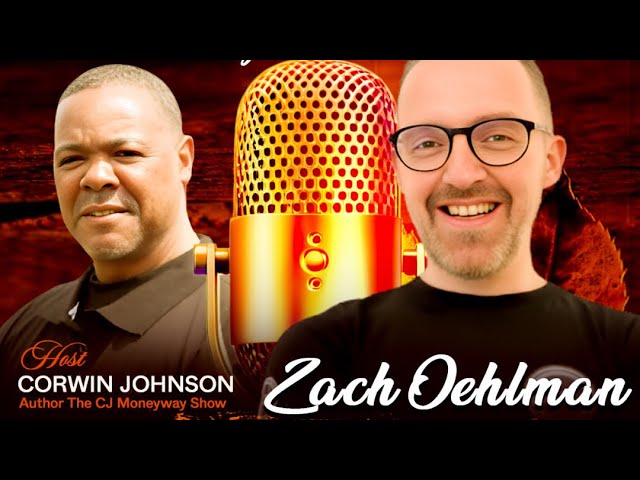
In this episode of the CJ Moneyway Show, host Corwin CJ Moneyway Johnson interviews entrepreneur and real‑estate guru Zach Oehlman. Zach shares his upbringing on a farm in Northwest Indiana, the loss of his father at age 12, his disengagement from school, and his eventual pursuit of a finance degree at Indiana University. After graduating, he worked unpaid internships, a stint at the Chicago Board of Trade, and a high‑paying corporate finance role that left him depressed, prompting him to quit and launch his own consulting and real‑estate ventures. He explains his consulting framework: free educational content, a $97 entry‑level mastermind, and higher‑priced tiered programs that provide personalized coaching, financial services, and operational support. Zach describes how he built a global community of 1,000+ members through weekly in‑person and online masterminds, emphasizing that community, a clear purpose, and the three ingredients of value creation—people, problem, solution—are essential to making money. He details his remote‑team system that lets him travel while running multiple businesses, citing a “band conductor” leadership style and the importance of aligning team members’ personal goals with the company vision. Zach recounts his personal development journey, overcoming social anxiety, drinking, and fear by attending seminars, reading books, and working with coaches, and he highlights the concept of resistance as the main barrier to success. He introduces the upcoming “Learn and Grow Rich” game, his philosophy of giving away over $6 million in education, and his belief that free access to knowledge can solve many societal problems. Looking ahead, Zach envisions an online and physical entrepreneurial campus, schools, and churches that embed values, ethics, and purpose to foster global prosperity. He concludes with five core principles for an extraordinary life—intention, personal responsibility, integrity, dreaming big, and doing the work—while also delivering sponsor reads for Blue Nile, Bombas, and Capella University.
Chapters
It took a lifetime to find the person you want to marry. Finding the perfect engagement ring is a lot easier. At bluenile.com, you can find or design the ring you've always dreamed of with help from Blue Nile's jewelry experts, who are on hand 24/7 to answer questions, and the ease and convenience of shopping online. For a limited time, get $50 off your purchase of $500 or more with code POD at bluenile.com. That's $50 off with code POD at bluenile.com. Welcome to the CJ Moneyway Show podcast, the podcast show where we unlock potential one dream at a time. Today we have another guest whose journey is truly worth hearing. Sit back, relax, and enjoy the Moneyway experience.
What's up, my good people? Welcome to the CJ Moneyway Show. Today I have on the show entrepreneur and real estate guru. I got my man Zach on with me today. How you doing, Zach?
I'm loving life, CJ. Thanks for having me on.
Oh man, I appreciate you spending, carving out some time for me today, man. I know you got a busy schedule and everything, so I appreciate it, man.
Yeah, it's my pleasure.
So Zach, man, tell us a little bit about yourself and about your background, man.
Yeah, so I'm a self-proclaimed farm kid, right? So I grew up in Northwest Indiana, right around the corner from you, which is really cool. In Scouts, my dad died when I was 12, took over the family farm, and I absolutely hated school. So I really didn't pay any attention during high school. I just sort of made my way through. And then I graduated high school and I was like, you know what? I want to travel the world, help people, and make a lot of money. And I picked up a book about investing, and it was Peter Lynch. And he says, you can buy businesses and you can make money as much as you want. And so I was really fascinated by this concept of finance. So I went to Indiana University, which is again right around the corner from you, for finance and business. Graduated at the top of my class there, went into the working world, and I went into the world of corporate in 2008. And if you remember 2008, that was a wild time.
Yeah, yeah.
Let alone for a young guy just coming out of college with no experience. So I worked 3 years for free in various jobs, just trying to get some experience on my resume. I worked for a real estate investor. I worked down at the Chicago Board of Trade, and then I finally got a job working as a consultant in valuation. And I didn't even know what that was, but it's essentially valuing things and people and businesses. And then I got a job working for one of the best companies in the world, became a published author in the world of finance, had hit all the six figures, everything I thought I wanted. And I was depressed. I hated it. And I quit. And I quit to become this entrepreneur real estate guy, you know, was successful at that, started my own community. And then what we do today is we buy and sell businesses, we do consulting, I have a portfolio of businesses, and we also do real estate. And so we support people 6 days a week with that as we travel.
Oh, okay. So Zach, tell us a little bit about what you do as a consultant.
Yeah. And so in the world of consulting, you know, I used to sell a $20,000+ education program and I've moved on from that and I actually give away all of my content as a gift to people because, you know, I see so many people spend a lot of money on stuff that they're not ready for.
Mm-hmm.
And so what I do now is I just, it's my gift to people and when they're ready, they can hire me as a consultant or we have entry-level masterminds. So what I do is I take people through the process of creation. And the first question we ask is, what do you want? What do you want out of life? What do you want your life to look like? What do you want your finances to look like? Do you want to travel the world like myself and my wife? Do you want to stay at home with your kids? Do you want to— whatever it is they want to do. And most people don't think about that. And so we get an understanding of where they want to be at in their life or their business or whatever it is they came to us. And then we help them create a plan. So we create a strategic plan along with a budget and projections So we know exactly what they need to do. And so we have a finance team, an operations team, a sales and a marketing team, and then we help them implement that plan to accomplish what it is they want.
Oh man, that sounds pretty cool. So initially you just give them your plan and then if they want to hire you as a consultant, then you come on it. And so where do the strategizing come in at? Do that come with what you give away for free or do that come with, you know what I'm saying, the paid consultant part?
Yeah. And so I have a framework. I'm really big on frameworks, which is essentially I try to help them replicate my thinking because that's what's really important. Because, you know, I'm not going to be able to give them an answer because everyone's so unique. But if I can, if I can give them frameworks and help them understand risk and reward and, and sort of the direction to head for success, all of that stuff is free. If my time isn't involved, it's free. Now, as soon as I have to start giving them my time, we start charging. And what we do is we charge accordingly, meaning we have an entry-level mastermind for $97 a month. So it's like when they're first starting off, most people can't afford what I can actually get people to pay me. And so I meet them where they're at. It's like, hey, if you're in second grade, I'm going to meet you at second grade. I'm not going to sell you a PhD-level program. If you want a PhD-level support, I use that analogy of school. I have it. I'll do the work. We can bring in teams. I can charge you $20,000, $30,000 a month. And so I go from that whole process. And my goal is to have lifelong customers with the idea is, hey, if I'm giving you all of this stuff as a gift and teaching you my frameworks, well, I'm the best person to help you consult on that. And so depending, we do consulting in the masterminds depending on what they need. We have a financial services firm. And what I always do first is I won't work with somebody if their finances aren't in order. Because it's such a stress and anxiety for them. And then they bring that stress and anxiety to me. And so that's why we started a financial services firm. So we have a whole team of bookkeepers, we have a whole team of CPA tax strategists, and obviously I'm the finance guy that brings it all together. And then once we have their finances in order, then we can start getting some vision of the future. Okay. Where are you and where do you want to go? And then we help them create that plan.
That sounds good, man. That's an awesome plan. Sounds like you got everything, you know, all the pieces in place, man.
Only took me 20 years to figure out, CJ.
Hey, it don't matter how long it took, man. As long as you get the process done, that's what matters, man. The end results. You know it. So tell us, Zach, a little bit about your journeys, man, spanning over 20 countries.
So yeah, for those of you guys listening, I started traveling during COVID which is like probably the worst time to travel. But we used to have masterminds every Wednesday and every Saturday. So we had 200 to 300 people every Wednesday night and about 100, 150 people every Saturday. We would take them out and talk real estate on Saturdays, and we'd have masterminds on Wednesdays at a physical location in Phoenix, Arizona. And then what happened was COVID came and we moved everything online. And I was in my apartment, beautiful apartment, just moved into it, right downtown Phoenix. Right next to all the nightlife and the dinners. My wife and I like to go out for dinners. And as soon as we moved in, it shut down. So I was in my apartment for 6 months and I looked at my wife and I said, I remember I said, "Honey, we don't have to be here." It was just like this epiphany. So we moved to Hawaii for 4 months and we worked there from there. And that was really fun. And then we came back to Phoenix and we said, "Where are we going next?" And so we started looking and it was Colombia. Colombia was the only place that was open receiving because it was so new, you know, the COVID So we came down here to Colombia and we just fell in love with it. We said, let's stay. We hired somebody to move all of our apartment into a storage unit. And then we went to Peru and then Argentina and then, you know, the Caribbean. And we just kept traveling. We've literally traveled nonstop, been over to Asia, Africa, all of those areas. And that was always a dream of mine. Since I was a kid, 16, 18 years old. And I tell people it only took me 16 years to accomplish. Within that 16 years, I was always having the intention of it. It was a goal, it was a vision, it was a dream, however you want to articulate it, but I never lost sight of it. And I built my business in a way that would align with that because my coach, I have a coach, she challenged me. She says, Zach, well, why can't you travel and have a business? I was like, hmm, because I had, you know, had a mindset, well, I'm gonna make a lot of money and then I can travel. She goes, why can't you do it at the same time? She challenged me and said, well, let's book a ticket and let's go. And so obviously there's the journey and the obstacles and the trials and tribulations, and I could tell you horror stories about all types of things that made me the person I am today. But the biggest thing is, is I just kept going and I surrounded myself with great people.
That's the key, man. My mother always tell me, surround yourself with people that's smarter than you.
Oh, you know it. You know it.
That know more than you do. You don't always have to be the smartest one in the room.
I don't ever want to be the— I just joined a mastermind and I said, I don't— he told me, he goes, Zach, you're not gonna have to worry, you're not gonna be the smartest person in the room. I said, I love it.
Oh man, but you was pretty smart guy, man, so far. Yeah. So tell us, Zach, man, tell us about your experiences as a human behavior and personal development expert.
So I knew nothing about success. I just sort of just kept walking in that direction. And I thought finance, you know, I heard this word finance. I want to become an expert in finance because then I can understand money and I want money. And I, right. And so I became really great at finance, but I, I didn't have the life that I wanted. I was making 6 figures plus, and by anybody's standards, I had success, but I wasn't fulfilled, and I wanted more money. I wanted more freedom, and I wanted to be able to dictate my life. And so I was this socially awkward individual that was afraid of the world. I was afraid of everyone. I broke out in sweats when I would talk to people. I would stutter. My mind would go blank, and I was just probably one of the most socially awkward people you've ever met. And then I— my friend told me, goes, "Zach, you got to get to this thing that we're having this Saturday. It's personal development." And I said, "What's personal development?" Right? Where, uh, where I come from, we either go to church, drink, or don't talk about it. Yeah. And I, uh, I chose drinking, man. I, you know, I was drinking every night because I couldn't handle the stress of life, and I went to this personal development seminar and there was this guy and I remember I was crying for like 4 hours straight. And the reason I was crying is because I was like, oh, here's the door to the way out of this self-imposed challenge. I don't want to use the H word, but self-imposed mind trap that I've been in. I hated my life and I didn't want to be where I was at, but I didn't know how to get out of there. And I signed up for his program and he coached me and he gave me some books and I went and got a bunch of books and I have never stopped that. And so I just kept taking program after program after program after program on emotional intelligence. And I was very good with skill sets, finance and business, stuff like that, but I lacked the emotional intelligence to be able to have conversations, to understand myself and why I was mad and frustrated and all this. And so I've spent the last, call it, the last 15 years focused on that. And when you are the head of a community like I am, there's 1,000+ people ranging from the brand new person to the person doing multimillionaire, whatever, jets, that ultra wealthy end of it. And then you put money and risk in that environment. And guess what? It could be trouble if you don't know how to inspire people and teach them to do the right things. And so what I've taken away over the last 15 years is values and principles create community. And if you lack values and principles, you're going to have— or let me rephrase that. If you lack the correct values and principles to get the desired result, you're going to have chaos. And you see a lot of it happening in the world right now that they lack values and principles. For your fellow man and your fellow human being. I mean, I've traveled the world. We're all humans. No matter where you go, we're all dealing with the same stuff. I don't care what color your skin is or what God you pray to or what language you speak. You're human. And we've, I think, strayed from that. And what I do in my community is I just bring them back to center. I was like, "All right." Just keep reminding people, "Hey, we're all on the same team here." And that has really allowed me to keep the peace, I guess you could say, when you're dealing with risk and money and people.. And I've really learned what it means to be a human being and go through the human process because we're all dealing with something. I don't care where you're from, who you are, you're dealing with something. The question is, do you know how to deal with it? I had my coaching call today. I have 2 coaching calls a week with my high performance coach. And the goal is, the intention is to make sure, A, I have an intention for my life, and B, that I'm staying empowered. It is real easy to start blaming other people. And not take personal responsibility for your life.
Exactly. I know exactly what you mean. And 'cause we do that a lot, you know, as a whole.
It's easy. It's easy.
Yeah, not want to take accountability for the things that you do, you know, that you have done or the pitfalls that you have come into. And I agree with you, man. But so tell me, Zach, tell us, Zach, what do you love most about what you do?
Oh my God, there's so much. That I get to continue to grow every day. And so, what I tell my— I have a lot of people that we support and they're taking on their life as well. And I feel in order for me to be the best at what I'm doing, I need to be taking on my life every day. I need to live. And that doesn't necessarily mean money, right? And so, my intention and my vision and my purpose in my life is to empower people to live an amazing life in all aspects of their life and it starts with me. And so if I'm not doing that, how can I teach it? How can I train on it? And so I focus on here first so then I actually have something to give and something to train on because all the stuff that I had to go through and get through and all those, I get to share that just like here on the podcast with you, CJ. It's like, you know, I'm just looking in the rearview mirror and telling people how I got here. And that helps people, right? Because it's wisdom, it's mentorship. And I got people in front of me looking in their rearview mirror that I pay, teach me how to get to that next step in life. So that's one of the best things in inspiring other people and giving back to the world. And so I give as my gift to the world all of my education. It's $12,000 plus, I mean, you probably value it $20,000 plus. I used to sell a $20,000 plus program. I give them my education, I give them my software, I give them my time. And it's really fun to see it pop for people like, "Oh my God, I get it. I know how to make money. Oh my gosh, I get it." Because once you experience that gift of figuring out how to make money, then it's just go and do more of it because it's a skill set and I developed myself in it over the last 20 years. And I just break it down and there's no better feeling than helping your fellow human being achieve whatever it is they want.
Man, that's awesome, man. I gotta tap into that, what you talking about.
It's all there, bro.
Oh man, so yeah, that's cool. And it's cool too that, like you say, you share your education with the world. You know, you go back to what you said earlier, like, I didn't even like high school, I didn't even like school, but now But now you at this point in life where not only did you get educated, but now you educate others and have a joy on seeing others succeed just as much as yourself, man. And that's pretty cool, man.
I was thinking the other night, I said the only thing that separates us from each other is our education.
Mm-hmm.
That's the only thing. As I travel the world, I see it, you know. And what I get frustrated with is the commoditization of education. I've spent over $1 million on myself between trial and error programs, coaching, me and my wife. And I came from— my mom helped me pay for my college. I just kept taking all my money and putting it back into myself, putting it back into myself. And I believe if we just gave education away to everybody, like the same education, right? And there's some great education programs out there. We give it away. Then the will of the people determines who wins. Not who they're connected to and what Ivy League school they get into and what books they have access to and all of that. It's like, no, if we have access to everything, then it really does become what the country talks about is you have the— I'm losing the frame of thought here. You're not guaranteed it, but there's the runway if you want to, you know, take off.
Yeah.
Right. It's education. And that's why I'm so adamant of giving it all away. 'Cause I think that's how we can solve a lot of the world's problems.
Man, that's cool, man. That's cool. So speaking of cool, tell us about the cool community that you have developed.
Yeah, I've realized— I did a talk on this— community is everything. And I literally mean that. Anytime there's another person, you're in a community. Even though you may say, well, I don't have a community, I would argue you do. You have the Northwest Indiana community. You live in Northwest Indiana, so you have a community there.. You have a community of entrepreneurs if you're an entrepreneur. Let's say you're a certain religion, that's a community. If you're a CrossFit person, let's say you like working out in CrossFit, you have a CrossFit community, you have a yoga community, you have your work community. There is literally community everywhere, but we're not present to it because we don't think about it. And so, I've spent the last couple of years understanding community and here's what I've learned. Is you cannot make money without another person. There's 3 ingredients to making money. 3. I mean, you take out all the softwares and the cool gadgets, you know, and you go back to the beginning of time where people started developing, there's 3 things. It's you need another person, you need a problem, and you need a solution.
Mm.
The 3 ingredients to making money. And it may not be money. It may be barter system, right? Because as we travel, there's still places in the world that don't use the formal currency. They use, I'll give you 2 apples for a banana, or I'll give you a pound of corn for some milk, or the bartering system. And there's an exchange of value though. And so you can't have that unless you have other people. And as soon as you have other people, you have community. And so if you want to change your life, well, you need to be around other people that have the intention of changing their lives. And so that's what we've created is we've created a community that everyone's welcome. If you want to change your life, I don't care how much money you got in your bank account. I don't care what accolades you have or have not accomplished. You're welcome. And that's why we make it free for the people that need free. And now I have advanced masterminds, I have a beginning, intermediate, and advanced. I have custom consulting, you know, for the people that are further in their path. But what I really preach to people is I say, "Hey, give back." We have this game I'm starting, it's called Learn and Grow Rich, the game of giving. And I've given away over $6 million of education software and support. And I plan on adding a couple zeros to that. And I challenge my community. I say, "Who are you giving to? What difference are you making?" Right? And at the same time, guess what? We got to make money. We have to because that feeds the machine. And so growing up in Northwest Indiana, you know, on a farm, we were instilled with helping your neighbor and doing stuff like that. So my biggest challenge was charging people. I'm just like, oh, I can't charge them for that. I want to help them.
Yeah.
But I found like if I don't charge, I can't grow because I can't buy the stuff that I need. So I can actually help more people by actually charging more money. And guess what? I give it back to the people that can't afford to pay me. The people that can't afford to pay me, I challenge them. I say, hey CJ, who you giving to? They're like, oh my God, I started an animal shelter. Well, fantastic. Or I'm helping kids. Fantastic. Or, you know, I'm feeding the homeless. Or I don't know, goat. Doesn't matter what it is, because the gift of giving is the most— there's nothing I've ever felt, you know, inside of myself.
Yeah.
After you give something. And so it's a fun game.
Yeah.
Bombas makes the most comfortable socks, underwear, and t-shirts. Warning: Bombas are so absurdly comfortable you may throw out all your other clothes. Sorry, do we legally have to say that? No, this is just how I talk, and I really love my Bombas. They do feel that good, and they do good too. One item purchased equals one item donated. To feel good and do good, go to bombas.com/listen and use code LISTEN for 20% off your first purchase. That's bombas.com/listen and use code LISTEN at checkout.
Okay, uh, when this game coming out, man? When you gonna have it?
I'm working on it, I'm working on it. I'm gonna be done with it by the end, the first round of it. Right. And here's what I've learned, CJ, just do it. So I'm gonna launch it this month.
You gonna launch it this month? Yeah, man. Let me know when you launch it, man. I wanna check this game out. It sound very educational, you know?
Oh, it's all, it's like the game of life.
Mm-hmm.
It's like, you know, cuz the challenge is, is we don't know how to make decisions.
Yeah.
So in this world of entrepreneurism, I hear so many times, I just wanna quit my job. And I tell 'em, I said, you have no idea what you just said. I quit my job and I quit my job too early. If I had to go back, I would've kept my job longer. And as an entrepreneur, there are not words that you can share with anyone that can prepare them for the journey ahead.
Yeah. Yeah.
And so I tell people, I said, love your job. You're getting paid. The question is, is your job developing you in skill sets that are going to advance you in your life and your vision and your mission? And most of the time it's not. I worked for 3 years for free to get access to skill sets and people that I could therefore put on my resume to get access to more skill sets and more people at the next level. And then eventually I quit. And again, I think I quit too early. I would have changed if I went back. And, and right, it's all in the process of developing yourself.
Mm-hmm. That's cool. Like you say, you know, when you get into entrepreneurship and things of that nature, man, like you just don't know, you know what I'm saying? It's Ooh.
I mean, it's like walking in a room of rattlesnakes with a blindfold on.
Hey, it's a good grind, but it's definitely a grind. It's definitely a grind.
Don't miss out on CJ Moneyway's book, Both Eyes Open and Both Eyes Shut, and get ready to preorder his upcoming release, The Issues of Life, coming soon. Moneyway, aiming to inspire.
So, uh, Zach, you said something earlier that your masterclass teachers put you to the test about why can't you have a travel and do business. So my question is, how do you travel and run multiple businesses?
Systems, processes, team, and intention. You know, I have a remote team all over the world, and the biggest thing is is they all have to— this is what I've learned. I'm the director. I'm like the band conductor. And one of my mentors told me this. He goes, "Zach, to make money, you don't have to know how to play every instrument, but you need to know what good music sounds like." And I really took that to heart. And so I just have really great people that are obsessive, Like, I'm obsessed with business. I'm obsessed with humanity. I'm obsessed with making a difference. So my mind just always— that's all my mind could think about. And it's awesome. And I just put it to use. And so I find people that are obsessed with whatever it is I need for my team, and then I pay them more than anyone else will pay them. I sit down and I create a plan for them. I say, what do you want out of life? How much money do you want? What do you want your life to look like? No one ever did that with me. So we do that with all of our team, and then we have quarterly check-ins with them, and we ask them how much do they want to make. You tell me you want to make $100,000 a month, I don't care. I'll find a way to do it, right? Inside of my business. And so what happens is they don't show up to work for Zach now. They're showing up for their vision and their goals. And then I just get out of their way because I've painted the picture of where we're going and what it looks like. And I keep that picture crystal clear and I just get out of the way and I let them tell me what to do because they're the professionals. And then I pay for extra coaching for them and I pay for programs to develop themselves in so that they can become better. Because that's another thing I've learned is I remember sitting in the Dominican Republic with my wife, been traveling for like a year and a half, 2 years, had everything I wanted, money, helping people and travel. And I was depressed and I got on the call with my coach and she's like, "Oh, you just quit asking what's next." Right? It's like, "Well, what's next? What's next?" And I didn't have anything. What next? I accomplished it. And so I created a big enough vision purpose, empower people to live an amazing life in all aspects of their life. And that's what keeps me going. And I instill it in my team members and I just get out of their way. I get out of their way and I keep them inside the boundaries, and it's a great experience, man.
It sounds like you're a wonderful boss to work for. That's what it sounds like.
I try. That's my goal, because I hated some of the bosses I worked for. Like, oh my God, I would— I'm not even joking about— it's caused me to drink, CJ. I was drinking every night. I remember one day I said, if this is life, I don't care if I live or die because this life sucks. I'm just grinding it out, and I didn't like my environment, but I was just I didn't know what to do. You know, I didn't have the social skill sets of it. I had the intellect of finance, but I didn't have the social skill sets. And I eventually quit that job and I got another job, and it was a much better working experience, but it was, you know, I was still wasn't getting what I wanted out of life. And so I've just— I created what I see I wanted.
Yeah, man, it sounds like you created something successful, man. And, uh, Sounds good. And I wish I was one of your employees getting all the benefits.
We were always looking for people.
That's pretty cool, man. That's pretty cool. So Zach, how do people get into business?
How do people get into business? That's a great question, CJ. I would say to be successful at business, you know, there's this test I remember of a mouse, right? And they put this mouse inside of a tube and they put some cheese in front of him. Mm-hmm. And then they measured how much he would pull, uh, tension, right? And you know, he did okay, but then they put some cheese in front of the mouse and a cat, the smell of a cat behind the mouse.
Mm-hmm.
And he pulled a lot harder.
Yeah.
And so for me, I hated my life so bad. That was the proverbial cat. I was just like, I was drinking every night. I was just not, I was like, this is it. This is it. I just remember myself. I'm like, I want to travel. I want to help people. I want to go on motorcycle rides. I want to do this. And I get 2 weeks a year to do that. What is going on? And I just remember sort of let down. I don't know how else to say it.
Let down.
So I had this pain. Then I had this vision of traveling the world on motorcycles and just living the life I had today. So I had something in front of me and something behind me, and then I found a way to do that. So the business is the proverbial pipe that I was going down. So I would say to be a business owner, to do what we do and enjoy it, the keyword enjoy, because there's a lot of people that do it that don't enjoy it. Is there has to be some type of fulfillment in it beyond the money. Because I will tell you, once your basic needs are met, and there's study after study after study on this, once your basic needs are met, money doesn't really matter. And I was just talking with the vice president of Think and Grow Rich, the famous book by Napoleon Hill. He came down here to Columbia and we had dinner and I was talking to him. And I'm going to paraphrase our conversation, but it's essentially all of those Napoleon Hill books are not about making money. They're about living a fulfilled and happy life in all aspects of your life. And obviously money helps with that, right? Money definitely helps with that. And so I would say to the listeners, what do you want your life to look like? What's your dream day look like? What are the adventures you want to go on? And then see if you can fulfill that with a job. There's nothing wrong. The reason I didn't like my job, it was because of the environment and I had unrealistic expectations. Somebody would have told me, Zach, hey, just sit here, work your tail off for 5 years, get developed into something. I would have had a different perspective. But there's all this, I heard this name, it's called wealth porn. There's all these social media influencers out there that are flashing their stuff and I made this much and join my program in the next 3 months, you could be this and that. It totally sets people up to fail. And so, you know, realize it's going to take some time. I've been doing this for 20 years and I've trained and developed thousands of individuals. And the people that just stay the course and they have an intention, they take personal responsibility, they win. They absolutely win. And it could be in job, it could be in self-employed, it can be business, it can be investor, whatever it is. Those are just avenues, the proverbial road that you're going to use because if you really want to start or buy a business or scale a business, I haven't seen anything harder than it, anything harder than it. But the sense of satisfaction is also, I've never felt anything greater. Right?
Yeah.
Yeah.
That's words of wisdom. Words of wisdom. So tell us, Zach, Why do people fail?
Because they're scared to death. I mean, I've looked at this over and over and over again. And there's this beautiful book out there. My— actually, my coach and I were just talking about this because we're putting on a big retreat down here in Colombia, South America. And, you know, we're charging money for it. And it's a considerable amount of money. And so it's like new for us to do that. And it's not about business. It's about awaken your purpose. My coach wrote a book, I wrote the foreword in it. So we're We're going down that avenue. And it was like, oh my gosh, it's called resistance. And there's this great book called The War of Art by Steven Pressfield. It was one of the first books I've read. And it talks about this thing called resistance. And it's that little voice in your head that gets you to not do what you know you need to do, to not go to the gym, to not read the book, to not make the calls, to not do whatever it is that you need to do. And I would say, so it boils down to fear. And for the listeners out there, the book is called The War of Art. Now there's another book called The Art of War by Lao Tzu, right? Which is a famous book. This one's called The War of Art by Steven Pressfield. And something else they can look into is called the Terror Barrier, T-E-R-R-O-R Barrier. And it's a similar concept, right? People, you know, they put their own spin around it. So it's the tear barrier. And we just get confronted with, what are people going to think? Are they going to like me? Am I good enough? Is it going to work? Is it the right time? Do I know what I'm doing? Am I going to lose money? Whatever that is, it can be boiled down to one word, fear.
Fear.
Right? Well, how do you mitigate the fear? How do you conquer the fear? Well, you walk through it. There's no other way. There's absolutely no other way.
Yeah, and you're making me think of some biblical terms when you say something like that, like, wouldn't—
the Bible. You want to learn how to live your life, go read the Bible. I mean, all those— I mean, there's so much wisdom from those, you know, not just the Bible, but from any biblical— you know, there's lots of different religions. Yeah, they were literally trying to tell you how to survive life, right?
Yeah, I mean, because when you said that, I'm thinking about the Hebrew boys when they went to the fiery furnace, you know. Oh yeah, come on now, it had to be some type of fear, but like you say, you just gotta go through it, you know, take the next step. Hey, and look, they came out unscathed. So, so that's good words of wisdom right there. So here go my last question for you, Zach, man. I'm gonna let you get on to your busy day, man. I appreciate you coming on. So tell us, Zach, what are some of your future endeavors besides the one you just told us about that's happening in Columbia and your game?
I could spend the rest of the day creating with it. So here's my vision. I want to create a college campus for entrepreneurs, for business owners, for people that want to live an amazing life. I don't care if it's a job. I don't care how you make your money. I want you to live an empowered life in all aspects of your life. And I want to have personal development and I want to have finance. I've created this business model, finance, operations, sales, and marketing. I want to teach people the skills of creating a life, how to set, create a purpose, like all of these life skills that I've had to pay a lot of money to learn. And I see it just like Indiana University right up the road from you. But being an online campus, it's like, oh, what course are you taking? What are you training and developing yourself in? All around the ultimate thing called your purpose, right? What is your purpose here? And then help them fulfill their purpose. And so, I want to build actual schools and churches all around the world, like physical ones. I think schools and churches are the answer to all the problems that we have right now. Lack of education, lack of God in their life, and lack of principles and values because there are schools and there are churches, but some of the people running these things lack values and ethics and morals, right, to actually do good by the people that are following them. Yeah, you know, and so if we can instill values and principles and ethics and morals into people around the structure of school and churches, man, peace on Earth.
Yeah, be a much better place, man. We would be a much better place if we had people like you, man, that really care, you know. Like just listening to you, you know, you just talk the talk, you walk the walk, you know, because you have a heart for the people, man. And that's wonderful. And we need more people like you, man.
I remember, you know, the reason I got into the world of business and finance is because I lived a great life and, you know, we weren't like poverty-stricken, but, you know, we worked hard for everything we had. And I remember a lot of my friends growing up, you know, we're all farm kids and a lot of them went on to become, I mean, they, They farm very successful, 3,000 to 5,000 acres, right? And it's just like, oh my God. But when we were kids coming out of high school and stuff, no one knew what a retirement was. I had these friends of mine that were much older. They're like, hey, can you help me explain this? I'm like, what's that? They go, oh, it's my retirement statement. I was like, doesn't somebody get paid to explain that to you? And I was like, oh, this is what I'm going to do with my life. I'm going to learn finance. I'm going to learn business. I'm going to learn how to win at life. And then I'm just going to share it with the world because If CJ's winning, I'm winning. Like, think about this, really think about this when we come back to community. If you have a million dollars and everybody else in your community is broke, who's gonna buy your stuff?
Yeah, that's true.
No one. Yeah, no one has money to give you if the whole community isn't prosperous. And so I'm like, well, let's create prosperity Right. So the word that people leave out is growth because prosperity only comes from growth. And those people are afraid of growth.
Yeah. To be expanded. You know, sometimes, like you say, we want to be, as you say, we be content, you know, saying in certain situations and in certain situations it's time to move on. But because I'm so content where I'm at, I'm afraid, as you said earlier, I have fear to be stretched. When I get stretched, it's pulling more out of me. But I'd rather be where I'm at in order to, you know what I'm saying, get more out of what I'm trying to do. Yeah, man, I get you, man. I get you, man. And I'm loving what you're doing, man. Man, that's cool, man. Everything that you're doing from the schools, trying to— It's just amazing to me. I gotta go back to it again on how you said that you didn't like school.
I hated it, man.
Now you want to build colleges and churches, man. That's wonderful, man. So tell us what we can know, your social media handles and things of that nature.
Yeah. So the best place to find me is my school. So learnandgrowrich.net. All my masterclasses there are free. We just launched our finance masterclass. We launched our finance software there. We have something called the Genius in 21 Days test, which changed my life. We give all of that as a gift to you guys for sharing your time with us and going out there. Use it. It's absolutely free and go make something of yourself and then go make a difference in the world.
Oh man, I'm going to have to check that out myself. Yeah. To be honest with you, I'm going to check it out, man. So Zach, man, it was cool having you on, man. I appreciate you having me on the show. Any other points you want to give us before you leave, man? Man, a lot of wisdom, man.
So here's what I want to tell people, right? I'm going to give you 5 tools to live an extraordinary life. And the first, all you really need is the first 3, but the other 2 is— so it's the principles that I live my life by. It's the principles that we've built Learn and Grow Rich by. And the first one is intention. Why are you here? Why are you listening to this podcast? What are you doing with your life? The second one is personal responsibility. If you take personal responsibility for your life and you know where you're going, there is Nothing that can get in your way. The third one is integrity. What does that mean? That means do the right thing, whatever it is. Do the right thing by the people that follow you and by the people in your community, and you will live an extraordinary life. Fourth one is dream big. Fifth one is do the work. There's no shortcuts, man.
Hey, you heard it here. Five things. He said all you need is the first three. You have been listening to the CJ Moneyway Johnson Show with my man Zach We outta here. Peace.
Thank you for listening to the CJ Moneyway Show. Don't forget to share this episode with your friends, leave a comment, and drop a review. Be sure to tune in every Tuesday and Friday for more inspiring journeys. Who knows, your story might be next. At Capella University, learning the right skills could make a difference. That's why our business programs teach you relevant skills you can take from the classroom to the workplace. A different future is closer than you think with Capella University. Learn more at capella.edu.
More from Corwin


Pressure-Proof Leadership: Claire Hayek on Neuroscience, Resilience & Leading Under Pressure

Healing With Fire: Zulma Williams on Trauma, Cancer, Depression & Finding Your Voice

The Economy of the Heart: How Love and Leadership Build Profitable Cultures | Hanna Bauer

The Doorman Nobody Valued: Wes on Storytelling, Corporate Blind Spots, and Building Brotherhood o...

Art for Your Sanity: How Creativity Helps You Survive Chaos — with Susan Hensley

Becoming Better: Ryan Gottfredson on Why Success Requires More Than Doing More

Mission Control OS™ Demo | Governance-First AI Executive Operating System | OpenAI Build Week

From Frustration to Confidence: The Dyslexia Professor’s Blueprint for Struggling Readers

Built in the Pit: Chris Duffin on Resilience, Accountability, and the Discipline to Rise

Cyber Thrillers, AI & the Future of Technology with Charles V. Breakfield & Rox Burkey