Most retirees focus only on the immediate tax cost of Roth conversions, missing the bigger picture. Craig Wear explains why the real decision depends on long-term tax consequences, not just what you'll owe in the conversion year, and offers a calculator to model your personal scenario.
Chapters
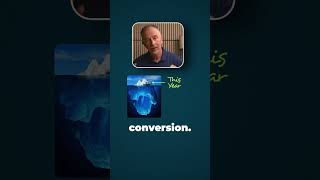
A lot of retirees look at Roth conversions through one simple question: What tax bracket will I be in if I convert this year? But that cost is really just the tip of the iceberg. What most IRA millionaires don't see is what's sitting below the surface. Because when you make the decision based on what it'll cost this year, you're only measuring the most visible part of a Roth conversion. But the tip isn't what makes the iceberg dangerous. It's what's below the water that will affect the rest of your financial life. So we want to stop treating Roth conversions as a 1-year tax event. Instead, you got to think of it as the tip of the iceberg of a much bigger retirement plan, one that affects your income, affects your tax exposure, affects how much of the money you spend your whole life building ends up with the IRS. So to make the right decision, the real question becomes, what happens to my long-term tax picture if I don't convert? To get a sense of what that looks like for you, you can use an RMD calculator below this video.