Benefits of Effective Financial Planning
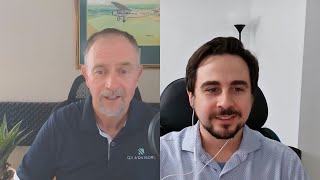
Transcript of a Q3 Advisors "What's Next for Retirement" podcast episode (Craig Wear, CFP® interviewing Ryan Boyle). Craig (founder) and Ryan (lead planning specialist, aka 'grand wizard of Rothology') describe Q3’s team-based Roth-conversion focused planning, contrasts with DIY/generalist approaches, and give client examples where specialized modeling produced large lifetime tax and tax-adjusted net-worth benefits.
Questions this video answers
Craig Wear, CFP® — founder of Q3 Advisors and host of the "What's Next for Retirement" podcast.
Ryan Boyle — lead planning specialist, nicknamed the 'grand wizard of Rothology'.
Collectively projected to save over $7 billion of taxes.
About $1 million in assets (single female client example).
A double-digit million dollar net benefit (10+ million) and approximately a 4–7% tax-adjusted net worth increase for the couple.
Chapters
Hey, welcome back to what's Next for Retirement podcast. I'm Craig weir, founder of Q3 Advisors. You know, if you've listened to us before, you know that our mission here is really to help IRA millionaires avoid just millions of dollars of unnecessary taxes and ultimately build a more confident retirement strategy. But today, I want to take you behind the scenes. I want to. I want to pull the curtain open. I want to show you who one of the wizards are. Most people think of financial planning is sitting down with a single advisor who shows you some numbers on a screen. They do a real simple little printout from one of the generally available software programs. And here's your plan at Q3. It works differently. And when you become a client, you're not just working with one certified financial planner. You're backed by an entire team. And today I'm excited and I'm honored to be able to introduce you guys to one of the key members of that team that's joining us today. Ryan Boyle is really a very important part of our financial planning team.
And.
He'S kind of got the title lead planning specialist, but everybody just calls him the grand wizard of Rothology. So he's the person who takes the raw information from our paraplanners, things like account balance, tax returns, income projections, and he starts shaping it and molding it into kind of the first draft of our client's Rothology plan. He's the one who really makes sure the math adds up, that the tax laws are applied correctly, and that we don't overlook anything before the plan ever gets to the certified planner who reviews it and works with Ryan, then to fine tune what the possible outcomes are. So Ryan and the team he's on, then pass it along to the financial planner who presents it to to our clients and helps with implementation. So, Ryan, man, dude, welcome to the show.
Thanks, Craig. Really love the introduction there. I'm glad to know that I've got another nickname being the grand wizard here. And I'm really excited to get to give the listeners a behind the scenes look as to what's going on here at Q3.
Yeah, well, I'm excited for them to hear from you. In a lot of ways, you're the one that really kind of gets the wheels turning on all these multimillion dollar tax savings that we see. So let's just kind of dig in right there. For someone who's l listening, who doesn't know what a planning specialist does in our world, you know, with your friends and relatives, how do you describe your.
Role Yeah, I like to say I'm the person who starts my sort of interaction with everything in the plan at Square two. But to give you guys that first step, that's where our clients are meeting with our financial planners and they're having that really in depth conversation to not only get to know their current situation, but also what they're really looking to accomplish. Once all that's been said and done, it comes to me so that I can go ahead and roll up my sleeves and really do that nitty gritty analysis to see what's going to be the absolute best outcome for the clients. Now we're going to get that. Me and my team are going to get that to being about 95, 99% of the way there before we really start to work with the planner and say, what's that final plan going to look like? Our real focus is to make sure we get a better understanding as to what's going on with current tax laws and where things could potentially be going, and really make sure that this is a plan that can last a client their lifetime or if we need to adjust accordingly.
It sounds to me like we've kind of laid on you and the other couple guys in your team the shoulders of really being, having a lot of expertise in some areas that not many people in the financial advisor space have.
Right, Exactly. We really want to go ahead and make sure that we've got our pencil sharpened, ready to go for everything. So we're really making sure that we've got top tier knowledge for every sort of topic going on and everything that can be impacted for the plan.
Yeah. So, you know, you've gotten to see or experience what a lot of other advisors outside of Q3 do in a minute, you know, we'll, we'll kind of talk through a specific case and some ideas on that. But contrast what you do here at Q3 with what most people are probably accustomed to seeing out in the normal advisor space.
I think one of the biggest things that I'd say that I'd be doing is we're taking a step ahead of everything else in terms of the detail that we're providing. You know, most things that I've been seeing is we're really relying on either just a basic Monte Carlo or really seeing some basic calculators coming into play to give a, a basic high level overview as to what Roth conversions can be done in other advisor spaces.
Okay.
At Q3, we're really, we're really going into the nitty gritty details here and ensuring that we're really going further than we need to in the sets we like. We want to make sure that we're getting everything in the plan tip top shape, you know, not trying to go ahead and stay in the grain unless we need to. But if there's something that's really standing out that we want to go ahead and make sure is addressed or something that's critical for client situation, always want to go ahead and make sure that's, that's accounted for and addressed.
Yeah. And you know, what's important to me in the way we've set up our business is, you know, somebody gets to talk to a CFP on the front. Then even our paraplanners right now are CFPs. And then it comes to you as a CFP and then it goes to the person who's going to have the relationship and kind of help them with the implementation, who's also a cfp. What do you think that adds to the mix for the client? What's that do for the client?
I think it provides two critical details. The first, it ensures there's accuracy across the board. You know, obviously one set of eyes is always great, but when you start to incorporate 2, 3, sometimes even 4, it really makes it difficult for an area to slip on by. Somebody will be able to catch it along the way.
Yeah.
The next piece is personalization for the clients. Really what we start to see is it allows the individual planner who's meeting with you a little bit more time to go ahead and get to know your situation before coming to the specialist team. For us to really make sure we're honing every detail in that we can, that can add up to quite a few work hours. So that way we can go ahead and make sure everything's up to date. But if that's something that's off the planner side and onto our shoulders, by all means it's a win win to ensure that not only you've got a plan that's more than accurate, but also more than fit for you.
So can you, can you give me an example of maybe a recent client where this really played itself out and really benefited the client more than just. If we'd have had just, you know, one guy looking at it and giving up doing all the whole thing for him.
Of course. Yeah. So actually I was just looking at a case earlier today. I was working on a single lady here, really just taking a look. She had about $1 million in assets. And through our initial analysis we actually saw there were multiple scenarios that were more than perfect. For her, that's where we started to play the game of saying, hey, well let's really hone into these nitty gritty details of what is she really looking to accomplish. On one end we saw cases where she'd be done and fully converted with everything in a matter of three years living that tax free lifestyle. And to your value there, Craig, that seems like that seems all fine and dandy. But after really peeling things back even further, we started to see that she didn't need to be that aggressive. She really didn't need to fully convert everything in order to get the most tax savings she can experience across her lifetime or the most bang for her buck on a tax adjusted net worth piece. Now sure, we're adding maybe a few more years to that, but it's nothing in comparison to being able to pass on as much as she'd like to have or being able to get the most out of the situation she's currently at.
In that particular lady's case, did she, because of the change you made, did she see where she actually paid less tax by extending it a bit or that's how. That's what the benefit was.
Exactly. During the. We actually showed all those scenarios for her. So we showed her, hey, this is what happens if you wanted to be a little more aggressive. But if you actually want to take your time, slow things down and not pay the piper too much, she actually could see that she'd save more during her lifetime, more during her beneficiaries, and end off with a lot more on a tax adjusted basis.
Yeah. And I think in a few minutes we've got a. You'd mentioned another case before we started that you're going to share with people. Most often what we find is that people actually benefit from accelerating conversions beyond what the typical advice is. And we'll share a case where that is probably more like what you normally get to work on. But it makes the point that because there's specialization in what we do, we're able to just kind of make sure that we're making the best recommendation to the client at all. And you know, a lot of people come to us and they either have their own investment advisor or even financial planner that has maybe told them some rule of thumb that they need to do or we get a lot of people that are our clients that come to us as do it yourselfers. They don't really want to hire investment person and they've done their own thing for a long time. They come to us with, you know, these very prolific spreadsheets that you know, are sometimes are really good, you know, but what mistakes, what mistakes do you often see people make when they're kind of trying to do it their self or maybe have a generalist as an advisor that's kind of their personal care physician, but they aren't really the specialist.
Yeah. So I want to go ahead and first hit on the Excel sheet piece and those people who are the DIYers with the calculators, because to your point, those calculators, they're usually accurate, but as a calculator is, it's only there to run the numbers. It's not really going to take into consideration other life variables, other sorts of circumstances that can occur. The other thing, rates of return are always, always fluctuating. We always say that some people like to go ahead and plan for an average, but in reality, quoting Ken Fisher here, the markets are really known to be the great humiliator. And if we're not taking that into consideration, really, we're setting ourselves up for failure in the lot run.
Yeah. And you know, the other thing, Daniel on our team did a lot of research earlier in the year and determined that he couldn't find a single piece of financial planning software. And I think he evaluated 12 or 15 different things, didn't find a single one that really did a good job of presenting the information in a holistic and a complete way. Right. So what are some of the other mistakes that you, that you've seen other people make when, when you get to see some of the other stuff that people send us?
Yeah, I think the other, the other most critical one, you already harp, you already brought it up initially. And that's really with working with the generalist who says, let's just go ahead and convert to X tax bracket, staying within your means. What we tend to see there is that depending on where they're at in their lifestyle, that can really impact what they're leaving on a tax adjusted basis in the long run. If we're just saying we're going to go ahead and peak out at, say, the 24% bracket until you're fully converted, not only does that not give a Roth IRA potential to continue to grow, it's really just a bit of a cookie cutter, cookie cutter recommendation that starts to go ahead and snow onto something that could be a little bit worse, which is why we always want to loop in one of our specialists onto that and just say maybe you don't need to fully convert using a tax bracket or even the entire account for that matter.
Yeah, you Know, there are, we see, we, we see a number of blind spots of the people who come to us that are, they've already got some sort of an initial plan that they aren't really confident in whether they did it or whether it was off of an online calculator or an advisor that they have. You know, and what we, what we have done to make sure that we don't have those same blind spots is that we've got, we start with a business model of men and women like you who don't have any ability to earn a commission on a product sale, nor do you have any negative that happens in your life because we lose assets under management because somebody goes and they put a half million dollars into taxes over a couple years. Right. So that's one way is that we make sure that we have a true fiduciary relationship. And then here's the best part, with no potential conflicts of interest. So as you and I know, fiduciaries can still earn commissions as long as they disclose they earn commissions. Well, that still is a conflict of interest in my opinion. Right. And it has to be disclosed. And we just don't do that. So that's one way we handle the blind spots is we make sure that everybody on the team has as the most important goal, helping the client. The next way that we do the, that we handle the blind spots is we have tools that we have developed on our own. Right. Over the years. And you've helped us lately with, you know, even fine tuning. And my guess is that 20 years from now, we'll still be fine tuning the tools that we have. Right. As we see new things and think of new ways we can help clients. So those are some of the ways that we know that we really try to fix the blind spots. But you know, frequently in our webinars, and I know that our orthologist, when they talk to people, we use this analogy of, I mentioned earlier, primary care physician and many of our clients, not all of them, I think statistically I did an I evaluated and about 60% of the people that come to us already have a financial advisor overwhelmingly. Most of the time those are investment advisors who have some sort of program and they run some financial planning. But they've been with those, those advisors for five, 10, 20, 30 years. Right. And they're like the primary care physician. They're, they're the doc that delivered the babies that was there, you know, at your bedside when you got gallbladder, whatever. And what we do is more like the specialist, you know, so if that primary care physician did a test on you and all of a sudden decided that you. You have a heart problem, and they wouldn't. They probably wouldn't try to solve that themselves if they. If they really were doing what's in your best interest, they would send you to, what, a specialist. And that's what I think you guys are in. All of our team are in our space is we are the specialists who really, we want to help you overcome this one big thing. And then we want to pat you on the fanny, send you back to your primary care physician, because they're the ones that are going to have the relationship for 20 years.
Now.
We do financial planning and we provide. And you do a lot of those cases where we do comprehensive planning. We do planning for evaluation of investment portfolios and estate planning and cash flow and retirement. But we are very focused on just our one specialty of doing planning for people, not the other. So, you know, we have a real solid technical kind of backbone. What kind of. What are your thoughts about how that serves a client and your role in that?
Yeah, so how it really serves the client is. I know at the end of the day, my work is getting to them, and they're able to go ahead and experience everything that they get. Almost like if, you know, we're going into a surgery and the doctor needs to give you some anesthetics while they do all the work. That's basically how I feel, as if I'm operating. You know, some of the clients may never see me, but at the end of the day, I know. I'd say, I know I've come in, I've stitched everything up, my work has been done, and they're on their way in a much better situation.
Good. Yeah. And, you know, a lot of the people will never see your face, but they get to see the outcome.
Right, Exactly.
They get to wake up and say, wow, somebody did a great job here. Right.
Some people have seen me, some people know I'm around. So for those clients, if they're watching, they date Phil, know who I am. So.
So get. Let's. Let's try to get something a little bit more granular here. Give us, you know, without naming names of the clients, tell us about maybe a case where, you know, kind of like the one you mentioned before, but let's say early modeling kind of completely changed the outcome. Yeah.
So really wanting to go ahead and see another bit of an example here. I knew I was working on a bit of a couple, a younger couple who were in A pretty well off position already. They were earning quite a bit. Not too much to really exceed certain areas, but they were, they were very well off already and built up a very nice nest. Eg, their original plan was to really start to go ahead and say I want to go ahead and convert as much as I can 35% bracket while working and then drop things down to the 22%. So they did a little bit of DIY work already started to take a look at what they were doing, realizing they're planning to be working until late in their career and they've got this ticking time bomb of taxes that's just building up, building up because they're saving so much. What we started to see is with everything that was outside their employer, we wanted to go ahead and move things over very aggressively very soon. Started to see that over time if they took that course of action versus just going to peak of the 35 like they originally planned, really seeing that if they moved fast and soon. When they eventually transitioned to retirement, they had no other steps to work with, primarily because they had another pension coming in. So not only were their income needs already met, they were able to diffuse that tax time bomb. They have in a sense and after all is said and done, leave the tax savings tied with the tax adjusted net worth impact were double digits in terms of millions and a percentage. It had to go ahead and look at the details. I believe the tax adjusted net worth increase, the experience wasn't necessarily 10% but it was a pretty substantial impact just by allowing the time value of money to really occur within the Roth IRA versus within their traditional ira.
So did I understand you when you said double digits? You mean 10, 10 or more million dollars of net benefit for them.
Exactly.
And somewhere between 4 and 6 or 7% net worth increase because they, they were more, more aggressive on the front end. Something like that.
Exactly. And that was just really the impact of saying hey, we're, we're continuing that savings in the tax free space versus really in the tax deferred space.
And so much of, so much of what we've learned in what we call the Rothology space is that so much of what needs to be done is counterintuitive to what is out there in the financial press and what most financial advisors recommend. And yet we don't have really a secret sauce other than we've opened our minds to the possibilities. Could be something different than what maybe we've been taught for our entire careers. But I guess for the listeners, I just want you as a Listener, I want you to just kind of listen to the, Listen to the amount of rigor and detail that goes into kind of what is produced for you on, you know, on the Q3 side. But, you know, Ryan, I'm a real big believer in that the mind will only absorb what the seat can endure. And when it comes to financial stuff, we probably have gotten close to what people are really willing to listen to. More and more detail. If. But it's been, I think it's been a really valuable conversation. I, you know, I think the listeners can see how what we do around the whole Rothology concept isn't really about one advisor plugging numbers into some failed calculator. It's. It's a team process. Paraplanners, specialists, CFPs, everybody working together to make sure that every detail is right and nothing's left on the table. And not that occasionally we don't miss it and have to go back and redo stuff, but, you know, at the time of this recording, collectively our clients are projected to save over $7 billion of taxes. So I think working with you and the team, you know, we try to make sure that really nothing is left on the table at all.
Well, want to go ahead and say thank you. Thank you so much for allowing me to share this behind the scenes view for everything. I'm glad we were able to go ahead and, you know, give our listeners that sort of, that sort of peel there.
Yeah, well, you know, the. I think it's the collaboration between everybody is what makes the plan not only technically accurate, but also meaningful for people. And that's the comfort that we want people to have when they work with you and the team. They're not really depending on a single person's judgment. You know, you got a team of specialists who each bring their expertise to the table. And that's how we've been able to help thousands of people and IRA millionaires save billions of dollars. So if you're listening today and you're wondering what this kind of team could do for you, I'd encourage you to take the next step. There's probably a button below here someplace that lets you get introduced to us in a more meaningful way, whether it's through a webinar replay or reading one of the books that we've written, all those kinds of. But once you, once you go through some basic education and you feel like there's. We maybe can be a good fit, then there'll be an opportunity at some point for you to actually book a time to talk to some of the people that are in there. But. So anyway, Ryan, again, it's an honor to have you part of our team. I appreciate you taking some time this morning to kind of help me to explain this to other people.
Greg, it's honor to be here. And hey, I want to say thanks for taking me in, being on the team. Always happy to be here and help out any way that I can. Cool. Great.
Well, look, hey, if you don't subscribe to the podcast already, subscribe so that when new stuff like this comes out, you'll be able to have first access. We're in a little bit of a series here where I'm not only going to not only interviewing our specialists, but we're going to be talking to some planners, we're going to be talking to some of our orthologists and really just give you a real big, a real, really good flavor of kind of who we are as a team. So take care. Have a great rest of your week. Subscribe to the podcast, give us a thumbs up, and we'll be talking to you soon.








