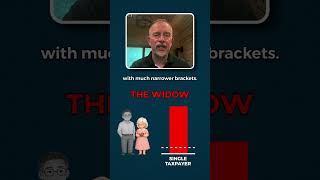
Craig Wear warns that converting to a Roth based on staying in the 24% bracket ignores what happens next: RMDs will push you higher later, and your surviving spouse faces a narrower bracket after you die, a trap he calls the widow's tax trap. Safe-looking conversions become expensive over a lifetime without modeling RMDs, Social Security timing, and life expectancy together.
Chapters
So Tom converts to the top of the 24% tax bracket this year and every year, and his CPA agreed with that. And look, that makes sense, right? I mean, it feels safe and it kind of looks responsible. But the problem is that calculation only looks at this year's bracket. It doesn't account for what happens to the money Tom leaves behind or what happens to his spouse later on. So see, at 73 years old, required minimum distributions kick in and the IRS forces money out on their schedule. And if Tom's remaining balance has grown for another decade, those distributions push him maybe into the 32% bracket or higher. And then there's the piece Tom really didn't see coming. If he passes first, Linda files single taxpayer with a much narrower bracket. The money Tom thought he was protecting quietly becomes a lot more expensive for Linda. That's the widow's tax trap, and we see it hit harder than most families really expect. So the safe conversion amount often turned out to be the most expensive one over a lifetime. Getting the right number means modeling your RMD trajectory, Social Security timing, IRMAA thresholds, life expectancy, See, cash flow and all that stuff together, because those variables push and pull on each other, and a spreadsheet that adjusts one at a time is going to get you close, but in my estimation, it's just not good enough. We see it all the time.