In this video, CFP® Craig Wear explains how IRA millionaires can turn market crashes into a tax‑saving opportunity by strategically executing Roth conversions when portfolio values are depressed. He uses a sponge metaphor to illustrate how the taxable amount of a conversion shrinks when the IRA’s market value drops, allowing the same shares to be moved into a Roth IRA with less tax liability. Wear stresses that timing is critical; the market may rebound before a conversion is completed, so a systematic approach is needed. He introduces “Roth Radar,” a monitoring tool that aligns market dips with each client’s retirement plan to signal the optimal conversion window while avoiding unintended jumps into higher tax brackets, Medicare thresholds, or survivor tax issues. The video also highlights the broader impact of smart conversions on required minimum distributions (RMDs), spouse tax burden, and inheritance, and it promotes a free RMD calculator, a webinar, and a follow‑up video on conversion tax‑saving tactics. The overarching message is that, with a pre‑planned strategy and automated monitoring, a market decline can become a “shining opportunity” rather than a disaster.
Chapters
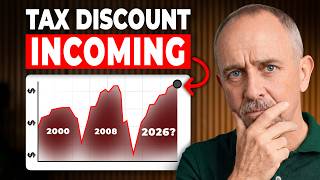
When you've spent decades working to save your money, a market crash feels like a disaster, but for IRA millionaires, it doesn't actually have to be one. So it sounds backwards when you see your investments dropping like a rock, but when you look at the math, there's really a strategic way to use that decline to your advantage. So in this video, I'd like to kind of show you how making smart choices during a market crash, keeping your head about you, will help reduce your lifetime tax bill and the exact strategy we use to help IRA millionaires make the best out of a bad market situation. So let's start with how to make losing money work in your favor. Think of your IRA like a sponge. Because you've been disciplined with your savings and investments, your sponge has spent decades soaking up water. But then a market crash hits, and when it does, it feels like someone squeezed that sponge. Your sponge is still there, but you've lost all the water. That's like the shares in your IRA dropping in value is losing the water and the hope is that those shares recover over time. So it sounds logical to just leave them be, but here's the part most people miss. Instead of looking back at their sponge, they're focused on the jug and how much water came out. That drop is real, but when you look at the sponge itself, something else has changed. Right now, your sponge maybe weighs a quarter of an ounce. Before it was squeezed, it was maybe 3 ounces. That's where a market crash really creates an opportunity because the IRS isn't looking at the water that got squeezed out during the crash. They're not looking at how much water the sponge might soak up later. They're looking at the actual value of your conversions right now to calculate your tax. That's where the strategy comes in. A Roth conversion is like moving your sponge from your traditional IRA through a pipe to your Roth IRA. With a soaked sponge, pushing it through the pipe squeezes out water in the form of taxes. But if the market has already squeezed the sponge down, there's less water that can get squeezed out as it moves through. So you're moving the same shares from your traditional IRA to your Roth, but because the value's lower, the taxable amount likely has dropped as well. And then if the market covers after the sponge is already in the Roth bucket, well, that water comes back on the tax-free side. So a solid plan can tell you how much room you have to convert and help you avoid unnecessary tax brackets, Medicare thresholds, and survivor tax problems. But the market doesn't move on your schedule. So when the opportunity suddenly appears, all you can see is how much water is being squeezed out in the jug. And by the time most people realize what happened, the market's already on its way back up. That's why most IRA millionaires miss out on these opportunities because even a strong tax plan can't predict the window. It can only help you recognize what to do when that window opens. That's what a tool we give our clients does. It's called Roth Radar. Because you shouldn't have to spend your early retirement constantly keeping an eye on the market, we do that for you. And it's not just watching whether the market is up or down. The market being down is not enough. Roth Radar watches for the moment where the market lines up with your actual retirement plan. That way you don't miss the window of opportunity and you know exactly how much to convert. So with the right plan in place and a system watching for the right moment, What feels like a market collapse to everyone else becomes your shining opportunity. You get to move money out of your IRA into a better long-term tax position. And that's the bigger point. This isn't about hoping for market crashes. Nobody wants to see their retirement account drop, but over a long retirement, market declines are going to happen. And having a system in place before they happen gives you the chance to really take advantage of it. So, because when one of these windows closes, it doesn't come back the same way, and it may be months before you have it again, or years. And if you miss it, the costs may not just show up on your tax return this year. It can show up as higher RMDs and a larger tax bill for your surviving spouse, and even in the amount for your family that inherit after you and your wife are both gone. So that's why we don't look at Roth conversions as a one-time trick. We look at them as part of a larger IRA exit strategy. That strategy starts with knowing your numbers. So head over to our free RMD calculator in the link below. We're going to send you some different projections based on your actual numbers and based on what thousands of our clients have accomplished by doing Roth conversions the right way. We'll show you what's happened as if you were one of them and had similar circumstances to them. And if Roth Radar sounded interesting, that's something we use with our clients. So far, we've helped them avoid over $10 billion in projected lifetime taxes. If you want to see if you'd be a good fit, watch the webinar in the description. And if you want to learn a smart way to save on your Roth conversion tax payments that doesn't rely on market crashes? I cover that in this video. Go watch it next.