In this conversational interview, CFP® Craig Wear explains the four most common tax mistakes made by IRA millionaires and why traditional advice about staying within a tax bracket or single‑year Roth conversions often backfires for large retirement accounts. He emphasizes that the real problem is the growing tax liability embedded in a massive IRA, which becomes a symptom (high Required Minimum Distributions) once the account reaches a certain size. The key window for action is the period between retirement, the start of Social Security benefits, and the onset of RMDs, when the taxpayer still has room in their tax bracket. Wear warns against the "widow’s trap"—the abrupt halving of a joint tax bracket after a spouse’s death while the IRA remains unchanged—and the 10‑year rule that now forces heirs to withdraw large balances quickly, compressing tax exposure. He argues that Roth conversions must be treated as a multi‑year strategic plan rather than a one‑off decision, linking all the above issues together. To help viewers assess their situation, Wear promotes an RMD calculator built from over 2,000 client cases, inviting users to see projected tax costs and potential savings.
Chapters
Most IRA millionaires focus on the wrong tax problem. My dad here has spent the last 40 years helping IRA millionaires avoid massive tax mistakes. And when I asked him about the mistakes he sees most often, well, he said he's seen the same one over and over again. Right, Dad?
That's right. But I'll tell you what, in this video, we're going to show you a few things. First of all, the biggest mistake that I see IRA millionaires make over and over that quietly turns a large IRA into a much, much bigger tax problem. How to spot those mistakes so you know whether your current strategy is actually protecting you and why so many people think they're solving the problem when they're really just making it worse.
Before we dig into these 4 big mistakes, why do you always condition your comments to IRA millionaires? Don't these apply to just everyone?
That's a great question. People who've accumulated a million or more in their IRAs are in the top 10% of American savers. That circumstance puts them into a category where the tax results are just simply going to be very different than most mere mortals, right? When I started studying this years ago, it became really clear that traditional Traditional advice about Roth conversions just doesn't fit this group of IRA millionaires. So it can work for people with smaller IRAs regardless of what their outside investments are. But for IRA millionaires, it's the size of the IRA that matters most when deciding how much to convert and of course at what pace.
When I asked you about the mistake you see over and over again, there was one you just brought up immediately. Let's go ahead and just reveal it.
So a lot of IRA millionaires think their biggest tax problem is their current tax bracket. Nobody wants to pay more tax than they have to. So they hear advice like, hey, just convert to the top of your tax bracket. That'll be good enough. And they assume that that's the whole game plan. But that's where people go wrong. Because if all you're doing is protecting your tax bracket this year and you're an IRA millionaire, I promise you, you're missing the much bigger tax problem that's built inside that large IRA.
So then what's the real problem?
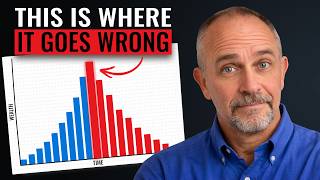
Well, the bracket is not the real problem. It feels good to stay efficient year by year, but while you're worried about protecting your bracket, your IRA keeps keeps growing. And as it grows, the future tax problem grows with it. That's why I tell clients RMDs are not the real problem. They are a symptom. The real issue started years and years ago when no one really asked you, this account too large to leave untouched?
So once the IRA gets just bigger and bigger, it creates pressure with higher RMDs?
Yep. And that's exactly right.
Man, that's a big mistake. I mean, it's hard to know when to act. I mean, at what point is it too big?
Well, look, once you've retired or you're getting close to retirement, it's easy to think that the opportunity will still be there.
Like the problem may be bigger than you thought, but there's still some time to fix it, right?
Yeah, that's what people believe. They know the IRA is large. They know taxes matter, but they think the real decision can wait. And that's the trap because the window where you have the most control is the same window people waste.
And that's before RMDs start.
Yeah, that's right. Before RMDs, you have room in your tax bracket. Brackets. After RMDs, the flexibility starts disappearing year after year after year.
So the key window is between retirement, starting Social Security, and RMDs?
Yeah, that's exactly right. You've stopped earning a paycheck, but income isn't being forced on you yet, and that creates planning space that is just not going to exist later.
So what should people be asking if they're not asking, oh, just top percentage? What is that question?
Well, the question is, am I making good use of the time I have before the IRS starts controlling every decision I make. Because once Social Security and RMDs hit, you're not really planning anymore. You're doing damage control year after year after year.
So if someone's already taking RMDs, are they just out of luck?
No, not at all. I mean, we work with people in their 70s every week, but the greatest opportunities were earlier. So think of it like good, better, or best, right?
So the second big mistake is just waiting too long, though.
Yeah, that's right. Not because it becomes impossible, but because you lose time to execute strategic strategically the optimal game plan that you could have years before.
It's like a game of chess, but even if someone starts at the right time, there's still another mistake.
Yeah, there is. A lot of people build their retirement plan around what they know today.
And as long as things stay the same, the plan works. And, you know, things stay the same all the time.
Yeah, exactly. But retirement doesn't stay static, to your point. People plan around current income without thinking about how the tax structure changes. The income stays, but the tax environment change literally overnight.
Like when a spouse passes away.
Bingo. The tax bracket gets cut in half immediately, but the IRA doesn't shrink. So if I pass before your mother, she files single taxpayer for the rest of her life.
So the mistake is assuming the tax structure just stays the same and that you'll just file jointly forever.
Yes. It's what we call the widow's trap, and it can cost hundreds of thousands of dollars of taxes unnecessarily.
And it doesn't just affect spouses either.
That's right. A lot of people see their IRA as something they're leaving to their kids.
But it doesn't stop being taxable.
Yeah, exactly. They're inheriting a tax problem along with the money. On paper, it looks like wealth, but without planning, it creates a very different outcome.
And that's because of the 10-year rule. They, they just can't stretch it anymore.
That's right. Now the problem is compressed. Large account, less time, and withdrawals stack on top of their peak earning years on top of that.
So it costs them more, to just receive the money.
Exactly. If you don't solve the IRA problem, you just pass it down.
So, Dad, what's the biggest mistake?
So, it's not one of these. The biggest mistake is really thinking about these in isolation. And so, for IRA millionaires, Roth conversions aren't a one-year decision. To save six or seven figures in taxes, you need a strategy that connects all the dots, right?
So that's why we built an RMD calculator based on over 2,000 real client cases just to show you projected tax cost and potential savings. So follow the link below to see your numbers.
Or if you want something more specific, watch this next video. I explain why IRA millionaires need a personalized Roth conversion plan. I'll see you there.