Navigating the Complexities of Roth Conversions
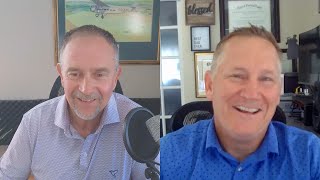
YouTube podcast conversation (host Craig Wear, CFP®) with Stephen Avery, CFP®, about Roth conversions and the front-end specialist role they call a "Rothologist." They explain that Rothologists provide unbiased, educational, low-pressure guidance to help 'IRA millionaires' decide whether accelerated Roth conversions fit their situation, collect client background, address common hesitations (taxes, timing, existing advisors), and then hand off to a planning team that builds the detailed conversion plan. The firm (Q3 Advisors) emphasizes role separation (education vs. product sales) and team-based delivery; calls-to-action invite viewers to webinars or scheduling a conversation.
Chapters
Hey, guys, this is Craig Weir. Welcome back to what's Next in Retirement podcast. I'm Craig Weir. If you just happen to kind of found me for the first time and founder of a firm by the name of Q3 advisors. You know, over the past several episodes, what I've done is kind of giving you guys a behind the curtains look into the team that actually works on our clients Rothology plans. And I don't know whether this video stuff is going to be going out to people who are just kind of considering working with somebody that specializes in Roth conversions or whether you're just starting your research on what the heck are they. And you know, I don't think I should do that kind of stuff, you know, or whether you're already engaged in the process with us and we maybe are sending you these things to help you gain a bit of confidence in who we are and what we do. Welcome. You know, the whole team that we have work are really specialists. We've got people who specialize in doing the modeling for us. We have people that are certified financial planners also that guide you through the process and do the annual reviews. But before any of that happens, somebody has to get you to take the first step. It has to help you understand whether or not this is a good deal for you and whether there's some benefit to you or whether it's really just something you really don't need to spend any time on. And that's what we call our role is a Rothologist. So all everybody on our team that touches the financial planning process are certified financial planners, as are the Rothologists. But they specialize in the early stage of the process. We want to help families really understand what the Roth conversion process is, what the Rothology opportunity is, and explore whether or not people are really a good fit to do what we do, which is accelerated Roth conversions. And then we want to make sure that we connect them with our planning team who actually build and deliver that strategy for them. And today we've got one of our superstars that's on the call with us. I'm joined by Steven avery, he's a CFP, one of our Rothologists here at Q3.
So.
Hey, Stephen, thanks for being here, bud. I appreciate you taking the time.
Yeah, thank you, Craig. I'm very excited to be here and just talk how we help our clients get started on their Rothren.
So thank you. Yeah, you bet. So why don't we just start with kind of the basic, you know, Vince Lombardi question. So in fact, you know, it was It's. I'll pause here. It's appropriate for me to use events Lobardi analogy. Stephen was a NFL football player with the Pittsburgh Steelers. Number 43. Go 43, right.
That's right.
So he and I can, although I've never played professional sports, he and I can connect on all the sports analogies very frequently. Right. It has a lot to do with life. But so anyway, from a Vince Lombardi standpoint on Roth conversion and Rothology. So for someone meeting with you the first time, uh, what does your role look like?
Yeah, so number one, I always want to. Just to get to know the client and really create a kind of a low pressure environment when it comes to what we're doing. I love the fact that we're, we're not out here to try to sell them products or try to take control of their money, but we're here to help them optimize. And I try to be very truthful about the fact that there are no shortcuts. We gotta really get into the details and go follow through a process. But to try to help kind of break down some of that resistance just because of the nature of our world and all the information that they're receiving, you really gotta kind of create a trusting environment. So we just try to, you know, keep it as real as we can and let people know that, you know, we're here to. And we have their best interests at heart.
Yeah. You know, I think that's pretty valuable. And hopefully as we go through this conversation, it'll become really evident that we really have created a very different kind of financial advisory firm. You know, most advisor firms mix sales with planning and advice. And while there's nothing illegal or, or unethical about that, it does create a bias. And you and I have come out of that world. In fact, all the. We've got, I think 15, 16 CFPs on our team now, everybody came out of that world and we really like what we're doing now.
Yeah.
And we, but we separate those roles so clients get unbiased education first. And you know, we begin with the premise that we don't, we don't sell financial products, we don't do money management. And so we at the front end, it really is an educational thing. How, you know, Stephen, how does you being involved in the front end and your focus has, how does that create a cleaner handoff for the rest of our team to help them? Have you thought about that before?
Yeah. Like I said, when it comes to optimizing, there's a lot of Good advice out there. So. So we don't want to criticize, you know, the, the financial planning world and things of that nature, but because there's good advice. But when it comes to optimizing and what you've created here is a specialist role. And I, over the last, you know, since I've gotten here, really, these last few years, it's been really amazing. But you've created something special and it does take work, it does take effort, and it does take expertise. And even though there's a lot of good advice out there, when it comes to this, there's an optimization process that again, it just, in a regular setting, I don't think you have enough time in the day to be able to do what we're doing. That's just my opinion.
Yeah, and I think, I think too, the nature of who our clients are, you know, for the most part, we deal with what we call IRA millionaires, and they have a very unique set of circumstances that you in your role have to identify and to make sure that we are going to be able to offer a very unique experience for them. And as history has proven, a very unique outcome also. But as you've already kind of mentioned, the rest of the industry has polluted the pool, so to speak, with all kinds of garbage, you know, of buy this, come here and I can show you how to do this and not pay any taxes. Come over here and I'll run this real quick Roth conversion plan for you and you can have it in 10 minutes. And so, you know, we talk a lot in our meetings that people, we all in life, we come, we have suitcases of the baggage that we carry with us through life, you know, and people who get to talk to you, you know, it's not their first rodeo talking to a financial advisor and, you know, they can, they can smell a rat from a mile away. I mean, they're all roughly my age and we've been hit upon for our whole life. And so, you know, when you first meet with people, what are some of the reason, the biggest questions or hesitations that they usually have?
Yeah, my first questions I like to ask people is, you know, how did we get to this point?
Right.
How did you get on a meeting here with a cfp? I want to know what their journey has been up to this point. And, you know, there's people that found us on a reel. I don't do social media, so I don't know what reels are, but I know that's how people find us. Or you have somebody who says, you know what, I've read Craig's book, I've watched the webinars. And so that's a whole different approach and conversation. When somebody get really gets educated and understands what we're doing, they're pretty excited about it. But if it's just, you know, some of the technologies we use out there, then that's another. You got to kind of start at a place of creating a good framework for them to make a good decision. And so it all depends on, you know, that upfront. Few questions. How did you find out about us? Can you give me a little background? Where are you from? You know, what were assets located right now? Get ideas of where some of those balances are and, and then people have a tendency to want to open up when they do and they understand there's not a lot of pressure here. And they're just dealing with a real first world problem here is they're going to pay too much taxes. So, you know, they've, and I'd say, look, you've got this far. You probably made a lot of smart decisions. You don't want to go on for the rest of your life and make a bad decision. So let's find out how we can make good decisions today.
Yeah. And don't they, don't they. I know when I was before all you guys started coming alongside and doing the heavy lifting, you know, that I was doing, I used to hear kind of a similar theme of questions. You know, how am I going to pay the taxes?
Yeah, right.
Should I, shouldn't I just wait until RMDs happen and then start doing the conversions? Or shouldn't I wait till I retire? And of course, you know, a really big question that we hear a lot is, gosh, I already have an advisor, you know, why can't they just do this for me? And I, you know, the goal of today isn't really to try to answer each of those questions necessarily, but, you know, just generally speaking at a high level, how do you, how do you pre, how do you prepare that person for the next step with us, which is once they've said, yeah, let's go do this, and they start meeting with the planner and how do you, how do you kind of handle some of those questions that come through from folks?
Yeah, well, I definitely try to break down those, those, those walls, say, look, we're not here to replace them. That's not our role. We're here as a specialist. We're here to be an enhancement to your overall financial planning situation. And we want to work with your team. And I always, when I walk people through the steps that we go through in terms of creating the plan in that step three, which you're familiar with, obviously, I always tell them, hey, look, if you want to invite your financial advisor on that call, please do. We want more and more people to know about what we're doing and how special it is. And once they get on that call and they start to see the details, even they get excited about it. So the more enthusiasm we generate together, obviously that helps. So in some of those false paradigms that kind of built up that you've talked about many times on the webinars, I try to address all that and just get them to understand that they know there's something out there and they know now that it exists. Right. They just need to get the right information. And that's what I really try to do on these calls and, and handle any of the objectives that they may have. You know, kind of the simplicity, simplistic way of thinking about it, you know, and again, how these answers we come up with aren't just some algorithm. Here we are working with a team in detail to optimize this. And like I said, I think what you've created here is truly special and unique, and it's the people. You know, everybody uses tools, but we, we have, I think, really a phenomenal team that we've created that I just, I don't know where you can get this type of value for what we're doing, to be honest.
Yeah, well, I agree with you. I mean, I, I frequently get goosebumps. Just the, the quality of people that, that, you know, have been led our way and that we work with and we do things with. You know, what's interesting is 16 years ago, when I first kind of discovered, when I had my big epiphany moment with that prospect that came in from my talk radio show, the issues I dealt with at the time were just getting people to get their head around the fact that it really was a good idea to accelerate when they paid the taxes. And, you know, I use that to, to build my business, sold that business. And then even six years ago, when I started this, the very first book that I wrote, the title was Paying the Piper. And man, the comments that I would get in our social media ads from people. The, the objections I had then were more of, how do I not get killed in the city square, or tarred and feathered and run out of town? Because I even suggested this. And now the objections are all Of a sudden, more people have started saying, well, no, that's not right. And then they go do the investigations like, well, I'll be darn. It was no different than my epiphany. But, you know, I just got a 16 year head start on it and, and now, now it's more of, well, why shouldn't I buy these annuities to pay the taxes? And well, why shouldn't I just go subscribe to a hundred dollar a year software to give me the answer that I need? And well, I'm good at spreadsheets. I'll just, you know, I can do all that stuff. And you know, the what. And I didn't as you as much work. Yeah. And you know, Stephen knows, you know, for those of y' all listening in, Stephen knows because he's been around me long enough that I'm not necessarily the sharpest tack in the box. So these weren't all these great epiphanies I had at the very beginning. There are things that our clients and you guys and gals on our team have kind of unearthed and we've solved these things together. And it's been a. Probably 80% of who we are today is because of our clients asking questions and demanding different things from us. But, you know, the, the role you serve the Rothologist is, is, is really preparing our client for a very successful journey with us. Because as you've mentioned, you gather their story, you, you're able to set expectations and in cases where you don't see where we're going to be a great fit, we either just kind of tell them, here's what I would do if I were you, or we lead them to maybe one of our financial planning services that still can get them where they want to go, but not in the same way. But we also, we also increase their confidence. And, and when somebody is crystal clear about why they're doing something now, their confidence goes. And then, and then you get to introduce them to the planner to take it over and to develop the relationship and do that. But the way I see it is that, you know, the client really never feels like they're starting over with somebody new in our team. They're working with a very unified, cohesive group. And I mean, you're on the handoff part of that. Do you see that come to fruition most of the time?
Oh yeah, yeah. We all speak the same language. And that's one of the things I'm very clear about with people, is that we are a unified group. And like I said, there's really one language. And I personally think the team that we hand off to are incredibly smart people, very detailed. I look up to them, although some are younger than I maybe. I just think what you've done and what we created here and all the personnel, all the experience, the synergy here is just, to me, I love it. And I believe in the process, you know, 100%. And you just, there's no way you or I could do any of this heavily. Not. Like I said, you've really put the team together, but I just, I couldn't do what I do if I didn't have that team in place. Let's just put it that way.
So you mentioned to me before we kind of push the record button on this, that this morning you'd had the opportunity to kind of help two different families make a decision that they needed to kind of move forward.
Yeah.
What do they, what do they usually say after that first conversation with you? What's the, what is the. I mean, the conversation had to start with one level of intensity and it ends with yes. So this sounds like a great deal. So what, what kind of feedback do you get after those, Normally speaking, after those kinds of conversations?
Yeah, people are excited to move forward. Like this morning, just, you know, it was just two great conversations. People that, they've accumulated a lot of wealth again, the IRA millionaires, they know they, they know that something out there exists. They want to do it. They just want to know that they're going to make the right decision the first time. And typically, when I'm done presenting two client, there's going to be one of two answers. Number one, great job, let's move forward, or great job, I'm going to talk to my wife. And there's no pressure. If, if, if it's the, if it's the latter, then I'm going to say, okay, hey, listen, you know, I, I want to make sure that you're on board and obviously your, your significant other is on board, and there's no pressure here, but I'm going to send you an email and it's going to just a, a wonderful scrubbing of the Internet. And we have a lot of really good information that we can get to people to help them make the best decision.
Right.
So it's kind of one of those two answers. But I always try to make sure that whatever direction they pick there, if it's yes, let's go, let's get it, move forward here. I'm like, I'm excited for them, you know, because I know how beneficial this is going to be. And I want them that enjoy just whole process. If they gotta wait and they want to talk to their spouse, great. I'm excited for them at the same time because I'm going to get them information that's not going to be on some sales pitches, but it's just going to be good, solid information in terms of access to some of your books and articles and interviews with other people and different things like that.
Yeah, you know, I'm going to kind of throw a softball pitch to you here because I've been in your chair and I've done a lot of calls with clients early on. But, you know, think about maybe come bring to mind somebody who, when they, when you first got on that zoom call with them, they just were convinced that from their math or from what their CPA told them or what their advisor told them, doing accelerated conversions the way we do them just doesn't make sense. And, and after 30, 45 minutes, you kind of get to walk them through the big picture. What, what, where's that change? How does that change happen to where people come in with this suitcases, as I've talked about, and then all of a sudden they turn into, oh my gosh, I need to do this. How does that happen in 30 or 45 minutes?
That's just an awesome question because I do find it fascinating how people will come in, you know, trying to feel you out, maybe a little bit distrusting, you know, who are you? And then. But they're sincerely looking for just good right direction. And even though they have a great relationship with their existing financial advisor, they just don't quite feel like they're getting the right advice. And typically when we, when I walk through everything that we'll cover and everything that they'll receive, when they actually become a client and get an actual plan, all of a sudden you can see their eyes are starting to light up because this is what they've been looking for this whole time. You know, and when you think about the, the start of the relationship to the end, when we actually deliver a plan, what. And you know, this, I have found it so fascinating when you talked about confidence and that clarity. I tell people all the time that this clarity is going to produce a lot of confidence. And there have been some cases where, you know, I've seen people get so excited, they. They even get way more accelerated than.
I ever thought they would.
Even though we've shown them the optimized plan, they're like, steve, I'm ripping the band Aid or I'm going to do this. And, and it just brings joy to my heart because they're excited about it and they know that they've seen everything that they need to see to make the very best decision for their family. And I've had quite a few people say, look, I never would have done this had I not gone through this process.
Yeah.
And that's what we're trying to get.
People to so well. And, you know, I, I love how you frame the, this first step that you're involved with, because it's really not about convincing someone. It's about helping them to see whether what we do, that we call it Rothology, is really a good fit for them. And if it is, then, you know, we got a great team of CFPs that can step in and design all the details with it.
Yeah.
You know, truly do. Yeah. So I think, as you've said, you know, your role is just to help them understand all that stuff better. And, and, and I think that's really the real take. Takeaway today is every Rothology plan starts with just a conversation with a Steven. You know, and we've got several people that are in the same role that do the same kinds of things. And, you know, that conversation isn't about products. It's not about how does an annuity fit. It's not about how much better our portfolio management is, because we don't, we don't do any of those things. It's really about uncovering, I call them blind spots. Right. What are the blind spots? What are the things that maybe we know from doing thousands and thousands of these that maybe you hadn't, didn't even occur to you or your advisor or your cpa and then, and then try to show them what are the possibilities, you know, and, you know, if you're watching this and you'd like to take the first step, you might get lucky enough to talk to Steven. But there's, there's a lot of other great men and women out there that are on our team. But I, I just encourage you to, you know, there'll probably be a button somewhere in this, underneath this thing that you can schedule a time to learn more. And if you haven't been to one of our webinars, that's the best place to start. First is get, get your knowledge expanded, understand what we're really, what it's all about. And then, and then you get to talk to somebody. And, you know, we don't, we don't like for you to just pick up the the phone and talk to Stephen because there's an education process that you really need to go through before you really can understand all the things that he wants to talk to you about. You're coming in with your own suitcases of knowledge and experience. Have kind of been choked down by the financial media. And I want to just present you with information that allows you to consider, well, maybe, well, what if that is true? And then, and then we can, then we can prove it to you over time. So any final thoughts, Stephen, that you have at all?
No, like I said, I just, I love the process that we have here and what you've created. And like I said, it's just such an incredible way to help people make really, really smart decisions that not only benefits them in the short term, but the long term. Right. The end is going to be better than the beginning. And that's really trying to get people to see that perspective and to know that the quality of life is going to significantly be impacted. You know, if they're the right fit and they're the right client. It's just such a great decision to make.
Yeah. And you know, the cool thing is you're, you get to be the first one to open that door, you know, to show them all those things. And that's pretty cool. Very thankful. Yeah. You know, if you're not already subscribed to the podcast, you know, subscribe the pods podcast and we get more of this stuff out there. We've, we're interviewing every, a lot of different roles on our team so that you can get to know us and understand really who we are and what we are about. And know to those of you listening in, thanks for joining. But remember, the best outcomes can only happen when you take the first step. So this is hopefully prompting you to take that very first step. Steven, have a great rest of the of your day. And man, I, I feel blessed that you're on the team and appreciate your insights and just your heart for really wanting to help people. And I don't know about you, but this is the first time in my 40 year career that I really am jazzed about waking up every morning because the gratification is so immediate. We get to see people get such a fantastic benefit so quickly. It's not like we gotta wait 20 years and watch them retire to feel like we did a good job, you know?
You know that's true. Yeah, that's a great perspective. I know. I just enjoy working with people and just so fortunate to be part of the team, man.
Cool. All right. Well, hey, thanks for your time again. And. Got it.
Yeah. See you.








