Roth Conversion Strategies for High Income Earners
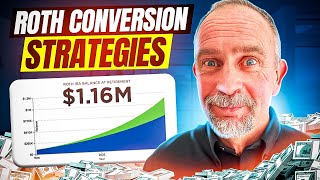
Craig Wear, CFP® (host) presents a tutorial-style YouTube video explaining Roth conversions for high-income earners. He contrasts Roth IRAs (tax-free growth and tax-free inheritance) with tax-deferred accounts, explains that Roth conversions move money from IRAs/401(k)s to Roths while triggering taxable income, and argues strategic conversions can substantially reduce lifetime taxes, required minimum distributions (RMDs), and Medicare Part B/D premiums. He emphasizes planning (age, income, account mix, retirement timing, lifespan, state taxes), warns conversions create current-year taxable income, and recommends careful, data-driven NPV-style analysis or professional help. The video closes with a call-to-action to subscribe and download his book.
Chapters
Hey there. Are you a high income earner looking to maximize your retirement savings while minimizing your tax burden? Today we're going to dive into a few strategies to do just that very thing. My name is Craig Weir and I'm a certified financial planner. I own a firm that helps people all over the United States avoid millions of dollars of taxes. Legally, I might add. We don't sell financial products, we don't manage investment portfolios. This is a channel where we just simply educate Americans about all kinds of topics that affect your financial life from a very much so a pure fiduciary perspective. We have no commissions to gain and we don't want to manage your investments. Just good old fashioned advice. So since Roth conversion strategy has been our primary claim to fame, let me just kind of begin there. A Roth IRA gives you a ton of benefits beyond what the tax deferral you've experienced during your lifetime in your 401k or your 403 or your IRA accounts. The biggest difference between an IRA and a Roth IRA is that everything that you have in a Roth IRA is going to grow totally tax free for the rest of your life and you'll pass it to your heirs and they won't pay tax on it either. A lot of people have developed large IRAs because they've taken advantage of tax deferral, which is a good thing. But there's a point in time in your life where it's time to pivot and to do the very thing you've been doing your whole life. Save taxes, but do it a different way and do it over the rest of your life. And that is through something called a Roth conversion. So the way to get money from the taxable or tax deferred accounts over to the Roth which is tax free, is through something called a Roth conversion. And unless you've been kind of living under a rock, you've heard of what a Roth conversion is, but it can be a little bit complicated, especially when a lot of people confuse Roth conversion with a Roth contribution. So. So a conversion is a way that you get money from the tax deferred account over to the Roth tax free account and you pay tax along the way to make that done. So in this video I want to share a little bit of some of the advantages of Roth conversions, especially if you're a high income earner. So most high income folks usually also have large 401ks large IRAs which are going to cause very large required minimum distributions once you get to that age, once you're Retired and you get to whatever your age is, where you got to start your RMD, 73, 74 years old, then you have to begin taking these taxable distributions from IRAs. Well, a lot of people think, yeah, no big deal, that's the deal I made with the irs. And so when the day comes, we'll just do that. But they don't realize how significant they are in their life and what the total is going to be over their lifetime. And these large required minimum distributions just kind of sneak up on people, especially if you're that IRA millionaire. Because what happens is that you maybe when you retire, you got around a million dollars in your IRA and you live off of Social Security and maybe some other income, some investments, and that 1 million becomes 2 million through retirement by the time you get to RMD age. Well, that $2 million IRA has this associated required minimum distribution. And I'm just going to round it and say it's about $80,000 a year if that was your first year. But the problem is it grows each year based on your stock market returns, but also based on factors that cause the amount that you have to pull out through a required minimum distribution to be higher. So 80,000 is maybe where you start. That can easily become $100,000 a few years later and 125,000 a few years after that. And it just keeps going. So doing strategic conversions allows you to greatly reduce or, or in some cases totally eliminate all this future tax for the rest of your life. So the lower taxable income also has this impact of keeping your Medicare Part B and D premiums as low as possible. So if you find a way to reduce those RMDs down to where it's just your Social Security and other investments, we find that a lot of people put their self in the lowest threshold for Medicare Part B and Part D and they in a lot of cases reduce the tax on their Social Security. But a lot of high income retirees can see their Medicare premiums easily go to 12 to 15 thousand dollars a year each. So having a strategic game plan for conversions now can save you well over $100,000 in total Medicare premiums over your lifetime. So if you're already retired and you're on Medicare, you are going to pay higher premiums for a few years while you're executing whatever your conversion game plan is going to be. But what we see in our practice with hundreds of people every single year is a substantial lifetime savings of Medicare premiums for those who find the right plan. But it does take Finding the right plan to make it work. You can't just launch out and decide you're going to do conversions. We found that a lot of people who can, that are high earners and that have large IRA balances. If you avoid paying tax at a higher rate than you already are, you're likely to pay more tax over your lifetime by converting at one of the lower tax brackets. So what actions should you consider if you're a high income earner today? Well, first of all, there's always the traditional backdoor Roth IRA conversion. And that means that you take a tax deductible contribution to an IRA and then you turn right around and you convert it to a Roth. That's the simplest explanation and that's okay, but it's not nearly as effective as doing a conversion of your existing tax deferred funds. So there are creative ways to rearrange cash flow. The amount that you're putting into your 401k to make all this happen. If you have extra cash flow and you're kind of in your later stages of work and you're really putting a significant amount in your 401ks, there's a lot of benefit of changing that cash flow around and redirecting it to pay taxes on conversions. You get multiple times the amount in a Roth, tax free as you could by putting money straight into your 401k or even your Roth 401k. And you're going to be a lot better off doing the conversions, even if it means you have to go to a higher tax bracket than if you just simply make contributions to that 401k or the Roth. And we've done the math on it nine ways to Sunday. And if you are a high earner and you have a large IRA balance, you will help yourself tremendously by taking some steps to make it work. So your first step is to really hone in on getting a plan for aggressively converting those 401k 403 IRA balances. But before you run out and start converting, there's some factors that you really need to take into consideration, like your age, the current income you have, maybe your future income sources that are going to come in, your family mortality. What do you believe about how long you're going to live? How long is your spouse going to live? You also have to take into consideration your mixture of taxable and tax deferred accounts. When you retire is another really important thing. If you're not already retired, how long is that going to be? And of course, there's many Many other factors, but you need to get, first stop, get back and analyze it and make sure that you get all the data involved to make it work. The other thing is that you just got to be aware that anytime you choose to do a Roth conversion, there's going to be a tax, a federal tax, and if you're in a state that has a state income tax, you're going to have state income taxes. As a Roth conversion, an amount of money coming from your IRA to a Roth is going to be taxable income that year. So in addition, doing conversions should be carefully weaved into your plans for retirement. Or if you're already retired, just have either yourself or have somebody that knows what they're doing help you to make sure that the Roth conversion piece fits nicely into your retirement and your cash flow. And making sure that at the end of the day, it was worth it. That's the last test that we like to go through when we're working with our own clients is not only is it right that we get all the data, but the last step in our system is was it worth it? Where we do what are called net present value calculations to help with people. But you know, some of the recent laws like the Secure act have actually dramatically strengthened the position of being able to confidently make conversions. We talk to a lot of people who, like I, we just don't trust a lot of what government does these days. But I can trust the principles that are put in place. And one is that our politicians want to get reelected. And so if they were to all of a sudden take away the tax free nature of it, they got a whole generation of people who vote a lot, they're going to have a real problem with that. In conclusion, if you're an IRA millionaire or a high income earner, the chances are really great that you're going to save millions over your lifetime by finding that optimal Roth conversion game plan that really fits your situation. You're going to want to consider all the factors that's going to be really important to you and you're going to want to find the best plan, the optimal plan for giving you the best outcome possible. We've done hundreds and hundreds of these and it's probably going to be at a higher tax bracket than what you would probably think about today. And it's probably going to be over a much shorter period of time than you currently may believe is best for you. And you may have all your spreadsheets laid out and they may tell you something totally different. And you might be right but in 14 years of specializing in Roth conversions, four years of taking this message to a national audience, two best selling books. We talk to hundreds of people every month that we do business with, many, many of those. Very seldom have we found somebody who comes to us with a spreadsheet that we can give a check mark that it's 100% right. There's normally one or two things that are left out. So just be very careful and look at all your data, look at your information that you have and make sure that you really have taken everything into account. So if you like this kind of information, hit the subscribe button. If you want to be among the first to hear the hot off the press new stuff that we're going to do, then I'd love for you to join that. It makes a difference in our channel. It lets me keep putting out good content and lets me know that you're involved and you're engaged with it. Speaking of being engaged, man, leave a comment below. Tell me kind of if you have any questions. Ask some questions, we'll try to get to those or share what your conversion success is. So check the notes below. Download my best selling book, the very first one I did, which is called Paying the Piper. You can have that absolutely free. Take care. Hope this is of help to you. We'll see you next time around.








