The Critical Role in Your Financial Plan
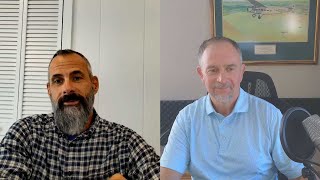
Derek DeHayes explains how Rothologists assess whether clients should convert IRAs to Roths. A couple with a $1.2–1.3M IRA saved roughly $1.6M in taxes through optimal conversion planning, far more than typical advisors or CPAs would identify.
Questions this video answers
November 4, 2025.
Craig Wear, CFP® (host) and Derek DeHayes (Rothologist).
About $1.2–$1.3 million in IRA assets.
About $1.6 million in savings from optimal conversion.
Chapters
Well, hey guys, welcome back to Clear Direction for your retirement, or we also call it what's Next in Retirement as podcast. And just trying to help you get some really good, clear ideas about, you know, what happens next at various stages of your life. I'm Craig weir, founder of Q3 Advisors. Over the past few episodes, we've given you some behind the scenes look at kind of the team that actually works on our Rothology plans. This planning specialists who do the modeling, the financial planners kind of who guide our clients through the process and do annual reviews with folks that come to us. But before any of that happens, somebody has to help you take that first step. And that's the role of our Rothologists. They're all certified financial planners. They all specialize in the early stage of the process, which is really as critical as every other stage. And that's helping families understand what the opportunity is for them, specifically with the Rothology strategies and exploring really whether the people we get to talk to are a good fit or not, and then connecting them with the planning team that are going to help deliver the strategy. Today I get to talk to Derek DeHayes, aka Captain, among all of us here. He's one of the rothologists here at Q3. So, Derek, man, thanks for taking the time today. I know you guys are busy right now.
We are busy, but enjoy doing this all the time. Excited to talk to folks about what we do and how we help. I mean, that's the big key. Cool.
So let's just kind of, let's just kind of start with kind of the whole Vince Lombardi, this is a football thing. So, you know, for someone that is meeting with you at the, you know, the very first time, what's your role in that process? What's it look like for them?
Well, I would say first I make sure they understand it's a safe environment. We're not here to pitch them a product or do anything along those lines. So really just try to set the entire meeting at ease, but obviously want to understand their situation, want to understand who they are, what they do, what's going to benefit them in the long run, and then feed into kind of how we help clients achieve that. Obviously need to know a little bit about their situation, but really just trying to understand is there a good fit for, for what we do. And after doing this several hundred times for other clients, I think I got a pretty good idea. So usually in that first conversation, I know if there's a fit and I do my best to express that to them and say hey, we're going to do you a huge service. Just give us the opportunity to do it. That's really what that first meeting's all about.
Yeah. And you know, you've been part of the team for quite a while now and you've seen how we've transitioned roles and how we've enhanced the services that we offer and everything. The thing that sticks out to me a lot is.
The way that we.
Try to help people determine the best long term tax strategy for them. Really involves several people. You're one of the people in the chain of events that occurs and if they go to, I mean typically you get people call you and it's, they're contrasting what we do with. Well, my advisor this or my CPA told me this, or I've got this software that I spend a hundred dollars a year on. You know, they can do that. But you know, most advisor firms, you're, you know, you're talking to the, the guy who also wants to sell you an annuity and get you to move more money over at the same time. And there's nothing wrong with selling products and managing assets and those kinds of things. But you know, part of the reason that we've put you guys kind of into specialized roles is I believe that kind of creates bias. And so here at Q3, we separate those roles so the client really gets that unbiased education you're talking about first. And your focus really is on the front end. How do you see your role on the front end and meeting people and helping them work through. How do you think that makes for a cleaner handoff to the people that are actually going to flip the switches and turn the dials for them?
Well, well, first off, they got to look at this, you know, big hairy thing here and have to deal with somebody on the front end. But you know, really it's, again, once we get through that process and there's an understanding that there is a huge advantage for them to, to convert. We want to get them involved in the team right away. I'm a financial planner. I've done all kind of financial planning through my career. But really the specialization is what makes us different, really what makes us different in this, in this entire industry. So I'm looking to introduce them to one of our planners that we can all collaborate, gather the information that we need and then further move that along the line into the rest of the planning team. Not one financial planner, certified financial planner, not two certified financial planners, but at least three to four certified financial planners are going to look at your case across the entire process. That's just allows not one person's opinion to become gospel, if you will. You know, you've got a lot of input on these plans and we want it that way because that's how we find the best result. Yeah.
And you know, the, the thing that is really interesting is that people come to us from all kinds of backgrounds and all kinds of experiences. Right. But you've done this long enough that you know, you and I can kind of, we can pigeonhole this person has had this experience, this person's coming from here. Um, but you know, our industry has done a lot to make your job a lot harder. Right. In that the industry. And if it's done incorrectly, it's really nothing more than a high paid salesperson. If it's done, if it's done, okay, it's done by somebody who can maybe give them some advice but can't help them with anything. That is really very granular. But you probably hear the same, although everybody is unique, you probably hear the same type of questions and hesitations when people first come to you just, you know, off top of your head. What are some of the main objections or questions or hesitations that are, that come up in those conversations?
Well, I, we hear a lot of my income's too high. If I do conversions, I'm going to pay way more tax than I need to. Well, maybe in the short term, but let us look at the long term strategy. So there's, there's, we get those questions a lot, you know, around. I have all this money in my 401k. I've been successful in just putting the socket in a way, but I really lived my life really well and I have nothing outside of my 401k. How am I going to pay these taxes? Hear that a lot. And is it an obstacle? No, we, we want to determine what the right case is for every situation because sometimes it makes makes sense. But yeah, though I'd say those are the big ones that we hear most people just thinking, hey, if I go up into that higher tax bracket, aren't I, isn't that the opposite of what I do? I'm going to pay more taxes. Well, the numbers show differently.
So how do you, how do you respond to the, the people that, that get on these initial zoom calls with you? And they're pretty well convinced that their advisor, whether it's a financial, an investment guy or a cpa, they're pretty convinced that you know what that advisor is telling them to do, which is either you make too much money, you don't, you shouldn't do conversions, or you should only convert to the top of your tax bracket. How do you, how do you help them understand how what we do is so much different than what they think?
Yeah, I think the first question I ask is, is have you done the work to find the answer? Uh, is that answer that you're being given, is it the best answer? Has the work been done to determine is that the right answer? And in, in most cases, the answer to that is no. They're dealing with other specialists like a CPA who is obviously positioned to save your taxes this year, maybe do a little bit of planning for next year. And then there are advisors who are really well positioned and probably really good at doing what they do best, which is figuring out the risk tolerance that you have, doing your asset allocation, investing for you, making sure they're growing your assets. That's a full time job in and above itself. So to throw in the high specialization of actual long term Roth conversion planning, if the, if the analysis hasn't been done, you're working off of bad information. Everybody wants to make informed decisions. We give them the information to do that.
Yeah, and you know, I'll just, I'll just talk just a second to, you know, somebody maybe listening or watching this. You know, the men and women we have on our team are, are chosen because they know how to plan. And our industry is, is an abundance of people who know how to ask, how to gather assets and how to sell tax advantaged investments or insurance products, but very few have real experience with planning. And we discovered that even as they have experience with planning, the software that they use, and I'm talking about the biggest names in the industry have got huge gaps in them to help answer the question of what is the right Roth conversion strategy. But our, our Rothologists, the front end, the, the frontline women, you know, they really are here to prep our client for success. You know, like you kind of referred to Derek, they, you, you're gathering the story, you're kind of setting some expectations for them, you're trying to figure out what confidence level they have and, and give them more confidence that this really is going to work out. Or sometimes you have to tell them, I don't think we're a good fit for our Roth conversion piece. Let me introduce you to somebody else on our team that could do some other things for you. But at the end of the day, ultimately the goal is to introduce them, you know, to the planners. But our goal is that the client never feels like they're starting over with the next member of our team. It's, you know, we've, we, you guys do a lot of internal notes, you do a lot of internal conversation, all those kinds of things. But you know, when you get finished with that first conversation, it can go a couple different ways, obviously. But what do people usually say to you after that first conversation? What, what has that, that person who had his mind made up one direction that ultimately decided that maybe there was something different?
What.
How's that conversation go?
Um, so yeah, after the initial consultation, usually clients, they've experienced the marketing that you've done, the videos you've done, they've. You become a celebrity. Celebrity to them in a lot of cases. But to bring that knowledge in and then certainly compartmentalize it and address it to their particular situation, all of a sudden, sudden becomes this broad range to, hey, let's talk about you and your situation and how does this apply to you? And that usually is that eye opener for them. We'll run through a RMD calculator to just take a look at what it looks like. If they don't convert. Are you okay with these numbers? Is this something that you would really want to pass on to your heirs? You know, going through those conversations is a real big eye opener for those folks. And they see that there is someone now who doesn't just explain it to the masses. Someone who's explaining it in their terms, in terms that they're familiar with their own financial well being. And that's fun. Being able to do that and kind of convert that, that broad knowledge into this is what works for you, I think we can help is great. And that's just that first conversation. But then we get into the second conversations, we're gathering all the data and then we finally present the results. Um, you know, those are some of the most wonderful, like fulfilling parts of my job, I will have to say.
Yeah, you and I have talked about this before. You know, you've been in the business a long time, like I have. And this service that we offer, I get excited about it because it's the first time in over my 40 plus years that I see some instant gratification of helping somebody. I get to, I see and they see. And it's not like we got to wait 20 years and have a retirement party. Right. Do you, can you think of. I know you, you help dozens of people every single month, but is there, is there, is there a particular maybe case recently that sticks out in your mind? Where the conversation started, where they didn't think it was going to make any sense. Then all of a sudden it led to millions of dollars of tax avoidance. Tell us a little bit about that if you can think of one.
So many. Yeah, I could think of one recent one.
Jim.
Jim and Elaine. I remember he was an oil guy, early 60s, worked for a big. Working for a big oil company, Texas, and still working for a few more years. So high income, they're coming into us, got about 1.2, I think 1.3 million in IRA assets coming to us and said, hey, I love everything you're saying, but I think I'm too early to the game here. I think my income's too high and this is just not going to be the right thing for me. Talk to them well enough to know that, hey, I think you're missing the point. And we had a great conversation. I think it was two conversations we had. But eventually they said, hey, this is something we ought to dig into and I think it's worth us giving us a shot. They ended up saving. If I remember right, it was around one point. Now this is just a 1.2, $1.3 million IRA. Their savings was about $1.6 million to convert optimally. And that was someone who was. Just came in, just, hey, I like what you guys are doing, but I think I got to do this in a couple years, too. If I waited a couple years, I'm going to end up paying more taxes. So it was a great, that was kind of a great solution. And I think that happens quite a bit. I think that's why that one came to mind, because that is quite often the case. Folks think that if they're in too high of a tax bracket, they just shouldn't be doing these conversions. And we really are able to, to show otherwise in a lot of cases.
So, yeah, that's, that's probably one of the biggest lessons I've had over 16 years of really doing this is I, I cannot, I cannot pull up a single case in memory where it was ever better for somebody to wait to start doing an aggressive conversion plan if they fit our demographic of an IRA millionaire or very high income. It. The gain that happens in the IRAs over that waiting period can never be overcome by a lower tax rate later. And you probably would agree, most people who think they're going to be in a lower tax bracket later really aren't in a measure, in any kind of measurable decrease tax bracket.
Our demographic, and they've got those large IRAs Absolutely not.
Yeah. Now, you know, people you've talked to that have had more modest IRAs, they, that, you know, we could go a totally different direction. And they're, the advice that we give to them is totally different than that IRA millionaire that you get to talk to day in and day out. But, you know, I love how you frame kind of your perspective on you being the first step. You know, it's not really about convincing people. It's about helping them to see whether or not doing what we do is a good fit. And if it is, man, you got a team that can step in. And, you know, in most cases, we, we're able to show them how to lock in generational wealth that doesn't get eaten up by taxes along the way.
Yeah, I, I think as I see my role, it is, it's, it's really just to be able to understand them from top to bottom and just see if there's an opportunity that is going to make sense for us to help and then just connect them to our team. Let our team just wrap you up with all of our good certified financial planning and put you off into the right direction. I think that's part of what we enjoy doing. And that's, at the end of the day, I think a client that feels comfortable, confident in the team that's working with them is going to end up executing a strategy that is going to, you know, be in the best interest.
Yeah, well, that's, you know, that's really the, I think the real takeaway today for listeners. Every, Every really good tax plan or orology plan that we put together starts with a conversation, a conversation that is not surrounded with, hey, buy these annuities and it'll pay all your taxes. Or here's let us do a free Roth conversion analysis for you so we can convince you to move your money over to talk to us. It's really about uncovering the blind spots that other professionals just don't see. Not because they're not as smart as us. They just, they don't focus like we do. They don't have the specialization that's, you know, we frequently use the illustration between your primary care physician and a cardiologist. If you're in a, if you're, if you're in a good spot with your primary care physician, all of a sudden somebody determines that you have a heart problem. Your primary care physician is probably not the person you want doing open heart surgery on you. Probably not. Now they maybe decided they were a heart surgeon, they became a PCP but normally it doesn't work that way. Right. And so you guys have got, I mean, if you're listening to this and watching this and you have an advisor, our job is not to create a wedge between you and them. It's to make that relationship stronger and better. And we hear that often that we, that we accomplish that. We want to be that team you can come to for a very specialized need. We want to fix the big problem. And then metaphorically, we want to patch on the fanny and send you back to your primary care physician so that they can take care of you for all the other important parts that have to be done. Implementing the plan. Continue to monitoring your investments, going to your kids, weddings, and all those kinds of things. Um, but I, I really appreciate the work that you're doing, Derek. You know, you're, you are one of the pillars of our planning team and I appreciate you, you know, sticking around here. And I say frequently how blessed I feel to have people of your caliber that are willing to just go along on this journey and help people the way that we do. So thank you again.
Oh, shucks, I appreciate that. That's very nice of you to say. And I, I love being here. This has been, you know, long career for me. Be able to do what I do now and do it with such joy and fulfillment is. It doesn't feel like work. It absolutely just feels like I'm helping people. And who wouldn't want to do that for their career?
Yeah, no doubt.
So I appreciate it. Thank you. Yep.
Well, okay. If you aren't subscribed to the podcast, hit the subscribe button. Next time we come out with one of these exciting, information laden conversations, you'll be one of the first to know. If you like it, like it. If you happen to be watching this on a YouTube thing that we put together, then subscribe. I mean, I mean, that's how we can keep creating great content, is people, we know people love it. And if you like this kind of stuff, subscribe that as well. So hope you have a great rest of your day, folks. Thanks for tuning in and tune in next time. Take care.
Thank you.








