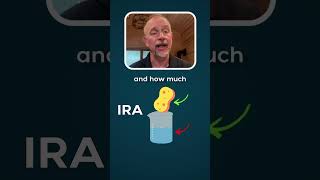
Craig Wear explains how market downturns create a tax advantage for Roth IRA conversions. When your portfolio drops, you convert to a Roth and pay taxes on a smaller amount. Any recovery after that grows tax-free.
Chapters
So let's start with how to make losing money work in your favor. Think of your IRA like a sponge. Because you've been disciplined with your savings and investments, your sponge has spent decades soaking up water. But then a market crash hits, and when it does, it feels like someone squeezed that sponge. Your sponge is still there, but you've lost all the water. That's like the shares in your IRA dropping in value is losing the water, and the hope is that those shares recover over time. So it sounds logical to just leave them be, but here's the part most people miss. Instead of looking back at their sponge, they're focused on the jug and how much water came out. That drop is real, but when you look at the sponge itself, something else has changed. Right now, your sponge maybe weighs a quarter of an ounce. Before it was squeezed, it was maybe 3 ounces. That's where a market crash really creates an opportunity because the IRS isn't looking at the water that got squeezed out during the crash. They're not looking at how much water the sponge might soak up later. They're looking at the actual value of your conversions right now. To calculate your tax. That's where the strategy comes in. A Roth conversion is like moving your sponge from your traditional IRA through a pipe to your Roth IRA. With a soaked sponge, pushing it through the pipe squeezes out water in the form of taxes. But if the market has already squeezed the sponge down, there's less water that can get squeezed out as it moves through. So you're moving the same shares from your traditional IRA to your Roth, but because the value's lower, the taxable amount likely is dropped as well. And then if the market recovers after the sponge is already in the Roth bucket, well, that water comes back on the the tax-free side.