Becoming a Dog Trainer, the Intangibles of Dogs, and Opening a Training Business with Thomas Morin
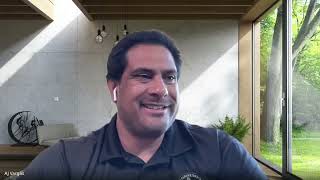
In this episode of the All Things Working Dog podcast, host AJ (AJ Vargas) interviews veteran‑turned‑dog trainer Thomas Morin, founder of All American Canine in Orlando, Florida. Morin recounts his lifelong relationship with dogs, beginning with a golden retriever in New York City and a later boxer, and how those early, active interactions shaped his training philosophy. He explains his military background, the desire to become a canine handler, and the obstacles that led him to infantry before discovering a path through the VA to service‑dog training. Morin describes his formal education at Canine College of the United States (CCU), emphasizing hands‑on obedience, kennel care, and first‑aid knowledge. He details the transition from hobbyist to business owner: securing funding, acquiring and renovating a kennel with help from Army buddies, leveraging real‑estate networking, and using barter and collaborative marketing with peers. The conversation explores the intangible mental‑health benefits dogs provide to veterans and owners, the importance of integrating dogs into daily life, and the need for professional, accountable training over DIY internet videos. Morin shares market insights for Orlando—balancing resident versus tourist clientele, observing pet‑friendly trends, and conducting grassroots market research by simply being present in dog parks. He offers advice to aspiring trainers: obtain hands‑on education from experienced mentors, embrace accountability, and be willing to do the “dirty work” of kennel maintenance. The episode concludes with Morin’s contact information and a call for listeners to support his business through referrals, marketing assistance, and candid feedback.
Chapters
Welcome everybody back to Source: All Things Working Dog. This podcast, we aim at a, a number of different topics, but the thing I like the most about this is the great guests we have and I just enjoy talking to everybody because oftentimes we get caught up in work and we don't even talk to our own friends. And this makes it pretty easy to get people on the show and talk to them and talk dogs and dog business. And it gives me an opportunity to catch up with everybody. So today I'm excited to have Morin on the show today. I'm gonna let him introduce himself in just a minute. And as we kick this off, like we always do, getting to know Morin a little bit. So tell us about yourself and man, the new things you're doing.
Hello everybody, Thomas Morin here with All American Canine. So after the expertise and training that I got from CCU, went out and, and started my own business and, and taking this dog training real serious and wanting to really help people. I've mentioned it to, to the trainers and to AJ when I first got there was, you know, my mission was as a veteran and a disabled veteran was to try to be able to help people and their dogs and help veterans if they have dogs to get them well trained and better behaved so that they can have a good experience. And having dogs has just been a great experience in my life. I've had a dog in my life ever since a young teenager. I had a golden retriever. In New York City. I was the only guy with a, with a golden retriever in New York City. Everybody else had, um, at least where I came from in the city, you know, everybody pit bulls, Rottweilers, Dobies, all that, you know, all those kind of dogs. But I was the only one with a, with a golden retriever, man.
Do you feel a little shorthanded walking around with a golden retriever?
I trained that dog. I took her out a lot, so I was always active in the street. So I would take my dog with me to the playground, to the parks, running around. I used to rollerblade, bike, and all that. So all that stuff like you see with Cesar Millan and all that, like, I used to do that with my dog. And so that helped me. I saw that now, you know, in hindsight, looking back, I'm like, all those activities helped me with that dog because, you know, she was, she was a dog that used to go out in the backyard, and now she went to an apartment. But I used to take her out, um, all the time, and I used to be you know, just playing sports and stuff like that. Basketball, baseball, football. I was always into some kind of sport, doing something, riding my bike, you know, stuff like that. And she got really famous in the neighborhood because I started teaching her sit and stay. I taught her how to jump fences. So I would jump the fence and then she jumped the fence, you know, because that's something we do in the city anyway, right? You know, playing tag and stuff like that. So we jumped the fence. So I told her to jump the fence, so she used to jump fences. I couldn't have her sit on a busy street on the side, on the sidewalk. I could cross the street, talk to my buddies, and I'm talking, and then I would whistle. I had her trained on a whistle. So I would whistle and then she would come across the street when I told her to come. I had her very well trained. She would be off leash sometimes. A lot of times she'd be on the leash with me, but there was times that off leash, I would hold her by her shoulders and she would be in the middle and I'm on my rollerblades and she would just take me down the block. Uh, so I had her running all the time. I take her to the field and play fetch and stuff. When we got home, it in turn— she was just a good dog, right? At home, she wouldn't destroy nothing. She would be already worn out.
I mean, it's, it's remarkable, uh, if you think about it, you know, starting off at that early age, you're not even realizing where it's going to carry you to where you are today, because you have an extensive background You were in the military and you did some pretty cool stuff in the military, and then you also have a background in real estate and in business, and then now you're diving into the dog business. These interests and these, this background, how did that help you to transition to where, I guess, where your passion really was and where it really started back in middle school?
Going into the military, I wanted to be a canine handler, right, in the military. But back then when I went in, that wasn't a job. You can be an MP, but there's no guarantee that you can get to the canine spot because they had very limited spots. So, so that's kind of where I really wanted to start, but, you know, ended up in the infantry in the 82nd. That was, you know, it was great experience. I grew up in a cop family, my uncles, my dad, stuff like that, thinking K-9s. But we moved, my parents left the city, we came to Florida. So I was here in Florida, you know, I just went to school and then I went and got my own dog. I had a boxer and again, doing the same thing that I was doing with my other dog. Then I saw an opportunity through the VA, how they can help me to get the training that I need because, you know, it's not cheap. To be able to get trained and stuff, knowing that my disability started impairing me a lot and having my dogs again, it was helping me and also trying to get a service dog. It was like a 2-year minimum waitlist and anybody, I mean, anybody can go anywhere and it's minimum like 2-year waitlist. And I'm like, I need a dog now, blah, blah, blah. But just to be able to see if I can train my own dog and be a service dog or a dog that service me for PTSD and stuff like that. Then I had a brother-in-law that he went to train training as also ex-military, which also kind of pushed me, telling me about the programs, um, that they had. I found you guys, and after looking at the different schools, and I was like, this is the school for me. Also the working dog line, I saw that if I can be able to learn how to handle dogs that do all these performances, you know, apprehensions and searching and tracking and stuff like that, that if I learned those skills, that would better my resume as a dog trainer. And, you know, and AJ, I remember the conversation, or I told you, oh, I want service dog training. You said, look, service dog training, the first thing any dog to do anything is obedience and learning how to handle that dog. If you know how to handle dogs, then you can learn the other skills, but you got to know how to handle a dog first. And I remember that conversation, AJ, you know, put it very clearly to me, and I, I was like, okay, I got it now. It's helped me a lot at CCU.
Well, you know, we like to take credit for everything, right? But we can't because we have great students that come in that are open to learn, and they come in with a vision like yourself of where they want to get and where they want to be. We're just blessed to be able to use our network and our experience to help other people do that. And that's really why we're in the industry, is really just to help others where when we were coming up, we just didn't have those opportunities, at least I didn't, and had some bad experiences and things like that, which kind of pushed me to a point to where I wanted to focus on building solid programs and really building ways that we can really help trainers and help handlers to achieve their goals. It's really not about CCU, it's about what Morin's doing. And, you know, I, I always appreciate You know, getting the text like I got from you a couple weeks ago about you starting your business and all that, it just brings chill bumps to me because, because of that. And so I'm just thankful and blessed just to have those opportunities. And as we sit here and talk and I hear you go through your story and I hear you tell, telling everybody about, you know, really where your humble beginnings were. Little did you know, you know, at your age now, as you move through a whole career, it's gonna come around full circle and really lend to the experiences and the things now that you're gonna teach your clients. And that's what I'm most amazed about, you utilizing that experience now to transition over to benefit your own clients. And I think that's amazing because you've already hit on so many points that we're gonna talk about towards the end of this as I always recap some things that we can learn from Thomas More during this podcast. But you've already touched on some very specific highlights that I'm just like, man, that's just amazing. You know, the interaction that you had with your dog where you were very intentional about that interaction and really including your dog in your everyday life, which then resulted into a well-behaved dog. And I think a lot of owners can learn a lot from that. You can't just take a dog and put 'em on the shelf and expect them to behave when you get 'em off the shelf, right? You have to interact and include them. And I'm sure there were some difficult times, right, dealing with your first dog?
Yes. My dad likes plants and stuff, so he had some potted plants and we left her in the house. And back then, nope, there was nothing really about crates, right? We would leave, came back, and she dug up—
Yeah, yeah. It's one thing to have a hobby, right, and train dogs, but now you've shifted from that passion and that hobby to now making it a career and something I foresee you doing for many years because I know you now, right? So I know you're not going to just start something and quit on it or just start something and it gets a little bit difficult and you leave it because I've heard some of your other stories with some of your other businesses. So where did you know, or how did you make that transition or that thinking process of where you were going to take that passion and now make it a career? How did that come about?
Going back to my brother-in-law, he did this like 8 years ago. He used the government to be able to help pay for the schooling. And I saw him training dogs for veterans, PTSD, and stuff like that. And really that motivated me. And due to my PTSD and my conditions and just not wanting to get up sometimes or stuff like that, having a dog helps and motivates you to move and do the things that you want to do in life. And when you're feeling down and out, out, that dog is there for you. So that was a passion because of myself and what happened to me and my injuries and things that happened to me in the military that's caused me now to go, I want to help these people. And right now it's not that I'm doing a lot of service dog training work, it's just I'm helping a lot of people, veterans and civilians, with just having an obedient dog. Because, you know, with the obedient dog is a happy life in the household. So that's my motivation there.
Well, just from knowing where I started and where we're heading in progress every single day, you know, that direction will change as you become more knowledgeable, as the market opens up a little bit to you, and that revelation of the market opens up to you in your eyes, then you see all this new stuff that you can do, which is also, yeah, an amazing thing to see. Like the evolution of a dog, right? You start off, dog's disobedient, dog doesn't know anything. You spend time with it, you nurture it, you train it, you mentor it. Business is very much the same way. You know, it's all over the place at first, and then you start to get focused and you start to do the small things to begin to control it and make it obedient and shape it into what you want it. Just like Cookie. And now that you look back on Cookie, You really molded and shaped that dog, and now your business is gonna take on a lot of that same characteristics, but also that same pathway, if you will. So now you're taking that previous career experience you have, that previous passion with dogs, and now you're opening up your own business. What advice would you have for somebody at this point that has, or maybe thinking, hey, I love dogs and I wanna make this into something that I can enjoy doing every single day of my life. What's the one thing that you would tell them as they consider that option?
So what I would tell people is that they should go ahead and get training from somewhere and work under an expert as I did with the great trainers I had in CC, because they start having you think about things differently. Even having that experience with my dogs, I still didn't think I knew it all. Now I understand the processes of how I did it. If I do one thing, the dog will react this way. If I do this thing, the dog will react that way. In the school, it really broke it down. If somebody really wants to really be serious about this, then they need to be serious about getting the education and finding a way to get that education. I see a lot of things out there with online classes and stuff like that. I'm a little old school. I like hands-on, and I think that you need to be hands-on working with dogs. And not just looking at a video and then go, okay, let me try it. You know, you need an instructor there to be like, no, no, no, no, let me show you, and then you go and perform it. So I, I think long answer short, if you want to go and become a trainer, you got to get educated with a professional trainer that knows what they're doing and has the experience that you need, um, to show you that there's a lot more to it.
Well, yeah, but what I like most about your statement is that You didn't say you need to get training here or there or at a specific place. You gave the advice that they just need to get professional training from a professional that knows what they're doing. And you really hit the nail on the head with that. We don't know what we don't know. And Simon, our head trainer, said it best one time when he said, well, when you don't have anybody to hold you accountable, then you do it any kind of way and it's always the right way. And sometimes we need somebody looking over our shoulder, no matter what your experience level is, that's also gonna call us out when we're not doing right by the process or right by the dog or right by the client. We need that oversight per se to keep us grounded and push in a direction where we're held accountable. And I, and I, I find that so true in that statement. He doesn't realize how profound that statement really is. When he said it, but he's absolutely 100% right, just like you are. And you know, you got to get training. You know, you can't learn off a video.
Yes, I totally agree with you on that. I see it now more than ever because obviously now being in the business, you know, you want to be a dog trainer, take my classes and watch my videos, and I'm like, I don't know if you really want to be a dog trainer. I don't see that that's the best way to do it, but I don't know, people are doing it. But to me, I would advise them to go to a class and go to a school and train and work with dogs and get in like dirty nitty-gritty. How I learned it in CCU, we had to go clean the dogs in the kennel. And if you're not willing to do that, then you really not have the passion for the dogs. And I learned that 15 years ago with my daughter when I took her to learn how to ride horses. The lady told me, she's like, okay, we'll see if she wants to ride horses. Because we're going to put her in the barn, and if she doesn't want to pick up the poop, then she's not ready to, to ride. Because the first thing you got to do is you got to do that work. And with dogs, it's not just you take the dog in and out and stuff like that. You got grooming, there's maintenance, there's a lot of work. And if you're not willing to do that, then don't go ahead and be a dog trainer, because there's so much more to it than that.
Yeah, exactly. And then, you know, even with our clients, I mean, there's a ton of time probably 2 or 3 times a week where we're giving advice on care and nutrition of an owner's dog, not just the training aspect of it. They're gonna have questions about the health and wellbeing of that dog. But you know, you brought up your daughter. Even with that sense, we didn't have kids and not change their diapers and feed them. And then all of a sudden we have a good bond with them. We went through a process of raising them, knowing when they sick, when they were sick, or when they didn't look well, or when they weren't feeling well emotionally. We could tell those things. And even in a dog, when you care for a dog and you learn normalities and the things that are out of place, you begin to build that closer bond with that dog, which then it makes the teaching process a lot easier because we can read the minute behavioral changes in that dog, which as a trainer tells us how to react to certain situations and how to best teach that dog. So it's such an important aspect of that. And so I'm glad you brought that up. Wasn't something that we even planned for, but that's a great piece of advice for anybody that's gonna get into this industry for sure.
When you go to school, especially in the school that I went to, the, the health and the, the first aid stuff that I learned, it's been so valuable to know the signs for heat stress or heat stroke. Cause I live in Florida and it's hot here. I have this English Bulldog and just monitoring him, making sure that he's always got water. You know, we gotta bring him inside to the AC. You got to cool them down, then we can let them back out. You guys made that— it was always safety first, priority of the dogs first. That's obviously stuck with me big time.
Well, that's great. You know, I've seen the horror stories. I've— we've gotten dogs in that have been with trainers for 6 weeks, and dogs are malnourished. They can't get the dog out of the crate, and it's just kind of unbelievable that a trainer could have a dog for that amount of time and not pay attention to the health and well-being, or at least seek out some professional help from a vet. And I've seen it time and time again. But that's also why you have standards. And that's not the— by any means to downplay a trainer, because they could be talented trainers. But like you said, they don't know what they don't know. And the health and well-being of a dog is most important first, because as we say, a dog that's not healthy can't train. They're distracted, their mind is somewhere else, just like we were if we had an injury. Your mind is on the injury. It's not on learning and progressing in your talents. So dogs are very much the same way. So that's why kennel maintenance, care, grooming, all that stuff's on a schedule and a very strict schedule because of that. And we teach our owners the same thing. Healthy dog is a happy dog. And then we can get into training and teaching that dog something. So great points. And you're opening your business in Florida, correct?
Orlando, Florida. Yes.
Okay. And what have been some of the big, biggest challenges? Now you've opened up a couple business, but in this case, in the canine business, because you didn't leave school, you've been away from school for quite some time. You didn't leave and then the next day you have this business, right? You took some time to build. So what has been your biggest challenges in the early steps of building this business?
So obviously in any business, funding is always a problem. And then after that, just marketing through my real estate career and stuff like that, I was able to get some acreage that my family lives on through another CCU student that didn't go to school with me, but I met, I met her, Natalia. She's out in Florida too, more in the Tampa area, and she had a kennel. And then she was like, oh, this is where I got my kennel and stuff like that. So, you know, okay, now I got a kennel. I'm not much of a handy guy. I'm a dog trainer. I had some Army buddies help me because it was just a shell of the kennel. And then, you know, I got it insulated, got to put the floors and the walls and everything the way it is now. So that took time. And that's again, money and finding the right people to help me to do the right thing, get power to the kennel. It's just, it was a lot of work. And then started with the marketing and stuff like that. And then I came across some guys. And they're doing some marketing for me and it's working out good and it's helped me out. Obviously, again, having to put some money into marketing, I had a friend of mine that's another trainer from New York. She flew down and helped me and did some videos with me because she went to school for digital marketing. You go to, you know, on TikTok, you can look at me at All American K9_ORL and you can find me there. You can see those videos that, that I posted there. But again, it was just help from them. Now I have another client of mine that's in school here, like a media school. So anyway, he's a film student, so he's got a pit bull, and I'm gonna help him train his dog, and he's gonna help me do some more, uh, editing and filming and stuff like that. And that's just not my forte. I've been lucky to be around and know people from all my years of just doing good business and networking and just being a good guy, right?
And, uh, that's right. Well, you bring up an interesting point that has been yet to be talked about on this show, and that's bartering. You know, we always think about a cash exchange, right? I give you something, you give me money back for business. But oddly enough, you brought up bartering, and again, this wasn't something we planned, But Maya, that's how we first got connected too. She was a client and we always tried to meet our clients on a personal level, right? We build a family and me and her got to talking one day. Her dad's a, a Marine. And so got to know that a little bit. She's got several siblings. And then, um, I found out that she was doing marketing for another company. And, uh, I approached her and said, hey, would you like to switch out some dog training for some marketing? And she said, well, let me get back to you. So she came back, uh, to me about a week later and, uh, she said, yeah, I wanna try it out. And so then we came up with our scheme of this is how much you're gonna get. And I would always recommend being upfront with what the exchange is gonna be so there's no confusion and everybody stays happy because that's always my fear. If somebody feels that you're getting over on them. So we were very specific about what we were gonna trade off and it merged into The Voice of Reason. Now that's on this show with me right now, coming on full time. And it's been absolutely wonderful since then. And I told her that last week, she just does a remarkable job in what she does. But it all started with bartering. Yeah. And sometimes we don't even think about that, do we? Yeah. Yeah.
Like you said, it's not always about the cash. It's about if you're wanting to build the business. Right.
You know, man, that's, that's great. I didn't even think we were gonna pull this out of this episode, but man, that's a great thing. I like it. You know, it's not for everybody and it doesn't fit every situation, but I can attest to what you're saying. It's worked out for me and obviously it's worked out for you as well. You know, everybody thinks because you're in Orlando, it's not just, everybody knows Orlando for the big amusement park there, right? I looked and Statistically speaking, there's over 300,000 permanent residents that live in Orlando. You know, about 74 million per year travel to Orlando, at least in 2022. That's a big difference there. But at the same time, from your business perspective, who, who do you see yourself serving more, the residents or the visitors?
Okay. So funny enough that you brought this up before the pandemic, we had reached 100 million people was coming here, right? As you said, it's died down. Mickey Mouse brings everybody here. If I open up, if I'm able to go from where I'm at now and grow what I'm growing and then get a piece of land somewhere here in Florida, I've been thinking about this close around the airport-ish area or something like that, where I can start advertising and marketing to those tourists, right? Whether it's 74 million, 100 million, we could probably safely say 50% of those people have pets. You know, I got 5 dogs, right? So when I want to go away somewhere, I'm like, who's going to take care of them? People love to travel with their dogs and their animals. So with that being said, I'm looking into having a bigger facility, and I can house these dogs while these people are on vacation. Either I meet them at the airport, pick them up, or they come and they drop the dog off to me, and then they can go and feel peace of mind that the dog is being taken care of.
I have thought about that.
For me, I'm looking at a bigger picture. I've always been like, been that way, and, and I'm thinking that if I tap into that market— so like SeaWorld has a place, and I believe Disney has a place. They're very small, so you can go to SeaWorld and they have a little place, right? Outside the park there, the park entrance, and you can go, but they only have so many kennels, right? So that's what I'm saying. So I can take a lot of that overflow.
So, uh, Maya did some more research for you. So in 2024, over half the dog owners plan on traveling and going on vacation. Of that, about 37% of the dog owners will travel with their dog. That's going to continue to rise, as we know. I want to be able to come to Orlando and board my dog with you because I know you're a professional. I know your standards. I know you've been trained properly and I know your love and passion for dogs and my dog's gonna be safe at your place. So yeah, I, I like it and I like the forward thinking with that as well. And so I wanna talk a little bit about market research because that's where this leads me into. Okay. How do you conduct the market research when you look at maybe starting another service? And it really doesn't matter about the dog business, it's business in general. What is maybe one or two things you can give our listeners that you did in order to tailor your market? Because obviously you're gonna service the market differently than I would here in Atlanta.
I'm gonna be honest with you. What I did was more of just being out there. I've noticed it as being a realtor, right? So I've been a realtor over 20 years, so I'm always out in the public and meeting people, I'm starting to see these dog parks coming up everywhere. So the builders and the contractors, they have showed me that there's an influx of people with pets. That is how I did my market research. I didn't go on a computer and start looking and gathering all this data. I did it by being out in the street and just watching what's going on, what people are doing. I don't need to take anybody's business. I'm here. To help. And I'm trying to also have a community, right, or a family of people that we can go to here. It's plenty of business, there's plenty of dogs. I just want everybody to help people with their dogs, and so we can have a nice community of people just walking their dogs peacefully out here and stop having bad incidences, you know.
Well, that's where the importance of professional training comes in versus trying things on the internet. Yeah, it may work for that one particular dog, but there's a lot more behavior behavior that goes into a short clip that you see for 5 minutes where somebody trained a dog to do something. And there's deeper psychology that goes into that than what a video can show you on YouTube. And that's where the importance of a professional dog trainer comes in. Another statistic which we may not be aware of— I'm sure you are because you live there— but Orlando in 2019 was ranked the second most pet-friendly city in the US. So you watching the builders, you catapulting off of that, building a business off of that. May not have been the traditional MBA market research that they would've recommended, but you were in the weeds, man. You were on the street. And so it's something traditionally that you've been doing from an early age, cuz you remember you told us that you were on the streets with your dog. Just out there pounding pavement teaching them, right? And then now you're doing the same thing for your business. So it's worked having your ear to the ground and listening to what's really going on and then utilizing that to, to complement your services based on what you see the market doing. And I think that's a great thing.
Yep, exactly. Just, just out in the street, like, you know, I have a degree in information systems. I can't be in front computer. I need to be out and about dealing with dogs. So that's my thing. I like to be out and about and seeing exactly what's going on out there.
Yeah, exactly. Well, here's something that we have never done on this show, at least not to now. If you could speak to everybody listening, you mentioned bartering earlier, you mentioned pulling off your network. Well, obviously there's a lot of people that listen to this podcast. Uh, if there were some things that the people listening, or one person that was listening, could do to help you, what would that be? And what resources could somebody offer that, that would really help you to take your business to the next level? Not with a proposal to purchase, but something that somebody can give you, a resource or something that they can lend you that, that would really help you out. What would that be?
You know, I heard you guys talk about it in the last podcast. I heard the marketing and any business, man, is marketing. Being able to get yourself out there. I only can be in so many places at one time. Technology does help have its pros. And just like I said, I bartered that because I know that that's, you know, not a strength of mine, right? Honestly, if I can have that right now and my business is just getting that word out, eventually I'm going to, I'm going to need more trainers. I'm going to need people once that marketing kicks off and the wheels are turning nicely, you know, calling CCU and asking you guys if you have anybody that just came off looking to be a trainer somewhere, you know? So using those resources, right? Yeah. So marketing, man, if there's anybody out there that has those skills that I can utilize, then reach out to me. That'd be great. Really appreciate it.
Well, on top of that, social media, those that are listening, like, share if you're in the Orlando area, recommend Morn and, and here's, uh, his company. And before we get off here, I'm gonna let him share that information just one more time for everybody. That way you know how to contact them and how to share his information with other people. And the one thing that's invaluable to an owner is candid conversation. You know, how did we do? How was our services? What can we do better? You know, everybody wants to bash somebody, but they don't want to take the time to help them. But I'm sure Moran would appreciate that. But before we get off here, I got 3 points that I need to drive home and 3 lessons that we learned from Thomas Moran while we were on this, this short talk. The first thing is you said it, but you didn't say it. Interaction and incorporating your dog into everyday life. Is a tremendous benefit, and you saw it at a very early age. Most people put their dogs in a crate or in the backyard or put them up on a shelf, is what I said earlier, and forget about them until now they want to take them out in public, put them in the deep end of the pool, and just expect for them to start swimming instead of taking the time to raise them, to mentor them, to show them what they expect and what they don't expect. And you'll have a dog that merges towards being a very vital part of the family. And, and then maybe even looking at some professional help just to maybe pull some things together that you need some help on. So that's the first thing I learned from you was to incorporate your dog into everyday life. The next thing that you mentioned, the intangible benefits of your dog, right? The things that we don't think about a dog providing us— the love, the companionship, but most of all, that routine that made you get out of bed, that made you feed them, that made you take them out, which helped you with some of the things you were dealing with on a mental level, right? Some things you were struggling with, maybe depression or things of that nature. Having a dog makes you have that routine. And I hear it time and time again, especially with veterans that have emotional support dogs. My dad said the same thing. That dog provided that routine that he was used to, having to get up at a certain time, having to feed them, having to care for them. And it pushed him to face some of the things that he was struggling with. And so if you don't have a dog, Find you one. Call Morin. Call one of us. Connect with us. Let's get you a dog. Get one embedded in your life. I will promise you it will change your life forever. And those are the intangible things that dogs give us that we don't put our finger on because people talk about service dogs where they have to do X, Y, Z. They have to perform this, this, and this. But nobody ever talks about the intangible things like, man, they just got me outta bed every day. It made me get out and get some sun. It made me get out and care for them even when I didn't want to. I knew I had to care for this dog. And it changes lives just with those intangibles. The last thing I'll mention, the network. You talked about networking. You talked about not burning bridges per se, treating people the way you would want to be treated and keeping that network and relying on that network. You mentioned several students that have came through our courses, but just good people that understand the importance of that. And when you reached out to 'em, they were so happy to help you because that's what this industry should really be about. Some people turned you away that didn't want to help you in your local area, like you're gonna take something from 'em. Mm-hmm. But if they would've came with the perspective that you come with, they would've realized that you would've added to their business versus taking it away. And your intentions were to build a strong network that all of you guys can help each other with, if it's nothing more than support. As a business owner, who do you talk to? I mean, you're out there on your own. Well, nobody else understands you other than other trainers or other business owners. So if we bring that network in close and embrace it, I promise you, as an owner, as a trainer, it will help you more than it will hinder you. There's plenty of business to go around. I promise you that. Uh, we're very early on that I wish I would have known early on in starting my business because I had the Field of Dreams attitude, which was if I build it, they will come. And then when I'm laying on the couch 3 or 4 months later and I'm realizing that, man, business doesn't work that way. We got to go out and hustle. But you already know that and you see that. So I commend you for that, man, and I'm so proud of you. And I told you that personally, but I, I'm telling you that in front of everybody, that I'm proud of you, man. And anything that we can do to support you, you know what time it is.
I appreciate that. I appreciate that. Segue real quick. So with my boxer, I was taking her out, training her. Then it got to a point my grandmother moved here with us, right? My mother's mom. She came in and we took her in and because the weather, right, it's just better. So we took her in and she was living here with us. My parents were working and she would be home all day by herself. Then I decided to let— take my boxer that I had, that she was already older. So she wasn't a pup, right? She was already 5, 6 years old or so. And I let my dog stay there with my grandmother and it helped my grandmother. To get up and get off the couch from watching TV all day and to go take my dog out and stuff like that.
And they built a bond.
Like, there's nobody could go into that house unless us, you know. But she was very gentle with her because, again, I trained her with obedience and stuff like that. She was really good with my grandmother, and my grandmother made it to 91, you know. And, and I feel that her having this dog around with her changed her and helped her. It got her moving and got her thinking, oh, I've got to feed the dog. My dog would— her name was Astra, and, and Astra would go to her and let her know, got to go out. And she'll take her out and got my grandmother walking. My grandmother had a bad leg from an accident from years, years ago. So she would walk, her leg was stiff, right? So she would just, you know, walk with a limp. And so she didn't walk a lot. Right? And, but my dog made her get up and walk, so she walked. And, and, you know, around that property, 2 acres, and make her go out, get some sun, right? Instead of sitting inside watching TV and stuff like that. And so it helped.
Intangibles, man. Intangibles for sure.
And before we go to— let's— I, I think it's appropriate. I saw your post today regarding Officer Obey, the dog, um, that the LT lost. Yeah, I met that dog. I trained with that dog. I met the LT when we did some training there in Greene County. And just wanted to maybe have a second of silence for the officer that, that we lost recently. Absolutely.
So as we depart, not for good, but for this podcast, please give everybody the ways that they can get a hold of you. They can contact you directly, they can find your business. And if you'll just end it with that, I think that's the appropriate way to, to end this show today.
Sounds good. Thank you, AJ. Thank you for this opportunity. Again, this is Thomas Marin with All American K9. You can find me on Facebook, All American Canine. You can find me on Instagram and TikTok, All American Canine underscore ORL. You can find me on Google as All American Canine. You can also contact me at 321-207-6454. You can visit my website, www.allamericancanine.org. Old American Canine out.
Appreciate you.
More from AJ

Running vehicles with K9 Chidori#workingdog #detectiondog #workingmalinois #malinois #drugdetection



Join us for group training this Saturday! Sign up on our website. #DogTrainer #DogGrooming

Smart Funding Ideas to Launch Your Dream Dog Business | Custom Canine Unlimited



Why is my dog reactive? #reactivity #dogreactivity #k9 #dogtrainer #dogtraining

It’s not too late to sign up for Group Training! | #dogtrainer #dogtraining #trainyourdog


K9 STEVE | Explosives Detection 💣#workingdog #policek9 #detectiondog #edd #trainyourdog