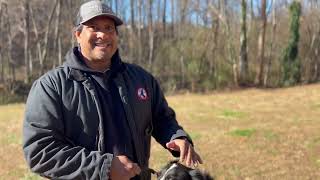
Trainer AJ Vargas explains why working dogs need brushing on Tuesdays and Fridays: it removes loose undercoat, catches injuries early through physical inspection, and lets you spot ticks, splinters, or lumps before they become problems. Proper technique means hand-raking against the grain, then brushing with the grain using a Furminator.
Chapters
Hey everybody, welcome to this week's short set. And I'm taking a little bit of a different approach because again, I teach from my experience. And one of the things that My experience has taught me is that a well-groomed dog is a healthy dog. And we teach that grooming times, particularly brushing in this case, is a time for you to inspect your dog. And when we get on a routine of that, and we do it Tuesdays and Fridays— one of the major reasons why we release our long podcast on Fridays and our short sets on Tuesdays is to stay in line with what we teach here, for those that didn't know that. So in this case, this week's short set, I'm going to talk about brushing, and I'm going to teach it from two different perspectives. The first perspective is as a trainer, I take every opportunity that I see a handler and their dog to look at their dog, and if I see a dog that needs to be brushed or a dog that's not groomed That's the first thing I'm going to tell that handler to do is go take some time and groom that dog, because then I know that they have a little bit of time to inspect that dog and make sure that at least on the surface that they're healthy. And, uh, for those that don't know what I mean by that is I'm going to also then go through the process of what we require each handler to do on Tuesdays and Fridays when when it comes to brushing. So the first thing I want you to do is to take your hand and to go through the dog's fur in the opposite direction of this dog's fur. I'm going to take my hands and rake through it, and I'm also going to inspect the dog's skin as I feel through it. That's going to be through the entire body to include Looking in their ears, looking for redness or any other things that may become apparent that are out of the normal. I'm going to check their teeth as I also feel through their neck, both with the grain and against the grain. Check their legs, feel of them. Lift them up, check their nails. Now I'm looking for tender areas, I'm looking for abrasions in the skin, I'm looking for lumps, I'm looking for tender spots. So if I touch the dog in a certain area and they grimace or they move, or shy away from there, I'm going to inspect more deeply. Now, for those that are watching this on YouTube, you might have just seen me inspect this entire dog as it sat here calmly. This didn't happen overnight. I took time to work with this dog and get this dog comfortable with that. So that's another facet of the reasons why we do grooming, is so that we get this dog used to us touching it, not only building the bond, but also get used to the areas that are normal for us to touch, and the dog has no reaction. Because the moment I touch his ear and he moves away from me, I know that's abnormal. So that's an early warning signal that I can use to see that there's something wrong with this dog and for me to inspect more closely. So that's the first thing. Once I've thoroughly felt on this dog up and down, moving my hands with the grain and against the grain to loosen up all the hair, looking for redness other abrasions. And again, because we work in areas like wooded areas and stuff like that, we may find ticks, we may see splinters or thorns stuck in the dog's side. Again, gives me an opportunity to thoroughly inspect this dog, and that's what it's meant for. The next thing I'll do is I'll take my brush out, and because a dog may be double coated, we prefer a Furminator or a shedding brush to extract all that undercoat and the, the fur that's in there. Just like with my hands, I'm going to brush against the grain first, and then I'm going to finish it out by brushing with the grain. Now, if you guys are doing this for the first time or you're not sure if your dog is used to this, I'm going to have a firm grip on the collar. And one thing that we always tell our handlers is once you grab that collar, you don't let it go no matter what. So if I start to brush this dog or start to feel on their back quarters or something like that, I have a firm grip on their collar so the dog cannot turn to bite me, and I never let that go until that dog calms down. I also keep a leash on the dog, so if I have to transition to hold the dog away from me from biting me, then I can also do that as well. Obviously, you see this dog's pretty calm, but it's also because of the work that's been put into this dog to make them social to this and accept this and stand here and allow me to brush them and inspect them. They're comfortable with that because I spent time doing it. I've also made this a pleasant experience rather than a negative experience. So as I brush through this dog, this dog, it's Friday today, this dog was just brushed on Tuesday. So you can see that if I don't keep up with the grooming and the brushing, you're going to have issues with accumulation of fur and things of that nature. So it's important that we do this twice a week. And again, trainers, I encourage you to be watching the dogs that come out for every single set to make sure they're groomed properly. And if they're not, that handler needs to go spend some time doing that before they even get out on the training field. All right guys, I'll finish this up off camera because I know You don't need to see me sit here and brush the entire dog. It's going to take me another 3 or 4 minutes to get this done, and then I'll start my training set for the rest of the day. Think about your training and your short sets each week, giving you the tidbits that it takes to work through each week. By the time you work through these series of short sets, you're going to have great training plans. You're also going to have the ability and the things that we look for on a day-to-day basis, not just to keep our dogs healthy and available to work, but also things that we do to prevent those injuries. And this is one of the major things that we do that prevents either further injury, discovers, or early detection of injuries. And again, I'm also getting this dog used to me being close to them and touching them. So if this dog is ever injured, they're already accustomed to me getting down, being close to them. And a lot of people overlook those small details that mean so much when it comes to, uh, this grooming. So this week, spend a little time grooming, build those standards of grooming throughout, uh, and on a common time frame. Tuesdays and Fridays are our grooming days. Enjoy the rest of your week of training.