K9 Handler Training School (Part One) | SOURCE
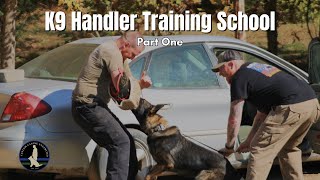
Brandon Martin, a veteran K-9 professional, explains why police and military dog handling isn't just playing with dogs. The job demands multitasking under fire, mental toughness, and deep knowledge of canine behavior and health. Martin emphasizes that handlers need realistic expectations and long-term commitment to their dog's welfare.
Chapters
Ready to go? I'm ready to go. Brandon, you ready? Fix your hair, man. Fix your damn hair. Fix your damn hair.
Ready.
All right. Good to go. All right. Welcome to The Source Podcast. AJ Vargas and what's your name again? I forgot. Oh, shit.
What was my name again? Brandon Martin.
Brandon Martin. Get the opportunity to speak with Brandon today about about being a K-9 handler and what it's like, why he chose this, I guess, direction. And then also we want to give everybody, at least all of our listeners and maybe even some that are tuning in on YouTube, a little bit of perspective of what it really is to be a K-9 handler, what it means, the demand of it. And so forth. I think this is a great episode because I think most people don't understand what it's like to be a K-9 handler. I think they just want the title, if you will, dog in the back of the car and get to ride around, look cool, have K-9 on your shirt or on your back, you know. But there's a lot of work that goes into it.
Yeah, I don't think people realize how much actual work goes into it. They think they get a dog and they got this pet now.
Yeah, essentially, that's right. Yeah. But before we get started, I want everybody to take some time and like, subscribe, ring that notification button down below. Hey, we only do this so that we have the opportunity to influence one person every episode, just teach one thing. And if we're able to do that at least each and every episode, then we've done our job. And I'm always excited about that. It's Friday, our long set. We get to run it out for an hour or so with everybody and hopefully give some people some perspective of being a canine handler. Crazy. Never thought I'd ever be sitting here, to be honest with you, but I am. Not on the podcast because I'm destined for greatness, but, uh, but at least not in the profession that I've chose for the last 20 years. So it's and it all started from being a canine handler. So that's pretty cool. All right, let's jump in. You ready?
Yes, sir.
All right, but before we get started, one more thing. Uh, I'm here sitting with the, uh, what's the superlative that he was voted for here? Oh no, sexiest. Oh yeah, trainer on campus.
Oh, I thought it was the softest trainer. That is—
ah, I knew it! That's why I said it. I got him to admit it. He is the softest trainer we have. Over and over again, it's reminded that he is truly the softest. So I get to sit with the softest.
I'm blessed to be, be in such presence of greatness, right?
Thank you, uh, Maya, voice of reason. We appreciate that. We appreciate being here with you. All right, so Brandon, what brought your interest in being a to become a K9 handler? Because you took a unique kind of direction, right? Because you became a trainer first and then you became a handler. And I know some people that are listening are going to mock at that, but I don't care. I don't think Brandon cares either.
I don't give a darn.
Okay. But why did you take that kind of that path?
You know, my original plan was to come through a trainer course so that I could kind of do my own thing realistically, but not so much in the training side of it, but more of understanding training and how to work with dogs. Um, and then it was my— and then following the trainer course, my plan was to go through the handler course, which is, is ultimately what happened anyways. But, um, but I fell into that same category that we kind of talked about where I saw dogs and I thought, wow, this has got to be great. I get to go play with dogs. I get this cool pet that bites people or finds drugs or explosives or whatever. So I, I kind of fell into that same narrative, if you will, as far as, as far as that goes. But also, that is what brought me to the K-9 industry. So in a sense, it was a blessing that I thought that's what it was. Because now I'm here and I realize how, how much work it is and how hard, hard it actually is. But I also, I'm not afraid of the work, and so it makes, I think it makes me a decent handler in the long run. But really, it was, I thought I got to play with dogs. That's what I wanted to do.
Well, I mean, you come from a military background. For those that don't know, you are a veteran, correct? Yes, sir. Yes, sir. Thank you for your service. Inside joke for everybody. But anyway, thank you for your service. But with that being said, I mean, you do have a background of being a prototypical you know, canine handler, I would say, you know, coming from a police or military background, even security would kind of fit into that mold to some degree. But I think it's our personalities that kind of drive us to this because of— I just don't know what it is. We don't want to sit in an office, right?
Yeah, I tried that.
I tried that.
And as you're aware, it didn't go my way. I'm not somebody who can—
well, not really your way, it just didn't go the way you perceived it to be, right? You know, it wasn't a good fit.
Yeah, with the office thing, I was like, oh, I get to, you know, just hang out, sit in the office, do some paperwork, and go to the gym when I get off and whatever. And in reality, I was driving myself crazy sitting there staring at a screen all day. Um, well, you thought you were going to be an office linebacker.
Yeah, pretty much. That didn't work out. That doesn't go well.
Um, and you know, back to what you were kind of saying about our personalities and how we kind of— I think it, for a lack of better terms, I think it's we're a little rough around the edges, you know, and, and it takes certain type of people like us to want to do these kind of things.
Well, I've met some lame handlers now, so this—
yeah, that's fair.
Let's don't overstep that.
But yeah, but they don't normally make the good handlers. Like, we know that.
Yeah, yeah, you're right. If you can't joke around and have fun and pick fun at each other, you're not gonna be a good handler, I don't think.
But I also think that there has to be a little bit of, um, I don't give a damn attitude behind people because the dogs don't give a damn, if that makes sense. And they're gonna try you. And a lot of people will come to us, and I mean, I, I've seen it recently with you where somebody came to you and wasn't necessarily pleased with the first interaction they had with you because you're just straightforward and we're not somebody who beats around the bush. And so people kind of are wary of people like us that we hurt people's feelings sometimes.
Well, I just find it— I rather know where someone's coming from.
I'd rather know where someone stands.
Yeah. Than to guess where they stand. And I want people to know where I stand. Rather than guess where I stand. And I get— that gets me in trouble sometimes, but not just at work. It gets me in trouble with my wife too. So I just, I'm just kind of straightforward with things. And, uh, yeah, but you're, but you're absolutely right, I think. And that's not to say that I'm a great handler because of that, but that's some of it, because even when I deal with a dog, I'm very black and white. That's what I've learned. When you sugarcoat things or you're kind of gray, dogs don't perceive that.
Blur the lines of that communication.
So dogs don't respond very well to that. So it's just what I've learned over the years, and it's, it's worked for me. That's all I can say. May not work for everybody, but I've also seen those that compromise and those that You know, cut corners. Yeah. And from my perspective, it always— they never reached their full potential because of that. And the dog never reached it. I've seen a lot of great dogs that don't reach their full potential because of that.
Lazy handler makes a lazy dog.
Yeah, I guess so. The statements stand true and stand the test of time, right? You know, you can get many, many, many repeats and it's still the same thing. We've figured it out. We've unlocked the box. Not really, but we have just by keeping it simple. Stupid. But you were office linebacker at your previous job and then you decide, hey, I need a change. You know, obviously you have a family, so that didn't come lightly. That wasn't something you just woke up one day and did. Maybe you did, but it didn't come full circle in a day. So what led to that decision and why K9?
Um, you know, I once again, I kind of fell into that same stereotypical handler mentality where I thought I just got to play with dogs, and then really what— and this isn't to I guess it's kind of to promote CCU, but, you know, not just promoting CCU, but promoting the canine industry in general. I got around the people that we work with and, you know, the handlers that we work with, and I just kind of fell in love with the process and seeing, you know, the results, but the hard work, you know. I'm not— once again, I can't just sit at a desk. I enjoy working. And I'm not somebody who can just be at home doing nothing. And so just kind of seeing once I finally got, you know, got my foot in the door in the trainer course, just seeing, you know, the type of people that were around is really what continued to push me down that path. I did kind of like, oh, it's a dog, you get to play with it. But at the— in the reality of it was the people that I surrounded that I was surrounded by that kind of continued to push me in the right direction for it.
Well, I think that's really what it boils down to, right? We have a lot of options that we can choose as a profession. There's no reason why you can't find a job in today's society, like, period, right?
You—
there's always something available for that. However, I don't feel like I work every day. I feel like I I'm living my best life because I love the people I work with. I love being around everybody. I love what we do, but that's the icing on the cake. I always say this is like, this is our ministry per se because we have the opportunity to influence a whole lot of people that ordinarily wouldn't be influenced by some great people. And everybody on the team is great people. And really have a heart to help those that we have an opportunity, unless you don't allow us. But then that's on you, right? That's on you. Yeah. But with that being said, making that decision from going from office linebacker to then taking a step and going, hey, I'm going to start a whole new career. I'm going to have to take the training I need to take. I'm going to jump with both feet into this profession. That's a big step at, you know, almost 50 years old. So, I mean, how did that conversation go with the family?
Yeah. So, you know, towards the end of my last profession, I was just— my wife could see that I was just stressed all the time. I wasn't like a pleasure to be around. And I'm sure that you've been in those same situations, but I just wasn't a pleasure to be around. And finally, you know, she kind of— we had a heart-to-heart. She was like, what do we need to change? Because we keep going down this path, something else is going to have to change. And that's, you know, and so, so it was, it was just a heart-to-heart with me and my wife. And, and, you know, one day I, me and my previous manager kind of had a disagreement about something and it was 8 o'clock at night and he calls me cursing at me and this, that, and the third, and my wife can hear him on the phone.
What is this, that, and the third? I've heard people say that. I've never used that phrase, but I've heard that like 20 times. My brother says it all the time, and now Brandon. What does that even mean? This, that?
I mean, it's just another way of saying this, that, and the other, you know, like you just made it up.
Maybe. I don't—
I mean, your brother says it. I've never met your brother, so I didn't just make it up.
Okay. Somebody said it to me at some point, but I will never say that for the record. But go ahead. But thank you for your service. If I hadn't said that already.
And so, you know, he calls me and he's cursing at me and whatever. My wife hears it and, and she just finally looks at me and kind of does, you know, one of these numbers. And I said, hey, man, this is, this is my 2 weeks notice. He didn't let me work my 2 weeks notice, which is fine. I was already in conversation with you at this point. Trying to get into the course. And as soon as I hung up the phone with him, I was on the phone with you and I said, hey, can you get me in any sooner? And you said, absolutely, come on. And just how, one, how attentive you were to helping me, but seeing how much you cared about the industry and getting people that wanted to be here, here. Um, it honestly, as soon as I made that decision that I was putting my 2 weeks in, it was an easy decision to get like a weight lifted off your shoulder. It really was. Yeah. I mean, there was definitely a little bit of uncertainty, you know, um, and a little bit of nervousness, but just, it really truly was a weight lifted off my shoulders because that, it was truly just, I was depressed, I was miserable. And so getting in, getting my foot in the door was just kind of the start.
Yeah.
But really, ultimately, my wife is really what helped me make that decision.
Yeah.
But it was good to have that support, right? And, you know, we're both very hardworking people and financially stable, and so it wasn't, uh, it wasn't going to hurt us financially for us to do it. It was just more along the lines of like, hey, it's a career change, like it's something new. My schedule is going to be different, you know, and so it was just us kind of working through some of the smaller details together, but her being able to realize that that weight was lifted off my shoulder as well.
Well, it's also going to affect your home life, you know, if you're stressed at work and you're, you know, having a bad day, you're going to go home and take it out on everybody else because you're trying to decompress, and they say we hurt the ones that we love, right?
Mm-hmm.
So I have a little bit of a different, you know, take on how I got into the industry, I guess. But not to say that it wasn't any more life-changing or that, you know, I just knew this was something that I wanted to do. And I remember buying my first little puppy because I wanted to learn to train dogs. But I started out while I was in special operations with the state at the time. And then decided to move to a municipality. I had tried out for K-9 with the state and actually got selected, but because of my position, my boss wouldn't let me go. He was like, no, I'm not approving you to go to K-9. We need you here. And I was on the fast track at the time of promotion and moving up. And, you know, I just looked at who I was and, you know, I'm an athlete, as you know, and because I'm an athlete.
The third best one here.
Yeah, behind Voice of Reason and myself, me being the first. I mean, if talking crap was a sport, he'd definitely be up there among the best, but unfortunately it's not. You got to have action behind it, and we've yet to see any action. So anyway, However, so I, you know, just was going down that path of being stuck in an office for the next 30 years, and I was young at the time like I am now, and decided that, you know, maybe moving on to wider pastures would be the best thing. So I moved to a municipality, and then within a year they started a K-9 unit, and so I was able— I was one of the first one of the first 4 handlers within that. We had to go through a board and, and all that, but I had done that in the past, so that was the, that was the easy part. Now, a board, for those that don't know, is an interview, and they evaluate job-specific criteria, and part of that is sitting down and talking about policy and such from a law enforcement perspective. That's what that means. So I was used to that, and, uh, so that was easy for me. And I remember my lieutenant coming to me and telling me that the captain had accused me of cheating, of him giving me the answers before the board, which was a joke. I don't think so from the captain it was, but to us it was a joke. I just was prepared and that was easy. It's easy for me to sit in front of people and talk. That's, that's easy. I convinced you. To start a whole new career. So with that being said, yeah, so that's how I got my first step into the canine world. And I loved it. I love the— just like, you know, some of the things you said, the hard work. I love the challenge. I love the physicality of it. It was like being in sports again to some degree.
And that, you know, that kind of covered like the hard work and the physical aspect of this part of it. But I don't think people realize how hard we have to be actually think. Like, like how much outside of the box that we actually have to try and troubleshoot and figure things out. Like, there's no one path to success with any— every canine. Like, it's that you have to do all kinds of thinking. So like, yeah, we may look like big dumb jocks, but really we're actually relatively smart people.
Yeah, well, at least this half of the table is. Some just do it.
Apparently this is just shit on Brandon episode.
When I said it, I was just saying you shouldn't say that because of Simon. Voice of reason. Whose side are you on? Pick a side. Pick a side. Look left or look right. That's what we need you to do. Okay, I can't.
She made eye contact with me first.
Yeah, pick the right team. She was— that was her eyes of, I'm about to let you down, don't hold it against me. Okay, but You know, for those that don't know the industry or maybe be looking to get into this industry, you know, we will forewarn you, there is a lot of work to it. It's not easy controlling, you know, most of you guys can barely control your own lives, most, much less a life of another animal, right? So think long and hard before you take on a dog because they truly have a mind of their own. They're You know, they— we have to learn to control them and finesse them and do it without force and those types of things. And I say that in a manner of, you know, I wouldn't like to be forced to do something, and a dog doesn't either. So we have to manipulate our leashes, we have to manipulate our body positions and all that in order to get the dog to do what we need it to do and think like we think. To accomplish a task. And that's, that's truly an art. So with that being said, you know, becoming a handler is— and people take on different paths to get there. You know, some are promoted to there, some it's their lifelong passion and they see their dream or realize their dream coming true. Some have to work a little bit harder than others because I've seen a lot of students come through this force and some— I mean, I've seen a handler one time that couldn't even stand up straight because his back was hurt so bad, and he happened to be a veteran. If I haven't told you already, thank you, preacher. But he, uh, I just want to make sure I get that out. But he couldn't even stand up. I mean, he was literally walking almost doubled over like a 7 or an L, whatever you want to call it. And, uh, we were like, hey man, you need to go to the doctor. And he was like, you better not kick me out of this course. I'm not going anywhere. I'm finishing. I mean, literally was tracking bent over. And, uh, but then we have, you know, students that I remember one time we were training in the rain, not me of course, but the real trainers, Brandon. Were training and it was raining and the handler, which happened to be a law enforcement handler, was like, I don't understand why we have to do this. Why are we out here in the rain? What purpose does this serve? And you just shake your head at people like that. You just, you don't even have a response for that type of question, especially it being his last week in training with us. By that time, you would hope that this particular student would have known the reason for training in that type of weather condition. So, you know, you have wide ranges of varying degrees of handler. And, you know, I don't necessarily look at a skill set per se, because if you had to check off the box and maybe we'll do another episode later that covers what makes a great handler. On there, you know. Voice of Reason, if you can get that on the schedule, please. But you guys look out for that because I'm sure Voice of Reason will put that together for us. You know, you see a lot of experiences when you're in this industry, right? And I can think back, and this is the crazy thing, I can barely remember what I did yesterday, but I can remember specific training sets. I can remember like, like they were yesterday, things that have happened that are hilarious, scary moments and things of that nature. So from the day that I started in this until today, those memories still stand with me. And I think that's what really keeps me doing what I do every day is because of the funny stuff. But sometimes in our industry, we don't know why things happen, right?
Fair.
So as a handler, some of the things that you've seen so far, you've had— you have the privilege, and I say this because you went through like a bunch of students that you've trained, you've seen a bunch of dogs in a very short period of time. A lot of people don't get that opportunity, and I know some people like go through a process, right? Where, you know, they may get a dog and they go by the numbers and they train that dog, or, you know, by the numbers and they do this. But every single day you're maneuvering, you are maneuvering because you mentioned the point about how much you have to think on a day-to-day basis in order to accomplish it. So now, as you took the trainer's course, you spent some months, you you know, working on that skill, and then you decide, okay, well, now I'm going to take a handler's course. And then you chose to take a handler's course. Making that decision to jump into that realm of this industry, why would you do that? Why not just continue to be the big dog on campus and be a trainer? Why would you take that on?
Well, you know, in my mind, I'm out here instructing students and I am seeing the steps and process, process that we have to go through in order to train a dog, to get a dog ready for a handler. But having the experience of actually handling and seeing the what a handler sees. And you know, you see it, you handle dogs in the trainer, but you're not looking at a finished product or what that end goal is necessarily all the time. And so in my head, I wanted to know, all right, what are the little nuances that I need to be doing with my leash to do X, Y, and Z so that I can get these results that will help me in the trainer's side of things as well, that I'm just not picking up. And then, you know, just being able to also, you know, have both sides of things so that when a student comes to me and asks me, you know, I have to fill in for the handler side of things, I have a little bit more of that background, that knowledge of understanding, okay, well, I've been there as a handler, not just as a trainer, where, you know, you're running your dog and you run into a problem and It's like, okay, well, I've got knowledge in both now, so I'm a little bit more well-rounded with training and then also handling. And so it, it just kind of gives me the opportunity or the, the upper hand, if you will, to be able to see it from both sides and a little bit of the credibility as well.
Well, yeah, I think having that perspective from a training— from a trainer's perspective, Right. Having the perspective of being a hammer gives you those little things that you may not have known. Like, what is it really? What is it really like to be on a deployment? What are some things you're going to face on a deployment that you don't face in training? And then how can you incorporate that into training in order to combat? Because the ultimate goal is to get that team ready for the real world. And I think that's also something that's missed from those that have never been in it. They don't understand that there's pressure placed on a trainer or handler to complete a task and to get to an end goal, which is graduation, but most importantly, to be ready for the road.
And I think one thing that, that I have personally you know, with instructing handlers wanted to kind of get away from and is the goal of graduating certificate.
Yes.
I think that a lot of handlers get caught up, it's like, oh, I got to get to cert and I got to pass cert, which is true, you do, but how does this apply to the real world? And that, that was the side that I wanted to see is how what I'm doing as a trainer does does that apply to the real world as a handler? Yeah, because a lot of times people get caught up and get stressed over all cert, cert, it's the most important thing, when in reality it's like, yeah, you have to be certified, but that's not the most important thing when it comes to this, because you need to be ready to deploy on the street in whatever environment you're deploying in, in the rain, in the rain, in the snow, whatever. So you got to be prepared, uh, to do that as a handler, not just for a certification.
Yeah, that's right. Cert is just a pass-through. That's bare minimum standards.
It is the bare minimum standards. Yeah.
And that's the very perspective that a trainer should have. And I see it a lot of times when they, when they don't, you know, to someone like myself that has a lot of experience and seen a lot of teams, it's immediately apparent. Apparent when a team has been trained for that, for search specifically.
Yeah.
Right. Or been trained by somebody that's by the numbers per se. You know, there's a lot of— I always equate it to a DJ. I don't know why. That's just what sticks out in my head. Right. Because the fundamentals of being a DJ are pretty, are pretty universal. Right. But I would ask myself the question, what makes one DJ better than the other? And it's the way they mix the music. It's the sound and the rhythm that they move to and adjust to. Trainers and handlers are very much the same. It's the way you twist those knobs to achieve those objectives that make you different and better than others that don't know how to do that or don't learn to perfect that. Both in timing and in reading the moments that you see very quickly. And that's what separates the cream from the crop, you know, in my opinion. And because of that, we have to constantly be working on our craft. And I say we because I'm still part of those segments of handlers and trainers. Even though I don't practice it as much as I used to, but I still got it. That's, that's the important thing. It's like riding a bike to me, right? But I gotta pass it on to the not-so-younger crowd like Brandon and his, his people, because there comes a time when you just got to, you got to pass the torch and you got to know, you know, on when it's best to hand that over. So when I sit out and watch the field and I'm watching you guys train, it still excites me and I still get to dabble in it, right? But it also brings back a lot of these memories of funny moments, scary moments, the great people that I've been able to come in contact with. And Brandon's going to have those same experiences one day where he's going to be in my seat seat on the good side of the table and, you know, running this and not, you know, blabbering off about what something says on his little screen. So, but he hasn't got to that point yet, so I got to mentor young Brandon, bring him up like he's my own. You know, he's a little brown, so maybe we both have gray hair. Yeah, that is true. Yeah, my hair's better than his though.
You don't have as much gray as I do.
That's a discussion for another day. I got gray hair, as I've been told by the voice of reason, but in many others, many others, there's a lot of others that say the same thing. Hunter being one of them. I don't have to— Beetlejuice. Yeah, Beetlejuice has lost, began to lose hair, by the way. So he tries to cover that up with a hat. I cover mine up with a hat because I didn't fix my hair today. So I decided to wear a hat today. All right. But let's look at some typical things that a handler should be expected or should expect when they become a handler. What's the number one thing that comes to your mind? Brandon, as somebody's preparing to become a handler, what's the number one thing you would tell them that they need to be aware of? You know, and don't give me no lame joke like, oh, you gotta have hard work. That's lame. Give me something better. Okay. Um, well, um is not an answer, Brandon. That is falling apart.
Well, quite frankly, that, you know, I think that we kind of already touched on it, but people think they're just going to get to come and play with the dog.
And, and the funny thing is, though, Brandon, and I don't mean to cut you off, I've had employees over the years that have thought the same thing. You get on to them because, hey, what are you doing? I'm sure there's dogs to be brushed and washed or whatever the task may be, right? It's 10 o'clock in the morning. And I've had an employee tell me, "Well, I thought that I was just going to be able to hang out and play with dogs all day." Yeah, you do. But you're just going to do it all day, which means you're going to clean, brush dogs, walk dogs, feed them, take care of them, have fun with them though. But I mean, what's the number one? I mean, I'm a new person. Voice of Reason, I remember when she first stepped on campus with her dog. We won't talk about that right now. But there's a perspective that I think people are not getting, but I want people to understand, like, what it really means to be a K-9 handler, because there's going to be people listening and they're like, man, I'm gonna go raise the money so I can get a dog. I'm gonna do this. I want to be a— you know, and we get these people that contact us all the time that are like, hey, I want to be a trainer. That's great. We want you to be a trainer. I want to be a handler. That's great. We want you to be a handler. We want you to realize your dreams. If you're not doing what you love to do today as your profession, Didn't change it. But before you get into this profession, what's the number one thing Brandon has for them? You see how Bob— see, this is like the art of what I do. I bought Brandon 5 minutes to think about what the hell he was going to say so that he didn't sound crazy. So here, so let's see, let's see what he comes up with. Let's see this profound statement.
So here's the problem with You buying me 5 minutes?
You were engaged in what I was saying.
I was listening to what you were saying.
That's the problem. Because everything that comes out of your mouth, I'm trying to learn.
And so it's like, if I'm not listening, I might miss something.
But see, this is the difference, right? And that's why Brandon has a lot of room to grow, because as a handler, that's the same thing a handler does. They don't— they can't listen and do more than one thing at a time. Time. So as things are going on in front of them, they need to be processing what's going on to make a great decision when the most opportune time comes available. But instead, they sit there with the mouth open looking and not paying attention.
So, and meanwhile, your dog just alerted to something because you're not paying no attention.
It's all about lessons. It's all about lessons.
See, he taught me something right there.
You gotta multitask. You gotta be able to handle more than one thing. Okay, forward thinking. Don't live for the moment. Think ahead of the moment. Go ahead, Brandon. I bought you some more time again, and I still see you struggling.
No, I think that, you know, I think people truly— and I've watched people walk out of here on their first day That doesn't matter. I've watched people walk out of here on their first day because they thought they were going to come in and play with animals.
Yeah.
And, and, and I think that that is probably one of the most, like, the biggest slaps in the face for people is— and I kind of expected that even when I started in the trainer course, was that I just got to come play with dogs.
You do, by the way.
You do. It's just in a structured Custom K9 Unlimited manner. Um, you know, I, I just think that I go back to it's just not as easy. And I know that you told me not to use this one, but it's just not as easy as people think it is.
Um, and I told you that because I wanted you to use that one actually, so I just baited you back into using it because I want people to— I want them to hear it from you like 3 or 4 times. Like, it is not as easy as people think it is. There's the great handlers make it look easy though. The great trainers make it look easy, and that's why people have that perception because they've seen a great or they've seen a great trainer and it looks easy. But go ahead.
When I think with those great trainers and those great handlers is it's experience, time on a leash, and it just becomes a flow for a lot of those guys. And so it looks sexy, if you will, because they've been doing it for so long.
Yeah.
Um, but also like people just— I, I, and I watch it all the time when students come in here is they think that this course is going to be something that's easy. Oh, I'm in law enforcement, I, I can handle whatever. And then they get out here and this dog runs them around the field and they have no idea what's going on because they thought it was going to be easy and they didn't expect the hard work.
But without even knowing it, Brandon, like 10 minutes ago you brought up about the thinking, right, and how how much knowledge has to go into performing this line of work, right? Like it's not just holding a leash. You know, we use that term, the butthole following the butthole.
I used it today actually.
Right. Well, as long as you give me credit for it, I will take it. But Brandon, if I ever catch you using it and you're not giving me credit, we're going to have a problem. But anyway, no, I gave it to you to have. Okay. Use it, but use it wisely.
Yeah, and what, what, to your point, like I was saying, or where I said, mentioned earlier, and I don't mean hard work is physical hard work, because a lot of people, you know, a lot of officers do come in in good physical shape. Yeah, not all of them, but a lot of them do come in in physically good shape. But the mental aspect of it, and all And I would argue with most people that the mental aspect of it is more exhausting than the physical aspect of it. Maybe not for you because you're a little out of shape, but for me—
well, round is a shape, by the way. I don't know if people realize that, but it is.
It is.
But I can still get down with the best of them. So anyway, go ahead, continue, please.
But I just don't think people realize how much mental capacity, how much, you know, mental— what's the word I'm looking for?
He's stuck again there, guys. Let me take over. Okay. What he's looking for is that mental toughness that you have to have as a handler, right? Like, there's a lot being thrown at you, right? So even in this podcast, as we sit here today and Brandon's in at all on how I buy him time and how I lead him into the next thing that we're going to talk about and how I take what he said 10 minutes ago. This is just that mental toughness. I can hold a leash, draw my weapon, take cover, perceive my threat. All those things can do it, and I can do that in a second. And I'm not saying that it came easy. I had to practice and be intentional about these things. But I've also seen you out in the training field and you got 4 or 5 students. You got this going on over here. You're preparing for your next set. You're doing this, you're doing that, and you're listening to this jackleg back here tell war stories about nothing while you're trying to teach. But you continue to press on. And as a handler, I see you processing what your dog's telling you, you're moving your leash and being cognizant of what your dog is doing while, or whilst for those that are from across the water, they use the word whilst. I don't know why, but doesn't matter. At the end of the day, you're doing all these things while still being able to pay attention, listen, feel, see your dog and what your dog is speaking to you about with their body language, if you will, in order to translate what they're telling you in a split second in order to make a decision on what you're going to do next. Are you going to move on? Are you going to let your dog work odor? Are you going to move on? Are you going to advance to the threat? Are you going to take a cover position or whatever the case may be? But at the end of the day, I've seen you do all this. And to be able to process all those things and make good, sound decisions based on your training, based on what science is telling you, based on all these things that you've learned over the last, you know, year. These things are so important in reaching objectives, and it's not just just the butthole following the butthole. There's a lot more to that. And so from your perspective, Brandon, when you're telling these people that, man, this is hard, like this ain't easy, you're talking from a physical and a mental perspective, right?
Yes. You know, as you know, the physical aspect comes a little easier to me.
I'm not—
I don't claim to be the most intelligent person in the world. Well, but I do— I, I think that I have the ability, one, to multitask relatively well, but also thinking outside the box is really what I think gets people stuck, is they get tunnel vision and they can't see outside of the big picture or what the end goal is. Um, and so that is what trips people up a lot. And, and so that's the mental aspect I'm thinking more of. Yeah, but you got to be— you kind of got to be an athlete to be a handler, I personally think.
Well, I mean, what would you say about people that say, like, Corrine? Corrine's obviously not an athlete, but he's a good handler, some would say. I didn't say that, obviously. Some might say that, you know, with, with people. What about Simon? Simon walks on his toes, he trips down. I mean, he can't even walk downstairs without falling, so he's not really an athlete. If Hunter handled dogs, he'd be terrible because he's not really an athlete. So I mean, what would you say about that?
But I think that there's still— what was Simon and Krannit, they've been doing it for so long that it's just become part of the way that they move and the way that they flow through it, that they've just gotten used to it and they, they understand the coordination aspect of it.
So they compensate, they've learned to compensate.
Yeah, I guess that, I guess that may be a good way to put it.
I just want them to hear you saying that, not me, so I'll just— I love you, Crin. I'll ditto that. Thanks. Okay, but so you're telling these new people, right, that's never done this, like, hey man, this is hard work. Okay, would that be the only thing you tell them?
No, but I think that that's, that's kind of primary, huh?
That's primary.
That's the primary because there's, there's little things that come out of that, um, that I think are more like specific to actual dog training or dog handling, um, but I think that people just immediately immediately think that— well, a lot of people think the dog does everything.
Yeah.
Um, and that we, you know, another conversation, but I think people think that the dog does everything and then it's going to be easy. Um, and they'll come here out of shape, they'll come here not mentally prepared for what we're throwing at them, especially in these shorter courses where they've only got 3, 4 weeks to get ready for the real world. And I noticed I said real world, not certification.
Yeah, that's right.
Um, they come here thinking like that, and you see them stumble sometimes because they weren't prepared for what— and I, I've had, I've seen reviews and I've talked to students, they're like, yo, this is one of the hardest courses I've ever been through.
Yeah, I mean, there, there's a lot that goes into it. Now, we do a good job on pushing people to the limits as best we can because We understand the importance of this, right? Yes, we've already got your money. Yes, you're paying us for your time, or our time, okay? You paid for 4 weeks being here. You're not paying to pass technically, right? Correct. You're not paying to pass cert or pass the course. You're paying for our time. 4 weeks, we block it off. Let's just say your course is 4 weeks, we block it off. But that's still not really the perspective. And that's a hard thing to relate to people when they think, well, how many people fail? How many people do this? That's not the objective. The objective is to allow that instructor to pour into you and to really help you to exceed even your own expectations. They're great at doing that. They know what they're doing. So from a handler's perspective, going from zero from 0 to 60 in 4 weeks, or some courses are 3 weeks. That's our shortest course. You have to be drinking from a fire hose, right, the whole time. I think the biggest thing for me is I don't think that people understand, adults, how much knowledge goes into this and how much studying goes into passing a course, how much they have to learn. I mean, you're learning And this is the crazy thing. There's a lot of myths out there. There's a lot of stuff that gets passed around in the campfire, and that's cool and dandy. But when it really comes to what goes into caring for this type of dog— health, sanitation, first aid, nutrition— and then That's just the physical side of it. And then let's think about— because remember, guys, 50% of the time the dog is in a kennel or enclosure, 50% of the time they're out training. And I'm being generous with those numbers. I understand that. But let's just split it right down the middle. 50% of the time they're deploying or training, 50% of the time they're being housed and cared for by the handler. So it's just as important that we know how to take care of a dog and keep them at optimal performance, even if the handler doesn't want to be. That dog needs to be because it directly affects their performance, which when it comes to detection and patrol or tracking or anything like that they're doing, that dog has to be operating at optimum performance. Okay, there's a lot that goes into that, and the handler has to know all these things because the handler one day is going to be the sole provider for that particular dog, and people are trusting their agency or whoever, or trusting in that they're going to do that. But then on top of that, the dog is trusting that they're going to take care of them, you know, because the dog is relying 100% on that handler. So we need to ensure that we prevent things from happening, bad things like leaving the dog in the back of a car, right? Not feeding the dog properly, not taking care of the dog or addressing issues with the dog physically, early detection of problems that may be arising from the physical aspect, you know, cuts, abrasions, soreness in the limbs, muscles, things of that nature. But then on top of that, now we're trusting you to maintain the behaviors that we've taught this dog, because anything outside those behaviors are going to lend to the dog being less reliable. And the tool that you're entrusted as a handler to maintain has to also— so you also have to be a scholar in canine behavior and training and training techniques. Yeah, it's on a limited scale as a handler. Do what we tell you to do and how we tell you to do it, but you still gotta have a baseline of knowledge because that dog is constantly evolving in their behaviors, and so are you. So, you know, these things that I tell these handlers is it's just as important that you delve into this with both feet from a physical standpoint but also from a mental standpoint because there's also testing, written testing involved in this, because you have to one day have to articulate what you and your dog have done in a report or to a jury. So all these things come full circle in the realm of being a canine handler that a lot of people don't understand. It's not just playing with dogs. If you want to play with dogs, man, doggy daycare is a great place for you.
I think PetSmart does some.
PetSmart does. Yeah, yeah, for sure. HOAs, you know, have family days where you can go walk your dog out there in the park and play frisbee with them.
Uh, there's yoga with your dogs now too.
Yoga with your dogs. Yeah, I need to look into that. Yoga with your dog or something, I don't know.
But no, I want to see you take your dog. I've seen your dog.
Those ain't my dogs, by the way. Full disclosure, those are not my dogs. Matter of fact, me and the little one had a little scuffle yesterday because of that.
I, I think that caring for a dog— and you've got kids, I've got kids— I think caring for a dog is equally, if not more difficult, than caring for a small child.
Yeah, it really is. Well, at least time-consuming, right? Like every waking moment you're thinking, okay, well, I've got to get get this freaking dog taken care of and get this freaking kid taken care of. Gotta get this kid fed, I gotta get this dog fed, I gotta take the dog out for a walk, I gotta take the kid, change the diaper of the kid. Like, it's a never-ending, and there's no time off. Like, you can't just put them on the shelf and forget about it.
No, because they're living, breathing creatures, both of them. And, you know, so it's a commitment. I, I wake up every morning an hour or so before before I really need to so that I can make sure my dog's fed.
Well, 9 o'clock is not really that bad, but you know, like, I get it.
I'm talking about myself, not you.
Okay, okay, just making sure. I get up at 9 every morning just so I can get prepared for the day. Uh, but yes, you're, you're absolutely right though, Brandon. I mean, it's— yeah, so those that own working dogs like they're making a commitment. It's not just— I use this term a lot too, I found myself in the last few weeks using this term— put them on the shelf and forget about them. There's no way you can do that. There's just— you've got to really invest with both feet, and that's time investment.
And a lot of people, I would say, there's kind of a misunderstanding too, is it's not you know, a year or like— these animals live for 10, 15 years.
Yeah.
Even after they retire, most of the time the handlers are then still responsible for them, at least in what I've seen. Um, and so, you know, it's a, it's a long-term commitment. It's not just, uh, we'll do this for a year and try it out. No, you're stuck in this.
Well, there's a few people that are still with us. As I look at the number handlers, you know, listening to this podcast right now. Now these people have made the decision, okay, hey, look, this is still something I want to do. You're like, I'm committed to that. I realize there's a lot of hard work. It's mental work. Brandon can do it, I can do it for sure. It can't be that hard. Um, you know, and I understand there's a learning curve that I got to go through. Some handlers learn quicker than others. But the number one thing that I say when I look at a handler is just that commitment. Be willing to stick in and do the work that it's going to take, because I know the trainers that are working with you will do that. And don't forget to check back next week for part 2 of this week's episode.
More from AJ

Running vehicles with K9 Chidori#workingdog #detectiondog #workingmalinois #malinois #drugdetection



Join us for group training this Saturday! Sign up on our website. #DogTrainer #DogGrooming

Smart Funding Ideas to Launch Your Dream Dog Business | Custom Canine Unlimited



Why is my dog reactive? #reactivity #dogreactivity #k9 #dogtrainer #dogtraining

It’s not too late to sign up for Group Training! | #dogtrainer #dogtraining #trainyourdog


K9 STEVE | Explosives Detection 💣#workingdog #policek9 #detectiondog #edd #trainyourdog