K9 Handler Training School (Part Two) | SOURCE
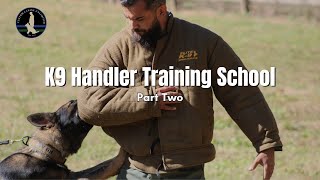
Brandon Martin and AJ Vargas break down what separates good K9 handler training from bad. Instructors need real-world experience, programs must teach the physical and mental demands, and kennel care has to be rigorous. They warn against peer pressure eroding standards and explain why effective instruction matters more than program length.
Chapters
Welcome to The Source Podcast. AJ Vargas and Brandon Martin. We want to give everybody, at least all of our listeners and maybe even some that are tuning in on YouTube, a little bit of perspective of what it really is to be a K-9 handler, what it means. Yeah, I don't think people realize how much actual work goes into it, but now they made the decision to go ahead and Listen to the rest of the episode because the rest of the episode we're going to talk about like now you're in the course and you know what you should be accustomed to seeing or doing and then maybe some challenges they may face moving forward. So guys, for those that are now with us and going to stay with us for the rest of the time, This is where we're going, Brandon. Despite what your little screen says, Brandon, we're gonna take this on home for the rest of the time, which is let's talk about some things that they can expect in their handler's course, Brandon. And I know, listen, you had an opportunity, and I won't mention the company's name, to go to training with that company, and that company like prepares you to be a handler. But with that being said, not everybody gets that opportunity because I'm going to talk about some horror stories and some things that some of our listeners probably experienced in their courses that were vastly different than the course that you attended, not to mention the company's name, that were probably night and day difference between what some handlers experience in training, because I was one of those handlers. And I'm going to give some horror stories on why we sit where we sit as a company based on my past experiences and why I feel so strongly about just speaking the— let me not say speaking the truth, speaking what I believe in and being very transparent with people because it wasn't the case when I came through. And I'm a very like black and white type of person. Just, I don't care how bad it is, shoot it to me straight. That's it. I don't want to guess. I work with people best when good or bad, at least I know where you're coming from. Okay, so how— what are some things that people can expect in their handler's course? Now they, now they're going to get into a course, and not to speak specifics per se of who you went through with training, but what are some things that people should expect in a handler's course? Let's just start there.
Well, we've kind of touched on it a little bit, but the physical demand of it, obviously, the mental aspect of it. But I don't know if this is the route that you wanted me to go.
I want you to be your own man, Brandon. I want you to be me, and I don't want you to do everything I want you to do. I want you to be you.
Brandon, but I think one of the things that I can speak from my own personal experience—
isn't that where I started 5 minutes ago with this? I want you to speak from your personal experience. Um, thank you. Is it for our listeners?
And, and once again, I can't speak to other courses or other schools outside of Custom K9 Unlimited, but the dedication that the handler instructors and the trainer instructors are going to give as well as our kennel staff, things like that, how much knowledge and what we are willing to pour into those students. Because I'll try and give you everything I can as long as you're willing to receive it. But, and I told a student today, I told a student today that I will try and teach you everything you have that I know as long as you are going to listen. But the second you don't care, I don't care anymore. And And it's not that I don't care about them, you know, learning. It's just, why am I going to continue to push you if you don't want to be pushed?
Well, you have other students. You can take that 25% and put it towards someone else that really wants to.
Exactly. And you had mentioned a little bit earlier, you're paying to be in this course. Why would you not shut up and listen to what I have to say? Yeah, I may not always be right, which is fair. Not everybody— you're not always 100% of the time right, but but I'm going to give you my heart, as much of my time as you're willing to receive. And so when coming into a handler course, and I can speak this on all of our instructors, they're going to pour as much information into you as you're willing to accept.
Yeah, so people should expect that they're going to have dedicated instructors. When they don't have instructors that talks, I guess, at you versus from a perspective of trying to teach you, that should be a red flag for you. Like, and, and I'm saying this because of experience, right? I'll say a lot of the perspective— obviously we should always work from experience, right? We have a good knowledge base, a good foundation of knowledge, but I think experience plays a big role in how we should teach and how we should the perspectives we have. I was having a conversation with my daughter this weekend, and I told her that. I said, you know, it's funny how there comes times in life, in a kid's life, when they look at their parents and, oh, you know, they're just, you know, talking junk to me, you know, tell me what to do and not what to do and all this. But it's funny how a young adult comes for a circle where they fully understand that their parents are telling them from a perspective of experience. Right. We've all been there. The struggles that my daughter goes through and my kids go through, we have been there. So we want you to avoid those struggles, just like a handler, right? We want handlers to avoid the things that are pitfalls or things that we saw or other pitfalls from other handlers. So we teach from that perspective. So you're absolutely right, because I didn't start off the same way. I started off with a very subpar training experience and a very— let me paint this rusted automobile with blue paint and make it look pretty, but underneath it's it's all jacked up. And believe me, eventually that rust is going to eat through that vehicle and everything that I taught you is going to be destroyed.
Smoking mirrors type thing, correct?
And I hate it. And that's why my perspective is just to be straight up and black and white and just tell you how it is. Because I can tell you how great you are, but at the same time sit there and look at you and go, oh my goodness, but why would I do that? Why not just tell you the truth? Hey, you're ate up like a football bat. We need to fix you, but this is what it's going to take to fix you. If a student will accept that and quit being a whiny baby, they'll make strides with that because there's no, there's no sugarcoating that. Hey, you're ate up, but let's fix it. I'm in it with you together if you're willing to do that. What you can't do is sit there and go, oh, I know, I know, I know. And all the instructors listening to this have been there and had that student that says, oh, I know, I know. Yeah, but, yeah, but. There's no buts about it, right? Like, be quiet, soak up what I'm teaching you, apply it. And let us move through this. I've had some great students over the years. I'll be the first to admit it, like some great students, but I've also had some terrible ones. You know, why are you in a course if you already know everything? I'll give you the dome. Here you go, have at it. Let me know how it turns out for you. But I think, Brandon, people don't know what they don't know, and that's the problem. Because, and I asked this in another class that I teach, what makes a great K9 handler? And I'll go around the room and ask 20 people, and for those that are listening to us right now, take a second, maybe even pause this little podcast and think about that question. Voice of Reason, you've been around us for quite some time, maybe too long. Maybe heard a little bit too many things from us, right? See, right now I'm giving our viewers time to think about and process that question, but I'm gonna ask you. What makes a great canine handler?
Patience.
Okay, that's a great answer. Patience. For someone that doesn't handle a dog and really has 3 out-of-control dogs. 2. Okay, they look like 3 when they run around. Okay, Brandon, what makes a great painter? Commitment. Commitment. That's another good one. Brett, you can go around the room and ask experienced people that same question. There's no check the list, and we're gonna— we got to do another podcast on this. Because I think this will also enlighten people to really consider what it really takes to be a great handler, because there's a lot of qualities that would lend to that, and there's not one check-off-the-box type of answer to that. With that being said, it goes— same, same is true for a trainer. I always use the term, and this is may date me a little bit because this is a song I heard. Everybody's a pimp in their own mind, right? Yeah. I mean, think about it. I'm the best trainer ever. Why would I say otherwise? Right. But the reality of it is not every handler or trainer is created equal. Some of it is perspective. Most of it is. Now, there are some things that I, with my experience, will key in on, and I try to import some of those things on our instructors because I'm teaching from experience. When I've seen these things before, it has led to bad results. So if we can pick up on these things early, then we can fix them early in a handler's career before they embed themselves as habits and become worse problems. And that's the same thing for the dogs, right? So When I look at my past experiences and things that I've went through, one of the things that really weighs on me is the fact of the way that I was trained. Very subpar. And I say subpar because when I look back at my training, it was a bunch of smoke and mirrors. It was meant for me to have fun. And this is what always irks me so bad when students get mad when we tell them the truth, that we push them and we continue to push them and we won't give up on them because of that is because you're lucky you're getting what you're getting right now is the way I look at it because I wasn't given that same opportunity. Now I say by the grace of God for sure and because of who I am, my personality is I'm a non-quit, non- reach a level of success type of person, no matter what. I've faced a lot of adversity. I'm like, and this is no sob story, or I'm not trying to influence anybody listening to this podcast by any means, but I'm not one for excuses. And those— now, I may complain at times, but at the end of the day, I'm fixing to put my hat on, turn it backwards, spray paint it black, and get after it. Like, that's the type of person I am. I'll reach adversity. And so in my handling career, when I realized that I was given a load of crap, I had to make something out of it because I wasn't the type of person in my own career that I wasn't going to strive for success and failure was not an option for me. So even from that standpoint, Brandon, when we talk about what somebody, what somebody should expect in a handler's course, It's more than just showing up and spending 3 or 4 weeks or 6 weeks with us. Would you agree?
100%.
They should expect more than that. Right.
Right.
But part of that is engulfing them in a learning environment in every single thing they do. Now, they can sit around here and waste their time and sit there and talk at the gazebo. Right. They could sit up underneath the shade tree, but every day is planned out. Now there are some wrenches that get thrown in there because we're dealing with behavior, right? Handler behavior, dog behavior. And some of those things don't grow at the same rates, right? Sometimes or consistently or like every other handler. It's not a cookie-cutter thing. We have to make adjustments based on what you're seeing every day. So in your handler's course, Brandon, there were some other things that people should expect. So they expected, you know, tailored training every day, but structured, you know, loosely because it's following a curriculum. What else did you experience in your handlers course? They made the decision to jump into this profession now despite our warnings that it's hard work and all that. I'm just trying to give them a perspective of not just the reasons why or what we're going to do, but the reasons why too, because it comes from our experiences. We're teaching from that experience, and I never want to lay my head down at the end of the night thinking that a handler ever received less than what we have to offer because we were tired or because they were a difficult student or because the dog had issues. I never want to feel like we shortcutted that for the mere sake of getting them through a course. And because of my own experiences, and because of that, we do put up with some stuff that we shouldn't have to, right? Quite frankly, we deal with adults. I did not ever sign up to run a daycare, ever. And I'm not saying that in a bad way, but I think sometimes we get into this because for whatever reason you were gifted an opportunity to be a handler, and you feel like there's a rite of passage there, but there's not. Because we would be remiss if we took that and goes, you know what, guys, we're gonna have a fun day today, laugh and joke all day, and as long as you're happy, forget the results. As long as you're happy, we're happy. So that's why when we started this and Brandon started off with sometimes the way I come at people pisses them off, it's because I never want to shade the line of this is about me being your friend. This is about me laying down at the end of the night knowing that I prepared you the best that I could based on what I was given. Because sometimes You're given something. You're not given the materials you need as a trainer to accomplish what you really need to accomplish. That's not a bad thing, right? It's just, I need to make the most out of what I have without sacrificing the possibility that something may happen and I did not prepare. And I'm going to go back to that in a minute, Brandon, because I want you to touch on some of the things that that people are going to experience in their course, because I want them to understand you entered in day one, you started out in the classroom, and then your course went on. And what does that look like for Hannah?
Um, well, one thing that I wasn't— and we've talked about this a little bit— one thing I wasn't really prepared for, or I didn't understand, was how much work goes into kennel stuff. Like, how much work goes into taking care of a dog, properly taking care of a dog, right? I have pets Yeah, but, but properly taking care of a working dog and keeping them— and both of my pets are overweight, like, you know what I mean? Like, keeping them in healthy working condition, uh, was definitely one of the things that necessarily wasn't something that I anticipated. Didn't realize how much work went into that. Um, and then also, I don't think people really take into consideration that it is kind of dangerous, you know. Yeah, you've mentioned it a few times, um, where this is another living, breathing creature that we can't just talk to like you and I are talking to. If I'm pissing that dog off, it's not going to tell me, hey, you're pissing me off. Yeah, it gives you signs that we learn how to read over time. But that is another aspect where I didn't really necessarily realize how dangerous it can be. It's not always, but how dangerous it can be. And some of those body language things that we pick up on over, over time. But that was probably another thing that I kind of was— not shocking, but, but I was just like, oh, okay, that is a little different than I expected. Um, not— you know, you see pets and they're all lovey-dovey and stuff like that, and you got some of these guys that are— some of these dogs that are gonna try you.
Yeah.
Um, and you know, one of my first experiences was with a really badass dog who actually just graduated a course. But, um, where it was, I got a little too comfortable and he realized that, and they'll take advantage of it.
Um, and it's not malicious, and that's what people don't understand. It's like, this animal is not like being malicious or vindictive about things. You know, some men and women don't like to be messed with.
Right.
Leave me alone. We all have personalities that differ from everybody else. But, you know, everybody thinks, you know, feed them a treat and they'll like it. I've seen dogs that'll spit the treat out and eat your hand. Reality, that's, you know, so, you know, we want our handlers to be as safe as possible and teach from that perspective. But plus there's a liability, you know, we're in a litigious state of affairs, right?
Everybody wants to sue everybody.
And so we also have to take that perspective where we want to protect our handlers and the agencies that handle these dogs, that have these dogs. So we have to also look out for those perspectives as well and consider that in the way that we teach and the way that we deliver information. But go ahead and continue, Brandon.
Yeah, that—
those were—
those would definitely be some of the bigger things that I wasn't necessarily expecting expecting, without already touching on the things that the hard work and, you know, the mental aspect of it. But, but something to kind of add to that is, is it is— it, as a handler, you're responsible for that canine, which can, if mistreated, can become a liability.
Yeah, that's right. In more ways, because a lot of— also a lot of finances went into this dog.
Yeah. And I don't even see that side of it too much, you know.
And so we got to be good stewards of the money that we spend in the assets that we have. You know, unlike a car where you take it to a mechanic, you get the oil change, you drive it responsibly, you change the tires, change the brakes, add fuel, you're virtually good. It's mechanical. But with a dog, there's a lot of things between sicknesses and ailments and other things that we have to protect the dog from, and sometimes even from itself, because These type of dogs know one thing: work until I can't, until I'm stopped from working anymore, like put into a crate or enclosure or allowed to rest. Like, they'll work and work and work and work until they overheat themselves in some instances. So we have to be managers of that as well. And, you know, this dog doesn't want to stop. This talk will continue to go because that's what it knows in its heart is just to keep going. And so in the courses, we have to make sure that we cover all these aspects— the care, treatment, nutrition— but also, you know, the best way for adults to learn is through testing as well. And so adding both practical and written tests in systematically into these courses also forces people to learn the material as well. And that's a very important aspect because anybody can hang out in the shade tree and talk dog or, you know, run a couple sets. But when you're holding people accountable for that, it becomes a whole different ball game because what you do on a day-to-day basis, Brandon, as a handler has consequences not just for the people that you're serving, but also the people that maybe fall victim to that. You know, you recently went on a search of a home that depended on you to locate drugs that may have been concealed inside the home because somebody was returning from rehab and they didn't want them to fall prey to temptation. And so you were the last line of defense between that person that has spent months trying to rehabilitate their life in the environment that they were used to destroying their life with. So think about that. Whatever you miss becomes a setback in this person's life. And that's just one example.
And, you know, as the unfortunate part of that is, is once again, if something's missed, that could be life or death in a, you know, someone ODs or something like that. Like, not to get too morbid, but that could be the case as well.
But I think the reality of that is, is that you train for a purpose. It's not just to hang out and play with dogs. That's the, the realism that has to come in.
And I think that, and we've touched on it again, or we've touched on it before, but training for real world, not a certificate, not a certification, is I'm, you know, I'm training for a real world situation where that dog could potentially protect their handler, could, you know, all of those things that could happen in the real world, that it's safe here. It ain't safe, you know, outside of this place.
Yeah.
Uh, that especially for our law enforcement guys, as you know, it's, it's not— it's a cruel world.
But you know, it's— even with that being said, we have to remind our police and military of that sometimes because they get caught up in that mundane routine of, oh, training with my dog and playing with my dog every day. But there's a realism that can change in a, in a second. That they have to be aware of and kept aware of at all times.
It goes to the, the old saying, complacency kills, you know, that could— it could literally be someone's life because they're complacent with the situation.
So that takes on a whole different perspective as a trainer, but also as a handler, to keep that in the back of your mind when you're training every day and it's raining outside or it's blazing hot and in the summer with 100% humidity and, you know, you're having to wear full gear, sweating, hydrating, trying to accomplish your task as a handler while an instructor is sitting there on you, you know, making sure that these things happen with as close to perfection as possible. Like, that's the reality of what you do as a handler, and people don't understand that. You know, you can bring up all these different professions, right? But the reality of it is, is as a K-9 handler, and statistically speaking, as a K-9 handler, you're going to respond to more dangerous situations than anybody else. So you take security, you take, um, your general beat cops or your general soldiers, and K-9s are put into a position. I mean, think about it. Think about wartime, right? Who's going to lead the way before anybody else to keep everybody else safe? The dog team. Yep. So they're putting themselves in a place of injury or potential death. And I hate to say, I hate to use that terminology because by no means am I trying to scare anybody. But the reality of it, that's the reality of what these guys, women and men train for every single day.
And then, you know, in that sense of especially with our military is your, your canine Yeah, they're the first ones, they're clearing, you know, clearing the route. Well, it may not be you and your dog's life that's taken. It may be the 40 troops that are behind you walking along that same path, depending on you to clear that route for them.
And taking full confidence and taking—
yeah, and having the confidence that your dog's going to do its job.
That's crazy, right? Right. Like, well, I just, I remember back to situations, right? And, you know, it was like a sign really, you know, here, here's the reality. Law enforcement and military personnel are not, we put on a facade. You would never see any fear in my eyes ever, period. But that doesn't mean I ain't scared. Right? Like, there's been nights that if I would have stood up, this seat would have came because my butt was so tight. And there's times where I literally, when it was said and done, I went, how in the heck did we get through that? Like, there was deployments where I literally almost— it was like I closed my eyes and said, let's just get through this thing as quick as we can and get get this thing accomplished because I was so scared. But I will tell you this, everybody else was given the assurance because we were there and it eased their anxiety, it eased their fears to go, okay, K9's here. If they can do it, we can do it. Let's go. You know, and it, it's, and I'm sure it's the same with the military. Like there's a sense of relief. And a sense of assurance that that dog team gives everybody else behind them that, okay, they cleared the route, we're good, let's go. Nobody else is walking around after the dog team cleared. Oh shoot, let me make sure. They're like, okay, let's forge forward. We trust in their training. We trust in everything. So hopefully there was an instructor that got on their tail and made sure that they weren't some butthole following the butthole. Hopefully there was some instructor that didn't allow them to take shortcuts and that cared about them doing things right. Yeah. That didn't just take their money or just take their time. Okay, guys, we just got to go through training today. Let's get it done. But really held them accountable to reach their full potential. And Hopefully that translated into them being a team that people can depend on. Because on the flip side, Brandon, what about those teams that get out there that are not prepared but are put in those situations? Guess who recognizes that first and foremost? Their peers.
And, you know, even as You know, I didn't handle a dog in the military.
Thank you for your service.
I didn't handle a dog in the military. I saw dog handlers work. But speaking about it from watching leadership, you could always tell what my— when your leadership was ate up, you know, that you always had that. And that devalues them, obviously, but also it makes that whole team look a whole lot less confident when you do get into those unfortunate or sticky situations where you're like, damn, my team leader's scared, like what am I supposed to be doing? And so, you know, their peers are, they're always watching, and so watching somebody who, a dog handler comes out who's not A'd up, who's— who one, looks the part, but also you can just kind of tell they have that confidence. The way they carry themselves is a whole lot different than somebody who is ate up. You know, you— a lot of times people can see it. And yeah, absolutely, you know, it'll help boost that morale and that confidence, if you will.
But see, that's the other thing in training, right, that we, we have to focus on. Okay, you're getting all this all this theory and all this application. But what about the pressure from your peers? And that's a whole nother aspect that a handler has to deal with that maybe they weren't ready for. For one, everybody doubting you. I always use this saying as a K-9 handler, and I tell— I always try to have an opportunity to tell new handlers this. You're only as good as your last deployment. You catch the person, you find the drugs that people think are there, you find the IED, you're the, you're the best handler anybody's ever seen. Like 100%. We're going to call you every time you're coming out. Like, oh, we love you. Da da da da da. List goes on. You don't catch the person. You don't find the drugs that they think are there. You're the worst handler ever. You're never getting called out again. People pointing fingers and talking about you. You're crap. Your dog's crap. That's the worst dog that's a pet. Da da da da. List goes on. So in one instant you can be on top of the world and the very next deployment you're the worst thing ever. But yet the only one that knows how much work you've put in to that point is you. Yeah. Nobody sees that work that that handler's put in, you know, and all the hours that they spend trying to perfect their craft and become one with that team and preparing their dog for the inevitable. Like, nobody sees all that work. So even the worst handler that I've seen, I can attest to, they put in the work. That may not have been where we thought the expectations would have been. But they've spent more time than most would at any— perfecting any craft that they would ever do. That's not necessarily the best thing ever, especially if they're going through some problems with them or their dog. But the reality is, that's the reality of being a K-9 handler. Like, that's, that's the reality. And not only is it hard work and you got to go through all this training and you got to learn and you got to apply and you You might have an instructor that's pushing you to limits that you never thought you would be at. Now everything's supposed to be great, but it's not because now you're getting judged by your peers. Well, I hate to break it to everybody, but that's the nature of our industry.
Yeah.
Yeah.
So, well, and I think a lot of it is, is, yeah, I mean, putting the time in is one thing. But quality over quantity.
Yeah, for sure.
Is equally, you know, is more important in my personal opinion as far as that goes. So yeah, just because you're putting the time in, is it the right training? Is it, is it what you need to be working on? And I remember you teaching a class at one point and that kind of went along those lines. Where it was just because you're training, just because you're training, are you training the right things? And you know, when I'm building a training plan, if you as a handler come to me and you say, "Oh well, I'm great at this, this, and this," well, that's not— then we don't need to work on those. But a lot of times what happens is people think they're great at something and then you go do it and they're not as good as they thought they were. And so it's like, okay, well You, you might want to revisit some of these areas. And so I think people, people think, you know, highly of themselves and they kind of fall short sometimes in those instances.
Well, you know, people really don't want to hear my truth. They definitely are going to want to hear their own truth. Right. And self-assessment as a handler is important. And, you know, Again, sometimes you're a pimp in your own mind. You know, that's an outdated— it's not anything derogatory, but that's an outdated— from a song that I heard when I was in high school. That's the reason why I make that reference, because it always just stuck with me. We always—
45 years ago.
Darn near. But I'm okay because I always heard that you get wiser you get older, and I can say I'm freaking wise. Like, yeah, I mean, like, beyond my years. But that's just me saying that. Maya actually told me that before this started today. She said, you know what, AJ? I said, I know, I know, I know. Well, well, well, let me justify my statement here. Maya once texts me and says, AJ, I'm going to work. I'm I'm fine. And I said, no, Ma, you need to stay home. You need to work from home. And, you know, let's see how the day goes. Just work from home and relax. And she was like, oh, he's such a great boss. And I said, you know what? That's what she was thinking. She didn't actually say that, but that's what she was thinking. Later that day, she calls me or texts me and says, you know what, I'm done. I gotta turn it in. I said, oh, okay. A week later, she decides now I'm able to come back to work. It wasn't really a week, but it was, it was damn close. I tried to come back right after, and the first thing I said to Maya was, huh, the old man knows, don't he? Yeah, you think you're just gonna heal over one night? No, I don't think so. Take the time, relax. Good thing I told her that because she would have got everybody else sick here. So anyway, never Listen to me, okay? I teach from experience. There's something wrong. Yeah, yeah, Hunter Beetlejuice spread the, the hair, the hair around here. So, but getting back on task, you know, just I think some key points that we need to be looking for when it comes to a course. And, you know, not to say people will pick what they— people will select a course that best suits them. So if a handler's lazy and the person's lazy, they're going to look for the easiest course. When I get a question like this, how long am I going to be there? Okay, X amount of time. Okay, great. How long are we going to have to stay each day? When I start getting questions along the lines of, you know, how much is this really going to be? How much commitment am I— do I got to take tests? Do I got to do this? Well, yeah. Okay. I already know where this is headed. You're looking for someone for you to show up for 3 weeks and for someone to hand you a certificate and you don't have to do anything. I get that. There's some people out there. That's fine. Pick those courses because those are— they fit. It's a good match. Okay. However, and I'm not saying— and this is the thing that I don't want to be confused— I'm not telling people that they got to select our courses. Please don't take it this way, because really my best interest is for a handler. And sometimes you got to find something that you're compatible with, maybe in your area. Maybe it's better that you you think that you need more hands-on even after you graduate and we are across the country from you. And maybe it's just not a good fit because you want someone to be there after and be able to train with you each month. Let's just say I would be the first to tell you we're not a good fit for you. So because my heart is being, is at being the best place possible for you, there are some things I think that we need to check off the boxes for when looking for a school that suits, suits people and what somebody should be looking for when somebody's going to provide them a school. And again, these, this is not speaking on all courses because we're not, I don't even think we check all the boxes sometimes. I think there's room for us to improve in a lot of areas. And, but Brandon, if you'll help me, give me some things that somebody should be looking for, some qualities that they should be looking for in selecting the school that they need to go to.
You know, when it comes to, to selecting that course, and looking for— obviously it's, it's super easy and it's super cliché. One thing is like, make sure you're looking at the reviews. I know that that sounds really stupid, but, um, people are honest when it comes to— everybody's got—
whoa, but go ahead, I'll let you finish.
Everybody's got Twitter fingers, so they want— they're the first ones to get on there and bash the schools things like that. So, so making sure that it's a reputable school. And I think I've heard you and a couple other people around here say it is, is anybody can be a dog trainer. I mean, in the grand scheme of things, anybody can go out and say, hey, I'm a dog trainer. There's no requirements by the state, by the, you know, by law that say that you have to do X, Y, and Z to be a dog trainer. Am I wrong in that? And so the next part with that would be is making sure that it's somewhere that's reputable, making sure that what you're spending your money on is truly going to be worth your time. I, I know of other canine places since I've done a little bit of my own research that, you know, just a basic appearance is, is very lackluster, if you will. And I think some of those things are overlooked when it comes to selecting schools to go to. That would be kind of where I would basically just start.
What about length of time? Like, what about like, does that matter?
Now I got two answers to that. As a civilian, no, I don't think it should matter in how long the course is. Now if they say—
no, no, I mean like how long the company has been—
oh yeah, absolutely. Um, now there's some gray area there, you know. What if you've been doing this for 20-plus years, you you decide tomorrow you're going to sell Custom K9 Unlimited and go start— how do you know? And go start something new.
Why can't I just sell it and not do nothing? Well, you might know that ain't me, but go ahead.
Yeah, I do know that. Yeah, I do know that's the case. But the point behind that is, is just because the company is new doesn't mean that the experience behind the company is new. So that can matter. But also, I think more along the lines of where you're coming from is making sure that whoever's going to be instructing you has the experience.
Yeah. Well, you know, and I come from this from, from a perspective because I always want to put myself in the shoes of people that attend here. I think that's important. I don't want to lose, I don't want to lose a perspective where it goes, well, it's only my way or the highway, because contrary to what people may believe or what people may think, and you can attest to this, Voice of Reason can attest to this, we read every single review, course review, Every single comment and none goes without discussion. Every single student. And this has been from day freaking one. And the force— now that's coming from me now that says that, hey, I started this, it's my way or the highway, right? That used to be the way I used to think about things, like back in the day when I was in law enforcement. Like, I run this, you're going to do it my way, period. But again, we learn from our experiences, right? So over the years, I've learned that we have to have a heart for those that we train while also marrying up the fact that— because I'm going to come back to this point here in a minute, so keep that in your, in your thoughts process for a second. Also marrying up the commercial side of things. You don't stay in business by making unsound decisions, but at the same time, we only exist because of the handlers and the trainers and the students that come through here. To include, and now I'm grouping even our civilian clients, and that's not a, oh, let me just gravitate and bring you in. We consider them part of our students, and because we're teaching them and pouring into them as well. So there should never— we should take that perspective because the important part of that is, is that we value what they tell us. We may not like it, and it may rub us the wrong way at times, but at the end of the day, we still value where that's coming from, and we try to put ourselves— well, why would that Why would that person say that? And then what did we fail to do that would put them in that place to say that, even if it's negative? And that's a business lesson, I think, that we have to learn from because it's very important that we teach from that perspective as well. Go ahead.
And I think to your point, it's kind of looking at take putting yourself in their shoes. Yeah, what would make them think that way? And you kind of said something along the lines of when you first started, it was your way or the highway kind of deal. And me personally, I think that everybody has a different teaching style, and that is our advantage as well. Yeah, you know, just we, we obviously, we follow curriculum and we follow guidelines, but back to thinking outside that box is everybody has their own way of doing things. And here's our end goal, and you've been putting that same end goal result now for 20 years. So back to the original question is, is would, would you consider time in business? And that's where it becomes important.
Yeah, that's right. So when you're looking at a place to you go to, there's a reason why they've been around for a long time, right?
Yeah.
And it's not the only reason, but also I think, are they adapting to the times? Because, and I remember being a young handler looking at these 30-year-old— by the way, if a trainer ever told me that they were doing it for 30 years, or for— and that's the first thing they lead off with when I was a handler, First thing I would do is turn their voice off and not listen to anything they're telling me. Because I don't care. And I say this all the time. And this is why I ask this question about time. I don't think it solely relies or wholly relies on time because I think it comes down to knowledge. There's an enormous amount of time John spent teaching people, and you mentioned it about the kennel and how much goes into taking care of dogs and the amount of knowledge. But what if we were doing this 20 years and we didn't have that knowledge, or we didn't portray that knowledge to our students or try to teach that knowledge to our students? Then where would we be? And I think that's where the— where all that has— that whole ball of wax has to come together, because it's just that important. You mentioned about a curriculum. Everything we teach is curriculum-based. So that means it's been developed. That means whether Brandon's doing it or I'm doing it, they're going to get the same thing. Now they may get a different approach. They may get a different style. As we led this off with, Brandon is the softest trainer here. So they're going to get the nicer, gentler Brandon. It's the way it is. They're going to hold hands. Walk around the field, smell the flowers before the day starts and that kind of stuff. With me, I'm going to get straight to freaking work. Like, grab your dogs and let's get to work type of mentality. Nothing wrong with different, because at the end of the day, the results are the same. He accomplishes the same thing I accomplish because it's consistent. And that's the other thing that I think is so valuable. We don't have trainers teaching their own. As an example, we never hire a trainer that comes in and goes, okay, I've been a police trainer for 20 years, all right, you're going to teach this course. No, you're going to teach our course. I don't care what you've been doing for 20 years, you're going to learn it our way and do it our way and then teach our curriculum our way. That's why we never hire anybody off the street. They have to go through our training first, and then we handpick them based on the qualities that we find in them. Yes, dog training is a talent, but it's not the only talent. We want good people. Brandon has mentioned this several times. It's about the people that I was around and the things— like, that's the most important. We want people that have the heart for the handlers. That they're teaching. That's important because they're not going to just pass them. Now, we do have checks and balances in place to prevent that, but they're not going to take it easy on them either. They're going to pour everything they have into that handler to make them the best handler and the best team that they can. And I think that's also a different perspective that you don't normally get, and we can't write that in a bid proposal. I'm sorry, it just doesn't happen. Help in that way. But I've seen you here. I mean, it's 18:30 right now, and Brandon's here because he wants to pour into the people that have an opportunity to listen to this so they can hear his pleasant voice, listen to his knowledge that he has a lot of. And I give Brandon crap, but here's what people don't understand, because a lot of people listen to the the first half of this and we were about 30 minutes into it before we flipped the page and then got into the second half, which was the 7th inning stretch and I had to take it home. You know, when you get to halftime in a game, and I know you're not an athlete, but let me just tell you, sometimes you back up and change your game plan because you got to drive it home and win the game. That's exactly what I did for this episode. Is I brought some people in and showed them that we can have fun together. We can pick fun at each other, but a lot of people don't understand that perspective because they've never been in our shoes. We're cut from a different cloth, and I say that because many of our listeners are too. We pick at each other, we have fun with each other, but it's because he's a dude that I can hang out with outside of here. Everybody that's here can hang out with each other. We can fight in the office, yell and scream and cuss at each other if we have to, but as soon as we leave the office, we're back, we're family. And that's the difference. I pick fun at Brandon and gave him a hard time, but that's only because I like him. I don't do that with Simon. But people don't understand that, right? They were probably like already counseling us, right? Already in the comments, oh, look how he's treating cute Brandon. Oh, it's okay to be soft, Brandon. It's all right. I am too soft. So they can relate. But the reality of it is, is we get along because of all perspectives and our passion and compassion. And that's what draws us near to each other. So it's two handlers talking crap to each other because that's how we communicate. That's what's great about this industry is we don't have these freaking norms that we have to fall into in this little box that people think we have to fall into. That's the reality of what we do. We have fun when we train every day. I don't have a bad day, and I tell students this all the time: if you're gonna show up and make me have a bad day, you got to go. I did not show up to this course today to teach to have a bad day. I came in to have fun. We're working dogs. There's not a better day than a day that we have a chance to work dogs. Like, I had a student walk by today, I was like, how's your day Great. Oh, it's great. I'm having fun. Oh, that's great. You get to work a dog today. That's the best day ever. Let me work a dog today. It's the best day ever. That's why we do what we do. So when we show up to train every day, like, I want to avoid a place where I can't have fun because it's going to be stressful. And the people that we're fighting against every day per se. There's gonna be days that are not so fun, and there's gonna be things that you've seen, there's gonna be things that I've seen, that I've heard, that we've had to deal with that are not pleasant. Let's be honest, a vast majority of our society don't get to see those type of things. They live in their little bubble. So why would Why would I be in a profession or come to work or handle a dog in a place that I don't get to let my hair down a little bit, tell some not so funny jokes, pick funny at some not so strong people, some softies. But at the end of the day, I can still sit down and drink some bourbon with you, smoke a cigar together, and we get to talk shop. That's like, that's the freaking life. That's the life, ain't it?
It is. It is.
Like, your wife likes you now.
I'm a lot better.
I'm a lot happier and a lot better. Your kids like you.
Yes. Yes.
It's a, it's a different perspective. So I know everybody came to join us today on this episode to hear about all those wonderful things about being a handler. But I'm putting the icing on the cake in the sense of You know what you really get as a handler? You get this, right? Maya didn't even know this existed. She lived in this little sheltered world.
We've broken that shell, right?
That's what my point, right? Maya will punch you in your face, right? She'll poke your eye out.
Keely, right?
Keely, who is if she had to sit here and talk to all three of us in here, right? I got a picture of her teaching at our last tracking course in Leavenworth and got a video of her standing up in front of all the handlers and teaching a class, like in literally 6 months or 8 months at the time, her being able to do that. And I remember looking outside the window and seeing her crying like every other second. I'm like, what's Keith Oh, they looked at me. Oh, they made me do this. Oh, they raised their tone. They changed their tone to me. And now I see her walking across the field crying. Now she's running around here hitting people with tennis balls and tripping people and talking about people's mamas. And I'm like, Keely, you got to calm down now. You're going overboard, you know, too much, too much, too early in the morning for that. Get some coffee first. So, you know, that's my point. My point is, is that that's what really drove me to this industry. And I didn't want to lead off with this because that was like, you can't lead off dinner with ice cream, with dessert, because it doesn't— you eat dinner to get to that. So what I hope is, is that everybody listen to this episode, learn some things about what it takes to be an owner. The good, the bad, the ugly, still wants to do it because really it's time for dessert and it's time for people to really see what this industry is about. I don't spend my time talking about anybody else or worried about what anybody else says. Like the only people I care about is the ones that are here, the handlers that we get an opportunity to train, the trainers that we get to give them an opportunity. We have a trainer that's graduating tomorrow. We have— we gave him an opportunity to take what he's learned here and fulfill his life with a passion and a dream like I once had, that I still have, which is to start a K-9 company. He'll be in Mississippi. Hopefully one day we can go visit him while he's got a class full of people, he's got a kennel full of dogs, And he's taken the opportunities to use his influence on influencing other people, like we have every single day to do here. Like, I love it. Absolutely love it. But I couldn't give the dessert to start this episode. I just couldn't. So hopefully it's a blurb that people get. Tells them that this industry is great, being a canine handler is great, but it ain't for everybody. And that's the reality of it, right?
I always think it's funny when people come in and they're afraid of dogs.
Oh yeah, like, what did you expect when you were gonna get here? Well, but you know what the great thing is, Brandon, though? That, that is great, right? That's a great thing. But think about the flip side to it when you see them in 3 to 4, 6 weeks. Yeah, not any longer.
When I came through my trainer course, there was a handler that came through and I watched him, all he— everything he could do to get away from one of these dogs. And he ended up— I mean, he came around and he— I believe he's a decent handler now.
Yeah, um, but a great handler, but a decent— yeah, decent. We know who you are. He's gonna listen to this and we just lost a viewer because of you. Thanks, Brandon.
He's a great dude. I'm sure he's a decent handler. I haven't seen him handle anything.
Well, I don't mean to bring up, but I got to give a shout out to my boy Juan Gallo, right? Juan passed away earlier this year, right? Was a veteran killed by a drunk driver. So don't drink and drive, guys. I will literally lose my crap with you if you do. My point behind that is Juan Gallo was scared to death of dogs. Like, I even— I literally, this is the only student I've had to do this with. In a very long time. I can remember like 3 others or 4 others. I actually counseled him, like literally counseled him, officially counseled him about his fear with dogs and told him, you have 1 or 2 options. Either you don't get over it and I'm going to have to ask you to leave the course, or you do get over it, we suck it up and move forward. And he said, AJ, I swear, just give me time. I promise I'm going to get over there. And this is Juan's voice, by the way, not my own. I'm going to do it. Sure enough, he did. He stuck his head to it. Now, obviously we didn't haze him or put him in the situation to poke fun of him.
You didn't lock him in a kennel.
Yeah, right. That's what I should have done. That was me back in the day. I should have done that. Thanks, softy. I'm going to do this next time. Next one, you guys come through the course and you're scared of dogs, you get locked in the kennel. No, I get to pick the dog, not Brandon, because Brandon will pick the soft dog, probably the lab that bites everybody. But anyway, but my boy Juan got over it, went through a trainer's course, full-service trainer's course, then went through a handler's course with a patrol dog and literally sucked it up. Got through it and became a handler, a great guy. And unfortunately, we lost my boy too early. A point behind that is, is that yes, I love that, but on the flip side, I even— I love it when someone can get up because that's, that's the truth. That's something hard to get over. It ain't easy. I recognize that, but people overcome those things. But just like any other challenge, you you guys see, you know, as a handler, you have challenges. As a trainer, you have challenges. And it's about that perseverance to get, get through it. That's the hard work. That's important. All right. Cause you're going to encounter those difficulties, right?
Yeah, absolutely.
So give me one thing. What's, as a handler, what's the most difficult or trying part of being a handler? That you had to overcome?
I would say for me, patience. I'm not necessarily always the most patient person in the world, and so trusting the process and like trusting my instructor to say, hey look, let the dog figure it out. And I fell victim to that, like, oh, this dog should— it It should be immediately, you know, and, and so my biggest, my biggest issue is definitely the patience side of it. But on the flip side, I think that that has made me a better person and, you know, dealing with people, but also a better dad too because I've kind of developed some of that patience now where it's like, yeah, whatever, like, we'll get through this. Yeah, we'll figure it out. We're just gonna wait it out. Let the dog make the decision.
Yeah, I know they call that gentle parenting now.
I ain't no gentle parent.
Soft serve over here.
I ain't no gentle parent, I can tell you that.
Soft serve over here.
Ain't no way I'm letting a 5 and 6-year-old bully me.
I saw her pull your hair the other day. She even told you to grow your hair out, Dad. Couldn't get Brandon to get a haircut for 6 months. No, my daughter told me not to grow my hair out. Okay, I get it. Softy. But yeah, you're absolutely right. I mean, it It's difficult, but there's so many life lessons taught in what we do every day and having that patience and that perseverance and those things, you know. And if there's one thing I can tell handlers or give any advice to, it's listen more than you talk. Become a steward of how much you can pick up from other people, good or bad. I try to listen to everybody. And most times I don't do any talking. I just sit there and listen to conversations or just watch what they're doing because it teaches me so much. And it's a skill that I learned a long time ago and it stands true to today. That's probably the biggest thing, the biggest piece of advice I would give handlers is just shh, listen, observe. You'll learn so much.
And I think that goes, you know, even further than just here at, you know, training, you know, in a training environment. But, or let me rephrase that, that goes more than in a school environment, um, with our, with our canine handlers. If you're out watching these sets and listening to what's going on with these sets, you never know when you're going to run into somebody who's far more experienced than you, who may do something or say something that just resonates with you a little bit better than maybe you thought you understood before. And so that, that definitely, I can see where that benefits even outside of just here in our school environment.
Yeah, we gave millions of dollars worth of content today, like lessons learned from years and years of experience. And I'm not just talking about mine. Brandon's. And, you know, the thing is, is we can talk about these things because we see it every single day. We— multiple dogs, multiple handlers around the world. I mean, Brandon's traveled just even in the short time he's been doing it, traveled around the country teaching, meeting handlers and doing all this crazy good stuff, you know, because of dogs. He could have been sitting sitting at his 9-to-5 playing freaking solitaire on his desk. But now he's, you know, doing this for a living. And I say it's a blessing to be able to do that. But I gotta encourage everybody not to keep— this is not a secret, like this material and what you know, what I know, what the handlers that are listening, the trainers that are— everybody thinks they have the magic magic potion that they can't give out to everybody else, and I hate it, right? Let me just— let me just tell everybody up front, you did not come up with nothing. I'm sorry.
Stop gatekeeping.
Yeah, stop gatekeeping. Share it, bro. Like, I want to learn something from you, right? Come at me right. I want to learn. I want to put it and I want to use it, right? But so many people in our industry think they have the magic potion. Now, that could be some insecurities. I get it. Maybe the more people think you know rather than you telling them and showing how much you really don't know, maybe, maybe your perspective. But I want to encourage everybody to share their knowledge. I want to encourage everybody to help somebody else out. Never be scared to spend some extra time with another handler. To help them. It may be the one thing you help them with that keeps them safe or helps them be a better handler. And that's really what we should all be in this for, not to point fingers and sit in a crowd with your arms crossed and talk about everybody because you have all the answers. And I've seen it too many times, people acting like that. I'm sorry, I'm just not going to deal with you. But I promise you, I will talk to everybody and I will learn from everybody. I don't have all the answers. I'll be the first to admit it. But I do have a knack for watching, observing, and freaking listening to people because I can learn from every handler, the one that's been doing it 2 seconds to the one that's been doing it for 30 years. Just don't tell me you've been doing it wrong because I'll cut you off. That's my pet peeve. So make sure you connect people with this podcast. I think it's a great resource. Unfiltered, raw advice, influence, like things that we've learned from a lot of years and dealing with a lot of people. And that's how I think that's the difference of perspective. When I was just coming up, nobody wanted to help me. Everybody thought I was going to take their clients. Let me, let me just tell you guys this. It's a multi-billion dollar industry. I'll give you a little bit of piece of it. I don't mind.
We can't take it all anyway.
We can't take it all anyway, that's right. Like, share guys, share. Help somebody else out. Like, I get it. Now I do have one rule, I guess I gotta disclose this up front before I get a rash of freaking phone calls and emails about help me do this or do that. There's a couple rules I have, okay. First rule is, if you're not willing to help yourself, don't ask ask me for help. That's the first thing. Don't come to me to give you something free when you ain't willing to do the bare minimum, right? Who would I be if I'm here to pour into Brandon and he took a step to help himself out, right? He took the first step. He didn't ask me for something free first and then asked me to give him everything. He took the first step, and then after that, door's wide open. Because I have a rule. The other rule is that goes along with that is I pour into our students, to our trainers, to our handlers, to our kennel masters, to those that we have given and entrusted CCU in helping them. So that's the other rule that I have is if you're not in the CCU family, I'm sorry. I'm gonna pour everything I have into those that are. That have decided to come into the CCU family and trust in us and training and mentorship and networking and giving them everything. We don't hold any secrets at all. Like, I'll give you everything we have if I can. There are some things I am restricted from because obviously we're a business and there's things that I— rules that I have to follow and Brandon has to follow. I can't just give you all our manuals and all of our processes and all that, but we will help you any way that we can and at least give you guidance and mentorship or connect you with someone that can. We have a large network of people and people that we trust that I would— that would give the shirt off their back just like we would try to. But share this podcast, freaking share the social media and all that good stuff because there's a lot of content that we give for free, that we want to push out there, that we— I say that, that long-winded thing, just so that people understand our perspective, because I don't want people to get the wrong impression, like, oh, they said they're going to give us this and that. They didn't give me nothing for free. So this is our closing though. Brandon, you got anything in conclusion before we let everybody off the hook?
Like, subscribe if you're not already. There you go. Social media, Custom K9 Unlimited, and then obviously our YouTube channels as well. And we really appreciate all the support that we get every week. You know, also to your point, we don't necessarily give things away for free, but all of our podcasts, all of our short sets are all available on YouTube. And they are for free.
Yeah.
So you are getting a lot more information than most people are giving for free.
For free. For free. For free.
I really appreciate you having me on, man.
No, man, it's been good.
It's been a pleasure.
Yeah, for sure.
And, uh, I look forward to continuing my growth with, with you guys, and I really appreciate it.
Yeah, me too. Been great. All right, Tuesday Short Set. See you guys then.
More from AJ

Running vehicles with K9 Chidori#workingdog #detectiondog #workingmalinois #malinois #drugdetection



Join us for group training this Saturday! Sign up on our website. #DogTrainer #DogGrooming

Smart Funding Ideas to Launch Your Dream Dog Business | Custom Canine Unlimited



Why is my dog reactive? #reactivity #dogreactivity #k9 #dogtrainer #dogtraining

It’s not too late to sign up for Group Training! | #dogtrainer #dogtraining #trainyourdog


K9 STEVE | Explosives Detection 💣#workingdog #policek9 #detectiondog #edd #trainyourdog