Our Selection Process - Drives, Health, and More | SOURCE
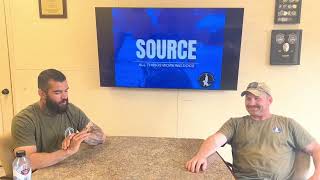
Simon and Brendan Martin walk through how they select working dogs: visual assessment, health screening including hip X-rays and heartworm tests, drive evaluation with balls and obstacles, and bite work assessment. Dogs then spend 3-5 days acclimating before imprinting on specific tasks like detection or tracking.
Chapters
Hey guys, welcome to The Source Podcast, all things working dogs. This is Simon from G1 CCU Central in Gainesville coming to you live. Well, not live if you're listening to us at home, but it's live right now. It's live right now. So I'm here with my special guest, my new trainer, my baby boy, the coffee man. Introduce yourself, brother.
Brendan, and, uh, give me your last name.
Go ahead.
Martin. And, uh, thanks for having me on.
Speaking of coffee, One Nation Coffee, best coffee around, absolutely, because that's what the CCU trainers drink. But, uh, we got a special podcast here for you guys. We're gonna go over the evaluation process. We've had some questions on evaluating dogs, especially for working tasks. But before we get into that, how was your day, Brandon?
It was good. I got to work with some, some bite work, which is always a good day.
Yeah, so it's bite work week with the trainer students.
It is bite work week with the trainer students. Yeah, they're getting some good bites in.
How are the dogs looking?
We've got a couple dogs that are looking really good. I'm really excited for those dogs.
We got them We got a man in there. We got a man in there.
In amongst the dogs?
Yeah.
Yeah, I'd say we probably have 2 good men.
Yeah. Yeah, one's coming along. And we're actually getting some dogs in today, which is going to be fun. So we're actually going to be spending the weekend doing some evaluation and doing that whole process all over again. So it's good to kind of have a refresher and kind of go over some stuff, go over some mistakes that we've made in the past. Going over, you know, what that evaluation process looks like and just giving you guys a little bit of insight. So when we get those dogs in, we bring them out individually one by one. What's, what's kind of your way of doing your initial inspection? How do you like to go about it?
I tend to, depending on who's handling the dog, if I'm the one handling the dog, I'm still gonna just kind of watch the dog, see how they come in and out of the kennel, things like that. And then if somebody else like yourself is walking the dog out, I'm gonna watch his gait and see how his temperament is as he comes out of the kennels, just to see, just kind of taking a step back and looking and just trying to learn that dog from afar for a minute.
Yeah, a lot of issues can actually be seen in that initial process, even when I'm doing pet dogs. I like watching the dog get out of the car because when you get a dog that's never— I mean, usually when we're testing a dog or evaluating a dog for a pet client, you know, this is a new environment for them. So that initial look at how they deal with being in a new environment and stepping foot on it is a really key aspect that a lot of people overlook. and you can see some hesitancy out of some dogs. So I'm really keying in on their body language as they're getting out of that car, and I'm looking at how they're reacting to different types of stimuli. So how are they reacting to other dogs, other people as they're passing by, vehicles, cars moving, loud noises? I'm looking at all that in their natural state, and all of it comes down to being able to read that body language as well. What's their ears doing? What's their body posture like? And what's their tail looking like? What I really like to see is that dog that hops out of that car, he's upright, he's looking around, he's interested, he wants to investigate his environment. Tells me that that's a dog that's comfortable, right? He's comfortable in his own skin. Almost kind of, you know, you almost want that dog to own the place, right? Right.
So And you can see, you know, like you said, you can kind of see those dogs when they get out of, you know, and I can really speak to clients' dogs when they bring them in and seeing them a lot of times with all the new dogs around, they hear the dogs barking in the kennels and a lot of times they'll have that tail tucked and they're hesitant to get out of the car. Or I've seen dogs that, you know, kind of fight the owners to get out of the car even as well.
Yeah. So we get that dog on our leash, uh, we're doing a health inspection, and there's some things that you learn in training, and you learn them after making mistakes. And I want to share something with you, Martin. I'm not perfect.
No, is that right?
I've never been perfect. I don't try to presume that I am perfect either, but, um, I'll tell you what, when I made this mistake. I told AJ after I made this mistake, I'm like, I'm never making a mistake like that again. Okay, I guarantee it.
But we learn from our mistakes.
So we had a dog, brought it out, maybe I made some assumptions, and, you know, we ended up testing the dog and I ended up purchasing the dog. Thankfully, you know, we have a process that kind of We— there's got to be a guarantee of health, so the dog needs to go to the vet, get cleared by the vet before we actually follow through with the process. But, um, I ended up getting saved by that, but I didn't get— end up getting saved by the wrath of my fellow trainers making fun of me.
So that's worse than anything.
Yeah, and then it's a good way to learn too. So when I inspected this dog, I never looked under the dog's dang collar. So when the dog came to me, I, I, uh, I tried slipping them and I, I did an inspection, but I just never checked under that dog's collar, and it ended up having a skin infection. And let me tell you, our Kennel Master Deborah is very, very nitpicky and very very strict about her kennel rules. And you bring a dog in with some sort of infection or anything of that nature, a sick dog where it can spread to other dogs in the kennel, she is not going to be a very happy camper. So she's diligent. She is diligent, and I appreciate everything she does, and I try my best not to disappoint her. So, but, um Yeah, I never checked under that collar. Dog ended up having a skin infection. So when we're doing those health inspections, you have to be very thorough, very thorough, looking over everything, feeling the contours. And not just that, I mean, it gives you an idea of what this dog— I mean, how social is he, or what kind of areas does he not like to be touched? Because, you know, as you know, we have students that are going to be handling this dog, and I don't want them making, you know, a certain mistake that's going to end up getting them bit, right?
And I think, um, I actually saw that on the last batch of dogs we had in. We had a dog come in, um, that we ended up having to muzzle just because of just simple touches like on his stomach and things like that. He was reactive, and you could kind of see that in his face.
But that brings up another good point, is being careful around these dogs too. So making sure we got positive control Muzzle that dog absolutely while doing that health inspection, um, just because you never know and you don't want to get caught with your guard down and that dog snapping on you. I've had it happen to me a few times, so I'm very diligent. Now, some dogs you can look at and be like, okay, this might be a problem, right? But that usually comes with experience. But, you know, there's dogs that have no issues being touched in certain places. But you got to think, especially with these dogs that come in from overseas, like, they just took a long ride over, so they're probably not in the right state of mind. And they're like, what's going on? Like, I'm in this new place, a completely different environment. It's humid as heck over here. Yeah.
So, so with the health inspection, say you end up muzzling a dog. How, how could you check their teeth in that process while you're, while you're muzzling? You know, the dog's muzzled, you can't really check its teeth. So what is something that you like to do?
And that's, that's actually an awesome question. I'm glad you brought that up. Um, I'm not gonna risk getting bit just to check the dog's tooth. You know, if the dog's got a problem with it, I'm really not going to try and push that, right? That's something I can work on with training, but you know, we have to evaluate this dog. And I mean, my biggest concern is not so much chipped teeth, but I want to make sure that there's no infections in that dog's mouth. That's going to be a big concern. But one way we can do it, obviously, if it's a dual-purpose dog, it's a bite dog, I can look at those dentals while they're on the bike.
Yeah, that's a good point.
So, um, there's opportunities to look at those teeth. Now, with some of the dogs that we get, we have— and that's why that vet clearance is very crucial. Um, Deborah tries her best to get pictures of the dog's teeth from that individual's vet as well. Okay. Obviously, things can change between that dog going to the vet and us receiving that dog, right? So Um, I want to try and find a good opportunity when I can to look at their teeth, and bite work's a great way. I can kind of take a peek while we're doing exercises. I mean, if it's something that where we can't take a look at it, that dog's going to be going to the vet. So the vet has ways of, you know, going in there and looking at those teeth.
Yeah, no question. I, I, uh, I appreciate that information, and that definitely helps me in the future. When it comes to, like I said, we've got to muzzle some of these dogs sometimes. They are in a new environment and things are new and you're touching all over them and they don't like being touched and they'll let you know it. There's nothing wrong with it, I guess. All right, so we've gone through medical. Once the dog is cleared medically, what, what do you like to do next? I mean, I know that you can kind of tailor the way that you evaluate dogs for different dogs, whether it's going to be a dual-purpose dog or single-purpose. How do you like to tailor your evaluation to those dogs moving forward after they've cleared that health inspection?
So everyone has their own way of doing the eval. I really— so there's 3 main areas we're going to look at with a working dog. One of those is going to be— I mean, one of the most important too is environmentals. So I like to start with environmentals, and during my environmental testing, I actually like to work a little bit of drive testing in that as well. So I'll— and this is just me personally, some people like to keep things separate, but this is just something that I found that's worked best for me. And as I'm taking that dog through different environments, in the buildings, into vehicles, and seeing how they're doing in those tight spaces, those dark rooms, slick floors. You know, I may try and toss a ball in a dark room and see how they actually hunt for it, right? Or take a look at some of that prey. Although, you know, I end up doing it out in the field, I like to do it in different settings as well to kind of just get a good idea of really what this dog's makeup is. Definitely doing some environmentals with some drive testing in there, and then I kind of formally go into my drives, uh, which the first two I always check the prey, and then I'm looking for, hey, can this dog hunt, right? Um, and I— with prey, I kind of like to just do it in the field, um, but with my hunt That's one thing I try and do in different types of environments. So, and around different types of obstacles as well. So depending on what I'm kind of looking for, whether it's just a generic working dog or, hey, am I looking for a dog that we're trying to purpose for a handler that's coming in for a bomb dog? You know, I like to see how, like, boxes are a great way to do it. Toss a ball in the boxes and— or just, you know, we got that big stack of cardboard boxes and just see how the dog kind of navigates around it to get to the actual object. Is he gonna bulldoze in there and just try and just wreck everything, right? Or is he gonna kind of methodically work his way through to search for that? Um, and this gives me the opportunity to see how he does on you know, uneven surfaces where he's got to walk over things, through things, around things. And it gives me a little bit of insight on how this dog actually works, right? So obviously, if he's blowing it, you know, I throw it into a stack of boxes and he's blowing through the boxes to get that ball, it's probably not a dog I want to do for explosives detection because that's going to be a liability. But, you know, and me and AJ were kind of talking about it, like as far in our last podcast about ethics, you know, and it kind of goes into the ethics as well. I want to pair a dog for the right task, right?
For sure.
Um, I don't want to— it's, you know, you don't want to set people up for failure. You don't want to set dogs up for failure either. Um, so I'm kind of mindful of that process, and I, I try and take mental notes of, hey, this dog did this, that could be a good candidate. And you know, the evaluation process isn't always perfect. No, sometimes, you know, we make mistakes, but we try and do our best. Uh, and the biggest thing too is I— when I do eval dogs, I— and I've learned this from another trainer— you really want to see that dog, how he works naturally. Right, we keep them on a long line, so a lot of people think like, oh, I'm supposed to guide the dog while he's hunting towards the ball, but it's not realistically what I'm looking for. I want to see if that dog will go out there on his own and just hunt. And I don't care if the dog doesn't find it right away, right? That's not a big factor for me. What's the most impressive is is how long is that dog gonna stay out there and hunt.
You're not looking for, you know, you throw the ball out in the field, the dog goes out there, he searches for a minute and then comes right back to you. That could become a problem essentially is what you're saying.
Yeah, it could potentially. You have to take into account too, I mean, does this dog have some sort of prior training as well? But that could be an issue, or if the dog just loses interest and just kind of goes off somewhere else. And, you know, a lot of people would think that for the dog to hunt, he's got to be using his nose, right? Right. It's not necessarily the case. It's a benefit if the dog can use his nose, but I can always teach the dog to use his nose once he learns that, hey, it's a lot faster if I just use my nose. But even if he's, if he's just out there and he doesn't want to leave that area whatsoever until he finds that toy, that's like, that's golden.
That's gold.
Yeah, for sure.
And, and during that, you're kind of looking at his confidence in that as well, right? So does that dog can, you know, in different environments have the confidence to be in there? And that's something that we're kind of testing throughout.
Yeah, I mean, I mean, throughout as a trainer You are always evaluating a dog's body language at all times. It's just something you're periodically doing, like you're analyzing, like, what's this dog feeling right now? What's his body language telling me? And yeah, I mean, you know, a lot of the issues I see is with dogs having trouble in dark or tight spaces, right? Right. Some dogs just really don't like that. You tend to see that pretty often, either that or loud noises, which going back to environmentals, you know, during that environmental process we're looking at how they react to loud noises, different environments, and even taking them offsite, putting them around traffic. The thing about the evaluation process is yes, everyone has their own way of doing it, and it could be as extensive as you want. Right, right. Or it can be as simple as you want. I feel like the more and more you do it, you kind of simplify it just because you kind of have that experience to work off of.
How do we separate between a dog that we're looking to purchase for, for a working dog and then a pet evaluation? You know, we're testing those drives for our working dogs. But are we really going to test that defense or that prey or the hunt drive when we're looking at a pet owner who just wants some obedience?
Yeah, I mean, we're still gonna— I still like to test drives with, um, pet dogs because some owners don't even realize that, you know, they have a dog that's destructive. Well, maybe it's just a dog that needs something to do. He needs to satisfy those drives, right? So even with pet dogs, like, I still like to go out there and at least test those drives if I can. But it's kind of a similar process because, you know, you can look at those drives in a pet dog and think, man, like, they can't, they can't handle this dog. But if you look at it from a different perspective, this dog has something that he wants to satisfy, something that he desires and is motivated to do. So why not utilize that into the training program? Okay, to kind of help with obedience and those other factors. But, you know, helping people make some decisions— not that I'm trying to discourage people from owning certain dogs. If you want to own a certain dog, Go for it, but I want you to understand some of those risks that you might be dealing with.
Well, with that though, you know, understanding those different risks that, that pet owner may be facing, we can take that, like you said, tailor the training, but also explain to the pet owner themselves, like, hey, the dog's destroying stuff because he wants to do something, he needs to do something, she needs to do something. She needs a purpose, essentially. And that would eventually, or could, if she was, you know, doing a little bit of work, might help you with the destructiveness. She's doing something, she's got a purpose. You go do that, she comes back, she's a little more tired, she's fatigued, or he or she. And, and that then will help them train a little bit too, and then help, help satisfy that dog's needs.
Yeah, and it's just they need that stimulation. And like I'm saying, like I had mentioned, you want to find a way to satisfy those drives. So I mean, even for pet owners, there's things that they can absolutely do with their dogs. One thing I always tell people, like tracking, do some tracking. Like your dog, your dog likes to sniff, he likes a toy. Here's something you can do with them. And you know, you can lay your own tracks and it's fun. Fun and it doesn't have to be serious. And it's a good brain exercise, not only for the dog but for you as well, you know. So tracking is always good. I have a lot of people asking me about scent work, like the AKC scents, doing stuff like that, getting— coming up with games to play with them. But what you got to understand too is like it takes a certain lifestyle change. Oh yeah, to maintain a dog like that. So you need to work with that dog. It's not a dog that you can just leave in the house, go to work, and then come back and expect your house to be intact.
Yeah, I mean, you're letting a Tasmanian devil loose in your house essentially with some of these dogs.
Yeah, and I mean, so far I've been really fortunate. I have one client who has a dog that— it's a Malinois. They have two Malinois actually, but I mean, the guy, him and his wife, they're just so gung-ho about doing work with this dog and like giving him everything that he needs to satisfy it. And that's something that I really admire. It's awesome having clients like that, you know. Um, but you know, that's, that's something that you want to kind of cut through to the owners in those aspects.
So we've got through testing different drives, hunt drive, prey drive. You've tested those already. What are you— what do you like to move into next when it comes to testing that dog that we're looking to purchase?
Well, if they satisfy all that and then they have that capability, he checks the box. He checks the boxes. He can at least go single purpose. Now, yeah, you know, I can take a look at whether or not this dog has that potential to go dual purpose. And that's— I mentioned it earlier, you're going to look at that defense. Um, you're going to look at if he has prior bite training. You want to look at what's he look like, what do his bite grips look like, how does he Is he on a suit? Is he on a sleeve? You want to take a look at all those as well. But, um, but yeah, you— so we test out some of that bite work, and then, um, some— it's also good to see what that dog's tracking ability is too. So depending on how far he is, if he's had any prior training in tracking, or simply just doing some puppy tracks or even running a quick, short concentration track to see if he can actually work odor back. And that's always a good, a good exercise to do just to see where the dog's at. But those are kind of those extra little tidbits. The biggest one though is, you know, just trying to see if you have the opportunity, see how that dog does in public, look at his sociability. How he is with other dogs, how he does around vehicles, loud trucks. Some of these dogs we get from overseas, you know, they're out in the country and they've never been to— I mean, not the downtown Gainesville is like— I mean, it's getting busy, but they've never been around heavy traffic, loud semi-trucks. So seeing how that dog reacts to that, and sometimes you know, what you want to look at— I'm not really looking to see if, you know, if that dog kind of cowers the first time he's around like a semi-truck. I'm not like, oh, well, he's out, he's useless, right? I want to see if he can overcome that. And that's where, you know, I kind of slip in some of the prey and seeing like, hey, can he get over it if I can engage him in prey drive, or is he just way too over threshold? How far back do I have to take this dog? It's not to say that it's, you know, maybe you got to work those thresholds and peel that dog back, but in the situation or in the way that we evaluate dogs, you know, you got to take into consideration when you are choosing dogs to put through into your kennels, how much time do you really have to work with that dog? And overall, overreaching— there's a business aspect, of course, which I try and stay out of as much as possible. I'll get, I'll get into it eventually, but, um, right now I'm— I like kind of being in my lane for now, um, because I'm, you know, I'll all of us trainers, we're always learning, but I really want to perfect what I'm doing on in my lane right now before I start merging lanes. But, um, the time that you're gonna put into working that dog through it, it's gonna cost you money. So that's something that you always got to take into consideration as well. But, you know, if it's something that you can fix on the spot there and you think, hey, this dog can get over it, that's something that comes down to experience.
Okay. You know, yeah, just seeing how you can get that dog outside of his comfort zones, essentially.
Yeah.
And then, and touching on that, you got to take, like you were saying, take time. It's time and resources. How long are these dogs going to be in my kennel? Things like that that you do have to kind of take into consideration. Even though we're not so much on the business side, our job is to train dogs. But if the dog's gonna end up being here for a year and a half just to get some training, like, it's taking a lot of your time when you could be essentially doing things with other dogs.
Yeah, and students that you need to be training and so on and so forth.
So I understand, I understand. We've gotten the dogs, we've tested hunt drive, we've tested prey drive, sociability. What are you looking for for next? What is your, your next step in your evaluation process?
Well, I mean, from there, if they check all my boxes and I like what I see, uh, I mean, prior to all this, there is, you know, a medical phase, and I really let kennels kind of handle that aspect. But obviously, before the dogs even get here All their vaccines need to be up to date. We want heartworm testing. You don't want to put a dog in your kennels that has heartworm. We've actually— well, the dog passed his heartworm, but I didn't even know this. It takes about— it takes some time for the heartworms to actually pop up on the test. So the dog was clear, got in our kennels, couple months later went for a checkup and ended up popping for heartworms, which that's gonna leave your dog in that kennel for about 6 months to a year before you can actually put him back to work. Really? Just because it deals with the cardiovascular. So the health of that dog is a huge aspect because yet we try and do our due diligence to find certain aspects effects on our level, but we don't know what's going on in the internals.
We can't see heartworms from the outside.
Yeah, so you want to ensure that any dogs that are coming into the kennels aren't going to get other dogs sick. So you got your preventatives and your vaccinations, but we also want, um, we want there to be, uh, x-rays done to check that dog's hips, his bone structure, making sure that this dog's not susceptible to hip dysplasia or even arthritis. When that dog— so after a year, you have a pretty good idea of what those dogs— so the dogs that we bring in are between a year and 3 years old.
I'm glad you mentioned that because I was going to ask that next.
Yeah, so a year and 3 years old. So after a year, you can get a good idea of whether or not those hips are going to be, you know, doable. The dog reaches, depending on the breed, most dogs reach full maturity by 2.5 years. After 2 years, you can get the dog's hips OFA certified.
Okay.
So it's, it's one of those things where you can absolutely do genetic testing, but that comes down to what your relationship with that vendor is and how that vendor goes about doing their breeding. So if I'm going to go through a breeder or someone that's trying to sell me a dog, I want to make sure that I'm working with someone that is pretty reputable and knows what they're doing. They're not just backyard breeding, they're breeding for working lines.
And then that comes from having a reputable vendor. Somebody that you've worked with in the past, or that you at least has, you know, has been vetted and has a good reputation.
Yeah, and we're fortunate AJ's been doing this for about 20 years, so we have a lot of good vendors that we can go to, and I've met a lot of them. Even the one that we're working with currently, he's an awesome guy, and you know, he's been doing this for about 20 years as well, and he runs a great kennel. The dogs we've gotten from him are phenomenal. I still don't have a dog that we've turned away from him. So it's been, it's been successful. But you want to do the best you can with the health evaluation, but, you know, things happen. You You can give all the guarantees you want for a dog's health, but you know, who's to say that dog doesn't get cancer or something 4 or 5 years from now?
But some of that stuff's unforeseen and you just can't really help it. Since you had mentioned it, you had mentioned you hadn't turned away a dog from this vendor specifically. What would be a reason that you would turn away a dog? Like, absolutely not, that dog's not coming in my kennels. Outside of those, those major health reasons?
I mean, there, there can be a lot. Obviously, if he has trouble in environments, maybe, you know, he displays the body language that shows a lack of confidence. It's, it's hard to say, but the big thing is if he's showing some confidence issues and prey is not carrying him through it, then more likely than not, that's a dog that, you know, and it's something that they can definitely work through, but we're not going to be the ones that are going to work that dog through it. If we're going to purchase that dog, I want those issues to be resolved. So I communicate that with our vendors and tell them, hey, you know, maybe work on this and bring this dog back, and we'll take it because I like this and this, but this part was kind of shaky. So if you work on that a bit, maybe, you know, bring him back and we can take a look. Obviously, if he— like we were talking about Hunt Track earlier— if I toss a ball out there and that dog runs out, takes a couple peeks, and then goes and does something else, starts chasing butterflies, you know, gets distracted easily, that's definitely not something that I I really want to work with, um, because I want that desire to do anything it takes, right? It's like having that soldier, that Marine, that's like, you tell them to do something, they're going to go at full speed. I usually say the crazier the better. Like, I try and think of it from the perspective, if I gave this dog to— I'll just use my wife, for example. I like bringing up. But if I gave my— this dog to my wife and I told her to take care of it and I came home, I want— I would hope that the couch would be eaten up and like, right, things would be scattered, they're jumping on the tables, things like that. And that's another thing too, uh, with environmentals is how's that dog do getting up on surfaces, right? Is he shy about it? Does he, you know, does he lose confidence? What kind of issues are we having there? One thing that I see a lot of dogs struggle with too is the stairs.
The whole upstairs.
Yeah, where they can see through the stairs and some dogs just freeze up or they don't even want to bother with it.
Medical phase has been cleared. We're good on medical phase. After medical phase is they've already been to the vet, they've got their x-rays, they're good to go. What's your last— or what's the next proceeding steps?
Start getting to work. Well, before we actually start putting them into work, especially if they come here from else— from somewhere else, especially overseas, we try and give them some time to acclimate, which can be anywhere from 3 to 5 days of them just sitting in the kennels, getting used to routine, and then we start that imprinting phase, whatever task that dog may be assigned, whether it's for detection, we start putting them on odor, odor and tracking, and then any sort of bite work that we might need to develop in any of those areas, we may start working on that. But ideally, if your testing process went well, you know, you won't have much of anything to really work on, and you can just get that work or get that dog put to good use and then start the training process and then either finish it off or get that dog into a handler course where they kind of finish that process out, putting him on the rest of his odors. That's all the time that we have for today, guys. Thank you for sitting down with us, having a discussion. With me and Brandon here. It ended up with me— well, it started with me hosting the show and ended up with Brandon hosting the show, so asking me questions. But, uh, Brandon, I think you did a pretty good job.
Well, I appreciate you for answering some of the questions that I had, and I think that that just helps me in my, you know, growing as a trainer in the future as well.
Yeah, please check us out on Tuesdays for our short sets. And don't forget to like and follow us on all the social media platforms. Leave nice comments for Maya.
Stresses her out.
The hate comments have been getting to her. I tell her not to worry about it. And I want to give a shout out to Josh. I know you're listening to this. We love you, buddy. Uh, can't wait to see you back up here.
Love you, Josh.
More from AJ

Running vehicles with K9 Chidori#workingdog #detectiondog #workingmalinois #malinois #drugdetection



Join us for group training this Saturday! Sign up on our website. #DogTrainer #DogGrooming

Smart Funding Ideas to Launch Your Dream Dog Business | Custom Canine Unlimited



Why is my dog reactive? #reactivity #dogreactivity #k9 #dogtrainer #dogtraining

It’s not too late to sign up for Group Training! | #dogtrainer #dogtraining #trainyourdog


K9 STEVE | Explosives Detection 💣#workingdog #policek9 #detectiondog #edd #trainyourdog