Reflecting on Our Week at the MWD Symposium | SOURCE
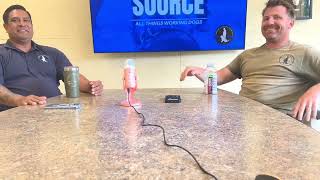
In this episode of The Source Podcast, host AJ (Speaker A) leads a round‑table debrief with team members Simon, Maya, and occasional references to Hunter and other staff about the 2024 Military Working Dog (MWD) Symposium. The conversation weaves together anecdotes, logistical details, and strategic reflections. The team discusses the shift from pre‑symposium expectations to post‑symposium realities, noting the proliferation of military acronyms and the acquisition of combat patches. They detail the extensive planning required—coordinating travel, gear, security clearances, and even transporting training aids like mouse traps and controlled substances—highlighting the challenges of operating on a military base. Maya’s role in establishing a cohesive visual theme (colors, graphics, branding) for their booth is emphasized, as is the importance of first impressions for both handlers and students. Training delivery is examined, with insights on adapting lesson plans on the fly, managing diverse student groups, and ensuring take‑away resources for handlers. The hosts reflect on ROI beyond monetary terms, focusing on brand recognition, follower growth, and knowledge dissemination, while also noting technical hiccups such as Wi‑Fi failures and the need for backup plans. Observations of military culture—rank usage, observer engagement, NATO dog participation—are interspersed with light‑hearted banter about patches, coconut oil sunburns, and internal jokes. The episode concludes with forward‑looking thoughts on scaling the symposium next year, potential budget increases, and personal takeaways: Maya stresses the value of clear goal‑setting and planning, while Simon shares a humorous lesson about sun protection. Overall, the podcast serves as both a celebration of the event’s successes and a candid inventory of lessons learned for future symposiums.
Chapters
Welcome everybody to The Source Podcast. Everything working dogs. I love it. Hey, you know, I like having these things every week because I actually get excited about having conversations about dogs. Of course, that's our life, right? But, um, you know, every week brings a new topic, every week brings, uh, new information we can pass out and, like we always say, influence one person during these things. So I'm excited about it. And today we have the opportunity to give a— I think Maya called this a debrief on our 2024 Symposium, right? So did you notice like pre-Symposium Maya versus post-Symposium Maya? Like everything's acronyms now. Like she didn't call you by your name today.
Oh yeah, she started calling me by my rank.
HT, head trainer.
She's like, she said, Simon, you were, uh, you got out as a sergeant. Yeah, she's like, "Raw sergeant." Yeah, I mean, she did her one week in the military and it was over. That chow hall, talking about the chow hall.
Where'd she eat at? Where was the meals at?
DFAC.
I don't think that counts as an acronym.
And then like on our way out, she was like, "Hey, I'm ETA." Yummy.
Yeah, it was— it's crazy because even today I got the update. Yeah, and everything was all in acronyms. Yeah, yeah.
So she picked up on it real quick and, you know, she was speaking the lingo. Yeah, she asked a lot of questions.
She got one patch.
No, I got 5 patches.
She's got— she got 5 patches. So now she walks around here wearing her combat patch.
Yeah, that is so—
she has that, uh, coveted Oh yeah, the deployment patch, and then she's got the coveted— she's got the coveted private patch, I think.
Yeah.
No, I didn't get a private patch, but I already know you lied to me.
It's coveted.
It's coveted. Yeah, it is. Yeah, but it was good. It was a good experience for her.
Yeah, absolutely.
Yeah, and even for you.
Oh yeah, yeah, we talked about it before, um, you know, we went out there to go teach people, but at the same time you know, we learned a lot as well. There were some funny moments and some aha moments, but I mean, there's a lot of information that I was able to take and bring back here and share with my trainers as well. So overall, I mean, we had fun too, but you know, it was good to be back around the military as well.
You know, the crazy thing is, and Obviously I miss the family and all that on these trips that we get to go on, but I enjoy the time that we get to spend together. Believe it or not, we went out to dinner together, we got to hang out together, and I think that's good for any team to experience that. I think they nowadays call it bonding, right? Like sports teams do it, you know, they get away from their normal everyday routine and their environment and then they get to spend some time doing some things outside of there. We got to see some problem solving. So, you know, even to the point where Maya and Hunter got into it, had a bash, you know. We show up 2 days later and they're like lining up to fight, you know, take it to the sandpit. What acronym does she use about that? Her battle about her Hammond Her and Hunter fighting?
Oh, I don't even know about that one.
Yeah, I mean, she, she asked him to step into the pit with her.
Yeah, meet me at the tree line. Yeah, you took him to the tree line. Yeah, but that's the other thing too, is, you know, you kind of saw like there was some tension. Yeah, at that event, at that vendor portion of it before we got there, and then you could see the sense of relief once me and AJ showed up and both 100 miles. Yeah, yeah, like we just took the edge off.
So that's right.
Uh, yeah, finally.
So yeah, you know, well, things you don't think about with these events. It's fun to do these events, absolutely, but I think we would be remiss if we didn't talk a little bit about planning and the things it takes to lead up to these events and all the moving pieces. You know, this is one of those events where, you know, it's an opportunity for us to give back as well. You know, we had several staff members, several resources we used to do this and to try to give a little bit back to those handlers that are serving our own firm. Forces, right? Not just with knowledge, but some giveaways we did and other vendors. And, you know, it's not just about us, but there was a lot of companies there, a lot of other trainers, a lot of other companies that were also giving stuff away and wanting to give a good experience for these soldiers, which I think is remarkable. But, you know, just the planning that goes into it, coordinating flights, because we had several people coming in and out at different times, coordinating travel with a bunch of gear.
Yeah.
Mouse traps. Trying to get mouse traps through security.
And think, I mean, we were able to expose these handlers to 2 pounds of meth. How do we get all that over there? We can't talk about that. But we even had to get training aids there, you know, and that's just crazy, you know. How you concealed that.
But I mean, um, as far as planning goes, I think, uh, when you assign this to Maya, um, Maya really went full steam ahead with it. So I got to give props to Maya. Um, I think she put on an awesome event as far as, you know, everything with the vendor show. A lot that you learned, but, um Overall, it was just the planning that you put into it, that preparation, that hard work, you know, I commend you for it. And that's why I think at the end of the day, I think that was a really successful event. I mean, in my mind, I don't know how you guys feel, but that's—
it was successful on several different fronts. And that's one thing that's important, right? As a company, we have to look at our— what's called return on investment, right? What we invest in something and what we're going to get back out of it. I say years ago, I never thought about that. I just want to give everything away, training and knowledge and resources that we have because we're blessed with what we have. And we did a lot of that. But we also look at— and in the planning phase of this, we, we look at what, what's the return based on the resources we put into it. We got Maya, we have Hunter. You know, you talk about salaries, you talk about travel expenses, you talk about gear. All this stuff that has to go into this, to include all the planning leading up to this. I think we started about 6 weeks out planning for this event, and we wanted to do something better than we did last year. And that's really goal-wise what, what I look at is, can we do something better than we did the year before, taking what we learned? But we really have some key areas that we wanted to focus on as far as return on investment, and it wasn't monetary. It was all based on getting information out and meeting those key milestones. And so as you plan an event, we look at things of that nature. And it's not, like I said, always based on money. It's based on brand recognition, also followers. You can look at several key factors as it comes to that. But then we also had key points that we wanted to make in training as well. And what we wanted to focus on, because unfortunately you can't go to these events and not have a plan. So we had a plan on operations and marketing, and then we had a separate plan for training, and then bringing and merging those two worlds together was important. And yeah, looking back at it after having our debrief, because that's also important, I think overall it was successful. Could there have been things that we'd done better? Absolutely. And those are things that we will mark for the future, future events, future symposium opportunities that we have to be able to help. So those are key elements. Maya, leading up to this, what did you, what did you think going into the event? Tell us a little bit about what your thinking was leading into the event.
So my initial thinking was, oh gosh, this is going to be awful and my name's going to be on it. Um, I had never planned, but why did you think that? Just, it just felt like a lot for someone who's never planned it, so I was like, where do I start?
But you, but since last year though, you've been like running around here telling everybody you're the event planner. Whoa, whoa, has she not?
And she's been trying to get me fired from HR.
Yeah, well, he ain't got fired, he was just, he stepped down due to family reasons.
I'm still, I'm still here.
That's what he told the public. I have to step down due family reasons and my health.
Look, if Maya wants to take me down from my HR position, I got some incriminating evidence on my phone that might want to make her rethink that.
All right, well, leading into the event, yes, that's, uh, you know, give a caption of kind of what you're thinking is.
Yeah, so I was trying to figure out, uh, first of all, where do I start? What needs to be ordered? What supplies do we already have? Which for some people, you know, you may not have any supplies, but had to kind of step back and take inventory of what needs to be done. But then also on a grander scale, really had to think about a theme because the last thing I wanted was for us to just show up and, you know, throw together whatever we may have had and hope that it gets the point across. I wanted it to be like very intentional from the images that we use, the wording that was used, the colors that we use. And make sure that everything was cohesive, which I think was successful for the most part. That was really where I had to start because you can't start graphic design or start with anything else until you have that theme down, which is where my event planning comes in.
Yeah, right.
Comes in to good use. So that was my initial sort of get going was that theme. Like, I was like, hey, what's the idea? What are we trying to convey to people who may or may not come by the booth, who might just see it and remember, oh, let me look at them later.
And that's what's crazy, because even from a marketing standpoint, everything's not apparent as to what it is, right? Like, everything's not based on click value or the almighty dollar. There's a lot of things that point people in a direction on accomplishing things through themes and color schemes and all these things that we never even think of. Just to show up at an event and set a booth up. Yeah, and it's, it's to me, just thinking back from years ago, it's crazy.
People are going to see how you're representing your brand, and then that's what they're going to interpret your brand to mean. So if you show up with half a display or not very well thought out design, they interpret that as that's the quality of your work, that's what you're able to give Yeah, but you know, it goes back to training.
Like even first impressions, right? We did introductions when we got into training. I'm not jumping ahead, but we talk about that a lot. Our presentation, our clothes, our branding, the cohesiveness between trainers, and that first impression when you step out in front of a group of students that don't know you. They have a little bit of anxiety, they have a little bit of excitement, and then we get up there and we're Debbie Downers. Well guys, you know, I've only been doing this for 2 days, you know, we're gonna do this, and yeah, maybe we're gonna do this. That's not how we presented ourselves, but it's just as important that we come in every morning with excitement and the enthusiasm because that sets the sets the stage for the rest of your day. We've seen it happen on both sides of it. The trainer comes in there and they're like, "Oh, I've only been doing this a day," and it just brings the whole class down because they're like, "Oh, shoot." But then you go in there with excitement, "Man, I've only been doing this one day, but I'm excited. Man, I'm ready to get this thing rolling," and then you just see everybody pick up. I had to tell Simon that because day one, He was like, this is my first time. And so everybody immediately was like, okay, I'm just joking. He did.
It was— there was—
he's experienced.
I did hear of, uh, I don't think it was at that event, but I heard of a trainer saying, I've never done this before, right? And trying to get other people to do it.
So yeah, no, no, you never lead off with it. Yeah, everybody loses value right there.
You should have teaching something you've never done before either.
But yeah, that's something else. But to your point, you have to be intentional, right? And even if you have one thing, at least let that thing be put together well versus going in there all over the place, because you saw that as well, right? Walking around, because you got to experience everybody else.
Yeah, and you know, everyone tries their hardest obviously you want to present your brand correctly, but you can't help but, you know, as you're going through, you're starting to see like almost dysfunction in a way, and you're like, oh, like why would you have chosen that versus this? Which also could just be like the marketing in general is looking at that and analyzing it, but it also gave me the chance to look at other booths and see what they had done better.
Yeah, and there was some that did better than us. And had a better presentation, probably, right?
Yeah, I mean, absolutely. And there were a few where I kind of like took mental notes about what to do at future expos next year at the same event and just how to— like, for example, one thing we had discussed was the booth location. So that's one thing that's great for me to know. Bringing interactive or an interactive element into it, that's going to be really great to include next year as well. So just kind of taking note of where you can do better, where you did good, but there's always room for improvement. And also, you know, where you just maybe did bad. So we had technical issues, um, we got there, got a little Wi-Fi. So kind of knowing that now allows me to even further prepare in advance for any ABC all the way through the end of the alphabet plans.
Yeah, you plan for A and everything everything to go perfect, and then you get there and you lose audio and video, you don't have Wi-Fi. Yeah, those things, especially if they're a big part of what you're going to do, can throw— so you got to have Plan B and Plan C. And you and Hunter did an outstanding job, even though that you guys were like bickering the whole time.
This is all alleged. This is all alleged.
Hey, I'm only going by what I was told. I wasn't there. Were you there, Simon?
I was not there, but I was there at, you know, when, uh, Maya debriefed us on this.
No, no, when she gave us the sitrep. That's what she called it, when she gave us the sitrep.
But Maya, I got a question for you. Um, you know, it seemed like you were pretty nervous going to interact with the military for the first time, so can you tell us what your thoughts were leading into it as far as that aspect, you know, your father being a former Marine, and, you know, how was it at that event, and was it as bad as you were thinking it was gonna be?
So you kind of mentioned it, right? I had an idea of what military is like because my dad was in the Marine Corps.
Anyway, I had a little idea, but I can imagine though the Marine Corps at your dad's time in And the way he represented the Marine Corps is vastly different than now. Oh, as you saw, which I know now, but you knew that. Yes, absolutely.
Yeah, I'm a 23-year-old kid, like, I have no real life experience, you know.
This is like all the stuff I started thinking of, you know.
I'm not a law enforcement, I'm not a veteran. My dad was a veteran, but I'm not a veteran. I was in the military. The closest I got was going to UNG, like, and I just watched the Cadets in uniform and the rifle team, right?
That's an inside joke. Those that know us will understand that joke. But go ahead.
But I have, you know, I was a little nervous. I was like, none of these people are going to take me seriously. I'm going to say something and be like, oh, what a freaking civilian, or something else.
When you get around them, you realize they're really just, just a respect though, right?
Like, they absolutely want never said anything.
Obviously they never said anything out of the way anyway, but, um, but genuine respect. Absolutely. Like, if it wasn't like, oh, you're lucky that I'm being made to be respectful to you, right? But it came from a good place.
Yeah, absolutely. But more than that, it was also genuine conversation. They just like talking to people, um, about training. Uh, even though I told them I'm not a trainer, they were just interested in like what we do here and what my role is here, and they just wanted to know. So that was really cool, just their passion for working dogs bleeds over into other aspects and hobbies of theirs. It was really— it was great.
But I like that, you know, given that because you had a lot of anxiety, you know, you know, going in—
trying not to show you guys that.
No, we could see when you were falling apart. Um, Simon, what was your first impression when you when you arrived, and then also seeing now the fruits of what Hunter and Maya coordinated?
Yeah, um, well, obviously, you know, I thought I was being set up because I was promised a hotel room, and then when I saw the base, it just brought back a lot of memories of some miserable times being in the military, being on long training, um, what do you call them, out in the field, uh, just training, just being in a desolate area. But no, I mean, um, the entire vendor expo, when we showed up there, first of all, I think our booth was beautiful. I like the color schemes and everything, um, and it was just interesting to see, um, all the different vendors there and just the interactions and And, you know, I'm shocked that you and Hunter were just interacting with all these people while we weren't even there.
That is true. Well, true, because, yeah, because Ma is like really reserved in how she is.
Yeah, but she, you know, people were walking by, she was greeting them and cursing and using her scissor hand.
Yeah, it's a knife hand. Yeah. Yeah, man, okay, you will come to training and you will.
I was like, wow, just being able, like I said, being able to interact with the military, the youngsters, and just talking to different people is awesome experience.
I mean, because we joke, this was your first like event, right? Yeah, and that was a good thing because because we've never trained together like this either.
No, and a lot of it was— you mentioned it over— like, we had our Plan A, but then, you know, things kind of shifted. And that's the nature of the beast, especially when you're running a big event like that. Things change up and you got to think on your feet. Um, that's just how things work out. But we adjusted very well. Obviously, we had our training plan to kind of push on advanced detection or advancing detection. And just the way that the cards rolled out, you know, we had some students that were ready to go into the lesson plans that we wanted to go into, but that was fine because that gave us an opportunity to do some problem solving and then teaching students how— or I'm calling them students, but teaching handlers how to work with their canines, because I think one of the key K9s, the K9 teams we had, they were only together— their first time working together was at the event. So that was their first training leg, and, you know, us being able to make that pivot and still get them effective training along the way as well.
I think that says a lot too, to the knowledge that you have and the ability to make those switches and recognize because you see a lot of trainers get stuck in, oh, this is what we're doing. It is what it is, sorry. But even you say it, you don't want to lose that student, and he's there for a reason, he or she, and we might as well— we have the capability to make the adjustments and cater towards their specific needs.
Yeah, and I'll admit it was It was kind of hard at first because I don't want to— the biggest thing I didn't want to do is I didn't want to contradict anything that they've been taught in the past or how things work. But, you know, after talking to senior leadership and discussing with them, I mean, it's not any more different than what we do here. So once I was able to get that understanding from some of their Kendall Masters and senior leadership, then it was just full speed ahead. Hey, we're going to push this team and make them a better team today than they were yesterday.
Yeah, and that's good to see, you know, even seeing their— see them in the morning, 8 o'clock at the site, first time we've met them. We don't know anything about them or their dogs or anything. Yeah, we take an inventory of what we have, check our roster, have them write their names in, those that were there, and and all that, which again, a huge event. Over 400 people were at this event. And just to see all the moving parts, and I understand from the perspective of coordination and all that how difficult that could be. I mean, even we made last-minute changes. Well, multiply that by 400 people making last-minute changes. But even seeing how Sergeant Major Levi handled this event with all the moving parts, and we— I think it was Wednesday, maybe, maybe Thursday when we seen her. I think it was Friday when we actually sat down and talked with her for just a moment. And one of the questions I asked her was, well, it seemed to be a lot smoother this year than last year, and how was she coping with it? And I said, you know, I asked her specifically, like, was it less put on you this year than last year? She told us, you know, actually, I was around the clock this week, you know, just making sure. But nobody ever sees that. They see the event happening, but they don't see all the background stuff that's going on to make sure that this is successful. Then people can sit back there in the corner and go, oh, look at this, this was bad, or that didn't happen, or I didn't get all the information. But she's dealing with—
I mean, she was so many people. She was coordinating so much. And like, I didn't even know this until the last day, but they had to coordinate helicopters come in from one of the training sites, right? You know, and that's not, that's not a small task. So, you know, I'm very understanding of that. It's never easy running a big event, and like I said, it's the nature of the beast. Some things, you know, malfunction, some things happen, some people don't show up. Yeah, and you got to roll with the punches. But at the end of the day, you know, that end result, what we got out of it, what we were able to put into it. I mean, you couldn't ask for anything better. And I got to see you do push-ups because you scratched up some cars too.
Allegedly. Yeah, that was allegedly, and I believe there's no video footage of that at all. That's all been, uh, all pictures or anything of that nature.
But yeah, I mean, you know, not to mention, you know, coordinating all that stuff and just all these different individuals you brought on there from different, um, parts of the country and the world. Yeah, and there was things that we learned. We had some dogs from NATO countries that were running, uh, sets with us, some explosive sets. Beautiful pattern, the handlers were handling very well. There was some differences in training and how odors presented, and that's, you know, that was something that I learned. I was able to take back as well. you know, to teach students here. So if they ever encounter that, but even having that one day off and getting to go kind of look around, I know Maya went to go check out some different sites.
I went and sat in on some classes, which was the class you sit in and was garbage. But I mean, you still—
I wouldn't recommend it to anyone. The guy that was teaching it had ramen noodles.
But he meant well, bless his heart.
No, in all seriousness, no, it wasn't.
We joke because he's a friend of ours, so we, we joke with him, but he's actually a great trainer, obviously.
But no, that was, that was an awesome class. And just, you know, Sergeant Major setting it up so that we had the opportunity to go check out stuff like that and see different avenues and different—
and that was one of the biggest things I took away from this event and, you know, obviously we told her this, but we had one day downtime to, for one, regroup. And I think if you're running into issues, it gives you a time to decompress and go back to your training plan and go, oh, we need to adjust some things. But not that we had to do that, but it also gave us the opportunity to then go visit some sites, see what other people were presenting and how they're doing it, you know. Borrow some stuff that we'll give them credit for later, but also just to kind of see what the industry is doing. And I think that's great to be able to learn from each other. And yeah, absolutely. And support those guys and girls that are out there training as well. I, I thought it was awesome personally.
Yeah. And you know, as the days went on, I think we kept getting into a groove Obviously when you first got there, you're kind of like, you know, trying to figure it out.
I wasn't, but obviously—
well, you know, um, you've been there before, I haven't.
So, you know, kind of getting the lay of the land, just getting your feet under you. And then I think by that last day, we're just getting awesome sets, good rotation. But I could feel that too, even the way we could look at each other.
And you were doing—
running one thing over here, but the cohesiveness of what we were able to do. Yeah, like you said, just got in that groove and it, it just felt natural, per se, you know.
And you know, it's not easy going from one set of students to the next one. I think after the first day I was like, I, I kind of like these students.
I don't want to lose them. Yeah, you fell in love. Yeah, yeah, he fell in love, you know, got his first kiss and he was wanting to get married. The first group was the best group. I'm like, You've only seen one group. We're getting a new group tomorrow. And he was sad. I mean, we had to take him out, remember? Get him counseling. He called, you know, had a question.
I actually, I saw them the next day working right next to us. And you were—
Yeah, they were like, that dude's weird. That dude's weird.
But, you know, that's just how we're used to doing training. You know, we're with students for a long period of time. We don't have just one day to work with you, and you know, you want to keep pushing these students and continue making those improvements, but it's like you just got that 8-hour window, and that is what it is.
But that's a great perspective too, because knowing, you know, going into that, you know that you have to, and you have to give them things to take home. You have to be intentional about what we're presenting. Obviously, you can go into a bunch of stuff, right, and be the master of everything and show all this stuff that you can do. But if you don't give these guys and girls something to go home with to their kennels— information, resources— and hopefully show them some techniques to use and some different perspectives, it's for nothing. Yeah. So we were very intentional about that, and We broke it down very simplistic, kind of married in, keeping them moving the whole time, which I thought was a great flow. We even got a lot of feedback, not just from the people that attended, but even from other trainers. Mentioning Landro that came by, which you attended his class and gave him constructive feedback, but he also did the same thing Monday. He stopped by our site and said, hey, and gave us gave some great feedback as well. And we poke fun at each other, which is always good to have a familiar face that you can poke at, right? But even, you know, and we joked about you falling in love day one, you know, but the crazy thing is, Maya, and even think about it, you mentioned this, I don't know if you remember, you mentioned meeting these handlers and these senior NCOs during the event. The vendor event, and then seeing them out in the field training, it gave you a commonality there and a sense of comfort. Yeah, because then you talk like you guys are friends.
Yeah.
And same thing with you throughout the event, throughout the week, you meeting these guys and girls, and you know, now they know you. They even cheered for you when you got your certificate. I mean, it was only 2 people. But it gave you a sense of belonging, yeah, to say the least.
Yeah, I got set up on that certificate.
They cheered for Maya but didn't cheer for you.
They were like, well, Maya took all those wonderful photos too.
So, um, but no, but really, it became— you could see the transition over the week, you know, walking around base. And that was the other good thing and we were staying— everybody stayed on base. So it was like you were engulfed in the, the whole training mindset. Yeah. Because everybody was there for that. There was no distractions. So from instructors to support to actual students or handlers or attendees, everybody was engulfed in that environment, which I think lended to the entirety of the event. Because imagine if you had all these other distractions that we didn't have to cope with just being here at our facility. People go home and there's a lot of other stuff going on outside of just here. But we had 5, 6 days of nothing but, hey, it's Pound training and let's get in that mindset and always be open to that, which I think was great.
Yeah. And I mean, I wouldn't say I fell in love. I just think that it's I guess the trainer in me, you know, I see some teams where I'm like, you know, I want to push.
Growing up, we would have called you One Love because you're happy just to have one love, and that's all.
But, um, you know, I just like seeing the process through, and I guess it— yeah, it was difficult for me to kind of part ways. Yes, and break up at the end, but I was happy to see them move on.
You love them enough to understand it's better for them to move on.
Yeah.
If you love me, you'll let me go. But yeah, you're right though. I mean, you do get attached to the students. Every day brought a new unique group of people, you know, and I can say looking at the 5 groups that we had Monday through Friday, 4 groups because we were off Wednesday, They were all great in their own way. Some challenging, some, you know, more advanced, or maybe different personalities, but as a whole, everybody was great.
Yeah, I think one of the standout portions of the symposium was during those courses we had observers that were usually I think senior leadership of some sort. Senior leadership. Some of them just, they didn't have their dog with them because their dog was injured and they were just there to learn. And just how engaged those individuals were. And, you know, having— what impressed me the most is I think we had 2 E-4s that sat in as observers and how engaged they were with the rank that they had, you know. That's impressive. And that says a lot about our US Army. You know, me being prior service, you know, seeing an E-4 step up to the plate like that and just be really engaged and really care about what they're doing, yeah, that impressed me a lot. And it was awesome interacting with them and having them assist us too, and kind of just being able to take a step back and let them run stuff, because when they go back to their units, you know, it gives them something to do as far as training goes. Yeah. And hopefully they took some pieces from that as well. But it was, it was just overall, like, I had a good time, you know, despite the little minor changes, you know, it was nothing really major. Didn't hurt my feelings. I had fun.
So yeah, no, I would, I would tend to agree. You know, I've been doing this a long time, obviously, but it was a great event. If I'm going to be away from my family, I would rather be doing something like that, something engaging, having a great time training, pouring a little bit into their cups. So I really enjoyed it. And then furthermore, you put the icing on the cake with us being able to go out to dinner together, spend time together, kind of see people people with their hair down a bit and, uh, you know, out of the normal routine that we have to do. And so that was also good to see because, you know, we get a snapshot here, we hang out after hours some, but to have to stay with somebody for a week and, you know, that doesn't bring soap with them— I'm not saying you, my hygiene was impeccable. Are you using my soap again? No, I'm just joking. He was— it was not. But yeah, it's just good. And then coordinating, because we shared a vehicle, we went out to breakfast together, we went ate lunch together, getting coffee together.
Like, actually, if there's one thing I'm going to complain about is the lack of coffee.
I will say that too. It's hard to make everything happen, and we did it as a team. Everybody contributed their parts and handled what they needed to handle. I knew the booth, the manpower at the booth, all that stuff was taken care of by you and Hunter. I mean, Maya and Hunter.
Well, manpower, Hunter, girl power.
Girl power.
AJ Hunter was looking for manpower.
Yeah, I will say this, this was the longest Hunter's ever stood up, withstanding. Now I will question this because he texts me like several times on Sunday, when you guys getting here? So I think he kind of planned, he was sitting down the whole time, or maybe not even there and then showed up right before we got there like he'd been there all day. That's one thing that I'm very very thankful that we have the opportunity to do these things. I mean, in reality, like, uh, I couldn't think of anything that I'd rather do. And I mentioned this to some of the handlers, like, look at where dogs have taken us. We're meeting people from all over the country, Central and South America, NATO countries, and then, you know, getting to see some familiar faces, guys, you know, Sergeant First Class Meeks. I hadn't seen him in a couple years and he's all the way in Colorado. So it was almost like a reunion per se. Some guys that were in the tracking course from before, guys and girls stopping by and poking fun at us. And you know, it's good to give each other banter. That's how you know you love each other because, you know, you pick at it. And that's what we always say, you know. I understand a lot of people take offense to some things, right? But who cares? Yeah, like, we don't care, right? To be honest about it, there's some things that get cut out that we don't maybe publish for the better good and Maya being the voice of reason for us. But when we're together, like, we're just poking at each other all the time. But it also shows our type of people or our background. Like, that's how we show each other that we care about each other. I mean, I didn't have a ride to the airport because I had to rebook my flight. One of the handlers is like, yeah, man, ride with me, I got you. But that's what we do.
Well, you kind of put him in the corner. I did.
I threatened him, but that's beside the point. At the end of the day, he willingly took me. That's all that matters, right?
But all right, so this year is closed out. Now, what, what are we thinking about next year? What are we going to do? Are we going to go to it? And what are we going to bring with us next time we go?
I mean, I'm a fan of it. I'm a fan to go back. I'm a fan to re— you know, to take what we learned over the last 2 years and apply to the 3rd year, and then like step up even bigger than we did this year. In my opinion. Yeah, yeah, I think we'll fly in with a jet. Um, I think there's some people that are going to be listening right now that want to be a part of it.
We know two pilots, right?
I mean, well, not, not just that, but we know the CEO of a whole airline.
There we go.
So why they weren't flying us to these events is beyond me right now. Like, I'm thinking about this right now. Why would we not on a private jet going to this event? Like, it's beyond me. But I know they're going to be listening to this, so they're going to step up. I already know that because I know them. And then when I start blasting them on social media and stuff, or at least have Amaya do it, or my fake accounts do it, which we don't have.
We do not have fake accounts.
No, Simon does.
No, I got one.
But when— now I'm just joking, but yeah, we— I think we're gonna step it up next year and, you know, invest some more resources budget-wise. I think it's worth the investment to allocate some more resources to this.
Yeah, I mean, I, I'd like to get all my trainers out there.
I think it's a great experience.
I don't want them to miss out on something like that because you just— there's a lot of opportunities opportunity out there with networking and just how much you learn, just seeing different avenues and even reaffirming some things you already know. That gives you that with confidence, with confidence, and builds that confidence that, you know, okay, I'm doing things the right way.
Well, yeah, because you take it for granted here because that's what we do every day. But then when you have outside people coming in and looking at it and going, man, why that. Yeah, that really puts you— I saw the way you were walking after you talked to one of the program managers. You were like, yeah, yeah, that's right, I said that. So yeah, it's good though. Yeah, but then, you know, get— just get— gosh, it's like a family because then you run in, especially like some of the program managers that you met from years back, and you're like— and then you get to reminiscing I guess a little bit, and, you know, poke fun.
It's small.
It's a small community.
Yeah, it's a very tight-knit community. I mean, just in general, like, you know, just being in the military, you run into people a lot, and you know a lot of people that are spread out throughout the country. But then you take that aspect and then you condense it into this. I mean, everybody knows everybody there, so Yeah, I'm just looking forward to doing more of these kinds of events.
I am too. I had a great time. I like to brag on the team as much as I can. I'm part of the best team in the world. I don't mind America. America. America. But I am part of the best team at CCU. I'm never embarrassed. I'm never like, nah, I don't think we can do that. If I hear something and have an opportunity, I'm the first one to say, "Nah, man, we can do it," because I know the team. We can put it together, we can deliver it beyond expectations, and we never do stuff according to where the bar's set. We always raise the bar another level, and I'm always proud of that and the commitment that everybody has has to do that. And that's not without push. Like, I don't have to push our team to do that. I've even been told by some team members, like, no, we need to do this. And I'm like, yeah, but this is okay. No, I understand this is okay, but we need to step it up and do it even better. And I appreciate that because just doing the bare minimum is not what we're about. I'm I'm proud to be a part of a team that's like that. I really am. Simon, give us a takeaway. We're going to end it on Maya giving us the final takeaway because this was her event. She put it together, she coordinated it, and then pushed us to deliver with exceptional results. So give us your takeaway. I can give you one takeaway that I already know you have that you didn't know because because you did it all week and when your face got blistered. So you could give people that takeaway on what not to do.
Yeah, if you get sunburned, do not apply coconut oil on it.
I told you that the day you bought it. I said if you do that, you are going to burn.
It moisturized my skin though, which is nice. But yeah, I got cooked. Yeah, that, uh, the sun up in Michigan is a heck of a lot—
It's the same sun though.
No, it's a different one. Okay, you got— there's two different sons. One's in Georgia, one's up in Michigan. Um, completely different. Uh, yeah, it cooked me, so that was not the most pleasant experience for you.
But for Maya and I, you were— we were laughing.
You were looking pretty dark.
Yeah, the center of your face was just a black circle.
Yeah, I will give you that. Uh, The wife even said that. You got dark. Yeah, I was out in the sun all day while you were not out in the sun all day.
So yeah, but unlike other trainers who were sitting in a damn classroom.
Yeah, set it up for the classroom instead of being out in the sun all day. But you know, I'm all natural. This brown skin absorbs that. We thrive in that type of environment. So Maya, what's your takeaway? You need to give the people, the people, something to go home with on this.
Maybe something about how you're not going to hang out with a certain someone outside of work.
Yeah, so can you tell us about that?
No, no, no, no. My takeaway would be—
use an acronym.
I don't have any more acronyms in me. Um, my takeaway would be if you start using words like de facto and chow hall out in public, people look at you like you know what you're doing. I noticed that in Walmart.
So it's like the chameleon, right? You got to be able to change your skin and adapt to your environment. Yeah.
Um, no, I guess my takeaway would be like when it comes to organizing an event like that, just taking a step back and looking at what you want it to produce overall, uh, your overall goals. And then breaking that down is going to help you way more than, you know, trying to piece things together before you have any idea of what you're even trying to accomplish. So, um, yeah, I would say that's probably the biggest thing. And also, don't tell Simon to not use coconut oil because he's going to do it anyway and then still get burned.
No, mosquitoes are huge. I've learned that, like That's the next lesson I gotta teach him. There's a level that you go through. Security is not going to stop you from getting on a military installation, okay?
That's the first thing.
Yes, sir! Whatever I need to do. Here's my passport. My Social Security card.
My mom's maiden name.
So, but yes. Short sets on Tuesdays. We're here on our podcast, long form, every Friday. And the great thing is we are going to Japan. We're gonna have a great time. We're there 5 weeks. But no, we have the opportunity again to travel, spread some knowledge, learn some stuff, and with dogs. And again, it's just one more check in the box. We're dogs have taken us. It's just awesome to see it. And so we're gonna have fun, but the most important thing is we have the opportunity to teach and to help in some way someone to be a better handler. And I'm happy about that. We're gonna have a great time. So are we going to do this from there? Are we going to have the opportunity to deliver a podcast from Japan. All right, short set. The Source Podcast, everything working dogs. We talk about just stuff that we get to experience on a day-to-day basis. How great is that? Something—
do you want to go train?
I'm ready to go train. Okay, in jeans, loafers, and a polo. I'm ready for anything.
Yeah, I'll catch Max and you help out them.
Okay, yeah, let's do it.
Fair enough.
All right, let's go, let's go.
All right.
More from AJ

Running vehicles with K9 Chidori#workingdog #detectiondog #workingmalinois #malinois #drugdetection



Join us for group training this Saturday! Sign up on our website. #DogTrainer #DogGrooming

Smart Funding Ideas to Launch Your Dream Dog Business | Custom Canine Unlimited



Why is my dog reactive? #reactivity #dogreactivity #k9 #dogtrainer #dogtraining

It’s not too late to sign up for Group Training! | #dogtrainer #dogtraining #trainyourdog


K9 STEVE | Explosives Detection 💣#workingdog #policek9 #detectiondog #edd #trainyourdog