Should I Get a Personal Protection Dog? | SOURCE
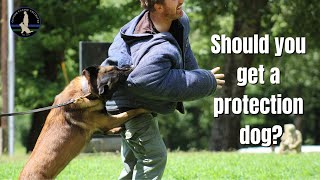
Dog trainer Simon explains what protection dogs actually are and why they're not for most people. A fully trained protection dog costs around $15,000 to start, demands serious ongoing commitment, and requires the right handler. Breed myths get debunked: not all German Shepherds bite, and any breed can't do the job.
Chapters
Welcome to The Source Podcast. This Friday we have the privilege to talk about personal protection dogs. We get so many questions, so many calls about protection dogs, and we see a wide range of not only pricing, standards, and everything in between. So we're going to have a little bit of time today to hopefully educate our listeners and to give you guys a little bit of perspective, at least from the CCU side of things. So I'm joined today with Simon, or by Simon, and we're gonna get into protection dogs today on The Source Long Version Friday Podcast. You ready?
I'm always ready. Come on, man. Anyway, I was out there doing bite work. Where were you?
Yeah, anyway, as you see, he's not even sweating, so So he's probably watching anyway. So we get to talk a little bit about protection dogs, and I think we need to start off with what is a protection dog? What does that even mean? Because I get calls probably 7 to 10 times a week about protection dogs, and they're separated from one end of the spectrum to the other. So what is a protection dog? What does it mean to have a protection dog? What does that mean?
Well, I mean, when you put it into that side, so I mean, you know, is it ultimately as far as protection dog, I think that it can be a deterrent. It doesn't necessarily need to be a bite dog.
Okay.
Um, but obviously what most people in their minds, what they think is they need a dog that is going to bite someone if for whatever reason they feel harmed. So I think that's where a lot of the calls that you get are for, is people wanting something like that, because everything you see on TikTok and YouTube and all of our popular platforms, they see the videos, they see the control, the obedience, and then that dog being ferocious. And, um, you know, they see those and they're like, man, I really want that.
But, um, I'm laughing because, uh, I've already prefaced this with the voice of reason today and told her that I was going to get into this a little bit without the, uh, you know, the expectations. The expectations, but plus, um, you know, the, the money that's involved in that, right?
Yeah.
Because out of the 7 to 10 calls a week I get, probably only one of those clients actually has money to purchase the training and everything that goes into what they actually want. So I'll get on my soapbox about that later. So yeah, stay tuned. Keep listening because yeah, it kills me to get phone calls from people that, I mean, literally don't even have a budget. But they want everything in between the earth and the sun in their dog, right? They don't understand how much training and how much work goes into this. So I'll let you continue to define what a protection dog is, right?
Yeah. Well, I mean, I don't have a clear definition and I'm not the brightest trainer that you got, but, uh, that is true. I mean, um, When we talk about it in the sense of what we commonly know it as when we talk to other trainers or talking between each other as far as personal protection dog, we commonly think of it as being a bite dog, one that's also a companion, can live in a household with the family and have great amounts of control on it. But also whenever you got handler needs that dog, uh, for any reason, that they can deploy that dog, um, to protect her, to apprehend an individual.
Okay. I mean, in a nutshell, you know, I think you said it best because I didn't even think about what you started this off with, which it can take on many different forms. The key is to understand what you actually want. That dog and how you want that dog to protect you. Because you mentioned barking, you mentioned maybe just showing aggression, and then you also mentioned biting somebody in those cases. So I think the biggest thing is to understand what, as a customer, what you actually want and what you, what your definition of. And I ask that question, obviously, first finding out you know, what kind of budgets people have. And I know that's kind of a, you know, people might take offense to that, right? Because they're like, well, you know, what does it matter how much money I have or whatnot? But the point behind that is, as I told you, I get 7 to 10 calls a week about this. And when I simply ask the question, what is your budget for this? Because you're like, you're giving me a laundry list of things you want to include. Either you have a dog or you want to purchase a dog. The realistic question is, is what is your budget? Because if your budget is $500 or $1,500, we're talking, we're so far apart, there's no way for us to come together and provide a service for you. So I think to check the box off The first thing is, is to determine as a client what you really want and quit pointing at pictures and videos that you've seen online because I don't know if everybody realizes this. Everything that's on the internet is not real. I don't know if you know that, but it's not. So, you know, there's even with this podcast, You know, Simon actually looks decent when the viewership sees it. But in reality, this joker is ate up like a football bat. So anyway, and Voice of Reason makes him look smart and sound smart by all the editing she does.
So Eddie can't smell me and you can't smell it.
So that's a big one. That is a big one. So anyway, my point behind that is, is that there's a tremendous amount of work but also a tremendous amount of editing that goes into producing something online, right? So the first step in acquiring a protection dog or even wanting one is to understand what you actually and really, really want, because there's liabilities involved in it. There's a lot of commitment there that has to go into getting or purchasing a dog that may have everything. You know, for us, we charge for time. That's really it, right? Base product, dog, what that dog cost us, what it takes us to warranty that dog, what it took us to house that dog, what it takes us to provide the medical soundness and the warranties that we offer, the continued free training that our clients get. But then in addition to that, then you got to pay for the training staff that it takes to train that dog. And so that's our model. That's not everybody's model because we feel like that's the fairest way to approach something. So we gauge what a client tells us and then price it off according to that. How much time is it going to take us or how much time we need to the particular dog we're selling them to include what they actually want us to deliver to them, because that's what's important to us. It's not our vision of what a protection dog is. It's your vision because you're the one buying. So we're going to give you what you want. It just may cost you to get that done. It's not cheap by any means.
Yeah. So I think I did a short set not too long ago about just even going in and purchasing a dog. And one thing that I think a lot of people overlook, I know I've been guilty of it when I first bought a dog, was You know, if you want that dog, you want to have— you don't want to just have a budget set to just get the dog. You need to have a budget set for, hey, there's things that I need to take care of this dog. And then also if I want to get training for that dog as well. And sometimes you got to look at that. Even with some— we got puppies coming in, you know, people spend a lot of money on puppies.
Yeah.
And then, you know, they have some expectations, and absolutely we can do it, but, you know, our time, you know, it's not free, unfortunately. Um, so just even for even pet, pet dog owners, or just, you know, any kind of dog, you want to make sure you have a budget set aside for everything that that dog's going to need. Yeah, if you want it to meet those expectations.
Well, you know, the easy thing is, is, and I, you know, to look at things for me and put it in perspective, right? How much goes into a dog, right? A working dog, per se. And many people know that my girls play soccer, right? So these kids grew up playing soccer their entire life. Uh, my middle daughter just started college and, but the amount of commitment in time and finances it took to get her to that point, because she went through all this training, playing all these games, literally since she's been 5 years old. So you're looking at 13 years of conditioning her and getting her ready for that, not knowing whether it's going to pan out or not. So my point is, is that the approach of testing and selecting a dog, right, getting a dog that's of adequate age to then train it to be a protection dog, there's a far— there's far more things that go into this than just meets the eye. Or the client raises a puppy up, begins and enrolls them in training, and then against to progress that dog. So when we're selecting these dogs, we want the dogs that have that natural ability versus what we have to train. Now we're going to use training to enhance it and modify it to some degree. However, that dog naturally should have what we're looking for because again, a dog that naturally has it means it's a— that those behaviors, those drives, those characteristics are going to be much more reliable. Um, but once we get the selection done, and even taking a client's dog— if a client comes here and says, hey, I want this dog trained as a protection dog, what's the testing you're going to do for that?
Exactly the same thing.
Exactly the same thing. So it doesn't change what's going to be done because the qualities, the characteristics— we talk about drives. Not everybody knows what drives are, I get that. So there's no reason to delve into that. The biggest thing is, is it's much like an NFL team, right? We're selecting very specific criteria based on our experience in order to take what that dog has and push it to the point of being a protection dog, or a protection dog in the eyes of the client. And that's why it's important for us to understand what the client wants. Yep.
And I think, um, you brought up a good point with, um, as far as training some things into them. And that's another thing that I really try to look at, especially if there's some spots where maybe the dog's a bit nervous in certain areas. You know, during my evaluation process, I see if I can make some marked improvements to see what the trainability of that dog is before I completely wash them up as well. Because there's some things that are deep-seated that will take a lot of time that, you know, we're trying to get a dog— we're trying to get a dog to a client at an appropriate age. And I don't want to have to sell a 5 or 6-year-old personal protection dog that I put almost 4 years of work into just to get them to the point that's you know, we can warranty and sell that dog.
Yeah. And that's the great thing about the testing process too, right? Because you also help the client to know, yes, you can use this dog, but you're going to pay an exorbitant amount of money to get this dog to where you really want it. So having those realistic conversations, those honest conversations with our clients to let them know as well, especially if they're bringing a dog to us Is it more cost-effective or smart to go with your own dog versus a dog that may be already ready to go? And, you know, you have both ends of the spectrum on that too. You have some clients that want to be involved in the process, which is good too. They just have to have the understanding that this doesn't— you don't snap your fingers and this happens, right?
Yeah. And, you know, I would We're talking about the investment that we're making. I think there's another investment that doesn't include, you know, the monetary aspect, but there's a commitment in time and a commitment in, you know, taking what that trainer tells you to do with that dog and putting a focus on that at home to maintain that dog's training. There's a big commitment having a personal protection dog. That's why typically, you know, I don't recommend for, you know, if this is your first personal protection dog to, you know, try and go get a puppy unless, you know, you're working with someone that knows a little bit about it. I think oftentimes people just think they can get a certain breed and they're not aware of that entire evaluation process. So, you know, from my experience, I would recommend if you're a first-time it's your first time having your personal protection dog and it's something that you really want to do, I would probably just look to buy one instead of just going out and getting a puppy.
Yeah.
I mean, would you agree with that?
Yeah. You know, that certainly makes things easier. But plus, on the investment standpoint, you know, you get a full warranty. Yeah. So, you know, yes, you pay a little bit more upfront, but you're getting rid of the time, the wait. The things that may or may not go wrong, and everything's under full warranty, whether it be medical and/or training. So it just makes more money sense to go that route than the other route. But I can also see somebody that's, like you said, maybe a second-time dog owner, uh, investing in that and it going very well, because we've had several clients that have done that.
Yeah.
And it's worked out tremendously. But they understand the process. They understand that. I think most importantly, to listen to what they're being told and follow instructions and don't try to supersede that.
And I think, you know, those clients, we got the same one in mind. You know, they originally purchased a dog from us, a personal protection dog. So they know what it looks like. They know the commitment. So they were able to make that selection with a puppy and, you know, immediately put it in the training.
So, but even with that, even one that we just did recently, the puppy that was raised up and then about what, 9 months old, he come to us. Is that was his 6 months? Yeah, 6 months old.
Yeah.
But again, no pressure. He understood the process. He understood, you you know, investing the time and the money into it. And now he's doing recurring training, coming back. And but now they're on easy street per se because he did that, had that initial investment, and he knew what he was getting into, you know, upfront. So I think that makes a big point or a big, a big difference as well.
Yeah.
Because we've had clients where it doesn't work out. And on the same side of things, when it doesn't work out, they're hurt because their pocket is really hurt too.
Yeah.
And that's why it's important to understand, to have a budget set out for this project. This is not something you just jump into and, you know, one day I'm going to get this protection dog because it looks cool online. A lot of training, a lot of time and commitment, and yes, a lot of finances go into it, you know. And at the same time, I think you and I have been guilty of this, you know, our car breaks down when we try to fix it ourselves and end up spending more money because we should have just let a professional do it. Yeah, and we would have probably saved a ton of money, right?
Well, you bring up a good point. I think another thing that people really have a hard time dealing with is, especially when they bring a dog to us, is when I tell them, hey, you should probably leave this dog with us to get this initial training out of the way. And people have already built that bond with the dog and they can't imagine their life with it without the dog. Um, you know, when it comes to that aspect, we got to understand that, you know, a personal protection dog is not a pet, right? They're going to be— they're your best buddy. Um, you know, you're going to develop that relationship and bond with that dog throughout the course of their career. But, you know, if you can separate yourself from that dog and let that dog get its initial training It's no different than when my parents sent me off to boot camp to go to the Marine Corps. I was gone for 3 months, right? Well, and then it became 8 years or whatever. But, you know, I was gone for 3 months. They couldn't talk to me. They didn't hear anything from me. But then, you know, at the end of those 3 months, they saw me at graduation, different person. I had all my training. I got my, my neat haircut. And, you know, I became a different person after that. So it's the same kind of process with the dog. Yeah. And you just got to, you know, if that's something you really want to commit to, that's something you got to take into consideration as well. Like, are you able to separate yourself from that dog and let him get that initial training?
Yeah, because I think from the standpoint, you know, although it's not necessary and in such, I think your perspective in making those decisions, because not every client falls into that. Oh, you got to, you have to lead your dog, right? When you take into consideration the financial aspect of it too, and whether that client's going to be able to follow through with the things they need to follow through with when they are not here, because are we just spinning our wheels and working on the same thing we worked on the last time we met because you didn't do what you were supposed to you know, over the last week or so when you had the dog. So I think you taking those steps to also really help the client to get to their goals, and sometimes a little bit of tough love is necessary in order to do that, and, and really ultimately saves them overall, right, in the long run.
Yeah, absolutely.
And I remember having a client one time and I told No, I, I really wanted the dog to stay with them through training because I thought it was best in that situation. And they came back and said, no, the dog's coming to stay with you for a while to get trained, um, because they knew what was best, uh, even though I had a different perspective at the time. My point being that everything is adjustable, and really our job is to look out for the client. Both from a financial standpoint and what's going to be most likely to assist them in reaching their goals. If, if the goals are possible, how can we really help them to get there? And what the reality of that situation is when it comes to what our recommendations for training really are and why we're making those recommendations, because they're always rooted in something never financial. And I'll say about the training team as a whole, at least here, the decision is made for what's best for the client, not for the financial. Because what people don't understand is either you're here in that kennel with that dog or someone else is. You know, we, we don't have— we're never at the point where we have to have a dog there. Um, so when those recommendations are made, they're made for the best interest of the client. Yeah, ultimately. Sometimes that's hard though, right? Because a lot of clients don't see it the same way. But like I said earlier, I spent a lot more money fixing cars that I broke because I thought I could fix them rather than just take them to the professional. And I've been slapped in the face more than once because of that.
Absolutely.
I watched it online. I've seen it on YouTube and now I can do it.
I've had some success fixing my own car, not cleaning it, but yeah.
But you can't even train your own dogs. So like, yeah, so you watching YouTube to train your dog just doesn't work. It barely works now, right? But let's talk about, you know, we've mentioned finances and all that. You know, typically what can somebody expect to pay What would be a fair market price to pay for a protection dog? This is just giving ballpark.
Ballpark, I mean, it's hard to say, but I initially, I think, you know, at least $15,000 that you're gonna have to put into it. And I've seen, as far as the ceiling goes, I've seen some crazy numbers, and I think it just goes up from there, but Um, I think about $15,000 would be a reasonable starting point.
Um, so if somebody doesn't have— and this is the reason why I talk budget when I talk to most people up front, unless I know you, you know, what do you have in your budget? Because now this is the problem that I ran into, right? And this is the bad part of when I didn't do that, and then I'm calling the client and said, hey, this is what we need to do next. We end up scrapping the whole project and we only get 25% into it because they don't have the finances to keep it going.
And that's a bummer.
And that's a— it is, because training— well, to think about the risk to that, you have a half-trained protection dog. Yeah, that's already been well started and is now on the verge of being out of control. There's a lot of issues that can get started with that, right?
Yeah. And I think it's from a training standpoint, it sucks getting a dog to a certain point and then, you know, having to wait. And then when you finally get that dog back, you're having to start, you know, a couple, a few steps back and then maybe even working out some issues after that. And then like you said, in the long run, you are spending more money because we got to go back a couple steps when that time could have been used to keep pushing and progressing.
Yeah, you give me a good budget to work with, you tell me what you want. Now obviously it's not to drain your budget, and I would see from a consumer standpoint where they would feel like, oh, he just wants to know— or could feel they just want to know my budget so they know what they can charge me. Well, our prices are set, none of that ever changes. So we want to take that and dispel that. I understand that there are some trainers that will do that, or On the flip side, training a protection dog for you for $2,500. I've heard. Uh, so $2,500. Yeah. I remember a client coming to us and telling us one time that, uh, they were going to go somewhere else because someone else guaranteed that they would train their dog. Had never seen the dog. Now mind you, a fully trained protection dog for $2,500. I gladly shook their hand and said, hey, have fun with that. Let me know how it goes.
Um, you pay for what you get.
You pay for what you get. Well, not only that, it's just not even from a time perspective could that even be reasonable for a dog that hadn't been started. You know, I can get it if the dog's already been trained for, you know, a year or been prepped. Okay, I could see that price being reasonable, you know. And that's really what less than about a month of training. So I could see that. But one that hasn't, that you're taking from start to finish, there's no way that the time would justify, justify that at all. But again, I've seen crazier, I guess. But I think the other important aspect that we haven't talked about is the relationship that you need to have with your training. And I always tell people this, especially with puppies. Is, is great to come in with a puppy now because you build a relationship with your trainer. And throughout the life of that puppy, that trainer is going to know that dog as it grows and reaches all these life stages. And if you're looking at from a protection dog standpoint, at least your trainer can then begin to guide you and help you. And even if the dog is not here with us, you have the relationship with the trainer. And within the scope of our training, we're able to help you progress that dog. And as long as you trust the process, that trainer can move you through that process throughout all the life stages of that puppy and put you at least in the best place possible to have the opportunity to go to college, if you will. All right, because without that, you're definitely not going to have a chance. Of taking it to the next level. So you got to do all this pre-training, if you will, in order to even have a chance to get and reach those goals. Would you not agree?
Yeah. Um, and you know, from the, uh, excuse me, you know, from the civilian, from the client perspective, you know, they have a whole nother life that they got to work on. you know, and to sit there and learn, learn everything there is to know and not have any sort of support on that end about dogs or canine training. That's, you know, I can't imagine it at some point. Yeah. Especially with how busy some of my clients are and trying to schedule stuff. And, you know, I really want to, you know, be as flexible as I can be with my schedule to match up with theirs. You know, they have a full-time job. They got kids that they gotta raise and stuff, you know? So sometimes it can be hard to balance. And, you know, I try and think about it. If I leave this dog with them and, you know, they're displaying these sort of behaviors, you know, sometimes I don't feel comfortable with it because, you know, I do this every day and I'm learning stuff, right? So it's, I just can't fathom like, oh man, like, Hey, you know, what are you gonna do if I'm not there, right? But that's why I always keep an open communication with, you know, all my clients. I always tell them like, hey, you know, I've been checking in with them, seeing how everything's going, how the dog's progressing, if there's any issues that they're having. And, you know, I, you know, having a trainer there where you can explain to them, hey, I got this going on. And he's like, hey, you need to come see me right now, or when's the soonest we can get you booked in? I think that's really important because there's just so much that goes into dogs that, like, you know, even before I got into this, I thought I knew something. But once I really got into it, I realized I knew nothing at all.
Yeah. Well, yeah. And it's one thing that we've seen throughout our time that The more you leave a dog to its own devices with an owner that may be not fully trained yet either, a lot— I mean, it's a recipe for disaster. So it's important to have that support and have that, um, the availability to text or call your trainer to get advice. And if you're not getting that, like, you need to be looking for a training company that can provide that for you. Because for those that are, especially those that are getting into protection training, need to have that support. Absolutely. And, uh, so, uh, but, you know, we get exposed to a lot of things and it's unusual. Uh, it's not normal. Uh, you know, when you compare what we get exposed to from a dog perspective, but also from a client perspective, there's a lot that we can share with that. And I think even from your perspective, I remember you being a new trainer last week, and, you know, since then, over the last 7 days, you've now like seen a lot. A lot.
Just joking.
Yeah, I'm just joking. But with that being said, we get the full gamut, you know. And as a trainer, being exposed to not just the dog side of things, it's important that we also work on the owner side of things and really put things in place to help the owners, not just in training but in education, and putting things in a way that they fully understand not only what they're getting, but the value of what they're getting. And as trainers, it's our job to, to really educate those owners so that they can move alongside their dog. As their dog grows, they grow as well. But there are a lot of misconceptions about protection dogs. I hear myths all the time. I hear people say things and I'll have to be honest, most of those come from inexperienced trainers as well. I'll never forget, um, a lady showing up. This is years ago, and I'll tell you how old— it had to be over 10 years ago. I remember her showing up to our place when we were out in Jackson County, um, before we moved to this new facility. And she shows up and has a— she's in a truck by herself, and she's in tears, literally in tears. She has a dog in a crate that's bolted down in the back of her truck, and she had just left a training facility, came straight to us, found us online, came straight to us to see if we can even get her dog out of the crate because she just picked her dog up after being with a trainer for 6 weeks for protection training. And she can't even get near the crate to get the dog out of the crate. Now, of course, being a young trainer that I was at the time, I thought she was joking. This dog's just showing his tail, you know, in this crate. That's it, you know, being a little bit territorial and such. She wasn't lying. Long story short, we ended up helping her with the dog, finding the dog a home. And that dog bit the owner even after time with them. Bit that owner twice pretty severely as well. But it was explained to us the methodology behind the trainer that did the training, and it was so archaic. It had no behavioral balance built into this, uh, the training and the development of this dog. So I want to delve in a little bit into some myths and misconceptions. The first and foremost is, is that the first myth that I would like to dispel is that these dogs are trained to bite everybody. They're absolutely not trained to bite everybody. Matter of fact, they should be social. They should be stable. Uh, the ability, as you talked about, to be around kids and other people is very important to most of our clients. They don't live in a, in a shoebox. They, they actually get out and go places. And most of our— matter of fact, most of our protection dog owners are very active people, some of the most active people. Uh, they just have assets to protect. So what's another myth you've heard?
There's one where— what about that one guy with the finger guns are a no-no? Dog will take you down, right?
Yeah. But that was also 20 minutes of him telling us all this other nonsense that this dog would do. But yeah, finger guns. Yeah. Training a dog to read finger guns. Um, is probably something I'm not doing.
You may, maybe even finger guns are a no-no, and it growls at old ladies. Um, I wasn't expecting that one. I don't know any misconceptions.
What about, what about the fact that— well, go ahead.
Well, I was gonna say, um, you know, I, because I've heard this not only about protection dogs, but even about police dogs, but, you know, if it's a German Shepherd or a Mal, it can definitely do it.
Wow.
And I heard that recently from, you know, an individual, so I thought that was pretty interesting because I know— I mean, you know, maybe I didn't understand quite the context of it, but, you know, yeah, maybe you can after so many years of proper training, but You know, I think I'd have to beg to differ.
But anyway, you may have a different experience than I've had, uh, or that I have. So, uh, yeah, I don't know. You know, there's— you know, obviously there's a lot you can do with an unlimited budget, right? You're always limited by the amount of time you can spend. If I was training one dog each year, I can spend a lot more time with that dog.
Yeah.
And if somebody was paying my bills for that year obviously you have a little bit more levitation, if you will.
Yeah, well, I think, um, you know, another one too. Now, I did bring up the breed and stuff, you know, and the, you know, German Shepherds and Mals, they are more apt for personal protection work or even might work patrol work. But, you know, I've had a clients tell me that they had a personal protection lab, or just, you know, even any, or, you know, your typical floppier dogs doing personal protection. And I haven't seen it yet to this day. I don't know if you have.
I mean, I've seen some ferocious labs, but I've seen some labs that would bite, right? But I think that's where the context of what what a protection dog is, right? Because there is a vast difference between a dog that will bite the sleeve or bite a sleeve or a tug.
Yeah.
Then one that really means it, right?
Yeah. All right. And you know, I think that's where a lot of people do have misconceptions, is they think, you know, they may see an aggressive dog and think, oh, well, that's a personal protection dog. Well, no, that dog has some behavioral problems, right?
Correct. Yeah.
And there's, there's a, there's a different layer of aggression that's applied in, you know, at least the bite work that we do here at Custom K9 and what's traditionally acceptable in the training world. And, you know, it comes from a place of play is where we kind of start out with utilizing that prey drive, um, because ultimately we don't want it to be very stressful for the dog initially. Um, and You know, some people think that, hey, you need to, um, and I've heard of certain trainers where, you know, they feel that to get the dog to bite, you just need to start hitting it until he has no other option, right?
Yeah. Yeah. I think going back to the lady that pulled up in our driveway, that's exactly the approach that training, uh, and I, even if I knew who it was, I wouldn't say it, but I don't. Even remember who that company was or who that trainer was. Uh, matter of fact, I don't even think I asked her because I didn't know who that was at that time. I really only delved into the law enforcement side of things anyway, so I was clueless if she would have told me who that was. But, but you're absolutely right, it's not about the dog being a mean bite-everybody type of dog. Now, there is a place for those types of dogs, maybe Maybe, but in, in my opinion, in today's society, when it comes to protection dogs, I, I can't even think of a situation where that would be.
Yeah. And I mean, if there's any mean aggressive dogs, I just hope they're not at the end of my leash because they're scared to—
well, you have your bike gloves now. Do we have— can we, can we show a picture of his bike gloves? Maybe a video of you testing this?
Oh yeah, we'll put it at the end of the podcast. Guess, so you got to watch the whole thing.
But I will need to let everybody know up front, CCU had no hand in purchasing those. Uh, AJ Vargas definitely had no hand in that. All recommendation and purchases came from this guy.
That, that's, that's a lie. I put in a purchase request. Great idea, Simon. Yeah, you're the ideas guy.
Yeah. Even Maya was sitting over there shaking her head. This is a bad idea.
Hey, you say that till we got a raccoon stuck in your office.
We need to get it out.
You'll be like, Simon, grab them bike gloves, this one's got rabies.
And we saw the bike gloves didn't work.
Simon is, uh, yeah, it'll at least work on a raccoon. Okay, right?
Yeah. Now, as it, uh, I, I just going back to the myths, um, because I get this all the time, uh, and again, guys, I'm not— I guess I'm not trying to discourage the purchase of a puppy, but when you tell me your ultimate objective is for this dog to be a protection dog and you're not a trainer and you purchase this German Shepherd or this Belgian Malinois because you want a protection dog, just my opinion, I think you're putting the cart before the horse. Because if I want a protection dog and that's my goal, I'm definitely not going with a puppy. I'm going to go with a dog I can test, a dog that I know has the capabilities, because if that's my goal And I cut out a year's worth of work and a year's worth of unknown by just going straight to the source. All right, now if you tell me, hey, I wanna— I bought this puppy so that I can attempt to train it and attempt to see it grow up and work towards that, by all means. But when you tell me your statement is, I bought this to be my protection dog I think you're not understanding what it really— it's not as simple as just taking a German Shepherd or a Belgian Malinois or Dutch Shepherd and going, okay, because I hear this too, well, their parents are police dogs. I think that's the— I think that's the page one of the Breeder's Handbook to sell German Shepherds, right? Yeah, yeah, everybody uses that term. Well, His parents, his mom, his dad, guys, okay, but Simon's dad was an Olympic athlete and now Simon's not even an athlete. So just because the parents have done something remarkable or, or doing something remarkable does not automatically make your dog a protection dog.
You know, the more we talk, I'm starting to realize something. I feel like we're talking about Maya when she bought Medusa and brought her in and said, can I say your dog's name? Because Maya, the voice of reason— now that I think about it, maybe we should kind of—
no, but here's But here's the thing, right? Everything on videos, right? Yeah. And you know, but, but this is the reason why we're sitting here today though, is because people just don't— and nobody's going to tell you the truth. That's the thing. You may not like what— you might not like what I say, but I'm gonna be honest with you. That's true, right? You're gonna hate me, you can bash me, whatever you want to do, but I'm not gonna lie to you. Yeah, tell me. We can keep going, she'll become a fear biter, or we can wash her out now. And you can just keep wasting your money. Yeah, it's just not worth it, you know. Let the dog live a great, nice, natural life, well-behaved, part of the family, those types of things. But it— when you begin to put those expectations in— again, I grew up 13 years with my girls playing soccer, and I've seen the parents on the side of the sideline freaking yelling, cussing at their kids and getting so mad. And I'm just like, I'm thinking, let the kid have fun. Dog training is much like that, especially when that dog's being raised to do this. It has to be. And you mentioned it, it starts out all fun, then you start getting serious. Another common misconception is that every German Shepherd and every Belgian Malinois, and you know, this is going to grow up to be this Olympic athlete in this? Now, yeah, there's always potential, but the investment in time and money and resources also has to be there, you know. And so with that being said, there's far more of those dogs that are released or don't make it, because even from the testing— what are your percentages on testing dogs that actually make it into a program for police protection?
Oh, it's the ballpark.
Yeah, just ballpark off the top of your head. Let's say you test 10 dogs. How many of them are actually going to have the capabilities that you're going to purchase to, to be a police or a protection dog?
Well, I'll tell you, I think I recently went to go look at 4.
I said 10, did I not say 10? But this is why you try— I'm going based— math's not good. I'll multiply that.
Okay, go ahead.
I'll do the math.
I'm going based And I'm, I'm telling you, last week I went to go test dogs and I tested 4 dogs that were supposed to be bite dogs and none of them made it. Okay, zero.
So, so zero percent. But I mean, in reality, 20%.
Yeah, when it comes to— especially when it comes to bite work, because it's so intricate and what we're expecting that dog to do, ultimately that dog needs to be reliable. Yeah. And, you know, it, it, it's something that we're very stringent on, especially because sometimes it can mean life, life or death in those situations.
But in the same sense though, it's also about the client, right?
Yeah.
For me, I'm not providing protection training for a dog that I know is never going to make it.
Yeah.
And the client thinks that what I'm doing is making a protection dog for them, right? Yeah. And I know you for about a week now, but my point behind that is we would never do that.
Yeah.
We would educate the client and say, listen, this is probably— one, we're not going to do it, but two, if you want to have fun with your dog and just maybe do bite work, come out here and hang out, you know, or do sessions where you're just doing it for fun, okay. But when you're paying us to do something with the expectation of the outcome, we're not doing that. Absolutely not. I think that's the ethics that come behind training, and us as trainers being, being ethical in telling these clients, because we've had clients I can think of one right now that still comes here to today, has been a client of ours for probably 6 or 7 years, and told me, just keep my dog as long as you want it, I don't care, because money is not an option. I had to fight this client to send that dog home and said, the best, the best place for this dog right now is for him to be at home with you. Because I'm not keeping your dog for a year to train it knowing that I'm never going to get what you need out of it right now. The dog still needs to develop over the next year. And guess what? He's a client of ours today because he did exactly what I told him to do. In a year's time, the dog developed on its own and became the best protection dog this guy's ever seen. But I could have kept him in training for a year. Money was not an option, but it's the ethics that come behind that. And I literally had a fight with this client. Come get your dog. But I got the money. I don't care. I don't care either. Come get your dog. It's not healthy for your dog to be here knowing that it's going to take a year, year and a half for him to develop and mature. He has the great foundation right now. Let him mature and you'll, you'll get what you want. But let it play out. But again, that's the ethics behind it. So the other, the other part of that is, is those finances that we talked about. But let's also talk about maybe, um, some success stories on what you've seen with protection dogs, like how they help people, where they're really feasible for people. Uh, and I know I go back a lot of years, but over their 20-year period I have a great friend of mine that we still train and board all her dogs. I've known her for 20 years, but I'll never forget when I— how I first met her and the amount of money. Now, back then, now this is almost 20 years ago, she bought a dog and she didn't tell me the exact price, but when she told me, when I asked her how much she paid for this dog, she said It was a car that I paid for this dog. Literally, she got a crate sent to her home with a videotape. This is how long ago, with a VHS tape taped to the top of the crate. That was her training. And she got a German Shepherd in the crate and that was it. And she paid upwards of $20,000 for that dog back then, now 20 years ago. My point behind that is we got involved because she said, look, I just don't think this dog is what they— what I perceived it to be when I bought it. Yeah, the dog will bite. Yeah, the dog's very obedient, but I don't think this dog would bite for real and is really a protection dog. And I think that's what the separator is, right? Are we doing this for sport or are we doing this for a true protection dog? And that is a vastly different approach to training and knowledge base. And she was right. Me and Corinne actually went to her house and we told her when we were coming around about time, no Sue, no nothing. We said, we want you to send your dog on us. Let's just see what happens. Of course, she was hesitant because she's like, well, you're going to get bit. Well, that's what we need to see.
Were you standing behind Corinne?
Actually, yeah. I pushed Corinne out there. I'm like, take it from me, Corinne. Corinne said, okay. He had shingles at the time, so the dog didn't bite. I think it was the shingles that protected them from getting bit. But no, the dog literally ran up to us and, uh, we petted the dog. Um, we kicked the dog into— we even kicked the dog into prey drive to see if he would bite on a prey scent. Would not. No equipment, no nothing. Which I obviously, I knew that going into it, because if I didn't I wouldn't have done that because there obviously there's dogs that I know will freaking bite. But after talking to her, knowing the dog's background and how the dog was trained and all that stuff, I already knew. And, uh, but I had to give her the harsh reality of that. She already knew it in the back of her head. Uh, we just helped make that decision, solidify that. Now we helped her with training. We pushed the dog into the other areas that it was necessary kept the same dog because that's what a lot of people think. Oh, you're going to change my dog. That's not the objective of protection training. The objective of protection training is to— for that dog to know when and how to fight, per se, not to change the dog's personality, if you will. So that's something that even when selecting a company, you need to understand that, or you need to partner with a company that, or trainer, that has that knowledge and can help you to understand that, because that's also very important. But that's just one story comes to mind. You have any more?
Well, I think ultimately, um, anyone that's came to us in, you know, the short amount of time that I've been here at CCU— last week, the past 7 days, uh, You know, anyone that has came to us asking for a protection dog to this day hasn't, from my knowledge, hasn't needed to use it. I think that's a success story ultimately because I think the best purpose that a protection dog does serve, you know, is being a deterrent and allowing those customers to have that peace of mind. Especially when it comes to customers that may have suffered from past traumas and felt the need to have that protection dog. And if I can offer peace of mind to someone, you know, absolutely. I don't want people to be scared just living their lives. So I think that's the biggest thing. But today I actually had a personal protection client that We did a session over at his house and we simulated a break-in. He had never done it at his house and the dog did really freaking well. And it was actually a dog that we didn't even get started. He moved in from out of state and he's an awesome client, great dude. He buys us sandwiches while we go training offsite and stuff. So he will work for food, but no, just, just not deodorant. Well, the biggest The biggest thing I really like about him is he's very consistent with training and, you know, but, you know, I don't mean to cut you off, but I need to add this point about that particular client.
Yeah. Because, because of the finances, right? Because we said you need to have $10,000 or $15,000 ready to go, right? But this guy does 30-minute sessions once or twice a week, which cost him about $99. Right? Because it's about an hour session. Let's say a session is approximately $100. Right? But he's been doing this consistently, most importantly staying consistent on his homework, and he's accomplishing his goals with very little investment, but it's because of his commitment as well. Yeah. Right? So go ahead. I wanted to interject that just because we were talking about probably seen earlier, and he's a prime example on how to save but at the same time still reach his goals. So go ahead, I'm sorry.
Yeah, and you know, um, to— during today's session, you know, uh, we made like really big improvements, and we wanted to catch the dog by surprise because— and I think I was even telling you, you know, I found some trouble spots when we first started training And, you know, he never like panicked or, you know, he just followed through with the training. And, you know, today I was crawling underneath trailers in his backyard and having the dog come find me and, you know, the dog wrestling with me under a trailer in the dirt and the mud and, you know, putting that dog in those uncomfortable positions that she struggled with previously. But, you know, with his commitment to coming into training and working with us, You know, she just— I was really impressed.
Everything kind of fell together.
Yeah. And it was just a really great session, you know, so I was really happy about it. And it's kind of funny that, you know, I didn't even think about it till now. I was like, oh yeah, I'm doing a personal protection podcast. But that was a— it's nice to have those moments in training where you're like, okay, everything, all that work we've put in now is coming to fruition. And just even catching the dog by surprise, not even expecting it whatsoever.
And see, yeah, he wasn't in a training mindset already. Yeah, or prepped for training because location or through the overall setup.
So yeah, we interrupted her, you know, daily routine and, you know, did it like a live break. And he had drove home. I was in the backyard creeping like I normally do with a snowball.
He was acting like he always does.
Okay. Yeah. And, you know, the dog engaged. And, you know, I— there's even another thing where the dog, uh, had some allergies and issues with their feet, so they're very sensitive about touching their feet. And I stepped on the dog's feet. It was an accident, but the dog, the dog fought through it because we worked so much time on that as well.
You know, you mentioned earlier about giving people peace of mind, right? And they brought back two clients in particular. And both of these happen to be females that their parents ended up buying them protection dogs. One, actually three, actually, now that I have memory, uh, as they transition out on into their own from high school and going into college. But I remember, I know of three specifically females, and I have all daughters, and you know and my daughter leaving and going and moving to Florida, the only real question I had of the coach is how is she going to be taken care of? Because I'll need to make sure that my daughter's safe, right? But thinking back to these parents buying a girl, a young girl, a protection dog, letting them go through training and giving them peace of mind. And in each one of these cases, I still am friends with them to this day, years later. Now, Callie flew in from— and I'll say her name, but because I can— but even with her last doll, she flew in from LA. She's a grown-up now. I knew her when she was, I'll say, a kid. Now she's a grown-up with a career, and she flew in, had us do another doll for her. From LA and ship the dog back out to LA with her. Like, but it's because she understands the presence of a dog and, and the difference that a dog makes in being a hard target or soft target. And I think back to my law enforcement career, I can never remember a time nor talking to any LE guys over the last 20 years where somebody with a protection dog was assaulted, was broken into, or was injured with their dog with them. Because you think about it, am I going to mess with that dog or even take a chance with that dog, or am I going to find someone else so I don't have to fool with that? Most people are going to go somewhere else and deal with it. I'm not saying that's the fail-safe, but I am saying statistically speaking, I've never had that happen. Matter of fact, Callie. I remember getting a phone call because her mom thought she was going to get sued because her dog bit, at the time, Callie's boyfriend. And I said, what? And she says, yeah, the dog just bit him, he's at the hospital. I'm like, oh, whoa, okay, what happened? Well, Callie was in school, he didn't have a key, so he decided to break in go through the window to go get his books out of there, and the dog, who bit him? I said, well, he was breaking in, that's his own fault. And then she like took a step back and was like, you know what, you're right. Why was— why didn't he just call Kelly? Exactly. He broke in the dog's head, he broke into the house, dog bit him. Not his fault, meaning the dog's fault, not Callie's fault. It was his fault. So anyway, my point is, is the dog did its job even with someone familiar, uh, in that case, because the boyfriend had been around a couple times and been around. They just, they had that level of separation, and, uh, the dog did his job.
Yeah, I was— even though it was the boyfriend, you know, it's that context as well for the dog. Correct. I'm sure there's probably some training that prepared the dog for that to build that context.
So one of the recommendations we got today for another client came from, um, and I listened to the call right before this podcast, uh, they recommended this guy come to us for training, but we did two protection dogs for them. Uh, well, one protection dog and one another dog for their daughter. For their other daughter that was coming up and going to college, Um, but gave them the peace of mind, and they still have the dogs. The dogs do great now with the family, but it gives them that, that peace of mind, but also makes them a hard target versus a soft target, which is also for someone that has girls. Like, to me, that's— you can't ask for none more, uh, than to be able to give that peace of mind and that safety, if you will. Yep. Last thing we're going to end this with, Simon, is let's talk a little bit about care. So now you went through training, you have this dog, you've invested this amount of money in this dog. For one, what, what can people expect as far as maintenance and upkeep, both financially and maybe even their time? And then how can they best protect themselves or keep their dog healthy? On top of that. So if you can delve into that a little bit, give everybody some perspective on that. Is it like, is it more expensive to have a protection dog than any other dog, or what?
Well, I mean, just having a dog is pretty expensive. I mean, um, we got 7, right?
All of which bite you. That's why you got the bite gloves. That's what it is. It wasn't for here. He wanted me to justify home use of his bite gloves. Now I get it.
Working on food aggression. No, actually, he, uh, I have a funny story about it. I'm just gonna throw it in there. But, uh, yeah, that dog in particular, for whatever reason, is aggressive whenever I put food into his kennel. And, you know, I started going about the process. I found out that like, oh, You know, if I just feed him outside the kennel, he's fine, right?
Remarkable.
So, so I just started doing that, you know, and I've been doing it for a while. I think there was a day not too long ago, it was actually the day I slipped down the stairs and I messed my ankle up.
Not while you were on duty.
Sure. I spilled, I spilled all my milk, literally spilled all my milk. It was an 8-gallon jug of milk.
Book.
Yeah, um, and then my car was having trouble, and when I got home I was like, man, like, I was just having such a crappy day. And you know, I— because both my dogs' crates are next to each other, so I go and feed Vargas. Vargas is cool with me putting food in, and then I don't even think about it, I open the kennel and I throw the food in. That dog looked at me like, are you stupid? He was even shocked, but he didn't bite me, so I think I got somewhere with that. But let's, you know, and let's talk about at-home care. You know, owning— and I tell handlers this, you know, as well— it's not— it's something that always sticks out to me, and it's something that I realized when I got my first working dog was it's— you're gonna be taking care of that kid, like, or that dog almost like a child for the rest of its life. Like, yeah, so there's You're definitely going to be delving into some time. Typically, you know, I think here we'd say about an hour of kennel maintenance, making sure that that dog's areas are clean, their food dishes are clean, their water pail, they're getting fresh water every day, at least once a day, and then maintaining their hydration. You know, vet bills. That's something that, you know, you should have money set aside for just in case of emergencies. Uh, those can rack up pretty bad, but ultimately, if you want to avoid those— they're unavoidable, but let's talk about risk management here. We want to make sure that we're preventing that. So, um, brushing your dog is really important, allows us to take a look at our dog and see and catch some of those issues early on before they get really serious. And then obviously grooming as well, which affords us that opportunity. There is a lot of food available, and right now the big one is the raw food diet, which, you know, I like the raw food diet, but if you're going to do that, you need to be able to do it right because you can't supplement, uh, a lot of the things, or you can't— you will need to supplement a lot of the things that the dogs need that aren't available just from raw meat. So you want to make sure that that dog is getting all the nutrition value that it needs to maintain a healthy weight and, um, maintain its skin, fur, and coat, and then obviously regulate hormones. And, um, just regulate everything internally for the dog. So, um, you know, have money set aside for that. Otherwise, if you want to look at a cheaper option, you want to ensure that you're getting your dog a food that's recommended for a working dog, usually a high protein or high protein, high fat if your dog is at a high active level, um, and at an appropriate weight as well. Is that—
yeah, amazing.
I'm trying to think, sorry, trying to think back to my short set. But, um, oh yeah, and then making sure your dog's on preventatives, especially out here in Georgia. Heartworms are really big, so making sure that you're ensuring that your dog is getting their preventatives or getting their vaccines. And, you know, they're also conducting training as well. You want to be sure that you're maintaining that training. And when you're doing that training, you're doing it as safe as possible and mitigating as much risk as you can. Because especially with personal protection dogs, um, you know, we talked about this in our decoy podcast, uh, with Brandon, a lot of the injuries you do see occur in the dental region, and those often aren't cheap, right?
Yeah, that's right. No, you're right. Um, expected cost per year, you know, probably $350 to $1,500 on average, you know, depending on what you need to do on the medical side of things. I think it's important, and we advise all clients. To me, $1,000 is a lot of money. For Simon, that's, you know, he throws at it and gambling away, you know, every day, right? This is his second job, uh, and— but my point behind that is, is if you're going to get into this, go ahead and get a full medical workup on your dog. The blood work, the hip and x-rays. If you own the dog and you raise it as a puppy, hips and x-rays done, uh, hips and elbows and spine x-rays done. And the reason why I say you don't want to invest a bunch of money into this dog, um, to push it in training and the dog is already injured, you're going to exasperate those injuries, if you will, and ultimately cause the dog more pain than good for you, just for your own well-being. And then if you buy from a reputable company, they're going to give you a warranty anyway on genetic health and such, and they're going to do their due diligence beforehand to make sure that dog's healthy before you ever purchase it. There's always something that can happen, right? The health, cancers, there's, there's a ton of things that could happen, but you want to mitigate, like you said, mitigate risk as much as possible in training mitigate risk and the health and well-being of your dogs. Feed them quality food. I know an owner of a dog food company that's pretty popular in the working dog side of things, and he, you know, he says this, you know, you wouldn't feed an athlete— a real athlete wouldn't eat junk. So we need to even feed our, our athlete dogs the best food possible. So don't take any shortcuts there either. There's a couple, I'm sure Maya can, if you'll hit us up in our comments of this podcast, we can give some recommendations on some great dog food companies that provide reliable working dog food and kind of what you need to look at as far as percentages in fat and proteins and some of the other contents that you need. So hit us up in the comments and we'll try to answer those and give you guys some recommendations. We don't endorse anybody, We use what we use because it works, but that doesn't mean that there's not other dog foods out there that could, um, do the same thing. But we're basing this off our experience and what the science is telling us from, from what we should be percentage-wise feeding our dogs. So, um, anything else to add, Simon, before we let you get back to you to start your second week of work here.
Yeah, if, um, if a protection dog is too expensive for you, then just buy a gun.
Yeah, it's just not for everybody. And, you know, I hate to sound offensive when I say if you don't have the money, don't do it, but the reality is it, it's an investment and You know, I don't even know if I didn't do this for a living if I could ever afford to do it, you know, and invest that kind of money in it. But I love dogs, I love training, and I know the value of how dogs keep us safe. And, you know, there's no substitution for that. However, it comes down to money. And if you don't do it right, that's the thing that I think I want to drive home. Is, you know, take the money out of it. You're going to get what you pay for. So these trainers saying they can do it for X amount of dollars, they haven't met your dog, they don't know what kind of work is going into it. You're— there's no way possible to get this done without investing time and expertise into it. And if you can't do that, it's best just to have a nice great dog at home with you that barks when people come to the house. That's better than nothing, and you're not investing the amount of money that it would cost to, to do it. Like, literally, I mean, I've just, you know, don't try to step into a realm that you can't. You're in a— you're going to end up short, you know, shortcutting yourself, you know.
Um, people, you know, BMWs are nice cars, but looks good in the magazine, looks good in the magazine, but I can't walk into a dealership right now.
Well, not only that, but the maintenance on you know, will cost you an arm and a leg. So those are just things you have to consider, okay? And if you're already crying about a 4-week boarding training that's $2,800, might want to stay away from this because a trainer never knows what he's going to get into until they get into it and start training. And if they recommend, hey, you need more training, you then you're not going to accomplish your goals. So I'm just, I guess I'm just trying to throw it on people that maybe there is another route we need to go versus, oh, I want a protection dog. It's just the investment.
And stay off TikTok.
Stay off my stick, not our TikTok. Stay on our TikTok. Yeah, well, but everybody else's, don't believe them.
Yeah, I mean, you know, and you brought up that point, you know, You can cut up and make a dog look good, but you know, sometimes, you know, we can take the best 10 seconds of our training in the day and be like, yeah, this is what it's like. But you know, there's— we got it.
Well, I mean, but if you think about that though, Simon, that's how we hired you. Remember I walked out and I tripped and fell and I looked up and you did something over there and I was like, dang, he's a good trainer. It was when I got passed back out.
I caught 10 minutes of your training and I was like, man, it wasn't when my dog accidentally bit a trainer in the face when we were doing a showcase.
But no, you're absolutely right. I mean, you know, we cut up a little bit, but at the end of the day, man, it's protection dogs are not for everybody. Yeah, you can, you can do it as a hobby and delve into it, but if, if you're really looking for something reliable and something that it's just gonna— it, it costs, costs money back, you know. I don't know an easier way to break it to people. Voice of Reason, can you help me with some, maybe a better approach? Shocked.
Well, Voice of Reason, you, you were once unreasonable and you, uh Well, nice that I have a mental illness.
It's called OCD. You obsess about stuff until you compulsively do it. Actually, my therapist told me that. I'm cutting that part. Hey, that's good stuff. People need to know, don't have OCD either. They want a protection dog because you're going to do it in over-speed. I have a German Shepherd that's reactive to everything. Yeah, just kidding, she's not. So, uh, but Not that I discount protection dogs, but it's just not for everybody. Well, and even now, knowing what I know now versus when I thought I wanted one, there's no way one could fit in my lifestyle. Yep. I know that 100%.
I think it's just one of those things like it's just a, it's kind of a fad thing. It's a status thing, right? People can say that, oh, well, that dog would protect me. No, don't walk too close to me. That dog's gonna protect me. You know, so make them look cool. I think, I think you got to be very serious about it if it's something that you want to do.
It's a very viable option for the right person and the right people, because we have clients that need that level of protection. They have assets to protect, yep, you know, and, and I say that's a viable option for them, but it's not for everybody, you know. It's not It's just not, uh, now to have a hobby and have fun with your dog, absolutely. But when you're really delving into what it really takes to obtain a protection dog or to train one up, it's a lot of man hours that go into those dogs. Yeah. And I can't stress enough to find somebody you can trust if that's the way you're going to go, that's going to steer you down the right path. Warranty their work and support you after you get trained. Yep.
Wow, man.
But like and subscribe our stuff. Um, comment, voice a reason. Even Simon sometimes, and even, uh, I don't, but some other people may, you know, go back and forth with you. But we're always there for advice. That's the most important thing, right? Because we want The whole purpose of these podcasts are for education. We hope that when you listen to them that you get at least one thing out of them that you can take back and use it. Maybe you learn something about protection dogs and go, well, you know what, maybe they're right. Maybe I need to stay away from that and just have a nice family pet. Or maybe I need to hire a professional to help me pick the right dog for what I'm trying to accomplish, because that's where I minimize my risk. But on top of that, like, subscribe, follow us for sure. Every Friday we have our long-form podcast that comes out, that is released. On Tuesdays we do Short Sets, which is just something to encourage you for the week, give you a tidbit of information, quick, short, to the point, but yet it's, uh, very, um, fulfilling. I, I guess that's the best way to say it. Uh, don't know the right word, but, but it just gives you what you need in the middle of the week. Let's run a short set, get some training in, and then look forward to Friday. So like, subscribe, follow, all those good things, and be sure to comment. And if there's stuff that you want to hear us talk about on our podcast, if you— if there's things or guests you want us to have, I think I— well, I know we have some special guests coming up over the next few long-form podcasts on Fridays. I know I have some interviews of some great people I'm going to be talking to. It wasn't so great here with Simon this time. No, I don't, I don't pick the guests. I just show up, right? I mean, I showed up today.
I'm the world's greatest dog trainer.
I showed up today to talk about protection dogs, and I look across the table and I have him. Sorry guys, you know, it is what it is. I just show up. Voice of Reason schedules these things. She surprises me when I step into the studio, and I got surprised with Xymon today. So Xymon, you got any last words before we cut it off? How's it going? All right, that's it. Hey, have a great weekend, everybody. See you next week. See you Tuesday, and then see you next week on Friday. Have a great week.
More from AJ

Running vehicles with K9 Chidori#workingdog #detectiondog #workingmalinois #malinois #drugdetection



Join us for group training this Saturday! Sign up on our website. #DogTrainer #DogGrooming

Smart Funding Ideas to Launch Your Dream Dog Business | Custom Canine Unlimited



Why is my dog reactive? #reactivity #dogreactivity #k9 #dogtrainer #dogtraining

It’s not too late to sign up for Group Training! | #dogtrainer #dogtraining #trainyourdog


K9 STEVE | Explosives Detection 💣#workingdog #policek9 #detectiondog #edd #trainyourdog