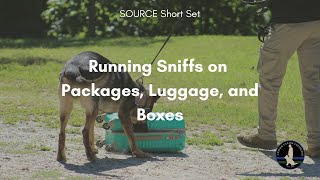
In this YouTube Short Set, the host presents a concise training module for detector dogs that expands their search repertoire to include packages, partials, luggage, and backpacks—objects they may not commonly encounter. The lesson outlines a step‑by‑step approach: start with a simple, evenly spaced layout of a few items, let the dog self‑discover the odor without forcing a response, reward the quick trace back to the source, and gradually increase difficulty by adding more items, moving them, and placing odor deeper within seams. Leash control is emphasized as a gentle guide rather than pressure, and the overall tone stresses fun, low‑stress learning to build a new “sight picture” for the dog. The segment closes with a call to action for viewers to apply the method during the week and to engage with the broader podcast series.
Chapters
Short Set Tuesday. It's another Tuesday, and I want to give you a little bit today to work on for the rest of the week. In today's Short Set, we are talking about packages, partials, and luggage. It's something new that a lot of detector dogs don't generally work on, so it's something that you got to target in training. And usually for the first couple sets, it may start off a little slow until the dog gets the concept of targeting those objects and knowing where to find odor. Now, just like a vehicle, you look at our vehicles, we talk about productive areas, And you know, you think about door seams, trunk seams, the front grills and such as being our productive areas. That's where we want to teach the dog to sniff and sniff intently. Well, partials and baggages, luggage, book bags, those types of things, since they're not generally something that the dog's used to sniffing, at first it may look a little ugly because the dog is not used to it. And not used to where they're going to find odor. So through successive approximation, we're going to build upon each, uh, iteration in order to build the dog's context, their sight picture if you will, with the partials, the packages, the bags, and the luggage. So we usually start off pretty simple. I'm not going to put a lot of bags out or packages out to start. And remember, these dogs already know odor. These dogs already know the command to sniff. It's just now building a different sight picture on how they target these objects. And so once we build that, very quickly the dog catches on and the dog begins to intently sniff these objects. We just got to build that sight picture, and it's built on fun. So the first thing we're going to start out with is just laying out the sight picture, which means I'm going to take boxes, bags, or luggages, and I'm going to space them out evenly. Now, just for me, I take 10 steps heel to toe and then lay each package so that they're evenly spaced out. With that, after doing that, all we're going to do is we're going to know— the handler's going to know, and I'm going to know where the target odor is. And then the next thing we do is we just walk the dog past these objects. We're going to allow the dog to self-discover. You always get better results with sugar than you do with spice. I don't want to force the dog to sniff. I also don't want to present anything to the dog. That's a short set for a different time. However, I'm going to take that time and just present the dog into the area and let the dog sniff on their own. Once they get into odor, because they already know odor, they're going to trace that odor back and we're going to give them a quick reward. And do that very quickly. All right, after we let the dog self-discover, I may not even have the dog give a final alert. Again, I'm just building context, and as soon as the dog sniffs, traces the odor back to source, I'm going to pay the dog. And again, every dog's a little bit different, and I play it by ear as I'm reading the dog and what the dog has given me. What I don't want to do is lose the dog for the sake of getting a final response. Because I'll build that in. That'll happen very quickly once the dog understands that they can find odor there. Then the dog will begin to learn the search pattern. I'll move the boxes around. I'll move the luggages around, our target luggage, and make sure that the dog has the opportunity and doesn't learn a pattern, rather just learns that the boxes in general afford them the opportunity to find odor. Once we do that, we will add more boxes, we'll add more luggage, we'll systematically increase the difficulty. Even where I place odor at, I will increase difficulty. At first, the odors presented outside the seam are very readily accessible, meaning odor is, before I begin to make the dog sniff deeper into the seams. And once the dog begins to learn the game, if you will, the dog will naturally begin to sniff deeper into those seams. I'm going to use the handler to control the dog with the leash, and with good leash control, the handler can guide the dog around the packages as the dog begins to learn the patterns, if you will. But again, it's very loose at first. No pressure, all fun. Allow the dog to self-discover. This week, begin working on your partial, your packages, your luggage, and your book bags. It'll pay off for you in the long run. All right, that concludes our short set for this week. I hope you learned just one thing. I hope you can take something back, begin to work on it, and I hope it inspires you this week just to have a different outlook on training. Enjoy your week of training. I'll see you back next week. For our next short set. Remember, every Tuesday is our short set, but don't end the week without listening to our long-form podcast. We always have some great guests, we always have a lot of fun, but most importantly, we just hope that you learn one thing from each of our podcasts, and we're going to continue to deliver that great content to you. Join us, like, subscribe, all those good things you guys talk about. Also comment in the section below and we'll try our best to answer those questions. We also want your feedback. How did we go? Talk to you soon.