Talking All Things Apprenticeship with Keely & Deb | SOURCE Podcast
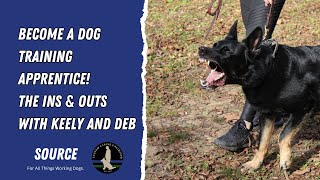
Keely Hill, a new apprentice at the Center for Canine Understanding, chose the facility for its humane training methods after bad experiences elsewhere. She works 10-12 hour shifts learning kennel fundamentals, handling her own reactive dog, and managing the culture shock of a staff dominated by military and law-enforcement backgrounds. Her goal is to move into working-dog specialties like detection and bite work.
Chapters
Welcome to The Source Podcast, all things working dogs. We are back today, um, we have Keely Hill joining us. She is our newest apprentice and she's going to be describing a little bit about her experience And why you should be a dog training apprentice.
So I first came up with, uh, CCU through looking for dog trainers for my own dog. Um, I went through a couple different places. I didn't really— I met them, I didn't really like them, I didn't like their techniques. And I came across CCU and I scheduled an eval with Simon, and immediately I could tell that he was a decent person. He— you could tell that he cared about dogs and you could tell that he cared about his job and like the people and the customer service aspect of it. And then he walked my dog and I was like, how are you walking my dog like that? Because I've never been able to walk my dog like that and nobody's been able to walk my dog like that. So after that, I continued training with him probably for like 2 and a half months maybe. And the more that I learned and the more that I knew I didn't know about dogs, is when I kind of really fell in love with the aspect of training dogs. And then I kept coming back, and Simon was like, all right, it's getting old now, you keep coming back, just come work with us. So after that, I put in an application as an apprentice, and yeah, it's been great since I've been here.
Wonderful, wonderful. That's great to hear. What was the biggest difference you would say that you found here in the training that you received before you were an apprentice to other companies?
Other places, they, um, they really resorted to the e-collar. And I didn't really know much about the e-collar, but I knew that was the beginning of their training is just the e-collar. There's no other aspect to it. And with, you know, the general— what is the word— stereotype of e-collars, it's just like, oh, you're shocking your dog. Yeah, obviously it's not like that, but with, you know, a new dog owner and stuff like that. That's, that's like the first thing that comes to mind. So I was kind of like, I don't really want to resort to that like right off the bat. And when he showed me new techniques, I was just like, that's the way to go.
Wonderful, that's really good. So, so far in your training, we know that there's been a couple different aspects you had to go through before you begin with the actual training side, you know, the basic handling, some of the stuff you'd already learned how to handle with your own dog. Um, what are some of the things that you've been learning from the training side as a new apprentice in these first couple of months?
So we started off with obedience. I actually just finished my, um, my training my own dog from start to finish, and that was something I was really stoked about, you know, seeing how he was in the very beginning. He was very reactive, he loved to pull, you couldn't bring him around people without him jumping. He liked playing with the leash, and now seeing how well behaved he is, he'll stay at the heel position, he listens to you, he doesn't care for dogs anymore, he doesn't pull towards them, he's not barking at them anymore. Like I said, to me, that's like the perfect dog, and to know that I did that myself is something that I never thought I'd be able to do.
Okay, so you've seen one dog completely through now, from start to finish with your obedience. What other skills have you learned in your training so far?
So really the biggest thing from, from when I started, Simon always said that he was going to work on my confidence because I'm a very shy, like, like keep to myself, mind my own business type of person. I don't, I don't like talking in groups. And he started with literally reading off a certification at graduation. Yeah, that was like the biggest anxiety attack I've ever had. But I— now I think I could easily just do that. And with reading like cert briefs and stuff like that, I feel a lot more confident and comfortable actually talking to people. Yeah, which is a really important aspect as a trainer because you want to be able to go up to these clients, people that you don't know, and you want to be able to talk to them and explain them what's going on with the dog and evaluating and like articulate things in a proper manner without like shying away or like not sounding confident in what you're saying about the dog or about them or anything in general.
Wonderful. That's really good. You know, I can say from my own experience, and I know this is about the apprentices, but that was a big issue for me as well when I first started. And almost the same thing, you know, my boss at the time was AJ, and he's like, yeah, you're going to teach classes. So basically throwing me right in the deep end, was like, you're gonna teach all these students this class. So I think that's really good, you know, not overwhelming, starting out with small things like just read this here, read this there, not do this repetitively, but over time adding in new things to start speaking to larger groups and doing more one-on-ones instead of having two trainers there with clients and things like that. Are very good to help get people out of certain, um, comfortable zones that they're in.
Yeah, I was gonna say, I think it's— it's— I've gotten used to being uncomfortable. Because if you think about it, if you're always comfortable in your own little bubble, like, how are you gonna grow and be better? Yeah, there's no— there's no way to do that without putting yourself in uncomfortable positions or having someone push you to do those uncomfortable things to make you better.
Definitely. Now with that, um, I'm sure you've been talking with Simon on the progression of your training as an apprentice. So what are some of the next things that you will be learning as you move forward in the next couple of months, not just these first months that you've been here?
So I want to say the first couple of months I've really been focusing on pet clients and doing basic obedience. I want to say In the next few, few months, he's gonna have me more focused on the working dog aspect. So that would be like imprinting them on drugs or explosives or bite work or just detection work and stuff like that.
Okay, wonderful. So with you expecting to start moving into more of the working dog training in the next couple of months, have you had any prior experience before the apprenticeship or within your first couple of months working with the law enforcement side while you've been an apprentice?
So coming here, pretty much everybody that you meet here— I'm not going to say everybody, but majority of the people here have that military or law enforcement background. And that was the biggest culture shock I've ever experienced in my life. Like, when I tell you, I have no military family, no military background. There was rarely any— anybody that was in the military that worked with me. So coming here and seeing like It's like a whole different demeanor. It's completely different. It's enjoyable too, don't get me wrong, but it's like, wow, you guys like say whatever you want and everybody's outgoing. They're not scared to talk. It really helps bring out your shell. But going into it, I am doing a criminal justice major. So that's one of the other things that brought me here, is knowing that I could one day be a K-9 officer and have my own dog and do my own working dog aspect of life. Wonderful.
All right, so switching gears just a little bit here, Keely, I know that you did do some first portions of your apprenticeship in the kennel to get down, although you had prior training with your own personal dog, some basic handling. And how to properly take care of the dogs. This is, you know, a critical aspect because we know a lot of trainers do end up going to start their own facilities or moving to new companies after their period of time with us where they might have to take care of the dogs as well as train the dogs. So what were your thoughts and opinions on the beginning of your training?
Um, I was— I would say it's very different. I don't think I've ever seen a kennel setting in person, and I don't really think I had like a big under— like just even a general understanding of it. Like, for some reason, when I think of taking a dog to a kennel, I always think they're just, just out roaming around, just playing with each other. Just, just knowing the schedule, like understanding like the type of things that you can get from exercise, like bloat. Like, I did not know that was a thing, and it's a very serious thing, um, to look for. So like, even now with my dog, when I train my dog, even though we're just doing obedience, I don't want to risk her. And then another thing was like a feeding schedule and how much it actually helps the dog. Like, with my dog, I never could get her to eat, and then I finally started doing a feeding schedule, and now she's eating and she's not underweight anymore. Which is really nice, and just understanding the biology of dogs that I never really thought about, I guess.
Yeah, so we talked a little bit about your beginning training where you had to do some time in the kennel. Um, with that, even after you were out of the kennel, you were still assigned a dog to see through to the end, taking care of and whatnot. Um, with that, what other things aside from, you know, the bloat that you mentioned with your own personal dog, did you you learn that you hadn't previously known about working dogs or dogs in general?
So I think the, the biggest thing that, that you don't really think of as a pet owner— maybe it's because it's the first time that I've been a pet owner, like, without any help, like, from my parents or anything like that— you don't really think about the general upkeep of dogs. Like, here we brush them twice a week, and we always make sure that there's nothing wrong with their body. They don't have any cuts or like even finding like ticks because we're in Georgia, stuff like that. Um, and then the other, the other thing that I also never did that I do now with my own dog is take their collar off at the end of the night. Um, because one, it can cause like issues with their skin and their fur, which I, I did notice When I started doing it, her fur kind of looked a little weird, which is a— it's a good thing to do, and it can prevent like choking hazards or them like chewing and eating their collar overnight without you even knowing about it, then coming the next morning and they're just sick. And then, um, one of the other things that I, that I did learn, which I still struggle with because it's really weird, is how to give medication to a dog if they will not eat it.
Like, I remember the struggle.
Yeah, luckily my dog does not have that issue. But who did I have to do it with?
You had a hard time giving it, um, to Otis when we were trying to feed his preventatives to him.
Yeah.
And I was like, just break it up into little pieces and give it to him because he's not gonna eat it even though it's meaty flavor for the dogs. And you were like, I can't get it, it kept falling out of his mouth. And I was like, It's so easy, but I've been doing it for years.
Yeah, no, it's definitely not easy, and it kind of, it kind of makes you uncomfortable, like, knowing that these are bite dogs and I'm just about to shove my hand into their mouth. But yeah, it's definitely a different thing. Wonderful.
Is there anything in particular that you would say, um, in order to make other apprentices or people who might be interested in joining as an apprentice aware of before they begin?
It's a lot of walking. I worked 10-hour, 11-hour, 12-hour shifts with no break, but it's completely different for some reason. Just, I guess, just maybe the terrain and the hiking and back and forth, this, this, and that. There's a lot of walking, and I highly would recommend moving to Gainesville and not driving an hour and a half just to get to work. But the fact that it's probably the first job that I genuinely enjoy, it really does make it worth it. Um, and then I guess the other thing is, don't— how do I put this nicely?
I don't know what you're about to say, so I don't know.
Don't be sensitive. I guess that's the biggest thing that I could tell you. They're not like— nobody's here to harp on you or make fun of you or like bash you and make you feel terrible about yourself. They're, they're genuine— genuinely trying to help you. So instead of taking it to heart and, you know, like, screw that guy, literally think about what they're saying to you and, and apply it instead of just getting upset about it and then shutting down. Because at the end of the day, in my opinion, you're here to train dogs and they're here to help you understand how to train dogs.
And I think also that's the the type of people we have here.
They're very direct, very straight to the point.
We do not beat around the bush. And so, you know, yeah, depending on who you're going to be around.
Yeah.
And kind of have to take it, learn to take it.
Yeah. And like I said, that's, that's one of the culture shocks that I experienced with, with the military and law enforcement background. Um, but yeah, that's probably the biggest thing.
Keely, you are one of the, uh, youngest people here at the facility. Do you feel like that has impacted you any, um, coming in as an apprentice?
Yes, and in like several different ways. Um, for one, it's really nice being so young and finding out about this field as soon as I did, because I mean, we have students that come in, they're like in their late 30s still trying to figure it out. But I, I'm grateful that I found it sooner because it gives me the opportunity to figure it out and build upon it. Being around older people, it kind of gives you a different a different mindset and a different outlook on life. It's like we actually have genuine conversations and laughs, and if we have a problem, we can just hash it out instead of just going to talk about it in the break room. Yeah, that is true.
That's very true. Very true. Um, I definitely think that is, you know, important to be able to have open, honest communication. Um, and like you said a couple of times so far, that is something that we're not trying to put people on the spot, um, right away or overwhelm them, but we do like to be direct and make sure that we correct issues before they become a problem or even help people through certain issues like public speaking, um, so that they can better themselves as a person but also do the job effectively.
And then another really big thing that I've learned um, is not to bring your emotions to work, like outside emotions, because then you're not only affecting the people around you, but you're affecting the performance of the dogs too. You can't— like, training a dog while you're pissed is not going to be beneficial to the dog because it's supposed to be fun, it's supposed to be a game, they're supposed to love it, they're supposed to enjoy it, and that's, that's how we keep them going and get them better. So if you're bringing these negative emotions to training, then it's just useless.
Sometimes it like translates down the leash. Yeah, when you are mad or afraid, that's one of the biggest problems when we're like, if you're afraid of a dog, do not put your leash on them because they're gonna know it right away. Um, and then that's not even just being pissed.
Yeah, that's another thing that I learned here. Um, with my personal dog, I didn't learn it until I got here. It really does transfer down the leash because if you think about it, if you go in a public place and you're anxious or you're scared or nervous, that dog is gonna like— they're gonna sense it and then they're gonna stand up for you because they don't feel like you can stand up for them. Like, Mom's anxious, maybe I need to do something about it. But if you're If you're nice and calm and you know what you're doing and you understand your dog, your dog understands you, you can do pretty much anything.
I mean, it's as simple as you tightening up on the leash and they can feel that around their necks, obviously.
Yeah.
Um, Keely, so far, what have some of your struggles been? Not necessarily weaknesses, but some of the things you've found hardest about being an apprentice.
Um, I want to say talking to people.
Again?
As crazy as that really is, I think, um, the new set of students that are here, the new handlers, I want to say it took me 2 weeks just to say hello. Like, just introducing myself and being confident in myself is one of the biggest things that I've probably struggled with. Another thing would be, um, just being uncomfortable. I, you know, it's not something that I really explored myself, putting myself in uncomfortable situations. And I always wanted to do, like, start off secluded, and I would always get pushed to go do it around other people. And I did. It was always hard for me, and it would kind of push me into this, I want— I'm done, I want to— I don't want to do this anymore. Like, let me just go put this dog up because I don't want to do it anymore. But pushing past that because I don't like being a person that gives up. So always, I would always maybe struggle the first time, but I would always try again, which is, um, a really good thing that I've started to do more is not even giving up the first time. Just keep pushing through it, keep trying new, new strategies and finding ways to problem solve to, to get me through it and then also to get that dog through through it as well.
I guess the dividing line between a good trainer and someone who just like is posting viral videos of dogs acting out and then fixing them, right?
That's one thing I really do enjoy about, about being here is we give the dog an opportunity to have that foundation. We don't just like throw them in there. Like today we have a new dog, um, that I'm imprinting on obedience and I'm not even doing any corrections. I'm making it fun. It's all a game. They enjoy it. He's wagging his tail, drooling all over my hand, taking the treat from me. It's really enjoyable for the dog. Yeah.
Did you feel at any disadvantage coming in as a younger woman into a primarily male-dominated field or career as a trainer?
Kind of. I feel like my other job was kind of similar. It's not like a primarily male dominance thing, but there were a lot of male figures, and men have egos. And being someone who doesn't have a big ego, it's kind of really hard to approach them. Say it's a student, like I'm a female, going up to go over an evaluation with a student or something along the lines of that. Yeah. You know, it's, it's easy to feel like you're speaking to them, but they're not. They don't even hear what you say. They don't even acknowledge what you say because you're a young female. You just started. Like, why am I listening to you? Like, it doesn't matter. But at the end of the day, for me now, knowing that I gave that feedback, I did my best. Giving that feedback, it is now like the ball's now in your park. I did, I did what I had to do. I did my best to be there for you and help you and give you an understanding of it. If you don't want to listen to it, I can't do anything farther, which is something that I've come a long way, I feel like, since I've been here. That's great.
So I know you haven't taken a bite yet, Keely. That's a critical part of training that's going to be coming up, right? It has to It's almost a rite of passage. It's a great way to keep people safe, especially as you're in the middle of training. With that, are you excited or more terrified to take your first bite from one of these working dogs now that you've been here, seen how they're trained, and know what they can do?
I will say one of the things that I'm really excited for is to to handle a bite dog. Like, I really want more hands-on experience with handling a bite dog, doing the announcements, the commands, the out commands, stuff like that. As far as getting bit goes, I'm still kind of on the edge about it. Like, I remember when I first started and Simon was, was playing with me like, oh, you're gonna get bit, you're gonna get bit, and I was terrified because that's like any, any normal person first reaction. Yeah, I think now I'm not really scared of getting bit anymore. The only thing I'm scared of is falling and embarrassing myself. Yeah, exactly, because I know Maya's gonna be there, I was gonna record it, post it on our YouTube, and I'm just gonna be like, well, this dog's half— like, more than half my size. What do you want from me?
That is very true. We do have dogs who have been bigger than you while you've been here. I know we've had at least 2 extremely large mastiffs. How did you feel having to handle those dogs, even if it was just to walk them or do basic obedience with them?
When I first started, I, I remember, um, which I've never been around these dogs, which made it even worse. Kazar and Vladimir, they're both really giant, enormous Dobermans.
Yeah.
And it was absolutely terrifying walking Cesar for the first time. You know, I'm just gonna be confident and try not to be scared, try not to show him that I'm scared. But then I walked him. Cesar's a really sweet dog. Yeah. Um, same with Vladimir. Like, I think once you get to know them, neither of those dogs are gonna try and do anything to you. But like, I don't know, I think being scared of them is kind of useless because they are They're trained dogs. It's not like they're just these crazy over-aggressive dogs that are just gonna bite you for putting the collar on. Yeah, they're, they're trained for certain aspects and for certain things. I don't think they would just bite you just to bite you.
So we do have not just those more large breed dogs, but we do have some dogs that come in green or even naturally a little bit more aggressive or prone to an outburst or two. How do you feel handling those types of dogs as an apprentice so new in your training?
I, I want to say I'm not necessarily timid about it anymore. Like, there's still some kind of fear there. Like, I wouldn't just go up to this dog and be like, oh hey, like, come on, let's go on a walk. Like, I would say it would probably take me a couple of days with trying to get to know the dog before I ever did anything with them. Probably a lot longer than other people that have been here. It would take me a lot longer to handle them. Yeah, I think I would just carry a sack of treats with me at all times. But at the same time, I don't think I would ever trust a dog that I've seen, like, lash out or have an outburst.
Yeah, that's definitely one of the points. Dogs can always gain new behaviors, learn new things, be unpredictable. They have their own senses and things that they have that are going to make them comfortable and uncomfortable, just like humans. And so we do have to be cautious not to get too comfortable with them. I know one of the first portions of training, it's like day 1 or day 2, we talk about just the very, very basics of canine behavior. Like, look out for these things. Don't try and push yourself on a dog, especially if you're not comfortable. Like, read their body language to ensure that you're staying safe as well. So I definitely agree with that. Um, I know we talked about getting your first bite for training purposes. Are you afraid about getting bit for real? As you've probably seen in your short time here already, several other trainers have gotten bit, um, as a live bite with some of the dogs that we've had. What are your feelings on that potentially being you one day?
I'm gonna say Yeah, like, like, if there's anything I don't want to happen to me, it's to get bit. When I was in 5th grade, I was riding my bike with my brother, and this dog came running through its yard and through a fence, and me and my brother, like, cornered each other on bikes, and the dog eventually was, I guess, tired of just barking at at me, so he just bit me. Oh my gosh. I'm not gonna lie, I was terrified of dogs up until I was like 17. I was like, okay, this is useless. Dogs are amazing. I love dogs.
I want my own dog.
Yeah. Um, I think if I got bit now, it wouldn't affect me like that. Like, oh, like, ow. And I'd probably cry because obviously it would hurt. Um, but I don't need to I don't think it would stop my, my relationship with dogs. I definitely will do anything to, to avoid that happening. Yeah. Whether that be going to get somebody else because I'm— I don't feel comfortable handling this dog, or just not giving them any leeway to do, to do something like that to me.
I know that when you had first started here in your training, that your hopes were to have your personal dog Astrid potentially become a personal protection dog or a working dog of some type. What are your current goals with her now, and how is that impacted by you working here?
So with her, she, she came here because she was always reactive, and she was always pulling me, and like, we couldn't do anything and enjoy it because I was always stressed. She was probably always stressed. Stressed, and we were just like feeding off of each other's energy, like, oh my God, it's like, it was like the worst combination ever. So coming here and doing her obedience and getting her in a calmer state of mind was really the main goal. I did want to push her towards personal protection, but at like, since being here and understanding the, the behavior and the drive that a dog needs for that kind of work. She definitely does not have it.
She's another personal protection dropout.
She, she is way too anxious. She's always, you know, looking around like, you know, kind of timid. You know, now though, I want to, I want to see. I just want to try it for fun, not for like any legitimate reason. I want to see if she would do tracking.
Okay.
I really, really do want to see if she would do tracking. I've started playing games with her at home where I would like tease her up with a toy, put her in her kennel and go hide it, let her out and tell her to find it. She does really well and she enjoys it. It's like a fun game for her. Um, but I don't think I would take it any, any farther than that.
Okay.
So I think now the main goal for her is just go out in public and go on adventures together and let her be a dog.
Recently we know you took a trip and you did take Astrid with with you. How did she do on that trip, and did you see any noticeable improvement with the training that you've done so far?
Yeah, so it was, it was really nice. It was a really good experience for both of us. I've always been the type of person that's too anxious to go somewhere by myself, um, let alone when I first got her, how uncomfortable I was to go in public because I didn't want her to like embarrass me or do anything crazy and have people come up to me like, yo, get control of your dog I thought, like, why did she bring that dog here? You know, because she's just an unbehaved dog. But she did absolutely amazing. We went to— I think the biggest accomplishment was we went to Panama City Beach. They have a little, little dog beach next to a pier. Um, we were there all day. She never pulled towards people. She never left my side. She always listened to my commands. There were probably about 20 to 30 dogs there, and she did used to be reactive to dogs. There was not a single peep out of her mouth. She didn't bark at any dogs. She didn't try to lunge towards any dogs. She actually met a lot, a lot of dogs, which is something that used to always make me uncomfortable, especially with the, the stigmatism some people put on German Shepherds. Yeah, it was really cool to see a lot of people come up and meet her and and she just greeted them happy as ever. That's the other thing that always deterred me is, you know, like, what if she starts trying to be aggressive towards a dog that she meets? Before, that's everything I always tried to avoid because I didn't know what I would do. But now I feel like the tools have been given to me and I have an understanding of what to do. Not given, you earned them. You did, you worked hard. We see you here every morning, every night. But now that, now that I have a bigger understanding of what to do and what not to do and what to avoid, it has made me a lot more confident in taking her places with me.
Wonderful, that's really good to hear. And I know all the trainers here and just staff in general who've been here have seen that change, at least while you're here with her working as other people are, you know, when you're first coming in, taking her through the kennels and things like that, or even when other people are walking their dogs or doing obedience, you take a second to also work with her. And we've seen that effort put in, so it's really good to hear that all of that is paying off for you in home and in social settings away from here. Where it can be a little bit more controlled. I guess one of the last things I'll kind of touch on is what would you have to say to, you know, other applicants who are trying to get into this apprenticeship program, as we only take maybe 1 or 2 apprentices at a time, to kind of guide them in if this is the correct fit for them or not?
One of the biggest things that I would say is, because yeah, you know, you love dogs, but I also would say loving to see the progress of that dog is one of the biggest things that drew me in. You know, a dog coming from being aggressive or just not listening or, you know, just whatever, to being the most obedient, socialized dog that you you can also teach to, to smell drugs and explosives. Like, that is the coolest thing to me, is seeing their progress, seeing how they learn, and then seeing that end product. I would say that joining this field, you have to be in love with the process more so than you are with just dogs.
Definitely. I know that's something that we say as well. You can't just be here. We don't allow people to just play with the dogs. It can, you know, interrupt with their training and things like that. But also with some of the dogs we have here, if you're trying to get down in their face and love on them too much, that can be detrimental to your health as well. So that's a very good way of putting it, wanting to see the progress that the dogs are making.
And then it's, it's just fun. Yeah, like I don't, I don't think I've ever Like, you come, you come to work and you get here, you might, you might be tired, you might be in a bad mood, but you're gonna start working and you're just gonna have fun because that is the main purpose of it. It's, it's nothing, it's nothing dreadful, it's nothing negative. Like, like, I, I genuinely look forward to coming to work.
You must to be driving an hour and a half every day. That's all I'll say.
Which, which I mean is It is what I was looking for in life because waking up every single day and, you know, you're like, I gotta go to work again. I really should just call out. Yeah, but coming here, it's like, no, I like really want to go to work. It really changes like your whole life perspective, in my opinion. That's great.
That's great. Well, I think that that is all that we have time for today. To anyone who's listening, thank you for joining the Source Podcast, all things working dogs. We're always going to have short sets on Tuesdays available, and our podcast will be back again next week on Friday.
More from AJ

Running vehicles with K9 Chidori#workingdog #detectiondog #workingmalinois #malinois #drugdetection



Join us for group training this Saturday! Sign up on our website. #DogTrainer #DogGrooming

Smart Funding Ideas to Launch Your Dream Dog Business | Custom Canine Unlimited



Why is my dog reactive? #reactivity #dogreactivity #k9 #dogtrainer #dogtraining

It’s not too late to sign up for Group Training! | #dogtrainer #dogtraining #trainyourdog


K9 STEVE | Explosives Detection 💣#workingdog #policek9 #detectiondog #edd #trainyourdog