The Road to Becoming a K9 Handler, Words of Advice, and More with C. Burke
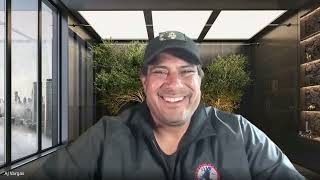
In this episode of The Source Podcast, host (Speaker A) interviews Sergeant C. Burke, the sole K‑9 handler for the Tullibee (Talladega) County Sheriff’s Office in northeastern Georgia. Burke recounts his four‑year path from dispatch clerk to police academy graduate, detailing multiple failures (EVOC, firearms) and the perseverance that eventually earned him a spot in the agency’s K‑9 program. He describes his expectations of K‑9 school versus the reality he faced—learning tracking in woods, handling a 73‑lb dog named Crypto, and navigating early mishaps such as kennel maintenance and leash tangles. Burke highlights a breakthrough moment in tracking when he let the dog lead, and shares his certification (CERT) performance, noting a successful sub‑6‑minute run after an initial failure. The conversation shifts to post‑school challenges: a mismatch between deployments (where the dog receives no reward) and training, the need for realistic roadside scenarios, and the importance of consistent training to balance reward ratios. Throughout, both speakers stress the value of mentorship, agency support, and networking with neighboring counties’ handlers. Burke offers advice on self‑motivation, record‑keeping, and accountability, while also suggesting that K‑9 academies incorporate more roadside pull‑over drills to better prepare new handlers. The episode serves as both a personal narrative of resilience and a practical guide for aspiring K‑9 handlers.
Chapters
All right. So we here today with Deputy Burke on The Source Podcast. So I'm happy to have you. All things working dogs. I'm ready to get started with this week's episode and I'm excited to have Burke on. I was looking forward to this with everything that's been happening this whole week. I was just excited to have you on and be able to talk some dog stuff with you. So welcome, Burke.
Thank you. Thank you for having me.
Well, tell everybody about yourself. Give you a few minutes to kind of sell yourself real quick to everybody. Let them know who you are and, uh, what you about.
All right. Sergeant Burke, Talladega County Sheriff's Office. Recent graduate from CCU. My dog Crypto, he's 19 months old. I'm his first handler, obviously my first dog. Excited. Been with the Sheriff's Office 4 years. Started off in communications, then went to the police academy. I wanted to be a handler as soon as I got on road patrol, but my sheriff told me when I could show her that I have an understanding that a dog is just a tool then we can move forward with that process. So I was honored when she gave me the privilege to complete K-9 training.
Well, that's great. You know, it's always, uh, refreshing to see somebody come up through the ranks. People don't understand how valuable it is to work your way up, right? Everybody wants to start at the top and, you know, do all these exciting things, but they don't understand, you know, they see where you're at now but they don't understand where you came from. And this was a 4-year process. This wasn't one day click your toes or your heels and all of a sudden you're in Wizard of Oz or back home, right? So it was a process, and I want to go over that process a little bit as we talk, um, because I want people to understand that, and I want people to understand that it, it's hard work to be where you are. And I want people to see that, that path that you took. Because it's a path that many, many others take ultimately once you decide to make that leap. But I also want to, I want people to understand that it's not easy either.
Right. That's correct.
Now tell me the agency you work for again.
It's Tullibee County Sheriff's Office in Georgia.
Now where's that located in, in respect to the rest of the state?
It's northeastern Georgia.
Okay, Northeast Georgia off of 20, right?
Yes, sir.
What counties do you have surrounding you?
Our neighboring counties are Warren County, Wilkes County, Greene County, Hancock County, Overthorpe County.
And, you know, obviously I always have a plan to what I'm talking about, right? So I'm telling everybody that because I want them to picture, especially those that may just be listening, uh, what your county looks like, right, in relationship to everybody else in the state. But also the availability now with your dog being there. You just mentioned right before we started airing that you had a call out today from a neighboring agency, Greene County. And, you know, that's a vital part of your role as well, is supporting those neighboring counties, right?
Right.
And that's important because people don't understand that it's not just your county that you're supporting, but your sheriff has taken an active role, not just in supporting the K-9 unit as a whole in the start, in the maintenance of that, but also I would assume your sheriff allows you to go to these neighboring agencies and assist them as well, right?
Yes, sir.
Is that what you envisioned, like coming on as K-9? Is that, is, you know, taking on those roles? Did you envision that?
Yes, sir, because we do it for other causes as well. So I knew that would be a part. But to be honest, did I knew that I would actually get called? Did I think I would actually get called? No, sir, I did not. I knew it was a possibility, but I didn't think I would get called.
What was that?
I just didn't feel as if I would get called because it's a rare occurrence when they call us for things. Um, and Crypto would like to say hi. He's here. We're outside. It's a nice day.
He, he heard you were being a movie star today, so he wanted to go ahead and join too, right? That's all right, we love to— we love to holler at him too. We'll get some words from here in just a minute, okay?
Yes.
So we're gonna, we're gonna come back to that statement because, uh, somebody mentioned that earlier, uh, when we were at the K9 Memorial. Pat kind of mentioned that. And not wanting to be a handler that doesn't get called out. But that happens. You've only been out of school a short period of time, but that happens quite frequently. That represent— that representation of your agency and also that reputation that you begin to build is the reason why you're beginning to get called out more and more. And it's funny, when handlers stop getting called out, they don't sometimes Remember that it's because of that reputation that they built and the hard work that you put in with your dog, and people see that. So that's why they call you out. And that's why when they think about a handler that is going to come support their agency, they want one that's trained up, ready to go, doesn't make excuses, and handles business when they come out. And, and that doesn't mean success or unsuccess. That, that's directly related to your reliability. They want somebody that they can depend on. And obviously so far that, especially coming from Greene County that has an established— that's important. So, Bert, let's talk a little bit about the, the process that you went through. And, and one thing that I want to focus on for just a moment is that process of starting 4 years ago and then leading up to you being selected as a K-9 handler for your agency. What did that look like?
It looked— sitting in dispatch, day shift, night shift, it drove me nuts because I'm not the type of person that just sits still for a while. But I knew what I wanted. I trusted my sheriff. If she said something, you can bet your money on it. She told me, just be patient, we don't have any road positions right now, but when we do, I'll send you to the academy. And so what happened, she didn't send me once. I actually went to the police academy 3 times. I failed 2 times prior, but I didn't give up. The first time I failed the EVOC, the threshold braking. I had trouble with that. I got discouraged. Our agency is more like a family, you know, everybody lifted me up. Like, you know what, I'm gonna go back, I'm gonna do it again. Go back, I fail firearms. So now I'm really frustrated. I'm back in dispatch. My pride's hurt. I like guns. I fail firearms. So then this last time, you know, I make it. I push through. I graduate the police academy June 2021. So then I get to be on the road, served as a sheriff's executive assistant. Filling in on the road when people call out and kind of learn my way around. Now I'm very familiar with the community because I'm actually from Tulliver County. I just went to the Air Force, so that helps out a lot too within the community. But as far as like the I-20 part, you know, through FTO, that helped me get through. And then I started like, sure, I want to be K-9, I want to be K-9. I just kept— she's like, well, If you can go out there and show me that you understand that the dog is just a tool, when you can start performing on your own, I'll send you to K9 school. And so it's basically just patience, dedication, determination, and that not giving up.
And I think that's an important part, right, is that not giving up part. You mentioned a little bit about your military service. Which teaches you some core principles through that service. And then you come into the law enforcement realm and, you know, you didn't ask for it to be handed to you. I know your sheriff very well. We go way back, but you didn't get discouraged when you didn't succeed the first time, right? And, and I think that's important because even in K-9, a lot of, I see a lot of people avoid, especially avoid our school because they feel like, it may be a little bit too difficult at times, and so they may choose to go other places. Don't be scared to face those difficult areas. You could have very much said, you know what, forget it, I'm going to go do this, I'm, I'm going to give up, I can't pass EVOC, I can't pass firearms, and I'm going to go do something else. But you stuck with it. But I think the important part is, is also your, your sheriff didn't give up on you.
Right.
Your team, the other people around you, didn't give up on you. And it, it's funny because even before you came to school, when I told Pat and them over at Greene County that your agency was sending somebody else to come get a new dog, they knew exactly who I was talking about and then told me, hey man, she's going to be a good one, she's going, she's going to be all right. You know, because they knew you from being on the road and such.
Thank you, that means a lot.
So now we come through this process of getting the dog, getting selected, and now leading up to coming to K-9 school. Did you have any conceived notions about what school was going to be like?
Yes, I did, and it was not like that at all. So in my head I had it made up. I was gonna go, I was gonna be handed a leash, and literally this is what I thought: I was gonna be handed the leash, he was gonna teach me what to say to this dog, and it was gonna know everything. I don't know why, that's just what I thought. I looked at YouTube, I seen the dogs do it, I was like, oh, that's pretty sweet. Nobody told me about the tracking part, nobody told me I would be going through the woods. I had no idea about that, like none. And it was funny because I remember Instructor Spencer, he told me the first time I seen a dog work on the wall, he was like, you just standing there watching the dog in amazement. I was like, yes, sir, because I'm amazed. I really just thought like these dogs were just not born that way, but I didn't get the reason that the handler graduates with the dog. But now it makes so much more sense.
Yeah, absolutely. You know, that vital part of you guys come becoming a team is so important. Learning the dog, the dog learning you. Obviously we saw a short clip of Crypto there, but the bond now that you guys have is inseparable. That's an important aspect. That socialness and that social drive that, that dog has to please you is a vital part of you guys becoming a team. So then let's, let's move into now you're gonna be the only dog handler for your agency, correct?
Yes, sir.
And now you're in school. Did any of those demons come back into your head about the failures that you had before, like in the police academy? Did that play any role in in your training in canine school?
Yeah, because that first week it was rough, Crypto. I couldn't do anything with him. I know it was a nightmare walking to the kennel, you know, we had to do the morning kennel maintenance, feed him, to clean the kennel, to get him out. He would almost knock me down every morning, and I was like, I don't know if I could do this. It's like, this dog, I don't know. And he would jump up on me and nip me, and I was like I think this dog hates me, but it was just— I didn't understand it. Yeah, I didn't understand him at all, and I was just so scared to fail. And the tracking part, it was just so frustrating for me because I didn't understand. I never been in the woods like that before, and then I got this 73-pound dog pulling me. Um, that was very frustrating for me.
So how did you overcome those things? I know week one's always We say it's like drinking out of a fire hose for most people. So now you're, you know, you're in a pretty short course, you know, you're in a 4-week course, right? So week 1, that's just 25% of your course is done. You're struggling both mentally and physically, and you only have 75% left. But that's also— remember that last week, at least half of it is certification. So you really only have 2 and a half more weeks of getting ready to certify. So how does that play on you mentally? How does that play on you physically? And then do you have any aha moments where you just go, oh, I got it. Like, okay, now we're clicking. And then when did that happen?
It's the trusting your instructors, trusting your dogs, and taking notes. And what I would do at nighttime when I was riding my canine tracks, the things that we would do and what I would notice with him, I would always go back and look the day before. Like, if we tracked on Tuesday, on Wednesday I would go back and look and see what we did. Even the small things, like about if he runs around the tree on the right side, I need to come around and grab the leash with my right hand so he's not tangled. So now I'm not running circles around the tree, tangling the leash up more, you know, those things like that. And it's like you got to step back, take a breather, just calm down and follow the instructions. Because I knew I had no idea about the dogs.
But you did own— you, you already had a Mal that you owned, which was that, right? So it wasn't like you were totally unfamiliar with dogs. However, now you're stepping into the working realm of it, and that's vastly different. And sometimes we don't understand that owning a pet at home and training and working a dog are like night and day, right?
Right, it is. And my male at home, she's more just like, hey, I'm the baby. And Crypto is more like, let's work, we're gonna work, we're gonna work.
Okay, all right. You know, I think it's, I think it's a unique perspective, right? It's been a long time since I've been through K9 school, many years, 2002 to be exact. So a lot of years, 21 years ago, uh, but I can still remember these training sets. I can still remember like these frustrating days and and all this stuff that went on in school that led me over to making that transition to getting out on the road. So when we look at that, I think about some successes that I had in school. Can you think of maybe one or two times that you can share with the people that are listening, or maybe even watching, when you felt like you succeeded in school? When you felt like you have accomplished something. Can you talk a little bit about that?
Okay. So the tracking, I would say that was kind of like the biggest one because in my mind I wanted to guide the leash versus just trusting my dog. And so I found that very difficult. And so one time I was like, let me just see what happens. I'm gonna just follow him and see what happens. Read his body language like they say and just see, gentle leash, let it guide, cut him proper. And we did it in about 5 minutes. And that was like my light bulb, and I was like, that does work. And so then from there on out, because tracking, tracking was the hardest. I think I would follow every single track every time we went into those woods, but You know, just stick with it, get better and better.
Yeah, you know, I see students, right, no matter male, female, doesn't matter, there's always seems to be an area that they excel at naturally and areas that they have difficulty in naturally. Even if they're two or three-time handlers, there always seems to be that conflict, if you will, between the handler and the dog where they're not working as seamlessly as they could. But then you go into other areas and it's like perfect when it comes naturally and it just happens and they flow and they look good. But it sounds like to me tracking was your Achilles heel.
Yes, it was.
But that's okay because now You're at a point to where, for one, you pass CERT, which is unknown, you know, sit times over 20 minutes, semi-urban area, and you went out there and banged it out. How long did it take you to run your CERT track?
So even with CERT, so the first one I failed, but then the second one we did it in under 6 minutes, just under 6 minutes.
Um, and what was the difference between the two tracks?
The Fast one, it was more of a rural area. The first one, we went to the East Hall Park and it was a more populated area. He may have gotten on the wrong track. It was a lot of people out there, so we had some difficulty. We went the complete opposite direction.
Okay, okay. And then you went out on your second track and finished it out?
Yes, we banged it out. I was proud.
There you go. Well, your school was 4 weeks, and now leading out of school, you've had some difficulties, you've overcome those challenges, and then you graduated, and now you're out on your own and working. Only dog handler for your county. You've been called out several times by other counties. You've had some big licks, or as Maya would put it, you've had some big bust. That's what she was telling me.
I didn't know that wasn't the right term.
I said never say that again, okay? But anyway, tell me about some challenges. What was your biggest challenge now making that transition from school to real life with your dog from school?
Because of that more controlled setting that I was used to, as far as that working part of it, it was more difficult when we're out in the real world searching cars. He would kind of get like stubborn on me because in training he finds it, we know where, where the aid is, he gets paid for it. But obviously we can't do that real world and paying for it because it's unsure. And I, I had a lot of deployments without him getting the payments, and my training deployment ratio wasn't adding up. So that's something that I've had to fix.
Let's talk about that for just a minute, because for those that may not be tracking what we're talking about here, and again, I know the background so I can talk a little bit about it. You talked about this over the phone when you were having those difficulty. So what was happening was you were doing a lot of deployments, right? And because he wasn't getting paid on the side of the road because you couldn't confirm the alerts, it was very lopsided. So one thing that we had talked about was making sure that, for one, you set up training, realistic and varied training but also that he shouldn't know whether it's a deployment or the fact that it's a training session. And so we need to increase the amount of training we're doing to offset the amount of deployments you're having without reward. And we just wanted to even those out because we should be doing multiple times the amount of deployments that we're having. So we have to offset the inability to reward the dog on the side of the road with more training on the side of the road where he is getting rewarded. And we've just gotta fade towards reality a little bit to make those deployments and to transition from initial handler basic training to real world. And that was one of the things we talked about, but I think it's important that we understand that there is a transition period. And I won't say it's a period of time, it's just, you know, the analogy that I would give is this: that deputy or that police officer that comes out of the academy is not the same deputy or police officer a year later, right? You're fresh, you're wet behind the ears, you're new. Like, all these things that we got to expose a new handler or a new officer or new deputy to when they get out of the academy to get them operating like a veteran just takes time, but it also takes actually answering calls, getting into things, making traffic stops and all those things. And that's what we always tell our handlers too. Don't get out there and not deploy your dog. You gotta get out there and get that experience and get that dog used to deploying, used to the unknown because the handler also has to get used to that. So that team has to grow over the next, 30 days all the way up to the next year. And I always say it takes 6 months to a year for you guys to start operating as a well-oiled machine, if you will. Some takes longer than others, but at the end of the day, you have to deploy to get that experience. Whereas I see a lot of handlers not deploy because they're unsure, they're maybe a little scared to fail, but you jump right into it. and you're one of those exceptions where I had to tell you, hey, you still gotta get your training in every week. You still gotta push in the training side of things too, because you gotta even and balance that out a little bit. And so how did that work out for you?
We fixed it. We came back through training, but I agree what you're saying. We, we did some training with the guys and they helped out a lot. We learn different methods.
Yeah, it's all part of that learning process, you know, being a new handler, being a new dog team, you gotta rely on those that have experience as well. Right. And it's not just us. You have some good handlers around you that are willing to help you. And that's what several people have mentioned in past episodes is making sure you build a good network, whether it's in business whether it's a K-9 handler position, like, you got to surround yourself with good people that are willing to help you. And I know you have that, and, and that's the reason why early on in our talk I brought up the fact that you're a one-handler department. You, you're the only handler for that department. So it's important that you seek out others. Yes, us, we're always there to support you and help you. We train, but pretty often together, but also other handlers that are in your area, reaching out to them and training with them and getting their advice. And I know Lieutenant Pickett from Greene County helped you. Like, everybody wants to pour into you, and that's great. That's a great family to have, I say.
Yes, sir.
So now you made that transition, you graduated, you've had some difficulties. Now, was there anything that you feel could have been done better in school to help you better prepare for making that transition?
In school? No, sir. I just would have liked more, um, roadside, because this is specific to my area, or roadside, um, deployments out in the training.
Well, that's great that you brought that up, because I hope the people and the trainers that are listening understand what you're saying, right? There, you're saying that you would have liked to had more roadside experience, maybe some vehicle pullovers and things of that, that nature, more of those in your basic handler course. So that's one thing that we can put in our toolbox and learn from as trainers is this is coming from a handler that just transitioned to the real world with her dog, first-time handler, and you need more roadside vehicle pullovers, maybe roadside work, that type of thing, right? Well, that's great cuz that's great advice for everybody and I hope everybody's writing this down and taking notes and thinking about ways they can implement that in your, into their training. And that'll be a discussion that we have with, with our team as well is, hey, we need to find more time to fit this in and get more time on that. And I know it's 4 weeks is 4 weeks. You gotta get everything you can in 4 weeks, but that's great to know. All right. So I know you mentioned a little bit about coming back and training with us. For those that operate training academies or K-9 schools like we do, is there any way the school could support you a little bit better in that transition period? Is there things that they could set up or maybe be intentional about setting up as you make that transition? As a new handler, you made this transition and yeah, we preach that we're always available for you. Is there something intentional that we can set up to help that transition once you leave school? And I'm not talking about we as in CCU, I'm talking about we as the community of canine trainers, as businesses, because we have a lot of people that run kennels and run training facilities that listen to us. Is there anything that we can do to help make that transition better? If you had to name, you know, 1 to 3 things that we can do to intentionally now you know, like an FTO or something like that, that we can do to make your transition easier as a K-9 handler, what would those things be?
For a handler to know that they can come back and get hands-on with experienced people and get that assistance, that's great. I don't feel like there's anything more that could be done. Also, as a handler, I feel like you have to take the initiative yourself. And in law enforcement, you can't expect anyone to hold your hand. You gotta have motivation of your own to do it. That's how you get better. You can't sit around and wait for somebody to be like, oh, come on, let's do this. It doesn't work that way. You have to put the effort in yourself. And as long as that invitation is there for those kennels for people to come train, that's great. I don't feel like there's anything more that could be done besides making it known that that's available.
That's good info to hear and refreshing. You know, you said a profound statement, and I don't even know if you realize that you said it right. You said sometimes we got to have accountability, and a lot of people make excuses. And that was one thing I was going to mention about you, just knowing you through school. I wasn't part of your training because I never would take credit for that. But I'm saying that because when I had the opportunity to train with you, uh, when we went to Greene County together and, you know, did the school searches and was on the side of the interstate, and the time that every day that I saw you, you were just like you are right now— upbeat, ready to go. Very respectful. Sometimes I just wish sometimes you'd cuss a person out or two just so that I could see that, right? But you were always yes sir, no sir, always willing to listen. You had two ears and one mouth, and the balance of that was great because you didn't try to speak more than you listened. And then you tried to learn from every single session. And just going back and reviewing your training records for the next day. I, I don't even know how many handlers that are listening to this right now would go back and go, you know what, I never did that. Maybe I need to start doing that to be a better handler. And that's great advice. I mean, you don't do training records for nothing. That's to go back and review them and to, to learn from them. And that's exactly what you did when you were struggling in those times of need. But then you said, hey, we got to take accountability for our own shortfalls. And then reach out, communicate, hey, I need help, I need this, I need that. And then all of a sudden things start to work out and fall into place. It wasn't a bunch of excuses, which you probably could have been. Oh man, this is not going right. I don't know this. I'm not going to deploy my dog. I'm not ready. I'm not this, I'm not that. But you didn't do that. In a very short period of time, you're able to make cases, you're able to assist other agencies, you're able to do this.
More from AJ

Running vehicles with K9 Chidori#workingdog #detectiondog #workingmalinois #malinois #drugdetection



Join us for group training this Saturday! Sign up on our website. #DogTrainer #DogGrooming

Smart Funding Ideas to Launch Your Dream Dog Business | Custom Canine Unlimited



Why is my dog reactive? #reactivity #dogreactivity #k9 #dogtrainer #dogtraining

It’s not too late to sign up for Group Training! | #dogtrainer #dogtraining #trainyourdog


K9 STEVE | Explosives Detection 💣#workingdog #policek9 #detectiondog #edd #trainyourdog