Veterans in the Working Dog Industry | SOURCE
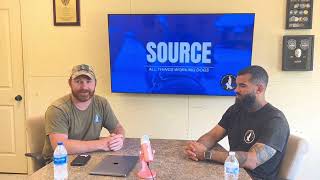
In this episode of The Source Podcast, host Simon chats with veteran Brandon Martin and off‑camera voice Maya about their journeys from military service to careers in the working‑dog field. Simon (former Marine) and Brandon (former Army infantryman) recount their enlistments, deployments, and the challenges they faced transitioning to civilian life, especially during COVID. Both discovered Custom K9 University (CCU) while searching for purpose after college and construction stints. They discuss using the GI Bill to fund handler and trainer courses, the supportive veteran community at CCU, the hands‑on training environment, and the therapeutic value of working with dogs. The conversation highlights mentorship from AJ Vargas, who provides veteran‑specific resources such as VA disability assistance and business guidance, and emphasizes the importance of networking, mental‑health support, and finding a career that aligns with personal passion. The episode ends with a call to action to follow CCU’s content and an upcoming military working‑dog symposium.
Chapters
Bang bang! Welcome to The Source Podcast. I'm Simon, your host today with, uh, one of my training buddies here, Brandon Martin, and we're coming to you live from G1 CCU, how are y'all doing today?
Do you expect an answer from that?
Yeah, like from the crowd or just from you guys? Oh, okay. Yeah, that's good. Okay, no, so that's all right, we're gonna keep this in. Um, I also got Maya here with us, the voice of reason. Um, she's gonna be asking me and Brandon some questions on today's topic, which is veterans in the canine industry. But before we get started with that, I want to check in on Brandon. I like checking in on him, asking him if he's okay. Are you doing okay, Brandon?
I'm having a great day.
Are you?
It's been a good day. Got to do some bite work with the students for the first time, you know, with this class, and it was a good day.
Okay.
Did you learn something today? I did.
I learned a lot. Yep.
Awesome. I learned something today too. It's always good when you're learning. That's the beauty of the canine industry. You always learn something every day. That being said, Maya, what the heck do you want to ask us? You're part of this too. You should be over here, actually.
Well, you ever seen like Joe Rogan? He's got that one person off camera.
Yeah, it's Jamie.
She's like, that's my personality. No one knows what I look like, they just know what I sound like.
You're Jamie? All right, sure, I'm Jamie.
Call me Jamie.
Jamie's a dude.
Oh, okay.
I feel like you knew that.
He did.
You're our Jamie.
Okay, there we go. So give me a little bit of background on your time in the military, Simon.
So yeah, starting off going with our backgrounds, uh, I joined the Marine Corps after dropping out of college, um, my first attempt. Actually, I think I had two attempts. I did a little bit of community college, but I joined the Marine Corps back in 2013. At the time, I thought I was going to be a combat engineer, and honestly, my goal was to work with dogs. And my recruiter actually told me, well, you can either go MP or you can go combat engineer. So I ended up thinking I was signing a combat engineer contract, but I did my time as a bulk fueler, believe it or not. So I was a POG. I was proud of it, and You know, I think, uh, it was harder for me on my deployments as a POG than being a grunt, to be honest. I went on the special MAGTF 16.2. We were in support of, uh, Operation Inherent Resolve. And to be honest, all I really did was just sit on a fuel farm begging to get sent somewhere else, working 12-hour shifts on and off. So my job was pretty boring. Um, but that was pretty much the extent of my military career, which at the end of the day, as much as it sucked, I was grateful for it. I got to travel. Granted, I didn't really get to do anything that I wanted to do in the military, but, you know, um, I had some great experiences in it. Um, and, you know, I'm sort of proud to be a Marine.
So really sort of Brandon, let's hear about your pride for your branch. Because we have a sort of proud.
Well, you know, something that they teach us in the Army is to be actually proud of our service, you know. But hey, here nor there. So I joined right out of high school. I joined the Army the beginning of 2014. And when I went to the recruiter, kind of start where he started, I told them that I didn't want to be somebody who's— here's the difference about the Army and the Marine Corps for those people who don't know. The Army actually lets you pick your jobs. The Marine Corps says, hey, you can maybe go here, but it's really just the needs of the Marine Corps. So when I actually joined, I told the recruiter, I was like, hey, look, I don't want to be one of those people that sits behind a desk and pushes mail or something stupid like that. I actually want to serve my country. And be in the fight. So I joined as an 11 Bravo, which is an infantryman. Went to basic, stationed at Fort Campbell, Kentucky. 2 deployments in Afghanistan. I actually saw dogs working, but I never had an opportunity to do any of that. Kind of one of those jobs that you see like randomly, and you're like, "Wow, that'd be really cool. You just play with the dog all the time." But hindsight, looking back at it, those people actually walk their dogs way out ahead of us on patrol. And thinking back on them, like, wow, those dogs were just looking for bombs. Like, not as fun as I thought it would be. Um, and so, um, I got out in the beginning of 2020, right before COVID started. Um, but yeah, that's pretty much the gist of my military career.
So you both mentioned you specifically went in because you wanted to work with dogs, and you saw, uh, handlers working their dogs. So is that what initially made you interested, or was it before the military?
I think, uh, well, so when I was in high school, I thought I had the coolest high school job. I actually worked at a doggy daycare, so it was pretty much like a kennel tech job, but then you also did, uh, doggy day camp where you would just play with like 14, 15 dogs in a room. And I, I've always loved dogs. I remember when we first got our first dog I've had an interest in training, but I guess it— as much as I wanted to make it a real career, I never thought it would have been feasible until actually I got to CCU and I saw, or I found out and I learned about CCU. I was like, oh, I could actually, you know, make a career out of this and enjoy what I'm doing. And it just wasn't a reality before that. You think of like dog trainers, usually they're walking around with treat pouches and, you know, um, just—
there's nothing wrong with it, as we established in the last episode.
Yeah, I mean, there's nothing wrong with it, but, you know, there isn't— I guess, you know, there wasn't really a clear-cut path on how to get there per se until I got to CCU. And CCU really helped carve that out for me. But I don't know, what about you?
I, you know, I've always had dogs growing up, things like that. Seeing the working dogs in the military was cool, I thought, um, but you know, I never really— truthfully, never really had any experience, or you know, never— kind of like you were saying, never even thought that this was like a thing, right? Like I know the dogs got trained and that, but to me, honestly, before I started here, I thought dogs got trained by cops. Like the cops.
Oh yeah. I thought there would have to be like some hoops to jump through to like try and get into something like that. Like it was just one of those things that like everybody wanted to do, which everybody does want to do.
But it wasn't until I was completely miserable at the— in my last career where I was like, I need to do something else. And I started just kind of doing some research and trying to figure out what it was that I wanted to do and actually stumbled across CCU and kind of seeing what everybody, like how the process kind of works just through Instagram and YouTube. I was like, wow, that looks really cool. And that's something that I could get behind and something that I could kind of take pride in.
I mean, as far as the transition process, I mean, I guess it's, it was like super exciting getting out. It's an exciting time, but then when you actually get out and you get to face reality, you're like, oh man, maybe, maybe I had it pretty good over there. But, you know, I kind of took that route where I'll just go to college, get my degree. My wife's very well educated and I got to see her pursue her career aspirations and I kind of wanted to follow in those footsteps. And, you know, the GI Bill is one of the perks of doing your 4 years of service is not having to pay for at least 4 years of school, which we know student debt is a big strain on our society and our young people. So I've been figured I might as well take advantage of that. So I did the school thing again, and then that's where it kind of just was me bouncing around trying to figure out what do I really want to do. So at first I was like, I want to do kinesiology, maybe do something with athletics, but then that then shifted to I want to do engineering. I've always been interested in buildings and architecture and I wanted to build buildings. But, you know, I think ultimately what my mindset was at was I wanted to make money and I thought making money was going to make me happy. And I knew, I figured out that, you know, more money isn't going to bring any joy into my life. With as sad and depressing as it is or as it was at the time. And, you know, at the time I was living in Colorado utilizing my GI Bill. And after COVID, I think that really like shook things up a bit. I felt like I wasn't enjoying my college experience because everything was online. So I decided to just go work construction and make some money because we kind of forget about COVID but at the time it was a pretty significant event.
Yeah.
And the future was kind of uncertain. So I was like, I better just gather up a nest egg. So I bounced around trying to figure out what I wanted to do. And ultimately I ended up stumbling upon Custom K9. And I think, you know, I always wanted to move, move to the South and live in the South. And I thought, I thought Georgia was an awesome place to go live. So, you know, I convinced my wife and I think the biggest thing about me getting to pursue this career goal is I always had support from my wife. And that's what's really helped me grow as a trainer and really get to do this. I wouldn't be able to do it without her. I would have never got this opportunity if she didn't say, yeah, let's move to Georgia. You know, taking a California girl down here, it's, it was a big step out of her comfort zone. And, you know, we haven't looked back since. And I mean, it's been awesome being out here and obviously getting to do this career and working here. But I don't know, did you have a similar experience getting out? Well, you got out during COVID so everything was kind of messy as it was.
So, so I got out at the beginning of 2020 and kind of similar to how you, like what you were saying, I wanted, I thought that I wanted to be a personal trainer and go down that path. And so that's what I started to do was I got into a gym, started managing personal training, doing things like that. COVID happened, gym closed down.
Yeah.
And I was like, well, what do we do?
Yeah.
Honestly, I just did a bunch of random odd stuff, like handyman work, really.
Yeah.
Uh, and then I got into home inspections. Um, but the, you know, back to the question is like the transition from the military to the civilian world. That was, you know, a lot of people don't talk about that. And, and one of the things that I always say is like joining the military was the greatest thing I ever did for like my growth as an adult and like as a man, as a father, and all of those things. But getting out of the military was also the greatest thing I ever did for my growth as an adult and for my family. Because I mean, in the military, as you know, like traveling all the time, training nonstop, you know, in the 6 years in the Army that I spent, like I was never home. Like it was training cycle after training cycle, deployment, training cycle. And so transitioning into the civilian world, it was a struggle. I definitely, like a lot of people did during COVID struggle with the depression. Like you were, you know, kind of said a little bit earlier, like struggle with depression and being able to transition smoothly as it's not as smooth as you would think. Like people are so excited to get out of the Army, like, oh, I can't wait till I'm free. And, you know, to get a little personal, like when I got out, I got my DD-214 and I got in my car after they stamped that red stamp on there and said, you're good to go. I just started crying. Like I, I was very emotional because I didn't know what I was going to do. Like I had no idea. You know, I have a family, I've got 3 kids at this time and a wife. And so I was just like very emotional. I was, I was happy that I got out, but at the same time I was like, I don't know what I'm going to do. And then COVID happened and that kind of prolonged what I thought I was going to be able to do. So I started doing some home inspections because during COVID real estate kind of picked up, which was weird. But so after COVID or during COVID I got into real estate and started doing home inspections. And then I transitioned from home inspections into some construction, very similar to how you, you know, what you were saying. I tried the college thing as well. During COVID and I was like, wow, this is— I can't do this online crap, this sucks.
Yeah. And so going to school as a veteran is really freaking hard to that point. I think it's just being around college kids, it is miserable. Then, you know, I was like, what, 26 at the time, and it was like I don't know, you're being around 18-year-olds and everything, and I don't know, it's— that was probably like a culture shock. It's—
it felt like I was gone for so long, I guess, like disassociated with the world.
Yeah, like everything just completely changed. It was just odd transition. Like, I mean, like, like we just said, is like we were in a freaking vacuum for like the past 4 or 6 years, and society just had this drastic shift in culture, and we kind of just got left to the wayside because we were just in our own bubble, I guess.
Yeah, very similar to you, man. I just— college wasn't for me, and I was just like, you know what, yeah, I got to get into something else. Started construction, and when I was in construction, I was just miserable again. And so coming to school here, I was like, wow, this is where I need to be. Being around veterans all the time, being around dogs, and being around, you know, like-minded people. Because that college experience is not like-minded for us veterans. You know, there's— maybe there's veteran colleges out there.
I don't know.
But the college that I was attending was very similar, and it was definitely a culture shock.
Yeah.
Transitioning.
Yeah, but I kind of figured out, and I always laugh about it, and my wife likes to poke fun at me, but I've dropped out of school probably like 4 times now. I just, you know, with college, I just really didn't see the value in it either, because even for the degree that I was going for, when I finally decided what I wanted to do and I found something that I was passionate about, um, just getting a bachelor's in engineering isn't enough.
So you both mentioned that you found CCU after going to college, it didn't work for you, there was a transition period coming out of the military. Why did you want to take a handler course or trainer course rather than just it being something you're interested in? Why did you want to make a career out of it?
Because honestly, Custom K9 offered me that opportunity. I saw the value in using my GI Bill, which I had spent a lot out of college, and using what I had left of it towards this career. I saw something that I would enjoy doing and I can see myself doing for a long period of time. And, you know, I had some opportunities to actually, after I finished my course here, go work a dog for a bit. And I, I wanted to do that. It's just what I saw myself doing, and it's something that I always had a dream of doing. And I always tell people, like, if you— if I go back in time and tell 17-year-old me, hey, you're going to be training dogs and working dogs, I'd probably piss my pants. So excited. I mean, it's always been like a lifelong dream to get to do something like this. Yeah. What about you?
Like I said, I didn't know this was an option, and I just had had enough with the office life that I knew I needed to do something else. So stumbling upon CCU, My first conversation that I ever had with AJ was over the phone, and I had submitted like an inquiry online about being interested in the courses or something like that. And my initial thought was like, to be quite honest, I didn't have like a plan after the fact of going through the Trainer and the Handler course, a set-in-stone plan. My plan was is, okay, well, I can go through, you know, after finding CCU, I can go through the trainer course, go through the handler course, and then I can do some contracting with my dog and take a career path in handling a dog, uh, was more my thought process. And then my conversation with AJ, he was like, hey, look, man, you know, if you're local and you're able to pass the course, you know, maybe Simon could potentially offer you a job. With you being local, and that kind of like sparked some drive in me, if you will. And so coming into the training course, I was like, you know what, I could do this. Like, this could be something that I can do, something I can take pride in, and just getting into something that I wanted to do. And so when he mentioned that and I got here and I started seeing how everything works and, and seeing, you know, the kind of people that are here, work here, and the type of people that are, you know, in and out through the courses and things like that, I was like, yeah, this is the place for me. And so the rest is history. Here we are today.
Yeah, so you completed the full-service trainer course. Yeah, which we have a whole podcast episode where we kind of talk about your time through the trainer course, but you mentioned a little bit about Liking the environment. What do you like about the environment?
Um, the people. You know, you were my instructor for the trainer course, and like the way that you taught the trainer course and the way that, the way that you handled situations, the way that you handled other, you know, other veterans even, it just kind of resonated well with me, and it was something that I enjoyed. Realistically, the people, you know, seeing that that, you know, we can kind of cut loose from time to time and, you know, we're still working. There's still a task that needs to be done, but the people are very much like-minded. And I think that CCU has done a good job putting the people in the places that they have to feel at home, like feel, you know, proud. Like I wake up every morning and I'm like, I get to go to work. And I have not been like that Like, I was excited to go to work when I was in the military. I got to wake up and get in shape, you know, like do PT and you get in shape and, and you get to work out for— get paid to work out basically. And then you get paid to go camping. And then so being able to come here and be like excited to come to work, excited to kind of come in and, and be around very similar people that think very similar to the way that I do. Everyone here is very direct, and there's no like beating around the bush. And something that I had an issue with as a civilian in the workforce specifically is people are afraid to just say something to you and say like, hey, here's where you're messing up. And when I got here, that wasn't a problem. You were like, hey, here's where you're messing up, here's how you fix it, and that's the end of it.
You know, growing up, you always hear you got to go to college and get your degree and make a lot of money. That's all you ever hear growing up, but a lot of people don't take into consideration, like, maybe you just gotta love what you do. And that's— I feel like a lot of people find that here. They find that purpose here. I use Josh as a great example. Like, Josh is my inspiration. He's my best buddy. I know he's gonna listen to this. I love you, Joshie boy. I can't wait to see you again. Um, but, um, you know, one thing I'm always impressed with Josh, like, he, he pushes himself. Like, he's been through so much, but he, he loves being a part of this, and it's just— it brings him so much joy, and it always brings me so much joy every— anytime I hear from him. Um, and it's— it, it really does something for your mental state. I couldn't imagine just working. Number one, I can never see myself working in an office. I struggle. I was actually working on my computer outside today because I had to catch up on paperwork, but I can't get anything done inside. I realized that, and it was good to be around the training at least, and I was able to get some of my stuff done. You know, being outside, and I think about it, like, even in the Marine Corps, I hated being in garrison. I enjoyed going out to the field, except for— and I'm going to bring this up— except for when they decided to put me in the field a couple weeks before I was about to get out. So all my SIF gear was dirty and supply threw a fit. So that was a pain in the butt. But other than that, being in the field was like my favorite freaking thing. I like sleeping in the dirt. And that's kind of how I see this place. I'm always in the field. I'm out on the track. I'm doing detection. I'm out doing something. And we're training, we're hands-on, and I get to do that every day. So it's, it's great for my mental well-being. And I think that's where a lot of veterans, why they're drawn to this place is because they enjoy this. It reminds them of those good times that they've had in the military. And, you know, whatever they're struggling with, they can let it all go and just go train a dog, man. Picking up that leash is almost therapeutic and being able to go out there, building a bond with a dog and teaching it something new, it's one of the best feelings in the world. And if you don't get fired up, you know, to go to work every day to do that, then, you know, I feel sorry for you.
It's that old saying, if you love what you do, you never work a day in your life.
Exactly.
Okay, so Simon, tell us more about your trainer course and handler course.
So I went through the handler course first. I did the explosives and patrol. Um, so I did that first. That's 6 weeks. And, uh, that was a pretty gnarly course with it being a patrol course. I kind of went to the ringer and I always think back on that course as far as, you know, when it comes to decoying, I had probably— my dog is a pretty big dog, about 80 pounds, but he was the smallest dog in that course. I had two other classmates that were law enforcement and they had some big monsters. One of them, they were both over 90 pounds. and one of the dogs actually on a live bite bit a suspect and fractured his arm. So yeah, we, uh, I think I developed some nice calluses on my arm after that course. Like, I see some of the bruises some of these students have, I'm like, you guys have no freaking clue. That was pretty much my introduction into the canine world and being around this place and You know, I had moved to Gainesville so that I could live here and work here as well. Not specifically here at the time, but you know, my plan was to do some work once I got out, get some work in with a friend, just working my dog. Eventually I moved into doing some handyman work, kind of like you, just doing some side jobs. But I got drawn back to coming here again because I just wanted more of it. Like, I got a taste, you know, and I wanted something more consistent. I actually came back and did the trainer's course not too long after, and after that I decided to put in an application, and I've been grateful ever since. And have gotten to the position that I'm at now. Like we had mentioned before, you know, it's just, it's been fun. I enjoy it every day.
In both the handler and trainer courses, you know, how big of a role did your classmates play in your development as a trainer, as a handler?
So my time alone, let's not even put into the equation my time working here, but my time alone in the courses and not only just my classmates, but the individuals that stopped by to come to do training. As you know, if you, if you are part of the CCU family and you've graduated from a course here, you're always welcome back. And getting to see individuals that have been through the course, I guess you can call them our alumni, but getting to see them stop by and come back to this place spoke volumes about it because if you come through a course here and you want to come back and visit just to see how everyone's doing and see the impact that the instructors had on their careers, whatever it may be that, you know, they were planning to do. It was an awesome opportunity to not only network and get to meet other people in the industry, but just getting to interact with the individuals that come out here and come through these courses. There's a A lot of cool people that you get to meet and that I've been fortunate to meet, even the law enforcement realm, which isn't my background, but getting to kind of get involved and knowing some of the individuals that work at, work K-9s over in our local agencies and jurisdictions has been, you know, I mean, it's just, You meet really cool people. That was one of the attractions to actually staying here is, you know, getting to interact with all these individuals on a daily basis. Just today we had 2 guys from a local agency come out and do some training. We had 4 that came out yesterday. My buddy down in Greene County, I remember meeting him during my handler course and You know, to this day, like, he's always asking me for advice, or I'm asking him for some help with some things that I need help with. And we just have a great relationship and a great bond. And it's important to have those, especially getting started in the K-9 industry. It's really good to have people that you can call to ask for some advice or ask for, you know, just even some information. Having that, you know, I, I don't know because I haven't been to another school, but I don't know if any other places offer something like quite like this.
Yeah, big network. CCU has a really big network.
Yeah, and we got people from all over the country. I had, uh, yeah, the world too. So like even in my trainer's course, I had one guy from Texas one guy from Pennsylvania and another guy from California, and then I was, you know, I came here from Colorado. So that pretty much covers the entire country, right? So yeah, at least the most important parts. But, um, but yeah, I mean, it was just, you know, it was awesome getting to interact with those individuals and even keeping in contact with some of them to this day. And, you know, it's been a couple years since we've went through that. I think, uh, one of the awesome things that CCU offers is that veterans class, um, with Mr. Vargas. When he comes down and visits, uh, he brings down his, uh, dog Sancho. And he actually, um, Mr. Vargas is an awesome resource because Believe it or not, there's so many things out there that veterans can take advantage of that we don't even know about. It's almost like they want to keep it a secret, but, um, you kind of have a cheat code here with AJ Vargas where he kind of spills the beans. And I think that was really cool, and it really opened my eyes to a lot of things, a lot of things that I'm not even accessing that I have access to. To as far as even, you know, um, whether you need help with your disability ratings, um, getting that set up. Because when I got out, I didn't put anything for disability. I didn't care, um, to do that. But, and I, I think when I came here, I've been out of the military for about 5, 6 years. What I didn't know is that you could actually still put in for it even after that amount of time, and AJ Vargas, you know, he's really big on putting it in because he was one of those that didn't put in for his disability. And he didn't do it until, you know, way after he retired. But that's still an option out there. And I think that sort of lending hand— that's not what I'm looking for— but that mentorship through those processes because They do offer us a lot of stuff, but sometimes they kind of make it difficult for just your average person to kind of figure out how to access it. And just having access to Mr. Vargas as a source for that to help guide us into getting whatever resource we needed was huge. And really, I see a lot of veterans that still come through that need help with certain things, and even some veterans that are having some problems, having some issues, or things aren't going very well in their life, or haven't been going very well in their life. Having Mr. Vargas come out and actually, you know, talk to them and find ways to assist them, I think that's one of the coolest things about CCU and the courses that they offer here.
Yeah, I actually, funny enough, when Mr. Vargas came to teach our class, you know, the veteran, the brief class that he does, I was actually kind of like, I don't want to, I don't know how to really say, like kind of annoyed. I was like, man, I already know, like I've been through all of this, like I know everything, I've got my rating, I've got, you know, and even then when he started teaching the class, I was kind of humbled, like you don't know everything.
Thing.
Uh, and you know, him having the background that he does with the VA, he was still able to open my eyes up to some of the things that I wasn't getting access to and some of the different programs and the different, uh, resources out there for us as veterans that, you know, like you had mentioned, a lot of people aren't touching or even know is a thing. They're like, oh, you know, here's the civilian world, go figure it out yourself. And, and that's something that he can kind of help guide and steer people in the right direction. He's, he's very clear, like, hey, I'm not going to do it for you, but here are the resources, here are the things that you have available to you. If you need some help, here's my number, give me a call, and he's available. Shoot me an email, whatever. But, you know, just having, having Having somebody come in, even for somebody like me who thought I knew everything about the VA, I've already been through the system, I understand how it works, he was still able to be like, no, here's what you don't know, and kind of steer me in some directions for some things that I'm now taking advantage of actually that I was unaware of. So to your point, he's an awesome resource that we have here on CCU, and he hosts an awesome Super Bowl party.
Yeah, we actually haven't seen Mr. Vargas since the Super Bowl. Yeah, I think he's a bit disappointed about those 49ers, and he did talk a lot of trash right before that Super Bowl. There's a resource out there that Mr. Vargas was able to pull up for them. So it's like wide range of things, whether you need help with your medical, your rating, or just reaching out for resources. Even if you're trying to start a business, you want to start your own canine facility. Facility after this, Mr. Vargas is our one-stop source for all that stuff. He knows it all really well, and he's an awesome addition to have, uh, on the team. You know, we've been talking about all this stuff for veterans, but, um, one thing that I really enjoy that we get to do, and it's kind of nostalgic for me, is we actually go and get to do some stuff with the military working here at Custom K9. So coming up pretty soon, we have our military symposium with the military working dogs, and that's an exciting event to be a part of. This is going to be my first time going up there with AJ Vargas, so we really look forward to that. If you like our videos, obviously like and subscribe and check out some of our short sets. They come out on Tuesdays. Our podcast airs on Fridays. And all the neat bite work videos and detection videos that you see. Um, go ahead and check those out as well.
Thanks for having me on.
All right, awesome. Thank you, Maya, for bringing us on. Bang bang, have a great day.
More from AJ

Running vehicles with K9 Chidori#workingdog #detectiondog #workingmalinois #malinois #drugdetection



Join us for group training this Saturday! Sign up on our website. #DogTrainer #DogGrooming

Smart Funding Ideas to Launch Your Dream Dog Business | Custom Canine Unlimited



Why is my dog reactive? #reactivity #dogreactivity #k9 #dogtrainer #dogtraining

It’s not too late to sign up for Group Training! | #dogtrainer #dogtraining #trainyourdog


K9 STEVE | Explosives Detection 💣#workingdog #policek9 #detectiondog #edd #trainyourdog