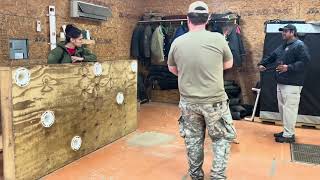
A detection dog trainer explains how to teach dogs to ignore distractions without creating anxiety. Instead of correcting the dog, manipulate the environment so it voluntarily returns to searching. Start with an easy distractor, gradually increase difficulty, stay neutral, and always remove the distractor when the dog looks away.
Chapters
Go! Go! The key to this is, right, we want the dog to continue to search even with the distractors, right? So whatever the distractor is, first and foremost, we have to be able to control it. Okay, because if we introduce distractors that we can't control, then it falls apart and we can't teach the dog how to overcome them. And so a lot of people will do this, right? Let's say dogs are reactive to another dog. What do they do? They walk the dogs by each other and every time the dog pays attention, they correct them. The problem with that is, is that it starts it could start adversity to it. So now when the dog sees the other dog, it begins to get anxiety. But we don't want that. We want the dog to be able to work through the distractors, per se. Okay. So with that being said, we want to first be able to control the distractor, right? And we want it to be very obvious when the dog is distracted versus being on task. So the concept of you saying, well, we're going to start from a distance and work close is great. But also think about this. If this is the task we want, right? This is our search area. We want the dog to search this area. Right? So what I'm going to do is I'm going to put the distractor here. So in order for the dog to be distracted, it has to turn all the way around and pay attention to me. So it's very obvious when the dog is distracted and when it's not. Make sense? So as the dog gets used to it and teaches— remember what I said before, right? We want the dog to teach itself at all possible. The behaviors that a dog teaches itself are much stronger than a behavior that we teach it. So if we can just manipulate the environment to allow the dog to teach itself, then we're going to be much more reliable versus you having to correct the dog to get the dog to go back to work. Okay, are you tracking that philosophy? Okay, as the dog gets used to it, then I'll bring the distractor more apparent to the point to where I'm going to be bouncing the ball off the wall and the dog is going to still be searching. Okay, how quickly we move into that will depend on the dog. Okay, remember, we train at their pace and allow it to take place, right? So the key to here is you continue doing what you do. You're not distracted by what I'm doing. At no time can the dog ever get the ball because then he self-rewards, right? So even if he pays attention to me, I'm just going to take the distractor away. And then he'll go, oh shoot, if I search, then I can get my ball. And then I'm going to come up and give him the ball. Does that make sense? Makes sense? All right, so give me one ball and we'll start working with distracting. Now you're still going to have to have a ball because you're going to reward from the wall. Okay, so I'll start back here. And I'll control the distractor, but you can't be distracted by me. You have to go back to doing what you do and you stay consistent with that. All right, clear. Clear. One. All right, so I'm watching the dog this whole time. You see how he pays attention? All I did was take the distractor away. See, he never gets it. He doesn't get corrected. He decides on his own to go back. He's wasting his time, and dogs, believe it or not, will not waste their time doing stuff they shouldn't be doing that don't accomplish their goals per se. See, I took it away. Took it away. Woo! Big love. All right, think about this. It doesn't matter the distractor, guys. It don't matter if we're in the obedience field if we're working gunfire, whatever we're doing, right? I have a constant. The constant is the dog already knows how to do this. That's the constant. You're the constant because you know how to work them on this. So you just stay constant and then we control the distractor the entire time. The problem is, is people think they need to address the distractor, which then I've seen cause more problems than Good, because now we're trying to make the dog not pay attention to the distractor rather than the dog learning on their own and making the conscious decision not to be distracted by the distractor. All right, and I always bring up the dog situation because you guys probably have done the same thing in the past, right? All right, dog's reactive, show them dogs and we'll hammer this dog in and I say hammer, but correct the dog for paying attention to the dog versus just teaching the dog to be neutral to other dogs. So even if I'm doing gunfire, I control the distractor, right? Boom, boom. And I present it when I— in the optimum time to help the dog to get over that. Okay, so we can take this same principle and apply it to anything that we're doing. Any distractor. The problem is that we get, what, in a hurry trying to fix stuff.