2-Hour Live Presentation: Creating an Optimized NCLEX Prep Study Plan!

Registered nurse educator Damion Jenkins breaks down NCLEX-RN/PN prep using the nursing process as a study framework. He covers NGN format changes, SMART goal setting, and 2-4 hours daily study, emphasizing the NCSBN test plan over textbooks and practical rules for prioritization and scope-of-practice questions.
Chapters
All right, thanks everyone for joining me today for this— or this evening— for this 2-hour live presentation for Optimizing Your NCLEX Study Plan. So we are just a few minutes before we're ready to start. So just come on in if you're already, um, connected to the live stream here on YouTube. Grab yourself a beverage, grab some, uh, something to write with, some pens, some notebooks. I have tons of information to share with you. Um, just a disclosure for any of you who are joining the event this evening for free, meaning you have not purchased, um, a seat to this, uh, presentation, please be informed that you will not be receiving a downloadable, uh, copy of the things that we're going to cover. Um, what I have available for those who paid to be in tonight's presentation includes a really comprehensive downloadable study guide, um, to help keep people on track for NCLEX success. So If you did not go through the paid channels to be here this evening, um, there's still an opportunity for you to be able to download, uh, the amazing study guide that I have available. You would just have to wait until the end of the presentation for me to give you instructions on how you can get that. Um, it will be a very small cost of $23 so that way you can pass NCLEX in 2023. And, um, you know, takes a lot of time and effort for me to put together these things to help individuals be successful. So I just wanted to throw that out there. So at the last minute, I did invite a lot of people. Many of them are currently working with me or have worked with me in the past. And so as a thank you for, um, support and for referrals and for recommending my services to help people pass the NCLEX, I invited a bunch of people to join. So again, if you went through the paid channel and you're here this evening, uh, because you signed up for a spot to be here, you will receive the downloadable PDF version of everything that we're going to cover this evening. So it's just now 7 o'clock. I hope that, uh, you are having a wonderful evening. For those of you who don't know me or just coming across my channel, my name is Damion Jenkins. I am a registered nurse of almost 13 years now. I've been a nurse educator for 9 of those 13 years now. Um, got my master's degree in nursing education in 2014, and I have helped over 2,800 repeat test takers prepare for the NCLEX, pass the NCLEX, and earn their nursing license. So I am confident that I have lots of experience and strategies that will help you or someone you know develop strategies for NCLEX success. So technology— for those of you who are familiar with online learning, there's a lot of moving parts, and here on YouTube it's a little complicated to screen share. Um, so I have the study guide that I'm going to be working from this evening, a lot of really helpful tips. And again, for those of you who came through the paid channel to be here this evening, if you paid to be here this evening, you will receive a downloadable PDF of everything that we're going to cover in tonight's session. Um, if you have not signed up to be here tonight and you were invited with a free link, there's still an option for you to be able to receive this downloadable PDF that's going to cover everything and more, and you'll have an opportunity to be able to sign up for that at the end of this presentation. I will provide you with information on how you can go ahead and access this downloadable PDF. Again, for those of you who signed up you will receive this in an email. I already have your emails and, um, I'm looking forward to helping you develop those strategies for NCLEX success. All right, so let's get started. So if you want to, you can feel free to put comments here in the comment box. I can see the comment channel here. Um, feel free to let me know where you're tuning in from. Let me know where you are in the process of your NCLEX journey, whether you're still a nursing student, you're a new graduate, you're a repeat test taker, maybe you're an international nurse and you're trying to get get your license here in the United States or in Canada. Either way, um, you're in the right place, right? If you're a nursing instructor or a tutor who's just trying to see what does this Damion Jenkins guy have to say about NCLEX prep, I'm glad you're here as well because I'm only one person and my mission really is to help get more nurses into the profession and stay in the profession. And so I hope that I can teach you, um, some strategies that you can implement for your students as well. All right, so here we go. So NCLEX study guide, really, I want to say congratulations to all of you for being here, whether you're already a nurse trying to help other nursing students or new grads be successful, whether you're in nursing school— it took a lot for you to even get there, so you should be proud of where you are— and even if you're a new grad, congrats, you passed nursing school, which is probably the hardest thing you'll ever do in your life. And if you are a repeat test taker, I still want to congratulate you because you found the courage and motivation to keep moving forward, and that's what counts the most. And we're always going to have struggles and challenges along the way, and none of this is easy. I hope at no point do you ever feel like someone lied to you and told you that nursing was going to be easy or fabulous or amazing all the time, because it's not. It is a lot of work, and there's some things that we have to deal with that we don't particularly love. With that being said, there's also a lot of information that nursing students and new graduate nurses have to truly understand in order to be successful on the NCLEX. And so what I've done over the years is I've really researched and assessed what are the gaps, what are the knowledge gaps. And so I found so many things that some people might kind of have an idea about, but they don't really um, intimately understand these rules, these principles, these guidelines, or the step-by-step process in which you should use critical thinking in order to answer NCLEX-style questions. And then oftentimes people spend way too much time studying the wrong things. They don't have the right strategy or process in place to make sure they're optimizing their time, energy, efforts they're wasting money, they're getting frustrated because they just are being told the wrong things. So if you're here with me live right now, or if you're watching a replay sometime later, I want you to put in the comment box if you think that nursing school makes you feel like you need to know every single thing in order to be successful as a nurse. Just give me a thumbs up if you think that's true. I know when I was in school, I felt obligated to know every definition, every medication, every disease process. I needed to know all the answers. I felt like I was being forced to be a walking encyclopedia or walking nursing textbook. And so because of that fear of needing to know everything, I found myself spending so much time trying to read through copious amounts of nursing content. Um, and then I learned much later, um, that that's not true. You don't need to know everything in order to make good decisions, and you certainly don't need to have all of the details in front of you in order to make sound decisions about NCLEX-style questions, right? So if you feel like you have to know everything, I want to let you know right now you don't. What you do need to know is your roles and responsibilities as a nurse. And so this NCLEX study guide is really going to help you master your ability to really own the roles and responsibilities of the registered nurse or the LPN nurse, right? So whether you're taking the PN exam or the RN exam, this study guide is going to be helpful for you, right? If you're teaching students LPN or RN, it's the same principles. We need to really make sure we're empowering our test takers and our students and our new grads to be able to follow this process effectively. All right, so let's not waste any more time. Let's get right into it. First and foremost, all of you know that the NCLEX was designed to make sure that we are producing safe and effective nurses who can demonstrate the competence to be ready to enter practice. We're not creating specialists. No one has to know everything, but you do have to understand the fundamental rules, principles, and guidelines that govern decision-making. As of April 1st, 2023, we know that the NCLEX is changing. It's going to be the Next Generation NCLEX. And with that, what I've done in the study guide is I've listed out all of the different types of questions that you might see on the Next Generation NCLEX if you're going to be someone taking the exam past April 1st of this year. That way you can become more familiar with these question types. Um, if you're still in school, hopefully your school is preparing you by introducing you to these question types and making sure that you are ready for them. But if you're not getting exposure to these question types, good news, there's tons of resources available for you. And in the study guide that I have available by download, there's actually a tutorial where you can go and you can practice some of those NCLEX style questions. They're not gonna be testing your nursing knowledge, but they're gonna be giving you a good example of how the format of these questions are designed. The more exposure you get to these types of questions, the better. So that's just kind of an introduction to some of the changes that are happening with the NCLEX. The good news is, is this, this passing standard for the NCLEX is not changing. So for those of you who might be repeat test takers, the way that they're grading the NCLEX and what they expect for you to be able to demonstrate in order to be successful on the NCLEX is not changing. So that's really great news. The difficulty level isn't really changing that much. They are doing a stronger emphasis on critical thinking and your ability to make sound decisions, but they're not really going hard on you needing to memorize facts, right? They blatantly said— I've heard from the words of the individuals who work at NCSBN that they are removing some of the pressure for you to memorize every single detail. Right, and this right here is going to save you a tremendous amount of time in your studying. And so one of those changes that you might be really happy to hear about, and this is specific to NGN, so those of you who are taking it April 1st or later, they are removing the fact that you need to memorize all of your lab reference ranges, right? So instead of having to memorize every single lab reference range in order to make decisions about whether the lab is high or low, they're going to start including those in the question types, which is great, right? That takes a lot of pressure off of you to try to memorize all these values. However, you do need to know what the consequences are if it's high or low, right? So you do need to understand what does a low potassium mean for the patient, what are some of the nursing assessments that you would be able to identify that could could show possibly a low potassium? You know, what are you going to be monitoring for, assessing for? What are some interventions to correct that lab value? And you know, what are the consequences if the patient does not have that lab value corrected, right? So these are the kind of the way you need to think, the big picture application and analysis level of what are you going to do with that information, and a lot less memorization. So In a way, the NCLEX as it changes is going to be easier because it's going to allow you to really put yourself in the shoes of the nurse and not stay kind of stuck behind trying to memorize this crazy amount of information that we learn in a very short period of time while we're in school. So that's one of the changes on the NCLEX that I think is really gonna make it easier for everyone. The question types that they're introducing are complicated, and they're complicated for a variety of reasons. The main reason is because they're new, right? Whenever we have to learn something new, we get overwhelmed and sometimes frustrated. And if your program of study didn't really use a lot of case study scenarios, getting you to really kind of place significance on different, um, considerations if they didn't have you select key information from perhaps a progress note that, you know, you would want to focus on, and if they certainly didn't teach you, uh, test-taking strategies that are specific to being successful on the NCLEX, well, these types of questions might be very difficult for you. But again, there's tons of resources. I have tons of resources, and there's a lot of free stuff out there that you can find, and my study guide points to a lot of that for you. All right, so here we go. Some myths about the NCLEX. You may have heard these, you may not have heard these, um, but the number one myth that I hear from everyone is that the NCLEX is designed to measure how smart you are in terms of how much content do you know, how much nursing knowledge do you know. And actually, that is a myth. The NCLEX is not a test of intelligence. It is not a test of your ability to memorize facts. What the NCLEX is truly measuring is your ability to remain objective, your ability to follow the rules, principles, and guidelines that govern decision-making in nursing, and your ability to make sound clinical judgments by using a step-by-step process for critical thinking. That's what it challenges you to do. It challenges you to apply and analyze nursing content or knowledge so that way you can make informed decisions when you're faced with situations that you don't know all of the answers to, because it's impossible. It's really impossible for you to know everything. I've been a nurse for almost 13 years now. I've been teaching nursing for 9 of those years. I've been teaching NCLEX professionally since 2016, and there's things I don't know. But because I understand the concepts that govern decision-making, I'm able to make more sense of the unknowns and still leverage the rules so that way I can make those decisions when I maybe don't know a medication or a disease process. The second myth about the NCLEX is that if you fail the NCLEX, it means you're not going to be a good nurse. Well, I can tell you first and foremost, that is not true. I've helped over 2,800 people pass, and they have all become amazing nurses and are doing really wonderful things in their careers. So I know for a fact that's not true, and I work with some awesome, uh, nurses who are at the top of their game, and, you know, they may have had more than one unsuccessful attempt. Another myth is that you have to remember everything in order to pass. Again, we've already touched on that. That's not true. You just have to understand how to answer the questions effectively. And, um, another myth is that the first few questions on the NCLEX are the most important and determine the focus of the exam. And that's also not true. Some people out there are saying if you do really well on the first, I don't know, 10 or so questions, that you have a high likelihood likelihood of passing, but that's not true because many people do really well and then they get distracted or they lose focus or they start second-guessing themselves or, you know, um, they start changing their answers or whatever the case may be. So there is still opportunity for you to not do well even if you start off the test really strong. So that's another myth. There are way more myths about the NCLEX, so I I welcome each and every one of you that if there's any other myths that you heard about the NCLEX and how to prepare for it or how to be successful, feel free to email me and just say, hey Damion Jenkins, I heard this, is this true? I don't mind answering quick questions like that, so if you want to send me some clarification questions just to see if you're hearing correctly, I would be happy to connect with you and let you know. All right, so test plans, right? I'm starting with test plans for your NCLEX study guide to optimize the time that you spend studying and preparing for the NCLEX. You have to start with the test. I mean, it pulls my heartstrings kind of hurts my heart a lot when I hear students and clients and new grads and everyone in between come to me and tell me that their school or whoever's helping them prepare for the NCLEX has never sat them down and walked them through the NCSBN test plan, right? So I'm giving away that for free because it's free information. The NCSBN test plan has been around for many years and has been the catalyst in helping many of my clients and students be more successful, certainly more organized when it comes to reviewing nursing-specific content. A lot of programs out there, a lot of resources out there really focus on kind of teaching from like a nursing textbook perspective. Right? Psych, med-surg, OB, um, all of that kind of stuff. But the NCLEX doesn't test you on that. The NCLEX oftentimes doesn't even test you on the specialty-type questions. What they're really challenging you to do is to make decisions about what you, the nurse, are going to do in that situation. And we want to make sure that our nurses are generalists when they enter into practice, meaning if you get your first job in med-surg, or you get your first job in the ICU, or you get your first job in home care, It doesn't matter where you are, you should be able to make decisions that are based on entry level of practice and that you have a very generalized sense of understanding about your roles and responsibilities. So when you're reading nursing textbooks, you're focusing on very specific content, but when you're reading the NCSBN test plan, you're actually seeing more about the roles and responsibilities of the nurse. And so that's where you need to focus your attention. Focus your attention directly on the NCSBN test plan. For all of the— for all of you watching this, you can Google it and you'll be able to find it on your own because it's available through the NCSBN website. For those of you who are paying for the downloadable study guide, after this session you will have links in the study guide that will bring you straight to the, to the test plans, the current test plan as well as the new Next Generation Test Plan for both the PN exam and the RN exam. So if you haven't heard— hi, Bindu, I see that you said hello— so if you haven't heard about the NCSBN Test Plan, no matter where you are on your NCLEX journey, or if you're helping people pass the NCLEX, if you're not utilizing that as a guide for your review, that's a big mistake. And that's the first thing that you need to do immediately when you start preparing for NCLEX success, whether you're preparing to take the NCLEX or if you're helping others pass the NCLEX. We really need to start integrating this test plan into all of our lessons and all of our review, because if you're not going through a systematic approach and making sure that you can speak to the test plan in a very articulate way. You have to be able to say, yes, if I'm faced with this particular thing, I know what my roles and responsibilities are. I know what assessments I have to do and what I'm looking for. I know what the common complications or expected outcomes for this would be. I do have some goals that I can think of that would address these complications that would arise or surround itself around that particular topic. I do understand the interventions that would help me meet the patient's needs for that specific topic, and I want to make sure that I'm meeting those goals in order to say that all of the interventions were successful. So, you know, running through that process and being able to speak to each item that results in a patient-specific item is very important. I never heard that. Coming out of nursing school. I didn't know they had an NCSBN test plan, and I graduated in 2010, and here it is now, 2023, and I'm still getting hundreds of people who come to me and say they've never heard of the NCSBN test plan. So take my advice, start there. So if you feel like you don't know where to start with your review, start with going over the test plan. If you need more specific information on how to tackle the test plan, because it's a lot of information, you know, I can walk you through that. That's no problem. We don't have enough time in this presentation to go over how to best spend your time in the test plan, but that's the key to start your content review— the nursing-specific things that you need to know and be able to speak to. So again, the NCSBN website has those test plans available for download free. So I recommend all of you, um, if you're already in my program or you've already had conversations with me, you probably already have access to this. But for those of you joining for the first time and hearing me speak about preparing for the NCLEX for the first time, you just got yourself an amazing way just to kind of narrow down the search for how are you going to review nursing information. Your textbooks are awesome, they're going to help fill in the blanks for a lot of stuff, but they don't give you a guide, right? They don't give you a guide of everything you should review, otherwise you'll be reading the entire book. And I have several of my old nursing textbooks sitting right over here on this shelf and many of them are like this thick, right? So I don't want to have to read those if I can help it. All right, so the NCLEX— preparing for the NCLEX, start there. The second thing that you really need to focus on that goes along with the NCSBN test plan is mastering the nursing process, right? So I know many people, when I say the nursing process, they go, oh, care plans, I don't want to do care plans. But if you don't know this already, the nursing process is not designed simply for care planning. The nursing process is designed as a tool for critical thinking. It is so important, in fact, that the best of us make decisions on a daily basis using the nursing process. Not only does it help us to make really good decisions about NCLEX questions, but it also helps us solve real-world problems. It helps us with conflict resolution. It helps us with financial management. It helps us rebuild relationships that might be falling apart. The nursing process is a mirror of many other models of critical thinking, and it was designed specifically for that. For critical thinking because there's so many moving parts in taking care of patients that you have to be able to see the whole picture. And that's exactly what the nursing process does. So really making sure that you're thinking like a nurse when you're answering these questions, instead of trying to rely on your memory to help you make decisions about what's happening in the question, you need to step into the shoes of the nurse and start the nursing process. So you start with assessment. So we know that assessment is the first step in the nursing process, but where a lot of people make a mistake is that assessment isn't always at the beginning of the nursing process, right? It's the first step when we're trying to learn new information, but assessment can happen at any point throughout the process because you may have assessed one thing, you start to move forward with doing something about it because you do have enough information to make a decision But then you have to kind of take a step back and say, well, am I missing anything? Which means you're assessing again, right? So assessment, or the nursing process per se, is not linear. I want to make that very clear for all of you just in case you weren't quite sure on that. The nursing process is not linear. It doesn't mean you always have to start at assessment, and it doesn't mean you always end at evaluation. It's more circular. It's a cycle, and you can move between assessment and evaluation very quickly because they're very similar. We're both collecting information in those phases and making decisions about, you know, what we're seeing and all of this. But assessment is key. So when you're preparing for the NCLEX and you're optimizing your study guide, you have to really kind of step into the space of being a nurse, and you have to start with assessment. You have to assess your schedule, right? If you're not assessing your schedule and trying to really make sure that you're finding undisturbed time that you can focus on getting some work done so that way you're reviewing information and having time to practice questions and re— and going over the areas that you might be struggling in, um, you know, you're wasting your time, right? So the nursing process is not only going to help you with figuring out where you have time to study, but it's also going to help you figure out how are you studying. Are there ways that you can improve your studying? Do you find yourself getting distracted? Do you find yourself, um, tired when you're, when you're getting ready to study? Do you not have any motivation when you're finding yourself time to study? If you're having issues in any of these areas and you just feel stuck and you don't know what to do, That's what an assessment is for, you know. So I've created several assessments to help people figure out how to find balance in their schedule and with their competing obligations, so that way they can have those really high-intention, high-focused, you know, very productive study sessions. Because if you're trying to cram in, you know, looking at questions in between taking care of patients, if you're like temporarily working as a CNA Or maybe you're, you know, working another job and you're trying to review lab values and, you know, try to memorize certain facts in between taking care of customers. You're not really doing anything of value. You're not really learning the way that you need to. So you can't try to just cram in little pockets and little bursts of studying. It's not gonna be helpful to you. So following the nursing process and starting with assessment to kind of get a better understanding of where you are in the process. Are you ready, right? We have to make sure that we are doing a readiness assessment. Are we currently ready in our lives right now to focus on NCLEX prep? Um, you know, I've helped people in all kinds of situations over the years, and there have been many times where my clients were not ready, and I would never push someone into testing if they're not ready. So, you know, using assessment is going to be so helpful for you not only in when you're doing your review, but also planning your study sessions, and certainly when answering NCLEX-style questions. So assessment is a nurse's superpower, right? So if any of you don't know that to be true yet, you will learn that in the very near future. Assessment is a nurse's superpower, so you really have to make sure that you get those assessment skills down pat. Some key points for assessment is always assess first, right? You may have heard this before in school, but always assess first and then implement once you have enough information where you know what you need to do. Assessment is your superpower, and it's going to help you find correct answers, and it's going to help you optimize your performance. When in doubt, check it out, right? You have to know the answer. So when you're studying for the NCLEX, you can't just simply read over some information and say, okay, I have it, right? If you're, if you're reviewing content, for instance, or you're looking at the rationales of questions that you've answered already in a QBank, for instance, you can't just glance over it and say to yourself, okay, I got it. But instead, you need to challenge that you truly understand it. Right, that you could teach it to someone else, right? If you're able to articulate it or to teach it to someone else or to be able to apply it to another situation later, then you do truly understand that information, and that's great. Um, the RN, the registered nurse, must always complete initial assessments, um, such as new patients and changes in status. Right? It doesn't mean that LPNs or VNs can't do assessment. They do a lot of routine assessments. They do ongoing checks. Um, once the registered nurse helps to create the plan of care, the LPN does all of the assessments. They do the vitals, they listen to the lungs, you know, they, they look at the telemetry monitor. They can do all of those things as long as it's not initial, right? So you have to keep that in mind. Both PN and RN exam test takers. You have to keep that in mind, it's very important. If the PN does find changes from those routine assessments, it is the responsibility of the PN to notify the registered nurse, and then it's the responsibility of the registered nurse to then go and validate those findings. This is very helpful on NCLEX questions because oftentimes the NCLEX will challenge, do you understand where you are in your role as a nurse and can you safely delegate that? Are you able to take on that responsibility based on your scope of practice, or do you have to report it to someone else? So for the PN, oftentimes it's reporting it either to the nurse or the doctor, depending on what the case scenario provides for you. If it's the registered nurse, you either have to do something about it, collect more information, or notify the doctor. If it's out of your scope of practice, well, we got to get someone else involved, right? So knowing our limitations of our practice is also very helpful. And then just some keywords to think about when you're studying for the NCLEX or you're trying to answer questions. The keywords: observe, inspect, monitor, examine, determine, first, best, initial. These are all kind of assessment buzzwords, right? All of these are words that you can think to yourself, you need to collect more information. Okay, so it's not always guaranteed that if that word is used in a question that your answer is always going to default to assessment. But if you read a question and you don't know what to do, if you're truly like I don't know. Chances are the answer would be in the form of an assessment, you know. So I have lots of examples in my program, and I have lots of examples in the study guide as well, that, you know, if you have a bunch of information but it's not enough information to help you make a good decision on what you should say next or what you should do next, well, then oftentimes we need to collect more information. So understanding that about assessment is so helpful in passing the NCLEX because these questions are designed to make sure you understand that process. You have to really know where you are. Are you going to do something about the information you've received, or are you going to collect more information? It should be clear-cut if you understand the rules that govern decision-making. And of course, my program and tutoring will go into that much detail, and there is a lot of helpful information in this study guide as well. So once the assessment phase of the nursing process is complete, then you need to move into the next phase of the nursing process. A lot of resources and a lot of schools started to talk about the next phase of the nursing process being a combination of analysis and diagnosis, but I like to keep analysis and diagnosis separate because they are two separate steps. They are two separate, uh, concepts. That require different criteria. So for me, the nursing process, the second step is analysis. So after you collect all that information and you see where you are with— you understand everything you've read, or you, you've identified that you don't understand something— now you need to make sense of what it is that you have assessed. Right? So again, going back to your study plan, optimizing your life, right, your schedule, your environment, the tools that you're using, the time that you dedicate, you know, assessing how is your family involved to help you in making sure that you have that dedicated time, that undisturbed time to study all of the information that you've collected whether it's to create your study plan or to move forward and getting better at answering questions, you have to make sense of everything that you've collected. So if you don't take the time to really kind of think carefully about, well, what does this lab value mean? Or why is it that I'm tired at this time of the day? Or why is it every time I try to sit down and study, I get interrupted 16 times by my children? Whatever the case is, right? No matter where you are in life, The nursing process helps. So the, the analysis phase of the nursing process is really just taking the time to make sense of all of the data that you collected. Either you, you do know that information or you don't, right? It's black or white when it comes to that. Either you can interpret information and know what it means and kind of place significance, and is it something I should focus on, is it not that important, um, or I don't know what this is, right? So if you're studying for the NCLEX, the goal is, is to fill in as many of those gaps as possible. Well, I don't know what this is, so highlight it, make a note, and give yourself dedicated time to better understand it. You don't have to know textbook definitions of anything, but you do need to know your roles and responsibilities surrounding that particular topic. So if you find yourself not really being able to make sense of the information, then you need to make a point to review it or to seek out clarification. That's where people like me, or even other tutors, NCLEX programs, even your professors can help you clarify some of that information. So once you've made sense of everything and you, you kind of say, okay, I, I understand the question, I see that this potassium is low, I see that You know, they're, they're asking me about priority. What should I do next? So I know this is a priority question. I've made sense of it, right? Then you move into the diagnosis, you know, of, of the nursing process, the diagnosis phase of the nursing process. And this is where you're going to start identifying what it is you, you need to fix. Like, what's the problem? What's the anticipated outcome? What is the thing that I need to be focusing on? And so with diagnosis comes, you get to start identifying the topic, the focus, the problem, the issue, or what is the question asking you to do, right? So once you can identify that, same thing if you're creating your study plan, um, you know, all right, my children come in and interrupt me every single time I sit down to study. Well, that's a problem, and if we don't find a solution to that problem, you're not going to be successful. It's going to be very hard to be successful to study appropriately. This kind of thinking goes both, again, real-world problems and NCLEX questions in nursing, right? It's going to make you a better nurse. So when you can identify what it is you need to focus on, now we have to come up with the plan, right? So now we have to kind of figure out, all right, well, I see the components that need to be addressed So now I need to come up with a plan. And so the planning phase of the nursing process really is kind of laying out the steps that you need to take in order to meet the need of either the patient— if it's a patient-specific scenario, you're, you're trying to meet a patient's need— or if it's meeting your own needs so that way you can make sure you study effectively. So creating a plan is basically creating those goals, right? A good nurse knows how to write SMART goals, and I'm sure you've heard of SMART goals before. It has to be specific to the patient or the problem. It has to be measurable. It has to be attainable, right? It has to be timely, right? All of these things, we have to make sure these things are in place. So when you're creating your study plan and you're trying to optimize your performance, you want to make sure that you're creating goals that meet all of those standards. Again, they have to be specific to meeting your need. Um, S-M, measurable, right? A, attainable, meaning they have to be realistic, which is R. I also say reliable. Um, realistic and reliable can be interchanged because reliable means it's something that you can do over and over again and it's going to work out for you. And it has to be timely, you have to set a time limit. Of how long it takes you to get to that point. If you don't set those limits, you're going to be aimlessly wandering forever, right? We all do. It took me 6 years to get my nursing license, just so everyone knows. I'm very transparent. And I went to an associate degree program. I went to a 2-year program before I got my registered nurse license. Um, it took me 2 years because life, right, life gets in the way. Um, I had to take some semesters off. I had to go down to part-time. And this was for all my prerequisites because we know we don't have very much control over the core nursing program. But, you know, it took me a time, but I kept my focus, right? I kept moving forward and I made sure that all the goals that I set for myself were attainable. And as long as I kept doing that, I was able to meet those goals and get to my end goal of becoming a registered nurse. And you guys can too. So on the NCLEX specifically, when we're talking about using the planning phase of the nursing process. I teach all my clients and students that you really need to kind of identify the concept that governs the question. You need to identify the topic or the, the information they're looking for you to speak to, and you need to establish the criteria so that way when you do look at your answer choices— excuse me— you have everything that you need to choose the correct answer, right? So the planning phase of the nursing process is exactly that. You're creating that step-by-step plan in your mind of what it is you need to do in order to make sure you meet the needs or satisfy that question. So planning really is about knowing what you're going to do. So on the NCLEX, or when you're thinking about nursing content, there are some keywords here are key terms that you should focus on to help you understand that you are in the planning phase of the nursing process. And so, for instance, if the question is going to ask you about establishing priorities, which means you have to plan out how are you going to attack this question, then you're looking for, again, best, first, initial, most, next, most appropriate, immediate— those key terms, or even the word priority. Those key terms means you have to establish priorities. Okay, so when you're planning out what are you going to do next, well, that's usually what's the priority here, right? So you have to make sure that you're kind of thinking about it in that way. Some other kind of key terms to determine how are you going to plan your answer is in the realm of therapeutic communication, for instance. Right? If the question is challenging you on understanding how do you respond therapeutically, well, it's going to say appropriate response, addressing behaviors or concerns or emotions, communication and responding to people who are kind of having an issue, right? They're angry, they're sad, they're fearful, um, they're hesitant, you know, maybe they're showing signs of Confusion, and I don't mean confusion like altered mental status, I mean confusion like they don't understand the information. Um, any of those would be therapeutic communication, right? If you— if the scenario is a boss comes up to you and starts, you know, berating you in the middle of the unit, this therapeutic communication, um, it's all about how are you going to respond appropriately. Um, and then if you're in the realm of delegation, like you're planning out how are you going to attack this question, if you can identify that it's challenging you on, uh, delegation, for instance, it's going to say things like creating an assignment, asking others to complete tasks, giving instructions to other members of the healthcare team. So the RN, the UAP, the LPN, right? It's going to be asking you about, uh, how are you going to do this? You're creating an assignment, there's another nurse coming from another unit who's not used to being on that unit because they're from psych and this is ICU, right? Well, who are you going to give the patients to that nurse, um, or what patients are you going to give to that nurse? These are the types of things that help you plan how are you going to address answering that question. And it's the same thing when you're creating a plan of study. If you're going through the NCSBN test plan and you're seeing things about delegation, you should be able to notice that the words appropriate response, addressing behaviors, all of these are going to be key terms that are used to describe the roles and responsibilities of the nurse. And so if you can identify that when you're answering questions, well, it's very easy to figure out what are the correct answers because you've established that criteria, right? So you went through the planning process to create in your head what it is that you need to have as the criteria to meet that answer choice, right? Great. Same thing with creating an effective study plan. You have to go through and map it out and make sure it makes sense before you move on to the next step. And so then the next phase of the nursing process is implementation, right? So implementation is when we do all of the things that we've planned out to make sure that we are working towards the goal that we've established. And so in your test taking skills when you're answering practice questions, or if you're sitting for the exam, you want to make sure that you are going through each individual answer choice one by one individually, and you are kind of assessing and evaluating if that criteria that you established, um, aligns with that answer choice, right? So if that answer choice is way off and has nothing to do with what the criteria of the question is asking, then it's not a contender for the correct answer. Same thing when you're kind of figuring out, well, can I ask my partner to watch my kids while I dedicate my study time on 3 days a week so I can make sure I'm getting enough time studying? Um, you have to determine you know, is that gonna work, right, when you're in the planning phase. But now the implementation phase is, okay partner, it's time for you to keep the kids, you know, engaged and out of my hair. And so make sure that all of the things that you've, that you've planned out are being done, right. So same thing here, you went through all that work to establish the criteria for the question, to make sure that you understand the concept that governs the question, you understand the topic of the question, you understand what the question is asking you to do. Well, now you need to make sure that your answer choice aligns with all of those things, because if it doesn't, you're just throwing darts in the dark, right? You're not really making good choices. So going through and systematically comparing one answer to your criteria and then making a decision about that answer choice. The only time you should really be looking at all your answers and then going back to the question to make sense of it is when you— if you read the question and you can't for the life of you figure out specifically what it's asking you, that would be the only time I would recommend going and then reading all of your answer choices. So if you're in the habit of reading the question, reading all the answer choices, and going back to the question, I want you to stop. Don't do that. And the reason why I don't want you to do that, because that's almost like assessing all 4 patients at the same time and then taking time to make sense of what you assessed. It's a problem, right? You might accidentally mix up information, you might miss stuff, you might compare one patient to the other instead of looking objectively at what you see in the moment, right? So it's very important when you're looking at NCLEX answer choices and establishing the criteria, and now you have compare your criteria to that answer choice, you do it individually. Because again, if you read all the answer choices, you might get an emotional response, your memory might trigger something, you might think that sounds like a good answer, and now you're focused on that instead of focused on doing your due diligence as a nurse and following the process to make sure that that answer choice makes sense compared to all of the work that you just did so far. Okay, so implementation phase, super important. Um, examples of actions and interventions to kind of think about when you're studying for the NCLEX. Um, there's categories, right, of the care plan— I mean, I'm sorry, of the test plan. So the NCSBN test plan, they have categories We have safe and effective care, health promotion and maintenance, psychosocial integrity, so on and so forth, right? So to kind of understand where you are again in the roles and responsibilities of the nurse, knowing actions and interventions will help you to kind of understand where you are. Is it specifically safe and— safe and effective care, or is it psychosocial integrity, right? So some examples of safe and effective care would be effectively communicating, verifying orders, advocating for the patient's rights, um, supervising the care provided by others. That falls under delegation and management of care. So these things can be in multiple categories of the NCLEX, which makes the NCLEX so challenging to kind of predict how it's going to score you. Because one question could technically be categorized as 4 different categories, but the computer is going to decide which category it is based on your prior answers, right? So it's really hard for you to kind of figure out how to predict your next answers based on your previous questions. So don't even try any of that foolishness, it doesn't work. So, um, again, supervising the care provided by others reporting client findings and observations, providing care within your scope of practice, documenting care effectively, and performing ongoing safety checks. Any of those kind of tasks or roles and responsibilities are going to be particularly, you know, for safe and effective care. Health promotion and maintenance, you're providing education. Education is huge in health promotion and maintenance. Teaching and validating that they've learned. So teaching and learning principles is big in health promotion and maintenance. Completing your comprehensive assessments, not just, you know, your physical assessment, but your psychosocial assessment, your learning readiness assessment. All of these things are very important. Plan of care of outpatient members of the community, making sure that not only the patient is taken care of in the hospital hospital or in the clinic or in the long-term care facility, but how are we going to make sure that patient is also thriving in the community in which they're returning to, right? So are they going to an assisted living? Are they going back home? Where are they going and how can we try to make sure that we're going to optimize their knowledge and empower them so that way they can thrive when they do get to that facility? Um, psychosocial integrity, Again, examples of actions and interventions here is going to be responding to behavioral changes, assisting patients with coping, providing end-of-life care or hospice care or palliative care, using therapeutic communication techniques, and promoting a safe and therapeutic environment. So something that I really spend a lot of time in my program is, is really making sure that you understand the difference between physical safety and psychosocial safety and how much impact nurses have on both of those and how the NCLEX really challenges your understanding of your impact on both of those. Um, it's not just your job as the nurse to keep your patient physically safe, it's also your job as a nurse to keep them emotionally safe. And there are a slew of interventions that directly play into psychosocial safety. Mental health is something that we know our healthcare system as a whole is growing in competence. There's a lot to be said for the discoveries and the treatments, but we also have a lot of improvement to do. We're not nowhere near where we should be as a healthcare system to adequately care for mental health. So the NCLEX is really beefing up the responsibility of nursing programs to make sure they emphasize mental health and kind of intertwine that through all of their courses. Because nowadays, no matter where you work in nursing, you're always taking care of a psych patient, and there's always someone who's depressed, anxious, you know, bipolar, schizophrenic. They're having issues with their medications, um, you know, there's a bunch of things that would make them a psych patient. So mental health is super important for psychosocial integrity. And then physiological integrity, which is one of the areas where a lot of people have problems on the NCLEX because they just don't understand kind of the pathophysiology of a lot of things. Um, again, you don't know— you don't need to know everything, but you do need to know how the heart works, right? If you don't know how the heart works, it's going to be hard— it's going to be very hard for you to adequately assess for cardiac perfusion, right? It's going to be hard for you to understand if the lab value or the diagnostic says an EF of 10. %, right? You're— that's going to be very confusing for you if you don't know what these things mean. So body systems and way the body generally works is very important for you to be successful in the physiological integrity section of the NCLEX. So things like assisting patients with activities of daily living, providing comfort, monitoring physical health status, and performing, you know, um, specific tasks like wound care, Foley insertions, trach suctioning, even postmortem care, like after a patient dies. Understanding the physiological, um, components and processes of your patients is super important. So if it's been a while since you've looked at pathophys, um, you should have that in your review to make sure that you just understand the fundamentals of how the body works and what your expectations are for identifying whether something's expected or unexpected, because that's huge on the NCLEX. All right, and then last but not least, the last phase of the nursing process is evaluation, right? So it is the final process, but it's really only the final process if we see that what we have in place has worked for the patient, right? So if everything we did has worked for the patient, has met the needs, has answered the questions successfully, has allowed us to be successful in putting in the work that we need to, to master these skills and the knowledge to be successful in the NCLEX, get our checkbook right, get the job we want, marry the love of our life, whatever the thing is, right? Whatever you're using the nursing process to accomplish The evaluation phase of the nursing process is just taking that last moment to say, were we successful? Did we do what we set out to do? And so on the NCLEX, or when you're practicing NCLEX-style questions, you really need to make sure that you're taking the time to do that evaluation before moving forward. So you have to take a moment, look at what you did, make sure it makes sense, remind yourself of the steps you took to get there. That you're not missing anything, and if you can see that it all makes sense and this is the best possible answer or the best possible outcome, uh, given your resources, then it's safe to move on. That is being objective, right? It's make— making sure that you're staying objective in your decision-making and not just making decisions on emotion or assumptions. Because if you make decisions on emotions or assumptions, you're going to be in trouble all the time. I mean, I'm sure all of you can think about a situation where you assume something about a family member or a loved one, and it probably didn't pan out very well, right? There was probably distrust, maybe a disagreement, some tension in the relationship because you just didn't remain objective, right? If you didn't see it happen, then you can't say it happened. And that's a lot of how we work in the real world, and especially in healthcare. If we don't see evidence of something, then we can't say it's there. Now, there are certain things that we have to just trust what other people are saying, like subjective findings like pain, dizziness, nausea, right? Numbness, tingling— we can't see those things, we can't measure those things. But even still, because we're so objective in our decision-making, we have to what I like to call objectify our subjective information. So even if a patient says, oh my God, I feel like I'm going to die, we have to find meaning to that, right? So we have to ask more questions. Well, can you describe how you feel? Are you having pain? Where is the pain? How bad is the pain? When did it start? Does it radiate? Right. Is there anything else that makes you feel like you're going to die? And then we need to put our hands on that patient, right? Our stethoscope, take vitals, see if we can see any evidence of any altered body systems or any alterations in their hemodynamic capacity. You know, is their blood pressure, you know, low? Are they showing signs of decreased cardiac perfusion, confusion, shortness of breath, right? We have to look for these things, so we have to stay objective. We can't just say because the patient says, oh my God, I think I'm gonna die, we can't just immediately call a code. Right? We can't just immediately call a rapid response team. We have to collect some information and try to figure out what— how can we interpret or make sense of this subjective data. So it's the same thing in real life, everyday life outside of healthcare. You know, if, you know, if you tell your significant other to call you at 4:30 and they don't call you till 5:00, You can't spend a lot of energy wondering what's going on and have it be a positive outcome. It's just not gonna be. You're gonna be stressed, you're gonna be making up stories in your head about possibly what went wrong. Maybe you're creating a story about them misbehaving, you know, whatever the case may be, uh, but it's just you're wasting time and energy. It's the same thing happens with the NCLEX when you're studying for the NCLEX. If you focus on all the what-ifs, the things that we don't have proof of— oh my God, I don't want to study, I'm just going to keep going over the same stuff, I'm going to be so tired, I'm not going to focus— well, either you're manifesting that for yourself or you're making decisions based on things that you don't know to be true. And it's not fair to yourself to do that. And when we're thinking about NCLEX-style questions or making decisions in clinical situations, it's certainly not fair to do that to your patients, right? You can't assume anything. You have to find meaning in everything and make sure that all of your decisions are objective. So again, if a patient says they're in pain, we can't really measure that in an objective way, but we can objectify that subjective information by collecting more information that we can make sense of it. We can kind of measure it based on a set scale, right? Whether it's a verbal scale, verbal numerical scale, or a faces scale, or maybe, um, you know, an unconscious patient type situation where we're looking for, you know, grimacing and moving the body parts, things like that, right? So there's ways that we can measure the subjective data, but we can't make decisions unless we can see this. That's super important when you are making sure that you're evaluating what's happening. Okay, so when you're evaluating on NCLEX questions specifically, or when you're reading through nursing information to make sure you understand your role in evaluation, um, key terms that's going to challenge your understanding of evaluation is things like accountability, correct correctness, effectiveness, goals, indicators, objectives, outcomes, patient response to treatment, and standards of care. All of those things are going to challenge your ability to make sure that you are in the evaluation phase of the nursing process, you understand that, and you're using that understanding to make a good decision about what you should do or what you should select as correct answer. So if you identify that all the actions and interventions that were performed are meeting that need, we're good. But if it doesn't meet that need, we need to go back to assessment and figure out what did we miss. Is there some other information that we needed to collect that we might not have seen or that we didn't get a chance to collect? Maybe we missed something in the analysis phase of the nursing process and we just didn't take our time to place significance on something that we did see. So sometimes we do have to go backwards a little bit, and that's okay. You just need to take a step back and say, all right, I'm missing something, let me go back in. All right, so with the nursing process, this is your tool for critical thinking. It's going to help you in planning out your day-to-day studying you know, how are you gonna— how are you gonna meet all of your obligations in addition to studying? You have family obligations. Many of us are working and trying to prepare for the NCLEX. You know, we are on different committees, we have practice, we have all kinds of things, we have a social life, right? So we have to make sure that we're using really strong critical thinking skills in order to be successful, especially when you're in the capacity as a nurse. When I'm in my personal life, I get to sometimes be carefree, right? Sometimes I don't need to keep track of the time. Sometimes I don't care to, you know, consider every calorie that I put into my body, that I drank enough water, or that I'm peeing enough. You know, when I'm, when I'm living my life, I'm not always nurse-focused in, in the sense of being super objective, but I need to be objective in many situations in life to make sure that I'm moving forward. And that I'm not setting myself up for failure, or that I'm not getting myself into undesirable situations. And it's the same when you're preparing for something as high stakes as the NCLEX. You got to pass this test to get your license. So when you are critically thinking, these are the things that you're doing. You're really honing in those observation skills, right? You really have to get good at making sure you're not missing anything. So, you know, become Sherlock Holmes, private eye, whatever you want to call it. You have to have a really good eye, um, and ear and nose and everything to kind of see the whole picture. You have to see everything as soon as possible so you can start moving forward and making decisions. And you have to be able to scrutinize information and place significance. You have to be able to say, all right, well, I see that the potassium is 5.4, and I see that the sodium is 125, right? These are, these are the things I see. You have to understand what does that mean for the patient and what are your roles pertaining to those values. How can you do something about it to help the patient receive the treatment that they need so that they don't have problems, right? Because if we don't fix those things, they're going to have problems. That's where pathophysiology is very helpful. Because it lets you know that if that's not corrected, they could be having other issues related to cardiac function. Identify those issues that need to be resolved or addressed. Prepare to address the issues. Engage in activities that work towards solving those issues. And measure the success in resolving the issues. So I just spelled out the nursing process, right? So all of the models that have been used in almost every profession, not just nursing, but in, in law school, um, you know, bioengineers, people who go to the moon, like, you know, astronauts, they all use a very similar model for critical thinking. And to observe is to assess, to scrutinize is to analyze, to identify issues is to diagnose, to prepare to address your issues, that's planning. Activities to solve the issues is implementation, and measuring your success is evaluation. Utilizing the nursing process as soon as possible and really getting comfortable with it is your key to success in anything you want to do in life. If you hear that rattling, that's just, uh, some radiators. I live in a pre-war building here in New York City, and sometimes when the neighbor's turning on their radiator downstairs, it rattles. For a moment, so please excuse that if you heard that noise. All right, so critical thinking is the same thing as the nursing process, honestly. So start using the nursing process as a guide for your step-by-step process of going through creating your study guide, dealing with the problems that you're dealing with, and also in answering your NCLEX-style questions. Um, currently the current NCLEX test plan that we're using right now that expires on March 31st of this year has, you know, basically like a 4 kind of level, um, question types that they're using. You know, we have recognition, recall, comprehension, um, application, and analysis, right? So these are the 4 different levels that they're using, and the application and analysis level questions are the passing standard questions. So in order for you to pass the NCLEX, you have to make sure that you are able to apply information that you've learned, apply the, the concepts that govern decision-making, apply the nursing process, making sure that you don't miss anything so that you're being consistent in your approach. And then also being able to analyze key information like lab values, you know, medication dosages, things like that, to make sure that they're correct, right? So if you're not able to answer those questions at a high percentage of accuracy, you can fail the NCLEX. You have to pass every category. You have to be above the passing standard in every category in order to pass the exam. So it's really important that you get really good at application and analysis level questions soon, right? Those should be the ones you spend the most time practicing. The ones that just simply ask you, what is the side effect of furosemide? That's not an application or analysis level question. That's a low-level question. Now, you should know what a side effect of furosemide is. I'm not saying that you don't need to know your nursing content. You do. But you don't need to know so much in great detail on a microscopic lab value. You know, you don't need to really know that the, the loop of Henle is being told to not excrete sodium and it's being told to reabsorb sodium and all these other things. Like, you don't need to know all that, right? You don't need to know on a microcellular level of what's happening in the body, but you do, you do need to know that with furosemide we waste potassium, and potassium and sodium and all the other electrolytes can go down really quickly with a furosemide medication. So knowing that means you're monitoring for it and you're advocating for the patient to make sure the doctor gets you some on hand if you see that the, you know, potassium level is low, or even if it's not low, even if the potassium level is normal, you know that if you keep giving the patient furosemide and they don't have supplementation on the, on the care plan or in the medications, then the patient's potassium will eventually go low, and then you're gonna be chasing behind a problem that we could have avoided if you just kind of understand that. So knowing your content is important. Knowing the whys and your roles and responsibilities pertaining to that content is even more important. So really focusing on, well, what do I do with that, is where you should be spending your time. If you're not sure, right? If you have to review, you need to know what to do with the low potassium level rather than just simply identifying a low potassium level. That's really how the NCLEX is going to challenge you. All right, so those 4 difficulty levels, um, I have a couple examples here. I gave you already recognition/recall, right? What is a side effect of furosemide? That's an example of that. Um, an example of comprehension would be something along the lines of, the nurse knows that hemorrhage is a complication of surgery because— and then there's 4 answer choices, right? So I'll read it again. The nurse knows that hemorrhage is a complication of surgery because— okay, that's what the question says. So in order for you to answer that question, you have to look at each answer choice individually, make decisions. So Is hemorrhage a complication of surgery because blood vessels are often disturbed, broken, severed, or cut during surgical procedures? Well, to me that sounds like a, a very possible answer because that does sound accurate. Um, is it because surgery causes clotting factors to decrease in effectiveness? I'm not so sure surgery itself would cause that. Maybe medications or other problems with the liver might cause clotting issues. So I don't think that's the answer. All patients who have surgery are placed on blood thinners. That's not true. Oftentimes we stop blood thinners, or we, um, contact the surgeon if the patient's on a blood thinner so that they can have measures in place to prevent hemorrhage from happening. And then patients who need surgery are ill and may have problems with their lives. That typically doesn't necessarily mean there's a clotting issue or a bleeding issue there either. So the only logical answer would be that blood vessels are disturbed, broken, severed, or cut during surgical procedures. So that's kind of the comprehension, right? You know why someone is at high risk for bleeding after surgery. So as an expert in your nursing roles and responsibilities, you should be able to know that any surgical procedure that you're dealing with your patient has a risk for bleeding, and that should be the number one thing you're looking for, right? A lot of my clients or students will say, oh, airway. That's not your first priority after surgery. Most of the time, the person has already recovered and is, is breathing very well and are no longer sedated by the time they get back to the unit, for instance. And again, we're trying to prepare our, our graduates for general entry into practice. A PACU position isn't typically a new grad position because they do expect the PACU nurses to know these protocols intimately. And so we don't really teach those protocols in depth in nursing school. So PACUs typically won't take new grad nurses, um, not at least unless they've been out for 6 months or more, right? Desperate times call for desperate measures. Sometimes we just need the people. But for safe, you know, onboarding, we typically wouldn't have you in that kind of setting straight out of school. But every procedure that is surgical, whether it's a puncture, whether it's, you know, the removal of a cyst, whether it's a major surgery, you always are at risk for bleeding. That should always be one of your considerations. All right, application. An example of application would be Which of the following would indicate to the nurse that the patient is experiencing a complication from surgery? So I'll read that again. Which of the following would indicate to the nurse that the patient is experiencing a complication from surgery? So with this particular question, you can tell that it's already challenging you at a higher level than just understanding the why. This is actually causing you to take information that you've learned in prior situations or lessons, and now you have to apply it to this particular— excuse me— to this particular question, right? So which of the following would indicate to the nurse that the patient is experiencing a complication from surgery? The patient is experiencing pain at the surgical site. Well, pain isn't always a complication, especially at the surgical site. It makes sense that if the person's been cut open that they could have pain, right? It's probably expected for them to have some pain, so that's not the answer. The patient's surgical incision is red around the edges. Well, redness around the edges isn't always a complication related to the surgery. That's most likely infection. An infection typically takes at least 3 days to start showing, um, especially if it's like a localized infection. So I wouldn't say redness around the edges is a complication to surgery. Um, the next one is patient does not have much of an appetite. Well, again, the patient had anesthesia, they might be in pain, um, they might just be grossed out at the fact that they have a wound or that they just went through a traumatic procedure, right? Some of our procedures we do for patients are pretty traumatic. Um, I wouldn't want to eat either, not right away. Um, so that makes sense. It sounds expected, right? But what about patient having a pulse of 112, a blood pressure of 102 over 62, and respirations 20? So a pulse of 112, a blood pressure of 102 over 62, and respirations of 20. I've had clients and students look at those numbers and say, that's not bad. But this is where understanding your role as a nurse is important. It's not your job to place significance on abnormal findings unless you're trying to decide which abnormal finding requires your attention first, right? But when you're just given generalized, you know, information like this— a pulse of 112— well, the first thing I can see is that it's elevated. And I do know that my patient's at risk for bleeding after having a surgical procedure. So any evidence at all, any empirical evidence, any objective evidence that shows me the patient could be bleeding needs to get my attention, right? That's how nurses should think. So I challenge you to do the same thing. Don't look at 112 and say that's not bad, even if it's at 101. Don't do that. Don't say it's not that bad. Any elevation in heart rate could be an indication that the body's trying to compensate for loss of fluid, right? Dehydration, hemorrhage, whatever the case may be. So 112 needs to be addressed right away. That's my problem. I need to address it. Blood pressure of 102 over 62. Well, that's still within normal limits, and we don't have a baseline to compare to. Again, just remaining objective, 102 over 62 is technically stable, right? It falls within the normal range of a healthy blood pressure, 100 over 60 to 140 over 90. If your patient's anywhere in between there and they're adult patient, then their blood pressure is hemodynamically stable. We don't need to rush to that. So that's not my concern. And the respirations of 20 is also not a concern. However, We have an elevated pulse, we have a trending low blood pressure, and we have a trending high normal respiration, right? Blood pressure's on the low side but still normal. Respirations are on the high side but still normal. But we definitely have an elevated pulse. That elevated pulse has to be addressed. So I'm going to say that this answer choice has to be objectively something that would show me that they're having a complication related to the surgery. Does it mean for sure they're bleeding? No. And that's also not your job as, as a test taker, as a nurse, to know exactly what's going on, but to recognize that this is not expected. It does place the patient at risk if it's not addressed. They could be hemorrhaging, which is an ABC issue, which means it's a priority. This needs to be addressed first. And the question is not asking you what needs to be addressed first, is asking do you know which one of these would possibly be a complication, right? So if you can identify complications, that means you can also address them much quick— quicker and get that patient the care that they need. All right, and then analysis. Again, analysis is the highest level of thinking. This is where you should spend a lot of your time really trying to become more um, critical in the information you're taking in and being able to make decisions about that information, um, decide what's important, what's not important, what needs to be addressed now, what can wait. This is important. It helps you organize your life. It helps you organize your study, uh, plan, and it also helps you effectively move through answering NCLEX questions, um, more accurately. Not spending 2.5, 3 minutes on a question, but moving through it a little bit more quicker. It's not a skill that is easily obtained, but you can get it with practice. It's just like any kind of sport or musical instrument. Um, it takes practice. You have to get good at it. So practicing being analytical and thinking this way is gonna be very helpful. So here's an example of how the NCLEX will challenge your ability to answer an analysis level question. So this question here says the nurse is caring for a 67-year-old patient who's taking lithium carbonate, 300 milligrams PO daily. The nurse assists the patient in selecting which of the following menus. Okay, so again, you're taking care of a 67-year-old patient, they're taking lithium, 300 milligrams by mouth daily. And you're assisting them in selecting which of the following menus. So the first thing, again, if you're following the nursing process, is to read the question, make sure you understand it, and then to think to yourself, do I understand all the information I've collected? So in the analysis phase of the nursing process, now I'm thinking about, well, is there any significance here? Is there anything that makes me kind of know exactly what I should be focusing on, because the question's in two parts. The question's talking about lithium for a 67-year-old and also talking about selecting a menu. So, you know, me being an experienced nurse, I know that lithium specifically doesn't have any dietary restrictions. Um, it does have a sodium component, but it's typically related to dehydration. But when it comes to picking out a menu, food-related stuff, there's not really any dietary restrictions that I need to be concerned about. Um, a new grad nurse or an inexperienced nurse may not understand that, but are you clear on what the question's asking, right? Are you clear on— is the question asking you about the lithium Or is the question asking you about selecting a menu, right? We don't really know at this point until we do a little bit more investigation. So this is where I told you earlier that if you kind of don't understand what the question is asking, if you're not really clear about what the goal is for the question, then you can go down to the answer choices and read those to see if you can get any clues, right? So the answer choices here Um, is fried crab cake, roasted potatoes, green beans, apple pie, chocolate milk. That's your first option. The second option is cheeseburger on a sesame seed bun, tater tots, chocolate chip cookie, and milk. The third option is grilled chicken salad with balsamic vinegar, tomatoes, croutons, banana, and milk. And then the last option is barbecue ribs, mashed potatoes with gravy, macaroni and cheese, coleslaw, and milk. So as a new grad or a nursing student, wherever you are, a lot of times people get hung up on the fact that it's a medication and asking about diet. So we automatically go to the assumption that there has to be a dietary, um, connection, right? But this is my recommendation to you. If that doesn't snap out to you right away, like if you don't see that and say, for sure, I know there's a dietary consideration. Like if I say to you Coumadin or warfarin, you automatically should know vitamin K and foods that contain high sources of vitamin K are one of the things that we're going to be concerned about because it could deactivate or decrease the effectiveness of the Coumadin. And then alternatively, things like garlic, ginkgo biloba, ginseng, you know, and any other anticoagulant could make the Coumadin or Warfarin work too well, right? You automatically know that in nursing school. I'm pretty confident that everyone learns these things in school and it kind of sticks with you. So this is one instance where I would say if you're not getting an immediate connection like, yes, I understand this medication has a dietary consideration, and you see questions like this, it's not about the medication. That medication is just there to distract you. So instead, you can only make decisions based on your ability to understand what's healthy, right, when it comes to the food. So based on these examples, you really can only analyze Well, this question is simply asking me what's the healthiest option for this patient. So for a 67-year-old, I mean, honestly, it could be a 23-year-old, it doesn't matter. We have no other information about anything else going on with this patient, so it's not like we can consider, um, you know, heart health or kidney health or any— it doesn't say any of these things. So we just have to go based on the most general information we know to be true, and that's picking the healthiest So you may have remembered the healthiest option, but it is the grilled chicken with balsamic vinegar salad, tomatoes, croutons, banana, and milk because those things are not fried, they're lower in sodium, they're not high in saturated fat, um, you know, it's more plant-based than animal-based, um, and so that would be the healthiest option for this particular question. Now this doesn't seem very difficult when we're just identifying healthy food, but the way the question is structured, it actually makes you go through the process of analyzing more of the information to make decisions. And so the NCLEX questions are like this. Sometimes the content that's within the question is not difficult, but it's the process they force you to go through in order to make those decisions. And so this is why mastering the nursing process is so helpful, because step by step you're going through your questions and you're getting better and better at identifying the key things that you need to make those decisions. So currently this is what the test plan is like. Well, the NCLEX is changing, right? As far as April 1st, the way that they're structuring the questions, they are actually going to be testing candidates on a, a layered approach. So it's not no longer just simply can they analyze, can they apply, but they're actually going to have some answer choices in the questions that are specific to the higher level decision making. If you answer that question correctly or you select that particular answer, that means you were in the analysis level of, of understanding. Or if it's this answer choice, it might be more of the comprehension level. So they're really kind of doing a layered approach of making sure that they can get a really good assessment, um, of the candidate's ability. And so with that is also some more good news about the Next Generation, Next Generation NCLEX is that they're gonna start offering partial credit. So that's really great. Um, you're gonna start getting credit for the answers you do get correct, and you will lose points for the ones that you get incorrect. But you still have a chance of earning some positive points, which is going to help in the determination of whether you pass or not, right? It's going to get you higher on that passing threshold if you earn 1 point on a question versus 0, right? So even if the question is worth 4 points, if you answer 3 of the 4, um, correct and you answer 1 incorrect, technically you're going to get 2 points for that. And so my program explains that in much more detail and just breaks it down and make sure you understand. So if you're taking the Next Generation NCLEX, that would be something you would want to kind of understand. Um, but so I think that's another great improvement for the, uh, Next Gen— Next Generation NCLEX because they're going to offer partial credit. So those, those, um, SATA questions that everyone hates because if you don't get the specific questions exactly the way they want, um, you don't earn any points. That's changing. So again, if you— if there's 4 correct answers but you answer 3 of them correctly but you answer 1 of them incorrectly, then it leaves you with 2 points. So that's still better than none, right? Awesome. So identifying the topic is super important. You can do that by following the nursing process. Um, one thing that you really need to think about is the topic and the concept are two different things, right? So when you're looking at NCLEX-style questions, the, the topic is the information that you need to focus on. So is it cast care? Is it, um, making sure that the person understands, what they were taught? Um, is it about, you know, making sure that the patient's skill is going to be done correctly? Uh, whatever it is, it's the thing, the content, the information that you need to focus on. It is the nursing-specific content, right, that the question is challenging. And then the concept, which is the big part that a lot of nursing programs and NCLEX prep programs don't really spend too much time on. The concept is what's going to give you your framework for the rules, right? The rules, the principles, the guidelines that you need to follow in order to make good decisions and leverage what you know to be true, so that way you don't focus so much on the things that you don't know, right? So once you can pick out that the question is asking you about prioritization or delegation or therapeutic communication, then it makes answering the question or focusing on topics so much easier because you always have to make sure you use both to establish that criteria to make sure that it makes sense. So it's the same thing when you're preparing for your studying, right, to optimize your, your your time and energy when you're sitting down and studying for the NCLEX. You have to make sure you have a plan for what are you attacking that day. You can't just randomly go in and do 75 questions in UWorld or some other platform and just think that you're on the right track to success. You have to have a goal. And so again, having that step-by-step process of understanding what you need to do to be successful, to challenge yourself is so important. So being able to identify that today I'm going to go through management of care, for instance, and I'm going to make sure that I understand all my roles and responsibilities in the topic of management of care. Make sure you go through a series of study times where you get to really get into that information, and then you challenge yourself on how you are applying that information by doing those practice questions and applying that to situations where you can make decisions. It's so important that you go through and you do that, um, because if you don't follow that process, you're basically wasting your time. Again, like, you can read all the textbooks and you can go through my program 100 times, but if you're not applying what you're learning and putting into practice the way to kind of systematically go through and, and do this work, then you're not going to be successful. You're going to have a lot of problems there. Reviewing what's important again is super helpful for making sure that you're not wasting time. Um, it's one thing to establish priorities, to say, all right, this is what I'm going to do next, But when you can look closer at 4 priorities, right, all 4 of these are definitely things you need to do, but you need to have a, a system to categorize what's first, second, third, or fourth. And so there's a lot of concepts out there that can help with that. A lot of rules per se that fall under the concept of prioritization and that you should really be familiar with. If you're not familiar with those concepts, I outline them in great detail A lot of them are here in this, in this study guide that I'm going to be sending to, uh, individuals who sign up for it, um, or who have already signed up for it. Um, but it's also in my program and I have even more outlined in the program. And so, you know, things like acute versus chronic, I'm sure you've heard of it before, right? But you have to make sure you're considering that when you're looking at if you're going to go address this patient's concern, or if you're going to go, um, see this patient first, right? We have to understand where does it fall on the acute versus chronic scale. Is it an actual problem or is it expected, right? Do we have to go and take care of this patient right now or can it wait? Um, these are things that you need to consider. Same thing when you're studying for the NCLEX. Do you have to go over the ABGs again even though you know them? The answer is no. Don't go over stuff that you already know or that's not a priority for you. You should be spending time in the areas that you're uncomfortable. A lot of us avoid being uncomfortable because we don't want to be uncomfortable. But let me tell you, when we force ourselves to step into a space where it's challenging or uncomfortable for us, that's how we grow. So for anyone who has worked with me directly and has needed a lot of coaching on stepping outside of the comfort zone, you know exactly what I'm talking about. And for those of you who have not worked with me, I would challenge you to step out of your comfort zone. The most growing I've done as a nurse has to be put in situations that I felt intimidated by or uncomfortable with. Because it allowed me to stretch myself to the point to where I grew, I learned, I gained more skills, a different perspective. I felt more confident the next time I was put in a situation like that. So we have to make sure that we are, um, really putting ourselves in those situations to push ourselves, um, and to make sure we're doing what we need to do to grow and develop our skills. Physical versus psychosocial— there's so much to talk about here. I don't have enough time. We have about, you know, 25 minutes left in this presentation. But really understanding not only physical versus psychosocial, Maslow's hierarchy of needs, ABCs, all of that stuff, but it's really, really important that you understand the chronological order of every physical need of a patient. And every psychosocial need of a patient. If you don't know how to choose which of the physical needs come first versus which of the physical— psych— I mean, which of the psychosocial needs come first when you're dealing with question types, that's a problem. Same thing when you're optimizing your performance to be ready to pass the NCLEX. If you're not taking care of the physical needs first, then you're never going to get anywhere with your anxiety, right? Your self-doubt, your lack of motivation. You have to take care of the physical first. It's so very important. You got to eat well, you got to sleep well, you got to stay hydrated, you have to get exercise, right? You have to be able to take care of the physical part of yourself, your family, and your patients in order to ever get to place of, you know, mental or emotional, uh, elevation, or even just maintenance. Honestly, people go into depressions when they don't get enough sleep. You know, people are very anxious when their— when their body doesn't have certain minerals or nutrients to take care of the neurological system. We can't really focus on studying and answering questions at a high capacity if we're not feeding and nourishing our bodies. So it's really important that you take care of all of that. Make sure you're prioritizing those physical needs in chronological order. I have all of them listed here. I call it the NCLEX alphabet. You know, it's coined from one of my past clients, and I thank him so very much for, uh, giving that to us to use. It's very helpful. And so just kind of all the way from airway all the way to sex for reproduction, right? And for also for physical well-being, emotional well-being. Sex is very important, but knowing airway all the way to sex is so important. So wait, if you're gonna get answers that all 4 of them are physical problems, you have to figure out which of those 4 you need to deal with first, okay? It's very important. And the questions aren't always going to have an ABC in there. It could be sleep, shelter, and elimination, right? Those are the 3 physical things that the question's asking you to to determine what's most important. And if you know the chronological order of which one's most important, you would pick elimination, right? Because elimination is more important than, um, shelter, and it's more important than sleep. If the body's not excreting waste products, then the sleep's not going to be able to help the body repair itself, right? So we have to really understand that kind of chronological order. Um, I'm just gonna say I don't like stable versus unstable for a rule for prioritization. I also don't like safety as a rule for prioritization either because there's too many considerations. So when you're kind of using stable versus unstable to make decisions, instead I want you to look for objective data. I want you to look for things that you can define. You know, a blood pressure of 70 over 40, that's unstable, right? That is objectively unstable. That's not going to be good for perfusion, um, appropriate, uh, cerebral perfusion, any of that, that's not good. So you would know that that low blood pressure is a problem for the patient. Try not to use terms like unstable or stable or safe versus unsafe, because again, there's too many considerations for that. You want to be more objective and pinpoint the exact findings that need to be addressed. All right, so covering the rules of delegation, super important. Making sure that you understand your scope of practice, super important. Rules of management of care between RNs and PNs, the study guide outlines all of that. The NCSBN test plans outline all of that. So there's no reason why you should be unclear about what your roles and responsibilities are in the scope of practice. Now, one thing that again nursing school doesn't do a really good job of is kind of pointing out your limitations of your scope of practice. And so I've outlined exactly where it is that a registered nurse's superpower ends. There is a— there's a finite place where you no longer can help that patient. And the easiest way to remember that is if you can't take care of the problem within your ability to do nursing interventions, then it requires someone else. You have to call a doctor or a specialist of some sort, right? You're limited to how much you can do if you don't have the resources to do, you know, to go inside the person's body and stop the aortic hemorrhage. You can't help that patient, right? You could hold pressure as much as you want, but you're not going to stop an internal bleed. They need medical attention. They need a doctor or surgeon. So understanding your roles and what your limitations are is also very important. So the scope of practice sections or management of care sections on the NCSBN test plans are super helpful for you to understand that. And my program also outlines that in great detail. All right, so we have all the concepts that you need to know— therapeutic communication, You know, management of care, prioritization. I do talk about safety in the program, but I break it down more or less in a way that helps you to kind of think about specific safety scenarios like physical safety, psychosocial safety, what your impact is on that, and how you can enhance safety based on your actions, things that you do, say, perform, behave. Um, the interventions that we put in place to keep people physically safe, and then the interventions we put in place to keep people, um, emotionally or psychosocially safe. Those are also very important for you to be familiar with. All right, as we're wrapping up the last 20 minutes of our Optimizing Your NCLEX Study Plan, it really gets into balancing it all. Right, a lot of you are probably here because you're trying to figure out a way to make sure that you have the best opportunity to get everything that it is you need to review and get better on. How are you going to make sure that you're able to do that? The first thing I want to say about that is you need to study smarter, not harder. It really frustrates me when people come to me and say, oh my God, I normally study for like 8 to 12 hours a day. I'm sorry, nursing, right, just being at the bedside taking care of patients for 8 to 12 hours a day is exhausting. So studying for that amount of time is also going to be exhausting. And there's a lot of research that shows overstudying and studying for too much time is actually counterproductive. It causes more harm than it does good. The only time doing something for that long is helpful is when you're mastering a specific skill, right? So if I strum the guitar for 8 hours every day, I'd probably get really good at guitar much faster, right? Because it's a tactile kind of— you have feel for the strumming, the placement of the hands. It takes practice. Same thing with gymnastics, for instance. So many hours of doing somersaults would improve the somersaults over time. But when you're consuming a great deal of information, your brain can only hold on to so much in, in so much time. Then you have to allow yourself the opportunity to use that information that you've spent time studying or absorbing. Again, if you're not taking time to start making sense of what you've consumed or what you've assessed or the data that you've collected by reading or watching videos or writing notes, if you're not taking time to apply it and speak it out loud, teach it to other people, apply that information to answering questions, then again, you're just wasting your time and you're just frustrating yourself. I look at computers all day long because I do things like this and I teach classes and I work with a variety of nursing professionals across all settings. And I go cross-eyed after about 4 or 5 hours. So I can't imagine you spending, you know, 8, 12 hours in an online program, for instance, and doing well. I know for a fact you're not. You're taking more breaks than you should. You're having more interruptions. You're giving yourself more excuses to get up and go get something to drink because you just can't stay focused. So you would be surprised that I really only recommend 2 to 4 hours per day of studying. If you study for more than 4 hours in a 24-hour period, it means you're studying too much. That might be surprising to you, but trust me, trust the 2,800+ people that I've helped pass the NCLEX who had multiple unsuccessful Tim's, you know, trust the professionals out there. Studying for that amount, that much time to really be able to master what you've learned is not going to help you. It may have helped you pass your nursing exams, right? But that's because your nursing exams are heavily recognition, recall, and comprehension level questions. Very few questions on nursing school exams are truly at the application or analysis level. Sure, nursing program instructors and professors throw some of those in there, but those are usually the ones that everyone gets wrong, to be honest, because you're learning so much information so fast, there's no way you can really master that information. But the NCLEX is expecting for you to know this stuff. The NCLEX is expecting for you to know your roles and responsibilities. What are you going to do in certain situations? Can you identify abnormal and what are you going to do about it? Right? So they really expect that you know your stuff. So small sessions, 2 to 4 hours, where you focus on one specific thing and you create a plan so that way the next couple of times you visit that information, you get better at it and better at it and better at it. And then once you are like, yes, I got it, move on to the next thing. If you try to do too much at once too quickly, you're never going to understand the stuff. And you're going to continue to find yourself frustrated and feeling like you're in a hamster wheel running around and around and around. Trust me on this. The next thing to do is to really optimize your resources. Another big problem is that too many people have too many resources. And I'm sorry, I'm apologizing to all of you that you didn't find me first because you probably have Kaplan, you probably have UWorld, you probably have Hurst, you probably have Saunders, you probably have Remar, you probably have Alpha Slice, you probably have Archer, you probably have the Mark Klinek Review, um, video recordings or whatever they are. You probably have gone to tutoring sessions, maybe you've had tutors before, maybe you have, um, ATI or HESI or whatever the schools are using to test your readiness as you exit the program. You probably have a lot more stuff than you need. And all that costs a lot of money. But they also have conflicting information. They're not all equal. Not all NCLEX prep resources are equal, and not all NCLEX prep resources are written by NCLEX experts, right? They just take nursing textbooks and they just make them into an NCLEX prep guide, as if you're just reading a textbook all over again, or feels like you're being lectured by a nursing professor all over again about you know, this medication and this disease and the nursing interventions. And you don't need that, right? When you graduate nursing school, at that point you don't need it anymore. So optimize your resource, avoid all those extra resources, and focus on the process. Focus on the NCESBN test plan. Focus on getting really good at identifying what the question's asking, understanding the, the rules, principles, and guidelines that governs decision making. And that step-by-step process of making sure that you learn how to really apply this information so you could be successful in answering questions. Um, if you have more questions about that specifically, it's outlined in this study guidance, also in my program. And I spend a lot of time with people who are struggling to really walk them through this to make sure that they understand how to become better at this, because this is truly the key at being successful on the NCLEX and also being an excellent nurse. If you know, if you can develop the skill before you start your first nursing job, you're going to be light years ahead of some of the other new nurses because you've already mastered this kind of nursing process to make sure you're using critical thinking. The other thing is self-assessment is really important. If you're not regularly assessing your knowledge and your competence Again, doing those practice questions, um, teaching other people who know the information so they can validate that they're— you're teaching it correctly, being able to apply it as many times as you need to, to make sure that you are becoming competent in that area is so important. So you should be doing weekly self-assessments, right? Weekly self-assessments through a test, through demonstrating skills, getting validated by someone who knows how it should be done. Um, Q banks are a great way to do that. And again, making sure that you are checking in with yourself to make sure you're maintaining all of your needs, right? So self-assessment isn't just your NCLEX capabilities and your nursing knowledge. It's also, are you eating enough? Are you sleeping enough? Are you resting enough? How are your relationships? Do you have enough money to get by? Is your work schedule too hectic? You have to kind of take in all these things and do regular self-assessments to make sure that you're not becoming derailed. Um, you have to stay on track. It's a very short period of time. If you really can dedicate, um, some time and just really focus, hunker down and focus and get it done, it's just like nursing school. It eventually comes to an end. So you just have to do that and stay consistent with it. And then you need to know when to seek expert
More from Damion



Stop Waiting, Start Positioning: Alignment & Career Growth for Nurses - The Modern Nurse Way!

Pull Up a Chair to the Decision-Making Table: How Nurses Influence Policy, Education, and Technology

You're in the Driver's Seat: Taking Control of Your Nursing Career Trajectory with Damion Jenkins...

Legal Considerations for Nursing: This is a CALL TO ACTION for More Education, Training & Support...

Unifying the Nursing Voice: Leading Teams Who Feel Heard, Valued & Invested In - Not Just Managed!


Identifying the Gaps in Education, Training & Professional Development for Nurses and Daring to D...

Breaking the Nursing Glass Ceiling with Emotional Freedom Techniques (EFT) and Entrepreneurship!
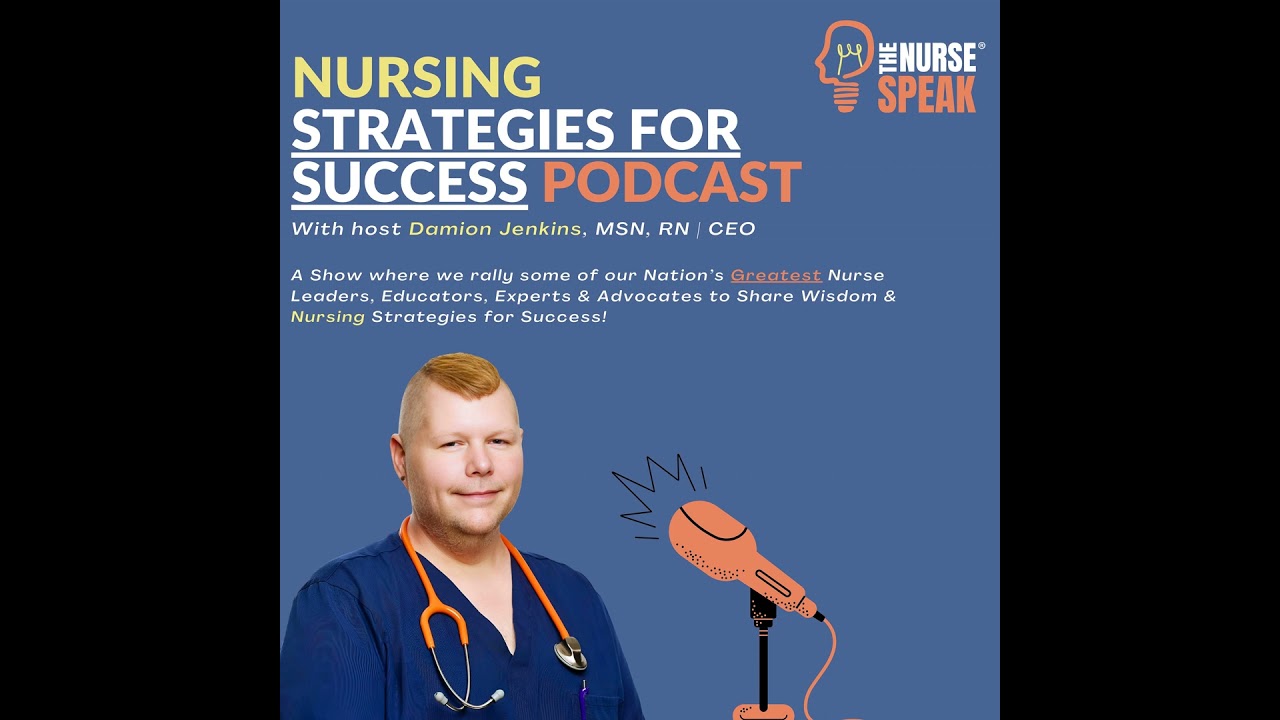
Diversifying your Clinical Experience, Knowledge and Skill to Help to Improve Interdisciplinary C...