#NotJustANurse - The Power of Intentionality to Grow Professionally & Impact Others in Positive &...
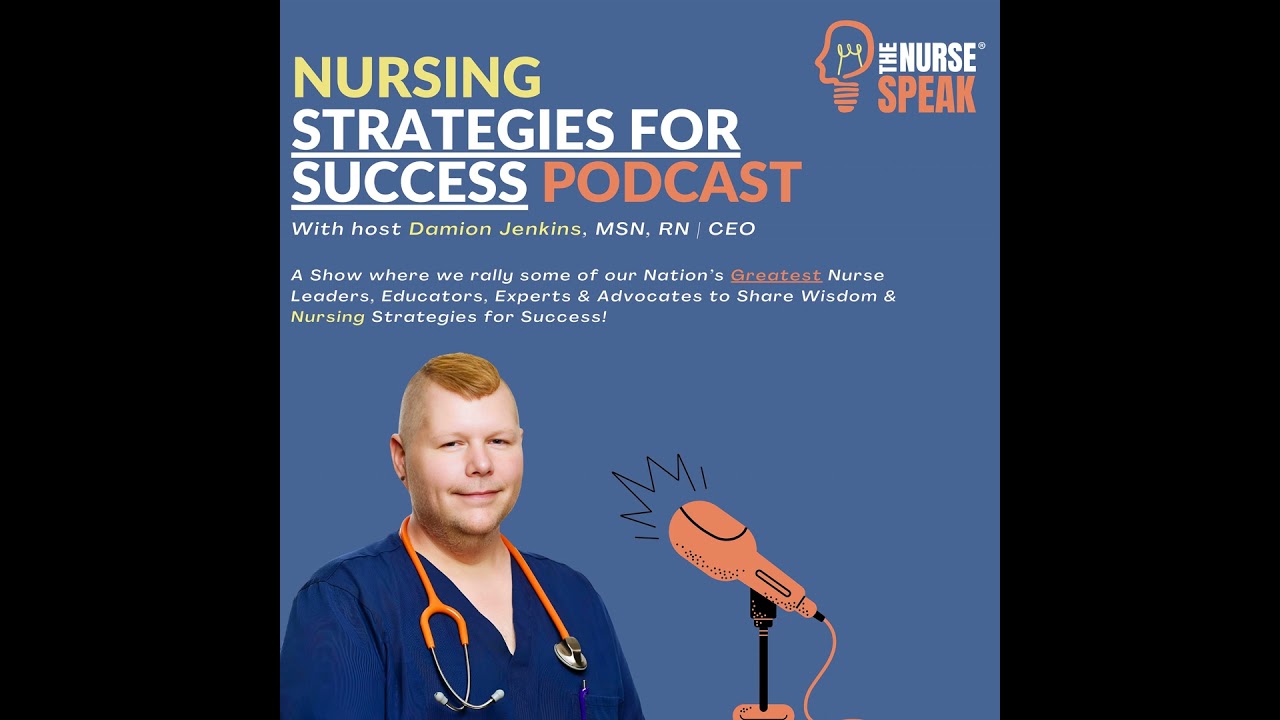
In this episode of the Nursing Strategies for Success podcast, host Damian Jenkins interviews veteran nurse leader Jessica Grundler, who reflects on a 43‑year career that began as a surgical technologist in 1980 and evolved through bedside nursing, a master’s in healthcare administration, a pivotal injury‑driven shift into nursing informatics, and later senior leadership roles at Dignity Health. Jessica discusses intentional professional growth—pursuing certifications (med‑surg, informatics, quality, DNP), networking, and continuous education—culminating in the creation and trademark of the #NotJustANurse brand to empower nurses beyond bedside tasks. The conversation emphasizes communication (verbal, non‑verbal, listening) as the foundation for safe patient care, effective leadership, and cultural change, urging nurses to speak up, address incivility, and view “soft skills” as essential. Jessica shares practical resources: her LinkedIn profile, the Clinical Project Resource website, and coaching services for career mapping and personal branding. The episode weaves personal anecdotes, advice on resume optimization, and calls to action for nurses to recognize their broader impact and to connect with Jessica for further development.
Chapters
Thank you for joining me for another episode of the Nursing Strategies for Success podcast with this week's guest, Jessica Brändler. Jessica has been a nurse for 43 years in surgery and leadership, where she empowers nurses to understand their impact. Hashtag not just a nurse. Her career started in 1980 as a surgical technologist, and she has been on an intentional path of certification, education, and networking where But along the way, she has found ways to be a positive influence on the nurses she works with to promote the profession by speaking for nursing students, promoting non-traditional roles such as informatics, and recently trademarking #NotJustANurse to promote the profession further. So let's welcome Jessica to the show. Welcome to the Nursing Strategies for Success podcast brought to you by The Nurse Speak. A show where we rally some of our nation's greatest nurse leaders, educators, experts, and advocates to tackle some of our greatest challenges that the nursing profession faces. My name is Damion Jenkins, and I'm your host for this show. So sit back, relax, and get ready to learn that nurses can do anything. Okay, Jessica, thank you so much for being on the Nursing Strategies for Success podcast. Why don't you take a moment and introduce yourself to the listeners? Let them know a little bit about who you are, where you started in nursing, and where you are today.
Okay, thank you so much for having me. I'm so excited. I started my career as a surgical tech, um, back in 1980 and then for nursing school 5 years later. I was a staff nurse for 5 years while I went back and got my bachelor's degree. And then I went back to the operating room and was a staff nurse, charge nurse, manager. And about that time I started my master's degree. I thought I wanted a career as a director of surgical services. So I went back to branch out a little bit and got a ma— and worked on a master's degree in healthcare administration.
Mm-hmm.
I quickly realized that that really wasn't for me, but I didn't know what I wanted to do. About that same time, I had an injury in the operating room, which allowed me to work on the new implementation of the surgical software when EMRs started coming out. So I worked for about 6 to 9 months on implementing the first EMR that we had in Georgia. And I loved it so much. My career path switched at that time from hospital to nursing informatics. And that took me into the corporate world for about 15 years. Okay. I loved it. I worked for 2 different software companies. Implementing and optimizing software and helping nurses understand the easiest ways to do point-of-care documentation, which was just very exciting to me.
Right. And has been—
but I—
and really has been so pivotal in the way that we capture all of the great work that we are doing as nurses. Right.
Absolutely. And it's very important if you do a switch in a career like that you still have to find what ignites you about being a nurse. So rather than the daily interactions with patients, it took me a while to understand the overall impact that I was having on nurses to kind of get over that. I miss being a bedside nurse to understanding how engaged I was with nurses and how I was building the future of nurses in that role, which gives you kind of a different point of reference from that.
Awesome. And so when I was— Yeah, so go ahead. From that point, where did you go?
I finished my master's degree, but I got a master's degree in nursing, so I could do anything I wanted with that. What I've done throughout my career is maintained my education in nursing and then got certifications. So I was certified back in the day as a med-surg nurse. Then when I was working in informatics, I attended a boot camp and got my, um, certification in nursing informatics. And currently I have my certification in quality also. Um, once I went back to the hospital environment after 15 years, I got married and I actually liked spending time with my husband and I was traveling 95% of the time. So I stopped traveling and went back to the hospital as a director of surgical services.
Nice.
At that time, I was motivated to get my doctorate and my DNP again in nursing. And while I was in the operating room and finishing my doctorate, I wanted to branch out. I wanted to get kind of outside the operating room that I'd been in for my whole career. So I started working in the quality department and became a director of quality. And that got me out of my comfort zone.
Right.
And from then, I've progressed into different senior leadership roles. And currently I'm a senior leader for Dignity Health in the Bay Area, covering 2 hospitals as the senior director of nursing operations, which includes perioperative services. So that's where I am today. And after attending the National Nurses and Business Association last year and got very motivated, um, I started my own business. So in addition to working full-time for Dignity Health, I have a business called Clinical Project Resource and, um, am very interested in empowering nurses to be the best version of themselves they can be.
Awesome, that is fantastic. You have just really outlined a tremendous career path that, first and foremost, I want to thank you for your many years of dedication to not only delivering high-quality patient care but also to, you know, empowering the profession because Nursing has always been and forever will be a team sport. It really takes a village to make the magic happen. And I really appreciate all that you have done so far and everything that you're continuing to do. And really, congratulations for you recognizing the need to step out of your comfort zone. I mean, we all do it many times throughout our careers. I mean, heck, we all had to do it to even become nurses in the first place, right? Step out of our comfort zone to push ourselves through the rigorous studying and mastering the skill set that we needed in order prove that we can be safe and effective nurses, not only to finish our programs, but to also get our license and, um, keep that license with the ongoing competencies that we need to demonstrate on an annual basis, so on and so forth. Um, so yes, recognizing that you needed to stretch yourself and make yourself uncomfortable so you can grow. I think being aware of that is something not everyone is so easy to articulate, but we all do it. And I think if we harness the power of knowing that in discomfort comes growth, we can actually intentionally pivot more so and more intentionally, um, with more impact than if we're just kind of doing it, you know, blow by blow or more of a passive kind of mindset. So awesome. So you were at NBAA last year. Did you go this year?
Yes.
Oh yeah, I thought so.
I did.
I thought I saw you there. And you know, we see something—
I know there's like 300 people there. I facilitated the presentation on trademarking because I have just trademarked my logo, hashtag Not Just a Nurse.
Yes, yes, yes. Yeah, you were on stage and were facilitating that panel, which was excellent, by the way. So thank you again for that. So awesome. So hashtag Not Just a Nurse. I love that. And you said you've trademarked that, correct?
Yes, I have.
So listen up, everyone, you can't have it. It belongs to Jessica, which good for you for trademarking that. It's important that when we recognize powerful slogans or hashtags, if you will, that we do claim ownership of that so that way we can continue to push that message far and wide and not allow it to get diluted by those folks who don't really have the same passion behind it as we do. So excellent on that. All right, so you've done a lot, you've seen a lot, you're in, you know, high-level leadership position in nursing, and you've been through all the trenches that nursing has to offer. And your mission is to empower nurses to know that they're more than just a nurse, right? So what's the thing that was the catalyst for you? What's that driving force, the plague, if you will, on the profession that you felt so passionate about trying to overcome?
Um, I love the hashtag or the statement, Not Just a Nurse, the first time I heard it, which was in 2016 when Kelly Johnson was a candidate for, uh, Miss America. And she got up on stage in her scrubs and her stethoscope and told a story about, um, her conversation with the patient. And the end of that conversation with that patient was he said, Kelly, you're not just a nurse, you're my nurse. And sometimes even when I still tell that story or watch the video, it still tears me up because I don't think nurses truly understand their impact every single day, taking care of every single patient.
Right.
As a surgical nurse, we joke about, you know, I work in the operating room because the patients are asleep. But that connection and that safe environment that I portray to my patients preoperatively and to be there at the most frightening time in their life when they're going to sleep and when they're waking up is critical to each and every person who's woken up and looked into my eyes when they recover from general anesthesia. And Those are the things that I think are so critical that as nurses we diminish our tasks. Of course. And we don't think about the effect that we're having on people's lives. And I see people now talking about, not just a nurse, talking about expanding their roles and can't they just be a nurse and can't they? And it's, that's not the point. The point is understanding the impact that you have on people's lives every single day. And it's— I correct people when they say it. I still hear it all the time.
Of course.
I just want— I mean, in my career, like I said, I had to convert from my individual impact on patients to my impact on nursing. And I think we all have to pivot in that mindset, whatever we want to do. And understand that if you're a bedside nurse and you love it, good for you.
And stay—
make sure you stay there and participate in your clinical ladder. And in addition to taking care of your patients, have an impact on the care provided in the profession by joining a professional organization and spreading that. There's always a way to empower other nurses, and that's what's so important.
Awesome. So yeah, I want to piggyback on that a little bit. And so yeah, so part of my mission as a nurse has always been identifying those gaps in education and training, which we all know if we had the mentor or the appropriate training in the very beginning, a lot of our frustrations would have been, you know, never— they never would have come to fruition because we would have been prepared adequately ahead of time. And so, you know, speaking to those direct care providers, those nurses at the bedside, charge nurses running units, unit managers, directors of nursing, directors of education, we all have the ability to impact beyond our roles and responsibilities of the nurse, right? So again, traditionally speaking, the roles and responsibilities of the nurse are to facilitate patient care, to make sure that they're receiving all of their treatments, to evaluate the effectiveness of the treatments, and to constantly, you know, work towards improving the, the quality and safety of the care services provided. In a nutshell, that's basically what every nurse is assigned to do. However, there are a gazillion other things that we do that is part of facilitating those very specific responsibilities that do include transformational change. And it's from changing the attitude of one of our unlicensed assistive personnel to see the bigger picture so then they can provide care in a more meaningful manner, or it's having tough conversations with providers who their orders may not be what's best for the patient based on a variety of factors, including personal preference, religious beliefs, cultural, you know, needs, language barriers, and/or what they need physically. So there's just so many things that go into facilitating safe and effective practice that have so many different levels and actually pull from the core foundation of knowledge that other disciplines are trained to focus on solely, like HR, you know, conflict resolution, um, risk management, finance, and resource management. There's just so many things that nurses inherently kind of are responsible for because without an understanding of these systems or these concepts, we can't really get to the place of providing a safe and effective care. And so a lot of people don't realize that. And of course, it's one of those things that unless you walk in the shoes of a nurse, you don't truly understand the full capacity of that. But I really go back to the nurse who's at the bedside. We all have a choice to be part of the solution or to allow the status quo. And so if showing up in a more meaningful manner means spending a little extra time coaching that other nurse or that other CNA to develop the essential skills necessary to do their job in a more meaningful and thoughtful manner instead of just running through the motions, then that's what we need to do. If we need to say, hey, before you go home, you know, let's clock out together and go to the nearby cafe and sit down for about an hour. I would love to speak with you about ways that we can work better together. If we actually took the initiative to do that instead of thinking so much of nursing being a shift work type role, we would be able to transform our healthcare system in a matter of years as a collective. Can completely transform the way we do things. Break down workplace bullying and incivility. Break down misunderstandings about the capacity of our roles. Increase safety. Increase satisfaction for both staff and patients. You know, build more collaborative relationships with members of the C-suite, right? A lot of our nurses on the front lines don't really feel connected or empowered by the C-suite. They don't really know who the C-suite people are except names and titles. So, you know, there's just a lot of things that we can do to really impact. So I love the fact that you've identified that. And so, you know, can you give an example of how leaning in has allowed you to really, you know, create that transformation and that impact that you want so many other nurses to be able to do?
Absolutely. And I think it all starts and ends with communication. Well, let me rephrase. It starts with communication and ends with speaking up. And there are two extremely important aspects of communication. One is verbal communication, and the other is nonverbal communication. And as a staff nurse or a charge nurse and a manager, in your daily work, you have the opportunity to make a choice, to make that communication positive and open or to shut it down. And that's with your words, your actions, and the look on your face. I mean, as an operating room nurse since the age of 18, I'm sure I have— and a teenager— hardwired eye rolling to it.
Sure. Right.
I try not to do it anymore.
Right. But you're more aware of it now, right?
Yes. In verbal communication, think about how you're engaging with your licensed and non-licensed personnel. Think about your nonverbal communication and cues. Are you listening? Listening is something that a lot of us have forgotten how important it is. I even had a surgeon one time who I just was sitting and listening to him, and about 5 minutes into him talking, he said, You haven't said anything. I said, I'm listening to you. Yeah. And he said, how refreshing.
Right, exactly. I'm not finishing your sentences and anticipating what you're going to say next because I truly want to listen to your message in full before responding. Right, exactly.
So listening is one of the keys to even verbal communication because it's just listening. And then from a nonverbal communication perspective, One. And this is funny because it has to do with my pageant presence, which is a totally different conversation. But one of my chief nursing officers made— talked to me about my communication style, the sound of my voice, and the look on my face. When I was a director of quality, I was so used to being in the operating room. People's lives were in my hands. I was responsible for that patient's life or death. So she's like, Jessica, you're just so serious all the time. And, you know, you really need to use some soft skills when it comes to communication. So if you're a Sandra Bullock fan and if you love the movie, I did. I started taking a deep breath, and when I exhaled, I'd say, world peace. And it put a smile on my face called the world. The word peace makes you smile. And within about 2 months, my CNO said, I don't know what you did, but people have really noticed the change in your communication style. Because it would give me a chance to relax, take a deep breath, breathe, and put a smile on my face, even if that wasn't in my head. Right. So I think working on that communication of verbal and nonverbal And then as a manager, empowering people to speak up.
Yes.
And speak up if you don't agree with an order. Speak up if you're— someone's not listening to you when you're talking about the endangerment to your patients. Speak up for patient safety and quality. And that's part of #NotJustANurse. You're your patient's protector. 20, you know, while you're on your shift, you are there to represent them.. And you have to understand that that's not only your job, but it's what you've committed to do, and it's the right thing to do. And you have the right to speak up no matter what your role is.
Absolutely. I think that's so important for everyone to be reminded of. And, you know, unfortunately, there are still a lot of workplace cultures where speaking up seems to create a retaliatory environment. Supervisors get personally offended when someone speaks up and it might go against their better judgment or maybe their directives. And, you know, so many people get caught up in their ego or their feelings about the situation when in fact we should always remember that we are scientists and we must, we must function in an objective manner despite how much of the humanistic side of things is involved in nursing, and that is half of our work, is the art of nursing, which does include a lot more subjectivity and creativity. But we always have to make our decisions based on objective needs. Like, we cannot make decisions based on subjectivity. It's just not safe to do so. It's not fair to other people to assume anything or to put words in someone else's mouth or to change the narrative or context of a situation because you don't have all the facts. Um, and I think keeping that mindset makes a very fair leader. It makes a very fair nurse. It makes a very fair person in general in life. Um, you can solve a lot of conflicts and you can even prevent ongoing conflicts by just saying, wait a minute, we don't have enough information to really make a decision about this. So as of right now, we're going to leave it as is. But if things continue to surface, then we're going to investigate further and collect our data and then come to a resolution. This helps a lot, especially in, you know, your role and in role— the role that I have as Director of Education and Staff Development. It's similar situation, you know, yes, I need to know when people aren't following the process or when there's practice issues or concerns. But it's not just a matter of, oh, this person isn't doing the skill correctly, you need to write her up, or you need to provide corrective action education. I need more information before I can make the decision on what action is best. Is it truly that they're not doing it the right way, or is it that they're not doing it to your preference, right? So we have to really kind of take a step back and think about it in that manner. So that's really important that that communication piece can really help to break down a lot of the— really almost all of the issues that we have in healthcare. You know, I was just—
absolutely—
just speaking to the, um, our medical director just yesterday, and we had the same conversation that we have often. 99% of our problems in healthcare is a breakdown in communication. Absolutely. And so if we could focus on empowering that education, I mean, the communication about education, education in communication, we can then really level up the way that we do our daily interactions in business. And, you know, I think misconception of workplace incivility and bullying. You know, it's not always bullying and it's not always incivility, but oftentimes it is mishandling of communication.
Or it's communication style that just needs a slight adjustment.
Yeah, right. And, you know, and we work, you know, and here in the United States especially, we have very diverse working communities. And so we have Filipino nurses, we have Nigerian nurses, we have Chinese. You know, all the Asias. And then we have a lot of European, we have South American, we have Mexican, we have people from all— Indian— people from all over the world who come to work here in our health market space as nurses, as doctors, directors, educators. And so there, there is a lot of potential for breakdowns in communication. But if we have a foundation of education and training on these key principles on taking those moments of being mindful, taking those moments of setting yourself up before reacting, thinking it through, maybe even practicing what you're gonna say before saying it, and then also getting feedback from other professionals who might have an upper hand on professional communication styles or collaborative communication styles. We all have We all have a dedication if we want to be good at what we do, and if we want to excel in our role, we all have to be responsible to continue that professional growth. Just like we have to continue to make sure we're, we're competent in our hands-on skills for the patients that we serve, we also have to continue to grow our essential skills. And so you said soft skills because that's something your director in the past said, But I have been on a movement my whole nursing career, really, is to change the word soft skills to essential skills. Um, absolutely, because they are more important than putting in a Foley catheter. Truly, your communication, your ability to communicate and solve communication conflicts is way more important than putting in a Foley catheter. Truly, because if you can communicate effectively, then the likelihood of making a mistake for doing a skill would be minimal, if not at all, right? So it's a lot about how we react with people when we're in, you know, situations of stress. And we know healthcare can be stressful, a little bit, just a little bit, right? We're dealing with people at their worst, right? So I always want to remind people of this: we're dealing with people at their worst. They're grieving, they're suffering, they may be facing their own mortality. Right? So they're not going to be the most pleasant people, you know, and, and so we have to understand that going in the door. So as healthcare professionals, we— it is expected to be someone's punching bag that day because we are there helping people in their moment of need when they're very upset, they're in pain, they're suffering, they're scared. So that right there adds a level of stress that many other industries would never know. Because there are other industries like, I don't know, the food and hospitality industry. You don't see people at their worst. You see people when they're coming out having a good time. So generally it's, it's more uplifting and it's a lot less stress. Um, so that's the first thing that we have to consider. And then the other thing is the fact that we have time constraints, right? A big time constraint on being able to do what we need to do with the limited resources known as time. To get the things done, and that adds another level of stress. And then we have the complexities of the diverse workforce, varying education and experience levels, varying, you know, cultural beliefs and preferences. And then, of course, just the fact that things are just ever-changing. You may not work with the same team that you worked with today that you will be back with tomorrow. And so that— all of these things make nursing specifically so very difficult, um, just to start. So if you don't start with a good foundation of communication, it really is a recipe for disaster.
Absolutely.
And that's what a lot of us are seeing in today's healthcare market spaces.
So, all right, yeah.
So Jessica, are there ways that people can connect with you? Do you have any products, services education, blogs, podcasts, anything that people can connect with you on to learn more about these essential skills so they can improve their practice and truly step into the power of not just a nurse?
Absolutely. Um, probably the best way to connect with me is on LinkedIn, so, um, Jessica Grundler, and my last name is very hard to spell, but I'm sure it'll be advertised in your podcast.
It will be.
Um, with, with a link. I also have a website which is www.clinicalproject.org, and I am going to start offering some opportunities for empowerment coaching that include career mapping and positioning yourself for success and personal branding. Um, I think one of the most important things that we can do is continually brand ourselves. Correct. And LinkedIn is an amazing way to do that because you may not know your career path.
Mm-hmm.
Until you see what other people are doing.
Correct.
And once you read the stories of other people, it's easier to step outside your comfort zone. And if someone decides that they want to understand what their options are, And when they, you know, map that out, I'd love to help people map that out. And then once they understand the direction they want to go in, optimizing a resume is something that people don't really have the concept of. I get, when I interview even directors for positions, I'll get a resume that has nothing to do with the position that they're applying for. They have one that they send to everybody. And I think it's critical to help people understand how to optimize a resume for the role that you're applying for. And yes, it's time-consuming, but if you really want to step outside your comfort zone and expand yourself as a nurse, I think it's critical to do that. So messaging me on LinkedIn or emailing me at drjessica@clinicalproject.org are the best ways to get a hold of me.
Awesome. Thank you so much for that. I will make sure that all of the ways to connect with you will be in the show notes of this episode. And Jessica, I now feel bad that we didn't connect as much as we should have at an NBA, but hey, there's Orlando in July, so hopefully there's Orlando there, and then, you know, maybe we'll cross paths physically before then. Who knows? Um, each day is a new journey. Um, but everything that you're saying is so valuable and so important. Um, back to the, you know, professional development, coaching, and branding, that's so very important. I've been helping people do that as well for many years. If you haven't seen the brand identity presentation that I did a few years ago for NNBA, it is on their website. It's one of their kind of à la carte, you know, presentations that people can purchase for a very low fee in the members section. And then, you know, I'm, I'm going to try to speak at the next conference. I didn't apply to speak this year. I wanted to go purely as a participant and just really enjoy because it's always such a fun conference. But next year I'm planning on speaking, so hopefully you'll see me there on stage. In the meantime, we're working on— and you're in California— we're working on me and Dr. Chibuna. I'm not sure if you met him at NABA this year, but we're planning on getting ready to facilitate the ELEX conference, which is going to be in Ontario, California. So not too far from you, right? It's kind of close to the LA area, like northern LA, I believe. So anyhow, yeah, so we'll be there in October, so just a couple months from now.
So yeah, I would love information on the conference.
Yeah, I'll, I'll ping you on LinkedIn after this. So thank you so much, Jessica, for being on the Nursing Strategies for Success podcast. It's been such a pleasure learning from you. Um, I'm sure my listeners are going to gain so much additional insight and again, a nice refresher on the fact that we are more than just nurses. Um, we can really do anything, and that's the whole purpose of this podcast, and to really remind ourselves that we always have a choice in how we respond and react to even the most difficult situations, which could have lifetime impact on a single person. And isn't that what we all want to do as nurses anyhow, right?
So thank you very much for having me. It's been a pleasure.
My pleasure. We'll talk soon, Jessica. Take care. Okay. Bye-bye. And that concludes episode 8 of season 3 of the Nursing Strategies for Success podcast with this week's guest, Jessica Grundler. We hope that everything we shared in today's episode will help you to realize that you are hashtag not just a nurse. All the ways to connect with Jessica will be in the show notes of this episode. And as always, if you have any questions about anything we shared, please feel free to visit thenursespeak.com/contact, and I would love to have a conversation with you. So until next episode, take care, be well, and remember that nurses can do anything.
More from Damion


Stop Waiting, Start Positioning: Alignment & Career Growth for Nurses - The Modern Nurse Way!

Pull Up a Chair to the Decision-Making Table: How Nurses Influence Policy, Education, and Technology

You're in the Driver's Seat: Taking Control of Your Nursing Career Trajectory with Damion Jenkins...

Legal Considerations for Nursing: This is a CALL TO ACTION for More Education, Training & Support...

Unifying the Nursing Voice: Leading Teams Who Feel Heard, Valued & Invested In - Not Just Managed!


Identifying the Gaps in Education, Training & Professional Development for Nurses and Daring to D...

Breaking the Nursing Glass Ceiling with Emotional Freedom Techniques (EFT) and Entrepreneurship!
Diversifying your Clinical Experience, Knowledge and Skill to Help to Improve Interdisciplinary C...