When it's time to say NO to the Status Quo and Lean into Entrepreneurship for Career Alignment & ...
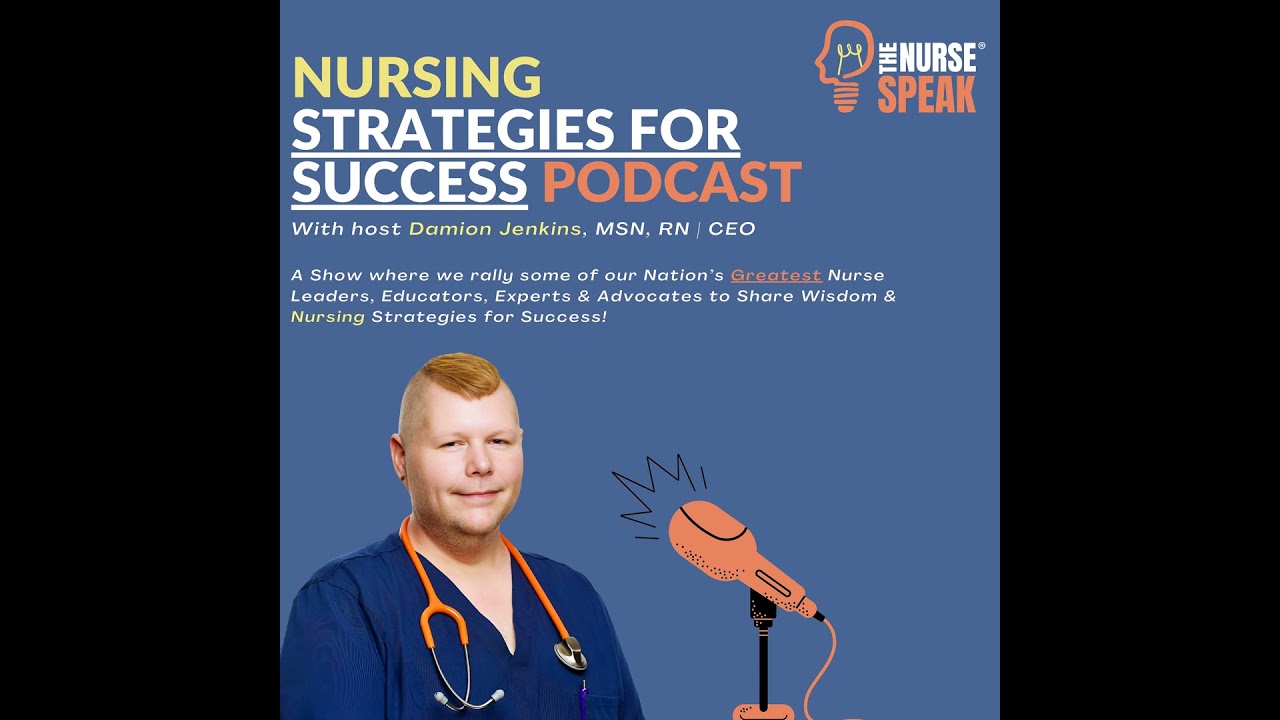
In this episode of the Nursing Strategies for Success podcast, host Damian Jenkins interviews Dr. Kiana Jones, a former critical‑care RN turned entrepreneur. Dr. Jones shares her personal story of overcoming early‑life adversity, becoming a 16‑year‑veteran nurse, and eventually founding Lux Beauty & Wellness Boutique, Lux Beauty Academy, the Nurse Boss Mob community, and the Med Spa Boot Camp mentorship. The conversation explores the systemic challenges nurses face—bullying, racism, micro‑aggressions, staffing shortages, inflexible scheduling, and a lack of professional support—leading to burnout and high turnover (over 100,000 nurses left since COVID, 600,000 projected to leave in the next decade). Dr. Jones argues that the solution lies in nurses leveraging their licenses to create side businesses or full‑time ventures, such as med‑spas, IV hydration, digital products, or teaching, thereby increasing financial freedom, impact, and personal fulfillment. She outlines concrete programs (Nurse Boss Mob, Med Spa Boot Camp) that have already helped over 200‑plus nurses and other healthcare providers launch businesses, with a goal of 300 this year. The hosts discuss the importance of flexible work arrangements, the need for professional culture change, and the broader mission of the podcast to empower nurses to align their careers with purpose. Contact information for Dr. Jones (social media handles, website, membership windows) is provided for listeners.
Chapters
Thank you for joining me for another episode of the Nursing Strategies for Success podcast with this week's guest, Dr. Kiana Jones. Dr. Jones believes in the power of community leverage and the monetization of our nursing licenses to achieve purpose and fulfillment. She has an inspiring life story that is sure to resonate with so many. Facing adversity early in life as a teenage mom and a high school dropout, Dr. Jones defied the odds to become a successful nursing professional and entrepreneur. I can't wait for all of you to hear how she can also help you align with your career path and purpose. So let's welcome Dr. Jones to the show.
Welcome to the Nursing Strategies for Success podcast, brought to you by The Nurse Speak, a show where we rally some of of our nation's greatest nurse leaders, educators, experts, and advocates to tackle some of our greatest challenges that the nursing profession faces. My name is Damion Jenkins, and I'm your host for this show. So sit back, relax, and get ready to learn that nurses can do anything.
All right, Dr. Kiana Jones, thank you so much for being on the Nursing Strategies for Success podcast. Why don't you take a moment to introduce yourself to the listeners, let them know a little bit about who you are, where you started in nursing, and where you are today?
Awesome, and thank you for having me, Damion Jenkins. My name is Dr. Kiana Jones. I am owner and founder of Lux Beauty and Wellness Boutique and Lux Beauty Academy, and I help Nurses monetize their licenses, charge their worth, and add tax. That's right, tax, because we should tax. Okay, giving. Um, and I've been in entrepreneurship for going on 6 years. I've been a full-time entrepreneur for— since 2021. So next year will make my third year when I dare to venture into this space. And it is really my mission to help those who are where I was 6 years ago come over to the softer side. That's, that's all I'm trying to do.
Wow, amazing. So where'd you start nursing? How long have you been doing nursing?
Oh my gosh, so I've been a nurse for— it'll be 16 years next April, I think. Yeah, so it's been a while. I actually started out— my bachelor's degree is in public health, so I was a master's entry nurse, actually one of the first programs in, in California where we were direct entry, um, and that was in 2006 when I ventured into the program. And I've worked critical care. I did that full-time for 3 years, and then after that I was per diem for the remainder of my time working. And I also worked in academia as well as, as in leadership at a healthcare organization here. So I've worked in various capacities but only did full-time bedside for 3 years. I was done.
Got it. So just in the first 3 years, you were already like, I'm spent. I'm done. Never doing this again.
It was not a popular thing at that time. Let me just say that. People thought I was— see, now it's a little bit different because it's all over social media. So people kind of understand what we're going through. But back then, it was like, girl, you are crazy. What are you thinking? How are you going to pay your bills? You got a good job. It was one of those type of things. But I just knew I was called to do more. And I did not sign up to be as miserable as I was. And so I made a decision.
And I don't think any of us sign up to be as miserable as we are in many capacities. And I have a handful of friends out there who love, love, love, love, love their clinical roles. And kudos to them because we need them in those spaces. And if anyone can find peace and happiness with their clinical roles, all— by all means, let's empower you to stay there and coach and mentor others to be like you. Yes, but many of us like yourself and myself go through not such lovely experiences, and we sign up to do more, to help more, to impact more, and yet we, we find ourselves unable to do that, and we wind up just being miserable. And that's what it sounds like happened to you in those first 3 years, right?
Yeah. Oh yeah, for sure. A lot of bullying, a lot of racism, and, you know, just microaggressions. Yeah, you know, and it just became so much that I started to really dread going into work, like anxiety on my off days. It was just really bad. Now, I know that's not necessarily everyone's experience, but that was mine. And I'm really glad that it was my experience because it really made me put some fire up under my butt and look for different avenues. And that kind of segue me into where I am right now. So it's a part of my story. My test is my testimony. So I tell that story all the time because I know there are a disproportionate amount of nurses who are in that situation and don't know what to do, right? And so for me, I am like you. I'm like, if you're happy, great, like, stay where you are, do your thing, because I'm getting— when I get older, I know I'm gonna need a nurse to take care of me. Okay, she's gonna, you know, so I appreciate those who— but I think if we— and this is just, I'm biased, let me start it off to you, listen, Very nice. I believe every nurse should at least have a side business or be a full-time entrepreneur.
Absolutely.
Have a side business, but if you don't and you're miserable, join, join, come on over here. Um, absolutely. And I feel that way because, you know, it has really, uh, allowed me to have even a greater impact than I was able to at the bedside, you know. So still in a position of serving, um, but now I'm just serve the masses, and, you know, I get to touch more people and help more people. So I'm still doing the work, you know. A lot of people think the only way we could do that is when people are sick, but we can also help people and prevent them from even getting sick. Like, that's also an option. So, um, but yeah, so it's, it's been a, it's been a journey. I, I just feel like a lot of us are more than qualified, but we're just afraid to dare to step out and go through the ugly. Yeah, ugly.
Yeah, we all do it. We all do it. And look, we go through it at the bedside, right? So even transitioning into practice out of school, very little support. Let's be honest, did you have the best preceptor experience? Did you have the best onboarding experience? Did you feel like you were really provided with all the tools to be successful? No, the answer is no. Very few people that I've— that I speak with or I work with say that they felt that they had everything they needed to be successful. In fact, many of them say that they taught themselves or they had to figure it out on their own. So if you're doing that at the bedside working for another organization that you're helping to make money, why can't you do that for yourself?
That part, exactly.
Yourself money, right?
And make yourself money. But like, I was a happier nurse Yeah, when I worked, I was working per diem. I worked per diem for like 8 years, right? And I was the happiest. Now granted, I was at a great organization here in Southern California, don't get me wrong. But even when I was out of ratio or when things just, you know, one of those days— I don't care where you are, what healthcare organization, you're gonna have those days, right? Even if it's a great organization. But even when I was in those moments, because I knew I was only working my 4 shifts I was like, okay, we gotta— okay, that's fine. I'm gonna do the best I can. I'm gonna take care of my patients as best I can, and I'm gonna be going home. So I was miserable. I noticed that a lot of nurses are unhappy because they don't see a way out, so they— and they're not planning for their exit strategy. So again, I'm not trying to make everybody leave the bedside, but I do feel like we have a lot of leverage that we're not using, and that, that can require these healthcare organizations to create better working environments for us so that we can show up and really serve our patients. Um, I think that's really what's being missed. You know, 100,000 nurses have left already since COVID over 600,000 expected to leave in the next 10 years. We need to put a crunch on them so that they can do something about these conditions. Right? That's how we can be overall happy and we can still keep people at the bedside if we focus on, you know, allowing us to be the best versions of ourselves. And most of us entered into this field because we want to serve.
Absolutely. And, you know, to piggyback off of the, you know, improving the workplace, you know, sounds like scheduling really seems to be one of the biggest issues is, you know, we often think as nurses or even the general public think of nurses as hospital workers who work 3 12s or so a week. But a large proportion of our nurses out there in long-term care facilities or like home care agencies, which they have— they have more of a 5-day week type of schedule where they're working anywhere from 8 to 12 hours a day. And yeah, they are burned out because every day they go to work and do 12 people's worth of work, and they don't have any respite. And so offering more flexible schedules is exactly what keeps happier nurses. I know from my own experience For 7 years I did agency and travel, and with those either local agency gigs where I can pick and choose when I wanted to go in and work, I could pick and choose which facilities I wanted to work, which units I wanted to work. And with my travel contracts, I can negotiate the terms of those contracts to where I made sure I had built-in time for respite so I could be off and enjoy my life and not just focus on work. And that's why we have such a huge issue with staffing, um, versus where we have agency workers who are readily available, but full-time people signing up, they're not coming in the door, right? So if you work at agencies, if you work at organizations, or you, um, are still, um, close with people who work in organizations, it is very difficult for those organizations to staff full-time direct hires versus staffing part-time. Oh yeah. Or per diem agency. And it's for that very reason. We get burned out very quickly, so we want to pick and choose when we want to go to work.
And I, and I don't know, you know, it's just thinking about it and just like based on what you just said, I just think like if I could have a magic wand, what would that look like? Because honestly, it's one of those positions where we know we're going to work, and I don't think we mind working.
No, right? I don't.
I think when it comes to that balance. What I hear more often from nurses, which is interesting, aside of them being burnt out, but a lot of their burnout is directly related to the lack of appreciation and the lack of consideration they have. It's really not— yes, patient, you know, ratio is something, but like, it's not the number one.
It's like, it's not the patient.
Yeah, it's, it's not, it's not. It's like, I'm missing out on time with my family, with my kids. With like being able to take care of them when they're sick. I'm taking care of others. I'm giving emotionally. Like, if you're a good nurse, you're definitely gonna have some level of empathy for your patients, for their families, for the— that it within itself, it's so emotionally taxing.
Yeah.
And it drains you. So a lot of times it's like, well, how can you be burnt out? Because you only have— especially in California since we have ratios, right? You only have X amount of patients. Like Yeah, but you're giving, right?
But what we're not prepared to do is take verbal abuse from our colleagues, be thrown under the bus when everything goes wrong, even though it's a system failure, not a nurse direct— directive affair, right? We're not ready to be told we have to and we have no choice.
That's right.
We're not ready to be told, even though we've saved 100 lives, if we lose one, we did something wrong.
Exactly.
We're not ready to be told, I'm sorry, you cannot have that earned paid time off because we cannot do our job to keep the staffing to where it needs to be. So unfortunately, you cannot have your family vacation.
Exactly.
We are like, not ready to take on all of the tragedies and pain and suffering of the organization when we are busy taking on all the pain and suffering of our patients.
Exactly. And that emotional load compounded with— we're human, right? We have families, we have circumstances, we have personal things going on, right? We have emptied so much of ourselves in our positions that we don't even have the bandwidth, right, to take on just normal life, daily stressors, right? But we are running a lot of times on empty.
Yeah. And so, you know, in being in a leadership position, you've been in leadership positions. We also know that we can't really blame our frontline workers when we ask them to do extra and they clap back with attitude and say, no, I'm not doing it. Now, as in a leadership position, you're kind of like, wait a minute, you know, don't say no. There's a, there's a place in time. There's tact. There's professionalism. And we try to hold people to those standards, but at the same time, understanding the humanistic side of one another, we have to be like, I know I'm asking too much of you right now, but in my position, I have to. At what point do we break the cycle? And it seems like the way our organizations are set up, there is no breaking it. It's just simply compromise.
Yes. And the thing about it is, like, you, you see it all the time, you know, a nurse is sick with either a terminal or like some type of cancer, and then their colleagues is donating hours for them to be able to take off. Like, it's just, you know, and that— and that's the part that it's like, if I'm gonna do it, I'm gonna do it for myself. Like, I'm going to go hard for my own business because ultimately I don't care how they position it, it is a business. And because of that It's about numbers.
That's it.
And even though they try, you know, you work for nonprofits, you have these different healthcare organizations, but essentially none of that matters. It's the bottom line.
It's all about money. It is a business at the end of the day. And you're right, if we're gonna do all of this work and extend ourselves to the very end of our ability, shouldn't we be walking away with more peace of mind, more stability? More freedom, more creativity, and the ability to actually leave a legacy for ourselves and our families versus for the organization, which employs hundreds of thousands of people year after year.
I remember when I graduated nursing school, remember the crash was like in 2007. So that was right about to graduate. And seeing those nurses, it was, it was very pivotal for me seeing them. Like, because when we came into the program, the big— the way they were marketing to us was like, there's going to be a mass exodus of nurses. The average age of a nurse is 54 years old, this, this and that. And then that happened, and all of a sudden those nurses weren't leaving, right?
They had—
because a lot of them lost their retirement. And I was looking at that and I was just like, well I, you know, just being ignorant, not knowing, I'm like, well, I thought they— it's their retirement. But no, it's tied to the stock market, and you have this per— this person on the back end who is managing your contribution, and stock market fails, so you lost in some cases hundreds of thousands of dollars that was for your retirement. And I was like, oh no, I— that can't be me. And so there were certain times. And I was actually— hadn't graduated in 2007 yet, I completed 2008. So during that time, I was looking and I was like, okay, that can't be me. Like, I am not— and like I said, I work there, if you love it, fine, even if you like it, but you have an obligation. Like, you never want to be in a situation where if you're sick or your kid's sick or your parents sick or anything happens where you have relied totally on this external source, external source. And I don't care if you believe you have security, you don't, you don't. It's just, it's beyond your control. And so put yourself in a position where in the worst case scenario you can still be okay and be able to survive. Not to mention, if you're in our generation, we don't even know what retirement is going to look like by this, right?
For sure, right?
At this point it might be 75, you know, like they only want you to live about 10 to 11 years after you retire, so Right, we have to think about that.
Yeah, absolutely. So with all of these super valid points, right, um, we don't want to paint a complete, complete disaster-like picture of nursing because it's not completely disaster. There's a lot to be said for improvement. And, you know, in my 14 years as an RN, I've seen a lot of things improve, but I've also seen a lot of things not improve and honestly have remained either stagnant or maybe gotten a little worse, right? I know for the— one of the biggest things that I have an issue with, um, and it's been consistently getting worse, is just the lack of professionalism in the workspace. It's, it's gotten really difficult to manage, um, when people have certain opinions about a situation. It's very difficult for everyone to kind of stay on a professional level without the outbursts, without the inappropriate language, or with without the inappropriate behaviors. And I don't know, I don't know, I don't know what the magic wand is to fix this. I don't know what to do to fix it other than to continuously role model the appropriate behavior and hold folks accountable for their actions. But it's becoming increasingly difficult. And it's not just in healthcare, it's across the board. It's everywhere, everywhere that I know where people work. So we don't know what that's all about, but we'll figure it out. Maybe it's just all the traumas and stress from the pandemic and The fact that people were isolated for so long and now they're being hurriedly reintroduced into a new world where there's a lot of pain and suffering that has happened. I'm not so sure what that is. However, there's still lots to do in our healthcare space. Now, what have you specifically done or are doing to help people and yourself battle a lot of these issues that we have in our profession? So you said you're an entrepreneur, you've been doing this for a while now. You said you help other nurses become entrepreneurs. Let's lean into that a little bit. What are you doing?
So what I am doing to be a part of the solution and not the problem is reimagining our profession, because we know that we went through nursing school— from the time we were in orientation, we were funneled to enter into some type of healthcare setting. As an athlete. And so in my mind, I'm a disruptor, period. And so I look at it as, first of all, I've sat on— I know you've been in academia as well. So in academia, we're on committees, and we sit at the tables with these healthcare organizations. And at one point, I was at a meeting, and I was lead faculty for public health. So of course, we were always out in the community. And I just— some— a light switched, and I was just like, all of these conversations are all about getting them from where they are to into their system, whether it's at the hospice bedside or even long-term care, you know, outpatient, wherever. But it's never like as a standalone, like, you have this license, here are your options. And I feel like a lot of our institutions have an obligation. I'm paying you for my license, right? So, and it doesn't belong to these healthcare organizations, it belongs to me. So you have a due diligence to provide me with all the options accessible to me with this license, and then I make an informed decision, right? And so me as a disruptor, I need people to know what their options are. And so I, I— it's funny, I created a reel and I was like, my answer to everything is entrepreneurship. And it's only because the position that it has put me in. And, and I, I, I truly appreciate— like, I just feel like a nurse can be a nurse at any— wherever. I'm still a nurse.
Absolutely.
And it doesn't matter if I am in these healthcare settings or not. I am still a nurse. I've worked hard for this, and I just want us to be able to reimagine that. So through my mentorship, whether it's because I'm the owner of a med spa in LA And that's really where I started in it. Um, but I've taken like all of the information that I learned and the skills that I obtained from working at the university, and I've been able to package it really nicely into my own programs and mentorship. And so for me, my solution is those who are looking to do more, like without having a ceiling, without trying to sit at these tables— and some of these tables, depending on who you are, they don't want you there, right? Instead of trying to conform, create your own. And so those people who dare come to me, and then they work with me, and I introduce them to all the opportunities that are accessible to you. But really based on this paradigm shift that's happening in the marketplace, which is into this digital space, right?
Right.
Like, it's your life and monetize it. Like, do what you want with it if you want to even be in healthcare, right? But you may not want to be in healthcare. So get into digital space, like something. There are people who are making millions of dollars, right, following us, less educated than us, who are making way more and teaching on topics that we are the experts in. That doesn't sit well with me, and it shouldn't, right?
And you—
and this is a part of our impact, because if you want to serve the masses, which this is why we are in our positions, because we want to give and we want to contribute. And so if that's you then you have an obligation to be out here teaching the right way, because other people are going on Google and creating courses and teaching your audience. That should not be okay with you. And so that, that's— and providing the solution.
Yeah, absolutely. So, um, pardon my coughing. For those listening, I'm recovering from COVID It is still going around. This new strain apparently super contagious, but Mild, just a little itch in my throat. But yeah, Miss Jones, Dr. Kiana Jones, you are giving us full service right now, which is truly amazing. You, you know, moving into a place of your own strength is truly what we should all be doing. And for those individuals who are lucky enough to work with you, which I've met a few already, Um, in the short time that you and I have known each other, we just met at the National Nurses and Business Association this past July, right? It is now September 26th, which is this recording date. And, um, when they get to come to you and work with you, we create a nurse who is now able to leverage their strengths, leverage their passion, find themselves working in the space that they want to work in, whether it's a brick-and-mortar, whether it's a digital whether it's, um, you know, teaching, tutoring, coaching, whether it's opening a med spa, whatever it is, IV hydration. There's so many options out there. And I love the fact that you say you're a disruptor, and that since the organization that helped you get your nursing license never provided you with these options, you feel obligated now that you know to help other nurses see the options out there. And I think that is fantastic. And that is exactly what I've been doing all along as well. Is, is this the whole premise of this podcast is to let nurses out there know that there are ways that you can leverage your strengths, your talents, and your passions to align with the career that is going to be best for you. Whether you want to be a home care nurse and stay in that space, in long-term care, acute care, own your own acute care, whatever you want, we can find a way to help you leverage your strengths to get to that point. So amazing.
That's right.
Work. And, you know, just, just brag a little bit, uh, Kiana, how many nurses have you successfully helped launch their own businesses?
So as of the beginning of the year, uh, I was over 200 nurses. As of right now, September, that was just the beginning of the year, like 2022. I went super hard. I was over 200 nurses. Here I've helped over 230, so I'm on track. I wanted to do 300, so we'll see if I reach my number. That's the goal, because I have multiple touch points, right? So it's not just start your med spa. It's like, those who are interested in starting their med spa, here. If you want IV hydration, here. If you're looking to get into the digital space and create courses and, you know, be— maximize and leverage your skill set, meet me over here. So I am most likely going to reach my, my 300 people for this— 300 nurses, and I should say healthcare providers because I've also worked with physicians and nurse practitioners and also physicianists. So healthcare professionals, um, I'm on track to be at my 300 goal for this year. So yes, I am the one. I'm showing up and I'm going to leave here empty., and people will remember my name. I mean, that's the plan.
Truly. I mean, truly, I will remember your name forever. The, the short, you know, meeting that we had at the conference, I was like, this, this lady's got it. She's where it's at. People need to connect with her. And I'm so glad that I was able to do the, um, brunch in New York City. Uh, with you as well. That was fantastic, and I'm so happy to have you here on the show. So, uh, Dr. Kiana Jones, how do people get in touch with you? Drop us a few ways that they can connect with you, and I'll make sure that this is in the show notes of the episode.
For sure. So you guys, I am actually— I don't know when this is going to air, but I have a community called the Nurse Boss Mob, and we only open 3 times a year, and I only have a 7-day window for you to join. Now, in the Nurse Boss Mob is all of my courses to help you build. So whether you are trying to monetize social media, whether you are trying to create digital products, whether you want to get into the beauty space, whether you want to— I mean, just everything. How to obtain virtual assistants. I have it all in my membership. Now, that's annual membership. That's through the Nurse Boss Mob. Now, I don't know when this is going to launch, when this is going to be released, but we will be open from October the 25th of 2023 till, um, October the 31st. I think that's our window, so you can look that up. I'm, and I'm on social media, sidepreneur_nurse, and all of my links are in my bio. That's the most recent. Um, I also have the Nurse Boss Mob— I'm sorry, I also have the Med Spa Boot Camp. That is a mentorship where I help healthcare professionals launch their aesthetic businesses. And so we go through everything to get you from A to Z and launch. Okay, so I also have that. And then I won't tell you everything, but you can find me on www.drkiionajones.com, and everything is linked in there, y'all. I'm on— who— @cypreneur_nurse.
She's everywhere, y'all. And I'll also drop your LinkedIn because I know you're on there as well. So we'll have all of those ways for people to connect with you in the show notes of this episode. And Dr. Jones, I want to thank you so much for taking the time to come on the Nursing Strategies for Success podcast with me. As always, it's a pleasure. I can't wait to come out to Cali and hang out with you and see what's going on. And, um, just an FYI, I'm entertaining the aesthetic business as another revenue stream, um, because that's what entrepreneurs do. We, we take what we have and invest and pivot and see where we can, you know, leverage our skills, our strengths, and our talents to make more money and have fun along the way. Because the aesthetics business is a lot of fun.
It is fun and it's transformational. And that's here. It's like you can serve and people are happy.
Who doesn't want to look beautiful, right?
Exactly. Exactly. So, but thank you so much for having me, Damion. I just want to let your listeners know, like, what they hear on your podcast is definitely who you are. You and I connected, and I was like, he's really my person. Like, I really like—
well, thank you. Um, and for those of you listening who know me, we already know that Dr. Kiana Jones, you know, we, we got this. Authenticity is where it's at. It's truly what I believe in. It's how it's helped me gain so much success over the years and make lifelong friends and colleagues. And I'm so glad to have you in my network, and I can't wait to hang out with you soon. So we'll talk soon, okay?
Okay.
All right, take care. We'll see you later.
Bye.
And that concludes episode 9 of season 3 of the Nursing Strategies for Success podcast with this week's guest, Dr. Kiana Jones. We hope that everything that we shared for you in this podcast will help you align with your career path, enter into entrepreneurship, and take full ownership of what you like to do with your nursing license. All of the ways to connect with Dr. Jones will be in the show notes of this episode. And as always, if you have any questions about anything shared in this episode, feel free to thenursespeak.com/contact and get in touch with me. I would love to have a conversation with you. So until next episode, take care, be well, and remember that nurses can do anything.
More from Damion


Stop Waiting, Start Positioning: Alignment & Career Growth for Nurses - The Modern Nurse Way!

Pull Up a Chair to the Decision-Making Table: How Nurses Influence Policy, Education, and Technology

You're in the Driver's Seat: Taking Control of Your Nursing Career Trajectory with Damion Jenkins...

Legal Considerations for Nursing: This is a CALL TO ACTION for More Education, Training & Support...

Unifying the Nursing Voice: Leading Teams Who Feel Heard, Valued & Invested In - Not Just Managed!


Identifying the Gaps in Education, Training & Professional Development for Nurses and Daring to D...

Breaking the Nursing Glass Ceiling with Emotional Freedom Techniques (EFT) and Entrepreneurship!
Diversifying your Clinical Experience, Knowledge and Skill to Help to Improve Interdisciplinary C...