E1079 Power of Accelerators E10: Pioneer Founder Daniel Gross on gamifying the startup process
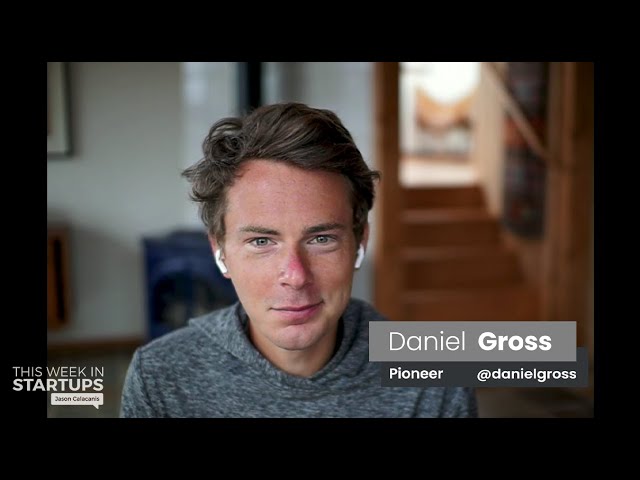
In this episode of This Week in Startups, host Jason Calacanis interviews Daniel Gross, founder of Pioneer, a remote, gamified accelerator that uses points, leaderboards, weekly progress updates, quests, and mentor office hours to surface and validate early founders. Gross explains Pioneer’s free‑registration model, 1% equity stake for winners, optional Gold/Platinum follow‑on investments, and the ability for founders to participate anonymously. The conversation shifts to the geographic distribution of Pioneer’s applicants—about half of traffic comes from outside the United States, with strong representation from Europe, India, Nigeria, and Eastern Europe—highlighting the platform’s international reach. Gross and Calacanis then debate whether San Francisco will remain the world’s tech capital, noting the city’s mismanagement, high costs, tax pressures, and the three‑stage lifecycle of tech communities. They discuss the broader trend of founders relocating to other U.S. regions (e.g., Sacramento, Santa Cruz, Napa) and global hubs (London, New York, Cupertino) and consider California’s fiscal challenges. Gross emphasizes Pioneer’s agnostic stance, ready to “float” to wherever the next tech capital emerges. The episode concludes with a call‑to‑action for listeners to apply to Pioneer via pioneer.app, underscoring the low barrier to entry (free, 1% equity) and the platform’s supportive, gamified environment. Calacanis also thanks sponsors and notes increased listenership during the pandemic.
Chapters
This Week in Startups, The Power of Accelerators series is brought to you by LinkedIn Jobs. A business is only as strong as its people, and every hire matters. To post a healthcare or essential service job for free, visit linkedin.com/power. Vanta. Compliance and security shouldn't be a dealbreaker for startups to win new business. Vanta makes it easy for companies to get a SOC 2 report fast. Twist listeners can get 1,000 $1,000 off for a limited time at vanta.com/twist. And Zendesk— qualifying startups can join the Zendesk for Startups program and get 6 free months of Zendesk products. You'll also get access to an exclusive community of startups for advice and connections. Visit zendesk.com/twist today to get started.
Hey everybody, hey everybody, it's your boy Jason Calacanis here on This Week in Startups. And we are continuing, in fact, we're wrapping up our Power of Accelerators series. And this was intended as a 10-part series since many of the founders who are watching and aspiring founders want to know, hey, should I consider an incubator? Should I consider an accelerator? And what's the state of those? Because I get this all the time. Which accelerator should I pick? Should I go to Techstars? Should I go to Launch Accelerator? Should I go to Y Combinator? What's this Dreamit thing? What's SOSV? And we did our study of all the different accelerators out there. We wanted to have a range from internal ones like Ford's X program, obviously having Techstars, which is the largest one in the world, Science, the startup, startup studio model. We went through all these crazy different models. And to be totally honest, all of them you probably already knew about. They all fit the exact mold.
Yeah.
But I always look for things that are innovative, and we're ending with what I think is the most innovative new idea I've seen in accelerators in a long time. It's called Pioneer, and the founder is Daniel Gross. I believe he was at Y Combinator for a bit. When I saw this, I said, wow, this is amazing. Everybody in Silicon Valley, everybody in the investment space, even in the accelerator space, because there are so many companies, has moved a bit downstream. So you look at VCs, they used to invest in a business plan, then they invested in a prototype or a mockup, then they invested in MVP, then they invested in paid trials. And now they're saying, hey, wait till you got $1 million to $3 million in revenue, then a VC will do it. Seed funds, angels, accelerators, incubators will do that early stuff. And then even the accelerators, because they had so many people applying, they started to move downstream. In fact, the Launch Accelerator, we changed the name from an incubator, we went to an accelerator because My God, the first 2 years of trying to just get your product launched, we have so many companies to choose from. We just wait till you get to $5K in revenue and maybe 1,000 people using your product a day for a consumer product. And that's when we like to engage. And then I see this Pioneer Accelerator and it starts with a form and says, hey, what do you want to build? And it's literally starting from day zero. Daniel Thanks for coming on the pod. I'm incredibly impressed with what you've built, and I'm monitoring it daily because you share the videos on YouTube. And it's a little bit like— it feels a little acoustic right now. Still feels like you're figuring it out, but it's impressive in what I think is year 2 for you. Where are you at with this project? And tell me what you— how you describe it to the world.
Sure thing. Yeah, thanks for having me on. I've been a fan of your work and of your content for quite some time.
Thanks, man.
Excited to participate in it and give back and hopefully be even 10% as amusing as your regular guests are. So Pioneer is— yeah, you know, it's funny, a lot of people talk about themselves as a startup accelerator. We're almost really hoping to be a startup generator. We're looking to find people, you know, at the point where they're working on an interesting project and they're not even really sure if it's a company, or they're working on maybe a very, you know, they just incorporated, but they're not really sure they have product-market fit. And we're aiming to bring these people what I think is the largest kind of scarcity in the startup ecosystem pipeline, is a sense of validation and confirmation that yes, they should be working on what they're working on, they should be going down the rabbit hole they're exploring.
Mm-hmm.
and they should be taking their dream and their passion a little bit, you know, more seriously. My view is twofold. One, I think like weirdness and change and variety is a great thing for the world. And I think we wanna live in a world that has many more small startups instead of 4 or 5 large tech companies. And I think we want that. We want more variety, we want more choice, we want more creativity, lots of small islands instead of a few continents. And secondly, I think the largest constriction towards creating more of these startups is effectively generating more of these extraordinarily productive people that go on to form these companies. Um, and I think the largest constriction there is there's a lot of people and there's a lot of companies that never make it past the GitHub repo, uh, phase. You know, I think GitHub is the largest graveyard of startups, period, because, you know, someone kind of gets started and they're really sure if they should take the idea any further. And, you know, unlike a structured job where there's a very clear motivational treadmill and there's almost a very obvious game to play, you know, in terms of how to advance, what's good, what's bad, you know, if you work at Starbucks or in the military or even just a manager in a large company, it's really clear what to do next. In startups, especially in the early days before you have revenue, super unclear what to do next, right? And so motivation comes in fits and starts and maybe you're excited and inspired and you get started and then it dies. So Pioneer, Pioneer takes literally the shape of an online game to try to inject some of that motivational structure into people that are kind of at the project building phase to try and get them to take that thing a little bit more further. So it's a website you go to, it's pretty simple. Unlike traditional accelerators, we try to run as much in software as possible so that we can service as many people as possible. And you can go to the website, you can check it out, you can, You can check out the internals without registering. Literally, it takes the place of a structured game with points, and the more progress you make on your project, the more points you get. And if you get a bunch of points, you become a pioneer, and that kind of gives you funding, access to network and so forth. But, but the real vision is to, to really generate another 1,000 companies that would not exist without kind of this web, uh, you know, product and platform.
Yeah, and I thought this was really fascinating when you go to the— I think it's pioneer.app. It's a fully remote accelerator, which we've had to move to, and Y Combinator and Techstars was experimenting with one. So, you got that right as well because that reduces a ton of friction. Anybody can participate. But the game, when you click that you want to enter the game, it's really fascinating. I'm pulling it up here for people, but it tells you exactly what to do and gives you your progress bar.
Yeah.
If you go back to that page, it says sign up, tell us about your project, submit your weekly update, and it tells you how many points you get, 50. Then it says vote on weekly progress updates. That's up to 50 points. That's Monday at 1:00 AM and Tuesday at 1:00 AM. Then you have quests. You're actually using that term quests. Finish your project description, upload a 1-minute video, take a 40-minute series of puzzles, add your project's metrics. Fascinating because all of this activity results in a climb the leaderboard and see the top 50. And I don't know if this is correct or not, but when you do the mentorship sessions where you have Austin and I see you had Des Traynor, my friend from Intercom. You had Austin from Lambda School, which we're investors in. They will— I think the reward, correct me if I'm wrong, for doing work and going up the leaderboard is you get a famous founder to then hear your pitch and give you feedback, and you publish that to your YouTube channel, correct?
Yes, that's right. And, um, the, the idea is if you do well, you chart on the leaderboard. In time, you become a pioneer. You get a chance to meet some of these interesting folks, some of these founders. That in itself, I think, is, uh, both useful and the tactical advice you get, but also more importantly, kind of just inspirational. I mean, I'm sure you have this experience. Um, uh, where, you know, before you were an insider, you were very much an outsider looking in. And to be able to talk to someone from the inside—
Life-changing.
Life-changing, right?
It is the moment in time where you can demark— like, I met Mark— I remember meeting Mark Cuban. I remember meeting Michael Moritz from Sequoia. Like, you remember meeting these absolutely famous people, and they may have given you just a little bit of attention And it just filled your bucket. It fills your gas tank for a year.
That's right. And, and, and, you know, I think, um, I feel like a lot of founders don't realize this because no one really wants to say that what they need is, um, a bit of inspiration. It's kind of a bit too Tony Robbins. But the reality of it is, I think the, the general service that the founder or the advisor or the investor is giving the founder, if they're really doing their job in office hours It is not the tactical advice. It is the, like, you can go and get it type of inspiration. I remember I would have these moments where I came out to Silicon Valley as pretty much a nobody, um, from Jerusalem, Israel, when I was 18 years old. I went through YC, and a lot of what I got out of interacting— you know, back then YC was Paul Graham, Jessica, and, uh, I don't know, half a dozen or a dozen companies. What I got out of it was very much walking in feeling like, I mean, I, I don't know how to tie my shoelaces, and walking out feeling like my company is going to go public the next day. And I think that's, that's incredibly important, um, because here's the subtle thing going on. It is the insecure overachievers that make for the best founders and change the world. These people are the— are their own harshest critic. And so—
They got that voice inside their head saying Uh, you're an imposter. Are you really— are you really gonna get this done? It's impossible. But then all of a sudden you're in the YC office, you're like, I made it, I'm here.
And, and, and you're totally correct. And, and that feedback loop kicks in also once you have customers and revenue that, you know, that's real validation that you're not just a loser. But the issue is everything starts at zero. Um, and so you have to— you know, we think of venture capital as a mechanic to inject money into companies before they have much traction, But there's a little bit of kind of social capital where you have to inject a bit of inspiration into someone just to get them off the ground.
Yeah, absolutely. When we get back from this quick break, I want to look at the leaderboard, and then I want to ask you about a couple of companies and how it's going so far, and what is the deal for founders— how much equity to take, how much money to give them— when we get back on This Week in Startups. Now more than ever, we need people with the right skills to support our communities, especially the frontline workers who provide the resources and care for those most in need. You all know this, we see it, and we are in awe of those frontline workers, obviously. And so to help, my friends at LinkedIn are offering free job posts to healthcare and essential service organizations that need to quickly fill critical roles with the people who help us all. How awesome is that? If you or someone you know are hiring for one of these organizations, LinkedIn's active community of over 675 million members can help you quickly find the perfect candidate. You know, LinkedIn screens all of the candidates on their job service for the skills and experiences you're looking for and puts your post in front of qualified people who meet those requirements. So you can find the right person quickly to fill critical roles. We've done this over and over again in our organization. We've had an amazing time. As well as our portfolio companies, including Takeoffs.io. They were looking for an AI engineering lead, and that is one of the hardest positions to fill. And with LinkedIn Jobs, boom, the ad was right in front of a PhD in computer vision. And that employee has been with them for over a year, and I was just on a board meeting. They are making serious progress. So thanks to my friends at LinkedIn for helping with that as well. So here is your call to action. Thanks so much, LinkedIn. For making this series, The Power of Accelerators, possible. We all learned so much. Um, we really do appreciate you supporting us here at This Week in Startups and our mission to support founders. If you want to post a healthcare or essential service job for free, visit linkedin.com/power. That's right, linkedin.com/power. And you can post a healthcare or essential job for free. Thanks again to LinkedIn for supporting The Power of Accelerators. Series. I learned a ton and I know the hundreds of thousands of people who tune into every episode got a lot out of it. And we're really hoping that you guys start companies and thanks to LinkedIn, which was a startup not too long ago. And they may have 675 million members now, but they started with 675. So keep that in mind, founders out there, you can do it. Okay. Let's get back to this amazing program.
All right.
This is episode 10 in our series, The Power of Accelerators. You know, we had Steve from Dream Adventures on, We had Stardex, Cameron from Stanford's amazing program, Mass Challenge, SOSVC, Capital Factory, my pal Josh from Austin, David, my boy from Techstars, not that David, the other David, David Brown, the other David, there's 2 Davids. We had Alchemist on, we had Mike Jones from Science, we had my pal Sonny from FortX, and Daniel, who I think I'm going to become fast friends with from Pioneer.app because he's really doing something that, you know, you don't see many people just Starting with a really new concept. And I actually have never seen anybody even try this concept. And it seems to be working because I actually am in touch with 2 of your founders, which I'm reticent to say it here because they might come to our accelerator. I might put $100 grand into them. So I don't want to publicly say which ones, but I'll tell you offline or slide into your DMs. What is the deal for founders? Anybody can sign up. I know that. It's free to sign up, but do you— when you sign up, do you get 1% or 10% of the company just for them being in the program? Do you get an option to invest? How do— what's, what's your business model here?
Totally. Yeah, so, um, uh, uh, it's very simple. Um, we've, we've worked to try to make it as structured and as simple as possible. I think one of the, um, challenges with, uh, certainly as a founder that I faced with the venture industry with my first company was just negotiating opaque deals with VCs always felt, um, well, I always felt like I was at the losing end of the stick because here's a guy that does it all day versus you that is doing it for the first time.
Of course.
Anyway, so we try to make things very transparent and simple. So the way it works is this: it's totally free to register and to, and to kind of use the software. It's, it's, it's quite fun actually, even if you don't become a Pioneer. We actually get tons of letters and emails from people who thank us for the system despite them not winning, um, just because of the amount of feedback you get from other players in the community community. As it turns out, we thought we were making Pioneer for Pioneer. It turns out the community of non-winners itself is quite interesting. All that's free. If you become a Pioneer, in exchange for the mentorship, the community, and the feedback, you effectively subscribe 1% of your company to Pioneer. For the most part, a lot of our winners don't even have companies at that point. We'll help you form it for free and take care of all of that beautiful Delaware paperwork And then we have 3 structured tiers alongside which we'll occasionally invest, what we call Pioneer Gold, which is a $20,000 investment, Platinum, which is a $100,000 investment, and $1 Million, which is a million-dollar investment. And those are totally optional add-ons, if you will, for later on. We do find a lot of our pioneers occasionally take that 1% offer, and then end up raising a lot more money just by virtue of status exchange alone. Many of them end up going to—
That they went through Pioneer.
That they went through Pioneer. We have this livestream that we do, which is our equivalent of Demo Day, but it's on Twitch and YouTube and it's streamed live and people demo their work. A lot of investors watch that.
I've watched it live. Yeah, I'm one. I've watched it a couple of times and I actually set an alert on Twitter for when you're doing it. I subscribe to your channel, I get an alert. Once in a while, I'll probably catch 1 out of 5 live or 1 out of 10, But what I like about it is just I learned something as somebody who's been in the industry for 3 decades. I learned something when I hear Des Traynor giving his opinion. Maybe not Austin, but, you know, like, I'm joking, Austin. But, you know, you learn something watching this nice dialogue about the questions people ask about the businesses. How does one get to the top of the leaderboard exactly? And can you pull up the leaderboard, Nick, so we can look at it? Oh, and then what percentage do people get for those— for, for the gold, platinum, etc.? Is that a fixed amount, or is it on a note? How does that actually mechanically work? I'm curious.
Gold and platinum, uh, are fixed at 5%.
Um, and you just make a decision if you think they have enough to be gold or platinum in your mind?
Yes, of course. It would be quite beautiful if we could at some point mechanize in software when to hand out those offers, right? Um, that is of course the dream, and I, I would like to work towards that one day. But just like, you know, occasionally you have, um, uh, humans driving cars, uh, before you have autonomous cars, we need to educate ourselves in the system a little bit about what to look for, you know, before offering those.
And that's a dangerous incentive to put into a video game because then people will be hacking the game, not actually focus on customer delight, right?
This is the truth of any leaderboard system. Um, the good news is you've unlocked tremendous um, uh, kinetic energy in people to, to, to try to perform well on that leaderboard. The bad news is they will work to perform for the leaderboard. And, um, yes, and this isn't just Pioneer. You see this on Twitter, you see this in sales leaderboards.
Yeah, people say incendiary things on social networks to get more likes, right? It's part of the polarization in society that's occurred is if you say something that's straight down the middle and accurate, you get no clicks. But if you pick a side and you're MSNBC or Fox, you get all the clicks because you pick the side, right?
Yes. Yes, I, I, I, the, the— we have, you know, we have interesting moments for us where you can kind of— our job in many ways as designers of a game is, um, fairly similar to the job of an economist. We have a currency and we're trying to figure out, you know, which of these quests are worth what and exactly how much to make it worth it. And we spend a bunch of time thinking about that, but it always surprises me, uh, how Seriously, people take that stuff. Yeah, because at the end of the day, you know, kind of we're crafting this, but, but then I kind of realized maybe this is what the Fed is thinking too, because at the end of the day, these are all numbers and, you know, people will work to maximize, you know, whatever metrics you give them.
Yeah. Um, so if we pull up the leaderboard here for a second, how— I see Hacker Stash from the Netherlands has 24,000, thirdweb.co, uh, has 24,144. I guess that seems like the top amount of points you can get, basically. Tell us about— and then somebody won. It might have been Remote Hour. Is that it? What was the one? I think it was a Japanese founder who did an office hours type product where you could just set up office hours and people would just dump into your Zoom. You just set a time and people would just come in and talk to you. I forgot the name of it.
I believe you're thinking of Remote Hour. That's Soon, right?
Yeah. And I, I got in touch with that per— that founder because I thought it was a really clever idea. Um, and I— and he's in San Francisco. He's a solo founder. It's really interesting. How do people get to the top of the leaderboard? What, what would those 24,000 points— what would be the driver to get there? And then what happens if you hit the top 10?
Yeah, so I mean, it's, it's fairly similar to, to a game in the sense that there are many quests you can go on and all of them kind of add up to a different number of, uh, of points. Predominantly, the large driver of your score is the community and the expert rating on your feedback— on your progress, sorry. So every single week, you're submitting a progress update to the system, to the whole network of other players, about kind of what you did that week. And then, interestingly, you get points for voting on other people's progress reports. So it's quite interesting. And we have a very interesting mechanic on the inside where this isn't kind of like your standard voting UI. You get shown 2 progress updates from 2 different players. So one can be from Shun, who's building, you know, Remote Hour, and he'll tell you a little bit about, you know, he managed to get, you know, 20, 30 users this week. The other person will say, well, I got only one person, but they're paying me maybe a little bit more money. And then the user is asked, which is more impressive, number A— sorry, position A or position B? And here's something interesting. Here's something interesting. So they pick, say, A over B. We ask them then to give, um, uh, obviously positive feedback to A. Why did you think this progress was more impressive? But then constructive feedback to the person they thought was less impressive. And we were very scared before we launched this feature because, as you know, it's the internet. Who's nice to strangers on the internet, right?
Yeah.
That doesn't happen.
No.
But, but, but this turned out to be one of like our big product learnings maybe of 2019 was the feature does incredibly well and people take the time to write incredibly detailed constructive feedback on why this wasn't as interesting as the other one. And it beckons this interesting psychological question, which is, what is going on? Why are people nice to each other here? And I think the simple answer is because we're not really well known. See, my view is part of the problem that the internet has today is that the Eternal September effect has kicked in on steroids. There's a ton of people on the internet, and most people are pretty normal. They're not outsiders. And most normal people over time kind of devolve into the crazy activity we see on Twitter. It used to be the case that strangers were very nice to each other on the internet, you know, back when it was IRC, you know, in 1998.
Or Usenet or the web.
Or Usenet or PHPBB.
Yeah.
And what we've managed to do in Pioneer, one of the reasons why I think it's special, isn't just the, the kind of nice software and yellow colors, is we've carved out a little bit of space online that's a little bit dislodged from everything else. And we're in this interesting position where Select we get a lot of free positive selection pressure for it. You know, we're not going to get the Series you know A founder from Stanford or whatever. We shouldn't. We're not a great place for them, and our deals don't make economic sense for them. But we will get to take you know the the first real bet on someone. You know, we have a pioneer named Arsalan is building a company called Live Docs. It's it's basically the new Quip. You know, it's a Google Docs competitor. He came to us from the UAE, literally. He would have moments where it was a real blessing of Zoom. The guy would be calling in and he'd be in Kashmir suddenly and there'd be no heating, so he'd have 10 blankets on. Now he's in San Francisco and raised a round from General Catalyst for his startup.
Whoa.
All because Pioneer took a bet on him. Another founder by the name of Shepo from South Africa building a search engine for software code. I saw that one actually. Yeah. It went through. Now he's a YC founder. And so we get a lot of free selection from folks that wouldn't make sense for any other place. And I think a lot of it is working for that reason. The interesting twist for us is I think as Pioneer becomes more successful, selection will get harder because I think we're actually going to start attracting more and more normal people.
Right.
And so there's this interesting flywheel effect. You know, if you read a lot about the early days of Harvard, it was actually fairly similar. Um, if you think about it just as a concept for a moment, 19th century, are you really going to go to like this new continent no one's been to and go study there?
No.
No, seems super weird. So you get a lot of frontiersmen.
Go to Oxford.
Yeah, exactly. Go to Oxford. Um, so you get a lot of frontiersmen, and frontiersmen are always the ones that create nonlinear change in our world. And so, you know, at that point, the community goes kind of from frontier to famous. And when it's famous, a lot of normal people want to do it. Um, and normal people are great. Normal people run our banks, you know, make our taxes run on time, run our military, but they don't create this type of nonlinear change that, you know, Einstein and Ramanujan are famous for. Um, those are always outsiders. And, and if you're not careful, um, you end up bringing a lot of kind of normal people into your network. And, and I think long term, that's the thing we'll have to think about. But, For now, you know, it seems to be working. We funded, um, gosh, about 140, um, folks in, uh, around the world in about 40 different countries.
Um, 140 in how many months?
In—
Or years? 2 years?
Yeah, the ramp is interesting. The ramp is probably a year and a half because it took us a while to get our act together.
Um, that's a large— that's a large number of startups. What do you— when we get back from this quick break, I want to know what your expectation is for returns and how you have constructed your portfolio construction for how you will make this a money-returning enterprise when we get back on this week's earnings. If you don't have your SOC 2 compliance buttoned up, well, you're not going to be able to close major customers. It's really that simple. You know this. And if you already have your SOC 2 report, don't you want to make it easier to maintain it year after year? And you probably like to save money and time, right? We all do. Well, Vanta's compliance software makes it easier to get and renew your SOC 2. Their software continuously tests against technical and non-technical SOC 2 requirements, which you need to do. And they partner with over 2 dozen audit firms who have been trained To file SOC 2 reports directly within Vanta. V-A-N-T-A, if you're wondering. The average 20 to 50 person company is SOC 2 ready with Vanta in just 2 to 4 weeks compared to 3 to 5 months without Vanta. And with Vanta, you can connect your tools and infrastructure, continuously monitor for risks and vulnerabilities, and fix issues fast with actionable guidance. And avoid anxious onsite visits from auditors, and never again have to prove compliance with manually captured screenshots just by using Vanta. Companies like Lattice and UserTesting and hundreds of others have successfully gotten their SOC 2 reports with Vanta in weeks, not months. One of our portfolio companies, LeadIQ, which is one of the most successful SaaS companies we've ever invested in, said they couldn't imagine having to go through SOC 2 without Vanta. So don't hurt your revenue and frustrate your sales team because you aren't SOC 2 compliant. Why would you put up roadblocks to making money? Unlock those sales and give those employees time back so they can work on business-critical assignments. Vanta is giving TWIST listeners a rolling $1,000 discount on their subscription at vanta.com/TWIST. Once again, Vanta.com/twist for $1,000 off. I met the founders; they're awesome. They've got a great business. They're really just delighting customers, and they said, "Hey, J Cal, what's the best offer you got?" I was like, "Well, somebody gives a hundy. This other company gives two hundy. You may have heard of the five hundy." They said, "Double it, J Cal. Let's go with $1,000 for your listeners," and I really do appreciate that. So Vanta.com/twist. Okay, let's get back to this amazing episode. All right, welcome back to This Week in Startups. We decided to do this Power of Accelerators series because, gosh, I get too many questions about what accelerator should I go to, and which ones are good, and I'm pretty famous for saying most of them are terrible. Well, here's one today that is terribly innovative, and is really filling a niche that nobody else really seems to want to do the hard work. It's hard to do the early stuff. Because, yeah, it's not polished. There's nothing there. It's literally you're starting with a blank sheet of paper. And most investors don't like to do this because you've added probably a year to 2 years to your investment being realized by being this early. Whereas Y Combinator, maybe they're 2 years beyond you. A seed fund might be a year or 2 beyond that, and a Series A fund might be 5 years behind that. In other words, A Series A or Series B fund could get returns in 5 to 7 years. You're going to be more in the 10 to 15 range. I'm sure you realize that you have a longer window. How is— is this like a proper fund where you have a $50 million or a $10 million fund? Are you funding this yourself? How does the economics work for you as a company or as an investment fund? What is Pioneer itself as a corporate entity?
Yeah. Pioneer is a small corporate entity. We don't have your traditional fancy fund structure, and maybe that will change for us over time, but for now, we're pretty modest. We raised a small amount of money from myself, Stripe the company, and Marc Andreessen individually, just because they were all fans of the work and the concept. We started Pioneer because we very much believe it's an important experiment to run in the world. Look, like any experiments and like any startups, statistical odds are against us. But gosh, if we could make a thing that kind of generates more interesting founders and more interesting people that wouldn't exist otherwise, and we'd go from an era where every single year I feel like there's like 2 to 5 great breakout companies, but if we could go from that era to an era where there's 10 or 50 and be responsible for that, that'd It'd be pretty great legacy, I'll tell you that.
Yeah.
It'd be—
yeah.
And I think it'd be a lot of fun, right?
Yeah.
Um, to, uh, just, just because, you know, one of the reasons I got into startup investing kind of organically, even before Pioneer, is it's a lot of fun. You meet interesting people working on interesting problems. And, um, that is the best part.
You get to hang out with the smartest, most driven people who want to make the world better. What a selection criteria for your— to have a fun circle of people to hang out with.
It's complete neurogenesis in that sense. Pioneer is kind of a— how would you say— it's a kind of operationalization of that insight. Instead of doing it in a fairly ad hoc fashion with a bunch of emails, we try to write software to do it. But that's really the main goal, is to try to create change. A lot of us who work at Pioneer are effectively outsiders that became insiders. You know, we're all immigrants either to the United States or to California, uh, and, and we're eager to find a mechanized way to pay it forward, uh, to others, just like— How many people work at Tiny?
Yeah, how many people work there?
Uh, it's small. I can count it on my hands. We're about 5 people.
Perfect. And you raised a seed round or something, or a Series A? How much have you raised?
I don't think we've ever fully published the numbers. But, um, we raised a bunch of money. Um, uh, a bunch, like—
Oh, okay, like a fund, or is it the— or does the investment occur from the corporate entity and then it's just like evergreen?
We have a, we have a small humble LLC. Got it. Um, and it's at— right now it's evergreen. And, you know, I, I, it's interesting, uh, you know, it's— I should probably ask you your advice for this off camera, but we're in this funny position where—
Let's do it on camera, be more interesting.
Yeah, okay, well, exactly. A lot of people do want to give us kind of more, um, how would you say, proper institutional capital. Um, but I think the question for us is, um, to your point about time horizon, we really need to make sure that this works. Um, and I don't mind kind of, you know, um, losing a lot of money.
It's gonna work. It's gonna work. I mean, it's based on how many angel investments did you make before you did this?
Myself?
Yeah, you said you did some angel investing.
Quite a bit, yeah. Over 20?
Over 30?
Probably over 30, yeah.
Yeah, once you break 30, you know you probably have an outlier or 4 in there, especially if you were at Y Combinator previously. You got to skim the cream, so you've got 3 or 4 winners in there that are outliers, I'm sure, out of your 30.
We certainly have a bunch we're extremely excited about.
Yeah, so I mean, you need only hit 1 out of every 50 to be an outlier here, you know, a modest outlier. I'm not talking about an Uber, an Airbnb. I'm talking about like a billion-dollar outcome. It all pays for itself. So, I mean, there's, there's really 2 different ways to structure it is I would just do 100. I would just do like a— the best interest of you and your partners would be to have small funds, uh, like SPVs, which you can do with a company like Assure, which we're investors of and which used to power AngelList but powers SeedInvest, et cetera. You pop up an SVV, you ask your high net worth friends, hey, for the next 100 companies that we invest in, we're going to invest $3 million in the next 100 to 200, and we're popping up this $3 million fund. And as part of that, you get to see the list of what we're investing in because that's what Marc Andreessen is doing it for. He was in my first fund as well. You know, he puts small checks into a bunch of funds. This is very well known in order to, like, you know, sort of help build his network. And I was the first Sequoia Scout and the first syndicate on AngelList. The reason people allow—
Really? That's remarkable. You're first to all of these. What are you first to now?
First to finding you. No, I missed you. I could tell you a very simple philosophy I have about how to be early on to ideas, but this is more about you right now. You asked me how you do it, and it's a really interesting discussion because I'm on my third fund now, and I've been doing this for 10 years. I think small funds for folks like us, purposely small funds, are better because you'll have a higher cash-on-cash multiple, and the bigger funds then will push you downstream. I've been trying to stay upstream near the well, and this is what I always talk to people about. If you look at venture capital as an asset class, they have this incredible orchard known as startups. And they were like, you know what? Tending to these fucking trees is so much work. We're out. Bring us YC, Techstars, Launch Accelerator, seed funds, AngelList, SeedInvest. You guys tend to the orchard. Bring us a bushel of apples. We'll pick the best apples. And I just thought this is the stupidest strategic move ever. And when I saw you, I was like, oh, they are— they're planting the trees. I'm running the orchard, but this guy's planting trees. Fuck. I didn't know there was another level. That's why I was so enamored with what you're doing, Daniel. And I was like, I told my producer, Nick, I said, this is the number one get, like even above YC. We invited Michael to come on the pod. He doesn't like me, but, um, he didn't come on. But, uh, I was like, what you're doing is planting an orchard, right?
Well, we're, we're certainly stuffing a lot of things into the ground with, uh, with the help, uh, of, of a lot of other folks and We're pouring a lot of water over it and we're praying.
You're very humble. Either you're being tremendously humble or you don't realize exactly what a powerful position it is. When I studied power when I came to Silicon Valley or in the tech business in the '90s as a journalist, I realized there was 2 really interesting points of power. One, the person who finds the company, i.e., Sean Parker bringing Zuckerberg to Silicon Valley and introducing him to Peter Thiel. That person is so powerful. That's you or me in this, or Y Combinator, Paul Graham, et cetera. And then the person who can write the biggest check, right? Whether you're Yuri Milner or Sequoia, just somebody who can write a big check and has those big pocketbooks. Everybody else in between is kind of a commodity, right? Who does your Series B? Whoever paid the highest price with the least rights, right? Who did your Series C? It's like whoever will give us $20 million and not take a board seat. So there's a million ways for you to do it. But I think for you, being able to build your position, what is your follow-on strategy? That's my number one question for you. What's your follow-on strategy to build meaningful positions? Because 1%, you know, when I started my career, I had 1% of a— under 1% of a lot of great companies. But it generally winds up being a small number unless you hit an Uber. You want to have 5%, 10% of a company. So do you have a plan to get there, to get to 20%, 15%, 20%? Yet.
Yeah, it's, it's, it's a good question. And look, I, yeah, I understand. Um, I've been my entire life an avid reader of S-1s, uh, and 10-Ks. Um, and so I'm familiar with, with the power of concentration if you get it right.
Yeah.
Um, I was, you know, I was the teenager with the stock trading problem.
Um, yeah.
So I, but, but, but I do think, and for the— even, uh, as an LP in Pioneer, it is in our best interest to be as useful as possible to the largest number of people we can take bets on. Um, because here's, here's what I find so interesting about our business model. The more kind of life-changing we are to the person, the more pricing power the organization has. Um, and, you know, you know, we don't have like a structured, uh, how would you say, goal we have to get to in terms of position and allocation in any single company. And maybe we'll evolve over time and we'll create that. We're just kind of young. Um, but, but the high-level mandate that I find so interesting is that for us to actually own 10%, 20% of a pioneer's company over time, we really have to be remarkably impactful in how much we change their life. Um, and I think that's a very healthy north star for the organization to think about. Uh, and in many ways, I often wonder about, you know, companies' pro rata rights, um, when the percentage is quite large. So when you have a 25% pro rata right It's— it kind of makes you not have to sing for your supper. Um, and I'm not sure that's a good thing. You know, we think a lot about how we can make our pioneers successful because we need them to be successful for us to be successful.
Yeah, but don't— I, I agree with all that, but you know from experience how sharp-elbowed those Series A, Series B investors are about keeping their barata. and saying, I won't do this deal unless I can hit this ownership percentage. What I learned over time being early stage and getting run over, or VCs trying to run me over over time, was I fixed a leak in my game, which was I didn't have enough ownership in the companies early on to even know they were doing a new round, to even have a board seat in the winners, right? I didn't have a board seat in Uber, didn't have a board seat in Superhuman or Com.com. And in those I owned Under 1%, 2% of Superhuman, 5% or 6% of Calm. But then later I said, you know what, let's try to get to 10%. Let's try to have an option of a board seat. Let's try to have some future pro rata rights. So I think the way I fixed it was having the right to invest more in the round after they graduate from our accelerator, which is what I think you should do. It's completely reasonable for you to say it's 1% when you join. If we put the $10K or $20K in, we're putting it in and we just want to have the ability to— Put in another $250,000 in your next round, uh, or $100,000 in your next round, or $100,000 in your next round and $250,000 after that. Those founders are gonna be more than willing to give you that right. And then if you do hit an outlier, you're gonna own 10% or 7%, and you might be able to be on the board of that company. And I think that you're— because you're willing to do this hard work with thousands of people a year and invest in 100 people a year, whatever it is, you deserve that right. You deserve that. And you deserve it, and I deserve it, and Paul Graham deserves it. Techstars deserves it more than the Series B jerkoff who comes in with a $20 million check and says, everybody before me doesn't count. All you people who put in the 4 years of hard work with the startup, you don't count. I count. When we get back from this final break, I want you to think about what I've just said to you and tell me your decision when we get back on This Week in Startups.
Yes, doctor.
Hey, it's a little weird right now. We all know that. And we also know that no matter how crazy it gets out there, we need to focus on delighting our customers. And it's super important to maintain those customer relationships. And Zendesk is here to help you with the Zendesk for Startups program. Zendesk really cares about Their customers, and they really care about startups. And I'm just going to go right to the call to action here. If you are an early-stage startup with under 50 employees, they want you to get started right now with six months of Zendesk for free. This is like the best offer you could ever imagine. They love startups. They want to support you. They're going to give you six months for free. Nobody else is doing this, and they are the gold standard. Zendesk.com/twist. Every customer counts when you're a startup. You know that. And it's more important now than ever. So start building the best customer experiences with Zendesk. You can utilize their support and sales solutions and gain access to an exclusive startup community with resources to help you scale. Zendesk is a service-first CRM company with support, sales, and customer engagement products designed to improve customer relationships. You know all this. You know your friends in the startup community use Zendesk. They won't shut up about it. Because it is the gold standard. It's that simple. We use it. You use it. You need to use it if you haven't. If you are an early-stage startup with under 50 employees, that's it. And that's a lot of you out there, probably at least half of you. Well, you can get started today with 6 months of Zendesk for free. 6 months. You heard it right. zendesk.com/twist. Now more than ever, you need to have the best customer support experience. And you can do that most easily and elegantly and simply and now free with zendesk.com/twist. Get in there, everybody. All right. Very real conversation going on here with Daniel Gross. Thank you for participating in the discussion in an open way. Most people don't like to talk about portfolio construction or this dynamic in the industry where the early investors get screwed. They consistently get screwed. And in fact, it's one of my big pet peeves. One of the things I fixed in the last 5 years after getting elbowed in the face 3 or 4 times, we're point guards in this analogy. You know basketball at all, Daniel?
I'm pretty familiar.
You're a fan of the basketball?
I grew up in Israel. I thought I was tall. I thought I was a great basketball player. And then I came to the US. Let me tell you, I'm barely 6 feet, so I'm definitely not playing professionally, but go ahead.
Well, we're the point guards in this. We bring the ball down the court.
Yes.
And you give it to the forward, you give it to the center, they put the ball in the basket. And for the center or the power forward or whatever it is to not pass the ball back to you when they're double-teamed and let you take a 3-pointer once in a while, when you brought the ball up court and you're like a pass-first mentality, which is what we are by definition being the startup stage, we're pass-first, right? We want to get Sequoia, we want to get General Catalyst, you want to get Benchmark, whoever to do it. If they then go screw you, And I've had this conversation 4 times in 200 investments where I told a venture capitalist, if you ever try to screw me like you're trying to right now again, I will never work with you again. I will never send a founder to you again. I will tell founders that you tried to screw me and that you will try to screw them, and I will never pass you the ball again. I will freeze you out. And I'm a point guard. I'm Chris Paul in this analogy. I bring a lot of good balls down the court.
Yeah.
I put it where you want it. You will never get a deal from me, and I know who your top 5 competitors are, and I will bring it to them. And man, you will see a VC wilt like that. 3 out of 4 times it worked. One time I got one person who screwed me, and that person doesn't even know how many deals they didn't get because I said to a founder, let me tell you the story about that firm and how they screwed me, and you make your own decision. I'm not going to introduce you to them, but I'll tell you the story. And that one firm that screwed me, and they know because I sent them an email last week reminding them how they screwed me 5 years ago. I never forget. I never forget.
My largest learning from this podcast was not to mess with you. So I'm glad I didn't try that.
No, it's not that. I think this is a team sport is the point. Everybody wins or loses together. That's your point. But there's this weird dynamic And this is the way a person said it to me was, and I hope I'm not being condescending because I know you're very successful and I'm in awe of what you're doing. Honestly, Daniel, I'm really in awe of what you're doing. It's the most impressive thing.
I'm literally improvising at the piano keyboard and there's no scales. So go ahead.
Well, I know raw talent. It's one of the few things I know. And the reason I'm telling you this is because, my gosh, this person literally said to me, Jason, I had to eat shit in this industry when I came into it, and you're gonna have to learn to eat shit. That was literally what the person said to me, and I thought I was friends with this person. And I stopped them. I said, I'm sorry you had to eat shit. Let me tell you right now in no uncertain terms, Jason Calacattis does not eat shit, period. And then I told them they're never gonna get the ball passed. They wrote me an apology letter the next day, an email. You know, I've thought about it. Because they wanted me to give up my board seat, give up my pro rata, and give up my information rights. Because at the time I couldn't write the $500K check. It was early in my career. I said, if you do this, you're never getting the ball passed to you again. And I went to the founder and I said, I'm going to tell the founder exactly how many unicorns you have, zero. And then I'm going to walk them into Sequoia, Benchmark, Kleiner, Accel, Andreessen, and I'm going to show them how many unicorns they have. I will personally walk them in next week, and I will tell them the offer you gave them and how to beat it. This VC couldn't believe that I stood up to them. But the point is, you're only going to win if you have 5% or 10% or 15% of whatever the breakouts are, and we should want you to win. That's just a long way of telling you this was the mistake and the pain I went through when I became an early-stage investor. You see this. A bunch of people invested in a syndicate for Giphy that just got bought by Facebook, and they all got screwed. They all got washed out by later rounds, from what I understand. I don't have the actual facts. What's your long-term Concentration strategy on your winners, Daniel.
Do you have one? I will refer all strategy discussions back to you.
Anyway, I would think about that. When you find one that's a winner, how do you counsel them on what to do next? Do you help them raise a seed round? Because this is a lot of times why people are coming here. You're saying there are people who haven't been part of the system like you coming from Israel to the Valley, and Paul Graham and Jessica shepherded you, told you, "Hey, this is a mistake. This isn't." Hopefully, they gave you great advice. They're known for giving great advice. What advice do you give them? Hey, this has got potential. You should raise a seed round. You should go to YC. You should whatever. What's your what's your role there?
Yeah, I mean, I think so. Advice is so interesting in the sense that often breakout companies, actually all companies, come to— and I'm sure you experience this a lot— to the advice giver with repeated trope questions. And the advice giver gives the repeated trope answers. And this continues generation after generation after generation. I'll give you an example. Hey, we're trying to figure out what to do with Bob. I'm not— I'm thinking of firing him, but I'm not sure. What do you say? Fire Bob immediately. What do they say? Ah, They call you always 2 months later. I just fired Bob. Should have fired him the next day. I can't believe it. Never make that mistake again. Hey, I'm trying to figure out which firm to take the offer from. You know, Firm X offers valuation Y. Firm, you know, B offers valuation Y plus 20%, but I don't like them as much, but I'm still gonna take their offer. What do you do? And you of course say, focus on the partner that you like. And they of course take the higher offer. So what's so funny to me about advice is, Actually, a friend of mine, founder of Stripe, John Collison, had a good point that advice is kind of equal parts content and delivery. So I could tell you something, but it's just not going to get delivered properly, kind of like how certain drugs, you know, a lot of the science there is kind of breaking into the nucleus. And I feel like in similar vein with advice, you know, the thing I think a lot about is I kind of know what I need to tell you. I have the content, and figuring out the delivery is the interesting bit. So figuring out a way— sometimes I realize when someone's asking me, for example, about that employee issue, about letting them go, I realize nothing that I'm going to say is actually going to change your mind now. And maybe you need to talk to someone else, someone new, someone fresh you haven't spoken to that you deeply admire, who will kind of be— who will kind of do whatever you tell them to do. So that's a situation where I don't know, I— you may want to think about advice a little bit more kind of creatively than that. And Um, I think especially in the early stages of startups where it's actually pretty much the same set of questions over and over for team building, firing, hiring, product-market fit, uh, fundraising— a lot of the reasons why people take the wrong steps isn't because they get bad advice, it's because they get good advice that's, how would you say, um, cognitively dissonant, and then they don't follow it.
Right. And a lot of these things you have to learn for yourself, like hiring slow and firing fast.
Only experiential learning.
Yeah. You learn it over time because you're like, oh, I need to— when you're 10 or 20 years into your career, you're like, yeah, hiring somebody to fill the position and then having to fire them 3 months later is just arduous and painful and stupid. I don't care how long it takes. Let's get a culture fit who actually loves this vertical and who wants to do it. Every company I see succeed— we have a company called Fitbod, which has done incredibly well. And they're like a CrossFit fitness app. And they hire people who like CrossFit and who like working out. And those people don't turn over. But if you said, I want to hire an iOS developer and I want one who loves to work out, you've just narrowed the field to like 10% of the field. But so it theoretically should take you some magnitude longer to find them, or it might take shorter because, you know, you know who you're looking for. And the same thing with STEEZY, a dance company we have. They hire people who love dance. And boy, does it reduce retention and makes it easier to manage people because they show up for work every day working at their dream job, right? And that's a perfect example. And how you give the advice is also super important. I'm wondering, you were early on with remote. What have you learned about running a remote accelerator that I don't know, that other people don't know?
Hmm.
And then how has it changed in the age of COVID and the pandemic?
What is your intellectual property? And please list it out for me. No, I'm happy. Super happy to share.
Well, I mean, this is, this is, I mean, you've just, I think you literally just unpacked the point of the podcast, which is for a decade and 1,000+ episodes, I've had people smarter than me on and interrogated them and gotten smart. It's literally the point of a podcast. Yes. Is to have people on and then build a relationship with them. So hopefully I can become an LP in your next fund. And hopefully you can teach me something.
It would be great if I could just see the entire checklist of your objectives and what you consider accomplished.
What are your KPIs? Where's your roadmap? Please put it on and we'll share it with 250,000 people.
Yeah. Remote is— I actually think this is a very important topic, and just for people to understand how to work in a remote world, I by no means consider myself an expert on this. I do think a person You know, an example of an expert I think is Sid from GitLab, who— and by the way, the nice thing about GitLab strategy is it's all documented in public. You go literally go read it. If a lot of people have asked me what's the best book on remote work, it is actually GitLab's employee handbook. I would just go read that. It's out there on the internet and it's free.
What are the key points in there?
Yeah, yeah. Here's the TL;DR of like a lot of stuff we've learned in remote. The main thing you lose when you're remote In a company or in a community, say an accelerator is the latter example, is serendipitous interaction with other humans. And you need, you need to, um, you know, just like in space, because there's no gravity, you must work out unless you atrophy. In remote, there's no social gravity. And so you must have forced interactions so that the connections do not atrophy. Um, you're not going to be able to build, you know, there's all sorts of like remote serendipity companies now that, that are getting started and presence and whatever. I hope some of— there's some pioneers working on this. I hope they all succeed. Until then, it is incredibly important that you guys get together, audio or video, doesn't matter. My second point here is video is overrated, audio is fine, and have what I call non-goal-oriented conversations.
Non-goal-oriented. Ah, the check-in.
Yes. Like, let's just talk about talking.
Yes.
Now, the issue is it's pretty hard to do that when things are scheduled.
Ah.
So you can have scheduled conversations about goals. So we can get together for this podcast and I can interact with you and actually build a relationship with you because there's a goal in mind. In fact, you have many goals as it turns out. But what would have been hard to do is just get on the podcast, we didn't really know each other beforehand, and just be like, let's kind of talk. That doesn't work well. And so if you want to have non-goal-oriented conversations and if you want your kind of team or community to do so, You have to have other things to do during the conversation. Playing poker with the team doesn't really matter about the poker game or whatever, but it's an excuse for people to talk. Finding shared common interests people have ahead of time and then pairing them based on those interests. You both like running, you both like basketball, and then giving them prompts. That's another example of something that works.
What's an example of a prompt?
Well, for example, you both happen to like basketball. What did you think of the Michael Jordan documentary? I know you both watched it.
Yeah.
What I mean by that earlier gravity metaphor is you have to apply work here because things will fray organically. You can kind of quantify the strength. Imagine for a moment you could mathematically quantify the strength of the relationship between different nodes in the network. When you see people in the real world, You get free reboosting of that signal. Oh, you know, it's so good to see them. They're a real person, whatever. Over time in the digital world, that stuff frays. Now, you can maintain the strength of the links if you have chat open, if you have video open. There's all sorts of things you can do, but you must apply active effort to it. Otherwise, things will atrophy. Um, and, um, there's a lot I can say on this, but, but I should close something I briefly mentioned before. I really think when you're talking with It's one thing for us to be having a conversation, high-quality video and audio setup. Most people in the world don't have that. I really would do away with video and just do audio and other stuff.
I've started doing that now on my Zoom calls 'cause I am so exhausted from being on video for 7 fucking hours a day in this goddamn pandemic as an extrovert. Are you an extrovert or introvert? What's your Myers-Briggs? I'm curious. Are you ENTJ or INTJ? Or are you faking it?
As— I'll take whatever answer you want to apply to me.
You know, what is it? You know what it is.
What is it? I, um, I have a complicated answer that I'll say very quickly. I'm a very deep student of psychometrics and have zero faith in MBTI as, as a framework. That being said, if you really want to put me in a box, um, I'm more of an introvert than an extrovert.
It's very hard because you come across as extroverted here, but I know extroverts who have learned To deeply engage in a conversation, but they prefer to be introvert. Total.
I've been training for this moment for the past six months, every single day staring in the mirror, watching your body.
Do you feel exhausted though after like an hour-long conversation or something like that? Is it? Do you feel like you need to go read a book or have some alone time?
No, because it's interesting. I do get very exhausted with small talk. I find that drains me instantly. I'm unable to do that. And I actually think the main barrier between introverts and extroverts, in my view, is a bit more subtle. It's what you consider small talk. For, like, I have very— for some reason, maybe, maybe I should be more mindful, but my brain has very high content demands. So it really has to be very engaging. Right.
That makes total sense, right? Like, some people are so extroverted that any talking or conversation is fulfilling.
Correct.
This is— it's a very interesting observation because I have introverted friends who can get very animated and engaged in a conversation that's vibrant. But I wonder if, I'm just throwing out a thesis here, if the conversation is not really providing a lot of intellectual stimulation or value, I would rather be using that energy for something else. What's the point of this?
Correct. I think there's something about, there's so much going on in my own inner world, for me to suppress that requires what I'm staring at to be very engaging. I think this is also why you see a lot of introverts be much more interested in reading than watching things, is because watching is not fast enough. With reading, you have to— it's not a treadmill, it won't run for you. You have to push every single word.
Yeah. That's another interesting observation. Do you see any pattern post-COVID, i.e., more people applying, more people wanting to participate because they're stuck at home? Or because they realize they got their webcam set up and now they can participate?
Yeah, I mean, the 2 interesting trends for us is there's certainly more overall activity, but anytime quality— sorry, quantity goes up, quality goes down. So our retention is down a little bit, but overall activity is up. Um, I think that also means we're, we're, we're just getting more people now. I think this is a very fascinating generation. I mean, we've, we've basically, you know, we know that dropouts create great companies. Nature just decided to run this terrible experiment where it turned everyone into a dropout. The outcomes of this year, I think the second, third-order effects are deeply, deeply fascinating and unstudied.
Yeah. What do you think some of those— I had somebody refer to it as the Great Pause. What do you think the outcome of the Great Pause will be? What do you think a second or third-order impact might be?
Tyler Cowen actually had the brilliant— I don't know if this was his idea or he heard it from someone, the funny concept of maybe what we should have done is literally paused time, because that's kind of what the economy needed, is if we just would have said—
It's still March 12th.
Resume now. It's March 13th.
Yeah, it's a really interesting idea. The seasons, we get a little screwed up, but it's interesting. What— no, seriously, what do you think the changes might be? Obviously, people— I have a phone call this week because a friend of mine said, can you talk to my— one of my best friends who's considering going back to Stanford for their MBA? which will cost them $200,000, and it's going to be remote. So should they— I think it was Stanford. It might've been Penn or Harvard. Anyway, it was one of the big schools. They're like, they don't know if they should be $250K in debt or if they should go deploy that some other way. I'm like, well, that's a really easy question. Spending $200,000 on a Zoom education makes no sense. What do you think the second order, third orders that you're looking at are?
Well, we can kind of— I mean, in terms of maybe first and second order, I like to think of it as a bit of a Gartner 2x2, which is what are things that are— nature has put us through this A/B test, right? So we're living in a different variant of the world. So one axis is what things will go back versus stay. I think a lot of it is driven by the other axis, which is in what situations is the alternative, is the alternative that we've been exposed to better or worse? So I'll give you an example. Handshakes, clearly not coming back, because not doing handshakes is fine, and the cost of doing handshakes is now potentially, you know, a terrible disease. Deadliest, yeah. The inversion of that, in my view, is restaurants. As it turns out, not having restaurants is a bummer. People really want them, and so they are going to come back. Now, there's a lot of stuff that kind of gets caught here in the middle, which is, work? Does the office matter?
Yeah, going to an office.
We don't really have the data on that, whether some teams increasing efficiency, some teams decreasing efficiency. So on the margin, I think we're actually going to see teams disappear. So a lot of discussion of that on the internet. I wouldn't want to bore us with that. The third-order effects I find very interesting, and the one particular that's on my mind is how does this change the kind of undercurrent psychology in terms of making people more tribal, um, versus more porous. Uh, I think, uh, you know, for example, you know, 2, 2 very obvious changes that I think will, will kind of just drive how people think and operate. One is just this notion of any human I'm walking around can be carrying— how would you see it— like a biological machine gun almost. Yeah, it requires you They're armed, right? Everyone could be armed. And this requires you to do a lot of— I'm sure you're doing a lot of weird calculations I find myself doing as I meet friends, which is like, you know, do I really trust them when they've been quarantined? How clean are they as a person? And you're trying to project all this information from almost no data points. And that type of worry, uh, I think will, will make things a little bit less porous and people a little bit more cliquey, a little bit more guarded groups.
Yeah.
And less Uh, sorry, more WhatsApp groups and less Facebook, so to speak.
Yeah.
Um, the other thing that I think must, just must change given how humans operate is if everyone— walking around with a mask is different. Um, you know, you look at people with masks, there's, there's something going on there that is, um, just different in the way your— the neural net of your mind perceives the face.
Right.
Um, and I, I, you know, I find, you know, I can't see someone's expression quite clearly. There's, there's something that looks a little bit guarded about, about it. Uh, and so I don't know, I find it, it does change human psychology about other humans quite a bit. And, um, I do think one of the most important things we've learned from social media is it's really important for humans to physically see each other as much as possible.
Yeah, that's what we're learning. That's, I think, with the, with the going back to work issue is really interesting because I think you said it well, like, will that come back or not? Will people be more efficient or not? That's what I'm thinking about, because I look at something like Facebook or Uber or Google, and I'm like, you know what? I don't think those companies could have been built during their high-growth periods without a campus and everybody in the room grinding on that and that grinding culture. While I do think people enjoy working from home and that flexibility, I also think people are going to get kind of stir-crazy, and some group of people are going to want to be in an office. I'm already seeing that. Myself personally and across—
Especially if you have kids.
Well, especially if you have kids, then this is another order of homeschooling. Is that going to be on the table for people? I've been thinking about that. What do you think happens to cities? I'm curious because you are an international by design, remote by design enterprise, so you obviously bought into this. What do you think happens to cities? And do you see some trend with what cities are um, overrepresented in, say, Pioneer Labs that were underrepresented or not overly represented at your time at YC?
Um, yeah, I mean, so in terms of what Pioneer sees, I will say, you know, it's quite, it's quite international. Um, about half the traffic is just, you know, non-US, global world. Um, the— yeah, the half that— which is interesting, the website is in English. We haven't really done any growth work, period, you know, internationally. Um, Maybe some slivers in phone calls, but not that much. It has quite a spread. Even a lot of the American traffic, it's not SF, it's someone in Indiana. In terms of representation, I think we see the standard things you'd expect. All of the other technology hubs of the world, there's a lot of activity from obviously Europe, there's a lot of activity in India, there's a lot of activity in Nigeria. There's a lot of activity in Eastern Europe. That kind of remains alive and well. I think there's a very interesting question about will Silicon Valley and San Francisco in particular be the capital of technology in 2021? That, I feel like right now, is the question on everyone's mind. My worry is that the city for a very long time has been mismanaging itself. Just like we mentioned before about Eternal September, cities also go through effectively 3 stages of development in my view. All communities, all scenes go through the same 3 stages. It starts off as a frontier where it mostly has interesting people who wouldn't go there normally who go there. It becomes famous and it gets kind of normies. Then over time, things do tend to fail. Now, for internet communities, this could happen in a matter of days. For companies, it takes years. For cities, maybe it takes centuries. I do wonder if San Francisco is kind of obviously in this middle state now where it's famous, it's attracting both great founders and just like a lot of normal people. Um, as the city continues, um, to mismanage itself, you know, at what point does it— does the founding kind of tech scene break up into other parts of the Bay Area, into other parts of the world? That I don't know, but that's, that's, that's a huge question on my mind. We are thankfully, um, agnostic. Pioneer can float to whatever the real-world capital is. But I think, just personally, almost everyone who works at Pioneer is in the Bay Area, and we are wondering, if we want to be able to greet the door to our best pioneers as they arrive off whatever the future Ellis Island is, where should we be? Should we be in London? Should we be in New York? Should we be in Cupertino? I do not know. I don't know that it'll be SF.
SF is, I think, got the— all cities that are high-priced have one issue, but then a mismanaged city that's also high-priced, this is the worst of all situations because even people who we know who are contemporaries who can afford to live here, they're like, what's the point? The place is just so mismanaged and it's so terrible and we know the taxes are going to go up and why would I even stay here? What's the point? I mean, people feel that way about California as well. So I think this is like, this is more, this is an acute issue. This is not like some existential thing. People every day who I know who are absolutely price insensitive are saying it's not worth it. And it's like, but you're rich. And it's like, yeah, but I just don't want to be a sucker. I don't want to be here if this is like, is unnecessary and there's better places to be that are better run. And I think everybody's going to go north and south. the city and east of the city, right? So Sacramento, we're seeing a lot of people. People are going to Santa Cruz, people are going to St. Louis Obispo. Obviously, people are going north to Napa and other communities north of Healdsburg. So I think it's going to be— I still think the Bay Area is the special place, but San Francisco itself, which wanted to do an IPO tax, like, what are they going to do now with this crazy budget, this giant budget, terrible services? And then everybody's like, why would I—
Right.
Why would I be here? The tax base could collapse, and commercial real estate has already collapsed. And already, for the first time, I've never even heard of this, but I was being told that people are offering 2 months free rent in San Francisco, and the rents are 20% off. I mean, can you imagine sitting here 2 years ago and saying, you're going to get 2 free months rent in San Francisco, and it's 20% off the price?
I think the other thing that's happening is to our earlier framework of people trying alternatives on the forced A/B test of nature. Just like people realizing they can survive without handshakes, I think many are realizing they can survive without San Francisco, you know, as, as they currently sequester with their parents somewhere or somewhere else around the Bay Area. So yeah, it's unclear to me what, what the return is. And, and it's, um, you know, on, on, uh, how would you say it, uh, it's, it's, it's sad that San Francisco lost the opportunity to truly become a capital, uh, of the West and, and possibly of, of the entire modern world. The good news is maybe the tides have shifted and people will migrate to another place where local governance is a little bit more able to respond to the needs of the economy.
That is the very weird part of all this is the liberal cities are devolving, and then I see liberal people moving to Republican and conservative areas because they're higher functioning. Texas and Florida. These are the destinations now, and San Francisco and Seattle are going backwards, and those places are getting the highest-end people are moving to those places. It's very strange when you think about it. Maybe it isn't strange when you think about it. Maybe it's strange that San Francisco held on for this long.
Well, I mean, I do think California broadly still remains the iconic uh, land of the frontier. You know, I think it, it has some serious questions ahead of it just in terms of, uh, tax rates and, you know, the fact that such a large fraction of its revenue comes from the top 1%, uh, and the fact that it's going to run a giant deficit this year, and the fact that San Francisco may become the last city to emerge from lockdown, you know, will have terrible economic cost. I do think it has a reckoning to come to, um, but, uh, Uh, you know, I'm hopeful, I'm hopeful that we could get our way out of this because I'm sure you've had this experience too. I certainly have now traveled to a couple of other countries and I'm always struck by how California literally may be one of the best places in the world just in terms of how God laid out, you know, the planet.
I mean, Northern California is just particularly gorgeous. Like, to be able to surf in Bolinas and ski in Tahoe and, you know, all within a couple of hours each other. And Los Angeles and San Diego and everything in between is just stunningly gorgeous. But yeah, it's a very weird time. Well, listen, I kept you for over an hour, and I really appreciate you taking the time. I'm encouraging anybody who has an idea to go to pioneer.app and start pursuing it, because really, you're the only person doing something in this specific section. of the world, which is somebody has an idea and they don't feel like they're part of it, and they just need a little encouragement and a little framework, and you've done that. I think it's tremendous, Daniel. I am really impressed with what you've built, and it's only in year 2 now, so I really think the sky's the limit. Really, just great to have you on the program, and it's nice to see somebody with fresh eyes on a problem. If you're a founder, if you're wondering, if you're listening to my voice and you're wondering, Gosh, can I do it? Well, you just go to pioneer.app, I'm guessing it's apply or something. Go to pioneer.app and just say start. I think you just get started. There's a button and just get started. What do you have to lose? It's basically free. I mean, 1% of your equity means nothing in a speculative project. So that's, I mean, it's the best deal in town as far as I'm concerned.
Oh, I appreciate you saying that. And yeah, I mean, you can even you know, play it. You could reject our offer at the end. It really doesn't matter. The whole—
Oh, you're allowed to reject it?
I mean, it's, it's a free market. Um, you do whatever you want, right? So, um, the whole point is you can get started with a pseudonym. I mean, no one can know who you are. No one will see you in your nakedness. And if you fail, no one will know. And if you succeed, you can—
Oh, you can be anonymous?
Yeah.
Oh, I'm gonna start my new— I'm gonna start my new company there. I have an idea for a company. I want to go there and just be part of it and just be able to see if I can go to the top of the leaderboard. That'd be hilarious. If I did it and then got a got on the it's like it would be as if Lance Armstrong joined a Peloton class.
So yeah, let us know.
Yeah, Lance is I just got introduced to Lance Armstrong because he's doing he's doing a fund or he wants to do a fund or of course right exactly like anybody's gonna do a fund is like anybody's got a podcast. All right, listen Daniel, continue success, stay safe. You can follow Daniel on the Twitter. He's Daniel Gross, G-R-O-S-S. And this wraps up our Power of Accelerator series with a bang. Like I said, if you got an idea, go there and I'll be trolling looking for ideas there. Continued success and thanks for taking the time. Have a great weekend, Daniel.
Thank you so much, Jason. Your energy and dynamism is legendary.
Thank you. Thank you for that. All right. Thanks to everybody for supporting the podcast. I know a lot of advertisers out there stopped spending money during the pandemic. I know it was pretty scary and you didn't know what to do with your budgets, but oh my God, you all stuck with us through this. And, you know, we got 5, 6 people working on this podcast full-time, and I really do appreciate it to the advertisers who support this podcast. I don't do it for money. I do it to really help inspire people to start companies and to just maybe give them some inspiration twice a week. And we couldn't do it without your support. So thanks to all the sponsors who stuck with us during this. Really challenging time. And I hope we're producing for you because the ratings are up. Listenership went up. That's interesting. Yeah, more people are tuning in. Even— I guess people have time.
Thank you.
All right, stay safe. Thank you. We'll see you all next time on This Week in Startups. Bye-bye.
More from Daniel


012 - Daniel Gross (Founder of Pioneer) on the Future of Games And Opportunity Democratization

"Startups we love right now" with Indie Hackers' Courtland Allen & Pioneer's Daniel Gross | E1162