How This Company Helps Turn Passions Into Fulfilling Careers | Daniel Harvey
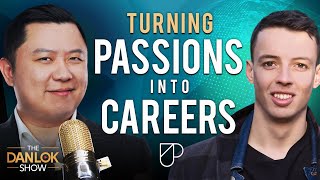
This is a Dan Lok show interview with Daniel Harvey, co-founder of Passion IO. Harvey explains Passion IO as a SaaS that enables coaches and experts to launch native branded mobile apps ("like ClickFunnels for mobile apps"). The company evolved from an agency that launched online courses (50/50 revenue-share, production services) after repeatedly receiving requests to put content into apps. Building the first app took ~11 months and ~$65,000; the team turned that work into a template-driven platform launched around late 2018/early 2019 and now serves ~1,000 coaches. Pricing tiers mentioned: $97/month and $297/month (plus packages/discounts). The platform automates ~95% of app creation but retains ~5% manual work for app-store submission and review. Founder advice emphasized: "do not automate until you are $100k/year", fail fast (launch early, day 15), get high-paying first clients, validate product-market fit, then scale with ads. Company-level challenges include cash flow and reinvesting profits into product. Team size ~25: roughly one-third marketing, one-third customer support, one-third tech. Vision: empower 30,000 experts to change 10 million lives by end of 2022.
Questions this video answers
Launched end of 2018 / beginning of 2019.
About 11 months and approximately $65,000.
Around 1,000 coaches.
$97 per month and $297 per month (plus some package discounts).
Approximately 95% automated with about 5% manual work for app-store submission/review.
Chapters
We tell our experts, our coaches, etc. We tell them you do not automate until you are at 100k a year. I believe every one of us is uniquely positioned to help a certain kind of person achieve a certain kind of result. Focus on impact and the money will follow.
And let me guess, that half a million dollars, a lot of them will go back to product. Hey, welcome to another episode of the Dan Lok show. Now every single time I bring you a special guest. Now this special guest today is actually someone who I saw a product that they have that I was blown away when I saw it. I said, you know what, I want to bring whoever's behind this particular product on my show because I have so many questions. It is in a space that I'm very passionate about. He is the co founder of Passion IO. Daniel, welcome to the show.
Thank you so much, Dan. Lovely to be here. Very excited.
Now tell me how you even got the idea. Okay, let me take a step back. What exactly is Passion IO?
Absolutely. So it's a software, as a service, if your listeners and viewers might be familiar with clickfunnels, you could imagine it's a little bit like clickfunnels for mobile apps. Okay. And we're specifically helping coaches to create their own native branded mobile app where they can teach their skills in the 21st century where everyone's on mobile, right?
Yes, yes. And when I came across the website, what hit me was like, that is a cool idea because of course now we have thinkific kajabi, different hosting platforms, but everybody knows, we all know everything is going to mobile. Right? But we're still kind of catching up. What inspired you to even come up with this idea for this particular software?
You know, it evolved. Okay. So we started as an agency where we would actually work with influencers, coaches, those sorts of people and we would actually launch for them online courses. So we'd fly them to Berlin, where I live, we would bring in a production team, film all the content, we would launch online courses and we had a lot of success. We had some courses that did like half a million dollar launch within two weeks and various things like that. So we got good at launching online courses. We got around our first hundred thousand paying customers across these courses and we were always the central, we were doing the customer service, right? So we were answering all the questions on behalf of these clients. And the number one question was like, when can I get this on an app? Right? Because the reality is if you're learning fitness, you know, if you're being coached in Fitness or language or playing the piano or photography or business or marketing. Like, whatever you're being coached in, you want to learn at the time and place that's convenient to you. Right? It's the same reason why Netflix have an app, why YouTube has an app, why Facebook has an app. We're always using the devices that are most convenient. So we got this question millions of times, and we thought, well, let's just give it a go. Let's just build an app. So we took one of our online courses and we just tried to build an app out of it. It took 11 months. It cost us about $65,000, and it frustrated the hell out of me. It just felt like there had to be a better way. But there actually wasn't because we looked around. Nothing possible. We talked to the developers who built the app, who were in our team at that point. We'd employed them, and we said, can we make this into a software? Can you build something where anyone could log in and just drag and drop their own app together, add their content and just do it? They were pretty hesitant whether it was even possible, because the first thing you do, I think when you have an idea is you look to see, okay, is anyone else doing something like this? There wasn't really anything that was taking coaching content and allowing people to launch an app with it, especially not without writing a whole load of code and employing developers and all this crazy stuff. But they got stuck in. There's some really talented people they got stuck in, and they built the first version. We launched it end of 2018, beginning of 2019, and it's just, like, exploded since then. We're now around 1,000 coaches on the platform and it's growing a lot.
Which is the best type of software because it is based on a need in the marketplace, people asking for it and say, hey, Daniel, give me some of this. How do we do this? So it's a very natural. I bet when you offer it, it's like, finally, it's here. I do want to go back. Share with us the business model. Before when you were running the agency, like, how do you charge? How do you do the split with the coaches and then afterwards, what the model looks like today with passion IO. So take us back, maybe walk us through that a bit.
If anyone out there is thinking about doing a software business, I cannot recommend enough to start as an agency. There's so many reasons to do this. If you just start building software from day one, you'll build the wrong thing because you don't really know what you need to build. And building software is very expensive, so.
Expensive?
Yeah, it's very expensive. So we started as an agency and we were working on 50, 50 revenue share most of the time. Usually they would pay something up front as well.
Okay, do they pay to. It's more for the production and the cost of creating the content. Right. Kind of COVID some of the cost. So if I'm an influencer, I worked with you back then I pay something up front and your agency will help me create a course and put it online. And who does the marketing? You do the marketing or I do the marketing? You do the marketing?
We did the marketing. The performance marketing, Facebook, Instagram ads. We would do email marketing on your behalf. We build the email list and all that sort of thing. We'd even post on your own social media channels for you if you wanted us to. Some people did it themselves, right? So we were like full, full service. The second reason why it was so important to launch an agency first is, is because we learned what worked and what didn't work. Right. So now when we get our customers into our software, we give them like step by step guidance because we made all the mistakes you can imagine and, you know, figured out how to do it properly. And so we teach them that. So yeah, to answer your question of how it works now is people pay for the software. There's a couple of different pricing options. $97 a month, $297 a month. We also have some packages where you can sort of get a discount if you like.
A long term contract.
Right, exactly. That sort of thing. Yeah, exactly. And we don't take revenue share. So it's all you. We're incentivized to make you successful because number one, you're going to stick around a long time and use the software if you're successful. Number two, as you see in the marketplace, like take ClickFunnels. It's a great example. The reason most people hear about clickfunnels is because of someone else who is successful on clickfunnels. Right? And that's happening with us as well. We have these coaches who are like, I cannot believe this is working for me. I had no idea that, you know, that it could work like this. The demand is just spreading organically because it's something new and it's actually working. So even though we don't take a revenue share, I'm thinking all day, every day about how can I make our coaches, our customers more successful?
Because a lot of them coaches or experts, right, they are very good at what they do. They have an expertise, they have skill sets, they want to get out to the world. But when it comes to marketing and tech, that's not their specialties. I think what impressed me the most when I was thinking about this and I asked my team, that's why they get in touch. When I saw the software, the first question came to my mind. How the hell does this work? I know when you build something, let's say I get it listed on Apple, right, on itunes. That's my software. That's the whole application process. Right. And it's getting tougher and tougher. And I was thinking, okay, if Passion IO has all these coaches and they've all this content, now clearly for the monthly fee, they cannot build an app for each one of them. There's no way. So it's a centralized system, like feed the content, like walk me through that. From a technical perspective, I find it amazing.
Yeah, thank you. So I will say I'm very not technical. My co founder is technical. But I'll give you the layman's one and hopefully if we got some non.
Technical, that's good for me.
Okay, so essentially what's happening behind the scenes is we have like a template app. Okay.
Okay.
And so on a high level, what we're doing is we're automating everything that's physically possible. And you're absolutely right that Apple and Google don't allow you to automate 100%. We've got it about 95% automated and we have a team behind the scenes who are doing the last 5% for you. We're also betting on Apple and Google eventually allowing 100% automation and hoping that we can become therefore more scalable. But at the moment it's fine. We have 5% manual stuff that our team have to do behind the scenes. What we have is effectively like a template app. You as a user of the platform, you can drag and drop what you want in there. The template is, although you don't see it, is completely bare. So you can bring in out of all of our different features, you know, headings, pricing, widgets, you can bring in different lessons, audio, video, all this sort of stuff. And then, and then what it does is it basically builds your app into this template. It sends it off to Apple and Google and Apple and Google see it as a brand new app. So they don't see it as a template, they just see, okay, it's a brand new app, it's got all these different features, etc.
Okay.
And then you're right that there's also a review process. So what then happens is you'll see inside your account, our customers see who's in that app and they see like, oh, John, Apple has just logged in. Right. So they actually see a physical human who's looking at their app and who is deciding whether it should be approved or not. And again, we've figured out with Apple and Google what you need to do to get past that. It's not rocket science. And we just help you, we guide you through the process, what you need to have in there, how it needs to look so that it will pass that little review that they do.
So basically what your team is done, figure out. It's a very efficient way of turning the knowledge content into an application, be able to submit and help them do a lot of these things, which there's a cost for the 5% manual. But then of course once they are on the monthly continuity, it's kind of more set and forget.
Right.
Because once you have helped them upload it. I want to put myself in the client shoes. So I am a fitness coach, let's say, and I sign up for Passion IO, I film myself on how to do exercise, how to lose weight. Great. I give you all the content, you help me upload and then create the app. Instead of me going to an app agency, which would cost me thousands or even tens of thousands of dollars to even create that. Because you've systemized it with the template, now you get it up on Android, get it on Apple, then I would just focus on marketing, like telling my audience, hey, I've got this app now help me like, you know, if you want more exercise training videos, go download that. And how would I track the like? So then I guess anything that I. Well, since this is my itunes account, then I just get the revenue from Apple.
Yeah. So you can absolutely do it like that. Our typical customer is usually an offline coach. So they usually, or let's say an offline expert, they have an expertise and they're usually currently functioning in the offline world, right?
Yes.
So that they're either teaching in a workshop or in a gym if they're fitness or that sort of thing. What we understood from our customers as they started to come in and started building that app, you know this Dan, if you build it, they will come is basically bullshit.
Yes.
You have to market, right? Correct. And so although people might be an expert in business marketing, maybe not marketing in this case, but fitness or whatever, that they're an expert they're usually not a marketing expert. So what we show them is like, okay, what should your pricing be? And we walk them through essentially two main trainings. The first is called Expert Unleashed. So we're unleashing them. It's a 30 day process. They watch a video and do a task every day. The goal at the end of the 30 days is they've made usually between five to $10,000. They've got their first five to 15 high paying clients and so they've got their first. But more important than the money is they've got their first users for the app. And what they do is they only build that app once they've got their users because then they're building what their users actually want and they're like almost co creating it. They're getting feedback from their users, they're giving them a bit more content, more feedback, more content. And then by the end of this process, they've got not only some revenue to show for their hard work, but also an app that is essentially proven to work and proven to have a product market fit. Proven that they can sell it. Got it.
I love it, I love it, I love it. So you kind of teach your clients what you guys have done. So teach them how to get kind of high end clients first, get the money coming in and then to turn it into a lower ticket app that they can serve the masses. And by that time they already have some kind of income. The 5, $10,000 a month. Well, this is very similar to my Wealth Triangle model. So essentially, Daniel, Wealth Triangle has three parts. High income skills, scalable business, and high return investments. In your case, you kind of teach them how to become that highly paid expert. First, it's still trading the time for dollars, but high dollars. And then taking that and turning into an app becomes a scalable business because now they can serve 1,000 people, 2,000 people, 5,000 people, doesn't matter what it is, right? Boom. They got that. So I love that. That's, that's cool. I would not see that if I just saw from the, from the website. Thank you for explaining this to me. Is awesome.
Yes, well, well, thank you for sharing. That means we need to improve our website. You know what, Dan, When I saw your wealth triangle and you Talk about the 100k a year for high income skills.
Yes.
It's funny because we tell our experts, our coaches, et cetera, we tell them you do not automate until you are 100k a year.
Okay.
Hammer.
Boom. Boom. That's a hammer moment.
Boom.
Why Is that important? I know that, but I want to hear from your perspective. Why is that important?
There's so many reasons, but for me, what the biggest mistake people make when they go online usually is that they have an idea that they think is great. They spend tons of time and money building it and then they put it out into the world. And usually they're wrong. Okay?
Yes.
And that's normal. We're all wrong about what the world is thinking because we're only one person. Right.
We have our own bias.
Creative. Exactly. As much of a creative genius as we might be, like, we need to interact with the world in order to understand what they want. Right. Even Steve Jobs, everyone says, like he just had these ideas, he interacted with customers all the time. So the most important thing is like, get your thing out into the world as early as possible. We do it on day 15. All right? And to be honest, a lot of people go through that first two weeks quicker because they get excited. Like, get it out into the world and understand what's working and what's not. Speak to people about it, understand what language they're using to describe their challenges, their goals. And then once you've got those first customers, get them their results. Figure out what it takes to actually get them to take action. Because again, so the first piece is like, figure out your marketing. You need to know that message, their goals, how do you need to speak to these people to convert them? But the second piece is once you've got them, you have to get them the results. If you build an app and you just put random things in there, it's not going to work. They might get overwhelmed because it's too much information. They don't know where to start. It might be too hard, too easy, too boring, whatever. You don't know because you haven't tested it. Get them the result, prove it. Then what we actually do. Because that's usually your first five to 15 high paying clients. We then show you how to scale that up using ads. Get out beyond your existing audience, speak to more people who aren't just in your network. Because the first five to 15 usually come from their followers, their existing audience.
Yes.
Then we show them how to get outside of their existing audience and really prove, evolve the product further, improve product market, fit within strangers, not just their audience. And only then once you've really like got a wealth of both data and knowledge from speaking to all these people, at that point you can automate and you'll create a marketing message that resonates enough to Have a scalable business and you create a product that actually gets people the results.
So I can see why that passion IO the companies grew from like non 0 to 3 million annual recurring revenue in what period of time?
Pretty much since the beginning of 2019.
2019.
A year and a half or so.
A year and a half. It's absolutely incredible. Like congratulations, it's awesome. So I could see that it's different because if it's just like a typical content hosting kind of service, the Thinkific Kajabi, that's great. But they don't help you to get from here to there versus what you guys do is knowing what you're actually selling, which is beautiful. I love that you do. Helps you to get from here, take your knowledge and get out the marketplace. But so much is combining with education and e learning results driven from here to here. And then we helped you scale so you're actually in a scaling business.
I think we're in the business of helping coaches to move online and be successful with that. And in the beginning it's ideas and then at some point it's product and then it's marketing. And we're trying to create online entrepreneurs. It ain't a small job, but we're working hard on it. And I'm really proud of these people who come from, you know, the offline world where they might have had like a shop on the high street where people just walk past, see it and go in, right? They've got, that's their marketing. And then, and these people come into this world and they, and they create something and they get, they're getting customers from all over the world, they're generating recurring revenue, they're impacting their clients, changing people's lives. Like I'm so proud of what people are doing and all we're doing is just seeing what's working, seeing what's not and just distilling that for people into information, a product and a community that delivers on that.
I love that. It gives me goosebumps because so many coaches, so many experts, they are best kept secrets, right? Like they have like, it could be a lifetime of experience of a particular craft or skill, but they just, they just can't get it out there in the marketplace. And I see this actually on, even on social media a lot where they hire some agency and then they got burned, they hire another agency, they got burned and eventually they kind of quit because they've been disappointed. They want to make a living, they want to kind of turn their passion into a career which they can't. Not that they are not good, but they're missing some of the key skills that are needed to do it right. And I was in that place myself many years ago. I was a kept secret. No one knows me. And that was it. But until I think we commit to say, hey, we're going to get our message out there, we're going to impact a lot of people's lives. This is what we do. And we add some of those skill sets. And for my listeners and viewers, there's no relationship, unfortunately, between being good at what you do and getting paid. There's a huge relationship between being good at what you do, being able to market, and getting paid. Like, this is the missing key. We cannot say, oh, I'm not a marketing person. This is not my thing. No, no, no, you are a marketing person. This is your thing. And you need to get good in order to get it out there. Otherwise you have one or two clients and three clients is sad. In versus you can. You can impact so many people's lives.
Another myth about, about, let's call it high income skills is I have a client who's just hit a million dollars a year. Like, I didn't even know. I just interviewed her on our podcast recently. I couldn't believe it. And she, she told me on the podcast she didn't. She doesn't work any harder today than she did when she was earning $700 for 10 days work as a. She's a blogger, like a journalist.
Yes.
And. And it's. And it's a big myth. Like you say, the correlation is between being able to market your skills. It's not about how hard you work. It's crazy.
No. And when I say market your skill, what I'm talking about, it's being able to multiply the value you deliver. That's what it means. It could be through an app like Passion IO, it could be through social media channels. It's serving many people, right? It's serving a lot of different people. That's key. Don't feel intimidated. It's a learnable skill. Like, anybody can do this right now. I'm curious, Daniel. So during that period of time, it's great to say, oh, we grow from 0 to 3 million recurring revenue in such a short period of time. Couple years now. During that time, I'm sure there is something that didn't work. Like some of the mistakes. What was some of the things that caught you by surprise that you wish. Yep. I would have done that differently.
Hmm. Oh, Dan, there are so many. You know, I think one of the biggest challenges for us has actually been cash flow. And the reason I say that is because we're building a software company. Right. I said earlier, software isn't cheap. We're also not, we also haven't raised a ton of money from investors and VCs and stuff like that.
Got it.
So for us it's always been a matter of like, we want to invest so heavy into our software and so we, we've always been trying to manage the business around break even and that can be a risk, right, because. Because what a lot of like infopreneurs do, if they're just selling information, they don't have a lot of cost and that's great. So what they can do is they can take that profit and they can use that for a lifestyle business or they can do what they like. Right. For us, we always wanted to take our profit, reinvest it in the software and just create as fast as possible the best platform. And so there have been many times on that journey where we've sat down and gone, oh, guys, there's actually an issue on the cash side and we need to do something here, you know, either on the revenue side or the cost side or we need to. And luckily we've never had to get to the point of letting anyone in the team go. That's always like our last, last, last, last resort. We've never got to that point. But we have had to think, okay, what are we going to do with this project? Are we going to be able to do a big revenue project here and all that sort of thing. So it's a challenge for sure.
Yes. Any of my viewers and listeners, if you're thinking of launching a software company, well, it's going to cost two to three times as more than what you think. It's going to take two to three times longer than you think. So if you think I'm going to launch these features in three months. No, it's going to be six months. Right. You think it's going to be 200K? No, it's going to be 600K. And if you think you're going to launch with no problem, no bugs, no, you still need to fix like a whole lot of things. Right. So anyone who's thinking of doing any kind of a SaaS model, any kind of software model, it is very different from a lifestyle business because you have to be willing to be very frugal, eat shit for a period of time like that ramen, like instant noodles, get Ready for that for a period of time. Because it's tough unless you've got funding and different things, a different story. Right. But even then it's going to be challenging.
Yeah. And funding comes with its own challenges as well. You got investors to keep happy and they want you to go a certain way and you lose control sometimes. So yes, I agree.
And then maybe they want certain growth rate that they want. But you're thinking, but I need to retain certain amount of cash. It's many things. You're juggling the tech side, you're juggling the marketing side, you're juggling the people side, you're juggling the investor side. Like it's not easy. That's why the failure rate is high. If you actually pick a market and create a product that people want, you might find out you do all these things and at the end actually you're off Mark. The marketplace doesn't want what you have. And all that time you gain no traction.
Right.
It's a tough, it's a tough thing. So, Daniel, one thing I do want to ask you is you work with all the coaches and experts. What if they come to you and say, hey, Daniel, I want to sell my course, I want to create all these things from your experience. You know, they are kind of picking the wrong industry or the way that they're selling it, it's wrong. What tips do you give to them to select the right niche?
So we have these different price points. Right. And of course, if people join for a couple of hundred bucks a month, I can't individually coach them. But what I do is everyone who joins the platform, they get an onboarding specialist, someone who, from my team who walks them through how to use the platform, ask them some questions about what they want to achieve and tries to get them on the right track. We of course have, or maybe not of course, but we do have like higher ticket coaching where it's like a group coaching program or a mastermind program called Impact Accelerator. And then the more ambitious, or let's say the more people who are more serious about taking it as far as possible, as fast as possible, they join that. And then of course we give them more individual support. One of the, the reasons why we tell people like get your thing out to the world within two weeks, like as quickly as possible, is like sometimes people say, oh, Dan, it didn't work. I followed your system and I launched and I didn't get many customers. And I'm like, you should be celebrating if you wouldn't have followed this process, you would have worked six months on that before you launched it, and then it would have failed and then you would have given up. But you've only done two weeks. So celebrate that you've learned your idea was not good. That's a great thing.
Fail fast, fail fast.
Fail fast. Absolutely. And then what we show people is how to actually engage with the market, to ask open questions, ask method. Right. Ryan Levesque pioneered this. Just ask people open questions. What's the number one goal you want to achieve? What's standing in the way of you achieving that? What have you tried in the past to get there? Once you start to get a feel for what people truly want and what's really holding them back, and then you combine that with your own expertise and you start to see how all these things line up and you realize that you are uniquely positioned, I believe every one of us is uniquely positioned to help a certain kind of person achieve a certain kind of result. It's just about figuring out what it is and making sure it's something people are willing to pay for.
Yes, yes. And I could also see sometimes coaches, when they are so attached to, oh, I think this is the perfect solution. This is the best fitness weight loss solution there is. But maybe the marketplace wants something else. They want a different angle, they want a different messaging and through that period of time, it's great. What's interesting is, Daniel, from my observation, SaaS software and E learning is actually a very powerful combination because SaaS, you burn money and it's a very cash investment heavy type business. On the other hand, the education business, done right, if it's high ticket, you could generate a lot of cash flow that you'll be able to. If you can do both at the same time, it's very powerful. At the same time, if you're selling a SaaS, you can use education, E learning to enhance the value of the SaaS. That is, they buy the SaaS on a monthly, but you also give them education and coaching. Because I do see a lot of SaaS founders, they don't have this piece and they struggle more.
Right.
On the other hand, what's interesting, I noticed, which I respect what you do because a lot of marketing guys, let's call them marketing guys, try to do software and they suck because they're not willing to invest, they're not willing to tweak, they're not willing to go through the. They just want to create something and then I won't name names. You and I have seen it. They do a launch they sell software. Oh, lifetime access to this software. Pay us whatever.
When.
The minute I see that, I actually think it's a very bad idea because if you sell the lifetime access, who's gonna maintain it?
Who's gonna.
Right. So you know, like I've seen it again and again. They do it. It's almost like a money grab. They do a launch and then they do them and then they have a bunch of affiliates promote, and the software goes to shit.
Right.
Which I could see the way you do day one. It's not like that. Which, that's why I said I respect what you do.
Yeah, thank you. And I would say, like, developers and product people are very different from marketers. You know, it's. If you're a marketing. Yeah. Like the way our brains work is just so different. And so I'm a marketing guy, right?
Yeah.
Like I need my co founder who's more technical and product driven because he translates to that world for me. And we now have a head of product and stuff like that.
Yes.
But like, I can't. I could not brief developers on building this software. No way. I would get it so wrong. I'd get super frustrated. They'd get frustrated. So a lot of marketing people who try to build software build crap just because then that's not how their brain works. That's fine as well, you know.
And then they think, well, just two days, one week, then they launch something. It says marketing. It's easy, they write copy, they build funnels. But software, no, no, no. There's a Sprint, there's a two week, there's a month. There's like totally different timetable. Like in my mind, it's a different time frame, different way of looking at it. And that's why most marketing guys are not good software product guys. Right. On the other hand, you have very good product software guys. They don't know how to market. Talk to us a little bit about how you met your co founder. How did you guys kind of form a partnership together? I think that's pretty, pretty powerful information.
Yeah, for sure. So it was around four years ago. I started my first company in my early 20s. It was a property company. It had done pretty well and we'd grown, had some co founders and stuff like that. And we'd grown a little bit to around 10 people in the team. And then like. And then it all went wrong and the company ended up in liquidation. Right.
Oh, wow.
And it's funny, like I left that journey not feeling dejected, not feeling negative. I felt so empowered because I'd learned so much as my first journey as an entrepreneur. I'd spent my inheritance from my grandmother on it, right? And people can't understand why. I wasn't depressed. It went bankrupt. I was like, this is amazing how much I've learned and grown and I've adopted a growth mindset and I'd met all these inspiring people. And anyway, I left that experience with the firm belief that if everyone has access to learn from inspiring people, their life will be enhanced. I'd learned from all these inspiring people. My life had been enhanced. And that was my belief. And I had no other plan of what to do with that. I just believed. I wanted everyone I knew and everyone in the world to just be able to learn from inspiring people. And then I came across. I was just on LinkedIn, I came across a German and I couldn't understand how to even say his name. It looked like Matthias Bellman. So I only knew one German person at the time, Dan. And I thought, you know, I might be naive, but maybe they all know each other, right?
It's a small country. That's why you say everybody knows each other.
It's like, no, everyone in Germany knows each other, right? So I got in touch with this German guy that I knew and I said, do you know this Matthias Bellman guy? And no joke, he went, oh, Matthias, yeah, I've known him for years.
No way. Holy shit. All right. Meant to be.
Meant to be. So he introduced me. We had a 20 minute call scheduled. We ended up speaking for three hours. And. And it. And the reason was that we had a very similar vision for the change we wanted to see in the world. We want inspiring people to have a platform to share their message in a more meaningful way, a more impactful way with more people, right? And before I got off that call, I knew, like, we have to work together. My girlfriend got home from work that night and. And I said, hey, Jess, haven't you always wanted to move to Germany? She was like. She was like, no, but she's awesome. So within a week, our bags were packed and we were moving to Germany. And we've been building the company together. We started, like I say, about two years as an agency and about the last year and a half as the software and a little transition period in between.
Can you now speak German?
I live in Berlin, Dan. And I'll tell you something, something about Berlin. People in Germany say Berlin isn't Germany. I'm so embarrassed to tell you I don't speak good German. Little bits. But Berlin is Like, Honestly, it's like 90% people from all over the world. It's awesome. And everyone speaks English.
Oh, that's good. That's good. So it's almost like love at first sight. When you find the perfect partner, you're like, yeah, that's someone that I want to do business with. How big is the team now? What are some of the roles that you have? Break it down for us. So you have. You, right, you're the CRO. Kind of the marketing, right?
Yeah, yeah, you got it. So we're about a third. A third. A third. So we have. It's 25 people. Sorry. And we have about a third marketing, a third customer support and a third tech. That's. That's to keep it simple. And. And on the marketing side, because as you quite rightly said earlier, all we're teaching our coaches, experts to do is do what we did.
Yes.
And what we do every day. Like, how do we do our marketing? How do we all of that. We're just. We're just instilling that to our customers. So the marketing team are also like our training team. We coach our. Our people on how to, you know, do their videos, do their ads and all that sort of thing.
And do you find that when you met most of the teams are remote? Are they from all over the world?
Yeah, they are now. We started all in one office and we realized it doesn't make any sense. And actually we'd be better to bring people in from all over the world, get the best talent, and we all work remotely now wherever we want.
What are some of the tips you have in terms of managing and growing their remote team?
That's a big topic. I would say the most important ones, the thing you'll lose going remote is like the personal connection. Right. You can do almost everything now with these amazing tools, but you can't touch each other, you can't hug each other, you can't have a beer together or whatever. So every three months, we fly the whole team together. Before Coronavirus, we fly the whole team together and we hang out for like, we hire a big house somewhere with a swimming pool and stuff. And we just hang out for four or five days and just have fun. And we talk about strategy in the future and big picture stuff. And I would say that's probably the most important thing, that if you don't get that piece right, if you don't do that piece, like, it doesn't matter how well you manage all the meetings and all of that sort of thing, it's hard. It's hard to fulfill that. And then of course there's like, there's tons of great tools out there, you know, Asana for project management, you know, of course, Zoom for all of the calls and stuff like that. Slack for messaging, Google Drive for all the folders. Like, we're pretty advanced at using all these tools in a way that is highly efficient. And the last thing I'd say is sometimes people who are from the traditional offline world who've got like an office, they think like, well, how can I trust my people if I'm not like watching them work? How do I know if they're working.
Or just clocking in, clocking out, what's the time? Yeah, that's all the fact. Yeah, I would love to hear feedback.
Yes, exactly. If you have people who you're worried that they're not going to do work, if they're not there, fire those people. You should not employ people that you think aren't going to work when you're not watching them. And also maybe reevaluate how you what your relationship is with them. Because you want to trust your people, you want to empower your people and you don't have to watch them.
And I always say that trust the people you hire. And if people don't trust us, don't hire them. If you don't think that they're going to do their jobs, why. But once you hire them, you trust them and they're going to do what they're supposed to do. If you have to constantly monitor and micromanage and the reality is, if it's a high performance team, everybody knows. Everybody knows who is slacking off, who is not. Like, it's quite obvious. The off site, that makes sense. So every quarter, get together for a few days and so the company's like, that's good because then it's the bonding, brainstorming strategy. Now what happens now with COVID does that. I assume it helps the business?
Yeah, I mean, of course, like coaches, all of their offline business pretty much like disappeared for a lot of people. So we did have a bit of a, you know, a pretty substantial uptick in sort of April, like end of March onwards. That being said, what we're seeing from the people who joined in that period, they say the same thing over and over again, which is like they've seen the potential of online now and they're not going back. They're not going back.
Oh, yes, yes, yes. Once they digitize and virtualize what they do. And I think it's also almost what I see in the marketplace. A lot of offline business owners, a lot of them are thinking about going online, but they're kind of on the fence. But the COVID it just like, it just pushes them, like you got to do it. It's not even a choice. So they have to adapt. The ones who adapt, of course they can prosper. The one who don't adapt and they don't survive. It's just the way it is. Right. And I think it's awesome. Like, I have to say, what you build the vision. What's your vision for passion dialogue?
Good question. I want to ask you something similar in a second, if that's all right. We have a. We have a goal that we want to achieve by the end of 2022. We want to have 30. We want to empower 30,000 experts to change 10 million lives.
Yes.
That's the goal. That's what we're working towards every day. And for me, the reason why it's changed 10 million people's lives, not just, you know, make x amount of money or whatever, is like we want to help people, to impact people in a meaningful way, right?
Yes.
And that could be their mindset, it could be their body, it could be a skill they lear. It could be, you know, how much money they make. It doesn't, it doesn't matter what it is. All that matters is that it's meaningful to them and it improves their life.
Yes.
And so the thing that drives me is pretty much you said it like almost word for word earlier. It's like there's hidden gems everywhere. Like people who've got the most amazing insights and information that could change so many people's lives and they don't have the tools or the information or the mindset to get it in front of people in number one, in a scalable way that can actually help a lot of people. And number two, in a meaningful way that really impacts them. So that's, that's my mission. And I think, you know, if you speak to any of my team, you'll hear something similar because it's important to us that we bring people in who care about achieving that as well, not just, you know, getting a paycheck.
Yes, yes. And that's, I think a lot of times we started, including myself. Right. We started the business to want to have a certain lifestyle.
Right.
To want to make certain amount of money. And it's more, I would say, more self driven. Right. It's more like I started my first business because I Wanted to take care of my mom. That was it. That was my only motivation. And I think when we get to a certain stage, especially when you become more mature, I guess as an entrepreneur, then your motive will change. I do believe motives matter a lot. Right? What drives you? So from that lifestyle, business driven entrepreneurship to now, it's more and more purpose driven entrepreneurship. It might sound counterintuitive, especially for my listeners and viewers, when you don't think about money, you make money faster because you focus on the product, you focus on the needs, you focus on impacting people and solving their problems. It took me such a long time to hit that 1 million, but once I got a team, once I shift the focus, because now you know what, my lifestyle is taken care of. You don't have to focus on me, me, me, me, me. We focus on other others until you get there. I know it's very difficult for you to understand, right? I think Daniel is the same thing. But once you get there, you're like, no, I don't need to worry about that anymore. I could have fun. I could be focusing on other things other than myself. Then things will work way better. It's the same idea. It's truly the same idea. It's not just a fluffy saying of putting on the wall, oh, we want to impact people's lives, we want to change lives. We're not talking, I'm talking about being obsessive about what are we trying to accomplish and then everything works.
I 100% agree. And I can give an example that happened just last week for us. So we have around a thousand coaches on the platform. This mastermind I told you about, we just launched it, right? All we've been focusing on for the last year and a half is like getting these people as much success as possible. And then last week we said, you know, guys, we see that we can work more closely with some of you to get you there quicker. It's 10k a year, okay? For this mastermind, we need to charge something to devote time to this and you need to pay something to actually hold yourself accountable. You need to put some money on the table. So it's 10k a year. If would you like to join? We had 50 people join, okay, so that's half a million. Half a million dollars, right? Every single person who I've spoken to who joined has told me the same thing. You've added so much value to my life, to my business. You've brought me so far. It's a no brainer to invest and, you know, and Take the next step.
Go further.
Yeah, to go further. And so it's just because we're focusing on impacts, not thinking about money, that when we actually say, okay, we got this thing you can pay for without any, without a single dollar of marketing, it's not on my social media channels.
It's not a launch, it's no gimmick. I love that. I love that.
No, we just said, here it is, guys, it's only for you. You have to join by this day. And if you want to join, we'd love to have you. And half a million dollars. So, Dan, I completely agree. Focus on impact and the money will, will follow.
And let me guess, they have a million dollars. A lot of them will go back to product development.
Yeah, like, I also enjoy and like a certain lifestyle, but software for me is just an asset. It's like you also talk about the investment, high return investment. Yes, exactly. And for me, that's what this is. This is like the investment. This is like the, I mean, this is a business that's going to be worth a lot of money at some point to sell, if that's what we want to do. Right. Because the software. And if you think about we have a thousand people running their business on our platform, how valuable is that to them? So we're just building value. Reinvest, reinvest, reinvest. And yeah, like at some point, everything else follows.
That makes sense. That makes sense. Daniel, if our audience wants to find out a little bit more about, of course, Passion IO, go to Passion IO. If they want to connect on social media, what's the best way for them to reach out or find out more about your company?
For sure. Yeah. So Passion Dan is my name. You'll see me on Facebook, Instagram, whatever you like. If you like, I can explain about the webinar where they can get a discount for the software. Dan, would you like me to do that?
Yeah, please.
So we have an App Secrets webinar. The reason why we have a webinar is because, like, a lot of people can't get their head around how would an app work in their business. And that's completely understandable because they've never had an app before. The industry, it's pretty new for coaches and experts. So we spend about an hour really helping people understand how do you build an app that sells immediately rather than spending a lot of months or years creating something that ends up failing. The second thing we show people is how to successfully market that app and, and get customers. And the third thing is how to build their app a lot quicker and cheaper than has been possible before. And that's with Passion. And then we give an offer where they can get. It's about a 70% discount or something for Passion and we include the training I mentioned and stuff like that. So they want to attend it? Yeah, they can find that on our website as well.
Okay. So Passion IO, there's a link if they want to join the webinar that they could do that as well.
Free webinar. And yeah, they'll see exactly how it's perfect.
It gives them an idea of exactly. If I want to turn what I do into an app, what would the process look like? It's perfectly okay. Make an offer and see if it makes sense for you. I think everything that we are, where we're going, education more and more towards. It's not just app, it's the behavior of in demand learning. People don't want to go on a laptop and say, hey, I'm going to log into this website and learn. I'm in a gym, I go to my thing, I put my little iPhone here, I'm working out right. I'm doing my thing. I don't want to. It needs to be on demand. Any type of other learning, it's like listening to podcasts. I'm driving or I'm on a train, I'm on the bus, I'm doing something else. I could do this. So this is how people want to learn. They want to learn the way they want to learn, where they want to learn, however they want to learn. We cannot impose our idea. You got to be in a classroom, you got to go through this. People don't want to learn that way anymore. And microlearning, if I could just leave one more tip, it's the key and app is perfect for that. Don't make me sit through a four hour class. Give me 10 minutes, give me five minute, give me 20 minutes here and there. That's how people learn. It's what they want, so it makes sense. Passion IO so awesome. Thank you, Daniel. Thank you for being on the show. It's been awesome. Connecting great, great insights and I'm sure that my listeners and viewers and watchers and fans have gained tremendous insights from what you share. So appreciate it.
Thanks, Dan. It's been really fun. Thanks for having me.
Thank you.
More from Daniel
The Paradigm Shift Episode 160 with David Meltzer Featuring Daniel Harvey and Dom Farnan