This content was created by balanced-griffin. This content was uploaded by balanced-griffin. This is a YouTube tutorial titled "Analyze Painting Business P&L" (posted 2018-09-25) presented by a bookkeeping/consulting representative from BookkeepingForPainters.com. The video is an instructional walkthrough on how to read and analyze a profit & loss statement for a painting business (with references to running the report in QuickBooks Online). Topics covered include accrual vs. cash revenue, cost of goods sold and gross profit (typical targets 40–50%), materials as a percent of income (roughly 15–20%), overhead/operating expenses, officer salary, discretionary earnings and benchmark comparisons, plus a brief note to review balance sheet and cash flow statements. The presenter offers contact information and paid packages for further bookkeeping help.
Chapters
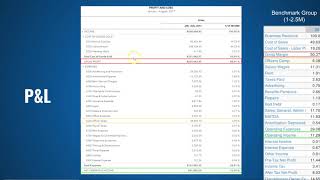
Alright, this video is how to read your profit and loss. As a painting business, you need to have a good understanding of your profit and loss and how to actually read it. So if you haven't— if you are wondering how to actually run a profit and loss in QuickBooks Online, you can refer to the video in the description. We're just going to be talking about how to analyze the profit and loss in this video. So once you run your profit and loss What you should do is make sure you run the percentages, percentage of income, so you have these percentages to refer to. This is really useful in understanding what percentage of each item is of income. And then if you have any benchmark data to refer to, this is always good, which we're going to be kind of covering it in this video. So if you don't have any benchmark data, just kind of jot down the percentages, the crucial percentages I mentioned. and that should be a good guideline for looking at your profit and loss for your painting business. So when analyzing the profit and loss, start from top to bottom. Basically, first you got the top line, which is revenue or income, otherwise known as income. So the revenue is $560,000, and this is kind of based off your goal. So if you're shooting for a specific revenue number, this kind of gives you a guideline of where you are at that moment. Now, a couple notes on revenue. Depending on how you run your profit and loss, it's either going to be based off of what you've invoiced so far in the year or what you've collected in cash. And this is determined by if you're running accrual— an accrual profit and loss or cash profit and loss. Most of the time, QuickBooks Online defaults to accrual. And so that top line, in this case, this is the case. So this is looking at all the invoices, how much this painting business has invoiced from January to August. If you do not do invoicing out of QuickBooks Online, you'll be basically, you're looking at a cash basis profit and loss. How much money you've collected in cash from customers. So one of the implications for this is if you've— maybe you've invoiced a lot of your customers, but they haven't been paying you, haven't collected, your income line might be really high, but you might not have much money in the bank. So that's a thing to consider. For most residential repaint businesses, collection isn't usually an issue. It's more of an issue if you're commercial. Doing commercial jobs where you're having to wait a long time to get payment. So this is something to keep in mind when you're looking at your profit and loss is what this number, if it's an accrual revenue or cash revenue. Alright, so the next section is cost of goods sold. So this is direct costs, costs on the job site, either the labor on the job site, the paint materials spent to complete a job. Now, if— and this cost of goods sold is subtracted from the revenue, and that gives you your gross profit. So gross profit is what's left over after you've paid for your direct costs, your labor and materials on the job site. Now, the percentage— if you look at the percentage on the right side, this painting business has a gross profit of approximately 41%. For painting businesses, generally you should shoot for between 40% and 50% of gross profit. If you're using subcontractors, they're usually a bit— a little bit more expensive, so you might be closer to 40% gross profit. If you're using employees, they're usually a little bit cheaper and you can probably hit closer to 50%. That's just a general guideline. In this case, this business is doing decently considering they use subcontractors exclusively, so they're about on track, and they're paying about 15% for materials overall. So that's usually what we see is between 15% and at the high end, 20% of materials as a percentage of income. So their gross profit margin is looking decent. Now the next section we look at is the expense area, or otherwise known as overhead costs. Now this includes advertising, insurance, accounting expenses, any officer pay. If you're being taxed as an S-Corp, you're required to run a salary for yourself as the business owner. So that would be included in the overhead costs, and then also any office employees who do not work on job sites would be included here as well. So there's a couple of other percentages we need to look at is officer salary and operating income here at the bottom. If we refer to the benchmark group here on the right, we have some benchmark percentages. So operating income and officer's compensation, if we add the two together— and the reason why we're adding the two together, because they're both going to the business owner. The operating income goes to the business owner, and so does officer salary, assuming that this is a— there's only one owner in this painting business. So we add those two together, that's on the benchmark side, that's about 17% of what we call discretionary earnings. And we look at the painting business we're analyzing, and they have 16% plus 7% So they are about 23% discretionary earnings. So this painting business is doing above average for profitability and about average for gross profit, so that indicating that their overhead costs are— they're doing pretty well on managing their overhead costs, they have lower overhead costs than average. So overall this painting business is looking pretty strong from a P&L perspective. Now As a note, P&L is not the only report you should be looking at. You should be looking at balance sheet and statement of cash flows, which I'll cover in other videos. But this is a rough guide on how to kind of analyze your profit and loss. Hopefully this was helpful, and if you need help looking at your profit and loss, feel free to reach out to us at BookkeepingForPainters.com. Click the contact button to set up a free consultation. We can help you run through and analyze your profit and loss. And if you want some long-term assistance, we have packages to get you set up on a bookkeeping system and also provide guidance and analyze your painting business's performance to see— to let you know how you're doing and how you can improve. Hope this is helpful, and until next time.