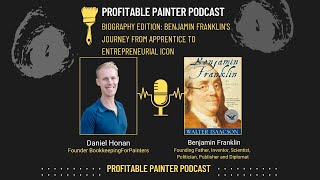
The video summarizes Walter Isaacson’s biography of Benjamin Franklin with a focus on Franklin’s entrepreneurial journey and the business principles that can be applied today. It begins by noting how 19th‑century magnates such as Thomas Mellon, Andrew Carnegie, and modern figures like Charlie Munger and Elon Musk cite Franklin’s autobiography and Poor Richard’s Almanac as sources of inspiration. The speaker traces Franklin’s early life: born in 1706, a voracious reader, and an apprentice printer at age 13 under his brother James. After a difficult apprenticeship, Franklin fled to London, returned to Philadelphia, and built a vertically integrated media enterprise that included printing presses, franchise printers, a newspaper, a magazine, the Poor Richard’s Almanac, and control of colonial postal distribution. He deliberately cultivated a public image of industriousness, even carting paper rolls himself, to reinforce his reputation. In 1727 he founded the Junto, a discussion group that functioned as an early mastermind, and in 1731 created the Library Company of Philadelphia to promote self‑education. The Poor Richard’s Almanac, though largely compiled from existing wisdom, became a cultural touchstone and influenced later business thinkers. By his early 40s Franklin retired from business, turned to scientific experimentation (lightning rod), and later played pivotal diplomatic roles in the American Revolution, participating in the Declaration of Independence, negotiations with France, the peace treaty, and the Constitution. The speaker extracts several business lessons: lifelong self‑education, starting early and staying in one industry, maintaining focus and financial freedom, leveraging networking and collaboration, and continuous innovation. The video concludes with a recommendation to read Isaacson’s biography and a Fourth of July greeting.
Chapters
The industrious Thomas Mellon, who erected a statue of Franklin in his bank's headquarters, declared that Franklin had inspired him to leave his family's farm near Pittsburgh and go into business. "I regard the reading of Franklin's autobiography as a turning point in my life," he wrote. "Here was Franklin, poorer than myself, who by industry, thrift, and frugality had become learned and wise, and elevated to wealth and fame. The maxims of Poor Richard exactly suited my sentiments." I read the book again and again and wondered if I might not do something in the same line by similar means. Andrew Carnegie was similarly stimulated. Not only did Franklin's success story provide him guidance in business, it also inspired his philanthropy, especially his devotion to the creation of public libraries. That was a quote out of the book, out of the biography by Walter Isaacson of Benjamin Franklin. This book was very dense and it was super interesting but very dense. It covered Benjamin Franklin's life pretty thoroughly. So I'm going to focus today on the business aspects, aspects of his life. Obviously Benjamin Franklin was the founder of the United States. He was a scientist, but he also had a very robust business life. So I'm going to focus in on that portion of his life. But let's start here in the early life, in his early life and education. He was born in 1706 in Boston, Massachusetts. He's, uh, he was described as skeptical, puckish, curious, and irreverent. Franklin had a lifelong appreciation for craftsmen. His dad fostered that appreciation early in his life. He would take him through the market and show him all the different tradesmen, craftsmen in, in the market. And Benjamin, of course, was also a voracious reader. This is a A thing we see again and again with folks throughout history is that basically leaders are readers. And this is something that we're doing together. We're reading, we're learning about history and the great businessmen of the past and how we can apply it to our businesses. So Benjamin Franklin was doing the same thing. And there's a quote from the book, from a child I was fond of reading. And all the little money that came into my hands was ever laid out in books. Books were the most important formative influence in his life. I often sat, sat in my room reading the greatest part of the night when the book was borrowed in the evening and to be returned early in the morning, lest it should be missed or wanted. So he was basically just consuming every book he could get. He would borrow books from the bookstore. In the evenings and then return it by early morning so it could be sold by the bookstore vendor. And so he was just reading all the time. And Benjamin Franklin came from a huge family. He was like one of 17 kids. And for a while there, they were trying to figure out— his dad was trying to figure out what trade or what craft should Benjamin Franklin go into. And Benjamin Franklin didn't like a lot of the things that were the options back in the day. So he didn't want to do candle making, he didn't want to make soap, and he ended up landing on and being interested in becoming a printer and apprenticing under his brother James. And he started doing that in 1718, and by that time he was only, you know, around 13 years old or so. So he starts learning the printing trade and helping his, his brother James, and In the printing trade, they're basically making newspapers and distributing it in Philadelphia. This provided an opportunity for Benjamin Franklin to start writing and actually publishing articles in the newspaper that they're printing. But he ended up running away from James because James was like a very, very difficult boss to work for. He didn't treat Benjamin very well. He would beat him and treat him pretty, pretty terribly. So he ended up going, running away and getting out of that internship that he was working with his brother James. He ended up going to London to gain further printing experience. Then he returned back to Philadelphia and started his own printing business. So I think this is one of the lessons that we should take away is start our trade early. And gain that experience in our businesses and stay in it for the long term. Because as you'll see, Benjamin Franklin started at age 13 in his craft, and he continued it and worked at it in different places, and he ended up basically becoming a media conglomerate. And it actually says this in the book because he created the actual articles and his newspaper, and then he would publish it and then distribute it. So he's basically completely vertically integrated in the 1700s. So pretty impressive, but he got there by starting early. He loved reading and writing, and he applied that and, and just ran with it. One of the other things that Franklin did is that he basically wanted to appear make the appearance that he was working hard. Obviously he was working hard, but he also wanted to appear that, that way as well to the public. So he didn't try to hide the fact that he was industrious. And here's a quote from the book: I took care not only to be in reality industrious and frugal, but to avoid all appearances of the contrary. Another quote from the book: This industry visible to our neighbors began to give us character and credit, Franklin noted. One of the town's prominent merchants told members of his club, "The industry that Franklin is superior to anything that I ever saw of the kind. I see him still at work when I go home from club, and he is at work again before his neighbors are out of bed." Franklin became an apostle of being, and just as important, of appearing to be industrious. Even after he became successful, he made a show of personally carting the rolls of paper he bought in a wheelbarrow down the street to his shop rather than having a hired hand to do it. So Franklin was very aware of, of what others saw and perceived of him, and he, he took that and made a show of his industriousness by, you know, putting the rolls of paper and carting them around and making people see that he's doing stuff. But he was also actually doing things too. So, uh, but it was just interesting how that was a common thread that kept coming up, is basically managing your, your exterior appearance to the world to make sure that they're picking up what you're, you're putting down, basically. Uh, so I thought that was really interesting. Another thing, uh, 1727, he founded, uh, the Junto. It's a discussion group for mutual improvement. It's basically like a mastermind. He It was an opportunity for him to network and collaborate with like-minded individuals and to grow with them. And he started this in Philadelphia and held those regularly to, to basically to, to network, to meet people, and then to improve his fellow business people. And then in 1731, he founded the Library Company of Philadelphia to promote continuous learning and self-education. 1732, he began publishing Poor Richard's Almanac. And Poor Richard was like a character he developed, and he basically captured a lot of wisdom and put it in these almanacs, and he would sell these every year. Uh, here's a quote from the book: Most of the Poor Richard sayings were not in fact totally original, as Franklin freely admitted. They contain the wisdom of many ages and nations, he said in his autobiography, and he noted in the final edition that not a tenth part of the wisdom was my own. Now, of course, this is the case for anybody, as you know, we're studying history and learning from it. You know, a lot of the, the wisdom is, is coming from what was before. I mean, very few of us are actually creating new wisdom. We're just really learning from the people, the smart people that came before us, at least in my case. So, uh, but Benjamin Franklin admits that this is basically what he's doing. He was just capturing the wisdom from what he read about previously and putting it in his, uh, his almanac. And the Poor Richard's Almanac was very influential to people around the world, not just in the United States but around the world. And Charlie Munger actually was very influenced by Benjamin Franklin. He wrote one of his books is called Poor Charlie's Almanac, which was a direct callback to Benjamin's Poor Richard's Almanac. And folks like Thomas Mellon, who I read in the intro, you know, he's very influenced. He was a very industrious banker back in the 1800s. He was very influenced by Benjamin Franklin, and there's a lot of famous business people that are very influenced by Benjamin Franklin, to include Elon Musk. Elon Musk, in an interview, actually said that was one of the biographies that he read, the autobiography of Benjamin Franklin, also this biography by Walter Isaacson. And he was just very influenced by Benjamin Franklin's life and inspired him. And Elon Musk even said that because he was asked the question, you know, why or how do you start all these businesses? Like, did you read business books on how to do this? Like, how did you figure that out? And he basically said, no, I didn't read business books. I just read biographies about, you know, folks before. And he specifically cited this book, Benjamin Franklin, which I thought was really interesting. Now let's hop back in the book here. Franklin decided to take on Bradford on, and over the next day, over the next decade, he would succeed by building a media conglomerate that included production capacity, printing operations, franchise printers in other cities, products, a newspaper, magazine, almanac, content, his own writings, his alter ego Poor Richard and those of Junto, and distribution, eventually the whole of the colonial postal system. So he created, like I said before, he's created this media conglomerate because he's controlling the, the print, the actual printing. He had other shops that he eventually had set up that other people were printing, doing those printing operations. He controlled the actual product, so he was developing the articles. He would often write in alter egos, like I said, Poor Richard But he would write like just crazy ones too that were really funny about, uh, he would write like some, like a lady would write in and have a story about something and he would print that in an alter ego. So, uh, he was doing that and then he was also controlling the distribution because he ended up becoming the postal, uh, the main postal administrator for the colonial, for the colony. So He was controlling all of that in the 1700s, which is crazy. So he's building his business and he ends up retiring in 1748. By that point, you know, he is in his early 40s and he's retiring from business because he wants to basically go into public service and focus on science. And this is when he starts going doing the, the kite experiments where he determines that the lightning that we see in the sky is actually electricity and that it can be leveraged and eventually used for, for different things. But initially he developed some lightning rods to help folks protect themselves against lightning, which became very famous. He became famous for that, world famous. He would travel later on in his life to France, and everybody would like freak out, like, oh, it's the guy that created the lightning rods and saved our city from being struck by lightning and burned down constantly. So that was like a big invention that he did directly following his business career. And then of course he was involved in the revolution, American Revolution. He was instrumental. I mean, if you're gonna pick one founding father that did the most. Like, he's a pretty good candidate because he was involved in the Declaration of Independence. He was involved in the negotiation with France to get them involved in the revolution to help the United States. He was also involved in negotiating the peace with, with Britain after the American Revolution to solidify the terms. And then And then he was involved in developing the, the Constitution, uh, with the Continental Congress. So he was the only founder that was involved in all 4 of those things. A lot of the reason why we're here today in the United States, if you're listening in the United States, is because of what he did. Benjamin Franklin is a really interesting person that accomplished a mind-boggling amount of things, um, and a lot of key lessons that I think we can learn from him. One of them is self-education and continuous learning. Franklin was a lifelong learner, and he believed in self-improvement and education. He didn't have a lot of formal education. He basically just consumed books and learned on his own and gleaned wisdom from the past and implemented it into his life. He also— another lesson I think we can learn is that he started early in his profession. You know, in his teenage years with being a printer, and he basically continued that for the next 30 years or so. And he ended up, you know, starting just as a printer and then ended up creating a media conglomerate where he controlled all aspects, completely vertically integrated in that industry, and became completely, uh, self-sufficient, financially free to pursue his other interests in science and politics. And so that, that I think is a lesson, is to stay in the industry that you're in and just continue to grind away. And, and, and that will lead to a lot more learning. And you will, if you continue to learn and stay in the industry, you will, you'll grow. So not getting distracted and, and sidetracked. I think Warren Buffett said that you know, you should put your, all your eggs in all in one basket and watch that basket very closely. Meaning that the people that are growing and building wealth, they're focusing on one thing and doing it for a long time and staying in it. They're not getting distracted with a hundred different businesses simultaneously. They're focusing on one thing and doing that thing for a long time. And so that's what Benjamin Franklin did, and he was financially free by his early 40s to do the other things he's interested in. Another lesson that I think we learned is networking, collaboration. He, through the Junto and other organizations, Benjamin Franklin demonstrated the power of networking and collaborating with others to get a mutual benefit. And then another lesson I think is innovation and problem solving. Benjamin Franklin's inventions like the, the lightning rod show the importance of innovation and solving problems. And improving existing processes. He was always looking, tinkering, looking to improve things all around him. And that's super important as a business owner because that's basically what business is, is solving problems constantly. So I think there's several other lessons we could learn. Those are the few that I think that jumped out to me that, you know, to improve our businesses. But I definitely recommend you dive into the book. By Walter Isaacson. Pick it up and give it a read. It's super interesting. And with that, I hope you all have a great Fourth of July week. And with that, I'll see you next week.