Biography Edition: Edwin Land's Visionary Journey from Polaroid to Modern Innovation
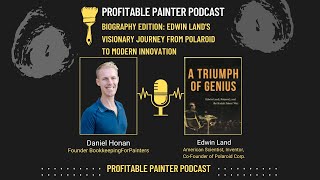
Edwin Land invented polarizing filters and instant cameras, then fought Kodak in a landmark patent war that lasted over a decade. The story shows how obsessive focus, intellectual property protection, and designing from first principles built Polaroid into a powerhouse.
Chapters
If you are able to state a problem, then the problem can be solved. Every creative act is a sudden cessation of stupidity. Optimism is a moral duty. The only thing that keeps us alive is our brilliance. The only thing protecting our brilliance is our patents. There's a rule that they don't teach you at Harvard Business School. If anything is worth doing, it's worth doing to excess. Do not undertake a program unless the goal is manifestly important and its achievement is nearly impossible. If you are right, the facts at the moment don't matter because in course the facts will catch up with you. A worthwhile invention must be startling, Unexpected and must come into a world that is not prepared for it. What the physical sciences teach the social sciences is how to fail without a sense of guilt. So those are some quotes. Those are called Landisms. I read the book A Triumph of Genius: Edwin Land, Polaroid, and the Kodak Patent War, and I just went through and read, um, what are called Landisms. So Edwin Land had these sayings that he would say. And there's a whole list of it in this book. I thought a lot of them were very poignant, and I think we can learn a lot from Edwin Land, especially his focus, his ability to protect his intellectual property, and his knack for creating something unique and bringing it into the world. And I thought this would be a good one to cover this book and studying Edwin Land. Edwin Land was the hero of Steve Jobs, and Steve Jobs arguably is one of the greatest entrepreneurs in the 20th, 21st century so far, at least. So I thought it would be an interesting episode to dive into Edwin Land. So first of all, early life. Edwin Land was born in 1909 in Connecticut. And he was deeply interested in science. Uh, here's a quote from the book: Land, still a preteen, began to read about optical science and discovered the textbook Physical Optics by Robert Wood, a professor of physics at Johns Hopkins University who was well known as an experimenter of great ingenuity in the areas of optics, light, electricity, and photography. Land slept with Wood's book under his pillow and read it nightly in the way that our forefathers read the Bible. It was an intellectual awakening that would shape his life. So again, we see, after reading all these books on these founders, we see that they're reading voraciously. They're reading books about history, about great inventors, great business people, and and they're, they're building that base of knowledge so that they can bring it to the next level. So Edwin Land, he's really interested in optics, lights, light, electricity, and photography, and he ends up going to Harvard, but he actually never ends up completing a degree. He's basically distracted and obsessed with these topics that he's he's getting into here. So let me read a quote from the book. Land had learned early on that total engrossment was the best way for him to work. He strongly believed that this kind of concentrated focus could also produce extraordinary results for others. Late in his career, Land recalled that his whole life was spent trying to teach people that intense concentration for hour after hour can bring out in people resources they didn't know they had. So Land is, he's super focused on what, what he has in front of him. And we see this again and again with the inventions that we'll cover here in a second. But I think this is one big lesson that we can really take is especially for our businesses, right? We need to set aside time to dedicate to focusing on working on our business and not in our business. And those hours we need to protect in our schedule. Because I know, especially for, even for myself, I mean, things are happening day to day and you feel, you feel like you're getting, you're really busy and you're, you're accomplishing things, but you're really working in your business. You're doing those, all those little tasks that you could probably could outsource to other folks to help you out where you need to be focusing on working on your business and putting in that intense concentration on building your business. So I think that's a big takeaway, a big lesson that we can learn from Land. He was great at this. Here's another quote from the book: Suddenly, a separateness that comes during preoccupation with a particular scientific task— there's a need, a transient need, a violent need for being just yourself restating, recreating, talking in your own terms about what you had learned from all the cultures, scientific and non-scientific, before you and around you. You want to be almost alone, with just a few friends. You want to be undisturbed. You want to be free to think, not for an hour at a time or 3 hours at a time, but for 2 days or 2 weeks, if possible, without interruption. You don't want to drive the family car or go to parties. You wish people would go away and leave you alone while you get something straight. Then you get it straight and you embody it, and during that period of embodiment you have a feeling of almost divine guidance. Then it is done, and suddenly you are alone, and you have to go back to your friends and the world around you and to all history to be refreshed, to feel alive and human once again. It is interplay between all that is richly human and this special concentrated, uninterrupted mental effort that seems to be— seems to me to be the source not only of science but also of everything that is worthwhile in life. So he's all about focus, as you can tell. He's basically saying you need to go away from the world, shut the world out for like not just a couple hours, which he's saying days or weeks, a couple days, a couple weeks to dive into whatever you have on your plate and then come back to the world and become human again, basically. So he really took it to the next level on focus. So moving on, so he starts out with his focus on polarized light filters. And what that is, basically all sunglasses nowadays, they're polarized, meaning like they take out the glare of any kind of light so you can see, you can see better. And so he's the one that invented this, and he actually quit Harvard to focus on creating this polarize— these polarizing lenses. And he would break into, actually, Columbia. They had a science department that he'd break into and use their equipment to actually make this. Here's a quote from the book: Years later, Land admitted that many of his early experiments were conducted at Columbia clandestinely. He and Terry would climb out a hallway window and then along a ledge on the outside of a building. They would climb back into a physics laboratory window and then proceed to remove the hinges from a locked cabinet to get at the necessary equipment. So he was pretty, uh, determined to, to get what he needed. Um, and obviously he's a young kid at this time. He's he dropped out of college, he doesn't have a lot of money. He actually goes to his father to borrow some money so he can do this business, you know, this experiment, and try to operationalize what he's figuring out with polarizing light. And his dad gives him a piece of advice that he really takes to heart. And at one point he says, Land recalled his father warning him, watch out, once you develop it, the big companies will take it away from you. It was advice that Land took to heart and filed away for future use. So Land is not only— he's gonna make several inventions. I think he ends up doing like over— getting over 500 patents, which is like the third most amount of patents that any person has ever had. I think Thomas Edison is number 1 and Edwin Land is number 3. So pretty impressive. Anyway, so he really takes that piece of advice from his father to heart. He gets so many patents. Everything he does, he documents very carefully and patents it. And this is going to become crucial for later on in the story when he creates the, the instant camera. So moving on here, so he creates these polarizing filters And this is where he kinda shows his showmanship. So he's very focused on, like, basically a scientist and very focused on inventing, but at the same time he's very much a showman. And this is, I think, where Steve Jobs gets his showmanship. If you remember Steve Jobs, he was all about presenting the new product, whether it was the iPad, the iPhone, the the iPod, the latest iMac, whatever it was, he was really good at kind of presenting it and launching a product. And I believe he got that showmanship from Edwin Land, because Edwin Land does this several times throughout his career where he will come up with a creative way to present his product. And so, and for his polarizing lenses, He wants to basically sell them as sunglasses, and so he's pitching that to some business people, and he basically gets a hotel room that's faced towards the sun. And so the hotel room is facing the sun, and he gets like this big goldfish bowl that he sets on the windowsill. And so the light's coming in through the window, the hotel window, and into the bowl where the goldfish is. And so he invites the business people in there and he's like, "Sorry about the glare. You probably can't see the fish that's in this goldfish bowl." And so then he puts like the filter in front of the goldfish bowl and it makes it super clear. And you can— it gets rid of the glare so you can see the goldfish. And so it's just— he basically wanted to come up with a way to instantly show the power of his invention. And so that was like the first kind of big showmanship that he demonstrated with the polarizing lenses. And he ends up also pursuing polarized headlights, so he goes to like the auto manufacturers, and he tries for years and years to get them to, you know, use these polarized headlights, which, which, you know, would, would get rid of glare and probably a lot of accidents. But he tries for two decades and fails on that front. So let me read that quote. After more than two decades, Land reluctantly gave up the fight. but he learned one very important lesson: "I knew that I would never go into a commercial field that put a barrier between us and the customer." Rather than deal with other companies as intermediaries, he would market his innovative products directly to the public. He believed that the role of industry is to sense a deep human need, then bring science and technology to bear on fulfilling that need. Any market already existing is inherently boring and dull. Land, like Steve Jobs many decades later, believed that his company should give people products they do not even know they want. So this is a big shift, you know, he's initially trying to sell to other businesses these ideas or these inventions, and after a lot of friction there, he decides, okay, I'm just gonna go straight to the customers and show them, you know, what what they're gonna want. And Edwin Land didn't believe in market research. Same thing, I think Steve Jobs got this from him. He literally almost quotes Land on this topic, but Edwin Land didn't believe in like trying to figure out what do customers want. He just thought that you should create something that was so unique and so amazing and, and just create an industry out of that. So continuing on here, we are in the mid-1930s at this point where he's doing the Polaroid lenses, and then we get into World War II. And this is— so at this point, Edwin Land has the company Polaroid that he's using and he's creating these lenses and they're making money. And he kind of foresees World War II is going to pull into the United States, and he wants to dedicate Polaroid's resources to help the war effort. So here, let me read a quote here. Roosevelt hoped to keep America out of another European war. Japan's attack on Pearl Harbor extinguished that hope just a year later. Land, however, was certain from the start that American involvement was inevitable. William McCune, who had attended that Christmas meeting, recalled that Land told his employees that he believed the war going on in Europe was of much greater significance to the United States than most people felt. Land predicted that the United States would be in the war within the next year. As a result, he had decided to make a big change in Polaroid's focus. From that moment on, the company would devote itself to one sole purpose: to win this war. In his talk with the Polaroid employees and in future comments, Land made it clear that he was not motivated by the chance to profit from the war effort. In fact, he said that he didn't expect to make much. His motivation instead was to combat the disease that is spreading over the world, one that that goes on for generations and does not stop when war stops. So Edwin Land focuses on the war effort. They create all these different goggles for the military to help in the war effort. There's another quote: Polaroid produced more— produced millions of what Land probably called the best damn goggles in the world. None other than General George S. Patton appeared on the COVID of Newsweek outfitted in a pair. So Polaroid gets millions of dollars developing these goggles and other inventions during the war. Now obviously the war ends in the mid-1940s. Now Edwin Land knew that the war was going to end, obviously, and he was worried that once the war ended, their revenues were going to dry up really quickly. So he was looking for an invention that he could sell directly to customers because once again, he didn't want to sell to other businesses because he didn't like how that went. As we talked about, he wanted to sell directly to customers and he was trying to figure out what his next thing was going to be. And he felt it was— time was of the essence because they only had a few years to figure this out. So let me go back to the book here. But the year was 1943, and the high-tech camera was a Rolleiflex box model filled with Kodak roll film. His daughter was disappointed when she learned that it would be weeks before she would be able to see the pictures her father had taken. Why can't I see these pictures right now? I don't want to wait. In those days, the film would have to be uploaded— unloaded from the camera taken to the pharmacy and shipped off to the laboratory to be developed into negatives. That process would involve a series of baths of various chemicals, all done in a dark, dark room at controlled temperatures. Once dry, each negative would then have a precise amount of light projected through it, the image being focused onto photographic paper held at just the right distance so that the image was sharp. That paper, or positive, would then— would next be developed to bring out the image, washed, and then processed further to stabilize the print. Finally, after drying, it could be shipped back for the little girl to see long after the enchantment of the moment had faded away. When confronted with an upset child asking silly questions seemingly impossible to answer, most fathers would respond with a comforting is if it's exasperated, because, or that's just the way it is, or I don't know. But not this father. As a colleague acknowledged many years later, this man never had an ordinary reaction to anything. Instead of dismissively laughing off his daughter's frustration, he shared it, he embraced it, and on the spot, at that moment, he committed himself intellectually to solving his daughter's dilemma. He would figure out a way to create a photographic system, a revolutionary camera and film combination that would allow images to be viewed immediately after being taken. He would invent one-step photography. So this is in 1943. He gets this idea from his daughter, like, she's like, where— I want to see the pictures now. He's like, okay, that's a great point, I'm gonna figure this out. And he, he's just obsessed with trying to figure out this one-step photography. And he has kind of a rough idea of how this would work. He doesn't fully— so he— they ended up— he wants it to be color, you know, initially, but they're not able to do it in color. They are— they initially do it in black and white. And there's some other things that he wanted that they weren't quite able to do. He, like, he wanted the, the size of the camera to be able to fit in a pocket. They don't get that initially, but they do get an instant photo camera that's in black and white by 1948. And so they really had to push to get this done because they only had a few years and they had plummeting revenue because the war ends— World War II ends in 1945. Their revenue decreases by 88%, which is crazy. I mean, just like, imagine your company's revenue is decreased by almost 90%. That would be very catastrophic. So their, their, their revenue is just plummeting after the war and they're just racing against time to get out this camera. This black-and-white instant camera. And so he's really pushing his team. He even announces the technology early to push his team further, and they get out this one-step camera in black and white, and it has huge success. They have a lot of trouble actually meeting the demand of it because they were kind of, um, really hurting on cash because the the war was over, they didn't have a lot of revenues, and so they were only able to make a certain amount of cameras at a time. But the demand way outweighed how much they could actually supply. So that first instant camera is a success, but Land, he, he wanted to improve it because he wanted it to actually be color, like a color picture, and he wanted to be smaller, fit in the in the pocket of somebody. And so he continues working on that innovation, uh, through the '50s and into the early '60s, developing that vision that he had. And all along this time, he's having his team document and getting patents on every part of what they're doing. And this is gonna turn out to be critical, uh, because this is really gonna protect their their industry, because they created this industry with these inventions. And at the time, Kodak is like the huge— they're the Godzilla, like they're the giant in the industry. And Polaroid is like this little company that created this one thing, but Kodak has a huge, almost monopoly on the industry. And So in order to protect themselves, they're, they're doing a great job of documenting all these inventions with these patents. So I'm going to read a quote from the book here. Polaroid, led by the charismatic and enigmatic Land, had become the Apple computer of the mid-20th century. It was arguably the most admired and glamorous technology company in the world, a loyal fan base of customers and investors eagerly anticipated its new products. 6 years earlier, Land had made the daring gamble of committing more than $500 million of Polaroid Laboratory research funds to the pursuit of his ultimate instant photography system. He did so without having done a single dollar's worth of market research to determine whether people would actually buy the product. This leap of faith would later be characterized as the biggest gamble ever made on a consumer product. Articulating a philosophy that would later become the mantra of Apple's Steve Jobs, Land proclaimed, "We don't do market surveys, we create the markets with our products." And here's another quote: There's no doubt that these Kodak engineers were amazed— okay, before I read this, actually, you know, so in, in the early '60s, they finally released the color version. It's the SX-70, is what they called it, the SX-70. It's a color version instant camera where it fits in your pocket, pull it out, push the button, take a picture, and then a photo comes out. And so this, this is amazing at the time. And so here's a quote from the book: there's no doubt that these Kodak engineers were amazed and disturbed by what they had witnessed Land demonstrated at the two events. And these two events, again, Land, when he's showing these off, he's creating like a huge event and doing this launch and just amazing everybody with his, his showmanship. So Land demonstrates at these two events a sleek metallic rectangular rectangle that unfolded into a triangle-shaped camera that with a push of a button snapped the shutter, and then ejected the film unit from the camera with the help of a small motor. The film unit was square and thin and intact from start to finish. No components were removed by the camera or by the user. It was an elegant system of camera and film that the Kodak engineers ultimately dubbed a masterpiece, a masterpiece of engineering. It was readily apparent to all that Polaroid system was far superior to the product Kodak had in development at the time. Polaroid is just light years away from anybody competing, to include Kodak. Kodak, you know, was trying to come up with their own system, which it really wasn't really their own system because they ended up basically copying Polaroid's patents. And this turns into a patent war that goes on for over, over 10 years. And because Kodak ends up launching their own instant camera, and then Polaroid ends up suing them because they were using the same technology that Polaroid had developed, and they ended up winning, and Kodak ends up having to pay Polaroid $1 billion. And this was back in the '80s, so a billion dollars then, uh, you know, it's like I don't know, multiple, multiple billions now. And this was really critical for Polaroid to win because they had a pretty singular focus on instant photography. Like, they didn't have other things going on. They did in the beginning, they were doing the Polaroid lenses and that stuff, but once they switched over to instant photography, that was pretty much their focus, and they didn't have any other kind of revenue sources. So if they were— if they had not protected their patents, or one, if they hadn't patented anything and then they didn't successfully protect their patents, they would have been destroyed. Now at this time, going into the '80s, you know, Edwin Land is old. He's in his 70s. So he ends up stepping down as the CEO and having his team take over from there. But Polaroid ends up wanting to— starting to diversify, and Land is really against that idea. And so he— I'm gonna read a quote from the book here. In 1981, it had almost been a year since he had stepped down as Polaroid's chief executive. Bill McCune had reorganized top management by appointing 4 senior vice presidents to oversee the diversification of Polaroid's activities beyond instant photography for the amateur market. This strategic move did not make Land happy. It was one that he had long opposed. At one shareholders' meeting, he had vehemently insisted that the company had no plans to diversify. It would be madness, he said, now that we are on the 90th yard line with the other guys 30 yards behind to make an end run around nothing. Now, out of sheer frustration, he took the unusual—for him—step of inviting a journalist from Businessweek to Cambridge office for a series of interviews, taping conversations himself to ensure that he would be quoted accurately. Land paced his office floor as he sought to put his position on the record. Land's central message was to make it clear that he does not intend to allow anyone at Polaroid to devote too much of its resources to diversification, read the published account of the session. While he conceded his successor's right to pursue new opportunities, Land wanted to make sure that they did not lose sight of what they believed to be the company's primary mission: to make instant photography the photographic system of, of the masses. They are not entitled to any neglect whatsoever of making the most out of the great initial opportunity. And I honestly believe that the basic amateur field is in its infancy and not in its maturity, said Land, pledging to put his still considerable weight and ultimate power at Polaroid behind his views, citing his ownership of 12.5% of the company, his total knowledge of the phenomenology of the company, and even a veiled threat to terminate his contract with Polaroid so as to enable him to contribute his technological prowess to another company. The message Land delivered, as reported in Businessweek, was that he threatens to derail the diversification plan if the company's new managers stray too far from his original vision. So bottom line, Land believed in picking one thing you're good at and doing that one thing. And unfortunately Or as we see again and again, you know, Polaroid ends up getting overtook by digital instant photography. Now, if they would have stayed focused, maybe they would have been able to, um, to stay competitive. But I think it was Sony that ended up coming up with like digital instant photography, and Polaroid ended up just copying them and they ended up losing market share and stopped being a leader in this area. So I think the main things that we can learn from Edwin Land is, number 1 is focus, intense focus. And this I think is on a micro level and a macro level. So intense focus on a micro level, meaning, you know, really taking your time and taking time out to work on your business. Or on that creative portion of your time to creating new processes for your service that you provide, working on your business in some way to improve it. And as I'm— we read in the quote, he's not just talking about like 30 minutes in the morning or an hour or 2 hours, he's saying like days or weeks to set aside time to really focus And he's— and that was one of the things that he was really trying to encourage people to do because he was such a believer in that. Doing that will really unlock things for creativity in yourself. So that's on the micro level, is focusing. And then on the macro level, he believed you should focus on one thing. In your business. Do that one thing very well. Innovate on that one thing. Don't get distracted. Don't try to do a bunch of other stuff. Focus on one thing. So the next lesson I think is protecting your intellectual property. So we've seen mistakes from other founders that didn't do this. Most recently we read about Walt Disney who didn't do this. He didn't protect his intellectual property. Very well and several other founders ran into this issue. And so for painting business, I think this is your brand, so making sure you're trademarking your brand name. You might have some, maybe something you did develop that is patentable potentially, but I think all painting businesses, you most certainly have a brand that you're using. and in order to protect that, you would want to trademark that, because otherwise you could be in business for decades and then all of a sudden someone comes and gives you a cease and desist letter that says, "Hey, you're using a brand name that is trademarked by somebody else, and so you don't own that." So that is one thing to definitely take a look at if you haven't done so already. The next thing I think we learned is understanding customers' needs. So, Land didn't believe in any doing any kind of market research. He just basically believed that you should start from first principles and evaluate what would I want, or what's like kind of natural, what do we want to see ideally, like what's the ideal situation. And with the Polaroid camera, the SX-70, you know, instead of having to wait weeks to get your, your photos, what if you just push a button and then it's— you have your picture right then and there? That would be an ideal situation. So he started from that vision and then tried to back engineer how would we actually get that, make that happen. And so I think we can take that same idea for our business. Like, what's, you know, what's the ideal situation? You know, somebody wants their house painted and then you're there, you know, that same day and you're painting their house and it's done by the end of the day. Maybe that's the ideal situation. Is that impossible? You know, it's probably not impossible. It'd be very difficult, but maybe that could be some sort of innovation you could start with. Like, how can we, instant gratification of our painting process, you know. So just as an example, starting for— starting with like what is the ideal situation and kind of working backwards, how can we make that happen in our business. So I think those are 3 lessons, but I do highly recommend the book and studying Edwin Land. Definitely learned a lot, and with that, see you next week.
More from Daniel







What’s REALLY Holding Your Painting Business Back? (Find Your Bottleneck in 5 Minutes)



